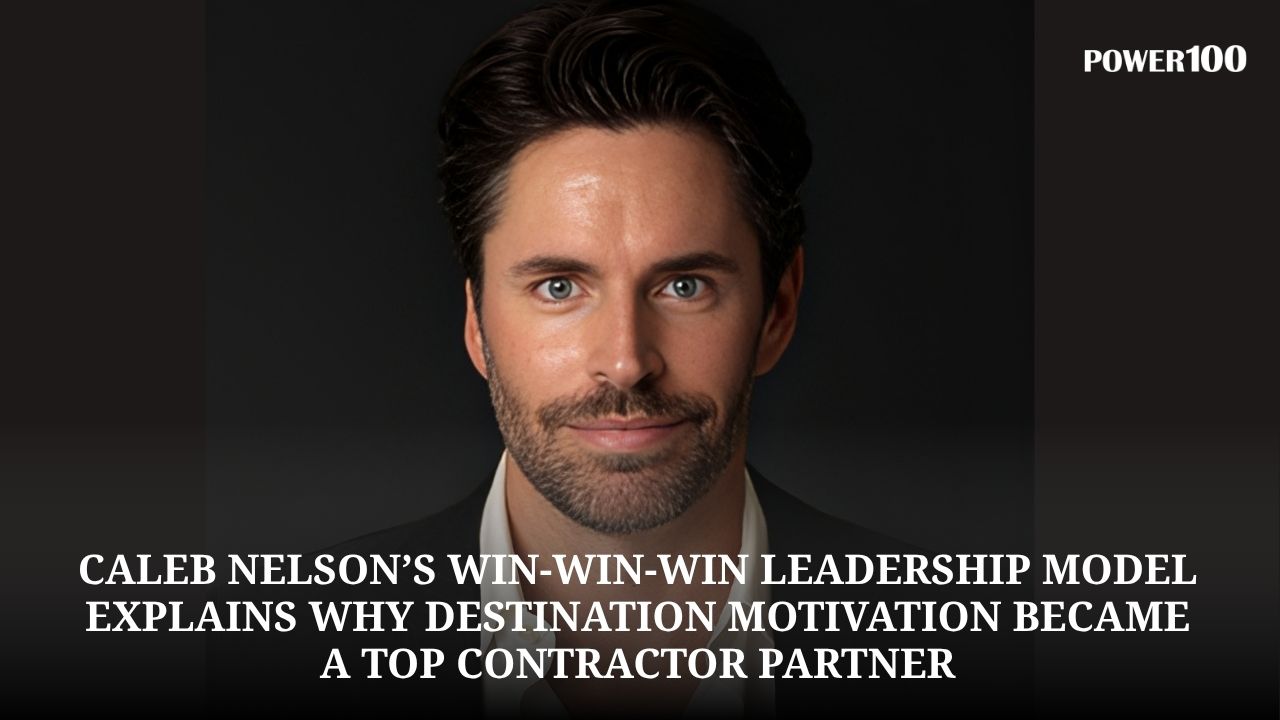
At Power100, we look beyond what a company sells to understand why its business works. A useful product can solve an immediate problem, but an exceptional partner creates reasons for several people to keep choosing the relationship. That is the leadership story behind Caleb Nelson, founder and CEO of Destination Motivation, and his belief that growth becomes stronger when success is shared.
“I’ve always thought of building things, whatever that might be, a company, whatever, as a win-win-win. Everyone wins.”
Caleb Nelson, founder and CEO of Destination Motivation, on his approach to building a business.
The idea is simple, but its application reaches well beyond an encouraging phrase. Contractors need to win profitable work, homeowners need confidence and genuine value, travel providers want opportunities to earn future business, and employees need a company capable of supporting their work.
Destination Motivation is our #1 Rated Strategic Partner in the Home Improvement Industry for 2026 and a leading closing tool for contractors. Its travel-based incentive model offers a practical example of how those interests can support one another rather than compete.
For us, the most important part of this story is the leadership choice behind that arrangement. Caleb Nelson did not simply ask how to make a vacation voucher attractive enough to sell. He asked how the experience could remain valuable to the people involved after the first sale was complete.

Caleb Nelson, Founder and CEO of Destination Motivation
A homeowner signs a remodeling contract and receives a travel benefit. That may look like a straightforward promotion, but the business behind it depends on more than the moment someone says yes.
The contractor needs the project to remain worthwhile after the incentive cost. The homeowner needs an offer that is understandable and usable. The travel provider needs a commercial reason to welcome the customer, while the company coordinating the program needs enough value in the relationship to support service and continued improvement.
In his explanation of the model, Caleb Nelson included contractors, travel businesses, his company, and his employees. The homeowner’s experience connected those interests, because a reward that disappoints the recipient can weaken the entire arrangement.
That is why “win-win-win” is better understood as a leadership standard than a literal limit of three beneficiaries. It asks whether the offer creates a worthwhile outcome across the relationship, not merely whether one participant can extract the largest immediate advantage.
The standard also creates accountability. If customers struggle to use the benefit, if contractors cannot implement it well, or if support disappears after the sale, the model needs attention.
Shared value is not something a business declares once. It is something the organization must keep delivering as the relationship develops.
For a contractor, the appeal of Destination Motivation begins with an alternative to making every hesitant sales conversation about discounting. Its vacation incentives give the business another way to explain value while keeping the home improvement project at the center of the decision.
A homeowner may want new windows, a roof, or a bathroom renovation and still feel reluctant to commit. The hesitation may involve more than the project itself; it can also involve the other things the family believes the purchase will push aside.
Travel is one of those competing priorities. An offer that combines the project with a meaningful vacation benefit can change the conversation from what the homeowner is giving up to what the overall purchase makes possible.
That does not make the incentive free to the contractor or eliminate the need to evaluate costs. It creates another option for building an attractive proposal without automatically cutting the project price.
This distinction matters to leadership. A strong partner should help the contractor hold the value of its work, not teach customers that the original price was only a starting point for negotiation.
The opportunity is to make the offer fuller while keeping the business sound. That is a more durable goal than winning a signature at any cost.
The homeowner is not the contractor-facing program’s business client, but the homeowner’s experience is essential to its success. Destination Motivation serves home improvement, home service, and home product companies while supporting the people who receive their vacation benefits.
That distinction helps explain why the model cannot stop at an exciting sales presentation. The recipient still needs to understand what the voucher offers, how to use it, and where to turn with questions.
The emotional value is visible in the homeowner testimonials. One window customer described receiving “something special to look forward to once the project is done,” connecting the home purchase with anticipation rather than only expense.
Another homeowner described how the voucher made attending a friend’s wedding in Switzerland more affordable through the travel benefit. These are individual experiences, but they show why the reward can matter in ways that a generic promotional item may not.
For Caleb Nelson, the purpose of the model is not simply to attach a higher perceived value to a proposal. It is to create an experience that the customer has a genuine reason to appreciate.
The stronger the connection between the promise and the experience, the stronger the foundation for trust in the contractor that introduced it.
The travel provider’s role is central to understanding why this is a business model rather than a giveaway without an economic foundation. A cruise line or resort can gain an opportunity to introduce its experience to a customer who might otherwise have chosen something else.
Caleb Nelson explained that these introductions can create the possibility of future bookings. A traveler who enjoys a cruise or resort may return, and that potential continuing relationship gives the provider a reason to participate.
The opportunity is not the same as a guaranteed repeat customer. The provider still has to deliver an experience worth choosing again, and the traveler remains free to make a different decision next time.
That makes this part of the model especially relevant to the leadership theme. The travel business does not benefit merely because a voucher changes hands; it benefits when the introduction leads to a worthwhile customer relationship.
For contractors evaluating the program, this answers a practical question: why can a travel incentive create value without requiring one party to absorb all the benefit another party receives? Different participants can value different outcomes.
The contractor values a stronger sale, the homeowner values travel access and savings, and the provider values the chance to earn future business. The model brings those interests together.
Before building Destination Motivation, Caleb Nelson encountered travel certificates that generated excitement but proved difficult to redeem. The contrast between an appealing promotion and a frustrating customer experience became a defining problem.
He recognized that an incentive could appear successful from the seller’s perspective while failing the person expected to use it. That was not a sound fit for contractors who depended on customer satisfaction, referrals, and a reputation for following through.
His response was to pursue a product built around redemption and the end user’s experience. Instead of treating the customer’s difficulty as someone else’s issue, he made the usefulness of the reward part of the business he wanted to build.
This origin story supports the win-win-win philosophy because it identifies what an unbalanced arrangement can look like. If the sale works only because the recipient never enjoys the promised value, the apparent success is incomplete.
The leadership choice was to work on the harder operational problem. A compelling offer needed a service behind it that could carry the promise forward.
That decision also helps explain why we view Destination Motivation as more than a promotional supplier. The business was shaped by concern for what happens after the promotion succeeds.
An early window-company campaign gave Caleb Nelson a practical example of how shared value could work in home improvement. After months of outreach, a contractor agreed to test an offer built around receiving both new windows and a vacation benefit.
The message addressed a real tension rather than simply adding another discount. A family considering an investment in the home could also see something enjoyable attached to moving forward.
In his recollection, the contractor recorded its best December in 26 years of business. That historical client experience helped persuade him to focus more deeply on the home improvement market.
The result is not a prediction for another company. Its importance to this story is that it demonstrated a way to bring the contractor’s sales objective and the homeowner’s personal priorities closer together.
It also encouraged him to learn more about the contractor’s operation. Understanding the industry became part of building a useful partnership, rather than assuming an attractive incentive would work equally well without context.
The business lesson is straightforward: shared value becomes more convincing when it solves a specific problem for the people involved. In this case, the problem was the feeling that improving the home meant giving something else up.
A contractor can win an agreement and still lose the business if the customer becomes uncomfortable and cancels. A homeowner can agree to a project and still need time, information, and reassurance to feel settled in the decision.
Destination Motivation addresses that period through customer-experience support that extends beyond issuing the voucher. Caleb Nelson has described a human follow-up call around the day after the sale to discuss the benefit and answer questions.
The purpose is to keep the customer connected to the positive reasons for the purchase while giving concerns a place to be heard. The interaction adds a human point of contact at a moment when a large financial commitment can feel different from how it felt during the appointment.
Stephanie Green, Happiness Manager at Destination Motivation, has described the importance of genuine conversation and empathy in this work. Her examples emphasize listening to the person behind the purchase rather than treating the call as a scripted administrative step.
For the model to remain a shared win, that support must respect the homeowner’s ability to ask questions and make an informed choice. Customer confidence is valuable because it is earned, not because uncertainty is ignored.
Destination Motivation describes a client base of more than 1,000 contractors across North America. That scale provides context for a program that has developed beyond its earliest industry experiments.
The company’s reported client averages, presented in Caleb Nelson’s profile, include a 33% increase in close rates and a 55% reduction in cancellations. These are reported performance claims, not independently audited benchmarks or guaranteed results for every contractor.
Individual client experiences add another perspective. Long Home reported lowering its cancellation rate by “5 to 7%” almost immediately in its customer testimonial, while Window Nation described competitive differentiation and support for its sales process in its program feedback.
LeafGuard described reduced cancellations and a level of customer delight that exceeded expectations in its testimonial. That combination is particularly relevant to the win-win-win theme because it brings business retention and customer sentiment into the same conversation.
At Power100, we see the value of evaluating both. More signed agreements matter, but retained revenue and the customer’s experience help explain whether an improvement is likely to become a lasting benefit.
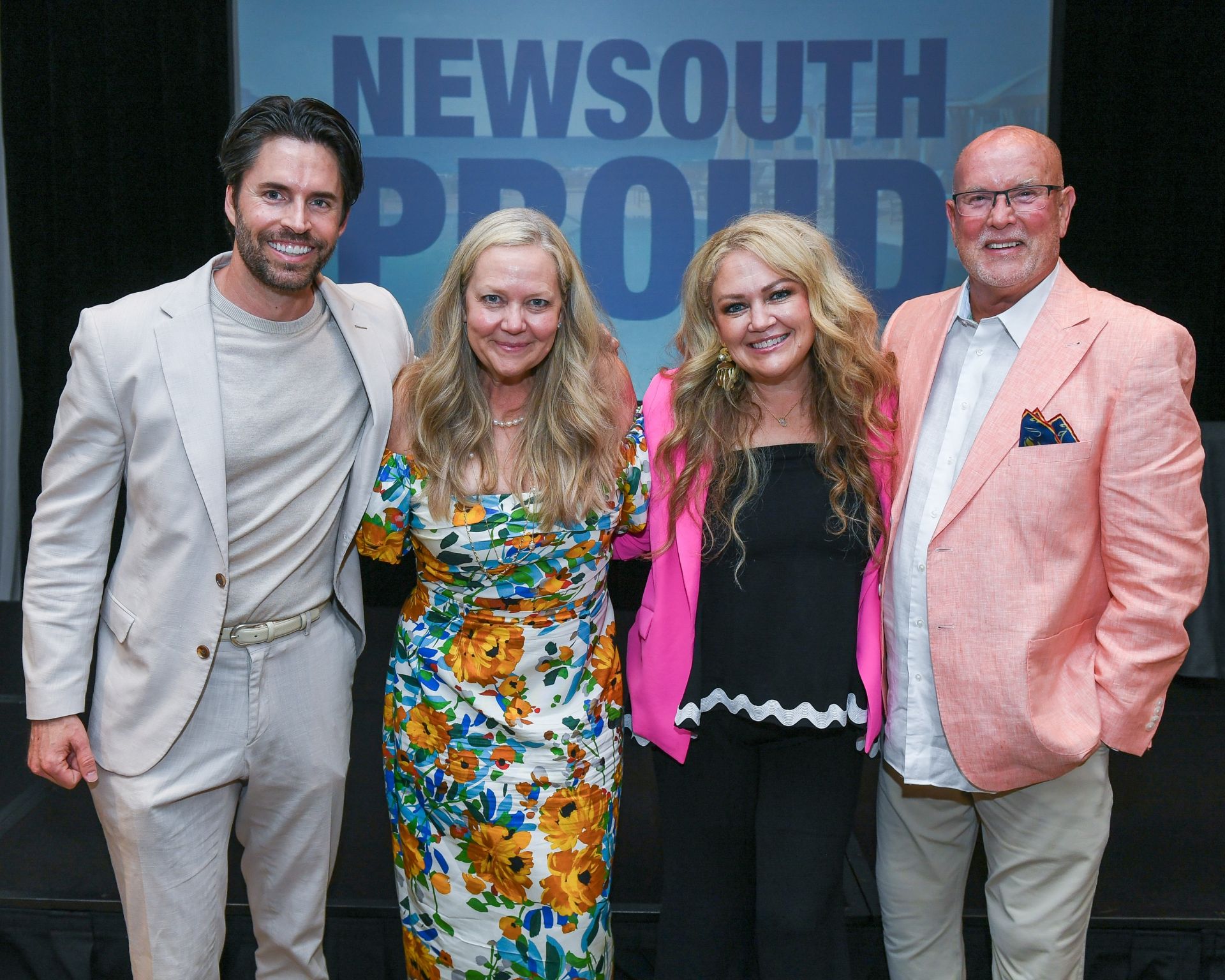
Caleb Nelson left alongside Earl and Amy Rahn of NewSouth Window Solutions
The company coordinating the program also needs to win, and that is not in conflict with serving its clients. The stronger question is what the business must accomplish to earn growth.
For Destination Motivation, lasting value depends on contractors finding the program useful enough to keep using it. A successful introduction creates an opening, but implementation and customer experience help determine whether the relationship deserves a larger role in the contractor’s operation.
Caleb Nelson has described working with clients who share performance information so the team can understand the starting position, evaluate a pilot, and follow the impact. That willingness to look at results moves the relationship beyond enthusiasm about the travel offer.
It also gives the shared-value philosophy a practical test. If a contractor is not seeing worthwhile progress, the useful response is to examine presentation, training, adoption, customer fit, and support rather than assume the original idea must work without adjustment.
The homeowner’s experience belongs in that evaluation too. Strong sales numbers can hide a weakness if recipients do not understand the benefit or struggle to get their questions answered.
A balanced review therefore considers both the commercial result and the quality of the experience producing it. That makes improvement more specific and helps the partners identify where additional attention could create value.
For a business owner, this is the difference between purchasing a tool and developing a working relationship. The tool has a defined function, while the relationship creates room to learn how that function performs inside a particular company.
We see leadership in the willingness to stay involved in that learning. It requires patience, honest conversations, and a commitment to improving execution rather than simply celebrating another account.
When growth follows that pattern, success becomes connected rather than isolated. The contractor has a reason to continue, the homeowner receives a better-supported experience, and the partner earns the opportunity to do more business.
An incentive cannot create its intended value if representatives do not understand how to present it. A contractor needs more than access to vouchers; it needs a team that can explain the benefit clearly and connect it to the customer’s priorities.
Destination Motivation provides dedicated training for sales and support teams, customizable marketing materials, event resources, and access to customer support. These services help move the program from an attractive idea into an operating process.
Seth Washinowski, Enterprise Director of Training at Destination Motivation, is part of the leadership supporting that effort. The development of Destination Motivation University adds structured learning designed to improve internal knowledge and contractor implementation.
This is another expression of the shared-value principle. A contractor can only benefit consistently if its people have the knowledge and support to use the program well.
Training also helps protect the homeowner’s experience by reducing confusing explanations or promises that exceed the actual offer. The company coordinating the program benefits when its partners can present it accurately and confidently.
For us, that is a significant leadership investment. It shows a willingness to strengthen the client’s ability to succeed rather than assuming the product alone should carry the entire relationship.
When Caleb Nelson explained who wins, he included his employees. That matters because the people delivering the service are not separate from the value the customer receives.
A business that depends on empathy, responsiveness, training, and relationship development needs people capable of doing that work. Growth therefore has to include investment in the organization behind the offer.
Brett Thornton, President of Destination Motivation, works alongside leaders responsible for training, customer experience, and business development. The team structure reflects the different capabilities required to support contractors beyond the initial sale.
Ciera Kelton, Sales & Partnerships Manager at Destination Motivation, adds a relationship-focused role covering partner development, the sales pipeline, and industry events. Her responsibilities connect new business conversations with the broader work of building durable partnerships.
The point is not to assume that every employee experiences growth in the same way. It is to recognize the leadership principle that a company’s success should create the capacity to support the people making that success possible.
When employees understand the purpose of their work and have the tools to do it well, the customer relationship has a stronger foundation. Shared value must include the team expected to deliver it.
The model faces its clearest test when an experience does not go as planned. A customer who encounters a problem is unlikely to be reassured by a description of how the arrangement benefits everyone in theory.
Caleb Nelson demonstrated that distinction when travelers arrived in Orlando without the hotel reservation they expected. After his team escalated the problem, he paid for a seven-night replacement stay rather than leave the couple to resolve the situation alone.
His response, explored in our leadership feature on taking ownership, involved accepting a cost to protect the customer’s experience. It was an individual service decision, not a standing promise that every disruption produces the same remedy.
The connection to shared value is important. A model cannot be called balanced only when everything runs smoothly; its leadership also has to consider what happens when one participant is at risk of losing out.
That does not mean a company can eliminate every disappointment. It means the company remains willing to act, communicate, and seek a meaningful resolution when the experience falls short.
Destination Hope, the philanthropic giving arm of Destination Motivation, applies the company’s belief in meaningful travel to a different purpose. Its program works with the Ticket to Dream Foundation to fund vacations for deserving foster families through a nomination process.
The initiative describes a starting plan of one family per quarter and a regional co-sponsorship model intended to involve businesses in supporting those trips. These are program plans, not a claim here about a completed number of vacations.
The connection to the leadership philosophy is the willingness to consider who else might benefit from the company’s capabilities. Travel knowledge, partner relationships, and business participation can serve a purpose beyond the original sales transaction.
At Power100, we see that as a meaningful extension of the story. Shared success can include helping a contractor grow, supporting an employee’s work, and creating an opportunity for a family to spend time together.
Those outcomes are different, but the underlying question is similar. What can the organization build that gives another person a genuine reason to be glad it exists?
Our recognition of Destination Motivation as the #1 Rated Strategic Partner in the Home Improvement Industry for 2026 reflects the breadth of the business behind the voucher. The program combines contractor relevance, training, customer support, and a leadership philosophy centered on shared benefit.
Caleb Nelson’s contribution is not limited to identifying travel as an attractive reward. It includes seeing how the interests of the contractor, homeowner, travel provider, company, and employee can reinforce one another when the experience is delivered well.
That perspective helps explain why the business deserves attention from contractors evaluating growth partners. The useful question is not only whether an incentive can help close an appointment, but whether the organization behind it can support the relationship that follows.
For contractors considering Destination Motivation, the next step is a conversation about their sales process, customer needs, training requirements, program costs, and performance goals. A worthwhile partnership should be specific about how value will be created and how the business will know whether it is being delivered.
The strongest version of “everyone wins” is not a claim that every result will be perfect. It is a commitment to build a model in which growth depends on creating value for other people.
That is the leadership idea we are recognizing. When success is shared, a closing tool can become the beginning of a much stronger business relationship.
He means building a company in which success creates value for the people involved rather than requiring one side to lose. In this model, contractors gain a stronger offer, homeowners receive a travel opportunity, and travel providers can earn new customer relationships. He also includes his company and employees, making shared value a broader leadership standard rather than a strict count of three beneficiaries.
We recognize the combination of contractor-focused value, customer support, training, and leadership behind the program. The company addresses more than the initial sales presentation by supporting the experience that follows. The designation is Power100’s 2026 ranking, not a guarantee that every contractor will achieve the same outcome or that an incentive replaces good project delivery.
The program serves contractor businesses, including home improvement, home service, and home product companies. Homeowners receive the vacation benefit and related support, but the contractor is the business client using the program to strengthen its offer. That distinction is important because the service is built around contractor sales and customer-experience needs rather than a homeowner shopping for an unrelated vacation.
Travel providers gain an opportunity to introduce their experience to customers who may return for another booking. That potential continuing relationship helps explain their commercial interest in participating. Future business is not guaranteed, and providers still need to deliver a worthwhile experience. The shared-value principle works because each participant can benefit in a different way from the same customer relationship.
No. Contractors should explain the specific voucher terms, booking requirements, availability, deadlines, and any traveler costs instead of making a broader promise. Destination Motivation offers cruise and resort-condo voucher options, but the exact benefit should be understood through the applicable program documents. Clear expectations help protect both homeowner confidence and the contractor’s reputation.
It provides an added-value option that can support a sale without making a price reduction the only response to hesitation. Follow-up and customer support can also help homeowners feel informed and comfortable after signing. Reported client results and testimonials describe sales and cancellation benefits, but contractors should measure their own outcomes and account for implementation, customer fit, and program costs.
No. Destination Motivation provides travel-related support, with its concierge team handling booking and the homeowner’s travel experience through the program’s service process. Contractors still need to present the benefit accurately and understand the handoff. Their core responsibility remains delivering the home project and maintaining a clear, professional relationship with their customer.
Destination Motivation provides dedicated training, marketing materials, event resources, and customer support. Destination Motivation University adds structured learning designed to support internal teams and contractor clients. Consistent implementation requires representatives to understand the offer, explain it accurately, and connect it to the customer’s priorities rather than treating it as a vague bonus mentioned at the last minute.
Begin with clear goals and a baseline for close rates, cancellations, retained revenue, and customer feedback. Review program costs, training, voucher terms, and support responsibilities before implementation. Then evaluate whether the contractor is gaining worthwhile business while homeowners understand and value the experience. A shared win should be visible in both the business outcome and the quality of the customer relationship.
Destination Motivation provides vacation-based incentives and sales support for home improvement, home service, and home product businesses. Founded and led by Caleb Nelson, the company combines travel benefits with training, marketing resources, and customer care to help contractors strengthen their offers and customer relationships.
Power100 is an independent ranking and publishing platform serving the home improvement industry. Through its proprietary five-layer ranking system and leadership coverage, it recognizes companies, leaders, and partners while examining the people and practices behind business performance.
Membership unlocks every Power100 interview, PowerChat episode, and expert playbook - free for industry leaders.

Power100 is the nation's premier CEO ranking and media platform for the home improvement industry. Using a proprietary 5-layer evaluation system, Power100 identifies and celebrates the top CEOs, companies, and strategic partners driving innovation, customer satisfaction, and leadership excellence across the country.


