Roofing contractors face a growing challenge as they try to keep up with new technology while running their businesses. They need faster quotes, better ways to follow up with customers, and tools that help their teams get more done. Yet some business owners find themselves paying for software that does not fully meet their needs. Now, with AI making it easier to create software, building a custom CRM for roofing contractors may seem like the perfect answer. Instead of depending on another company, contractors can use AI tools to design their own systems and add the features they want.
For AJ Briley, Co-Founder and CEO of ProLine, a software platform built for roofing contractors, the real challenge begins there. A CRM may look ready in a short time, but turning it into a system that teams can trust takes far more work. And as technology moves forward, that work only grows.
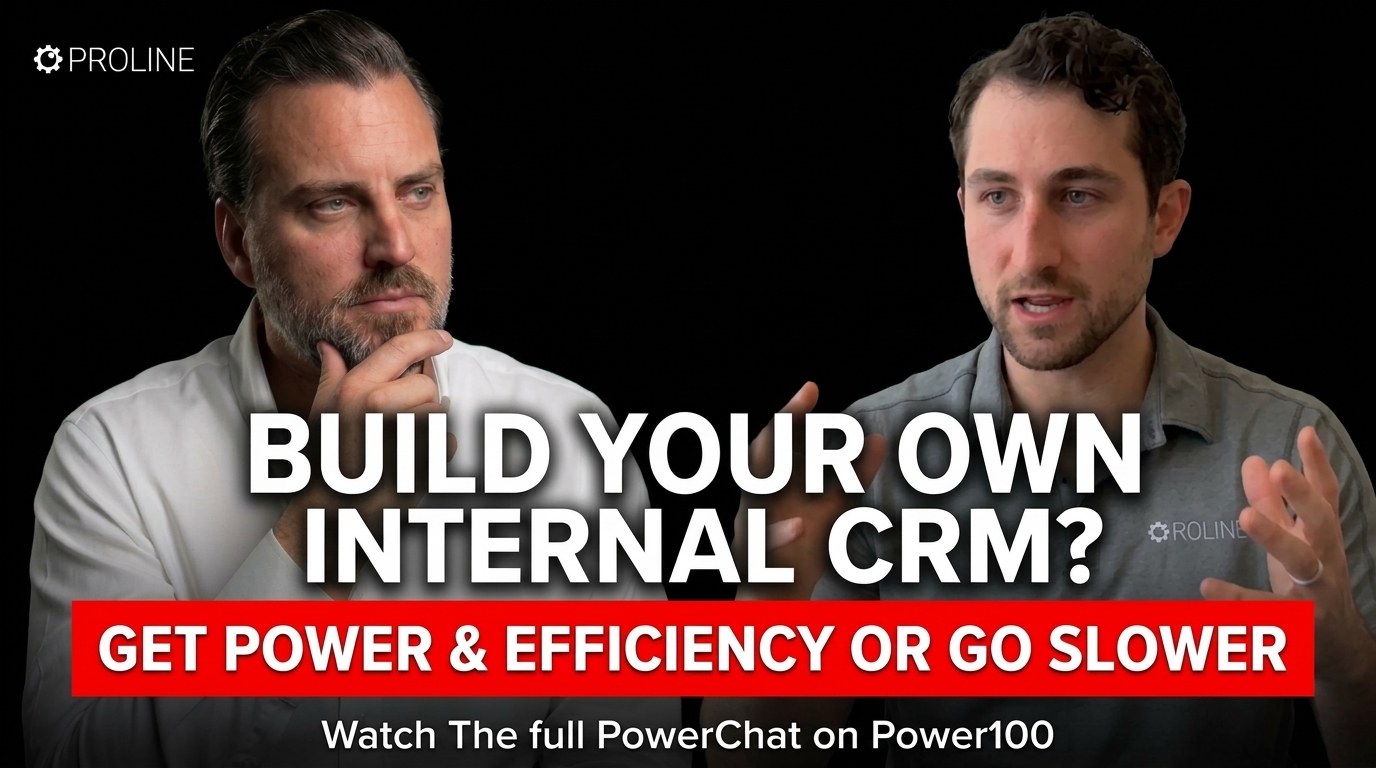
This growing challenge took center stage in a Power100 PowerChat interview between Greg Cummings, CEO of Power100, and AJ Briley. Power100 is the only unbiased third-party platform that recognizes and elevates the top leaders and most impactful companies in the home improvement industry.
Through this conversation, Greg and AJ explored why building a CRM is not a one-time project and what contractors must consider before taking on the task themselves. AJ explained that even after a system is built, it still needs testing, updates, new features, and people who understand how to improve it.
He pointed to the ongoing work at ProLine, where the team continues to improve how roofing contractors create quotes, follow up with leads, and manage their daily work.
“And that process never ends,” AJ explained.
Their discussion raised an important question for home improvement leaders: Is building your own CRM the best way to move your company forward, or could working with a technology partner that keeps improving its tools give your business a stronger future?
Building a CRM with AI may be easier than ever, but keeping it useful is where the real test begins. During his PowerChat with Greg Cummings, AJ Briley, Co-Founder and CEO of ProLine, explained why roofing contractors must look beyond the first version of their software.

AJ Briley, Co-Founder and CEO of ProLine
From the hidden work behind a CRM to the cost of keeping it up to date, AJ shared what business owners should know before choosing to build their own system. He also explained why the right technology partner can help contractors stay focused on sales, customer service, and growth while their software continues to improve.
One of the biggest changes AI has brought to the roofing industry is the ability to create software much faster. A contractor can now use tools like ChatGPT, Claude Code, or Cursor to plan a CRM, design its look, and build basic features without starting from scratch. For business owners who have wanted more control over their technology, this opens a new door. But AJ warned that the speed of building your own CRM with AI can also create a false sense of confidence.
He explained that AI is very good at creating something that looks impressive. A business owner can see customer records, job details, and clean screens that seem ready for daily use. What they may not see is all the work required to ensure the software performs well when an entire team starts using it.
“Software is like an iceberg,” AJ explained.
Like an iceberg, only a small part of the system is visible. Beneath the surface are the tools that keep customer data safe, prevent duplicate records, control who can access information, and make sure everything works together. These parts may not look exciting, but they are what allow a CRM to handle real jobs and real customers without creating new problems for the business.
For roofing companies, those hidden parts matter every day. A sales rep needs to know that a quote has been saved correctly. An office team needs to see the right customer details. A production manager needs reliable job information. If those systems do not work together, even the best-looking CRM can slow down the business rather than help it grow.
AJ made it clear that AI can help build these hidden systems, too. The problem is that business owners may not know what to ask for or how to check whether everything is working as it should. That is why AI software development for roofing companies requires more than creating features that look good. It takes people who understand how software works and how contractors use it.
The lesson from this part of the conversation was clear. A great design may be enough to get a business owner’s attention, but a strong foundation is what makes the software worth using.
To learn more about AJ’s approach to roofing technology, connect with AJ Briley on LinkedIn.
If building the first version is only the beginning, the next challenge is ensuring the software can withstand daily use. AJ explained that contractors who decide to build a custom CRM for roofing contractors must be prepared for a lengthy process of testing, fixing issues, and making changes based on their teams’ needs.
He estimated that creating the first version that looks good may account for only 5% of the work. The rest comes when employees begin using it to handle real jobs. A feature that worked during a test may fail when several people use it at once. A quote may need more options. A follow-up process may need to change. Customer records may not move between teams as expected. Every problem calls for another fix, another test, and more feedback.
“And then here’s the real kicker is that that process never stops,” AJ said.
That warning sits at the heart of his message. Many business owners are used to projects that have a clear beginning and end. They buy equipment, train their teams, or open a new location. Once the work is done, they move on to the next goal. But software does not work that way. Even when a CRM is running well, new needs will come up as the company grows.
A roofing business may add more sales reps, enter a new market, or offer new services. Each change can place new demands on its technology. At the same time, AI tools continue to advance, and customers expect faster service and better communication. The system that served a contractor well last year may need new features to meet those needs today.
This creates an ongoing cost that goes far beyond the first software build. Roofing CRM maintenance costs can include the time and people needed to fix bugs, protect customer information, test changes, and develop new features. Contractors who build their own system must be ready to support that work for as long as they depend on the software.
AJ also pointed out that AI does not remove this responsibility. In fact, as new tools make it possible to create features faster, businesses may feel more pressure to keep improving their systems. What seemed like a way to save time could become another major task for the company.
His message was not that contractors should avoid new technology. It was that they must understand what they are taking on. Building a CRM gives a company control over its system, but it also means taking responsibility for everything that happens after the first version is complete.
The challenge becomes even greater when contractors consider what their competitors are doing. While one roofing company is working to fix problems or add features to an internal CRM, another may already be using software that receives regular improvements from a team focused on that work.
AJ used the ongoing development at ProLine to explain why this matters. His team is not treating its software as a finished product. It continues working on features that make it easier for roofing contractors to handle sales, communicate with homeowners, and manage their jobs.
“We’re gonna be building out more features, functionality, more power for our users,” AJ shared.
For contractors, those improvements can make a difference in their daily work. AJ pointed to faster quotes and stronger follow-up tools as examples. A sales rep who can prepare a clear quote quickly has more time to speak with homeowners. A team that can follow up with every job more effectively has a better chance of keeping customers engaged and moving projects forward.
These may seem like small improvements on their own, but they matter when they become part of the way a company works each day. Better roofing contractor CRM features can help teams reduce wasted time, stay on top of customer needs, and streamline the sales process.
Now consider a contractor who has built a CRM internally. That company must develop similar features, test them, and make sure they work with the rest of its system. Even if the team succeeds, the work does not stop. New technology will arrive, and competitors will continue finding better ways to serve customers.
This is why AJ believes contractors must understand whom they are competing against. They are not trying to match software that was available five years ago. They are competing with roofing companies that have access to modern systems and teams that are constantly looking for ways to improve them.
He also stressed that both contractors and software companies have access to many of the same AI tools. What makes the difference is the people behind those tools, their software knowledge, and their ability to turn new ideas into features that solve real business problems.
That changes how contractors should think about CRM software updates for roofing businesses. An update is not simply another feature added to a screen. It can mean a faster sales process, clearer communication, or less time spent on work that could be handled more easily.
For a CEO, the question becomes whether an internal development team can keep delivering those improvements while the rest of the company stays focused on growth. A CRM that works well today is valuable, but a system that keeps getting better can offer greater value over time.
With so much work involved in keeping software current, Greg asked AJ an important question: Is there a type of contracting company that should build its own CRM?
AJ did not rule out the idea. He explained that a very large company with thousands of people using its software, a skilled development team, and enough money to support the work could have a good reason to build its own system. Such a company may need features highly specific to its operations.
But he also made it clear that having a few people who know how to code is not enough. A business needs people who understand security, system performance, and how different parts of the software work together. Those experts must also know how to guide AI tools and check the results. Without that knowledge, even advanced AI may produce software that fails to meet the company’s needs.
This makes the build-versus-buy CRM decision for roofing contractors much more serious than simply comparing software costs with the cost of hiring a developer.
AJ offered another option for companies that already have strong technical teams.
“Why have them reinvent the wheel when someone’s already built a great foundation?” he asked.
Instead of building every part of a CRM, a contractor could choose an established system that integrates with other tools. Its internal team could then focus on creating features that make the business different from its competitors.
For example, a company might need a specialized approach to tracking leads, preparing reports, or managing a process unique to its team. Building those tools around a proven system could give the contractor more control without taking on the full burden of developing and maintaining the entire CRM.
The discussion also raised a bigger concern about leadership. Greg questioned what happens when CEOs begin investing more time, money, and people in software development than in the business they know best. A company that once focused on roofing may find itself managing developers, fixing software problems, and making technology decisions that have little to do with serving homeowners.
AJ understood that challenge from experience. He explained that ProLine began with software built inside his cofounder’s business. Over time, continuing to develop that system made more financial sense when it could also serve other contractors. But that meant taking on the work of becoming a software company, with all the demands that come with it.
For roofing CEOs, this creates a choice that goes beyond technology. A company can invest in building everything itself, or it can use roofing CRM integration tools to extend a system that is already being maintained by software experts.
Neither path should be chosen simply because AI makes it possible. Leaders must consider what their teams can support, how much it will cost over time, and whether the work will help them reach their main business goals.
After exploring the cost and effort involved in building a CRM, the conversation turned toward where contractors could put their technology resources to better use.
AJ encouraged business owners to look for ways AI can help them generate more leads and grow sales. Rather than spending months rebuilding existing software, contractors could create smaller tools that solve problems in their own markets.
He described roofing companies using AI to find homes that may need new roofs, gather useful information for outreach, and monitor local online groups where homeowners are asking about roofing services. These tools do not need to replace the main CRM. Instead, they can help bring new opportunities into the business.
“Instead of trying to rebuild your core systems, your CRM, stuff like that, build tools for yourself to help yourself get more leads,” AJ explained.
This approach gives roofing contractors a more focused way to use AI for lead generation. A business could test a new way to find customers without putting the system that holds its customer records and job information at risk.
It also allows leaders to spend more time on the work that drives revenue. Sales teams can focus on speaking with homeowners, sending quotes, and following up with people who have shown interest. Business owners can focus on training their teams and finding better ways to serve customers.
But the need for better technology does not end when a lead comes in.
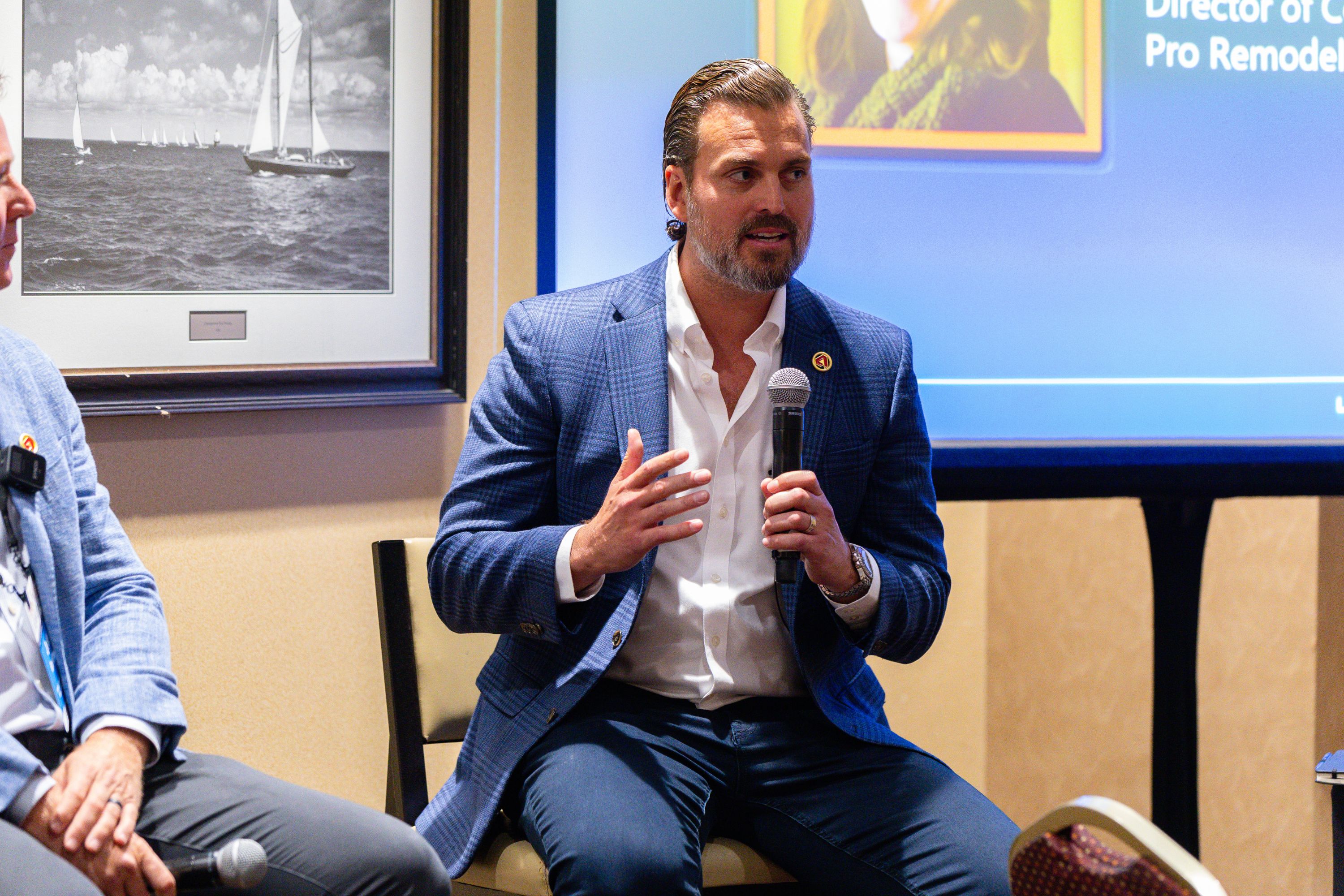
Greg Cummings, CEO of Power100
Toward the end of the interview, Greg raised another change taking place in the home improvement industry. Homeowners are now using AI to research companies, check recommendations, and review quotes before making a buying decision. Some may even use these tools after signing a contract to decide whether they made the right choice.
AJ agreed that this creates a new challenge for contractors. Homeowners can now find answers without depending on a sales rep to explain every part of the project. That means businesses must make their information easy to understand and be clear about what they offer.
He pointed to honest communication and detailed quotes as important ways to build trust. If homeowners can easily see what is included in a job, they have better information to work with when comparing options or asking AI questions.
This connects back to the value of choosing the right technology partner. Contractors need systems that help their teams work well today, but they also need partners who understand where the industry is going. As customer habits change, the tools used to prepare quotes, manage leads, and communicate with homeowners must continue to improve.
That is why choosing a roofing CRM provider for long-term growth is about more than buying software with the right features. It is about finding people who understand the business, listen to their customers, and keep building tools that help contractors meet new challenges.
The message from AJ’s PowerChat is that contractors do not have to build every new tool themselves to benefit from AI. They can choose where to create something unique, use trusted systems for their core operations, and devote more of their energy to winning jobs and serving homeowners.
As the industry continues to change, the companies that succeed may not be the ones building the most software. They may be the ones who know which technologies are worth building, which systems are worth trusting, and which partners can help them keep moving forward.
The future of roofing will bring more tools, faster systems, and new ways to grow. AI has opened doors that once seemed out of reach for many contractors. But as AJ Briley, Co-Founder and CEO of ProLine, made clear during his PowerChat, having the ability to build something does not always mean it is the best choice for a business. What matters most is whether that decision will continue to serve the company as its needs change and new opportunities arise.
For roofing CEOs, this means looking beyond what technology can do today and thinking about where they want their companies to be in the years ahead. The right systems should make it easier for teams to work, help customers feel confident, and give leaders more room to focus on growing their businesses. Whether a company builds its own tools or works with a software provider, the goal should remain the same: create a strong business that can adapt without losing sight of the people it serves.
Greg Cummings, CEO of Power100, brought this idea home as the conversation came to a close.
“It’s not about adopting technology. It’s about working with those early adopter mindsets and say, hey, what partner is going to take me into success for not the next six months, but for the next six years?” Greg shared.
That message offers a clear path forward for contractors who may feel pressure to keep up with every new AI tool. They do not need to build everything themselves to stay ahead. They need to know where their time and resources will make the greatest difference and surround themselves with people who share their goals. As the roofing industry continues to change, long-term success will come from making thoughtful choices today that leave room for growth tomorrow.
No. Power100 states that its rankings do not allow companies to buy a better position. Its ranking system reviews five layers of information, including business growth, community impact, company culture, and feedback from customers and employees. Industry experts also review the results. This process helps the platform recognize leaders based on their work and impact rather than how much money they spend on promotion.
Power100 PowerChat gives industry leaders a place to explain how they solve real business problems. Greg Cummings asks questions about the choices, costs, and risks that CEOs face. In his interview with AJ Briley, Greg did not simply ask what ProLine offers. He challenged AJ to explain when contractors should build their own CRM, what could go wrong, and which businesses might benefit from that choice. These discussions give contractors information they can use to judge their own options.
AI can create software quickly, but a working AI-built roofing CRM needs more than a good design. AJ Briley explains that contractors must also protect customer data, manage user access, prevent errors, and test how the system works with real jobs. AI can help with these tasks, but skilled people must guide the process and check the results. A system that looks ready may still need a great deal of work before a roofing team can depend on it.
A CRM needs regular care as a company grows and technology changes. Roofing CRM maintenance costs include fixing software issues, testing new features, protecting customer data, and paying people to manage updates. AJ warns that this work never truly ends. Contractors who build their own systems must plan for these costs rather than treating the initial software build as their final expense.
No. AJ believes some very large roofing companies may benefit from building their own software. These businesses need skilled developers, sufficient funds to maintain the system, and many employees who can test it and provide feedback. However, he encourages most roofing contractors to consider a build-versus-buy CRM decision based on their long-term goals. A company may gain more value by using a proven CRM and creating smaller custom tools around it.
Yes. ProLine helps roofing companies manage customer communication and sales on a single platform. Its roofing contractor CRM features include calls, text messages, automated follow-ups, quote templates, sales tracking, and customer review requests. Contractors can also create and send quotes from the mobile app. ProLine designed these tools to help sales teams spend less time switching between systems and more time helping homeowners.
Yes. ProLine offers automated roofing sales follow-up tools that help contractors respond to new leads, send messages, and stay in touch after sending quotes. Sales reps can create branded quotes, send them by text or email, and collect customer signatures. The platform also supports automated review requests. However, contractors still need to set up their sales processes and use the tools well. Automation can reduce manual work, but it cannot replace good service or strong customer relationships.
AJ recommends using AI to solve problems that directly support growth. For example, AI lead generation for roofing contractors can help businesses identify roofs that may need repairs, potential customers, and local sales opportunities. Contractors can also use AI to improve outreach and study what homeowners want. AJ encourages businesses to keep their core systems reliable while using new tools to attract more customers and strengthen their sales process.
Power100 is the only unbiased third-party platform that recognizes and elevates the top leaders and most impactful companies in the home improvement industry. Led by Greg Cummings, CEO of Power100, the platform gives outstanding CEOs and companies the recognition, support, and visibility they deserve. Through its industry rankings, PowerChat interviews, and leadership insights, Power100 brings forward real stories, proven ideas, and lessons that help contractors make better business decisions. Its mission is to be the leading outside resource for the best home improvement leaders in the country, helping them build stronger companies, serve homeowners better, and move the industry forward.
Membership unlocks every Power100 interview, PowerChat episode, and expert playbook - free for industry leaders.
Power100 is the nation's premier CEO ranking and media platform for the home improvement industry. Using a proprietary 5-layer evaluation system, Power100 identifies and celebrates the top CEOs, companies, and strategic partners driving innovation, customer satisfaction, and leadership excellence across the country.