
By Brian McCauley, Founder of The Sales Guy and Director of Sales Training at Cornerstone Building Brands
In home improvement sales, the words you use can either build confidence or quietly create doubt. The best sales teams learn to choose language that matches the value they bring.
Words have tremendous power in sales. That is especially true in home improvement, home services, roofing, siding, replacement windows, doors, remodeling, and outdoor living sales.
A homeowner may only spend an hour or two with a sales professional before deciding whether to invest thousands, or tens of thousands, of dollars with that company. They are listening to the product presentation, of course. But they are also listening to the language, tone, confidence, and care behind every interaction.
They notice the small things.
They notice whether a salesperson sounds like an expert or someone simply trying to “get a quote out.” They notice whether the rep appears grateful for their time. They notice whether the company seems intentional, trustworthy, organized, and confident in its solution.
That is why words matter.
In my years in sales and sales training, I have seen great home improvement salespeople lose ground without realizing it, not because they did not know their product, not because they were not likable, and not because their price was wrong. They lost ground because a few casual phrases unintentionally minimized their expertise, weakened their credibility, or made the customer wonder what the salesperson really meant.
“Words matter because customers assign meaning to them, even when we did not intend the meaning they heard.”
This is not about becoming scripted or robotic. It is about becoming more intentional. The goal is not perfect language. The goal is communication that builds trust, reinforces value, helps sales teams close more deals, and makes customers more likely to give referrals.
There are three phrases I encourage sales teams to pay close attention to:
Each one may seem harmless. Each one can create an unintended impression. And each one has a stronger alternative.
A home improvement customer is not simply buying replacement windows, a new roof, siding, a garage, a deck, or an outdoor kitchen. They are buying an outcome.
They want a more comfortable home. They want better curb appeal. They want less maintenance. They want to stop worrying about leaks, drafts, damage, fading, rot, poor installation, unreliable contractors, and surprise costs.
Most importantly, they want to feel confident that they are making the right decision.
That confidence is fragile.
One unclear phrase can reinforce a homeowner’s existing fear, uncertainty, and doubt. A casual “I’m just here to look around” can make a professional consultation feel less valuable. A quick “to be honest with you” can accidentally create the question, “Were you not being honest before?” A routine “no problem” can make a customer feel like their concern or request was unimportant.
The most effective sales professionals do not only know what to say when a customer objects. They understand how to communicate value from the first greeting through the final follow-up.
“The way you speak about your work teaches the customer how to value your work.”
That principle applies whether you are meeting a homeowner in their kitchen, working with a contractor at a building supply counter, presenting products to a dealer, or following up after a completed installation.
The first phrase is one most of us use without thinking:
“No problem.”
A homeowner says, “Thank you for coming out today.”
The salesperson responds, “No problem.”
What they usually mean is, “I am happy to help.” But the customer may hear something else:
That probably is not the message you want to send.
This one used to be a problem for me too. I heard an alternative many years ago from Jim Pancero that stuck with me:
“You’re welcome. I know it’s important to you, and I’m happy to help.”
That language changes the emotional value of the conversation. It tells the customer that you heard them, you recognize their project matters, and you are glad to be part of the solution.
For a home improvement customer, that can mean a lot.
Think about the difference after a homeowner asks you to clarify a warranty, explain financing, revise a design, or return for a follow-up appointment.
Instead of:
“No problem.”
Try:
“You’re welcome. I understand this is an important decision, and I’m happy to walk through it with you.”
Instead of:
“No problem, I can send that over.”
Try:
“Absolutely. I’ll send that today so you have the information you need to make a confident decision.”
Instead of:
“No problem, I can come back.”
Try:
“Of course. I want to make sure you feel clear and comfortable before moving forward.”
Those are not dramatic changes. But sales is often a game of small differences that compound.
I have seen this principle come to life in training sessions across the country. When a sales team starts paying attention to how it responds to customers, it often finds that the issue is not effort, it is habit.
In Houston, TX, I spent time with a seasoned sales team from Window World. These were experienced professionals who knew how to have fun, knew their products, and were eager to sharpen their skills for a future Level II session.
One topic we discussed was how even a seasoned team can benefit from examining the language it uses automatically. A rep may have closed hundreds of deals, but if they treat a homeowner’s question as a small interruption rather than a meaningful concern, the customer can feel it.
“Customers may forget the exact product feature you explained, but they remember whether you made them feel important.”
The teams that improve are willing to examine the small things, not just chase the next big closing technique.
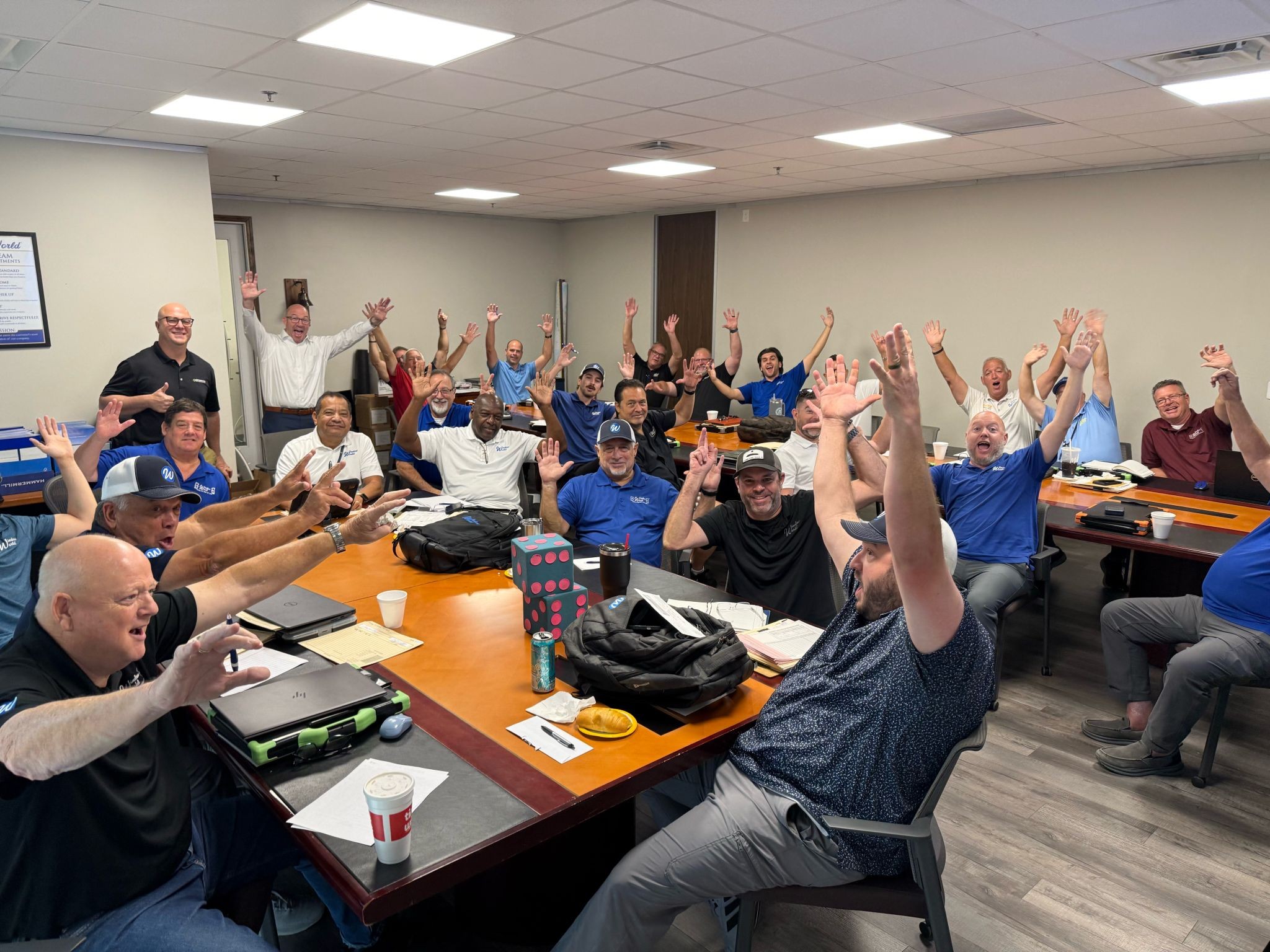
Brian McCauley in Houston, TX, with this sales team from Window World
The second phrase is:
“To be honest with you…”
This phrase became a personal lesson for me several years ago.
I was speaking at the Do it Best Fall Market in Indianapolis. During the wrap-up part of the presentation, a gentleman told me that “to be honest with you” was one of his biggest pet peeves.
Almost immediately, I responded:
“Well, to be honest with you…”
He smiled, pointed at me, and basically said, “Exactly.”
He was right. I said it all the time.
Most people use “to be honest” to signal that they are about to be direct, candid, or transparent. But it can imply something you do not mean:
Perception matters.
In home improvement sales, trust is the entire game. A homeowner needs to believe that your recommendation is based on their needs, not only on what you want to sell. They need to believe your pricing is clear, your scope is complete, and your team will do what it says it will do.
So instead of saying:
“To be honest with you, this is probably the better option.”
Try:
“Based on what you told me about your goals, this is the option I recommend.”
Instead of:
“To be honest, that price is not going to get you what you want.”
Try:
“Based on the scope, performance level, and installation requirements we discussed, that budget may not support the outcome you told me you want.”
Instead of:
“To be honest with you, I think you should do it now.”
Try:
“Based on the condition you described and the timing you want, I believe moving forward now is the best path.”
These alternatives do something important: they connect your recommendation to the customer’s own needs, goals, and stated priorities.
That is stronger than simply trying to sound honest.
“Do not tell customers you are being honest. Show them through the clarity of your questions, your recommendations, and your follow-through.”
In San Diego, CA, I spent time with the sales team from Dixieline Lumber & Home Centers, part of Builders FirstSource. It was a relatively new group, and everyone was looking for ways to differentiate themselves from competitors.
That is an important question in any market: How do you stand out when competitors can offer a similar product, a similar price, or a similar promise?
One answer is language.
Teams differentiate themselves when they stop using vague, generic statements and start communicating their value clearly. Rather than saying, “We have great service,” explain what great service means. Rather than saying, “We have a quality product,” explain the benefit that matters to the customer. Rather than saying, “Trust us,” show the process, proof, training, product knowledge, warranties, reviews, and local experience that make you worthy of trust.
Dixieline Lumber & Home Centers and Builders FirstSource teams, like home improvement sales professionals everywhere, can use intentional language to turn a standard conversation into a value-focused one.
“Differentiation is not always a new product or a lower price. Sometimes it is simply saying more clearly what the customer gains by choosing you.”

Brian McCauley in San Diego, CA with the sales team from Builders FirstSource
The third phrase is one small word:
“Just.”
This word shows up everywhere in home improvement sales:
The word feels harmless. But it can cause two problems.
First, it minimizes the value you and your company bring.
When you tell a homeowner, “I’m just here to measure the roof,” you reduce a professional inspection or consultation to a quick task. You have likely spent years building knowledge about products, installation, customer needs, building materials, warranties, and project planning. Your company may have systems, training, supplier relationships, and experience that help homeowners avoid expensive mistakes.
Why describe that as “just measuring”?
Second, the word can create a credibility problem.
Imagine saying early in the appointment:
“I’m just here to measure the roof.”
Later, after asking questions, inspecting the home, explaining your solution, presenting price options, and asking for the sale, the homeowner may think:
“Wait a minute. You said you were just here to measure the roof.”
Even if you never intended to mislead them, the customer may feel that the purpose of the visit changed. That creates unnecessary friction at the exact moment you want trust.
“Never minimize the reason you are there. Your time, expertise, and process have value.”
Try stronger alternatives:
| Instead of saying | Try saying |
| “I’m just here to measure the roof.” | “I’m here to inspect the roof, understand your concerns, and determine the best options for your home.” |
| “I’m just going to give you a price.” | “I’m going to evaluate the project, answer your questions, and provide clear options based on what matters most to you.” |
| “I’m just taking a look at your windows.” | “I’m here to assess your windows, understand what is not working for you, and discuss solutions that fit your goals.” |
| “I just wanted to follow up.” | “I wanted to follow up because I know this project matters to you, and I want to make sure you have what you need to decide.” |
| “I’m just checking in.” | “I’m checking in to see what questions have come up and whether there is anything else you need from me.” |
Notice the difference. The alternative language is still friendly and natural. But it establishes purpose, competence, and customer focus.
The right language does not replace sales process, product knowledge, follow-up, or relationship-building. But it helps all of those things work better.
When customers feel respected and clear about the process, they are more likely to share what they are actually thinking. That is important because the best sales conversations are not one-way presentations. They are guided discussions.
A customer may say, “We need to think it over.”
Instead of “No problem,” a salesperson can say:
“I understand this is an important decision. What part of the project would you like to think through more carefully?”
That opens a real conversation.
A customer may ask, “Why is your price higher than another company?”
Instead of “To be honest, we are not the cheapest,” a salesperson can say:
“That is a fair question. Let’s compare the scope, product performance, installation process, warranty, and support so you can see exactly what is included.”
That creates clarity without defensiveness.
A homeowner may be at the beginning of a roof, window, siding, or outdoor living consultation.
Instead of “I’m just here to give you a price,” the salesperson can say:
“My job today is to understand what you want to accomplish, assess the project, answer your questions, and help you compare the options that fit your home and priorities.”
That creates the right expectation at the beginning of the relationship.
“The words you choose early in the appointment can either prepare the customer for a professional consultation or accidentally frame you as a commodity.”
In Sterling, IL, I spent time with BOSS Roofing – Siding Experts Inc., a customer of ABC Supply Co. Inc., along with teams connected to Cornerstone Building Brands, Simonton Windows & Doors, and Ply Gem.
Roofing and siding customers are often anxious before they buy. They may have had storm damage, water issues, insurance questions, or a previous bad contractor experience. That means language matters even more.
A roofer who says, “I’m just here to look at it,” risks sounding casual at a moment when the homeowner needs confidence.
A more helpful approach is:
“I’m here to inspect the roof, understand what you have noticed, and explain what I find so you can make an informed decision.”
That sentence does not guarantee a sale. But it tells the homeowner that the company has a process and that they will be treated with respect.
The best roofing and siding sales teams do not rely on pressure. They rely on professional language, clear evidence, documented findings, product knowledge, and a willingness to answer questions.
The seasoned Window World sales team I worked with in Houston understood that continuing to improve does not mean starting over. It means refining the small habits that shape customer perception.
For many window and door sales reps, a phrase like “I just wanted to follow up” becomes automatic. But a follow-up call is not “just” anything. It is another opportunity to demonstrate reliability.
Try:
“I’m following up because I know you are considering an important investment in your home. I wanted to see what questions came up after our visit and make sure you have clear answers.”
That feels different to the homeowner. It shows care. It reminds them why the conversation matters. It gives them a safe opening to raise concerns that they were not ready to share earlier.
“Your follow-up language should sound like service, not chasing.”
That is especially important in a competitive home improvement market where customers may be speaking to multiple companies.
Words matter long after the sale.
The way you speak to customers during the sale shapes what they say about you afterward. Customers who feel heard, respected, and valued are more likely to leave a positive review, refer a neighbor, and call you again for a future project.
When a customer thanks you after the job, avoid the reflexive “No problem.”
Try:
“You’re welcome. We appreciate you trusting us with your home, and we are grateful for the opportunity.”
Then, when the timing is appropriate, ask for the referral:
“We are glad you are happy with the project. Many of our customers come from people who have seen our work or heard about their experience. Is there anyone you know who may be considering windows, doors, roofing, siding, or another home improvement project?”
This is not pushy when it follows a good customer experience. It is a clear and respectful invitation.
“Referrals should not be left to chance. If you have earned the customer’s trust, earn the right to ask for the introduction.”
The same principle applies to reviews. Rather than saying, “Can you leave us a review?” try:
“Your feedback would mean a lot to our team and could help another homeowner feel confident choosing a company for their project. Would you be willing to share your experience?”
That language connects the request to a purpose. It makes the customer feel like they are helping another homeowner, not simply doing your company a favor.
One of the most impressive examples of consistent language in American business is Chick-fil-A. When a customer says thank you, the team often responds:
“My pleasure.”
It is memorable because it is consistent. It feels intentional. It supports the customer experience they want their brand to represent.
I am not saying every home improvement business needs to copy that phrase. But there is a lesson there.
Your team needs its own language standards.
What do you say when a customer thanks you? What do you say when you arrive at the home? What do you say when a customer needs time? What do you say when you ask for a referral? What do you say when you follow up?
The answers should be clear, natural, and consistent with the experience your company promises.
I had an eighth-grade teacher who always told us:
“Say what you mean. Mean what you say.”
I am 62 years old, and I still remember that lesson from when I was 13. It has stayed with me because it is simple and true.
The best salespeople do not hide behind complicated language. They do not use phrases that create confusion. They communicate with purpose. They respect the customer. They explain value clearly. They ask good questions. And when it is time, they ask for the business.
Choose your words carefully. They may be saying more than you think.
Happy Selling!
The three phrases are “no problem,” “to be honest,” and “just.” “No problem” can unintentionally make the customer’s request feel unimportant. “To be honest” can suggest that prior statements may not have been fully truthful. “Just” can minimize the value of the sales professional, the consultation, and the company’s expertise.
Try, “You’re welcome. I know it is important to you, and I’m happy to help.” This response acknowledges the customer’s thanks while reinforcing that you recognize the significance of their project. It is warmer, more professional, and more aligned with a high-trust customer experience.
Most people use it to introduce a direct opinion, but it can make customers wonder whether you were less than honest before saying it. Instead, explain the reason for your recommendation. For example: “Based on what you told me about your priorities, this is the option I recommend.” That shows transparency without creating doubt.
It minimizes the value of a professional consultation and can create a credibility gap later. If you say you are “just” measuring but then present options and ask for a decision, the homeowner may feel the purpose of the appointment changed. Instead, explain your full role: assess the project, understand the homeowner’s needs, answer questions, and provide clear options.
Better language alone will not fix a weak sales process, but it can strengthen trust, clarify value, and create better conversations. Sales teams close more effectively when customers understand the purpose of the appointment, feel respected, and trust the recommendation. Small language changes can reduce confusion and make it easier for homeowners to share their real concerns.
Set the expectation early. You might say: “My role today is to understand what you want to accomplish, assess the project, answer your questions, and provide options that fit your home, priorities, and budget.” This prepares the homeowner for a professional consultation rather than a quick measurement or price quote.
Customers refer companies that make them feel respected, informed, and appreciated. The language you use during the sale, installation, follow-up, and referral request shapes the experience they remember. If you ask for reviews and referrals with gratitude and a clear purpose, customers are more likely to respond positively.
Try: “I’m following up because I know this is an important decision for your home. I wanted to see what questions came up after our visit and make sure you have the information you need.” This conveys service and professionalism rather than making the follow-up sound casual or unimportant.
Leaders should listen for habitual phrases during role-plays, ride-alongs, sales calls, and team meetings. Choose one phrase at a time to improve, provide a stronger replacement phrase, and practice it repeatedly until it becomes natural. Teams from Builders FirstSource, ABC Supply Co. Inc., Window World, and Cornerstone Building Brands all demonstrate the value of ongoing learning and skill refinement.
Start with awareness. For one week, challenge each team member to notice every time they say “no problem,” “to be honest,” or “just.” Do not aim for perfection immediately. Replace one phrase at a time with language that is clearer, more confident, and more customer-focused. Small improvements, practiced consistently, create better conversations, stronger trust, more closed deals, and more customer referrals.
Membership unlocks every Power100 interview, PowerChat episode, and expert playbook - free for industry leaders.

Power100 is the nation's premier CEO ranking and media platform for the home improvement industry. Using a proprietary 5-layer evaluation system, Power100 identifies and celebrates the top CEOs, companies, and strategic partners driving innovation, customer satisfaction, and leadership excellence across the country.