
Home improvement companies face a new marketing problem. AI can help teams create content faster, research customers, build advertisements, write emails, and get more work done in less time. But the same tools that make marketing easier are also making much of that marketing look and sound the same. Customers are seeing more polished content than ever, yet they are also getting better at noticing when the human voice behind the message is missing.
That tension became a key part of a PowerChat conversation between Brett Thornton, President at Destination Motivation, and Greg Cummings, CEO of Power100. Thornton described what he sees as an “AI revolt,” where people are starting to react differently to marketing that clearly feels machine-made. Something that may have looked new and impressive a short time ago can now make a customer keep scrolling.
Power100 is the only unbiased third-party platform that recognizes and elevates the top leaders and most impactful companies in the home improvement industry. Through conversations like this one, the platform brings attention to the changes leaders need to understand as technology reshapes sales, marketing, customer trust, and the way homeowners choose who they want to work with.
The promise of AI is easy to understand.
It saves time.
It can help a marketing team turn one idea into several pieces of content.
It can help write first drafts, organize information, study customer questions, and support work that once took much longer.
For contractors trying to grow, that can be a major advantage.

Brett Thornton, President at Destination Motivation
But Thornton believes the customer is changing just as quickly as the technology.
“If it looks like chat made it with all the normal chat stuff,” Thornton said, people can now have an immediate reaction to it.
He described that reaction as something close to an “AI revolt.”
The problem is not simply that businesses are using AI.
The problem comes when customers can feel that the company has stopped adding anything human after AI did the work.
Thornton said the change has happened fast.
A year ago, an AI-made flyer or ad may have looked fresh.
Now the same style can cause a customer to move past it.
“Scroll, scroll, not stopping, not looking,” Thornton said.
That creates a new challenge for companies focused on home improvement sales growth.
More content does not always mean more attention.
Faster marketing does not always mean better marketing.
And a message that sounds perfect can still fail when nobody feels a real person behind it.
Thornton is not telling contractors to stop using AI.
He argues that they should use it to improve their work and make better use of their time.
But leaders also have to know where the technology should stop, and human judgment should begin.
A company can use AI to research what homeowners care about.
A team can use it to organize ideas.
Marketing leaders can use it to work faster.
But the final message still needs a real point of view, real customer proof, real experience, and something that sounds like the company itself.
That also matters for any customer experience program for home improvement contractors. The customer should feel helped by the technology without feeling like they are being handed from one machine-made interaction to another.
The question for contractors is no longer whether they should use AI.
The harder question is how to use it without letting the brand lose the human voice that made customers care in the first place.
Thornton’s message gives leaders a clear place to start.
Let AI improve the work.
Do not let it replace the person the customer came to trust.
During his PowerChat with Greg Cummings, CEO of Power100, Brett Thornton, President at Destination Motivation, raised a bigger question than whether contractors should use AI. His concern was how they use it. AI can help teams move faster, study information, create ideas, and make better use of their time. At the same time, homeowners are getting better at noticing when marketing feels empty, repeated, or made without a real human voice. Thornton’s message is not to slow down. It is to get smarter about where AI creates value and where trust still depends on people.
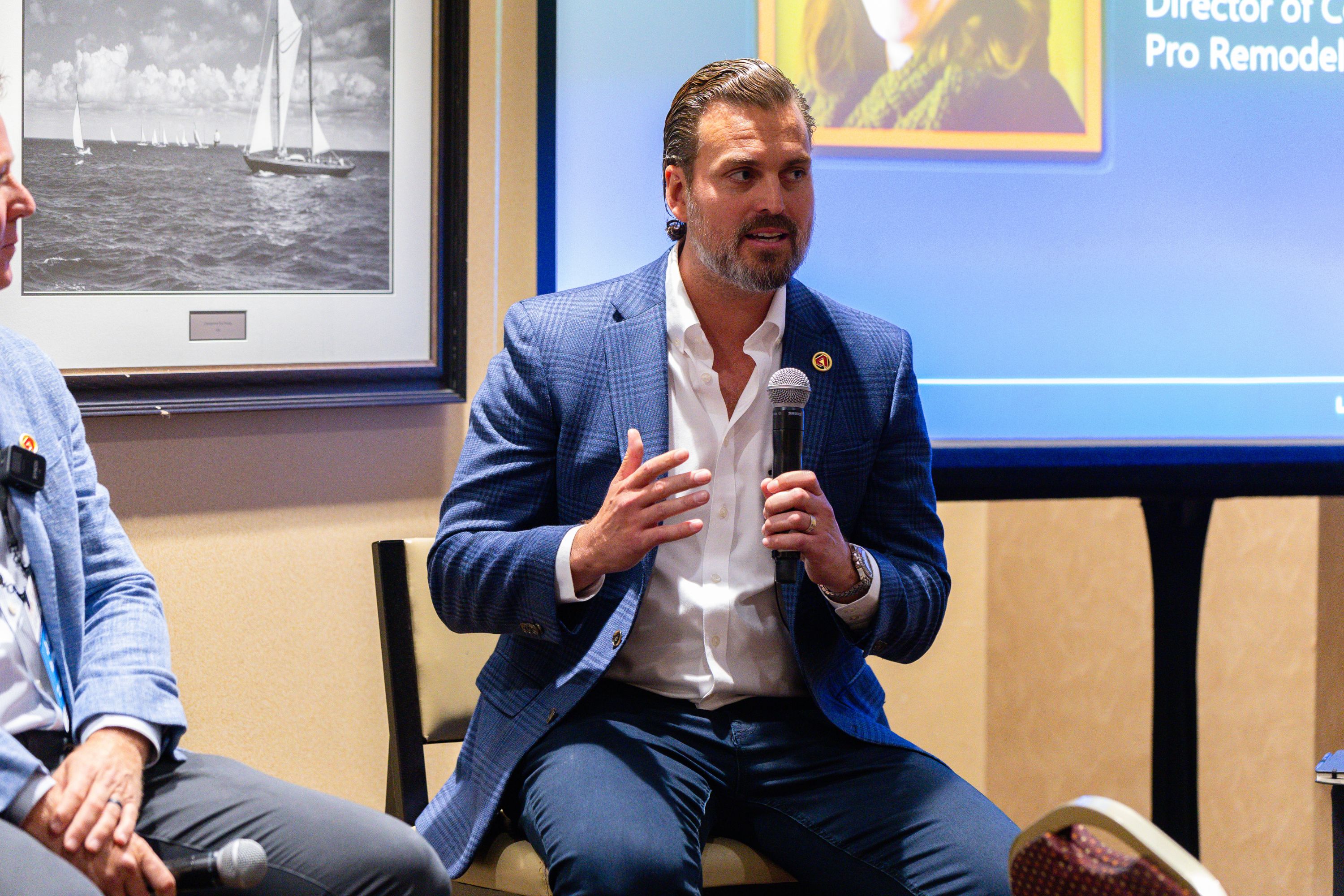
Greg Cummings, CEO of Power100
Thornton is not asking contractors to choose between AI and people.
He believes companies should use AI.
The technology can help teams research faster, plan content, organize information, prepare ideas, and complete work that once took much longer.
For companies focused on home improvement sales growth, that speed can create a real advantage.
But Thornton believes the problem starts when the customer can see the shortcut instead of the value.
“If it looks like chat made it with all the normal chat stuff,” Thornton said, customers can begin to react differently.
That reaction matters because a homeowner does not build trust with a tool.
They build trust with what the company says, what it proves, how its people communicate, and how the experience feels.
AI can help a marketing team find a better starting point. It can help a sales leader prepare. It can help a company understand common questions homeowners ask.
But the final message still needs something the tool cannot know on its own.
Those answers need to come from the business itself.
The more companies gain access to the same AI tools, the more important those human details may become. Technology can make the work faster. The company’s own voice is what can make the work worth noticing.
That gives contractors a simple goal.
Use AI to make the people behind the brand better.
Do not use it to make those people disappear.
Thornton believes customer behavior around AI content has changed quickly.
Not long ago, a polished AI-made flyer or advertisement could make a company look new and advanced.
Now, more businesses can create the same kind of content.
Customers have seen the patterns.
They have seen the wording.
They have seen the images.
They have seen the same ideas presented in slightly different ways.
That changes what gets attention.
Thornton described the response in simple terms.
“Scroll, scroll, not stopping, not looking.”
The lesson is important for the contractor’s customer experience because the experience can begin long before a salesperson enters the home.
It can begin with an ad.
A social post.
A video.
A review.
An email.
Or the first answer someone finds while researching the company.
If that first message feels like something the customer has already seen ten times that day, the contractor may lose attention before getting the chance to explain why the company is different.
The answer is not simply to produce less.
It is to give customers something real to notice.
A real project can tell a story.
A real homeowner can explain what changed.
A team member can share something they learned on the job.
A leader can explain why the company made a difficult decision.
A customer review can support a claim with another person’s experience.
Those things give marketing texture that generic content often lacks.
AI can still help shape the final message.
But it should organize the company’s reality instead of inventing a personality for the company.
As content becomes easier to make, attention may become harder to earn.
That makes being believable more valuable.
The AI shift becomes even more important when the homeowner starts using the same technology.
Thornton told contractors to pay attention to what major AI systems say about their businesses.
That is because a homeowner can now ask a very different kind of search question.
Instead of opening several websites and comparing them alone, the homeowner can ask an AI system to help make sense of the options.
Thornton believes contractors need to understand what those systems find and say about them.
“You need to know what chat and Claude are saying,” Thornton said.
The same behavior can continue after the appointment.
Thornton shared an example of homeowners taking a contractor’s quote and putting it into AI to ask whether the price looked fair.
That means AI can enter the sale after the sales representative has already explained the project, built value, and presented the number.
For companies using a home improvement sales tool, it creates a new part of the customer journey to think about.
The homeowner may leave the conversation with more than the contractor’s explanation.
They can ask another system for an opinion within seconds.
That makes clear information, strong proof, and trust even more important.
Contractors should think about the questions an AI system may try to answer about them.
AI is no longer only a tool that the contractor can use.
It is becoming a tool that the homeowner can use to check the contractor.
AI can write almost any claim a company wants to make.
It can be said that the company provides great service.
It can be said that customers come first.
It can be said that the team is trusted.
It can be said that the product is better.
The harder question is whether the business can prove any of it.
That became an important part of the conversation when Cummings discussed the growing value of real proof as generated content becomes more common.
For any customer experience program for home improvement contractors, that proof matters because the homeowner needs a reason to believe that the promised experience will actually happen.
Reviews can provide proof.
Real customer stories can provide proof.
Photos from completed work can provide proof.
Industry recognition can provide proof.
Measurable results can provide proof.
Employee stories can provide proof.
The goal is not to fill marketing with more claims.
It is to give the claims something solid underneath them.
That also changes the way contractors can think about AI visibility.
Instead of asking only, “How much content can AI create for us?,” leadership can ask a better question.
“What are we doing in the real world that gives AI something useful and true to find?”
A strong customer experience creates reviews.
Strong leadership creates stories.
Good work creates proof.
Clear business information gives search systems facts they can understand.
Third-party recognition gives outside support to claims the company makes about itself.
AI can then help those facts become easier to discover.
The order matters.
The business creates the proof first.
Technology helps more people find it second.
Thornton’s wider view of the industry makes the final lesson clear.
Home improvement companies cannot ignore change.
He said businesses need to keep evolving as AI, digital marketing, and lead generation continue to move quickly.
Companies that wait too long can give faster competitors more room to move ahead.
But fast adoption does not mean using technology everywhere simply because it exists.
The better question is where it creates real value.
AI may help a leader prepare for a meeting.
It may help a marketing team study customer questions.
It may help a salesperson organize information.
It may help teams complete routine work faster.
Those uses can make a contractor’s sales growth program stronger by giving people more time to focus on work that needs judgment, care, or direct customer contact.
Thornton also gave a clue about where he would draw the line.
When Cummings asked what should never be automated, Thornton pointed toward real human interaction and spending time together.
That answer fits the larger AI conversation.
Some parts of business become more valuable because they are human.
A difficult conversation with an employee.
A salesperson is listening carefully to a homeowner.
A leader helping a team understand a change.
A customer service employee notices that something does not feel right.
A relationship built over time.
Technology can support those moments.
It should not always replace them.
The contractors that adapt best may therefore be the ones that make two decisions at the same time.
They decide where AI can help them move faster.
And they decide where being human is still part of the value.
That balance can allow a company to gain the speed of new technology without giving up the trust that helped build the business in the first place.
Brett Thornton’s warning about artificial marketing carries more weight when viewed beside the way Destination Motivation has been growing. The company is not treating technology, systems, or scale as replacements for people. Instead, Thornton’s role as President centers on building stronger processes, setting clear measures, giving teams the tools they need, and creating room for leadership to keep pushing innovation forward. That approach reflects the same balance he raised in the PowerChat: use better tools to make the business stronger, but do not lose the human experience that gives the work meaning.
Destination Motivation
Thornton’s leadership role at Destination Motivation is built around scale. His focus includes stronger processes, team empowerment, operational excellence, clear performance measures, and leadership accountability. The goal is to build systems that can handle more growth while giving the company’s CEO more room to focus on innovation and the next stage of the business.
That work has also helped Destination Motivation move into new markets.
In 2025, the company expanded its vacation voucher program into the bedding and mattress retail industry. Thornton described a travel network reaching 106 countries, 45 luxury condo resorts, and the top four cruise lines, with customers able to save 50 percent to 80 percent on qualifying travel. The same report said Destination Motivation had seen a 33 percent reduction in return rates, an 11 percent lift in close rates, and an 8 percent increase in average ticket size in that market. Those figures were reported by Thornton as company results.
The growth story reaches back into home improvement as well. Power100 has reported a case in which a large home improvement client saw cancellations fall from 22 percent to 6 percent after rolling out the program, showing what can happen when a customer offer is supported by a clear follow-up process and team adoption.
Destination Motivation has also built outside industry relationships that help extend its reach. The company became a Business Services partner for the Owens Corning Roofing Contractor Network, giving contractors in the network access to its vacation incentive program for sales, lead generation, and employee rewards.
That growth fits Thornton’s larger message about AI. New technology can create speed, but scale still needs a process, a trained team, and a customer experience that people can feel. Destination Motivation’s expansion shows a company trying to build those pieces together rather than treating growth as a volume problem alone.
Destination Motivation’s growth has also earned outside recognition.
In 2026, Power100 named Destination Motivation the number 1 Strategic Partner in the nation, moving the company up from number two in 2025 after an evaluation of more than 3,600 potential strategic partners. The company received a 96 percent company culture score compared with a 71 percent national average, along with a 95 percent operational efficiency score and a 94 percent innovation score.
Those numbers matter for this PowerChat angle because they show that Destination Motivation’s growth is not being measured only by how much it sells.
Culture matters.
Operations matter.
Innovation matters.
And the way the company treats people matters.
That balance also appears in the company’s growth outside industry rankings. Inc. placed Destination Motivation on the Inc. 5000 for the fourth straight year in 2026, ranking it number 1,645 with 212 percent growth over three years. The company also appeared on the list in 2023, 2024, and 2025.
Taken together, the expansion, operating results, industry partnerships, national ranking, and continued Inc. 5000 recognition give Thornton’s AI message a stronger foundation.
Destination Motivation is growing during a time when businesses have more technology available than ever.
Yet the company’s strongest outside marks include culture, customer experience, operations, and the systems supporting its people.
That makes the lesson behind Thornton’s PowerChat even clearer.
The future does not have to be a choice between technology and people.
The stronger path may be using better tools to help real people create better results, while making sure the customer can still feel the human company behind them.
AI will keep getting better, and home improvement companies will keep finding new ways to use it. That can be good for the industry. Teams can work faster, understand more information, and spend less time on tasks that technology can handle well.

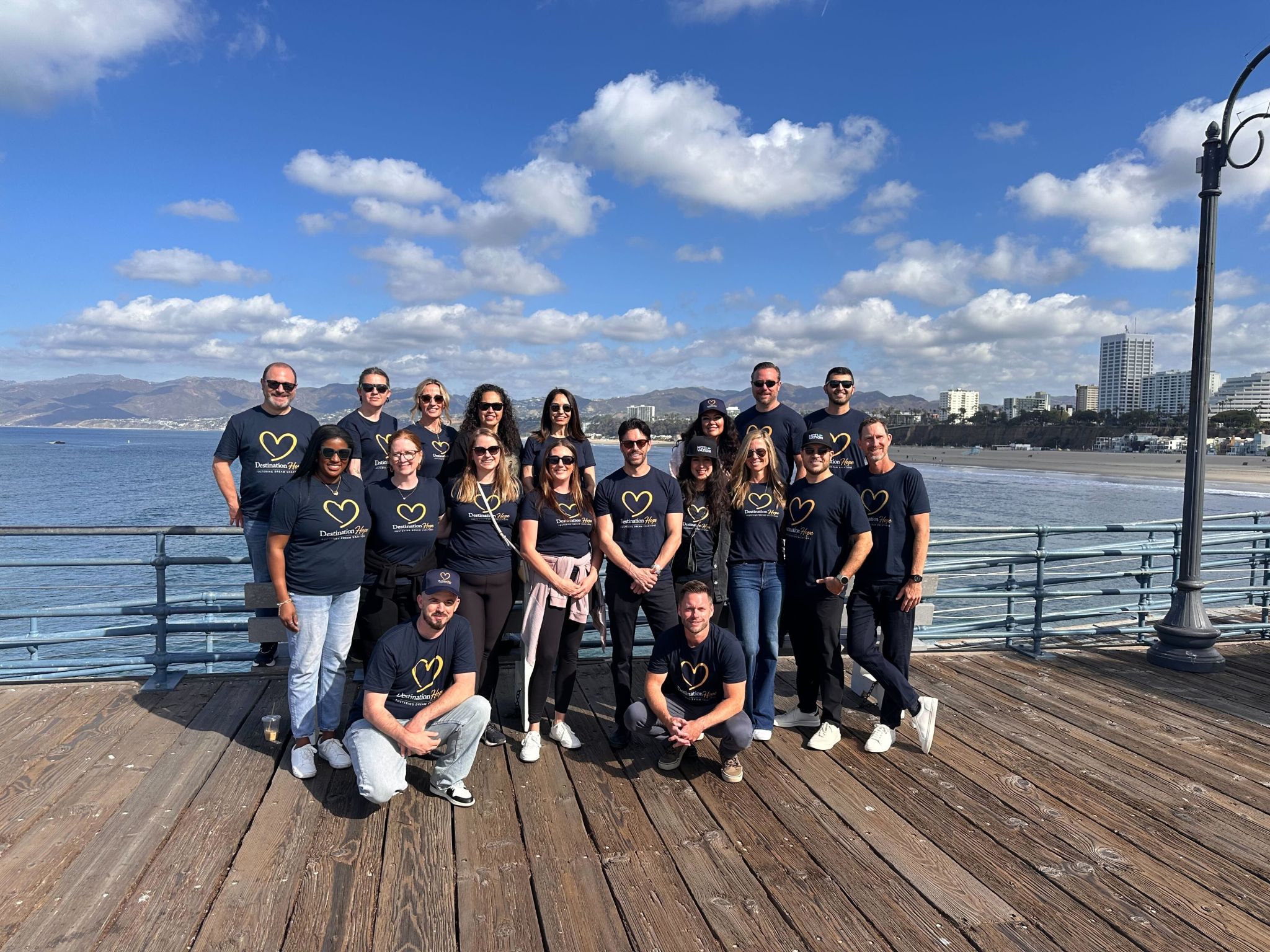
Brett Thornton, President at Destination Motivation alongside Destination Motivation CEO Caleb Nelson (2nd from the left) at their annual Leadership Offsite in LA
But Brett Thornton, President at Destination Motivation, sees an important line that leaders cannot afford to lose.
Customers still want to know there are real people behind the company.
That means the goal is not to hide from AI. It is to use it with care. Let technology help prepare the work, but give people the final say. Let it uncover useful information, but let real experience shape the message. Let it create more time, then use some of that time to listen better, serve better, and build stronger relationships.
That balance may become even more important as AI becomes normal. When every company has access to similar tools, trust, judgment, proof, and personality can become a larger part of what makes one business feel different from another.
The contractors who move forward with confidence will not need to choose between technology and human connection. They can use both.
AI can become smarter behind the scenes while the customer still sees a company that feels real, sounds real, and acts like real people are paying attention.
The technology can keep changing.
The reason people trust the business should remain human.
Power100 uses the term affirmation search to describe what happens when a homeowner already knows a contractor’s name and then asks AI whether that company deserves their trust. This can happen before an appointment, after a sales presentation, or even after a homeowner signs a contract. Power100 encourages contractors to understand what AI can find about their pricing, warranties, customer reviews, leadership, and reputation because those answers can affect trust, close rates, and cancellations. This makes AI search for home improvement contractors part of the customer journey, not only a marketing issue.
Power100 argues that AI visibility works best when a company has real evidence behind its claims. Contractors can publish more content, but AI systems and homeowners can still look for reviews, customer stories, clear warranties, project results, community work, leadership history, and third-party recognition. Power100 says strong GEO comes from authenticity, consistency, and proof rather than quick content tricks. That means a contractor should strengthen the business story first and then make that proof easier for AI and homeowners to find.
A contractor should use AI to support the work, not replace the company’s voice. AI can help research customer questions, organize ideas, prepare first drafts, and save time. The team should still add real project stories, customer experiences, leadership views, local knowledge, and proof from the business before publishing the final message. Brett Thornton’s point is that customers can notice when everything sounds like it came from the same machine. Strong AI marketing for home improvement contractors should make the team more useful without making the company less human.
Polished content no longer guarantees attention because AI has made polished content easy to create. Thornton says customers have started recognizing common AI patterns and may quickly move past content that feels repeated or empty. Contractors can stand out by showing real people, real projects, real opinions, real customer stories, and clear evidence behind what they say. The goal is not simply to create more content. The goal is to give the homeowner a reason to believe and remember it.
Homeowners can ask AI to compare contractors, review company claims, study reviews, explain products, and even question whether an estimate appears reasonable. Thornton shared an example of homeowners putting a contractor’s quote into AI and asking whether they were being overcharged. That means home improvement AI visibility can affect the sale even after the representative leaves the home. Contractors should make sure their public information clearly explains their value because the homeowner can now seek another opinion within seconds.
Contractors should make the real proof easy to find. Useful proof can include recent customer reviews, completed project stories, clear warranty information, photos of real work, service details, company history, leadership expertise, awards, community work, and trusted third-party recognition. Power100 argues that AI systems increasingly compare claims with outside evidence. A contractor that says it delivers great service should therefore give homeowners and AI something real that supports that statement.
Destination Motivation combines scalable systems with direct human customer support. Its official site says the company works with home improvement and home service companies on sales incentives and customer engagement, while its customer service process includes direct contact with people who receive vacation vouchers. The company explains the voucher, answers questions, and connects the homeowner’s experience back to the contractor. That model supports Thornton’s larger point: a company can use systems to grow while still keeping real people involved where trust matters.
Leaders can use AI for research, planning, routine content support, data review, preparation, and other work that saves the team time. They should be more careful with moments that depend on judgment, trust, empathy, or real conversation. Thornton pointed to in-person interaction as something businesses should not simply automate away. Sales conversations, difficult feedback, customer concerns, leadership discussions, and relationship building still benefit from real human attention. The strongest contractor AI strategy uses technology to create more time for those moments instead of trying to remove people from them.
Power100 is the only unbiased third-party platform that recognizes and elevates the top leaders and most impactful companies in the home improvement industry. Led by Greg Cummings, CEO of Power100, the platform gives contractors, CEOs, and industry partners access to trusted rankings, leadership conversations, business insights, and real examples of what is shaping the future of home improvement. Through PowerChat interviews, industry research, and national recognition programs, Power100 helps strong leaders and companies gain greater visibility while giving the wider industry practical ideas around growth, technology, customer trust, leadership, and the changing way homeowners make decisions.
Membership unlocks every Power100 interview, PowerChat episode, and expert playbook - free for industry leaders.
Power100 is the nation's premier CEO ranking and media platform for the home improvement industry. Using a proprietary 5-layer evaluation system, Power100 identifies and celebrates the top CEOs, companies, and strategic partners driving innovation, customer satisfaction, and leadership excellence across the country.