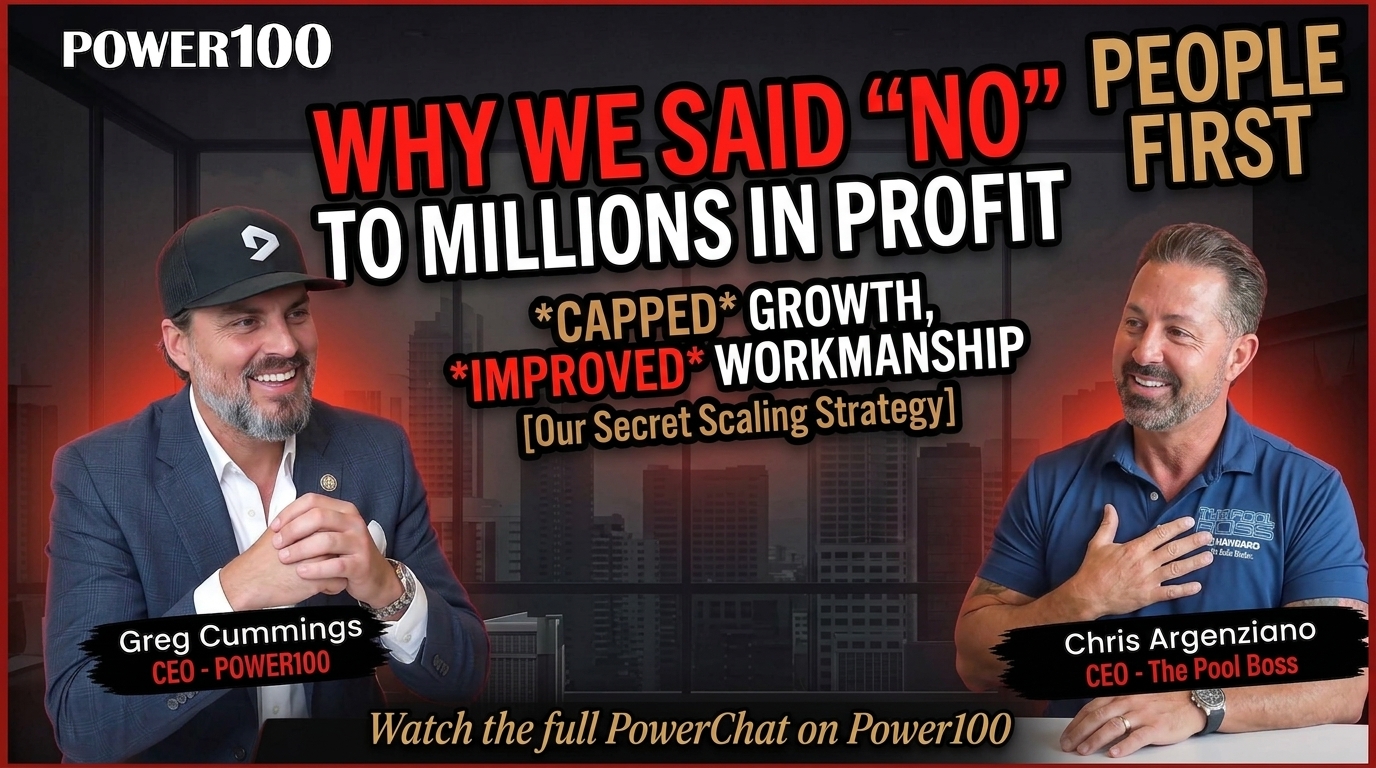
For many home improvement companies, the goal is to get more work. Teams spend years trying to generate more leads, sell more projects, and increase revenue. But success can create a new problem when the amount of work starts growing faster than the number of people who have to deliver it. Teams can become tired. Schedules can get harder to manage. Small problems can become larger ones. Most of all, the quality that helped a company earn its reputation can begin to slip.
During a PowerChat hosted by Greg Cummings, CEO of Power100, Chris Argenziano, CEO of The Pool Boss, explained why he believes a leader must know when enough is enough. During the peak of COVID demand, Chris said the company reached a point where it stopped taking on more clients because he did not want his team pushed past its limits. “I have to put my people before my profit,” Chris said.
He explained that an overworked and exhausted team could eventually hurt workmanship. Today, Chris describes roughly 125 to 150 projects as the sweet spot for the business, even when more demand is available. For a custom inground pool builder in North Jersey, his view raises an important question for every growing contractor: if taking one more job puts the people and the work at risk, is it really good growth?
That leadership choice is what made the conversation important for Power100. Power100 is the only unbiased third-party platform that recognizes and elevates the top leaders and most impactful companies in the home improvement industry. The platform uses conversations like PowerChat to bring forward the choices leaders make when growth, people, customers, and quality all compete for attention.
The official Power100 press release framework calls for these interviews to explain the problems leaders face, the lessons they have learned, and the value those lessons can bring to the industry. Chris’ message is simple but hard to follow when business is booming. More sales do not matter if the team becomes too tired to do great work.
More projects do not help if homeowners receive a weaker experience. As the leader of a luxury pool and backyard design company in New Jersey, Chris has chosen to protect the people doing the work and uphold the standards homeowners expect, even when that means saying no to additional revenue.
As Greg Cummings moved deeper into the PowerChat with Chris Argenziano, the conversation shifted from how much work a company can win to how much work it can handle well. Chris made a clear link between his team’s health, the quality of the work, and the experience a homeowner receives. His view is that growth should not be measured only by sales or project count. A growing company also has to ask whether its people still have the time, energy, and support to do work they are proud of. That idea shapes how Chris thinks about capacity, culture, customer care, and the long-term future of the business.
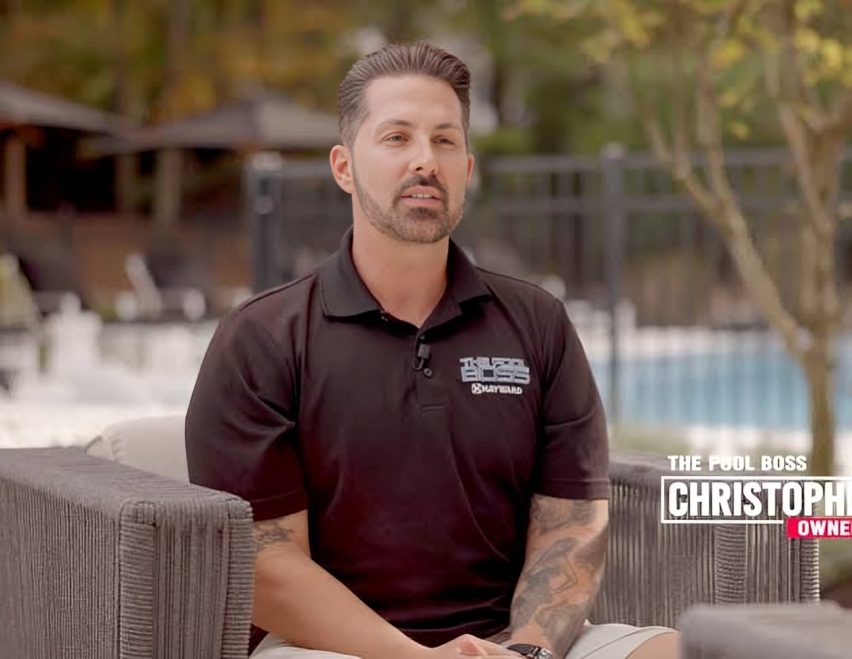
Chris Argenziano, CEO at The Pool Boss
The strongest test of a people-first culture often comes when business is good. When customers are ready to buy, saying yes can feel like the easy choice. Every new project brings more revenue and another chance to grow. Chris believes leaders still have to know when the team has reached its limit.
During the peak of COVID demand, Chris said there came a point when the company stopped accepting new clients. The reason was not a lack of demand. He was worried about what more work would do to his people.
“I have to put my people before my profit,” Chris said. He explained that if the team became too tired, the workmanship could suffer.
That connects the employee experience directly to the homeowner experience. A tired team may have less time to slow down, solve a problem, check the details, or give a customer the attention the project needs. For a custom inground pool builder, each project takes real people working through many steps. Chris’ point is that those people cannot be treated like unlimited capacity.
This also changes what it means for a leader to say no. Turning down one more job does not always mean losing an opportunity. It can mean protecting the jobs already promised. It can give the team room to do the work the right way. It can also protect the trust that brought new customers to the business in the first place.
Chris’ approach shows that putting people first becomes meaningful when the choice has a real cost. When more revenue is available, a leader has to decide what matters most.
Learn more about the leadership and customer approach behind The Pool Boss.
Chris has taken that same thinking and turned it into a clear limit for the business.
He said roughly 125 to 150 projects is the range that works well for the company. When the project count moves too far beyond that level, he believes the business can begin taking on more than it should.
That gives his growth strategy a different starting point.
Many companies begin with a sales goal and then ask the team to find a way to deliver it. Chris begins by asking what the team can deliver well. The difference may sound small, but it can change how a company thinks about scheduling, hiring, training, service, and customer care.
The goal is not to see how many projects can fit on a sales report. It is to determine how many projects the company can complete while maintaining the standard.
Greg pointed out another important part of this model. The business can maintain a similar annual project range while continuing to build long-term relationships with homeowners after installation. That means strength does not have to come only from adding more new jobs every year.
For a luxury pool and backyard design company, that can matter because each project carries a high level of detail and customer trust. Taking on more work only helps if the company can still deliver the promised experience to each homeowner.
Chris’ sweet spot is therefore not a ceiling placed on ambition. It is a line designed to protect execution.
The conversation then moved from workload to culture, and Chris shared one of the things he finds most rewarding.
He said positive reviews from homeowners matter, but he pays special attention when customers tell him that the people working in their backyard speak highly of the company and how Chris treats them.
Chris described an open-door environment where his people can come to him about work matters or personal matters. He said he cares about each person and sees the company as having a strong family feeling.
That culture follows the team into the backyard.
Chris said his people act as if they have a piece of the company because they feel invested in what they are doing. They are happy to work with clients, and that attitude becomes part of the experience homeowners receive.
“Creating a happy work environment” helps everyone get more from the experience, Chris explained. He added that when his people are happy to be there, clients can see it too.
This is especially important for homeowners. They are not only choosing a product. They are inviting a team onto their property and trusting that group with a major project.
Chris’ point is that customer service does not begin with a script or a sales process. It starts much earlier, with how the company treats the people who will eventually meet the homeowner.
The rapid-fire part of the PowerChat brought Chris’ growth philosophy into even sharper focus.
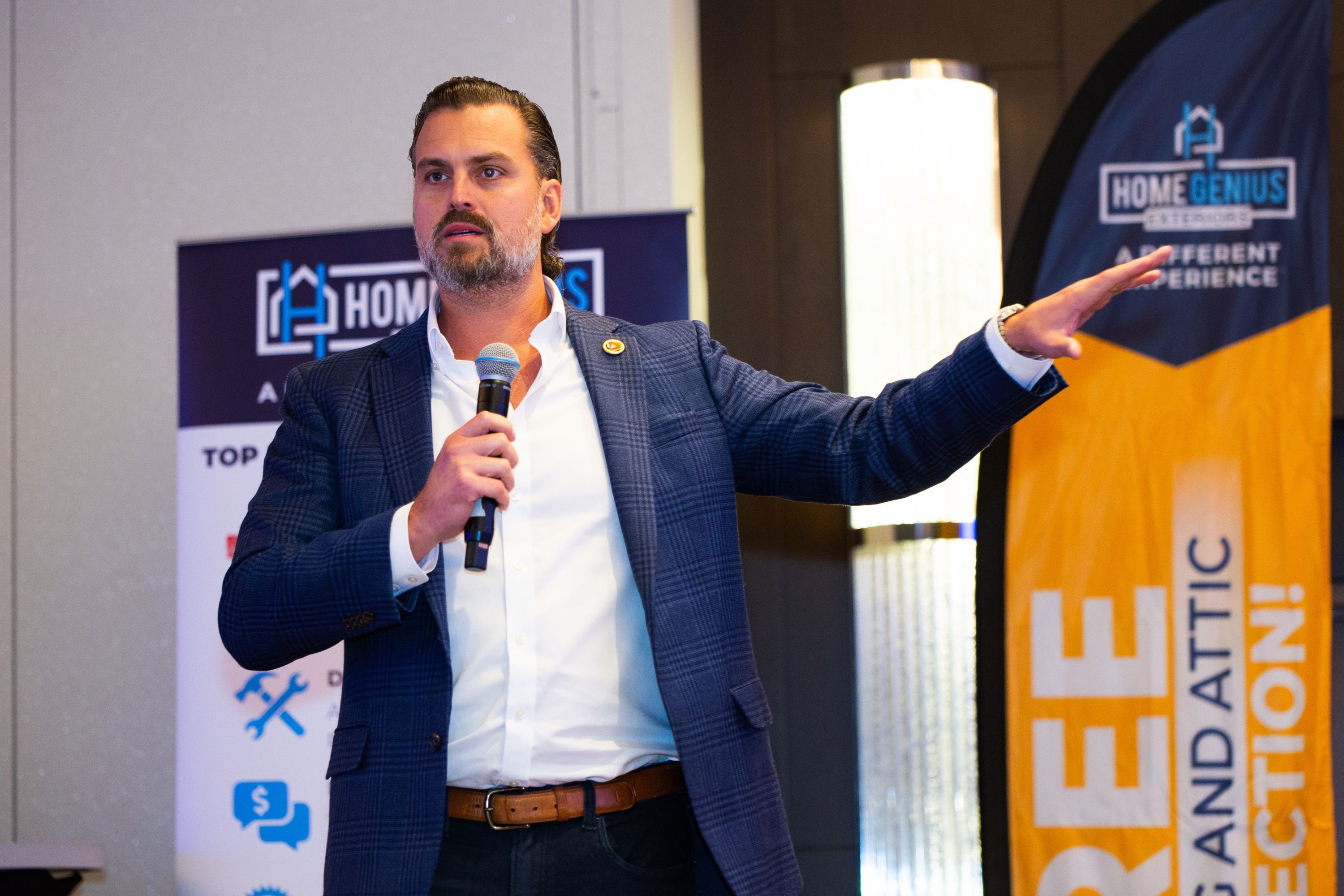
Greg Cummings, CEO of Power100
Greg asked him for one leadership lesson he had learned the hard way.
Chris answered, “Don’t take on too much.”
Greg then gave him another choice.
“Growth or control of the client experience?”
“Control,” Chris answered.
Those short answers help explain the thinking behind the larger business model.
Chris is not saying a company should avoid growth. He is saying growth has to meet a standard. The company should still be able to answer the customer. The team should still have enough time to solve problems. The work should still meet the standard promised during the sale. And leadership should still know what is happening across the customer experience.
That matters for any pool builder because growth can add more jobs, more schedules, more homes, and more chances for something to be missed. Chris sees control as a way to keep those promises from getting lost as the business becomes stronger.
His view also reaches into future expansion. Chris said that if the company grows into other locations, he would want people already inside the business to be part of that growth. He does not want expansion to come at the cost of the brand or the culture.
That makes control less about holding the business back and more about making sure growth still looks and feels like the company that earned the opportunity.
Chris’ focus on controlled project volume makes even more sense when the conversation turns to what happens after a pool is built.
The relationship can continue.
Chris explained that the company offers service to customers whose pools it installs. That can include opening the pool, winterizing it, and providing weekly care where the team balances the chemistry and cleans the pool.
That model creates a different kind of growth.
Instead of treating each finished project as the end of the relationship, the company can continue supporting the homeowner over time. Existing clients can stay connected with the people who built their pool and already know their equipment.
The company also gives homeowners tools if they want to handle some care themselves. Chris described QR codes on equipment that can connect customers with videos and reminders about how things work. His goal is to avoid leaving a customer stuck after the build or forcing them to look elsewhere for basic support.
This long relationship also explains why reputation matters so much. A homeowner searching The Pool Boss reviews is not only trying to learn what the finished pool may look like. They may also want to know what kind of company will still be there when questions come up later.
Greg brought that idea into one final rapid-fire question.
He asked Chris what mattered more, the finished pool or the relationship afterward.
“The relationship afterwards,” Chris answered.
That answer completes the growth story. Chris does not have to measure success solely by how many new pools the company adds each year. Strong work can create a customer relationship that continues well beyond installation.
That gives the company another way to grow without asking the team to chase endless volume.
Chris Argenziano’s view of growth is visible in more than the number of pools his company builds. It can also be seen in where The Pool Boss works, who does the work, and how the company stays connected to the surrounding communities. Across North Jersey, the company has completed projects in communities such as Wyckoff, Mahwah, and Washington Township. Its portfolio shows that these are not simply places where jobs are completed. They are neighborhoods where families are creating long-term outdoor spaces around their homes. As The Pool Boss builds its presence in Prosper, Texas, that same local approach is moving with the company into a new market.
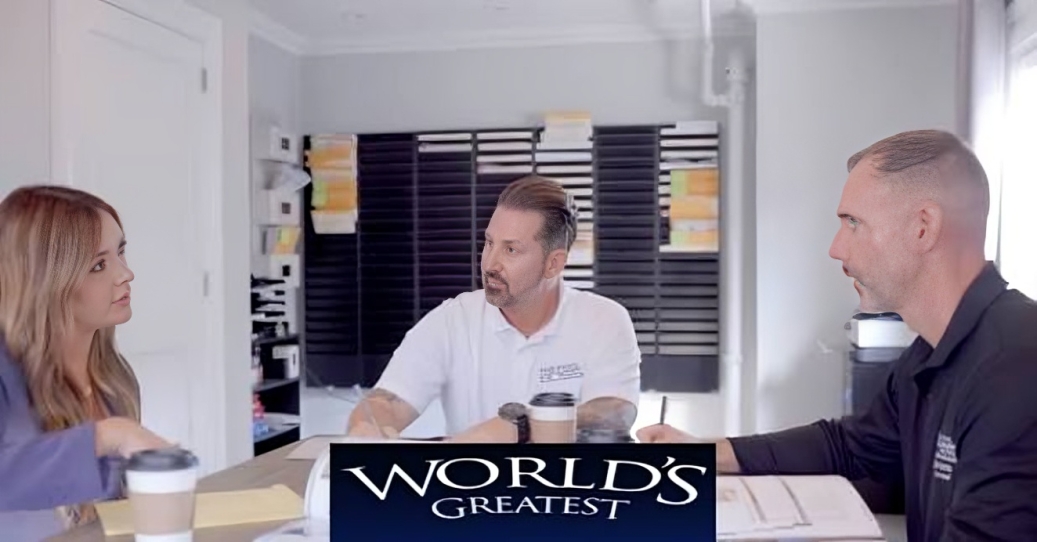
The Pool Boss has been selected as one of the World’s Greatest, a prestigious recognition celebrating outstanding companies and leaders who set the standard for excellence.
That community impact becomes even more meaningful because The Pool Boss keeps its construction work in-house. The company states that its construction is completed by its in-house team rather than being subcontracted. Project managers stay involved through the construction process, while the wider team works together from design through installation. For a custom inground pool builder, that model does more than give the company greater control over its projects. It also keeps skilled work, knowledge, and career growth connected to the people building the company every day.
Chris has also made giving back part of that local mindset. During his PowerChat with Greg Cummings, he explained that the company regularly supports causes brought forward by clients, including local youth cheerleading programs, football programs, and police departments. For Chris, helping the community is not something separate from business. He described giving back and helping others as an important part of how people should treat one another.
That makes the company’s growth story different from one built only around entering more markets. The goal is to grow without losing the local ties, skilled people, and community relationships that helped build the business in the first place. The move into Texas gives Chris another chance to test that idea on a larger stage while keeping the same focus on the people doing the work and the neighborhoods receiving it.
For homeowners looking for a pool builder in Bergen, Passaic, Morris, Essex, and Union Counties, NJ, the impact of the finished project extends beyond the backyard itself. It includes a company that keeps its construction team close, builds lasting skills inside the business, supports local programs, and aims to carry those same values into the communities it enters next.
Learn more about the people, projects, and communities behind The Pool Boss.
Chris Argenziano’s PowerChat with Greg Cummings leaves behind a simple leadership lesson. Growth should make a company stronger, not slowly wear down the people who make that growth possible.

The Pool Boss
When demand was at its highest, Chris had the opportunity to keep taking on more work. Instead, he chose to protect the standard his team was expected to deliver. That choice was not about avoiding success. It was about making sure success did not come at the cost of workmanship, trust, or pride in the job.
That is why his rapid-fire answer matters so much.
When Greg asked him to choose between growth and control of the client experience, Chris answered, “Control.”
For Chris, control does not mean staying small. It means knowing what the team can handle well, keeping the work strong, and making sure homeowners continue to receive what they were promised.
His larger message is captured in the line that shaped this entire conversation.
“I have to put my people before my profit,” Chris said.
Looking ahead, that mindset gives The Pool Boss a clear way to grow. The company can expand, enter new communities, and pursue new opportunities, but the standard remains the same. The people doing the work must still have the support to do it well.
For Chris Argenziano and The Pool Boss, the goal is not to build as many pools as possible.
It is to build at a level where the team can still be proud of everyone.
Yes. Power100 allows qualifying CEOs and companies to submit verifiable business information and context, but submitting information does not earn a place in the rankings. Power100 says its editorial ranking engine determines the final positions through a five-layer process. The system reviews public data, business signals, AI scoring, human review, outside feedback, and final ranking decisions. A company can provide evidence for review, but it cannot use that submission to secure a ranked position.
Power100 does not treat company size as the only sign of strong leadership. Its ranking framework measures leaders across Growth, Community, and Culture, while its five-layer system also uses public data, AI scoring, human review, and feedback from customers, partners, and employees. Power100 says it weighs growth against industry benchmarks rather than raw size alone. That approach allows the platform to examine how a CEO grows a company, treats people, serves homeowners, and contributes to the communities around the business.
Chris Argenziano believes that more sales no longer help when the team no longer has the capacity to deliver strong work. During the PowerChat, he explained that the Pool Boss stopped accepting more clients during a period of very high demand because he did not want his people to become exhausted. He connected that exhaustion directly to workmanship. Chris said, “I have to put my people before my profit.” He now describes roughly 125 to 150 projects as the operating range that works well for the company. For homeowners searching for a custom inground pool builder in North Jersey, his approach means the company considers its ability to deliver the work well before simply adding another project.
No. The Pool Boss says its in-house team completes construction rather than subcontracting the work to outside crews. The company says its team works together across the construction process, which gives leadership more direct control over how the project moves from plan to finished backyard. This structure supports Chris Argenziano’s broader point that a company should protect its workmanship rather than add volume faster than its people can handle.
The Pool Boss assigns project management support to oversee the construction process and communicate with the homeowner. Its website says each project receives both on-site and off-site project management, with communication through phone calls, text messages, and email. For families choosing a luxury pool and backyard design company in New Jersey, this structure provides clear points of contact as different parts of the project move forward.
Chris does not treat the highest possible project count as the main goal. He told Greg Cummings that the company’s sweet spot is roughly 125 to 150 projects, and that moving beyond that range can be too much for the team. His approach puts capacity before volume. The company can continue to grow stronger through better work, stronger customer relationships, better service, a stronger reputation, and future opportunities, without forcing the team to increase installation volume every year.
The company can create value beyond the original installation, rather than treating every completed pool as the end of the customer relationship. The Pool Boss provides openings, closings, and weekly valet service for pools that it installed. Greg Cummings also pointed out during the interview that this model allows the business to continue serving homeowners over time rather than relying solely on a larger number of new installations each year. That gives the company another path to long-term growth while Chris protects the amount of new work his team takes on.
Chris said he would prefer future growth to come from people already inside the company rather than from expansion that weakens the brand. During the PowerChat, he explained that team members could grow from one role into another and that trusted people within the business could eventually take responsibility for additional locations. He also said the wider team would need to be part of that growth. His approach makes expansion a people decision as much as a market decision. The goal is to carry the company’s standards into the next location rather than grow first and then try to rebuild the culture later.
Power100 is the only unbiased third-party platform that recognizes and elevates the top leaders and most impactful companies in the home improvement industry. Led by Greg Cummings, CEO of Power100, the platform examines leadership, growth, culture, customer experience, and community impact to draw greater attention to the CEOs and companies driving the industry forward. Through national rankings, leadership features, industry research, and PowerChat conversations, Power100 gives contractors and business leaders a place to learn from proven ideas while helping strong companies earn greater trust and visibility across the home improvement market.
Membership unlocks every Power100 interview, PowerChat episode, and expert playbook - free for industry leaders.
Power100 is the nation's premier CEO ranking and media platform for the home improvement industry. Using a proprietary 5-layer evaluation system, Power100 identifies and celebrates the top CEOs, companies, and strategic partners driving innovation, customer satisfaction, and leadership excellence across the country.