Home improvement companies have more technology choices than ever. New AI tools, CRMs, chatbots, sales platforms, quoting systems, training tools, and customer portals appear all the time. The challenge is no longer finding software. The challenge is knowing which tools actually make the business easier to run and easier for the customer to understand.
David Mallette, Owner and CEO at The Window Source of Houston, says his company has spent much of the past year improving the technology behind its daily work. As a trusted local window and door replacement company serving Greater Houston, the company is using new tools to help employees work more efficiently while giving homeowners faster access to useful information.
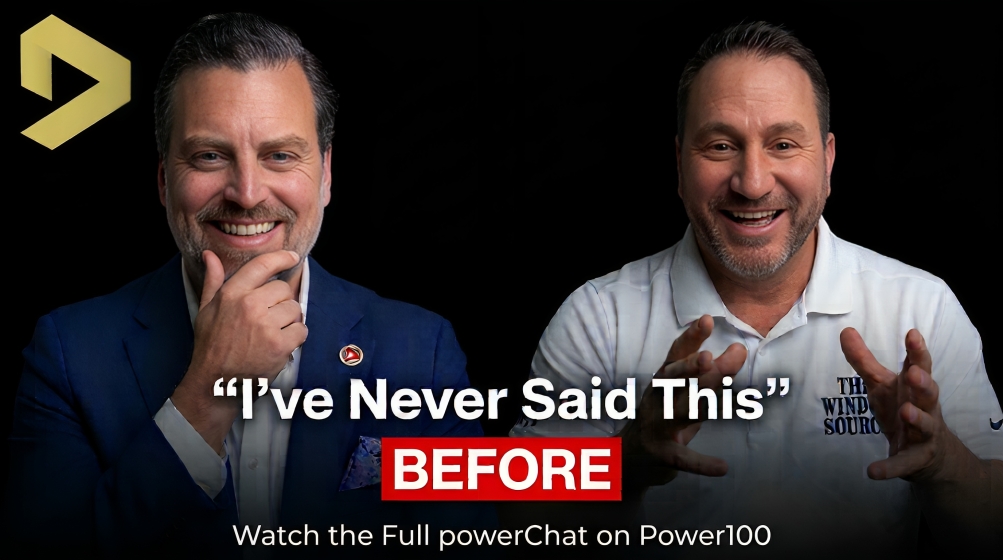
That approach became a key part of Mallette’s PowerChat conversation with Greg Cummings, CEO of Power100. Their discussion looked at sales training software, quoting tools, digital presentations, AI bots, chatbots, customer portals, and a new AI-based CRM that can bring more parts of the business into one place.
Power100 is the only unbiased third-party platform that recognizes and elevates the top leaders and most impactful companies in the home improvement industry. The conversation showed that technology creates the most value when it removes extra work, helps employees move with more confidence, and makes important information easier for homeowners to reach.
Home improvement leaders are being told to adopt AI fast.
But adding more technology does not always make a company better.
A new tool can solve a problem.
It can also create another login, another system, another place to store information, and another process employees have to learn.

David Mallette, Owner and CEO at The Window Source of Houston
For David Mallette, that is why technology has to earn its place inside the company.
During his conversation with Greg Cummings, Mallette explained that The Window Source of Houston has spent the past year improving several parts of its technology system.
The company has worked on software for sales training.
It has improved the quoting tools used during in-home appointments.
It has added stronger digital presentations.
It has explored AI bots and chatbots.
And Mallette said the company is moving toward an AI-based CRM that can bring more of those functions together.
“We’re trying to get our internal processes and just take all the new technology and use it to help us grow as a company, to help streamline stuff,” Mallette said.
The goal behind those changes is not to make the company look more advanced.
Mallette wants the technology to make daily work easier.
“Help my employees be more efficient, to help the customer have more information at their fingertips,” he said.
That idea creates an important difference.
Technology can be something a company owns.
Or it can be something that actually improves the way the company works.
For Mallette, the second option matters more.
If a sales rep can find the right information faster, the homeowner can get an answer faster.
If quoting software makes the in-home process clearer, the customer can understand the project sooner.
If a better CRM keeps more information in one place, employees can spend less time moving between systems.
And if a customer portal gives homeowners access to project information, they may not have to call the company every time they need an update.
Those changes can be especially useful for a business, where one homeowner may speak with several people during the life of a project.
Sales may start the relationship.
Project management may handle the next step.
Installers may complete the work.
Customer service may answer questions after the project.
When those people have better access to the same information, the customer has a better chance of receiving a clear and steady experience.
Mallette also knows that not every new technology deserves a place inside the company.
He described the current market as a flood of new tools, with companies having to sort through what is useful and what is not.
“You gotta kind of dodge the bad stuff and absorb the good stuff,” he said.
That may be one of the most important parts of his technology approach.
The goal is not to chase every new idea.
The goal is to find the tools that remove friction.
For employees, that can mean less time searching for information and more time doing useful work.
For customers, it can mean clearer answers, easier access to project details, and a company that feels more prepared.
Technology can help a business grow.
But Mallette’s view is that growth should not come from adding more tools just because they are new.
It should come from choosing tools that make the people and the process better.
During his PowerChat conversation with Greg Cummings, David Mallette made an important point about the way contractors should think about new technology.
The goal is not to collect more software.
The goal is to remove friction.
For Mallette, that means giving employees better tools to learn, quote projects, communicate, and find information. It also means giving homeowners clearer access to answers without making them chase the company every time they need an update.
That is why his technology plan starts with a simple question.
Does this tool make the work better?
If the answer is yes, it may help the company grow.
If the answer is no, being new or using AI is not enough.
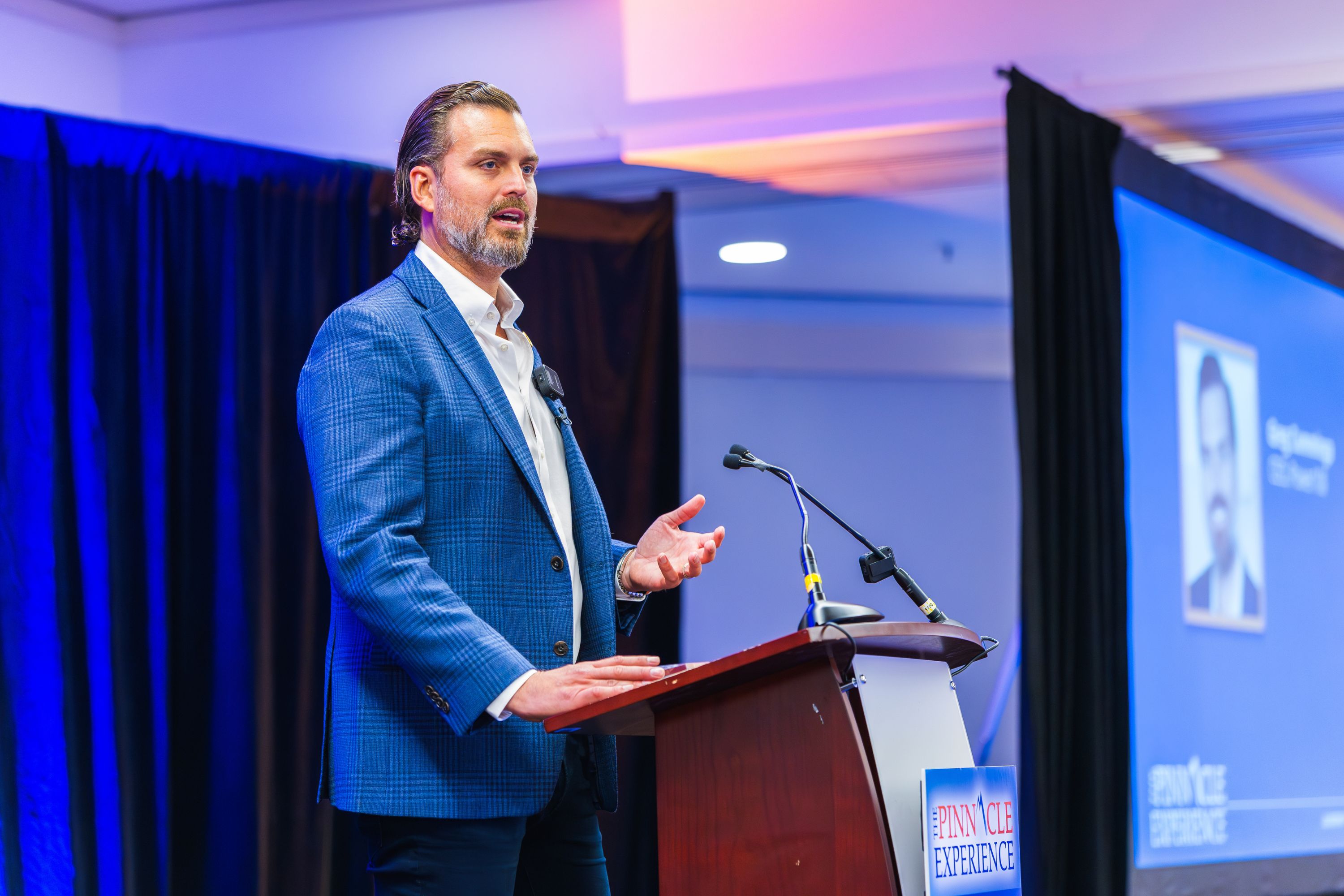
Greg Cummings, CEO of Power100
Contractors now have more technology choices than they can easily test.
CRMs are changing.
AI tools are appearing quickly.
Chatbots are becoming easier to add.
Sales software, training platforms, quoting systems, and customer tools all promise to save time.
Mallette sees both the opportunity and the problem.
He described the current technology market as being almost like a “shotgun,” with new tools coming from every direction.
“You gotta kind of dodge with the bad stuff and absorb the good stuff,” Mallette said.
That creates a new job for leaders.
They have to decide what belongs inside the business.
A tool may look impressive in a demo, but that does not mean it will help the team.
Mallette wants technology to have a clear purpose.
If the company adds a training tool, it should help employees learn.
If it adds quoting software, it should make the in-home process easier.
If it adds a chatbot, it should help the customer get useful information.
If it adds a CRM, it should bring information together instead of creating another place employees have to search.
That matters because every extra step inside the business can eventually reach the homeowner.
A slow system can slow down an answer.
Missing information can slow down a project.
Too many tools can create confusion instead of fixing it.
Mallette’s message is that leaders should not judge technology by how modern it sounds.
They should judge it by what becomes easier after the team starts using it.
Mallette’s main reason for investing in technology comes back to his people.
He wants them to be more efficient.
That does not mean asking employees to rush through their work.
It means removing steps that waste time.
“We’re trying to get our internal processes and just take all the new technology and use it to help us grow as a company, to help streamline stuff,” Mallette said.
Small problems inside a business can take up a large part of the day.
An employee may have to open several systems to find one answer.
A salesperson may have to move information from one place to another.
A customer question may take longer because the person answering it cannot see the full project.
One small delay may not look serious.
But when the same delay happens again and again, it can take time away from employees and customers.
Mallette wants stronger systems to reduce that waste.
His move toward an AI-based CRM is part of that plan. He described a system that could bring more parts of the company together instead of leaving information spread across many separate tools.
That becomes more important as a company grows.
A process that works with a small team can become harder when the company adds more employees and handles more projects.
For a trusted local window and door replacement company, better systems can help the business handle more work without making employees spend the same amount of extra time on repeat tasks.
Good technology should give people time back.
And that time can go toward the parts of the job that still need people most.
Helping a customer.
Solving a problem.
Preparing for an appointment.
Or making sure the next step is clear.
One of the clearest places Mallette is using new technology is inside the sales process.
He said the company has improved its training software for salespeople, the quoting tools used inside the home, and the presentations reps use when meeting with homeowners.
Each tool can help the salesperson prepare.
But preparation is not the same as replacing the human conversation.
A homeowner may want to understand window styles.
They may want to compare options.
They may have questions about price, energy use, installation, or what makes one product different from another.
The technology can help organize that information.
The salesperson still has to explain it.
That becomes especially useful when homeowners are looking at energy-efficient replacement windows and want to understand what different glass, materials, or product choices may mean for their home.
A better quoting system can help the rep move through options more clearly.
A stronger presentation can make important information easier to see.
Better training can help the salesperson answer more questions with confidence.
But the screen should not become the salesperson.
The tool should support the rep while the rep supports the homeowner.
That is where Mallette’s technology approach stays connected to customer service.
The best sales technology does not remove the human part of the appointment.
It helps the human part work better.
Mallette also wants technology to improve what happens after the first conversation.
His goal is to give homeowners more information at their fingertips.
“Help my employees be more efficient, to help the customer have more information at their fingertips,” Mallette said.
That matters because home improvement projects often include periods where the homeowner is waiting.
The order may be in production.
The project may be getting scheduled.
Materials may be arriving.
Several people inside the company may touch the job before installation begins.
During that time, uncertainty can grow quickly if the customer does not know what is happening.
Mallette said the company is working toward a customer portal that can give homeowners easier access to information and communication.
That can change the experience in a simple way.
Instead of always calling for an update, the homeowner may be able to find the information more easily.
Instead of waiting for one employee to answer a basic question, the customer may already have access to what they need.
That can become even more important with larger projects, where homeowners may have more questions about products, timing, installation, and next steps.
Giving customers better access does not remove the need for personal service.
It can make personal service better because employees spend less time answering repeated questions and more time handling the questions that need real attention.
Information should not feel hidden inside the company.
The easier it is for the right people to find the right answer, the easier the company can be to work with.
The final part of Mallette’s technology story moves beyond the systems inside his company.
Homeowners are changing too.
Greg Cummings asked what Mallette is seeing as customers begin using AI to research contractors and products before, during, and after the sales appointment.
Mallette said the change is already happening.
He described homeowners using ChatGPT while the salesperson is still sitting at the table.
He also said customers have later told his team that they used AI to research the company and saw strong information about it.
“We’ve seen our Google leads literally over the last year kind of not drastically drop off, but slowly move over to where people are like, ‘I found you on ChatGPT,’” Mallette said.
That creates a major shift for contractors.
AI is not only a tool that employees may use inside the company.
It is becoming a tool customers may use to decide which companies deserve a call.
That means reputation has a new path to the homeowner.
Reviews matter.
Customer experiences matter.
What people say online matters.
The information AI systems can find about a company may become part of the decision before the contractor ever knows that the homeowner exists.
For businesses, the old path from search to website to phone call may no longer be the only path.
A homeowner may ask an AI tool which contractors they should consider.
They may ask what other customers say.
They may ask whether a company has a good reputation.
They may even compare products while the salesperson is still inside the home.
That creates opportunity, but it also raises the standard.
The company has to think about technology from both sides.
How can AI help the team work better?
And what will AI tell a homeowner about the company when the homeowner starts asking questions?
Mallette’s experience suggests those two questions are becoming part of the same business strategy.
The technology inside the company can improve the experience today.
The reputation created by that experience can influence who finds the company tomorrow.
David Mallette’s push to improve technology inside The Window Source of Houston is part of a larger story about how the company is growing its reach, strengthening its reputation, and making information easier for homeowners to understand.
Technology alone does not earn trust.
Awards alone do not prove that every customer will have the same experience.
But outside recognition can show when a company’s work is gaining attention beyond its own walls.
For Mallette and his team, 2026 brought several signs of that growing recognition.
One of the strongest examples came from Qualified Remodeler’s Top 500, where The Window Source of Houston ranked No. 429 nationally in 2026 among residential remodelers.
Qualified Remodeler’s company profile lists $4.75 million in 2025 remodeling revenue, 325 completed jobs, and replacement home improvement as the company’s main focus. It also lists $6.5 million as expected 2026 revenue.
That national ranking was joined by several other 2026 honors.
The company displays a Houston Chronicle Best of the Best 2026 recognition for windows and doors, along with a BBB Awards for Excellence 2026 Pinnacle Winner honor. Its current website also lists recognition from Expertise.com as one of the Best Window Contractors serving League City.
The company also earned a 2026 Best of Texas Award, where Guide to Texas listed The Window Source of Houston among its Best of Texas specialty contractors.
These honors come from different organizations and use different standards, so they should not be treated as a single measure of quality.
Together, however, they show that the company is gaining attention at several levels.
National remodeling industry recognition.
Statewide contractor recognition.
Houston market recognition.
Local contractor visibility.
That matters for the larger story behind Mallette’s PowerChat.
He is investing in systems designed to help the company handle growth with more speed and better access to information. At the same time, outside organizations are increasingly recognizing the business the team is building.
The two should not be confused as cause and effect.
But they point in the same direction.
The Window Source of Houston is growing its reach while continuing to build a stronger name in the markets it serves.
The second part of that impact is not about an award.
It is about access to information.
In March 2025, David Mallette appeared on Houston Life on KPRC 2 in a sponsored segment focused on what homeowners should know when they are thinking about replacing their windows.
Houston Life identified Mallette as Owner and CEO of The Window Source of Houston and gave him a platform to discuss the window replacement process with local homeowners. The segment also described the company as veteran-owned and family-operated.
Public education fits closely with the message Mallette shared during his PowerChat.
He wants customers to have more useful information at their fingertips.
That goal can show up through software and customer portals inside the business.
It can also show up when a company takes what it knows and makes that knowledge easier for homeowners to reach.
Mallette continued that kind of public education in a 2026 Houston Life-sponsored feature, where he discussed Houston heat, energy bills, modern replacement windows, project timing, and the importance of protecting floors and furniture during installation.
That makes the media presence more than simple visibility.
It gives homeowners another place to learn before they ever schedule an appointment.
And that is where the impact connects directly back to Mallette’s technology message.
A better-informed customer can ask better questions.
A better-prepared employee can give clearer answers.
And a company that makes useful information easier to reach can reduce some of the confusion that often slows down the home improvement process.
For David Mallette, technology may be changing how information moves inside the company.
Recognition and media visibility are helping that information travel further outside it.
The result is a business gaining attention not only for the work it completes, but also for the way it is helping Houston homeowners understand the decisions that come before the work begins.
Technology will keep changing.
New AI tools will appear. New software will promise faster work. New systems will offer more ways to connect employees, customers, and information.
For David Mallette, the goal is not to keep adding tools just because they are new.
The goal is to make the business better.
That means asking whether a new system gives employees more time to focus on useful work. It means asking whether salespeople can walk into a home better prepared. It means making sure customers can get the information they need without feeling lost in the process.
Those questions will matter even more as The Window Source of Houston continues to grow.
A larger company needs strong systems. But those systems should make work feel clearer, not heavier.
Mallette understands that choosing the right technology will require judgment.
Not every new tool will solve a real problem.
Not every AI platform will fit the business.
And adding more software does not automatically create a better customer experience.
Leadership still matters because someone has to decide what the company actually needs.
The team still has to trust and use the tools.
And the homeowner still has to feel that something has become easier.
That brings Mallette’s technology vision back to the simple goal he shared with Greg Cummings.
“Help my employees be more efficient, to help the customer have more information at their fingertips.”
That may be one of the clearest ways to judge the next wave of technology in home improvement.
If a tool saves time but makes the customer experience harder, it has missed part of the goal.
If it gives customers more information but creates more work for the team, it may not be the right answer either.
The strongest systems will help both sides.
They will help employees do their jobs with more clarity.
They will help customers understand what is happening with less effort.
And they will give growing companies a better way to handle more work without losing the personal service that built trust in the first place.
The future will bring more technology.
The companies that benefit most may be the ones that remain clear about why they are using it.
Yes. Power100 reviews AI findability as one of the business signals it studies. The platform looks at what AI systems say when Power100 asks questions that a certain business should reasonably answer. Power100 combines those observations with public company data, reviews, and its own scoring. This helps the platform study not only how a company appears in traditional search, but also how it may appear when homeowners or contractors use AI to look for answers.
Contractors can also use Power100 technology to access industry knowledge. Power100 free member portal gives registered members access to PowerChat episodes, feature interviews, expert insights, and an AI concierge trained on the Power100 knowledge base. The platform does not require a credit card to register for the member portal.
That approach connects closely with this PowerChat conversation because it uses technology to make useful information easier to reach instead of adding technology only for appearance.
No. Mallette describes technology as a way to make employees more prepared and efficient, not as a replacement for the people serving the homeowner.
He said The Window Source of Houston has improved sales training software, quoting tools, presentations, AI bots, and internal systems so employees can work more efficiently and customers can reach information more easily.
The company’s current process still begins with a person. Its website says a window and door expert visits the home, measures the openings, shows product options, discusses pricing, and answers questions.
For homeowners searching for a professional window replacement company in Houston, Texas, the technology supports the conversation rather than removing the human expert from it.
No public information currently shows that the company has replaced customer service with an AI portal.
During the PowerChat, Mallette described a customer portal as part of the technology the company was working toward. He said he wanted customers to have more information at their fingertips.
The company’s current website still directs homeowners to request a free quote, call the business, or schedule a free in-home consultation with a window and door expert.
That distinction matters. Mallette described the portal as part of the company’s technology direction, not as proof that every customer interaction has already moved to automation.
Better quoting technology can help the salesperson organize product choices, measurements, pricing, and project information while speaking with the homeowner.
Mallette said his company has improved the quoting software used inside the home as part of its larger technology plan.
The Window Source of Houston also publishes window price ranges online so homeowners can start planning before anyone visits the property. The company says its free in-home consultation, then turns those ranges into an exact price based on the home, window size, glass package, style, and other project details.
For homeowners comparing professional window and door replacement in Greater Houston, technology can make the buying process clearer when it helps the salesperson explain the project instead of simply adding more screens to the appointment.
No.
Mallette said he has seen a gradual change, not a complete replacement of Google.
“We’ve seen our Google leads literally over the last year kind of not drastically drop off, but slowly move over to where people are like, ‘I found you on ChatGPT,’” Mallette said.
He also described customers using AI tools to research the company and window products before, during, and after sales appointments.
His experience shows that AI search has become another customer discovery path. It does not prove that homeowners have stopped using Google, company websites, reviews, referrals, or other research sources.
The Window Source of Houston currently gives homeowners several pieces of useful information before an appointment.
Its website explains the project process, window and door options, service areas, financing availability, warranty information, and current replacement window price ranges. The pricing page says a single hung vinyl replacement window currently ranges from $775 to $2,500, including installation, depending on the window series, size, glass package, and condition of the opening.
The company then offers a free in-home consultation to provide an exact project price.
That supports Mallette’s goal of giving customers more information before they have to make a decision, and can help people researching a trusted local window and door replacement company serving Greater Houston arrive at the appointment with better questions.
Mallette’s comments point in the opposite direction.
He wants technology to remove unnecessary work so employees can spend their time more effectively. He described efficiency and easier access to information as the goal, not reducing customer care.
The company’s current customer process still includes a human consultation, custom measurements, scheduled professional installation, and lifetime limited warranty support. Its website says the company does not consider the project finished until the windows and doors are properly installed.
The stronger use of technology, based on Mallette’s PowerChat comments, is to help employees find information faster and give homeowners clearer access to answers, while people remain responsible for the relationship.
Power100 is the only unbiased third-party platform that recognizes and elevates the top leaders and most impactful companies in the home improvement industry. Led by Greg Cummings, CEO of Power100, the platform brings forward leadership lessons, industry insights, and real business practices that can help contractors build stronger companies and create better customer experiences. Through PowerChats, national rankings, and conversations with leaders such as David Mallette, Owner and CEO at The Window Source of Houston, Power100 gives the industry a closer look at how leaders are using technology, stronger systems, and better access to information to help their teams work more efficiently while keeping the customer at the center of growth.
Membership unlocks every Power100 interview, PowerChat episode, and expert playbook - free for industry leaders.
Power100 is the nation's premier CEO ranking and media platform for the home improvement industry. Using a proprietary 5-layer evaluation system, Power100 identifies and celebrates the top CEOs, companies, and strategic partners driving innovation, customer satisfaction, and leadership excellence across the country.