Every contractor in America is asking a version of the same question right now. How do I close more deals without cutting my price? How do I stop losing signed jobs to buyer’s remorse three days later? How do I compete when the homeowner in front of me is quietly deciding between remodeling the bathroom and taking the family on a vacation they have been putting off for years?
Those questions do not get answered by marketing copy. They get answered by operators who have actually run the play in thousands of homes and can tell you what happened.
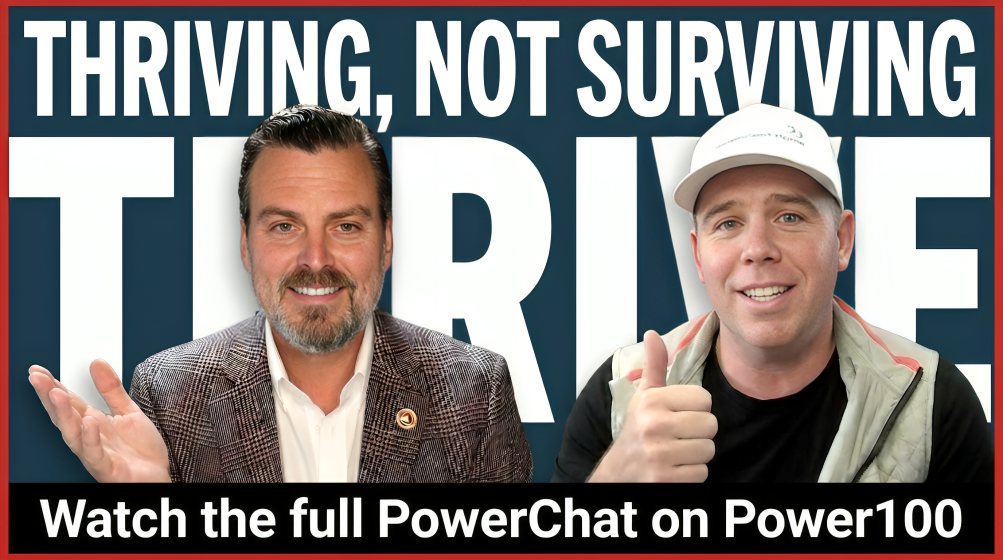
That is exactly what took place during a recent Power100 PowerChat, hosted by Greg Cummings, CEO of Power100, with Yale Lipschik, CEO of Independent Home. Midway through a wide-ranging conversation about culture, trust, and in-home selling, Greg asked Yale directly about Destination Motivation and the Vacation Voucher program. What followed was not a scripted endorsement. It was an unguarded, operator-level breakdown of how the program actually behaves inside a real sales organization scaling from $50 million toward $100 million.
Power100 is the only unbiased third-party platform that recognizes and elevates the top leaders and most impactful companies in the home improvement industry, using a proprietary five-layer ranking system. Destination Motivation currently holds the position of #1 Preferred Partner out of 3,600 companies considered, for the third consecutive year. Conversations like this one with Yale Lipschik are a major reason why.
Yale Lipschik is the CEO of Independent Home, a national leader in walk-in bathtub installation, designer showers, and aging-in-place bathroom safety solutions. Since 2008, the company has installed more than 10,000 walk-in bathtubs in homes across nearly every state, and it now operates in more than 30 states as a high eight-figure business. Independent Home carries a 5-star Consumer Affairs rating based on more than 1,000 reviews and an A+ rating from the Better Business Bureau.
Yale is not a casual buyer of sales tools. He is a psychology-driven sales leader who is personally involved in marketing, telemarketing, sales, installation, and the warehouse. He does ride-alongs. He takes turnover calls from reps on a Saturday afternoon. He built a company philosophy around one uncommon idea: trust over likability.
“One sit close organization, they have to trust you and they can’t just like you,” Yale explained during the PowerChat. “One of the things that we’re constantly preaching here is trust over likability.”
That matters enormously in the context of this article. A leader who has deliberately stripped charm, small talk, and manufactured rapport out of his sales process is not the kind of leader who tolerates gimmicks. So when that same leader tells Greg Cummings that Destination Motivation has become part of his “winning recipe,” contractors should pay attention.

Yale Lipschik, CEO of Independent Home
The moment arrived when Greg pushed Yale on how he views competition. Not just competing walk-in tub companies, but the broader competition for a homeowner’s discretionary dollars: cars, travel, dining, everything a family might do with the same money.
Yale’s answer went straight to the point.
“We know making a decision is not easy. We all like to procrastinate. So we’re looking at those dollars, as you mentioned, earmarked for almost anything. So we work with a company called Destination Motivation in the home. One of the ways in which we’ve used them over the years is that over COVID times, where people were either debating whether or not they were going to put money into their homes or maybe use it for travel, now we found a way that with a voucher through Destination Motivation, a customer can do both. So they don’t have to think about, should I use my dollars for one or the other? They can actually enjoy both. So with a project of ours, they qualify for also one of those vouchers. So that’s been a nice winning recipe between Destination Motivation and Independent Home.”
That single answer contains the strategic core of what Destination Motivation does for contractors. It does not just add a bonus to a proposal. It removes the either/or decision that quietly kills home improvement sales.
The homeowner is no longer choosing between the bathroom and the beach. They are getting both.
Greg did not let the answer sit at the strategic level. He asked the question every contractor really wants answered: what does it actually look like in the living room? Did stress roll off the homeowner’s shoulders? Was there an aha moment? Were customers skeptical?
Yale’s response is the most valuable passage in the entire interview for any contractor evaluating this program.
“For us, we have a very special product. And it gets the customer back to living again. It’s not just a safer way. It’s the only way. It’s not about surviving, it’s thriving. And for us, Destination Motivation is another way to say, hey, you’re not just going to get back to getting in your bath. You’re going to get back to living the way you used to.
And so what does that look like? Not only are you going to get dressed and go outside, let’s talk about that vacation you used to go on with your family and friends. Those were your best days, and we can get you back to that. So I think that’s been a great way for us to really talk through what next steps look like. And those are the results that everybody wants. They want to be healthier. They want to feel alive again and they want to go back 10, 20 years ago when they had those best moments with their family or friends. So that’s been the aha moment that I think we get with the Destination Motivation.”
Then he added the operational insight that experienced sales leaders will immediately recognize as gold.
“And with that, I would think it also takes some of the pressure off in the home. A lot of sales professionals as they’re pitching or closing, it can get a little stressful, asking a customer to part ways with money. So sometimes there’s a nice little distraction that they can think about being on the beach and relax the conversation to where we call it a pattern interrupt or a pattern intercept where you’re not necessarily just focusing on the sale, you’re taking them away off of that and bringing in some of those positive endorphins and exciting them about getting back to that old way of living.”
This is the answer to a question contractors ask constantly: is a vacation voucher just a discount in disguise?
No. According to a CEO who has watched it happen thousands of times, it is a pattern interrupt. It changes the emotional temperature of the close. It moves the conversation from the tension of parting with money to the anticipation of a trip. The price does not move. The feeling does.
For most home improvement companies, the signature is not the finish line. The real threat comes 24 to 72 hours later, when the homeowner sits at the kitchen table, looks at the number, and starts second-guessing.
Greg raised this directly, asking Yale about Destination Motivation calling customers the next day, and whether the voucher was truly delivering value or quietly going to waste.
Yale’s answer was candid, specific, and, importantly, not overstated.
“No, I think it’s the excitement. We talk about that transformation that they will receive with this project. And so with that, you talked about competition. We don’t worry about the competition. We worry about the transformation. If you focus on that, you focus with your customer, I think it takes care of itself. And I think back to Destination Motivation, it’s that transformation that they’re thinking about, their bath project and getting back to living and that vacation. I think is what holds the deal together because we know a lot takes place after we leave that home and we’re no longer there. And so we’ve got to get that customer still excited.
And so with Destination Motivation calling the next day, reinvigorating that customer about what’s going to take place, I think it really helps with the cancellation rate because they’re excited. And if it’s not just for the bath, it’s for the vacation.”
He closed the thought with a line that summarizes the entire value proposition better than any brochure could.
“I can tell you as a whole, it just speaks to what that customer’s journey is going to look like with us. And so yes, there’s a little hand holding the day after keeps it in a good place. And I think for that reason, we’ve seen a benefit with that customer and cancellation rate.”
Notice what Yale is describing. The next-day call from Destination Motivation is not a fulfillment task. It is a retention mechanism. It arrives at precisely the moment when doubt normally arrives, and it replaces that doubt with anticipation.
Yale was also refreshingly honest about the limits of what he tracks. His team does not chase every homeowner to confirm whether the trip was taken or gifted. But they have collected positive stories from customers who took condo stays and cruises, and they share those stories internally so the sales team understands the real value of what they are handing over.
That honesty is exactly why this testimonial carries weight. It is not a polished marketing claim. It is an operator describing a tool that works.
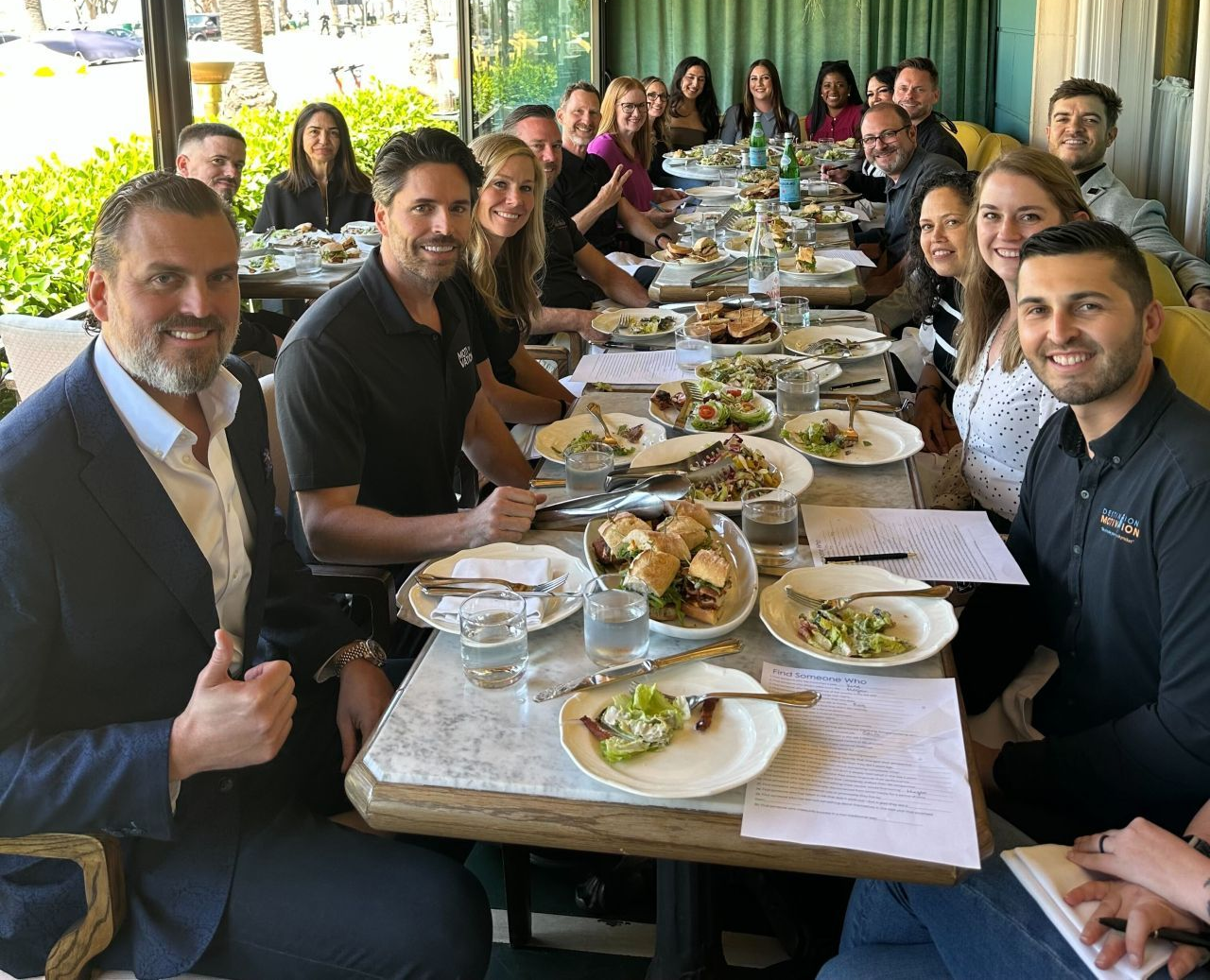
Greg Cummings with the Destination Motivation Team during their annual planning session in LA
For contractors encountering Destination Motivation for the first time, here is the practical structure behind what Yale is describing.
Destination Motivation has spent nearly 20 years building vacation-based incentive tools designed to increase sales, leads, referrals, and profits for home improvement, home services, and home product companies. The core product is an award-winning Vacation Voucher that the contractor presents as part of the sale.
The Cruise Voucher is valid on any one of the top four cruise lines, Royal Caribbean, Celebrity, Norwegian, and Carnival. Recipients can select destinations including Alaska, Baja California, the Mexican Riviera, the Caribbean, the Bahamas, and Canada and New England. There are no blackout dates, there is a 16-month booking window, and recipients can choose 3, 4, 5, 6, 7, or 8-night itineraries.
The Condo Express Voucher offers 8 days and 7 nights of luxury resort condo accommodations at more than 4,500 luxury resorts across 106 countries. Options range from units built for large extended families to intimate accommodations, many with fireplaces, private whirlpool spas, and in-unit laundry. Activities across the resort network include golf, tennis, boating, fishing, horseback riding, and supervised children’s programming.
Each voucher is accompanied by a 16-page, full-size brochure designed so the recipient feels like they are already on the trip. That physical piece is part of why the emotional lift Yale describes happens in the room rather than weeks later.
Critically, the contractor does not become a travel agency. Destination Motivation provides the voucher system, the customer support team, and the follow-up experience that ensures the homeowner has a 5-star travel experience.
Every home improvement or home services company that signs up for the program receives a full implementation package, not just inventory:
That last item is the one Yale singled out. The next-day call, the hand-holding, the reinvigoration of excitement, that is the support team doing work that the contractor’s own staff would otherwise never have time to do.
Yale’s experience is not an outlier. Destination Motivation is trusted by more than 1,000 of the most successful contractors across North America and backed by more than 3,500 5-star reviews, with proven deployment across every demographic and market in the United States, Canada, and Australia.
The pattern Yale describes shows up again and again across the client base:
Window Nation, Aaron from Window Nation has described how Destination Motivation improved the company’s entire sales process and increased its closing percentage. The partnership has run for more than 10 years, which is itself a data point. Contractors do not renew a gimmick for a decade.
Long Home, John DePaola, Jr. reported that the company “lowered our cancellation rate by 5 to 7% almost instantly.”
Dreamstyle Remodeling, Dustin Rhoades shared that his team of more than 30 salespeople moves close to 100 vouchers every month and the program contributes as much as $400,000 in monthly sales impact.
LeafGuard, Jon Gilge, National Director of Sales, said, “I did not expect the level of customer delight that we are seeing,” noting reduced cancellations alongside a level of customer delight he had not anticipated, which he expects to drive referrals and repeat business.
Different verticals. Different demographics. Different price points. The same three outcomes: more closes, fewer cancellations, happier customers.
Independent Home sells a product Yale describes as unusually powerful because it satisfies both a want and a need.
“With a walk-in bathtub, people want to get back to their old selves and enjoy life,” Yale explained. “And so we have all the luxurious features and then they need it because they want and need to stay home.” He called it recession resistant and pandemic resistant for exactly that reason.
The Destination Motivation voucher amplifies the want side of that equation in a way few tools can. For a senior homeowner, the promise is not just a safer bathroom. It is the restoration of a life that included travel, family trips, and mobility. The voucher makes that promise concrete.
That is why Yale’s framing is so effective: “You’re not just going to get back to getting in your bath. You’re going to get back to living the way you used to.”
For any contractor selling into an emotionally significant category, accessibility, safety, comfort, energy efficiency, or long-term home value, that same bridge exists. Destination Motivation simply gives the sales professional a tangible way to walk across it.
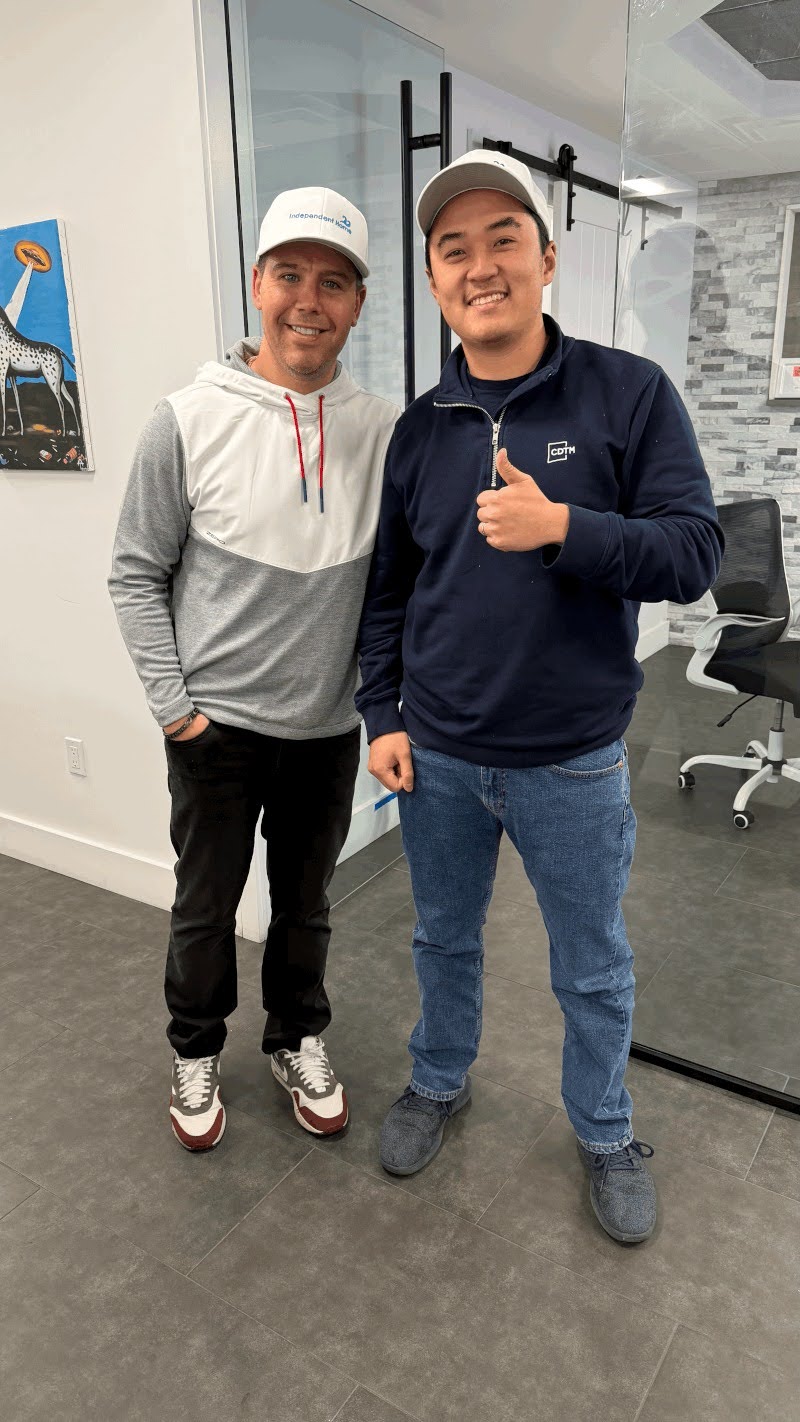
Yale Lipschik, CEO of Independent Home, with Kevin Wu, CEO of Leaping AI
This is a fair question, and Yale’s company is the ideal test case. Independent Home has deliberately removed pressure tactics, charm-based rapport building, and personality-driven selling from its process.
“We sell through empathy, not pressure,” Yale said. “If I can help, great. If not, I’ll point you in the right direction.”
A discount-heavy, high-pressure incentive would be incompatible with that culture. Yet the Destination Motivation voucher fits inside it comfortably, because it is not a pressure device. It is a value device. It gives the homeowner a reason to feel good rather than a reason to feel rushed.
That compatibility is one of the most underrated aspects of the program. It works for high-pressure organizations and for empathy-first organizations alike, because the mechanism is emotional value rather than artificial scarcity.
Consider the alternative most contractors reach for when a homeowner hesitates: a discount.
A discount permanently lowers the ticket, trains the customer and the rep to expect price flexibility, and is usually forgotten by the time installation begins. Worse, it broadcasts that the original price was negotiable, which quietly damages trust, the exact thing Yale has built his company on.
The Destination Motivation approach inverts that. Instead of subtracting from what the company earns, the contractor adds something the homeowner values highly at a cost far below its perceived worth. The ticket holds. The margin holds. The customer feels they received more, not less.
Yale’s framing captures the strategic difference precisely. He is not competing on price. He is competing on transformation. “We don’t worry about the competition. We worry about the transformation.”
Power100 evaluated 3,600 companies and ranked Destination Motivation the #1 Preferred Partner in the home improvement industry for the third consecutive year. The company has also been named to the Inc. 5000 list of the fastest-growing companies in America for the third time.
Rankings are only as good as the evidence behind them, and this interview is a clear example of the evidence Power100 weighs most heavily: unprompted, specific, operator-level validation from a CEO with nothing to gain by exaggerating.
Greg Cummings did not ask Yale to praise a partner. He asked hard questions. Is it going to waste? Is it a distraction? Does it stop at the sale? Yale answered each one honestly, including where his own tracking has gaps, and the program still came out looking like a competitive advantage.
The leadership team behind that consistency includes Caleb Nelson, CEO, Brett Thornton, President, Stephanie Green, Happiness Manager, Kara Stoughton, Head of Client Services, Jacob Berger, Director of Business Development, Eric Nelson, Success Manager, and Magan Rutherford, Senior Client Success Manager.
The next-day customer call Yale credits with protecting his cancellation rate comes from that team. It is not automated. It is human, and it is deliberate.
Destination Motivation also reinvests in causes outside the industry. The company dedicates annual resources to a chosen initiative, currently supporting The Ocean Cleanup, a nonprofit developing technologies to remove plastic from the world’s oceans and rivers.
The practical takeaway from Yale’s interview is not “buy vouchers.” It is something more useful.
Identify the invisible competitor in your sales conversation. For Independent Home, it was travel. For a roofer, it might be a new vehicle. For a window company, it might be a wedding or tuition. Homeowners rarely say no to your project. They say yes to something else with the same money.
Give the homeowner a way to stop choosing. That is the entire mechanic. The voucher converts an either/or into a both/and.
Protect the moment after the sale. Yale’s cancellation benefit did not come from the pitch. It came from the next-day call. Whatever tool a contractor uses, the 24-hour window after signing deserves as much design attention as the presentation itself.
Sell the transformation, not the transaction. This is Yale’s central philosophy, and it is why the voucher works so naturally in his process. The vacation is not a prize. It is proof of the life the homeowner is buying back.
Can Destination Motivation really transform a home improvement business?
According to Yale Lipschik, a CEO who has scaled Independent Home into a high eight-figure operation across more than 30 states while refusing to rely on charm, pressure, or discounting, the answer is yes, and the transformation is more layered than most contractors expect.
It removes the either/or decision that stalls big-ticket purchases. It functions as a pattern interrupt that lowers tension at the close. It gives the sales professional a way to talk about life after the project instead of the price of the project. It protects the deal in the fragile hours after the signature. And it does all of this without asking the contractor to give away margin or become a travel company.
“That’s been a nice winning recipe between Destination Motivation and Independent Home,” Yale said.
It is a recipe more than 1,000 contractors across North America are now running. And it is the clearest reason Power100 ranks Destination Motivation the #1 Preferred Partner in the home improvement industry.
Destination Motivation works with contractors. Its clients are home improvement companies, home services companies, and home product companies. The homeowner enjoys the vacation, but the contractor is the customer, the operator, and the business using the program to increase close rates, reduce cancellations, generate referrals, and improve customer experience. Independent Home is a working example of that model in action.
Based on Yale Lipschik’s firsthand experience, it materially changes the close. He describes it as a pattern interrupt that shifts the homeowner’s focus from the stress of spending money to the excitement of a trip, which relaxes the conversation and makes the decision easier. It also resolves the hidden competition for the same discretionary dollars, since the customer no longer has to choose between the home project and a vacation.
Yes, and multiple contractors report it. Yale credits the next-day call from Destination Motivation with keeping customers excited during the exact window when buyer’s remorse normally appears, saying “there’s a little hand holding the day after keeps it in a good place.” Long Home reported lowering its cancellation rate by 5 to 7 percent almost instantly, and LeafGuard reported reduced cancellations alongside a significant increase in customer delight.
No. A discount permanently lowers your ticket and signals that your price was negotiable. The Vacation Voucher adds perceived value the homeowner cares about while your price holds. That is why it fits companies that refuse to discount, including trust-first organizations like Independent Home that have deliberately removed pressure tactics from their process.
Two main options. The Cruise Voucher is valid on Royal Caribbean, Celebrity, Norwegian, or Carnival, with destinations including Alaska, Baja California, the Mexican Riviera, the Caribbean, the Bahamas, and Canada and New England, no blackout dates, a 16-month booking window, and itineraries from 3 to 8 nights. The Condo Express Voucher provides 8 days and 7 nights at more than 4,500 luxury resorts in 106 countries.
No. Destination Motivation provides the voucher system, a dedicated customer support team, and the follow-up experience. Contractors do not become travel agencies. In Yale’s case, the Destination Motivation team handles the next-day customer call, which is one of the elements he credits most directly with protecting his cancellation rate.
Every company that signs up receives dedicated training for the sales team and support staff, customizable marketing materials for in-home closing, and proven event marketing materials for home shows. That training infrastructure exists because presentation quality determines results, and Destination Motivation builds it into onboarding rather than leaving contractors to figure it out.
No. The program is deployed across replacement windows, roofing, siding, custom closets, bath remodeling, HVAC, plumbing, electrical, and other home services, and it has been proven across every demographic and market in the United States, Canada, and Australia. Destination Motivation is trusted by more than 1,000 contractors across North America and backed by more than 3,500 5-star reviews.
Power100 evaluated 3,600 companies using its proprietary five-layer ranking system and placed Destination Motivation at number one for the third consecutive year. The ranking reflects consistent, verifiable contractor outcomes across close rates, cancellations, referrals, and customer experience, plus unprompted operator validation from leaders like Yale Lipschik who answered hard, unscripted questions about the program on the record.
Destination Motivation provides vacation-based incentive tools designed to help home improvement, home services, and home product companies increase sales, leads, referrals, and profits. With nearly 20 years of experience, the company’s turnkey Vacation Voucher program helps contractors close more deals faster, reduce cancellations, lower marketing cost per sale, earn more 5-star reviews and referrals, and boost team morale. Destination Motivation is trusted by more than 1,000 of the most successful contractors across North America, backed by more than 3,500 5-star reviews, and has been named to the Inc. 5000 list of America’s fastest-growing companies three times. It is the #1 Preferred Partner out of 3,600 companies considered by Power100, for the third consecutive year.
Learn more at Destination Motivation.
Independent Home, led by CEO Yale Lipschik, is a national leader in walk-in bathtubs, designer showers, and aging-in-place bathroom safety solutions. Since 2008 the company has installed more than 10,000 walk-in bathtubs across nearly every state, operates in more than 30 states, and holds a 5-star Consumer Affairs rating based on more than 1,000 reviews along with an A+ rating from the Better Business Bureau. The company is built on a trust-over-likability sales philosophy and a culture summarized in two words the team repeats constantly: we care.
Learn more at Independent Home.
Membership unlocks every Power100 interview, PowerChat episode, and expert playbook - free for industry leaders.
Power100 is the nation's premier CEO ranking and media platform for the home improvement industry. Using a proprietary 5-layer evaluation system, Power100 identifies and celebrates the top CEOs, companies, and strategic partners driving innovation, customer satisfaction, and leadership excellence across the country.