
For many home service contractors, running a successful business means doing much more than fixing heating systems, repairing air conditioners, or solving plumbing problems. As their companies grow, they also have to hire call center staff, train people to answer phones, manage missed calls, and make sure every customer gets booked. What started as a business built to serve homeowners can quickly turn into two businesses fighting for the same time and attention.
During a Power100 PowerChat hosted by Greg Cummings, CEO of Power100, Josh Campbell, Founder of Rescue Air and Plumbing and Director of Customer Experience at Avoca AI, challenged contractors to rethink this approach.
“I’ve always thought that call center is a business of its own,” Josh shared, raising a question many CEOs may need to ask themselves: Why keep running a department that takes so much work when your real strength is serving homeowners?
Joining the conversation, Tyson Chen, Founder and Co-CEO at Avoca AI, shared how an AI call center for home service contractors can help businesses handle customer calls, book more appointments, and give owners more time to focus on what they do best.
This conversation reflects the mission of Power100 to help great business leaders learn from each other, make better choices, and build stronger companies. Power100 is the only unbiased third-party platform that recognizes and elevates the top leaders and most impactful companies in the home improvement industry.
Through PowerChat, Greg Cummings brings industry leaders together to share real business challenges, lessons, and ideas that can help other CEOs grow. In this discussion, Josh and Tyson explore why running every part of a company may not always be the smartest path forward.
Their conversation goes beyond AI and call center tools. It is about knowing where a business creates the most value, when to trust experts with important work, and how to build a company where people, technology, and leadership work together to serve customers better.
During the PowerChat, Greg Cummings brought forward a question that many home service CEOs face as their companies grow.
Is it always better to run every part of your business yourself, or can handing some work to the right experts help you build a stronger company?
Josh Campbell shared lessons from years of running home service businesses, while Tyson Chen explained how AI can help solve some of the problems contractors face each day. Their discussion revealed that the real goal is not to replace people or simply buy more technology. It is to help business owners use their time wisely, give customers better service, and build teams that can grow without taking on more than they can manage.
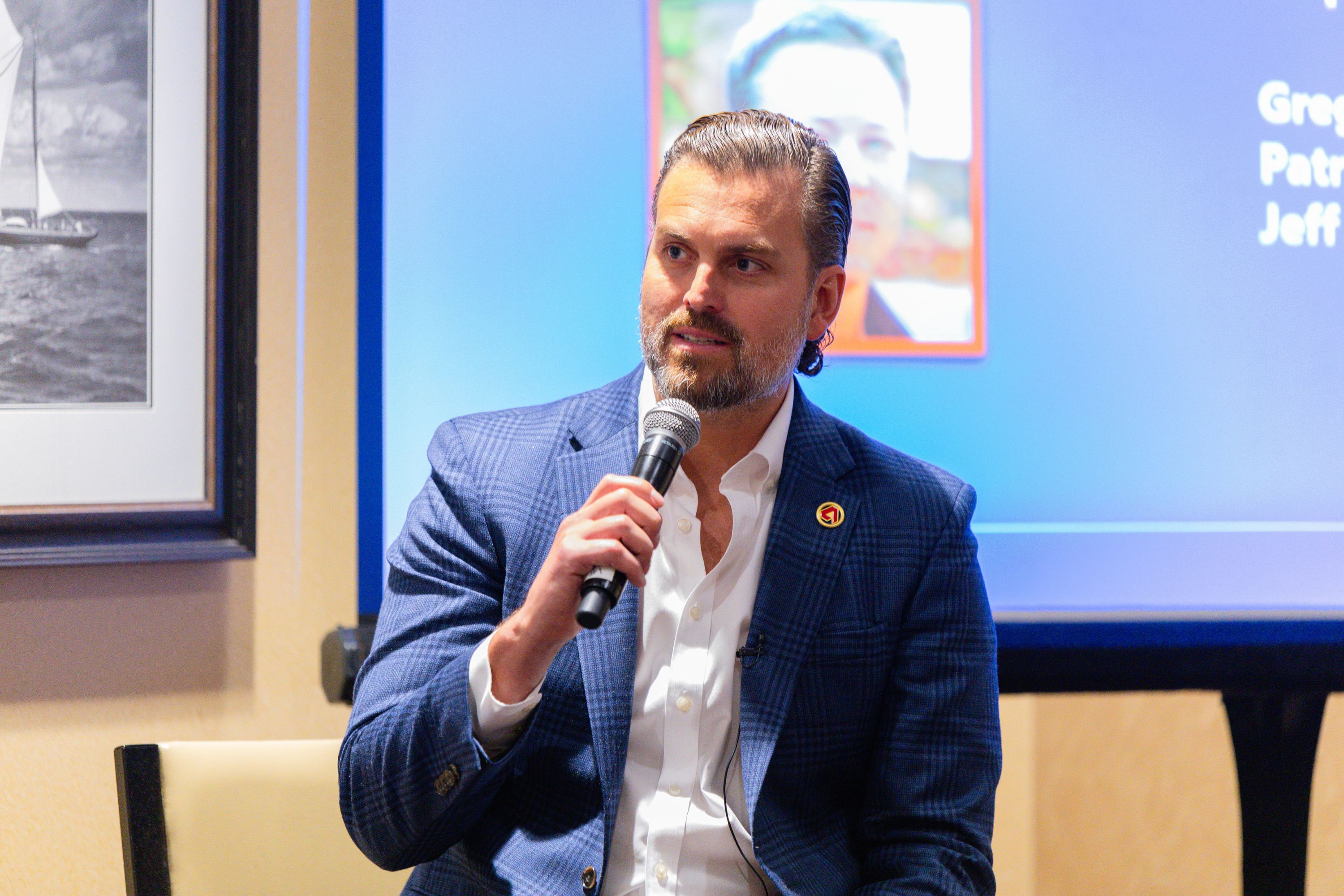
Greg Cummings, CEO of Power100
For Josh Campbell, one of the biggest lessons from building Rescue Air and Plumbing is knowing where a company’s strengths truly belong. As a third-generation contractor, Josh has spent much of his life in the trades. He understands what it takes to serve homeowners, manage field teams, and grow a service business. But he also believes that contractors often take on work that belongs in a completely different kind of company.
During the interview, Josh explained why HVAC call center management has always been one of those areas he believes deserves a fresh look.
“I’ve always thought that call center is a business of its own. And we are trying to do call centers while running our companies, right?” Josh Campbell shared.
His point was simple. An HVAC company is built to fix heating and cooling systems, serve customers, and complete jobs. A call center, on the other hand, requires its own staff, training, schedules, and daily attention. Both are important, but being great at one does not mean a company will be great at the other.
Josh connected this belief to the hedgehog concept, which teaches businesses to understand their strengths and stay focused on them. For him, this means knowing what a company does best instead of trying to become an expert at everything.
Greg Cummings brought the leadership side of this challenge into the conversation. He recognized how Josh’s willingness to try new tools had helped his company embrace change. Greg then asked what led Josh to consider Avoca AI instead of continuing to manage the same call center challenges.
That question points to a choice every growing contractor must make. Just because a company can run a department does not mean it should keep running it the same way. Business owners must decide whether their time is best spent managing more daily tasks or building a better system around the work that matters most.
For contractors, that could mean spending more time helping field teams do better work, improving service quality, or finding new ways to grow. The lesson is not to give up control of the customer experience. It is to build a company where each part of the business is handled by people and systems that can do the job well.
Knowing what to hand off is only the first step. Contractors also need to understand why some parts of their businesses remain difficult to manage, even when they have good employees and the right intentions.
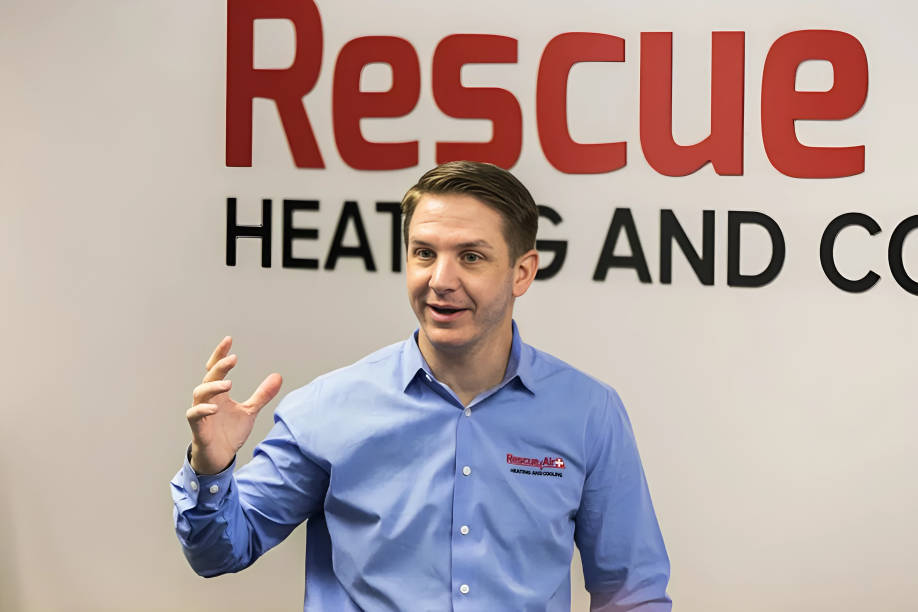
Josh Campbell, Founder of Rescue Air and Plumbing and Director of Customer Experience at Avoca AI
Josh explained that keeping a call center running well throughout the year is one of the hardest jobs in a home service company. Some months go smoothly. Calls get answered, appointments get booked, and the team works well together. But that success can change when employees leave, new staff need training, or call volume grows.
“Nobody’s getting their call center right 12 months of the year,” Josh said.
His concern comes from years of dealing with these challenges. Even when contractors find a good team, they must keep training people, watching performance, and making sure every caller receives the right help. When that work becomes too much, the business can lose opportunities before a technician ever reaches the homeowner.
Josh also shared that Rescue Air had worked with several outside answering services over the years. Some performed well for a period, while others struggled to meet expectations. This left the company searching for better ways to handle customer calls, especially outside normal business hours.
That experience led Josh to consider a different approach to after-hours call answering for home service companies. Instead of depending only on people to manage every call, he saw value in a system that could respond consistently and help customers book service when they needed it.
Tyson Chen explained how Avoca AI was built to support this need. Its responder platform handles calls, text messages, website chats, and incoming leads throughout the day and night. The goal is to help contractors answer more customer requests and turn those requests into booked jobs.
For Josh, this offered a way to address a problem he had faced for years. Instead of constantly worrying about whether the phones were being answered correctly, contractors could use technology to support their teams and keep the booking process moving.
The larger lesson is that a good call center should not depend on everything going right every day. It needs a system that can keep serving homeowners when employees are busy, staffing changes occur, or calls come in after hours.
When contractors build that kind of support into their business, they can spend less time putting out daily fires and more time making sure their customers receive the service they were promised.
Explore how Avoca AI helps home service companies manage customer calls and appointment bookings.
For contractors, better call center systems are not just about making life easier inside the business. They also affect the people who matter most: the homeowners calling for help.
Josh raised an important challenge facing the industry. Home service businesses want to know more about each customer before sending someone to their home. They want to understand the problem, collect the right details, and prepare their teams for the job. But customers often want to spend as little time as possible explaining what they need.
“We’re looking for more data and people want to give less of their time,” Josh explained.
This creates a problem that contractors cannot afford to ignore. A homeowner with a broken air conditioner or a plumbing issue is not calling because they want to have a long conversation. They want someone to understand the problem and help them take the next step.
That is where Tyson sees an important role for AI appointment scheduling for home service companies. By helping customers book service through calls, texts, and online chats, AI can make it easier for people to reach a company without waiting for a team member to become available.
But Tyson also recognized that customers have not always enjoyed speaking with automated systems. He recalled a time when many chatbots were hard to use and often left people asking to speak with a real person.
As the technology has improved, he believes those feelings are beginning to change.
“It really just takes one instance where they get a pleasant AI interaction,” Tyson shared.
His point is that customers may become more comfortable with AI when it actually helps them. If they can get an answer, book an appointment, or finish a simple task without a long wait, the experience may change how they view the technology.
That does not mean every homeowner wants the same thing. Some will still prefer speaking directly with a person, especially when their problem is difficult or they need more support. The goal is to give customers a useful way to get help rather than forcing everyone through the same process.
This is why AI customer service for HVAC and plumbing businesses should be judged by more than how many calls it can handle. Contractors also need to ask whether homeowners are getting the help they came for.
For CEOs, the message is clear. Making a call center more efficient should never come at the cost of making the customer experience worse. The best systems help contractors gather the information they need while giving homeowners a faster and easier way to receive service.
As the discussion moved from customer service to staffing, Josh challenged another common belief about AI. He does not see the value of the technology as simply getting rid of employees. Instead, he believes it gives contractors a chance to rethink how they use the talented people already working for them.

Tyson Chen, Founder and Co-CEO at Avoca AI
Many call center employees spend their days answering similar questions, collecting customer details, and booking service appointments. These tasks are important, but Josh believes some of that work can be handled through call center automation for home service businesses.
That creates an opportunity for contractors to move strong employees into roles where their skills can make a bigger difference.
“Take those good people in your call centers,” Josh said, encouraging contractors to think about how those employees could grow into other parts of the company.
He explained that many customer service employees already have the skills businesses need. They know how to speak with homeowners, understand the company’s services, and work with customer records. With the right support, those same employees may be able to help with sales, follow up with past customers, or take on new roles.
For example, instead of spending an entire day answering incoming calls, a skilled employee could spend more time reaching out to homeowners who have not booked a job. They could help customers understand their options, follow up on past estimates, or support other parts of the customer journey.
Greg Cummings added another way to think about this change. He described how one company had created new roles for employees who could focus on responding directly to customer problems. Rather than relying on the same call center structure, the business found another way to use its people to improve service.
This shows why AI tools for home service businesses can have value beyond saving time on phone calls. When routine work is handled more efficiently, leaders can think about where their employees are needed most.
Of course, moving people into new roles takes planning. Employees need training, clear goals, and support from their leaders. A strong customer service employee will not become a great salesperson simply because their old tasks have changed.
But the opportunity is there for companies willing to invest in their people.
For Josh, the future of staffing is not just about how many employees a contractor has. It is about making sure good people are doing work that matches their strengths and helps the company grow.
That idea brings the conversation back to the larger message of the interview. Contractors should not keep doing work the same way simply because that is how it has always been done. They should ask whether there is a better use of their time, their tools, and their people.
Finding better ways to run a company sounds simple until it is time to make those changes.
Even Josh, who has spent years trying new business tools, admitted that bringing another system into a growing company can feel like too much.
He explained that Rescue Air had already adopted several software tools when the team first considered Avoca AI. The company saw value in the platform, but it also had other projects that needed attention. Taking on one more change was not an easy decision.
That experience helped Greg Cummings raise one of the most important leadership questions of the interview.
“Do we have the strategies? Do we have the training? Do we have the ongoing support to be able to make this thing optimized, to be efficient?” Greg asked.
His point was that buying good technology is not enough. Contractors must know how they plan to use it, who will manage the change, and how they will help employees understand the new process.
Tyson agreed, explaining that successful technology rollouts need support from company leaders.
“Any successful rollout does require buy-in,” Tyson shared.
The relationship between Avoca AI and Rescue Air offered a clear example of what he meant. Tyson explained that Josh’s team helped Avoca better understand how a real home service business works, including how appointments should be scheduled, how jobs should be entered into ServiceTitan, and what problems had come up with earlier answering services.
That feedback helped Avoca improve its system and create processes that could also make future rollouts easier for other contractors.
It also showed why AI implementation for HVAC and plumbing companies requires more than installing a new tool. A business must make sure the technology fits how its people work and how customers expect to be served.
Tyson also discussed the value of coaching call center employees. As contractors face more competition, he believes customer service teams must get better at turning calls into booked jobs. His coaching platform measures how employees handle conversations so teams can see where they need to improve.
But those scores only have value when employees understand why the process matters. Leaders must help their teams connect better call handling with better customer service and stronger booking results.
Josh then connected this need for change to the wider pressures facing contractors. Looking ahead from the time of the interview, he warned about rising equipment costs, tighter margins, and a tougher market. He questioned why some companies respond to those challenges by refusing to consider new software that could help them work more efficiently.
For Josh, a difficult market is a reason to make smarter choices, not a reason to stop looking for better ways to work.
That does not mean contractors should buy every new tool they see. They still need to understand the cost, train their teams, and make sure the system can solve a real problem.
The real advantage comes when leaders know what their business needs and are willing to make changes that support those needs.
As Greg’s questions and the experiences shared by Josh and Tyson made clear, the future of a strong home service company will not depend on how much technology it owns. It will depend on how well its leaders use that technology to help their people, serve customers, and build a business that can keep growing.
Every growing business reaches a point where working harder is no longer enough. For home service contractors, that moment calls for a different kind of leadership. Instead of asking what else their teams can take on, CEOs must begin asking what their companies no longer need to handle alone.
As Josh Campbell shared during the PowerChat, building a great company does not mean becoming an expert at everything. Sometimes, the smartest decision a leader can make is to trust someone else with work that takes time and attention away from the company’s greatest strengths.
That shift does not mean giving up control of what makes a business successful. It means creating more room to protect it. Tyson Chen showed how technology can open new possibilities for contractors, while Greg Cummings brought attention to the leadership needed to turn those possibilities into real progress. Their discussion makes one thing clear. A stronger business is not always the one that does the most work on its own. It is often the one who knows where its people, time, and resources can make the greatest difference.
For CEOs who have spent years building their companies from the ground up, changing the way things have always been done may feel like a big step. But growth does not have to mean carrying more weight each year. It can mean building a business where the right people and systems share that weight, giving leaders more freedom to focus on the future they want to create.
The next stage of growth may not come from asking your team to do more. It may come from having the courage to decide what your company should stop trying to do alone.
No. Companies cannot buy their way into its rankings. The platform uses a five-layer review process to study business growth, company culture, and community impact. It also checks business data and feedback from customers, employees, and industry partners. This process helps Power100 identify leaders based on their work and results rather than paid promotion.
Power100 looks beyond company size and revenue. Its home improvement CEO rankings measure three main areas: growth, community, and culture. The platform studies how leaders build their companies, support their teams, and serve the people around them. Power100 says company culture carries the most weight over time because strong leadership means more than making money.
Josh Campbell believes contractors should focus on the work they know best. Running an HVAC or plumbing company takes different skills from managing a call center. Hiring agents, training staff, and handling customer calls can take time away from serving homeowners. Josh encourages contractors to consider call center outsourcing for HVAC and plumbing companies when outside experts or better systems can handle that work more efficiently.
Avoca AI offers more than a basic answering service. Its AI agents can answer calls, respond to customer messages, collect service details, and book available appointments into connected business systems. The platform also handles incoming requests outside normal office hours. This makes AI appointment booking for HVAC and plumbing contractors useful for companies that want to help homeowners without making them wait until the next business day. Contractors still need to set clear booking rules and service schedules.
No. Contractors can use AI to support their employees rather than replace their entire team. Josh Campbell explains that businesses can move strong call center employees into other roles, including customer follow-ups, sales, and helping homeowners solve problems. This approach allows AI call center automation for contractors to handle routine work while employees spend more time on tasks that need personal attention. Each company must still decide how to train and support its staff.
Yes. Avoca AI offers a hybrid call center system that can pass calls to human customer service agents when the AI cannot handle the request. Its platform can also route urgent service problems to the right team. This helps contractors combine AI customer service for home service businesses with human support. Homeowners can get quick help with simple requests while trained people handle problems that need more care. Contractors should confirm how these transfers work when they set up the service.
Josh Campbell brings years of real experience in the trades. He comes from a family of contractors and founded Rescue Air and Plumbing in 2014. The company provides air conditioning repair, heating, and plumbing services in Dallas and the surrounding DFW area. Josh has dealt with the daily challenges of hiring staff, managing calls, and serving homeowners. His views on AI and call center management come from problems he has faced while building and running service businesses.
Avoca AI offers a coaching platform that does more than score calls. It reviews customer conversations, finds missed booking chances, and shows managers where employees need help. The system also tracks call results so teams can see what works and what needs to improve. However, AI call center coaching for HVAC contractors does not guarantee more booked jobs by itself. As Tyson Chen explains in the PowerChat, leaders must train their teams, build trust in the process, and help employees use the feedback to improve.
Power100 is the only unbiased third-party platform that recognizes and elevates the top leaders and most impactful companies in the home improvement industry. Led by Greg Cummings, CEO of Power100, the platform gives outstanding CEOs and companies the recognition, support, and industry connections they need to grow and succeed. Through its national rankings, strategic partnerships, and PowerChat interviews, Power100 shares real leadership experiences, business lessons, and new ideas that help contractors make better decisions. Its mission is to become the number one external resource for the best exterior remodeling CEOs in the country while helping build an industry where strong leadership, customer trust, and quality service come first.
Membership unlocks every Power100 interview, PowerChat episode, and expert playbook - free for industry leaders.
Power100 is the nation's premier CEO ranking and media platform for the home improvement industry. Using a proprietary 5-layer evaluation system, Power100 identifies and celebrates the top CEOs, companies, and strategic partners driving innovation, customer satisfaction, and leadership excellence across the country.


