One of the hardest choices for a growing contractor is deciding where to allocate the next marketing dollar. Buying another lead can quickly create an appointment. Building a name that homeowners remember can take years. That makes paid demand easy to measure and long-term trust much harder to value. Direct Remodels sees both sides of that challenge as the company grows across Florida.
Paid marketing still plays an important role, but Todd Sigler, VP of Sales & Marketing at Direct Remodels, believes contractors need something that can keep creating value after one lead is closed. For a growing impact window replacement company in Florida, that means building enough local trust that homeowners already know the brand before the next appointment begins.
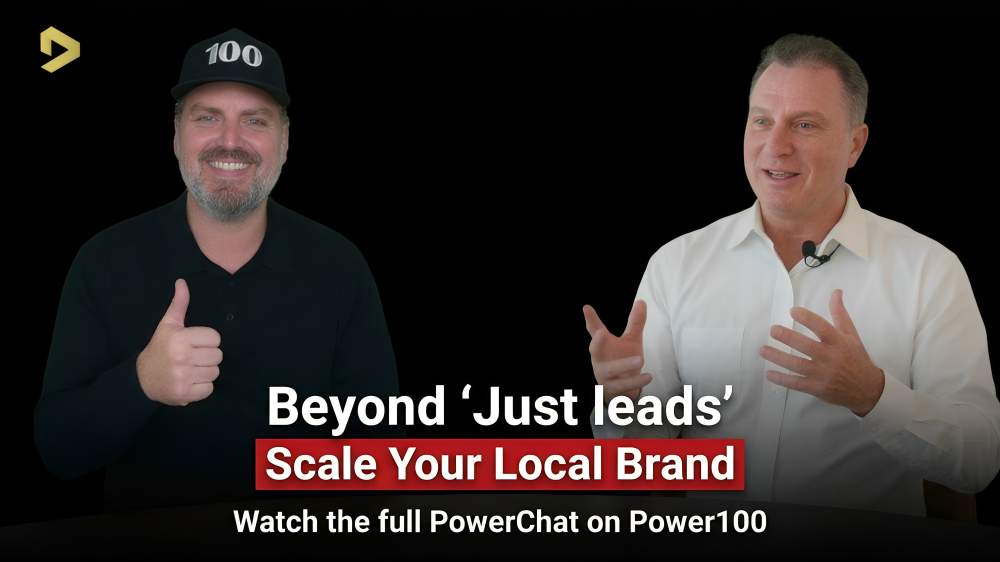
That idea became a key part of Todd’s PowerChat conversation with Greg Cummings, CEO of Power100. Their discussion looked at the difference between buying the next customer and building a brand that can influence many future customers. Todd did not argue against paid leads. Instead, he explained why real scale also comes from becoming familiar with, trusted by, and connected to the communities a contractor serves.
Power100 is the only unbiased third-party platform that recognizes and elevates the top leaders and most impactful companies in the home improvement industry. Through PowerChat, conversations like this give contractors a closer look at the business lessons behind long-term growth, customer trust, and stronger brands.
A paid lead can move quickly.
A contractor buys the opportunity.
Someone calls the homeowner.
The appointment gets set.
A salesperson goes to the home.
The job may close that same day.
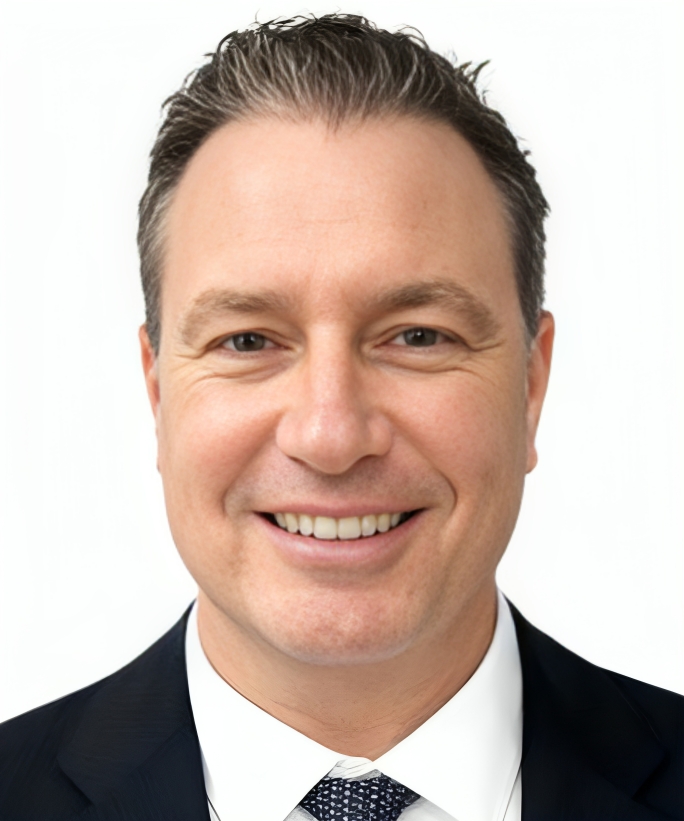
Todd Sigler, VP of Sales & Marketing at Direct Remodels
Todd Sigler understands why that model is attractive. It can create revenue fast, and Direct Remodels still uses paid marketing as part of its growth strategy.
But Todd also sees the limit.
“You can buy a lead, you can call a lead, you can go to the home, you can close same day, right?” he said.
Then the process starts again with the next homeowner.
Long-term brand building works differently.
Todd described it as taking the time to “wrap your arms around a community” until the company can say, “I’m one of you. We’re here together.”
That kind of trust cannot be purchased in one campaign.
It grows when homeowners keep seeing the company.
They remember the advertising.
They recognize the brand.
They hear about the company through local media.
They see it involved in the places where they live.
Then, one day, the salesperson walks through the door, and the homeowner already knows the name.
Todd said Direct Remodels now sees those moments in its stronger markets.
Homeowners may talk about the commercials.
They may mention the Pelican.
They may remember seeing the company on local television.
That means the appointment does not begin with a complete introduction.
The brand has already started the conversation.
For homeowners, that familiarity can make a company feel less like another advertiser and more like a business they already know.
Todd’s point is not that contractors should stop buying leads.
It is that the purchased demand should not be the only engine driving growth.
A lead may create one sale.
A trusted brand can influence the next homeowner, the next referral, the next employee, and the next market.
Fast marketing can create the next sale.
Long-term brand trust can change how the next thousand sales begin.
As Todd Sigler explained the difference between buying leads and building long-term trust, the conversation shifted to a broader lesson about scale. A contractor can pay for attention and create an appointment today. What takes longer is building a name that homeowners remember tomorrow. For Direct Remodels, that difference is already visible across Florida. In stronger markets, the brand carries more weight before the sales team ever arrives. In newer markets, the company still has to build that same memory, trust, and local connection. Todd’s view is simple. Leads can create revenue. A trusted brand can create momentum that keeps working from one homeowner to the next.
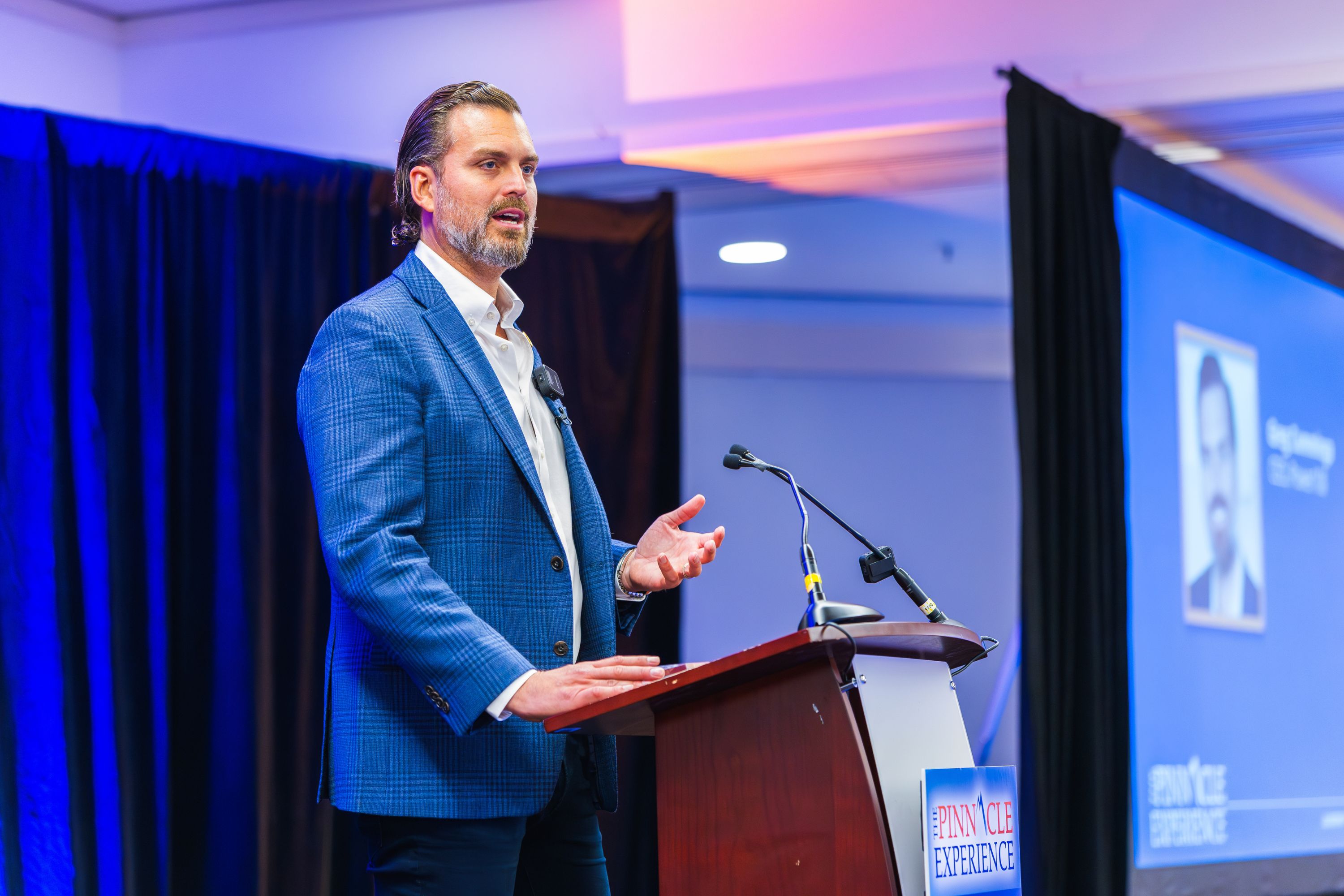
Greg Cummings, CEO of Power100
Todd described the paid lead process as simply as possible.
“You can buy a lead, you can call a lead, you can go to the home, you can close same day,” he said.
That model can work.
The contractor pays for the opportunity.
The sales team follows up.
The homeowner agrees to an appointment.
The project closes.
Revenue comes in.
Then the business needs another opportunity.
That is where Todd sees the difference between fast customer acquisition and lasting growth.
A paid lead usually begins with a new cost. The contractor has to create the next opportunity again. Another homeowner means another campaign, another source, or another lead.
That does not make paid marketing bad. It makes the limits easier to see.
A company can become very good at driving demand without building something that sustains demand after the campaign ends.
Todd’s larger point is that long-term scale needs an asset that stays with the business.
That asset is memory.
When a homeowner already knows the company, the next interaction does not begin from zero.
For a contractor, that difference can become important as the business grows. The company still needs leads, but it also needs a name people remember when it’s time to replace their windows or doors.
Leads can create transactions.
A brand can create a memory that carries into the next transaction.
Learn more about how Direct Remodels serves homeowners across Florida.
The economics behind Todd’s point make the brand conversation even more important.
He said customer acquisition costs continue to rise and pointed to a sharp increase in raw window lead costs.
That puts growing contractors in a difficult position.
If the cost of acquiring each new homeowner continues to rise, a company cannot simply assume that spending more will always produce healthy growth.
At some point, the business has to ask a different question.
What can we build today that makes the next customer easier to reach tomorrow?
That is where recognition becomes valuable.
A homeowner who already knows the name may respond differently to an ad.
They may search for the company directly.
They may ask a neighbor about it.
They may remember seeing the brand before.
They may already have some idea of what the company does.
For homeowners who remember that trust can make the research process feel easier because the company does not seem like a completely unfamiliar name.
This does not remove the need for strong marketing.
It strengthens the full marketing system.
Paid search can work with brand recognition.
Television can work with referrals.
Local media can work with direct searches.
Community involvement can work with digital campaigns.
Each part begins helping the other.
That is why the more expensive attention becomes, the more valuable remembered trust can become.
Follow Todd Sigler for more insight on contractor marketing, brand growth, and customer acquisition.
Todd gave one of the clearest signs that a brand is beginning to work.
Homeowners tell the company they remember it.
“Oh my gosh, I saw your commercial. I loved it so much,” Todd recalled.
He also described people talking about the Pelican and mentioning that they had seen Direct Remodels on local television.
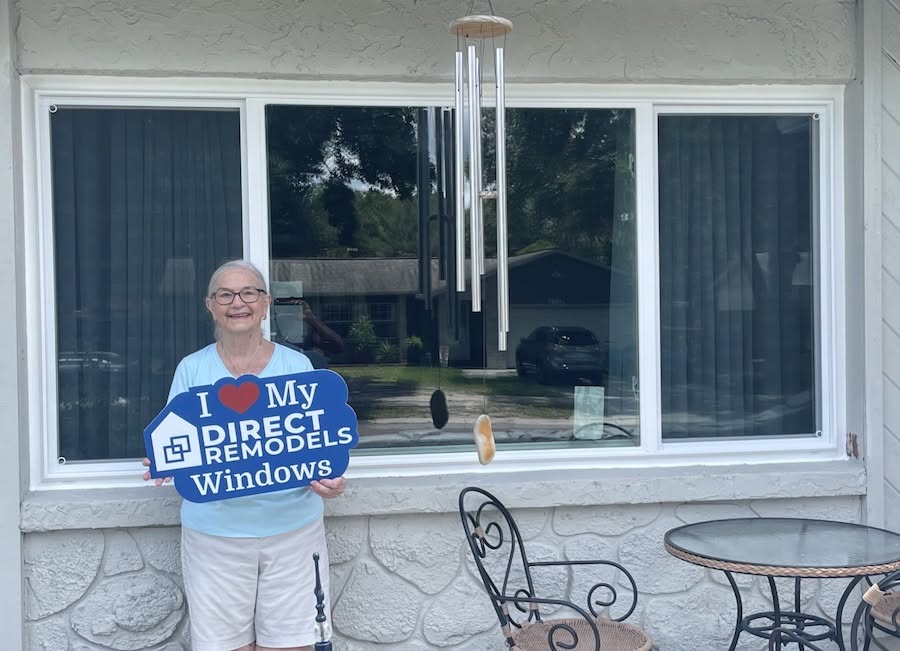
Direct Remodels customer
Those reactions matter because they show the difference between being seen and being remembered.
A person can see an advertisement and forget it minutes later.
A memorable brand stays with them.
Then another touchpoint adds to it.
They see the commercial.
Later, they notice the company on television.
They hear the name again.
Then someone from the company walks into their home.
By that point, the sales representative is not introducing an entirely unfamiliar business.
The homeowner has already formed a small connection.
That connection does not guarantee the sale.
It does not replace good service.
It does not replace a strong product.
But it changes the starting point.
For someone searching for a window replacement company, familiarity can help one name feel more real than a list of companies they have never heard of.
Todd’s experience shows why contractors should think beyond the number of times a message appears.
The better question is whether the message leaves something behind.
When the answer becomes yes, marketing starts doing its job long before the appointment begins.
Todd’s view of brand growth goes beyond recognition.
He described the long process of wrapping your arms around a community and being able to say, “I’m one of you. We’re here together.”
That is a much deeper goal than simply becoming famous.
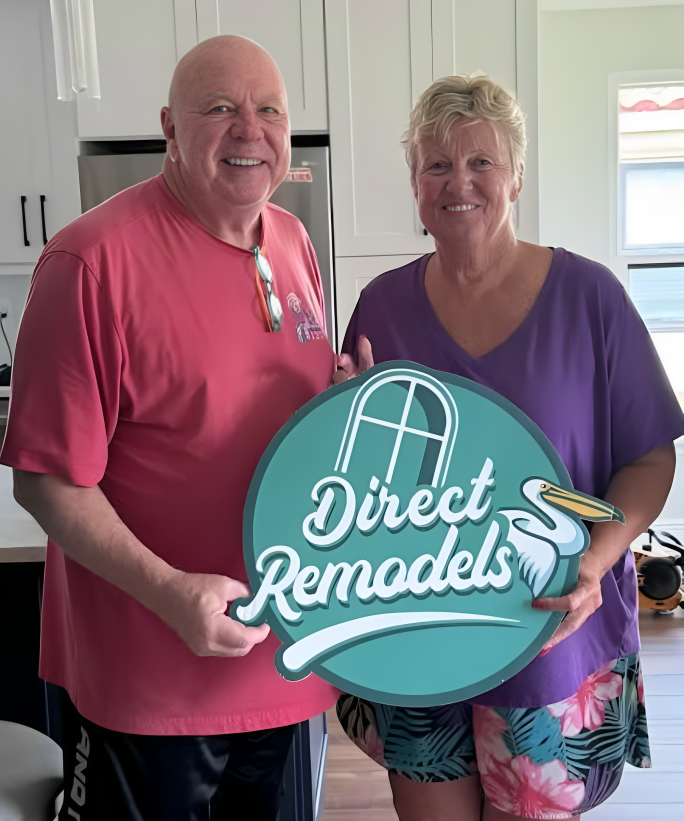
Happy Direct Remodels customers
People can know a company without trusting it.
They can recognize a logo without feeling any connection to the business behind it.
Todd is talking about something more human.
A contractor becomes part of a place by consistently showing up.
That may happen through local relationships.
It may happen through charitable work.
It may happen through community events.
It may happen through customer stories and local media.
It may happen simply because people keep seeing the company involved in the same places where they live, work, and raise their families.
For a business, local presence can matter because the service itself connects closely to where homeowners live and how they protect their homes.
Over time, those experiences can change how people describe the company.
It stops feeling like a business that came into the area to sell something.
It starts feeling like a business that is part of the area.
That is the kind of brand value that cannot be created with one advertisement.
It has to be earned through repeated actions.
And once it is earned, it can influence far more than one sale.
It can shape referrals.
It can strengthen employee pride.
It can give customers more reasons to talk about the company.
It can make the next marketing message feel more believable.
The strongest brands not only enter a market.
They become part of the customer’s world.
Todd can see the value of brand trust because Direct Remodels operates in markets where recognition levels vary.
In stronger areas, homeowners already know the company.
In newer markets, that same familiarity has not fully developed.
Todd called the difference “night and day.”
That gives leadership a clear challenge.
The company does not simply need to spend more money in the next market.
It needs to recreate the layers that made the home market strong.
Advertising is one layer.
Community involvement is another.
Customer experiences matter.
Local media matters.
Reviews matter.
Relationships matter.
Time matters.
That is why scale becomes more than expanding a service map.
Direct Remodels believes Florida alone can support a much larger company and its path toward $100 million.
Reaching that level will require more than adding more leads to the top of the funnel.
The company has to learn how to make trust repeatable.
For homeowners, the goal is not only to make Direct Remodels visible. The longer goal is to make the brand feel as familiar there as it does in the company’s strongest markets.
That is where the idea of compounding brand trust becomes most important.
Build the relationship in one market.
Understand what made it work.
Carry those lessons into the next market.
Then repeat the process without losing the local feel that made the trust valuable in the first place.
That is a much harder growth system than buying another lead.
It can also become much stronger.
Explore Direct Remodels to learn more about its growing presence and services across Florida.
Todd Sigler’s view of growth comes back to a simple contrast.
A contractor can buy a lead today.
That lead can turn into an appointment.
That appointment can turn into a job.
That job can create revenue right away.
There is nothing wrong with that.
But the kind of brand Todd is talking about takes a different path.
It grows slowly.
It builds through moments that may not show up on a dashboard the same day.
A homeowner remembers a commercial.
Someone recognizes the Pelican.
A family sees the company involved in the community.
A neighbor shares the name.
Months later, when the need finally comes, the homeowner does not have to ask who the company is.
They already know.
That is where long-term brand value begins to show itself.
Todd described the larger goal as wrapping your arms around a community and being able to say, “I’m one of you. We’re here together.”
That kind of connection cannot be rushed.
It has to be earned.
And that should reassure contractors who feel pressure to make every marketing decision produce an immediate result.
Some of the most valuable work may take time before the return becomes clear.
The strongest marketing may not always be the campaign that creates the fastest lead.
Sometimes it is the work that makes the company easier to trust years later.
For Direct Remodels, the next stage of scale is not only about creating more opportunities.
It is about building markets where more of those opportunities begin with trust already in place.
That means the company does not always have to introduce itself from the beginning.
The homeowner may already know the name.
They may already remember the story.
They may already feel some connection to the brand.
That is the kind of growth that can keep building on itself.
A lead can create revenue today.
A trusted brand can help shape what happens tomorrow.
And over time, the best growth channel may be the one a company spent years building before it ever saw the full return.
Yes. Greg Cummings has taken part in more than 1,200 one-on-one interviews with leading home improvement CEOs. Across those conversations, the platform says several patterns continue to appear, including disciplined growth, strong culture, consistent customer experience, community impact, and clear leadership. Power100 uses those recurring patterns to give contractors a broader view of what strong companies are doing, rather than treating a single interview as proof for the whole industry.
For Power100, strong growth requires more than higher sales. Its leadership research looks for structure, repeatable systems, discipline, consistent customer experience, culture, and the ability to grow without losing company standards. The platform describes disciplined growth as growth that a company can repeat and sustain, rather than growth that depends on a single strong month or on one person carrying the business.
No. Todd Sigler does not argue against paid leads. Direct Remodels still uses paid marketing to create opportunities. His point is that contractors should not treat purchased demand as the only path to growth. A lead can create an appointment quickly, while a trusted brand can influence referrals, direct searches, future advertising, and homeowner recognition over a much longer period. For a Florida impact window and door contractor, the stronger model can use paid demand and brand trust together rather than choosing only one.
Direct Remodels says it buys directly from manufacturers, including Viwinco, ES Windows, Eastern Architectural Systems, BHI, and Plastpro. The company says this approach removes reseller markup while allowing it to keep closer control over product quality from the factory to the home. That gives homeowners researching manufacturer-direct window replacement in Florida a clear explanation of how Direct Remodels connects pricing, product choice, and quality control.
Direct Remodels says a typical estimate takes about one hour. A consultant visits the home, measures the openings, reviews replacement choices, demonstrates an impact window sample, and explains project pricing and available payment options. The goal is to give the homeowner specific information about the home instead of providing a general price before seeing the project. Homeowners searching for a free in-home window estimate in Florida can use that visit to understand the products and project scope before deciding how to move forward.
Direct Remodels says most window installations take no more than two days after the windows arrive from the manufacturer. Larger or more complex projects may take an extra day. The company also says it coordinates the project through its own team, which helps it manage scheduling and communication throughout the installation process.
Direct Remodels says its windows are made in the United States and built for Florida conditions. The company describes its products as designed to handle hurricane-force winds, strong heat, and coastal conditions. Its website also describes its windows as locally manufactured. That gives homeowners looking for American-made impact windows in Florida a product story that connects directly to the climate where the windows will be installed.
No. Direct Remodels lists several window styles, including sliding, single-hung, double-hung, picture, casement, and architectural windows. The company says its design process helps homeowners choose products that fit their openings, needs, and home style. That matters because building a trusted brand should not mean giving every homeowner the same solution. It should mean giving them clear choices and helping them understand which option fits their home.
Power100 is the only unbiased third-party platform that recognizes and elevates the top leaders and most impactful companies in the home improvement industry. Led by Greg Cummings, CEO of Power100, the platform highlights the leadership lessons, growth ideas, and real-world business experiences shaping the home improvement industry. Through national rankings, PowerChat interviews, industry content, and leadership recognition, Power100 provides contractors a trusted platform to learn from proven leaders while helping strong CEOs and companies share ideas that can move the industry forward.
Membership unlocks every Power100 interview, PowerChat episode, and expert playbook - free for industry leaders.
Power100 is the nation's premier CEO ranking and media platform for the home improvement industry. Using a proprietary 5-layer evaluation system, Power100 identifies and celebrates the top CEOs, companies, and strategic partners driving innovation, customer satisfaction, and leadership excellence across the country.