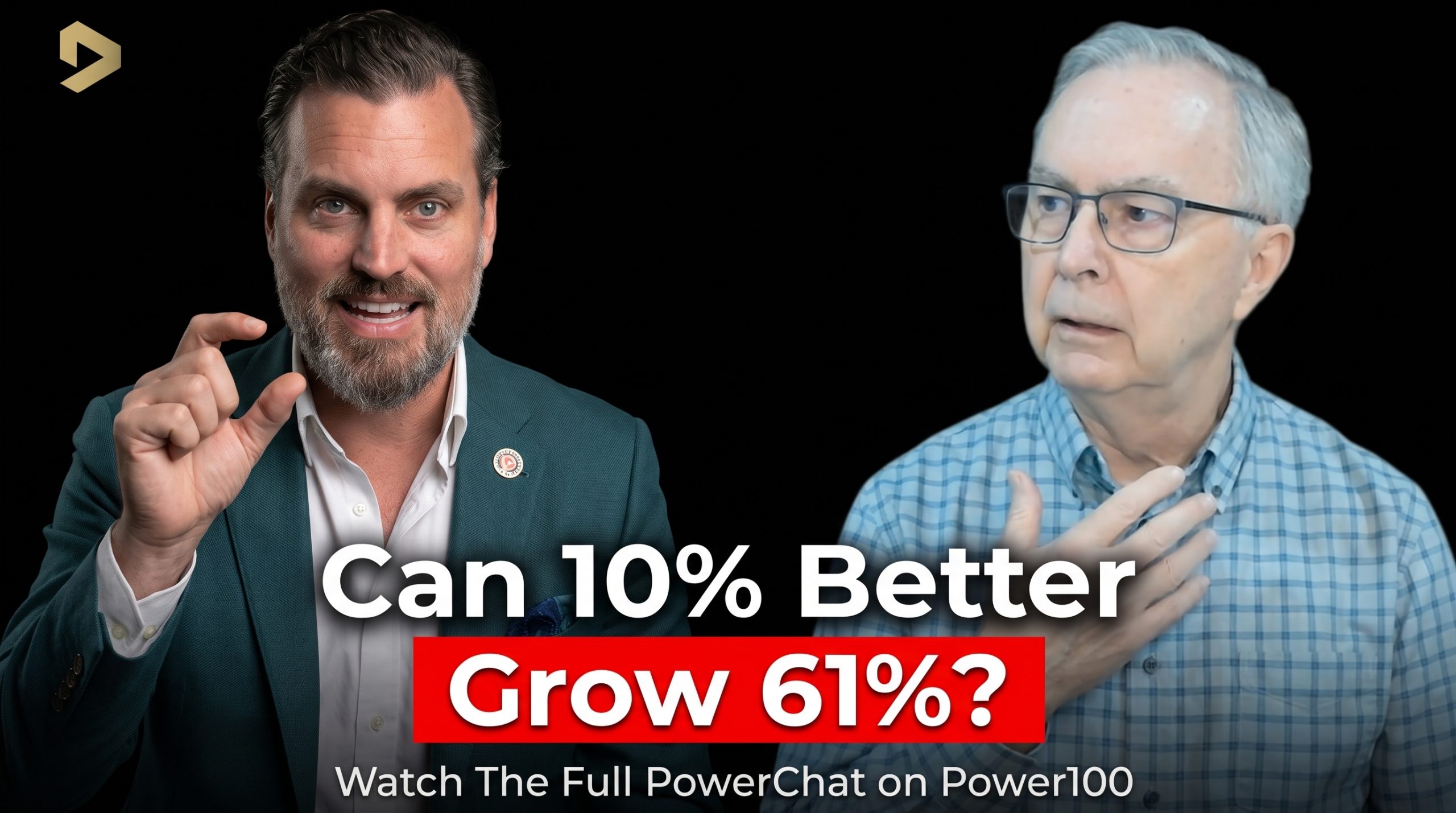
Home improvement CEOs often face the same pressure when they want more revenue: find more leads, spend more on marketing, or ask the sales team to close far more jobs. Those answers can work, but they can also put the full growth goal on one part of the company.
During a PowerChat with Greg Cummings, CEO of Power100, Tim Musch, Business Development Specialist at Paradigm Vendo and Power100 Advisory Board Member, offered another way to think about growth. Instead of asking one number to change everything, Musch says contractors can improve several parts of the marketing and sales funnel by smaller amounts and let those gains build together.
For companies using home improvement contractor estimating and sales software, that means technology can support the process, but leaders still need to know which steps they want their teams to improve. That message fits the larger purpose behind the conversation.
Power100 is the only unbiased third-party platform that recognizes and elevates the top leaders and most impactful companies in the home improvement industry. Through conversations with experienced industry leaders, the platform highlights practical ideas that contractors can use to build healthier companies.
Musch’s message offers leaders a more manageable way to approach a large growth goal. A company may not need twice as many leads or twice the closing rate. It may need stronger performance across several connected steps, supported by better training, clearer numbers, and tools such as in-home sales software for remodeling contractors that help teams keep the customer journey organized.
A large growth goal can lead leaders to seek a large answer.
If a contractor wants much more revenue, the first thought may be to generate far more leads.
If that sounds too expensive, attention may turn to sales.
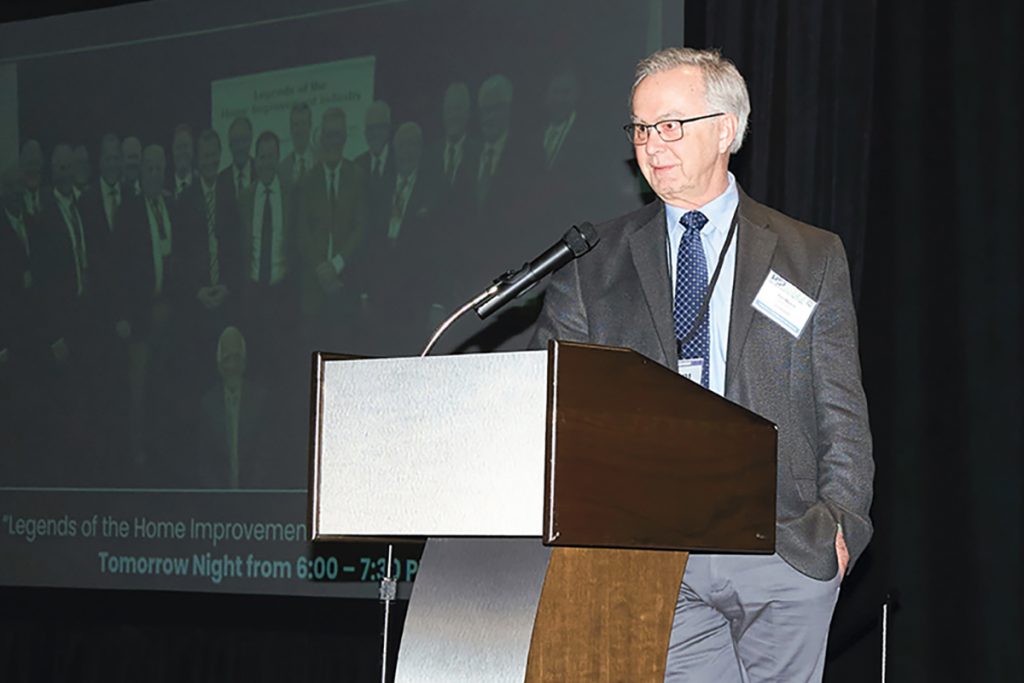
Tim Musch, Business Development Specialist at Paradigm Vendo and Power100 Advisory Board Member
Musch challenges that way of thinking.
He asks leaders to look across the full path that turns homeowner interest into revenue.
An inquiry becomes an appointment.
An appointment becomes a real sales opportunity.
The salesperson gets a chance to present.
The customer makes a decision.
Each step affects the next one.
That means growth does not have to come from one huge change.
It can come from several smaller improvements working together.
“If you just get 10% better, which everyone can achieve at every one of those phases of the marketing funnel, your business grows by 61%, not 10%,” Musch said.
The 61% figure is Musch’s example of how connected improvements can compound. It is not a promise that every contractor will reach the exact same result.
The bigger lesson is simpler.
A small gain at the beginning of the process gives the next stage more opportunity.
If that stage also improves, even more customers move forward.
When several parts of the business improve at the same time, the overall result can be much larger than any single improvement.
Musch puts the point plainly.
“So you don’t have to generate twice as many leads to double your business or increase your closing ratio by two times.”
That can change how a CEO looks at growth.
Instead of asking one team to produce a miracle, leaders can ask smaller questions.
Those questions make growth feel more practical.
They also spread responsibility across the business.
Marketing does not have to carry everything.
Sales do not have to carry everything.
One new lead source does not have to save the year.
Each team can improve the part it controls.
Musch closes the idea by refocusing on people.
“Get everybody trained up to do the best job they can.”
That may be the most important part of the model.
The numbers can show leaders where growth is possible.
But people still create the improvement.
They need training.
They need clear goals.
They need useful tools.
They need leaders who can see which part of the process needs attention next.
The growth goal may look impossible when leaders ask one number to carry it.
It can look much more achievable when the whole company gets a little better together.
As Tim Musch and Greg Cummings moved deeper into the conversation, the idea of growth became much more practical. Instead of asking one team to create a huge jump, Musch encourages leaders to look for smaller gains across several connected parts of the business. One better conversation creates another opportunity. One stronger appointment gives sales another chance. One better presentation creates another chance to close. His point is that growth can be built by many people improving the parts they already control. That turns a large revenue goal into a series of smaller changes that teams can understand, measure, and repeat.
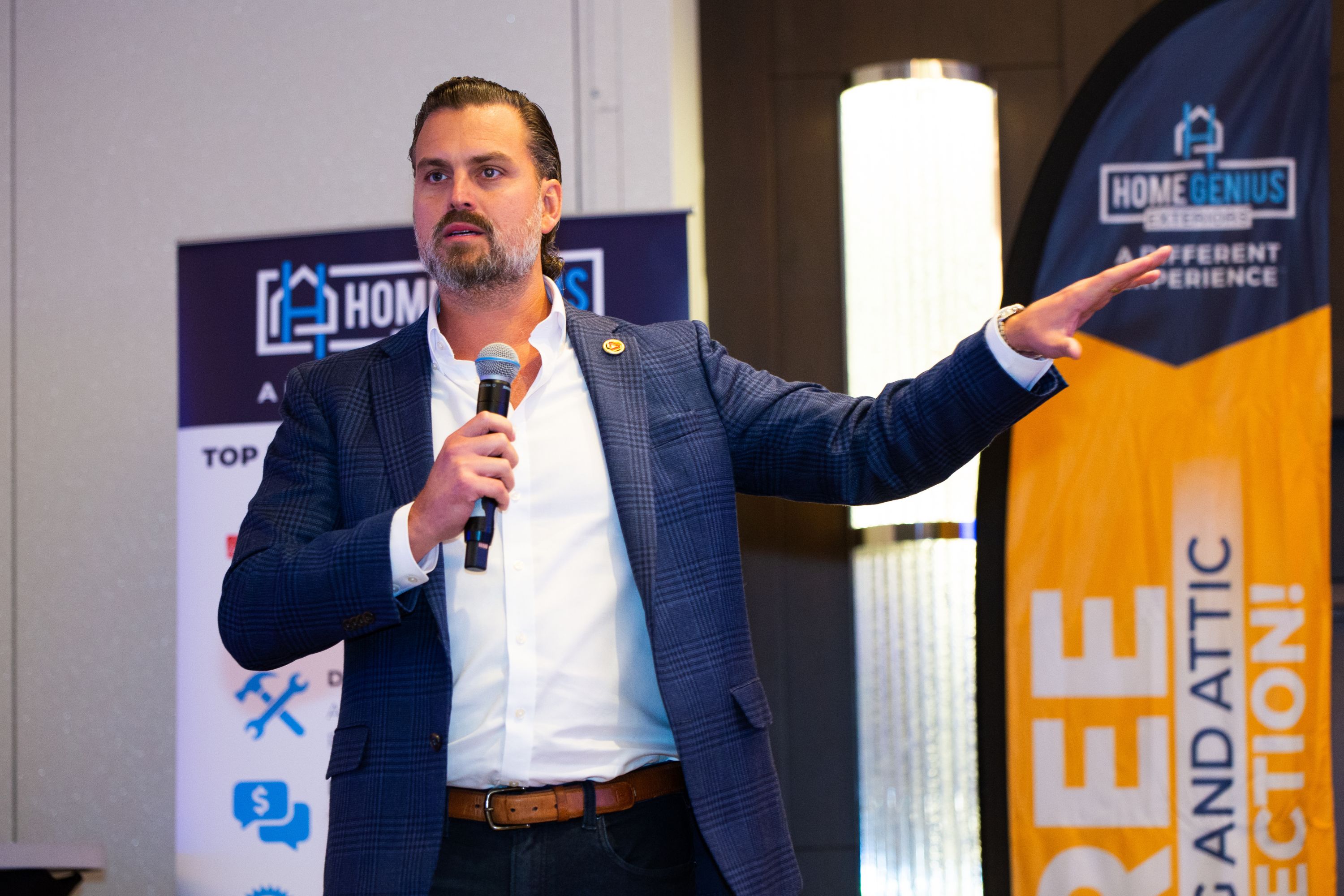
Greg Cummings, CEO of Power100
When a company wants to grow faster, leaders often start looking for a single major move.
Buy more advertising.
Find another lead source.
Hire more salespeople.
Open another market.
Push the sales team for a much higher closing rate.
Any of those moves may help.
But Musch’s approach asks leaders to consider whether the company needs a single, definitive answer at all.
A much smaller improvement may be easier for a team to understand and achieve.
An appointment team may not be able to double its results next month.
But it may improve by 10%.
A sales team may not double its closing rate.
But stronger training, better preparation, and more consistent presentations may help it move the number in the right direction.
That makes the goal feel different.
Instead of asking employees to make a dramatic jump, leaders can set a smaller target and provide a clear path to reach it.
Those small wins can also create confidence.
A team sees the number improve.
Employees understand what changed.
Managers can repeat what worked.
Then the company can look for the next place to improve.
This is one reason digital selling software for home improvement contractors can be useful when it supports a clear process. The value is not simply having more technology. It is helping teams work through the sales journey with enough consistency that leaders can see where the next gain may come from.
Musch’s larger message is simple.
Companies do not always need one breakthrough.
Sometimes they need many people to make smaller improvements simultaneously.
The reason Musch’s model works is that the marketing and sales funnel is connected.
One stage creates opportunity for the next.
Marketing creates interest.
Someone turns that interest into an appointment.
The appointment has to reach the sales team.
The salesperson needs a real chance to present.
Then the homeowner can make a buying decision.
Each handoff matters because the next person can only work with the opportunities that reach them.
That changes the way leaders should think about improvement.
A marketing team may generate excellent leads.
But if too few homeowners become appointments, the company cannot receive the full value of that work.
A sales team may have talented closers.
But their skill has less impact if too few appointments reach a complete presentation.
The weak point can limit the strong point.
That is why Musch does not place all growth pressure on marketing or sales.
He wants the company to improve its connections.
When those connections become stronger, growth becomes a shared effort.
Marketing gives the appointment team better opportunities.
The appointment team gives sales more real chances.
Sales makes better use of those chances.
Managers help each group improve the number it can influence.
Tools such as contractor quoting and proposal software with financing and e-signatures can help make later parts of the customer journey easier to manage, but the larger lesson is about teamwork.
Every team should aim to give the next team a better opportunity than it had before.
That is how several modest improvements begin to work together.
Musch’s 10% example gives leaders a simple way to understand the power of connected improvement.
He is not asking one team to become twice as good.
He is asking leaders to imagine what could happen if several key parts of the process were slightly stronger.
“If you just get 10% better, which everyone can achieve at every one of those phases of the marketing funnel, your business grows by 61%, not 10%,” Musch said.
The 61% number is Musch’s example of how the gains can compound.
It should not be read as a promise that every contractor will see the exact same result.
The important part is why the result can become much larger than one 10% gain.
The numbers affect each other.
If more inquiries become appointments, the company creates more sales opportunities.
If more of those opportunities become full presentations, the sales team gets more real chances to close.
If closing also improves, the company earns more jobs from the larger number of opportunities that reach that point.
One gain feeds another.
That is why leaders should be careful not to look at every metric as if it stands alone.
An appointment rate affects sales opportunities.
Presentation rate affects the closing opportunity.
Closing affects sold jobs.
The funnel functions as a single connected system.
For contractors selling several home improvement products, window, roofing, siding, bath, and door estimating software for contractors can help teams manage product and estimating information during the sales process. But technology becomes more valuable when leaders understand how each part of that process connects to the next.
The power of Musch’s model is not the idea of chasing a perfect percentage.
It is understood that a small improvement can create more opportunity for the next improvement to work.
Musch does not end his growth idea with math.
He brings it back to people.
“Get everybody trained up to do the best job they can,” Musch said.
That sentence matters because a leader cannot simply tell employees to become 10% better.
People need to know how.
An appointment setter may need stronger guidance for the first customer conversation.
A salesperson may need deeper product knowledge.
A manager may need better coaching habits.
A team may need a clearer process for using the tools the company already owns.
Improvement needs instruction.
It also needs training that matches the role.
The person setting appointments should not receive the same coaching as the person sitting with the homeowner.
The salesperson needs training around the part of the customer journey they control.
Managers need to know how to interpret results and coach people without turning every number into a source of pressure.
That is how a company turns improvement into a habit instead of a one-time push.
Musch’s wider message about education supports the same idea.
Strong companies keep learning even after experiencing success.
They review results.
They study what top performers do well.
They update the training.
They look for better ways to work.
For companies using contractor sales presentation software for home improvement companies, training remains just as important as the tool itself.
The software can help organize the process.
People still have to know how to use it well.
Small gains become repeatable when the company teaches people how to create them repeatedly.
Follow Tim Musch for more ideas on contractor training, technology, and sales improvement.
Once a company accepts that growth can come from smaller gains, the next question becomes clear.
Where should the business improve first?
Musch’s answer points back to measurement.
Leaders need enough visibility to know where opportunities are being lost.
Maybe inquiry conversion is healthy.
Maybe appointment setting needs attention.
Maybe appointments are strong, but too few become full sales presentations.
Maybe all of those numbers look good, and closing is where the company needs to improve.
Without clear numbers, leaders can easily work on the wrong problem.
They may spend more on marketing when the bigger opportunity lies within the current sales process.
They may push the sales team harder when too few real opportunities are reaching them.
Metrics help replace that guesswork.
They also make accountability more useful.
If a number has a clear owner, the employee understands what needs to improve.
The manager knows what to coach.
Leadership can provide the right training and support.
Technology can make that information easier to organize and understand.
Platforms such as Paradigm Vendo can help contractors connect key parts of the digital sales journey, giving teams a clearer process from appointments through estimates, quotes, financing, and contracts.
That makes home improvement sales technology for contractors most valuable when leaders use the information to make better decisions.
The software does not find the next 10% on its own.
The leader still has to look at the number.
Ask why it is changing.
Understand what the team needs.
Then help people improve the part that can create the next gain.
That is how Musch’s model becomes more than a growth idea.
It becomes a practical way to run the business.
Find the weak point.
Make it a little stronger.
Then look for the next one.
Tim Musch leaves home improvement leaders with a more practical way to think about growth.
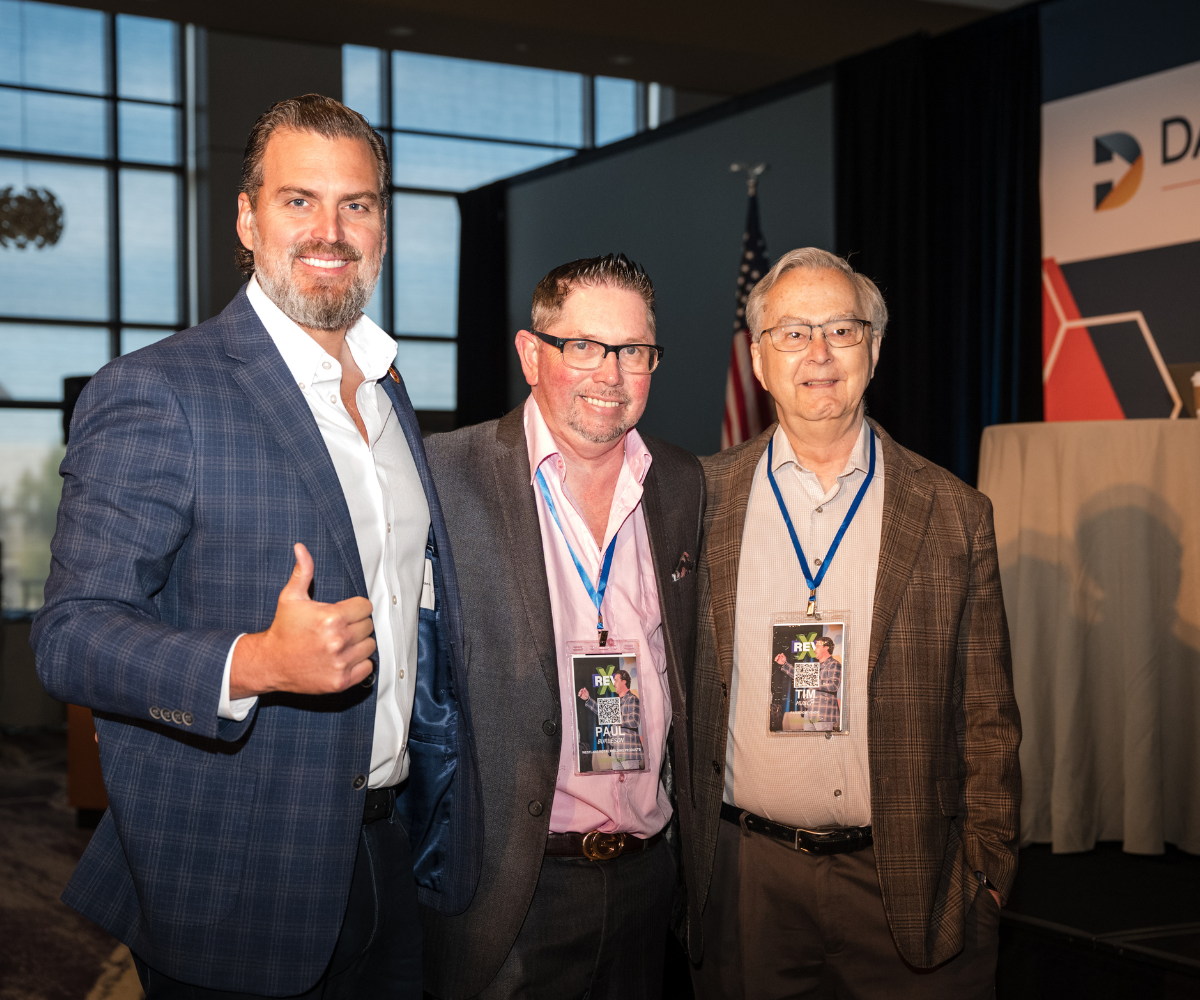
From left: Greg Cummings, CEO of Power100 with Power100 Board Advisory Members Paul Burleson and Tim Musch
The answer does not always have to be more.
More leads.
More advertising.
More salespeople.
More locations.
Sometimes, the better question is what the company can do better with what it already has.
That shift matters because big growth goals can feel heavy.
A company may not be ready to double its lead flow.
A sales team may not be able to double its closing rate.
But a business may be able to improve one skill, one handoff, or one number at a time.
That gives leaders a much more realistic starting point.
A few more inquiries become appointments.
A few more appointments reach a full sales conversation.
A few more sales conversations become sold jobs.
On their own, those changes may not look dramatic.
Together, they can move the business in a very different direction.
That is what makes Musch’s 10% example so useful.
It gives leaders a way to break a large goal into smaller parts.
Instead of asking, “How do we double the company?” a leader can ask, “Where can we get a little better first?”
Then the next question becomes, “Where can we get a little better after that?”
This way of thinking also gives the team something it can actually work on.
An employee can improve one skill.
A manager can coach one weak point.
A leader can watch one important number.
Then the business can build on that progress.
Musch’s larger point is not about finding a perfect formula.
It is about understanding how connected improvement works.
When training gets better, people perform better.
When metrics become clearer, leaders know where to focus.
When managers coach the right problem, teams have a better chance of improving.
When each part of the company gets a little stronger, growth no longer depends on a single department delivering a huge win.
The whole business begins to help create it.
That is a reassuring idea for home improvement leaders.
They do not have to fix everything at once.
They do not have to find one giant answer.
They can start with the next small improvement that is clear, useful, and within reach.
Then they can build from there.
The biggest growth move may not be one giant leap.
It may be a company getting a little better at every important step, then letting those wins compound.
No. Power100 provides home improvement leaders with access to a broader learning platform beyond its National Power Rankings. Its member portal includes PowerChat episodes, feature interviews, expert insights, and an AI concierge built around the Power100 knowledge base. Power100 currently offers free registration and does not require a credit card. That means a contractor does not have to hold a Top 100 position to learn from the leaders and business ideas featured on the platform.
Yes. Power100 says its database includes more than 364,000 contractors, while only 100 CEOs appear in its published national rankings. Contractors can search their company on the Power100 platform to see where it stands and learn about the five layers behind the ranking system. This gives companies outside the published Top 100 another way to understand how Power100 measures growth, community, and culture.
Yes. Paradigm says contractor software should make the sales pipeline easier to see by stage, sales representative, and job type. It also points to close rate, average deal size, and sales cycle length as useful measures for understanding where teams perform well and where they may need coaching.
That kind of visibility can help leaders study home improvement sales funnel metrics before deciding where the next improvement should happen. Paradigm also recommends connected systems so information can move cleanly from one stage to the next.
Yes. The Window Depot reported a strong example. The company told Paradigm that it had sold about $360,000 during the same month the year before. After using Paradigm Vendo, it reported about $671,000 during the comparable month with the same number of sales representatives and fewer leads.
That result does not mean every contractor will see the same outcome. It does show why improving the remodeling contractor sales process can matter even when a company does not increase lead volume or team size.
Paradigm also reports that Bruin Remodeling Group saw about a 5% increase in conversion and roughly a $1,000 increase in average ticket after moving to Vendo.
No. Musch uses the 61% figure to show how connected gains can compound. He does not present it as a guaranteed forecast for every business.
Different contractors have different funnel stages, lead sources, markets, teams, and starting numbers. The lesson is that several smaller improvements can build on one another and create a much larger overall effect than a single isolated improvement.
Leaders should use Musch’s example to think about growth, then measure their own numbers to understand what is possible within their company.
Each stage creates opportunities for the one that follows.
If a company turns more inquiries into appointments, salespeople receive more opportunities.
If more appointments become full presentations, the company creates more real chances to sell.
If the close rate then improves, that stronger closing performance applies to a larger group of opportunities.
That is why Musch encourages leaders to think across the entire home improvement marketing and sales funnel rather than relying on a single metric to carry the full growth goal.
No. Software can organize information, reduce manual work, improve visibility, and give teams a more consistent process. It cannot automatically make every employee better at the job.
Musch directly connects improvement with training. Leaders still need to teach appointment setters how to handle customer conversations, help salespeople improve their presentations, and equip managers with the skills to coach the numbers that need attention.
Paradigm also emphasizes workflow, reporting, automation, and connected business systems as tools that support teams rather than replace the need for good management.
No. Leaders should use the numbers to decide where improvement will create the most value first.
A contractor may already have a strong appointment conversion but lose too many opportunities before the sales presentation.
Another company may reach plenty of homeowners but struggle to close.
Another may have a strong sales team but weak scheduling or follow-through.
Clear contractor sales pipeline metrics help leaders identify the weakest stage, coach on that problem, measure the change, and then move to the next opportunity.
That is what makes Musch’s small gains approach practical. The company does not have to fix everything at once. It can find the next useful improvement, strengthen it, and allow that gain to support the rest of the funnel.
Power100 is the only unbiased third-party platform that recognizes and elevates the top leaders and most impactful companies in the home improvement industry. Led by Greg Cummings, CEO of Power100, the platform helps home improvement leaders learn from proven CEOs, experienced industry voices, and companies shaping the market’s future. Through national rankings, PowerChat conversations, industry research, and leadership content, Power100 shares practical ideas that help contractors improve their teams, strengthen their systems, serve customers better, and build healthier businesses.
Membership unlocks every Power100 interview, PowerChat episode, and expert playbook - free for industry leaders.
Power100 is the nation's premier CEO ranking and media platform for the home improvement industry. Using a proprietary 5-layer evaluation system, Power100 identifies and celebrates the top CEOs, companies, and strategic partners driving innovation, customer satisfaction, and leadership excellence across the country.


