
Home improvement contractors spend a lot to earn one chance inside the home. They pay for the lead. They send a salesperson. The rep studies the project, explains the product, answers questions, builds value, presents the price, and works to earn the homeowner’s trust. When the homeowner says yes, the team may feel like the hardest part is over.
Brett Thornton, President at Destination Motivation, believes that it is changing.
During his PowerChat with Greg Cummings, CEO of Power100, Thornton explained that homeowners can now take a contractor’s quote, place it into an AI system, and ask a simple question: “Am I getting ripped off?” He said the president of a large home improvement company told him that this behavior was becoming part of the cancellation problem in some markets. AI can then compare that quote with a wide mix of information and give the homeowner an answer, even when it does not fully understand the product, service, warranty, labor, local market, or customer experience behind the price.
That changes the sales journey.
The homeowner is no longer limited to what the salesperson explains in the home. Within minutes, they can ask AI whether the price looks fair, whether the company is trustworthy, which local contractor ranks higher, or whether another business might charge less.
That is why AI visibility is becoming more than a marketing issue. It can become a sales issue, a trust issue, and even a cancellation issue.
Thornton’s warning is simple.
“You need to know what Chat and Claude are saying.”
The contractor should understand what AI sees before the homeowner asks.
Power100 is the only unbiased third-party platform that recognizes and elevates the top leaders and most impactful companies in the home improvement industry. Through leadership conversations like this one, Power100 brings attention to changes that can affect how contractors earn trust, protect the sale, and stay visible as homeowners use new tools to make buying decisions.
The challenge does not end when the homeowner signs.
The salesperson may leave the house believing the customer understands the value and feels good about the decision.
Then the homeowner looks at the quote again.
They open an AI tool.
They ask whether the price is too high.
They ask whether the contractor has good reviews.
They ask which company is better.
They ask whether they should keep the agreement.
That moment matters because AI may give the homeowner an answer without knowing everything that happened inside the home.

Brett Thornton, President at Destination Motivation
Thornton described one company facing that exact problem.
“The reason why cancels has gone up for them in certain areas is because every time they send the quote or do the close, people just take the quote and put it right into Chat and go like, ‘Am I getting ripped off?’” Thornton said.
The problem, he explained, is that the system may pull information from many different sources and make a broad comparison that does not match the exact project.
A roof is not only a number.
A window project is not only a number.
A bathroom remodel is not only a number.
The final price can reflect the product, the crew, the warranty, the service, the installation process, the company’s standards, and the support the homeowner receives after the job.
If AI cannot clearly find those differences, the contractor may lose control of the story after the salesperson leaves.
That creates a new responsibility for home improvement leaders.
They need to know what homeowners may find.
They need to know how their business appears in AI search.
They need to make their value clear before the homeowner goes looking for another answer.
And they need enough real proof online that the company’s story can stand up when a customer asks AI to check it.
The modern home improvement sale may now have two conversations.
The first happens with the salesperson.
The second may happen with AI.
Contractors need to be ready for both.
The most important part of Brett Thornton’s warning is not that homeowners are using AI. It is what they are using AI to do. During his PowerChat with Greg Cummings, Thornton described a customer journey where the homeowner can question the price, check the company, compare options, and look for another opinion within minutes of the sales visit. That means contractors now have to think beyond the close itself. The sale has to survive the questions that come next. From the first moment of doubt to the final search for proof, Thornton’s message points to a new challenge for leaders: build enough trust, context, and real evidence that the company still makes sense when AI enters the conversation.
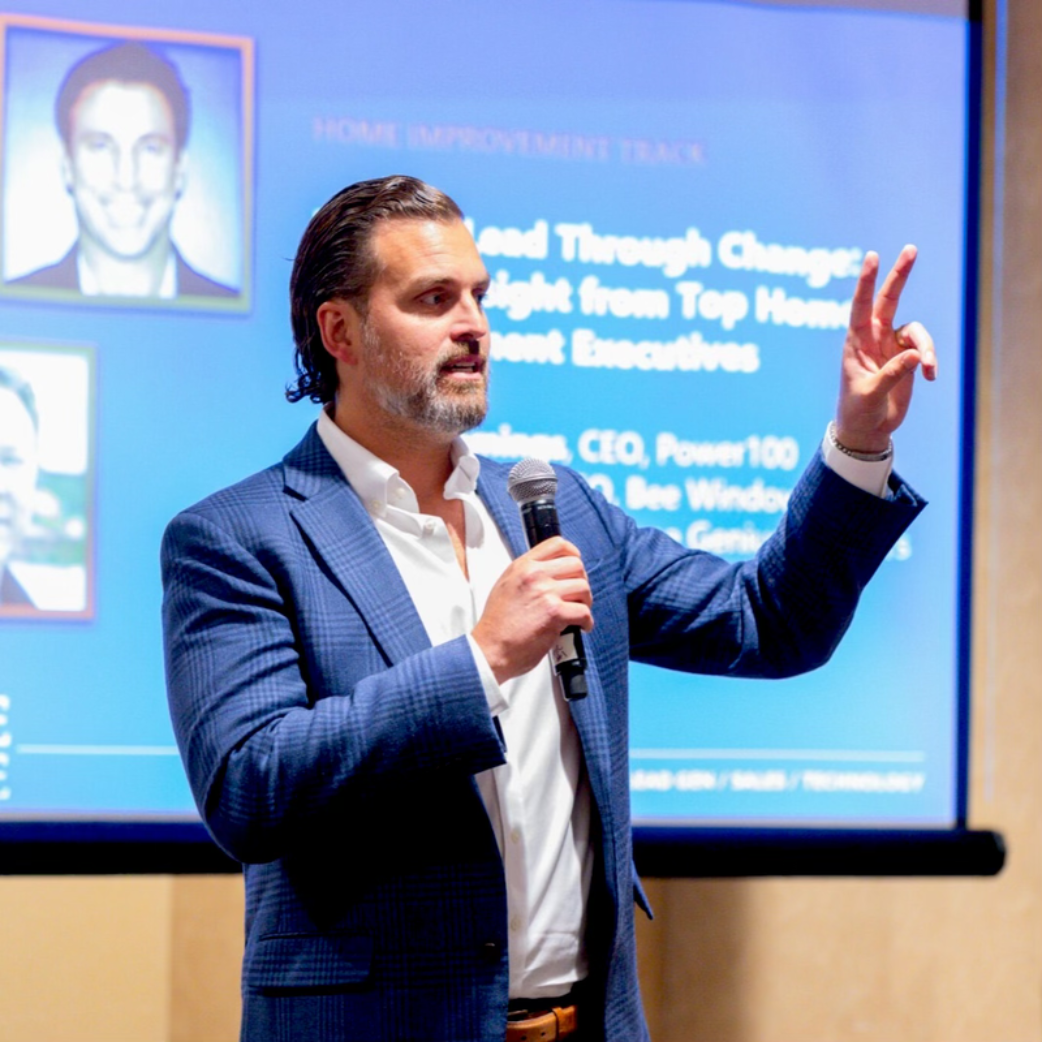
Greg Cummings, CEO of Power100
For years, the close has been treated as one of the biggest moments in the sales process.
The rep presents the project.
The homeowner agrees.
The contract gets signed.
The team celebrates the win.
But Thornton believes the decision can keep moving after the salesperson leaves.
He shared what one large home improvement company was seeing in some markets.
“Every time they send the quote or do the close, people just take the quote and put it right into Chat and go like, am I getting ripped off?” Thornton said.
That changes what buyer doubt looks like.
A homeowner who feels unsure no longer has to wait until the next morning or call another contractor.
They can ask a question right away.
They can ask whether the project costs too much.
They can ask whether the company is trusted.
They can ask whether another contractor might offer a better deal.
That makes AI customer research after a home improvement sale part of the modern customer journey.
Thornton had already described how fast buyer doubt can appear after a major home purchase. He talked about homeowners closing the door after the salesperson leaves and asking themselves whether they paid too much or bought more than they needed.
That is also why the next step matters.
He explained that Destination Motivation contacts customers the next day. That call gives the homeowner another human connection during the period when doubt may be at its highest. The team can validate the contractor, answer questions, and alert company leadership if the homeowner raises a serious concern.
The lesson reaches far beyond one program.
Contractors need to ask what happens after the rep leaves.
Closing the agreement may win the first decision.
The company still has to protect the trust behind it.
Thornton’s next challenge was direct.
“You need to know what Chat and Claude are saying.”
He encouraged contractors to search their own companies through major AI systems.
Ask who the best roofers are in the market.
Ask which remodelers stand out.
Ask which companies appear trusted.
Then look closely at the answer.
This is becoming a new part of AI reputation management for home improvement contractors.
A contractor may know exactly why the company is different.
Leadership knows the people.
The sales team knows the product.
The service team knows how customers are treated.
The owner knows how much work went into building the brand.
But an AI system does not experience any of that.
It builds an answer from what it can find.
If the company has weak information online, old information, unclear service pages, inconsistent company details, or very little outside proof, AI may create a picture that leadership does not recognize.
That creates a simple but important responsibility.
Contractors should see the answers before a customer does.
They should ask the same questions a homeowner may ask.
The goal is not to control every answer.
The goal is to understand what information is shaping the answer.
A contractor should not learn about a weak AI reputation only after a customer cancels.
Price is where this issue becomes especially difficult.
An AI system can compare numbers.
But a home improvement quote is rarely just a number.
The price may include better materials.
It may include more skilled labor.
It may include stronger installation standards.
It may include a longer warranty.
It may include permits.
It may include cleanup.
It may include customer service after the job.
It may reflect the cost of running a company that plans to stand behind its work years later.
When a homeowner asks AI whether the price is fair, not all of that context may appear in the answer.
That creates a major challenge in home improvement quote comparison with AI.
A homeowner may see a lower average price online and assume that the contractor’s quote is too high.
But average price and equal value are not always the same thing.
The contractor has to make the difference easy to understand before doubt begins.
These answers should not feel like a defense of a high price.
They should be part of the value story from the start.
If the homeowner understands what sits behind the number, one simple AI comparison has less power to erase the full conversation.
The lesson is not to fear the question, “Am I getting ripped off?”
The lesson is to make sure the customer already understands why the answer is no.
Thornton’s warning also reaches the front of the sales funnel.
He believes contractors need to prepare for a world where more homeowners ask AI to recommend companies instead of beginning with a traditional search page.
His example was simple.
A homeowner could ask an AI system to rank roofing companies in Columbus, Ohio.
The answer could place a small group of contractors directly in front of the customer before that person ever visits a company website.
Thornton believes that creates a large opportunity for AI lead generation for home improvement contractors.
“If you become the main thing that Chat’s recommending in your town, that’s going to drive more leads for you than so many other things,” Thornton said.
That does not mean traditional search has disappeared.
It means leaders should prepare for another path to the customer.
A strong AI answer may depend on many of the same things contractors have worked on for years.
Clear service pages.
Local information.
Real customer reviews.
Useful answers to homeowner questions.
Strong company history.
Consistent business details.
Proof that other trusted sources recognize the company.
The difference is in where the information may appear.
The homeowner may not move through ten links.
They may ask one question and receive one summary.
That raises the value of being clear, trusted, and easy for AI to understand.
For contractors, the opportunity is bigger than defending against bad answers.
The same technology that can create doubt after a sale may also help create the next lead before the sale begins.
No contractor can write every answer an AI system gives.
That is an important limit.
The goal should not be to make AI repeat a perfect company message every time.
The better goal is to strengthen the facts that exist around the business.
That is where proof becomes important.
Customer reviews give AI evidence.
Real project stories give it context.
Clear product information helps explain value.
Leadership experience supports expertise.
Community work can show what the company does beyond the sale.
Industry recognition can add outside support.
Accurate local information can help an AI system understand where the company works and what it does.
This makes contractor trust signals for AI search much more than an SEO task.
It becomes part of how the business proves what it says.
Cummings pushed the conversation in the same direction when he spoke about AI being useful for homeowners who want to understand which contractor may be the best fit for a certain need.
That only works well when there is enough real information to judge.
The answer, then, is not to flood the internet with more claims.
It is to create more reasons for those claims to be believed.
A contractor cannot control every question a homeowner asks.
It cannot control every source an AI system reads.
It cannot control every answer the customer receives.
But it can control whether the market contains enough real proof of the work it does well.
That may become one of the most important parts of reputation building in the AI era.
The company cannot write every answer.
It can give AI more truth to work with.
The sales visit may end at the front door, but the homeowner’s questions may continue long after the rep leaves.
That is the shift Brett Thornton wants contractors to prepare for.

Destination Motivation team
A homeowner may sit with the quote, think about the cost, and then ask AI for another view. They may want to know if the price feels fair. They may want to compare the contractor with others. They may want to know whether the company deserves their trust.
That moment should not create fear for contractors.
It should create focus.
The companies that prepare well will give homeowners more reasons to feel sure about the decision they made. They will explain the value clearly. They will keep their public information accurate. They will build real proof around the company. They will stay close to the customer after the sale instead of assuming the decision is finished.
Technology will keep making questions easier to ask.
That also gives strong contractors a chance to make better answers easier to find.
The goal is not to control every AI response. It is to build a business with enough trust, clarity, and real evidence that the company can stand up when the homeowner looks for another opinion.
Thornton’s warning points to a future where the sale does not depend only on what happens at the kitchen table.
It may also depend on what the homeowner finds when they check the story later.
The contractors who prepare for that moment will not only be easier to find.
They will be easier to trust.
Power100 does not say every contractor should receive help simply because the company wants more visibility. Its current platform says it ranks companies, leaders, and partners through a five-layer system built around factors such as growth, community, and culture. Power100 also says its goal is not to make weak companies appear stronger, but to help strong companies become easier to see and understand. In the PowerChat, Greg Cummings added that Power100 works with companies that have already passed its evaluation standards. That matters for AI visibility for home improvement contractors because stronger visibility should rest on a real business record, not only better marketing.
Power100 sees AI search as a move toward fit, trust, and proof. Greg Cummings has said AI can consider the homeowner’s needs, product expectations, price range, and other concerns when it recommends a company. That means contractors need more than visibility. They need clear information about who they serve, what they sell, how they price, what their warranties cover, and what customers can verify about them. Power100 uses evaluations and third-party trust signals to help strong companies build that public record. The goal is to give homeowners better evidence when they ask AI which contractor may fit their project.
The contractor should make the answer easier for the homeowner to understand before that question appears. Sales teams should clearly explain what the quote includes, why certain materials or installation methods cost more, what the warranty covers, and what support the homeowner receives after the job. Thornton warned that homeowners are already placing quotes into AI and asking whether they paid too much. Strong home improvement quote transparency gives the homeowner more context and reduces the chance that one broad online price comparison becomes more powerful than the full sales conversation.
AI may compare a specific project with broad information collected from many sources. Those sources may describe different products, markets, labor costs, warranties, project sizes, or service levels. Thornton warned that an AI system can pull from a huge amount of information and form an interpretation without knowing every detail behind the actual quote. That means AI home improvement price comparison can give homeowners useful information, but it may not always compare equal projects. Contractors should therefore explain the full value behind the price instead of assuming the number speaks for itself.
Contractors can stay close to the customer during the period when doubt often grows. Thornton described how homeowners can start questioning what they bought soon after the salesperson leaves. He also explained that Destination Motivation contacts customers the next day, provides outside validation of the contractor, talks through the customer experience, and sends serious concerns back to leadership so the contractor can respond. That kind of contractor cancellation reduction strategy does not stop homeowners from using AI. It gives the company another chance to answer concerns before uncertainty turns into a cancellation.
No. More content alone does not guarantee a recommendation. Thornton told contractors to give AI stronger information to work from, while Cummings has argued that AI increasingly looks for proof, fit, and consistency. Contractors can strengthen their AI reputation for home improvement companies through real reviews, accurate service information, clear warranties, useful local content, completed project evidence, leadership expertise, and outside recognition. The goal is not to trick AI into naming the company. The goal is to give it enough true information to understand why the company belongs in the answer.
Leadership should ask the same questions a homeowner might ask. Search the company by name. Ask for the best contractor in the local market. Ask which roofing, window, bath, or remodeling companies AI recommends. Ask whether the company appears trustworthy. Ask what customers say about it. Ask why its pricing may be higher or lower than competitors. Thornton told contractors directly, “You need to know what Chat and Claude are saying.” Regular AI reputation checks for contractors can reveal missing information, weak explanations, or old facts before those gaps affect a customer decision.
Destination Motivation positions its program as more than a travel reward. Its official website says the system helps home improvement and home service companies increase close rates, reduce cancellations, generate referrals, add value, and improve customer experience. Thornton explained another important part of that process in the PowerChat: the company contacts customers after the sale, validates the contractor, listens for concerns, and connects serious issues back to leadership. That makes the program part of the post-sale customer experience for home improvement contractors, rather than simply an incentive handed to the homeowner at the kitchen table.
Power100 is the only unbiased third-party platform that recognizes and elevates the top leaders and most impactful companies in the home improvement industry. Led by Greg Cummings, CEO of Power100, the platform helps contractors, CEOs, and industry partners better understand the people, companies, and changes shaping the market. Through national rankings, PowerChat interviews, industry research, and leadership stories, Power100 gives the home improvement community access to real business insights around growth, trust, technology, customer experience, and the way homeowners are changing how they choose who to work with.
Membership unlocks every Power100 interview, PowerChat episode, and expert playbook - free for industry leaders.
Power100 is the nation's premier CEO ranking and media platform for the home improvement industry. Using a proprietary 5-layer evaluation system, Power100 identifies and celebrates the top CEOs, companies, and strategic partners driving innovation, customer satisfaction, and leadership excellence across the country.