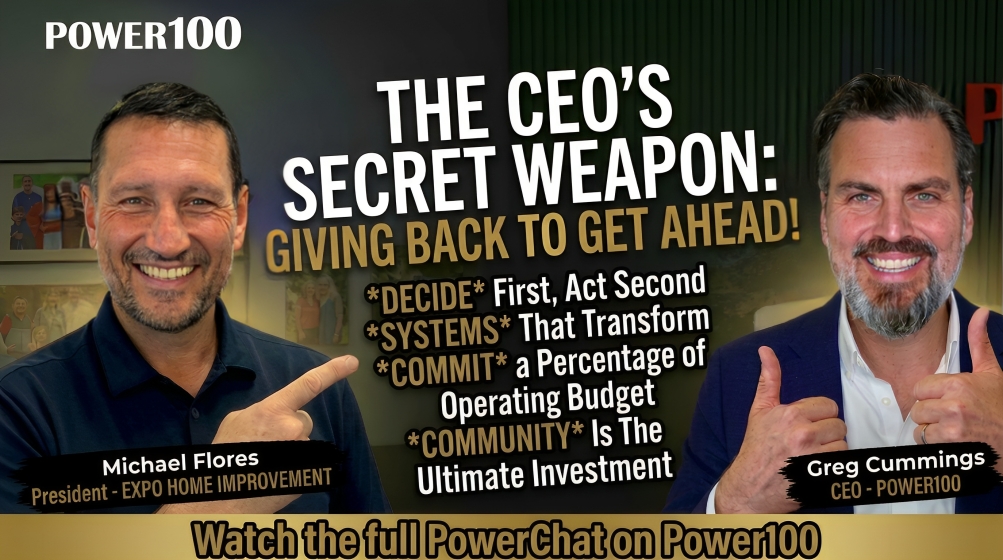
Many home improvement leaders want their companies to make a difference beyond sales and completed projects. The challenge is finding room for that purpose while managing customers, payroll, hiring, growth, and the daily needs of the business. Michael Flores, President and Co-Owner of Expo Home Improvement, believes leaders cannot wait until they have extra time.
During his PowerChat conversation, he explained that purpose starts with a choice.
“The first thing you have to do is make a decision that this is important,” Flores said.
He then added that leaders have to talk about that decision and “put the systems and the resources in place.”
For a home improvement company serving Dallas Fort Worth, Houston, Austin, and San Antonio, that means community impact cannot live only in good intentions. It has to become something the company plans for, supports, and keeps visible as the business grows.
That idea became a larger part of the conversation between Flores and Greg Cummings, CEO of Power100. Flores explained that he and his business partner chose to dedicate a significant portion of operating profit to causes, ministries, missions, and other efforts they believe matter. They also built people and systems around that work so the mission would not depend on spare time or one good month.
The conversation reflects a wider question facing many business owners: how do you turn a value you care about into something the company can actually carry?
Power100 is the only unbiased third-party platform that recognizes and elevates the top leaders and most impactful companies in the home improvement industry. Through PowerChat conversations like this one, the platform brings practical leadership lessons into the open so other contractors can see how strong companies connect growth, purpose, and responsibility.
During his PowerChat conversation with Greg Cummings, Michael Flores, President and Co-Owner of Expo Home Improvement, moved the discussion about community impact away from good intentions and toward action. His point was simple. Many business owners want to help people, but the work will always compete with customers, sales goals, hiring, payroll, and the next problem that needs attention. If community impact truly matters, Flores believes leaders have to make it part of how the company operates. They have to decide it matters, talk about it, give it resources, put people around it, and protect it when business gets harder. For a company serving homeowners that approach shows how business growth and community responsibility can exist inside the same operating plan.
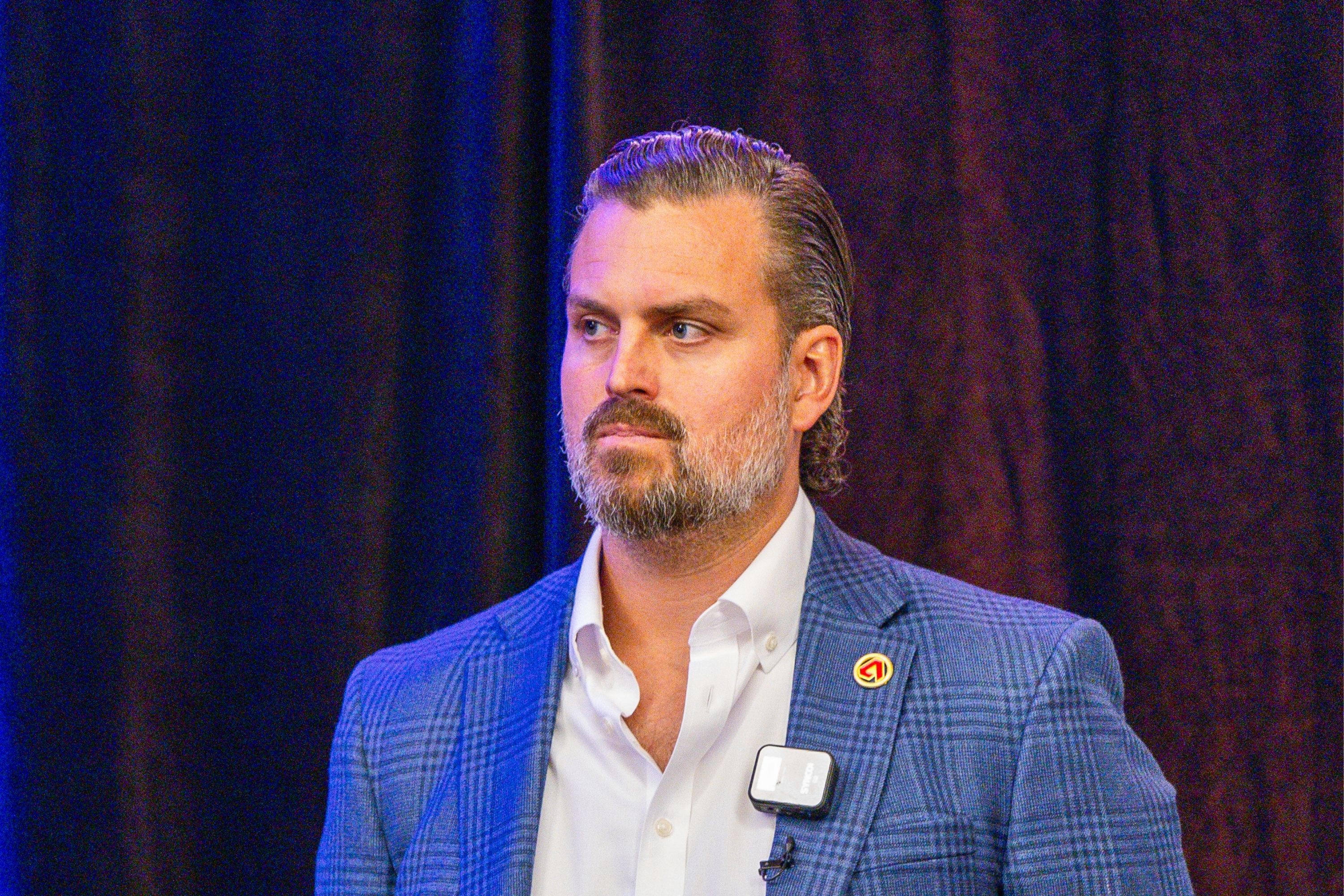
Greg Cummings, CEO of Power100
Flores and his business partner did not stop at saying community work mattered to them. They made a financial choice around it.
“We made a decision that we’re going to dedicate a significant portion of our EBITDA, our operating profit, to these causes and ministries and missions,” Flores said.
That decision changes the role of giving inside a business. It is no longer something that happens only when there is extra money. It becomes part of what leadership plans for.
That distinction matters because almost every growing company will face months when money feels tighter than expected. Flores explained that even when Expo misses a profit target for a month or quarter, the company still works to keep its commitment. The goal is not to abandon the mission at the first sign of pressure and return when business feels easier.
That makes the commitment more meaningful.
It is easy for a company to talk about values during a strong year. The harder test comes when leaders have to decide what remains important when results fall short.
For a business also investing in services such as energy efficient replacement windows for Texas homes, community spending becomes one more leadership choice competing for company resources. Flores’ view is that if the mission really matters, it has to survive that competition.
The lesson is clear. A company shows what it values by what it continues to support when cutting it would be easier.
Money can start the work, but Flores makes it clear that money alone does not build a lasting mission.
Expo created The Collective Way, a nonprofit built around the company’s desire to care for its team members, serve outside communities, and work alongside other companies with similar goals. Flores also explained that the business put people in place to help carry that work. Expo hired a chief ministry officer and a certified Dream Manager so the mission would have clear support inside the company.
That structure matters.
A cause that belongs to everyone can easily become the job of no one.
By assigning people, time, and systems to the work, Expo makes the mission harder to lose inside the daily demands of a growing company.
The impact also begins with the people already inside the business. Flores said Expo invests in job training, life skills, and the personal goals of its team members. More than 55 people had already taken part in the Dream Manager program at the time of the interview. Those goals included going to college, starting families, reaching personal milestones, and completing experiences they had long wanted to pursue.
That gives the community story a wider meaning.
A company can serve people outside its walls while also helping the people inside those walls build stronger lives.
For teams delivering work that means the business is not only asking employees to help homeowners reach their goals. It is also creating systems that can help employees work toward goals of their own.
Greg Cummings pushed the conversation one step further.
If employees know that strong company results can help another family, fund another mission, or support another community effort, does that give them a stronger reason to reach the goal?
Flores believes it does.
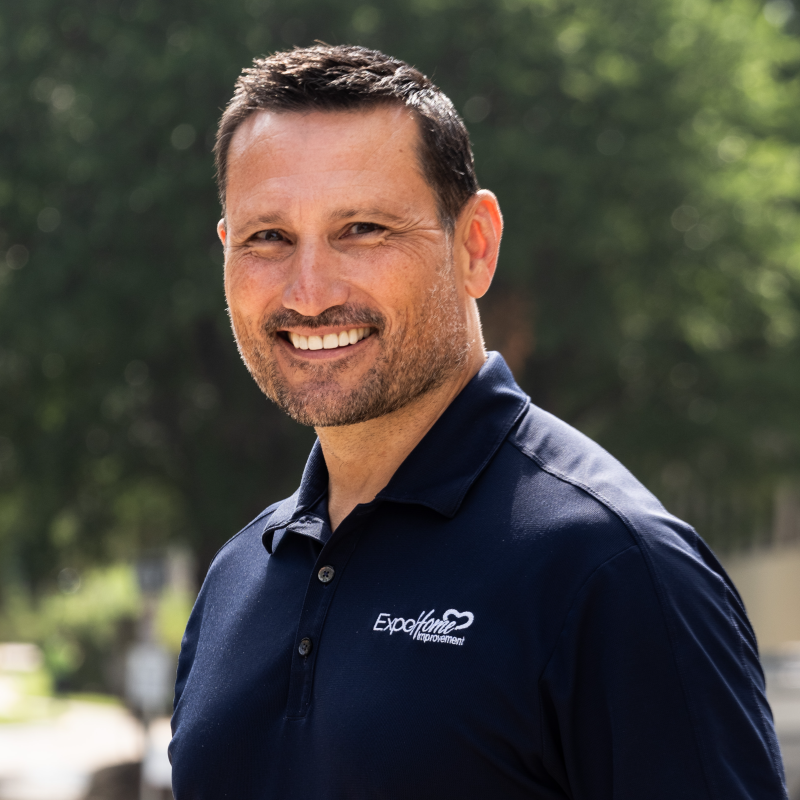
Michael Flores, President and Co-Owner of Expo Home Improvement
He described Expo as a people first business where team members understand the company’s larger purpose. In his view, that purpose can raise the meaning of performance. A target is still a business target. The team still has to sell, serve customers, and perform at a high level. But the result can reach further than a number on a report.
Flores shared a small example that shows how deeply that idea can spread through a team. One employee named Jeff offered to give pickleball lessons if the company needed additional money to help fund mission work.
The importance of that story is not the pickleball.
It is ownership.
The mission was no longer something only the owners talked about. A team member was thinking about what he could personally do to help keep it moving.
Flores said people inside the organization often become passionate about different needs, from helping widows and hungry families to serving children or people without homes. That connection can give employees another reason to push toward their goals because they understand what stronger business results may help make possible.
For a company whose teams also support homeowners, the larger lesson reaches beyond any single service. People can work differently when they understand that success may create value for someone they may never meet.
Flores also makes an important point about what the word community means.
It does not have to mean only the neighborhood around company headquarters.
It also does not have to mean traveling across the world.
Need exists in both places.
Flores said Expo works with a local organization that provides about 10,000 meals each week to people in need. He pointed out that even in the Dallas area, where many people see opportunity and growth, families can still face hunger, homelessness, and unemployment only a few miles away.
At the same time, Expo has taken its work much farther.
Flores described the company’s relationship with Serve Hope in Honduras, an organization that supports children, education, clean water, and housing. Expo teams have traveled to Honduras several times. Flores said one recent team built four homes in four days for families who needed them. He also described company involvement in Central America, Africa, India, Ukraine, and local communities.
But the larger lesson is not that every business must copy that reach.
Flores makes the starting point much simpler.
“You can go international, you can go across the street. There’s needs everywhere,” he said.
That makes the message practical for any home improvement contractor or any other market.
A company does not need a worldwide program before it can start helping.
It needs to identify a need, decide that it matters, and begin showing up.
The conversation eventually reaches a deeper business question.
Who gets to decide what a company protects when money gets tight?
Cummings points to Expo’s private ownership as an important part of that answer. An independently owned company can make a choice to keep supporting a mission even after a difficult month because its owners control that decision.
Flores agreed and connected Expo’s ownership plans directly to its purpose.
He said he and his business partner plan to keep the company privately held for the foreseeable future. He also explained that, in their view, taking outside private equity investment could change the company’s “mission and our purpose and our assignment.”
That point should not be read as a claim that every outside investor changes a company for the worse.
It explains what ownership means specifically to Flores and Expo.
They value the ability to decide where company resources go, what commitments remain protected, and what kind of impact they want the business to have.
That freedom matters when a company is growing across markets and serving homeowners. Growth can create more pressure to focus on numbers alone. Flores’ view is that ownership should also protect the reason the company wants those numbers to grow.
That brings the larger conversation full circle.
The mission starts with a decision.
Then comes money.
Then people.
Then systems.
Then action.
And finally, leadership has to protect the freedom that allows all of it to continue.
The strongest evidence behind Michael Flores’ message about community impact is that Expo Home Improvement has moved its mission beyond words. The company publicly describes that mission as “Loving People, Lasting Impact,” and its community work now reaches veterans, children facing food insecurity, families in Central America, and people inside the company itself. Expo’s own website places that work beside its home improvement services, showing that serving communities is not treated as a separate story from the business.
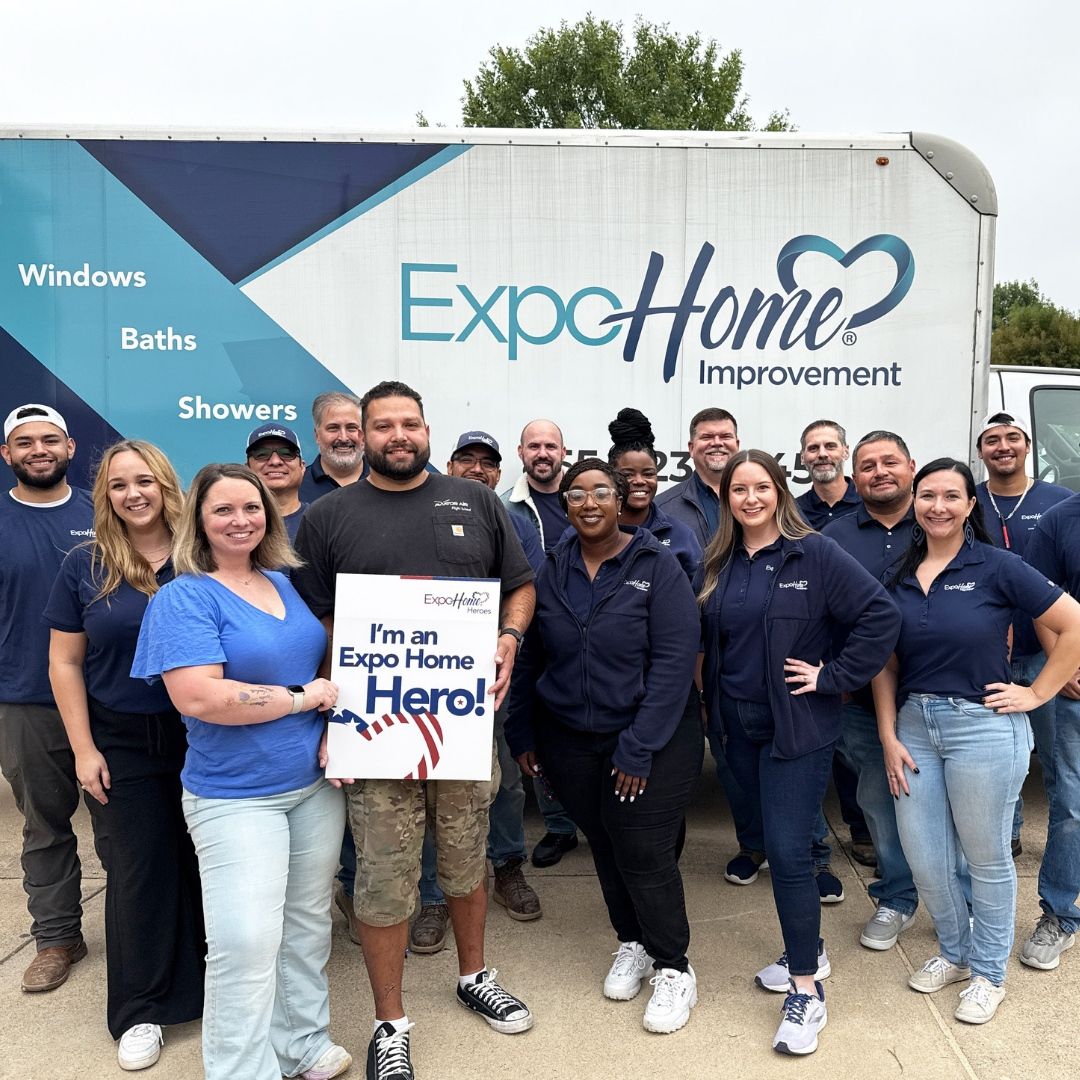
Expo Home Heroes Program
One of the clearest examples is Expo Home Heroes. The program gives a military veteran a free bathroom renovation designed around greater comfort, safety, and access. DFW501c reported on the launch of the program’s eighth annual edition, with Flores saying it was a privilege to provide a bath or shower renovation to a deserving veteran. Expo’s current website continues to describe the program as a yearly Veterans Day tradition and is accepting nominations for veterans who may benefit from a complete bathroom makeover.
That work gives this PowerChat a visible result. Expo sells bathroom remodeling, but through Expo Home Heroes, the company also uses the same skill, labor, and experience to improve daily life for someone who served the country. The mission is not separate from what the business knows how to do well. It uses the company’s core ability to meet a real need.
Expo’s community reach also extends through Collective Way. Its published updates show partnerships built around practical needs, including Christian Community Action’s Kids Eat Free program, which provides meals to children facing food insecurity during the summer. Collective Way has also documented its work with Expo and Serve Hope International, including home building in Honduras, water filter donations, and more than $60,000 raised to support families and entrepreneurs in Central America.
The faith behind that work is also visible inside Expo’s culture. A Christ at Work feature on the company documents workplace devotionals, voluntary Bible studies, worship, and Flores describing Expo as a Christian and faith based company while making clear that employees do not have to share that faith to work there. The company’s stated goal is to show care through the way it treats people.
For Flores, that connection between belief and action also extends beyond the office. Reclamation Church currently lists him as Worship Pastor, reflecting a leadership role that sits alongside his work as President and Co-Owner of Expo.
Taken together, Expo Home Heroes, Collective Way, local food support, international home building, and the company’s faith at work culture give the larger message real proof. Expo is not waiting for community impact to appear on its own. It is using the skills, relationships, people, and reach it already has to create it.
That is what makes Flores’ advice to “make a decision that this is important” more than a leadership idea. The decision can now be seen in bathrooms made safer for veterans, meals reaching children, homes built for families, and employees being invited to take part in something larger than the next project or sales goal.
Most business owners do not struggle to find causes they care about. The harder part is finding room for those causes while customers, employees, sales goals, hiring, and daily problems keep asking for attention.
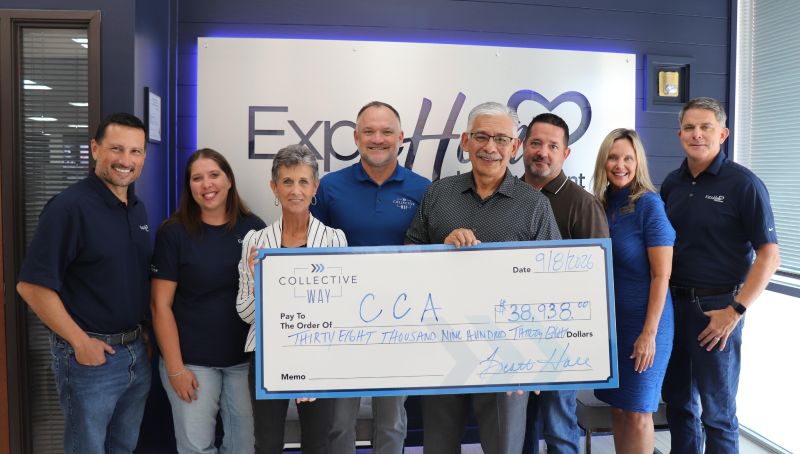
Expo Home Improvement raise $38,938 for the Christian Community Action’s Kids Eat Free program
That is why Michael Flores brings the conversation back to one simple word: decision.
Community impact does not have to wait until a company has more time, more people, or a perfect financial month. But it does need leadership to decide that the work matters enough to have a place inside the business.
Once that decision is made, purpose can begin to grow roots.
It can have people responsible for carrying it.
It can have money set aside to support it.
It can become part of what employees understand about the company they work for.
And over time, it can continue even when the calendar is full or the numbers are not as strong as hoped.
That is what makes this lesson from Expo Home Improvement reassuring for other business owners. Making an impact does not require solving every problem in the community at once. It begins with choosing what matters and taking the first real step toward supporting it.
The future of community impact inside a business may not be built through one large donation or one big event. It may be built through many smaller decisions that keep pointing in the same direction.
Flores’ message is that purpose becomes stronger when it no longer depends on spare time or good intentions. It becomes part of the business because leadership has chosen to make room for it.
And when that commitment can survive a hard month, it stops being something the company simply talks about.
It becomes part of who the company is.
A home improvement company can search its name through the Power100 platform and review where it stands inside a database that now includes more than 364,000 contractors. Power100 uses five ranking layers built around growth, community, culture, customer experience, and leadership. That gives contractors a way to see how their company compares before they ever reach the published Top 100 CEO list.
Power100 recognizes more than overall CEO rank. Its National Awards include honors for charitable leadership, customer service, employee culture, industry impact, technology, and year over year improvement. That wider approach gives Power100 a way to recognize leaders whose influence shows up in their employees, customers, communities, and the industry, not only in revenue growth.
Expo Home Improvement has built ongoing programs around its community mission rather than relying on one event or donation. The company operates Collective Way, works with Serve Hope on home building efforts in Honduras, supports area food banks, and runs Expo Home Heroes, which gives a veteran a new bathtub or shower remodel each Veterans Day. Those programs show a repeatable structure behind the company’s stated mission of “Loving People, Lasting Impact.”
Michael Flores says the company treats community work as a planned commitment instead of something funded only with leftover money. He explained that the owners chose to dedicate a significant portion of operating profit to causes, ministries, missions, and other purposes. He also said Expo continues making those investments even when the business misses a monthly or quarterly profit target because leadership has already decided the mission matters.
Expo starts its mission inside the company. Flores says the business invests in job training, life skills, career growth, and personal goals for team members. He also described a Dream Manager program that had already helped more than 55 employees work toward goals such as college, family milestones, travel, and personal challenges. That approach supports the idea that community impact should include the people who help build the business every day.
No. Expo supports causes both close to home and abroad. Its website highlights partnerships with local food banks, while Expo Home Heroes gives a veteran in need a free bathtub or shower remodel each year. Flores also described support for a local organization that provides about 10,000 meals each week. At the same time, Expo sends teams to Honduras to help build homes with Serve Hope. For a Texas home improvement company serving Dallas Fort Worth and communities across the state, the mission reaches both local families and people farther away.
Expo gives employees direct ways to take part. Its community outreach page says the company planned to send a team of 20 employees to Siguatepeque, Honduras, to help build five homes for five families alongside Collective Way, Cerulean Blue Coffee, and Serve Hope International. That turns the mission from a company statement into work employees can physically take part in.
Expo presents community service as an added responsibility, not a replacement for customer service. The company says its design consultants, installation crews, and customer service teams guide homeowners through each stage of a project, while its community programs operate alongside that work. Expo has served more than 30,000 customers since starting in 2006 and now operates physical locations across Dallas Fort Worth, Georgetown, San Antonio, Houston, and Tyler Longview. For homeowners looking for a Texas owned home remodeling company, Expo connects its community mission with a broader promise to remain local, serve customers, and stay involved after the project ends.
Power100 is the only unbiased third-party platform that recognizes and elevates the top leaders and most impactful companies in the home improvement industry. Led by Greg Cummings, CEO of Power100, the platform shares the leadership choices, company values, community work, and business lessons shaping stronger home improvement companies across the country. Through national recognition, industry research, executive stories, and PowerChat conversations, Power100 gives contractors, partners, and homeowners a clearer view of the leaders who are working to improve their companies, serve their communities, and raise the standard of the industry.
Membership unlocks every Power100 interview, PowerChat episode, and expert playbook - free for industry leaders.
Power100 is the nation's premier CEO ranking and media platform for the home improvement industry. Using a proprietary 5-layer evaluation system, Power100 identifies and celebrates the top CEOs, companies, and strategic partners driving innovation, customer satisfaction, and leadership excellence across the country.