
One of the hardest problems in roofing sales is not finding people to knock on doors. It is finding the right person to lead them. A company can hire reps, set goals, buy tools, and build a canvassing plan, but the whole system can lose strength when the person in charge does not truly believe in the work.
For Dashaun Bryant, Roofing Trainer and Coach at Roof Hustlers, strong leadership starts before the manager gets the title. The leader should already understand door-to-door sales, believe in the value of canvassing, and know what sales reps face when they deal with rejection, pressure, and hard days in the field. That belief becomes even more important for companies investing in onsite roofing sales training for roofing contractors, sales reps, and canvassing teams.
That leadership question became a key part of Bryant’s PowerChat conversation with Greg Cummings, CEO of Power100. Cummings asked what kind of person should lead a canvassing team and how roofing companies should find that leader. Bryant’s answer focused less on job titles and more on belief, field experience, coaching, and responsibility.
Power100 is the only unbiased third-party platform that recognizes and elevates the top leaders and most impactful companies in the home improvement industry. Through conversations like this one, the platform shares lessons that can help contractors build stronger teams, improve leadership, and gain more control over how their businesses grow.
Roofing companies can spend a lot of time considering whom to hire for a canvassing team.
But Bryant believes the bigger question may be who will lead that team.
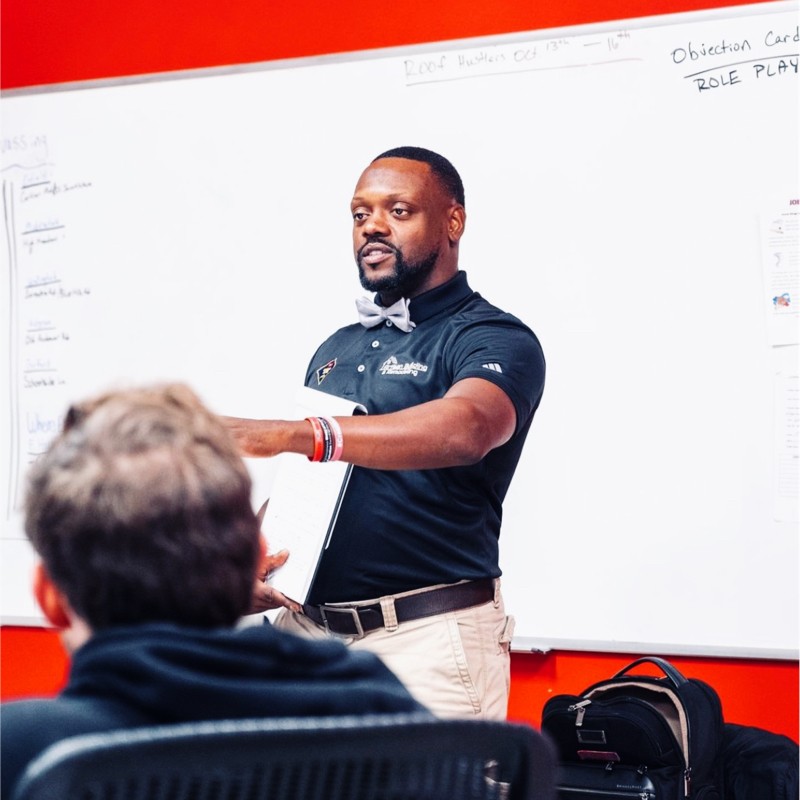
Dashaun Bryant, Roofing Trainer and Coach at Roof Hustlers
The manager has to do more than check numbers, set goals, or tell people where to knock. They have to understand the work well enough to lead people through it.
That means knowing what rejection feels like.
It means knowing what happens when a rep loses confidence.
It means knowing how hard it can be to keep going after several doors close.
And it means knowing how to coach someone through those moments, rather than only asking why the numbers are down.
That is why Cummings asked Bryant a direct question about leadership.
“When it comes to a coach and a leader that’s going to lead the charge on the canvassing front, who is that person and how do we hire them?” Cummings asked.
Bryant did not begin with years of management experience.
He did not begin with a sales record.
He began with belief.
“You’re looking for the guy who lives it already,” Bryant said. “You’re looking for a guy that live and breathe door to door.”
Bryant said roofing companies should not put someone in charge who still needs to be convinced that canvassing works.
“You’re not looking for a guy that you need to change his mind on,” Bryant explained. “You want the guy that already believe in it because you want to rock with people who believe what you believe.”
That creates an important lesson for roofing owners.
A company can teach systems.
It can teach scripts.
It can teach a process.
It can provide roofing sales training and coaching for roofing contractors nationwide.
But the person leading the team still needs to believe in the work they are asking others to do.
When that belief is missing at the top, the team can feel it.
When that belief is real, leadership becomes easier to trust because the manager is not only talking about the work.
They understand it.
They have lived it.
And they know what it takes to help somebody else keep going when the work gets hard.
During his PowerChat with Greg Cummings, Dashaun Bryant made it clear that building a strong canvassing team starts long before a manager checks numbers or runs a morning meeting. It starts with the person chosen to lead. Bryant believes that a person should already understand the work, believe in it, and know what sales reps face when they step into the field. From there, leadership becomes a daily job of setting the example, carrying responsibility, coaching people through hard moments, and helping new talent grow into professionals.
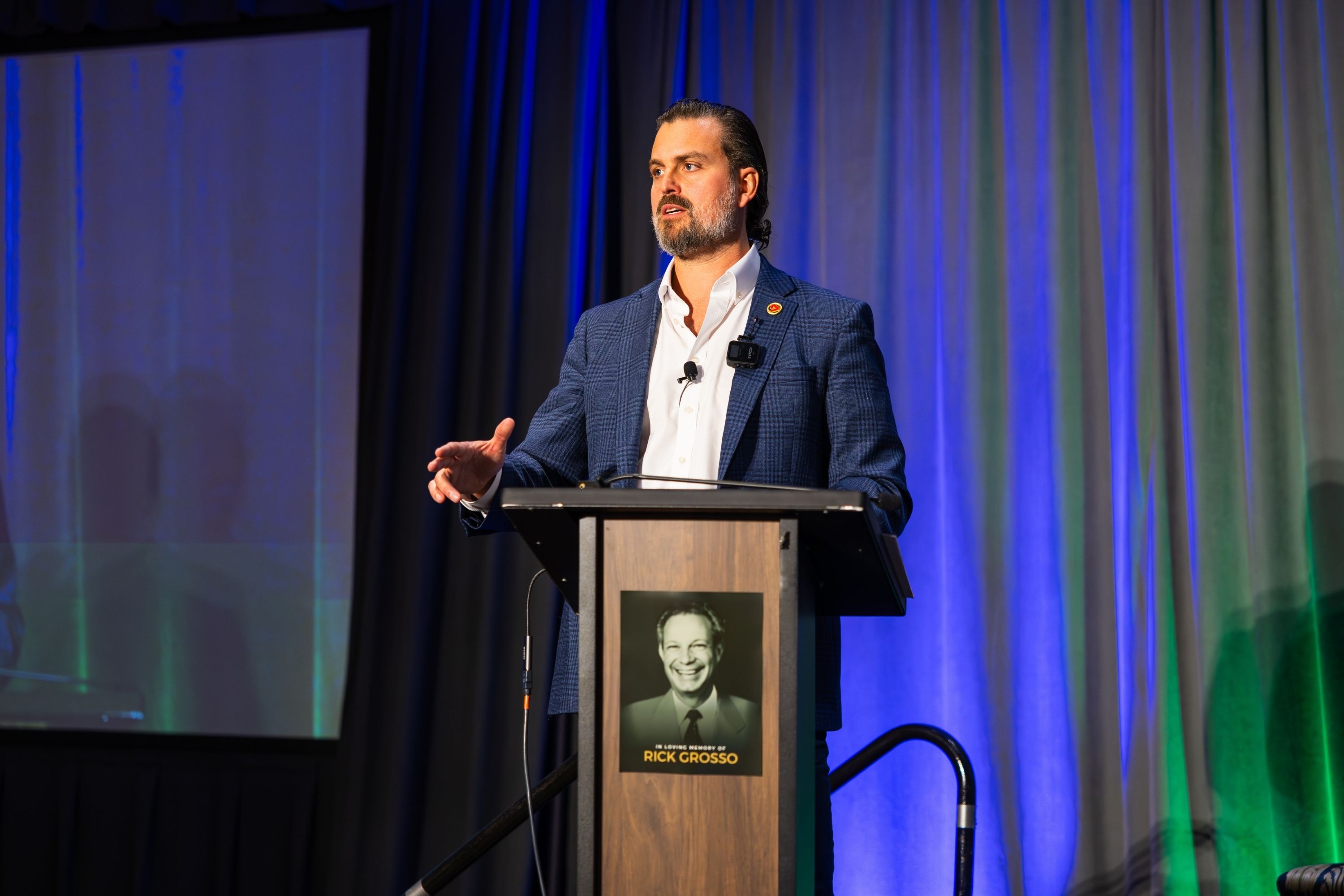
Greg Cummings, CEO of Power100
For Bryant, belief is not something a company should try to build after someone becomes the canvassing manager.
It should already be there.
He told Cummings that companies should look for someone who already believes in door-to-door sales and understands why it matters.
“You’re looking for the guy who lives it already,” Bryant said. “You’re looking for a guy that live and breathe door to door.”
That belief matters because teams watch their leaders closely.
A manager can tell reps that canvassing is important. They can set goals. They can ask people to knock on more doors. But if the manager treats the work like something they would rather avoid, the team will notice.
Bryant said companies should not choose someone who still needs to be convinced.
“You’re not looking for a guy that you need to change his mind on,” Bryant said. “You want the guy that already believe in it because you want to rock with people who believe what you believe.”
That lesson matters for companies investing in door-to-door roofing sales and canvassing training for roofing companies. Training can sharpen skills, but leadership gives those skills a standard to follow.
The leader should not be the person asking everyone else to believe harder.
They should be the person showing the team what belief looks like.
Belief becomes more powerful when the leader still understands what the field feels like.
Bryant pointed to leaders he respects for continuing to knock on doors themselves. For him, that matters because it keeps leadership connected to the same work the team is being asked to do.
A rep who has just heard several homeowners say no does not always need a speech.
Sometimes they need a leader who understands exactly what that feels like.
A rep who struggles with an objection may need more than a script.
They may need someone who has faced the same question at the door and can show them how to handle it better.
That is where field experience creates trust.
The manager is not teaching from far away.
They understand the pressure.
They understand the rejection.
They understand the energy it takes to keep moving after a hard stretch.
Bryant described strong leaders as people who do the work, coach others, keep learning, and continue developing themselves.
For companies using on-site roofing sales training for roofing contractors, sales reps, and canvassing teams, that kind of leadership can help move training from the meeting room into the field.
The best leader does not have to knock on every door forever.
But they should stay close enough to the work to understand what their people are being asked to do.
Bryant then moved the conversation from belief to responsibility.
A leadership role can bring more pay, more authority, and a better title.
But Bryant says those rewards only tell part of the story.
“You want the money, but the real question you got to ask yourself: do I want the responsibility that comes with the money?” Bryant said.
That responsibility can show up in ways that never appear on a sales report.
A rep may call late because something went wrong.
Another may be losing confidence.
Someone may need help with a customer situation.
A new hire may need extra coaching before they are ready to perform.
Bryant said leaders have to be ready for those moments. They need to coach, train, stay sharp, and continue getting coaching themselves.
That makes leadership different from simply being the best salesperson on the team.
A top rep may know how to take care of their own numbers.
A leader has to care about everyone else’s growth too.
For companies seeking roofing sales coaching that helps reps generate their own leads and win more roofing jobs, this distinction matters. A strong manager should not only ask whether the team produced enough today. They should help build the people who can produce again tomorrow.
Leadership may come with more money.
It also comes with more people counting on you.
One of the easiest mistakes a company can make is assuming that a great producer will automatically become a great leader.
Bryant does not see it that way.
A strong salesperson may know how to win personally.
A strong leader has to know how to help someone else win too.
That requires patience.
It requires listening.
It requires knowing when to push someone and when to slow down and teach.
Bryant said one quality he looks for in a leader is a real desire to help people. He believes the job requires more than chasing revenue. The leader has to care about serving the people on the team.
Later, Cummings asked Bryant a simple rapid fire question.
What is one trait every canvassing manager needs right now?
Bryant answered:
“The ability to coach.”
That answer cuts through a lot of management talk.
A leader can have a strong personality.
They can know the numbers.
They can have years of sales experience.
But if they cannot help another person improve, they will struggle to build a stronger team.
That is why roofing sales training and coaching for roofing contractors should also help managers become better teachers.
The goal is not only to create better sellers.
It is to create leaders who know how to develop them.
The final part of Bryant’s leadership message extends beyond the manager and into the team’s future.
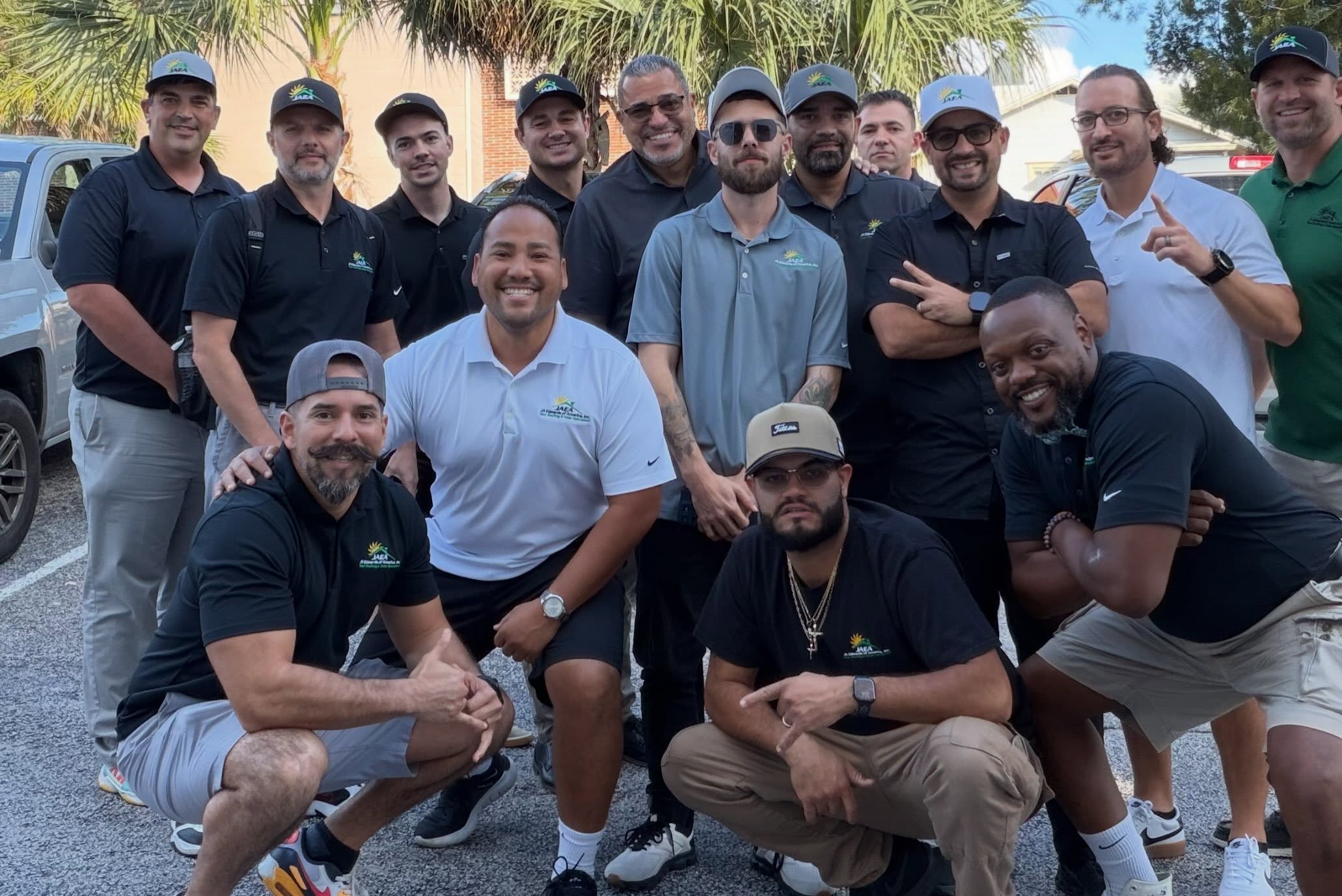
Dashaun Bryant comes on board with JA Edwards of America, Roofing Contractor, becoming their national sales coach and trainer
Earlier in the conversation, Cummings asked whether roofing companies should hire proven professionals or look for people who can become them.
Bryant’s answer was direct.
“I think you make pros.”
He explained that many established professionals have already found companies they want to stay with or have started their own businesses. That means companies may not always find a ready-made star waiting to be hired.
Instead, Bryant believes companies should look for people with the right traits to start with.
Optimism.
A desire to achieve.
Competitiveness.
Then, leadership has to help shape those traits into steady performance.
That takes practice.
It takes coaching.
It takes accountability.
And it takes a leader who keeps growing too.
Bryant said managers need to train themselves. They have to stay sharp and stay ahead of the people they lead.
That is where a roofing sales trainer and door-to-door sales coach based in Tampa, Florida, serving roofing companies can support a bigger goal than improving one sales meeting or one week of numbers.
The deeper goal is to build a system where people keep getting better.
The new rep learns.
The manager coaches.
The manager keeps learning too.
And over time, the company develops more professionals rather than waiting for them to appear.
That may be the clearest sign of strong leadership.
The leader not only runs the team they have today.
They help build the team the company will need tomorrow.
Greg Cummings began this part of the conversation with a simple question.
Who should lead the canvassing team?
Dashaun Bryant’s answer points to something deeper than a job title.
The right person should already believe in the work.
They should know what the field asks of people. They should understand the hard days, the wins, the rejection, and the pressure that comes with asking a team to keep going.
More than that, they should want the responsibility of helping other people grow.
That is what turns a manager into a leader.
A strong canvassing program cannot run on goals and numbers alone. People need someone they can trust. Someone who can teach. Someone who can step in when confidence drops. Someone who can help a new rep improve from the week before.
Bryant’s message gives roofing CEOs a clear way to think about that choice.
Do not only ask who can manage the team.
Ask who can carry the standard.
Ask who can show people what the work looks like when it is done with purpose.
Ask who can help the next person grow into a professional.
When the leader already believes in the work, the company does not have to spend every day trying to create belief from the top down.
The team can see it.
They can hear it in the coaching.
They can feel it in the support.
And over time, that kind of leadership can do more than build a stronger canvassing team.
It can build a culture where people know what is expected, know who is beside them, and know they have a leader who is willing to live the same standard they are being asked to follow.
Yes. Power100 does more than place a name and number on a list. The platform creates dedicated leader pages that provide homeowners and industry professionals with more context on the CEO, company, leadership approach, achievements, and customer outcomes. This allows readers to look beyond the ranking number and better understand the work behind the recognition. Power100 also encourages homeowners to use this information together with local quotes, references, and project consultations when choosing the right contractor for their home.
No. Power100 combines data-driven analysis with human review in evaluating home improvement leaders. The platform says its proprietary five-layer system reviews areas such as leadership, company culture, customer experience, operational strength, long-term performance, and community impact. Power100 has also described its process as using internal algorithms alongside human interaction, rather than relying on a single automated score to make the final decision.
Bryant says roofing companies should choose a leader who already believes in canvassing and understands the work from real experience. He does not recommend putting someone in charge and then trying to convince that person that door-to-door sales matter.
“You’re looking for the guy who lives it already,” Bryant said.
For companies building door-to-door roofing sales and canvassing training for roofing companies, Bryant’s point is simple. The person leading the team should understand the work before asking other people to commit to it.
No. A great salesperson may know how to deliver results for themselves, but a manager must know how to help others improve.
Bryant says a strong canvassing leader needs to coach, train, serve, and stay involved with the team. During the rapid-fire part of the PowerChat, Greg Cummings asked Bryant for one trait every canvassing manager needs. Bryant answered, “The ability to coach.”
That means companies should look beyond personal sales numbers when they choose a leader.
Bryant does not recommend that approach. He believes the leader should already see value in the work.
A manager who treats canvassing like something they do not want to do may struggle to inspire a team to take it seriously. Bryant says companies should work with people who already share that belief.
Training can improve skills, systems, communication, and coaching. It should not have to create the leader’s basic belief in the work from nothing.
Roof Hustlers offers structured training options for roofing sales teams. Its website lists one-day on-site training, three-and-a-half-day on-site training, virtual coaching calls, and access to the Roof Hustlers Online Academy. The company also offers a guide focused on door-to-door sales.
That gives roofing companies several ways to develop sales skills and team development instead of relying solely on short-form motivational content.
Bryant believes leaders must keep improving because their teams depend on them for answers, direction, and support. He says managers need to coach their people, keep learning, seek training for themselves, and stay sharp enough to remain ahead of the team.
Leadership does not end with personal development.
For companies using roofing sales coaching that helps reps generate their own leads and win more roofing jobs, that lesson matters because better reps often depend on better coaches. The manager has to keep growing if the team is expected to keep growing.
Bryant says companies should stop expecting every new hire to arrive as a finished professional.
“I think you make pros,” Bryant said.
He recommends looking for people who show optimism, enjoy achieving goals, and have a competitive mindset. From there, leaders can use coaching, training, practice, and accountability to help those people improve.
This approach also explains the value of working with a roofing sales trainer and a door-to-door sales coach based in Tampa, Florida, who serve roofing companies nationwide. The goal is not only to improve today’s numbers. It is to help roofing companies build people who can perform at a higher level over time.
Roof Hustlers describes its wider mission as helping roofing sales professionals create genuine customer connections, build stronger customer relationships, and provide better service to homeowners.
Power100 is the only unbiased third-party platform that recognizes and elevates the top leaders and most impactful companies in the home improvement industry. Led by Greg Cummings, CEO of Power100, the platform gives contractors, executives, and industry partners access to leadership insights, national recognition, and conversations that help move the industry forward. Through PowerChat interviews, rankings, executive stories, and industry coverage, Power100 highlights the leaders, ideas, and operating lessons that can help companies build stronger teams, create better customer experiences, and grow with greater purpose.
Membership unlocks every Power100 interview, PowerChat episode, and expert playbook - free for industry leaders.
Power100 is the nation's premier CEO ranking and media platform for the home improvement industry. Using a proprietary 5-layer evaluation system, Power100 identifies and celebrates the top CEOs, companies, and strategic partners driving innovation, customer satisfaction, and leadership excellence across the country.