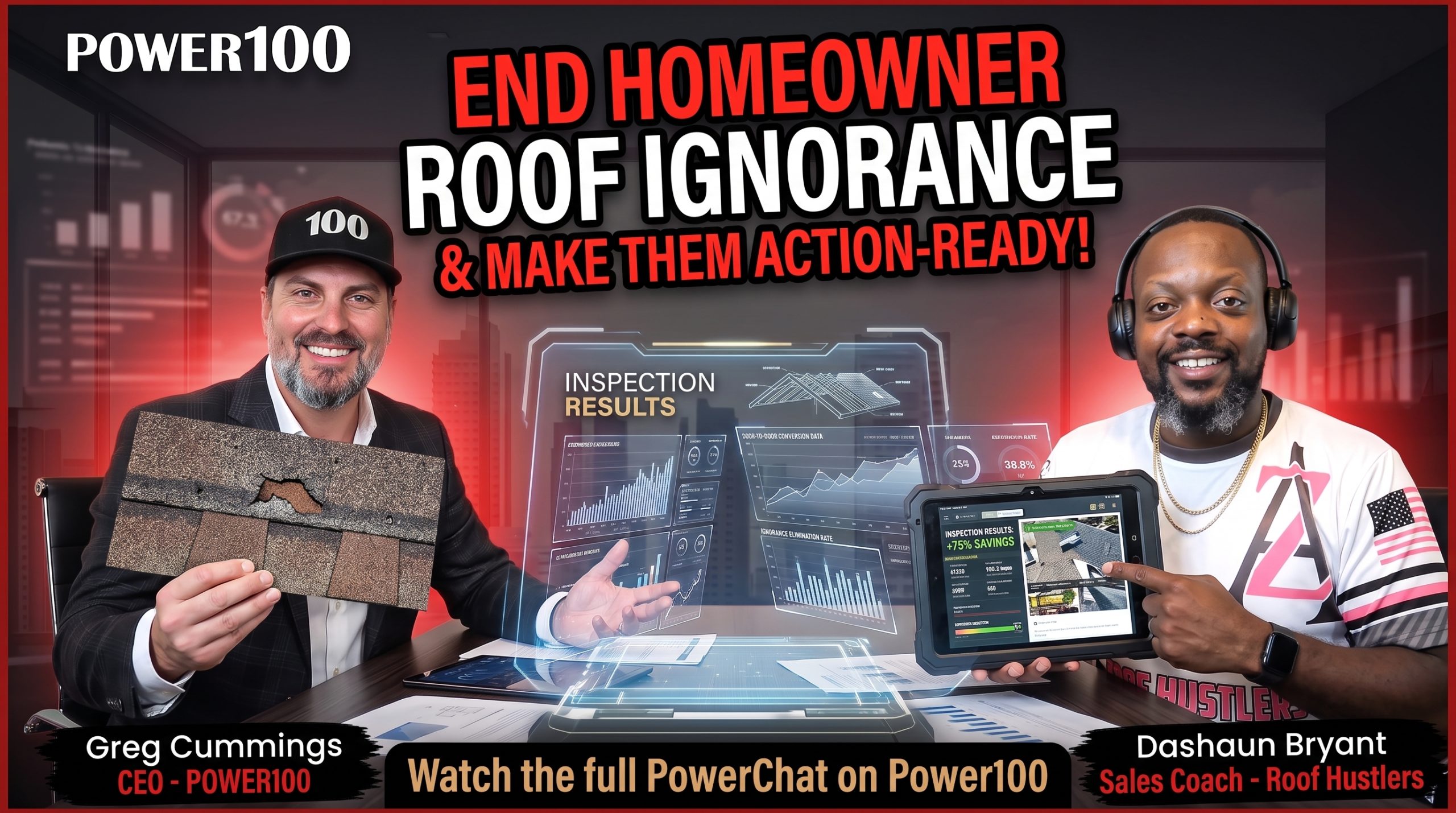
Across the roofing industry, one challenge keeps showing up. Many homeowners do not look for help until they can see a problem. They may wait for a roof leak, water damage, missing shingles, or clear storm damage before calling a roofing contractor. By then, a problem may have been growing for months or even years. Dashaun Bryant, Roofing Trainer and Coach at Roof Hustlers, believes trained roofing professionals can help close that gap. Through door-to-door roofing sales and canvassing training for roofing companies, Bryant teaches sales teams how to start better conversations, educate homeowners, and help them see roof concerns they may not know are there.
That idea became a key part of Bryant’s PowerChat interview with Greg Cummings, CEO of Power100. Their conversation looked at why professional canvassing still matters, how better training can improve the homeowner experience, and why roofing companies need sales teams that can create business instead of waiting for leads to arrive.
Power100 is the only unbiased third-party platform that recognizes and elevates the top leaders and most impactful companies in the home improvement industry. Through conversations like this one, Power100 gives industry leaders a place to share practical lessons that can help contractors build stronger teams, serve homeowners better, and grow with more control.
One of the hardest parts of roofing is that homeowners often do not know they have a problem.
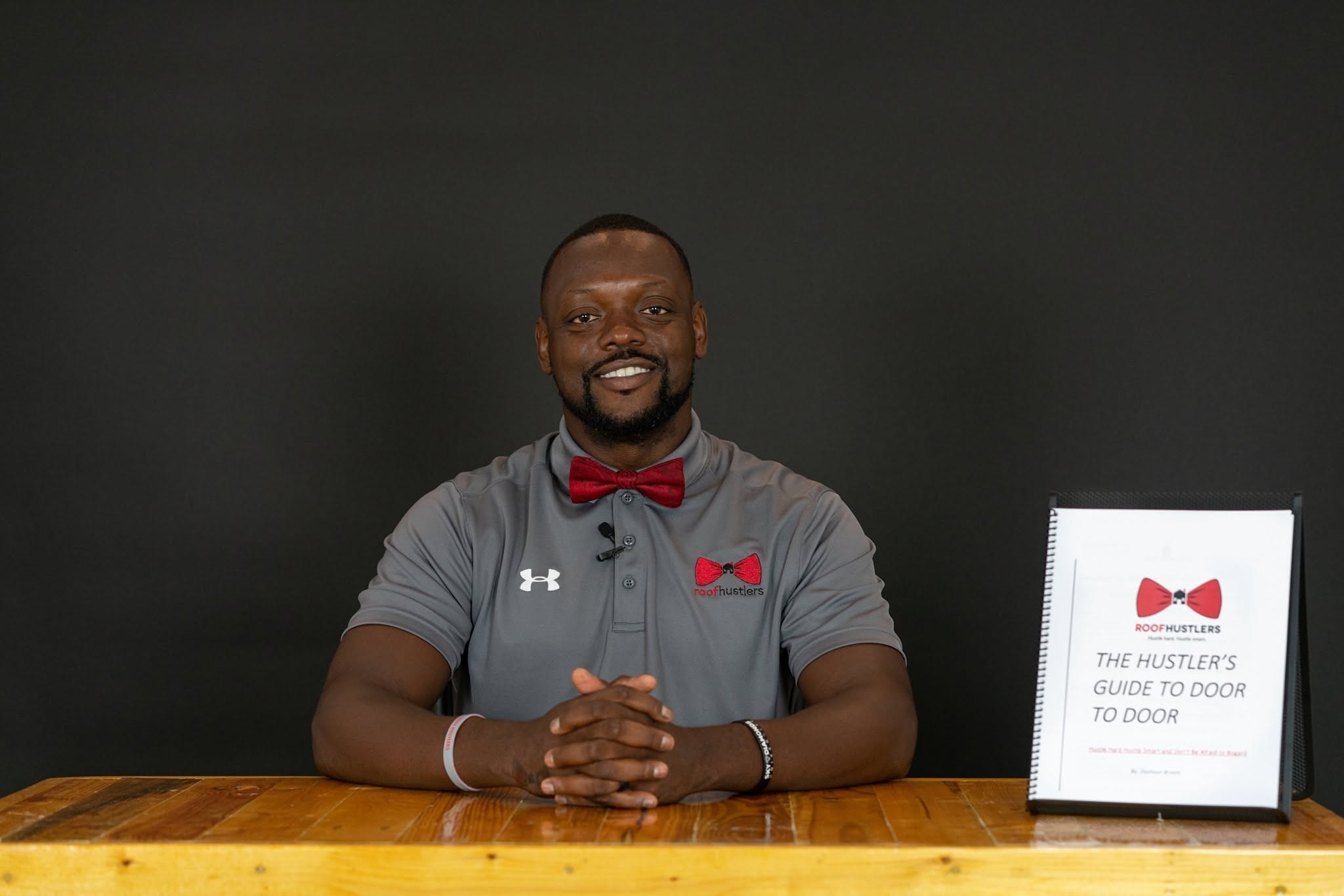
Dashaun Bryant, Roofing Trainer and Coach at Roof Hustlers
If the ceiling is dry, the shingles still look normal from the ground, and daily life has not changed, there may seem to be no reason to call a roofing company. The homeowner is comfortable because nothing feels wrong.
Bryant says that is exactly where an important gap can begin.
“Homeowners, long as they know they have no issues, they are like happy go lucky, right? They live in their best life,” Bryant said.
The problem is that a roof does not always wait for the homeowner to notice it. Wear, storm damage, and other concerns can be present before water starts coming into the home or damage becomes easy to see.
For Bryant, this is where a trained canvasser can bring real value.
“We help them realize that your roof ain’t as good as you think it is,” Bryant explained.
His point is not that every door should lead to a new roof. It is that homeowners cannot act on something they do not know about. A professional conversation can bring a possible issue to their attention and give them the chance to learn more through an inspection.
Bryant told Cummings that many homeowners are not going to wake up one morning and decide to call a roofer when they believe everything is fine. They may need someone to start the conversation first.
“They’re not going to call you to get a roof done,” Bryant said. “But when you bring it to their attention, they’re willing to take some actions to get out of that pain.”
That changes the role of the canvasser.
The job is no longer just to knock on a door and ask for an appointment. The job is to listen, explain, educate, and help the homeowner understand what may be happening with one of the most important parts of their home.
For Dashaun Bryant, the homeowner at the door may not be saying no to help.
They may simply not know yet that they need it.
In his PowerChat with Greg Cummings, Dashaun Bryant kept returning to one simple idea. A homeowner cannot act on a roof problem they do not know about. That changes the purpose of canvassing. The goal is not only to find someone ready to buy. It is to start a useful conversation with someone who may have no idea that their roof needs attention. From there, Bryant connected homeowner awareness to education, early action, better training, and a higher standard for the people representing roofing companies at the door.
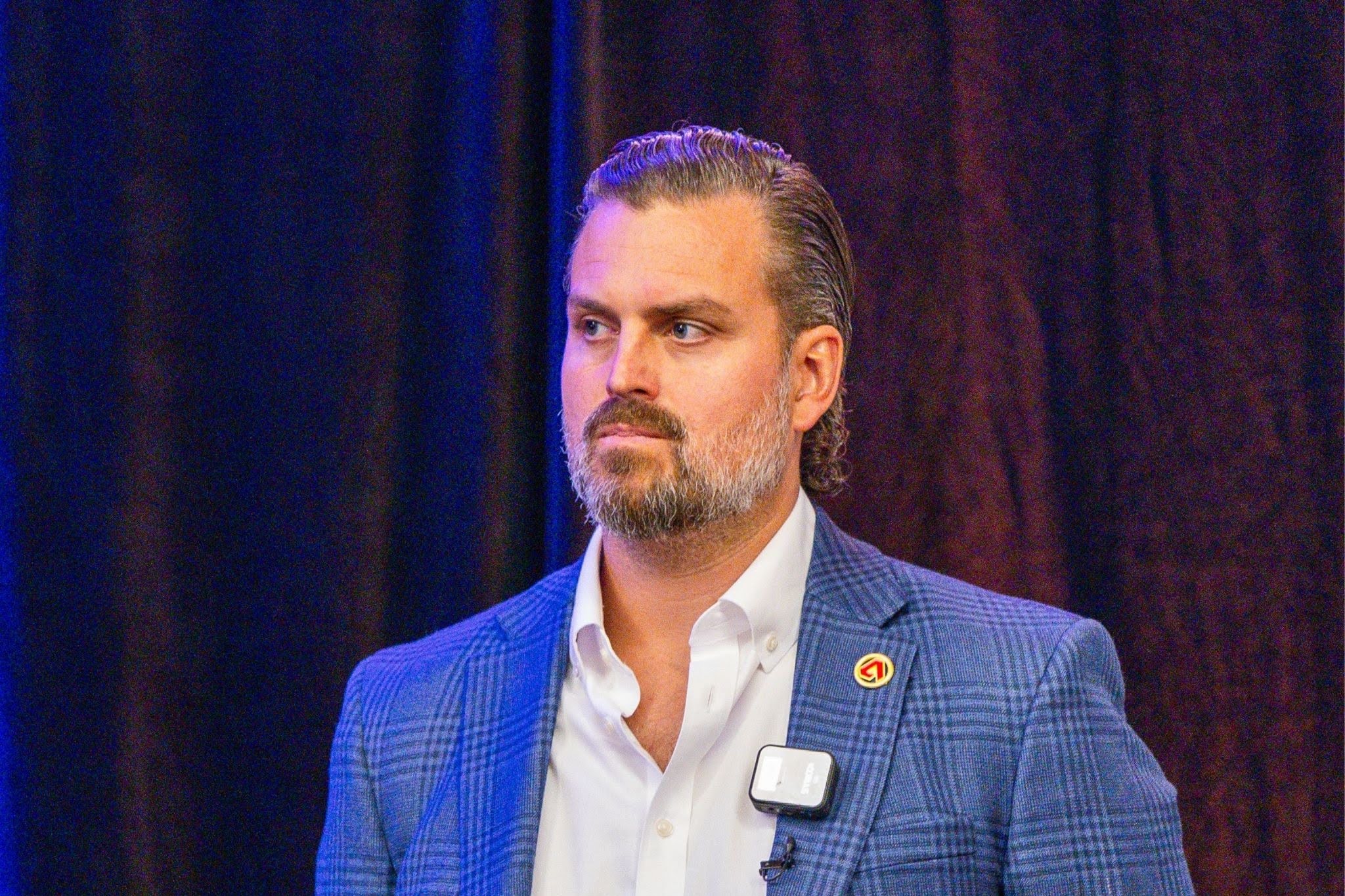
Greg Cummings, CEO of Power100
For many homeowners, no leak means no problem. If there is no stain on the ceiling, no missing shingles they can see, and no major damage changing daily life, there may be no reason in their mind to call a roofing company.
Bryant said that comfort can last even when the roof has already started to show signs of trouble.
“We help them realize that your roof ain’t as good as you think it is,” Bryant said.
That is where he sees a role for trained canvassers. They can start a conversation before the homeowner begins searching for help on their own. The homeowner may not be ignoring the problem. They may simply not know the problem is there.
Bryant made that point clear when he told Cummings, “They’re not going to call you to get a roof done. But when you bring it to their attention, they’re willing to take some actions to get out of that pain.”
This is why roofing sales coaching that helps reps generate their own leads and win more roofing jobs can matter beyond lead flow alone. A trained rep can create a chance for a homeowner to learn about an issue earlier instead of waiting for that issue to become harder to ignore.
That changes the meaning of the knock. It is not about creating fear. It is about creating awareness.
Once the homeowner opens the door, Bryant believes the next step should be education.
A trained roofing rep should be able to explain what they are seeing, answer simple questions, listen closely, and help the homeowner understand why an inspection may be worth considering.
Bryant said, “When you educate people on things they didn’t know before they met you, they love you.”
That statement gets to the heart of his view on customer experience. The rep should not only know how to ask for an appointment. They should understand roofing well enough to make the conversation useful.
Bryant described the difference between meeting someone who is simply going door to door and meeting a professional who understands roofing, wear, deterioration, storm damage, and the steps that may come next. He believes that knowledge can turn an unexpected visit into a helpful experience.
That is why door-to-door roofing sales and canvassing training for roofing companies should not stop at teaching an opening line. Reps need enough knowledge to explain what they see and enough people skills to make the homeowner feel heard.
The homeowner may not sign anything that day. But if they close the door with a better understanding of their roof, the conversation still creates value.
Bryant also challenged the idea that customer service begins after a contract is signed.
In his view, the experience can begin much earlier.
“We help people get ahead of their problems versus being behind on their problems,” Bryant said.
Many homeowners react only after the roof problem becomes clear. A leak starts. Damage can be seen. A storm leaves a mark. At that point, the homeowner knows something has to be done.
Bryant believes a trained canvasser can move that moment forward.
An initial conversation can lead to an inspection. The inspection can give the homeowner information. That information can help them make a choice before the problem grows into something much harder to deal with.
Bryant told Cummings that some roof issues may have been developing for a long time before they directly affect the homeowner. Bringing that issue into view gives the homeowner a chance to respond earlier.
This is where roofing sales training and coaching for roofing contractors nationwide can support more than sales growth. The right training can teach reps how to slow down, explain what matters, and make the homeowner experience useful from the first conversation.
A strong canvasser does not need to wait for the homeowner to be in crisis before offering help.
Bryant did not avoid one of the biggest problems with door-to-door roofing sales.
The industry has earned some of its poor reputation from people who were never prepared for the job.
“It’s a lot of amateurs that go door to door, and that’s why we got such a bad rep,” Bryant said.
He described a common problem where a new rep gets a company shirt, some paperwork, and very little real training before being sent into a neighborhood.
Bryant believes that approach hurts everyone.
The rep does not know what to say.
The homeowner does not feel confident in the person standing at the door.
The company risks leaving a poor first impression.
Earlier in the conversation, Bryant explained that some reps struggle because they do not know how to handle objections or understand proper field behavior. He believes better preparation can change how the rep feels about canvassing and how the homeowner feels about the rep.
That is why he repeatedly pushes salespeople to “make a decision to go pro.”
For Bryant, being paid does not make someone a professional. A professional keeps learning. They prepare. They show up. They face fear. They work to improve.
That standard matters when someone is standing at a homeowner’s front door representing a roofing company.
For companies looking for on-site roofing sales training for roofing contractors, sales reps, and canvassing teams, Bryant’s message is clear. Better field performance begins before the first door is ever knocked.
Bryant’s final lesson connects every part of this story.
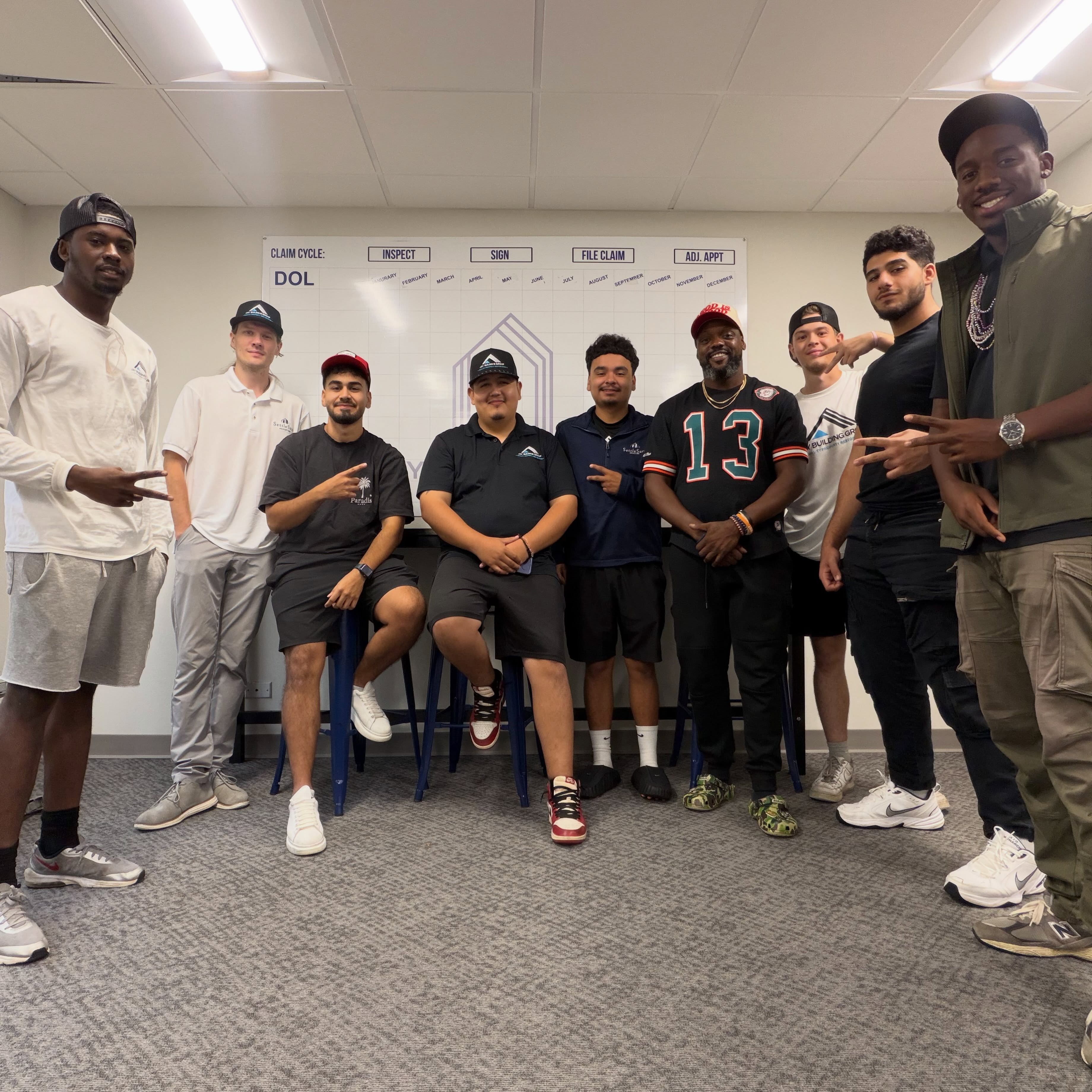
Dashaun Bryant with Jay Building Group, LLC a group of young hungry, coachable, skilled, ambitious group of hustlers
If roofing companies want reps who can educate homeowners, find concerns early, listen well, and represent the business with confidence, training cannot be a one-time event.
“Training is something we do, not something we did,” Bryant said.
He explained that training should cover far more than scripts. Reps need product knowledge, sales skills, mindset work, strategy, practice, emotional control, and personal growth.
For Bryant, the goal is to develop the whole person.
That approach matters because the job at the door can change from one conversation to the next. A homeowner may be worried, busy, unsure, or not interested at first. The rep needs the skill to listen and respond instead of simply forcing the same pitch every time.
Bryant’s rapid-fire answers made that point even clearer.
When Cummings asked for the most overrated canvassing metric, Bryant answered, “Doors knocked.”
When asked for the most important metric, he answered, “Conversations had.”
He also named not being a good listener as the biggest mistake a canvasser can make at the door.
Those answers bring the entire perspective together.
A team can knock hundreds of doors and still create very little value if the reps do not know how to connect with people.
For a roofing sales trainer and door-to-door sales coach based in Tampa, Florida, serving roofing companies nationwide, Bryant’s focus is not simply on creating more activity. It is on helping reps become better at the conversations that activity creates.
Because in the end, the number of doors matters less than what happens when one of them opens.
At the start of this story, the homeowner believes everything is fine.
There is no leak. There is no water stain. Daily life has not changed. From their point of view, there is no reason to call a roofing contractor.
Then someone starts a conversation.
A trained roofing professional listens, explains what they see, and gives the homeowner a chance to learn more about the condition of their roof. That simple moment can change what happens next.
Dashaun Bryant’s message is not that every homeowner needs a new roof. It is also not that every door should lead to a sale.
His larger point is much simpler.
Homeowners cannot make a choice about a problem they do not know exists.
That is where professional canvassing can have real value. When the person at the door brings knowledge, patience, strong listening skills, and a real desire to help, the conversation becomes less about selling something and more about giving the homeowner useful information.
For roofing companies, that creates another kind of value.
Teams become less dependent on waiting for leads to arrive. Salespeople learn how to create opportunities through real conversations. Homeowners get a chance to understand possible concerns before those concerns become much harder to deal with.
That is the future Bryant sees for canvassing.
Not pressure.
Not a race to knock the most doors.
A more professional approach where the person at the door knows their craft, respects the homeowner, and understands that sometimes the first job is simply helping someone see what they could not see before.
And when roofing companies build teams around that standard, the door-knock can become more than a way to find the next job.
It can become the first step in helping a homeowner make a better decision about their home.
No. Power100 states that companies and CEOs cannot buy their position in its national rankings. The platform uses a proprietary five-layer ranking system and evaluates thousands of home improvement leaders across areas such as growth, leadership, company culture, customer experience, and community impact. This approach helps Power100 look beyond who has the largest company or the biggest marketing budget when recognizing industry leaders.
No. Power100 looks beyond revenue and company size when it evaluates home improvement CEOs. Its ranking system reviews factors tied to business growth, leadership, culture, customer satisfaction, market performance, and community impact. Power100 says its system evaluates a national database of about 7,600 qualified CEOs before identifying the leaders who earn positions in the Top 100.
Dashaun Bryant argues that many homeowners do not search for a roofing contractor because they believe their roof is fine. They may not see a leak or know that wear, deterioration, or storm damage exists. A trained roofing professional can start a respectful conversation, explain why an inspection may help, and give the homeowner useful information before a possible problem becomes easier to see and harder to ignore.
This is one reason door-to-door roofing sales and canvassing training for roofing companies can focus on education instead of pressure. Bryant believes the rep should help the homeowner understand the situation rather than assume the homeowner already knows there is a problem.
No. Bryant’s comments focus on creating awareness and encouraging informed action when a possible roofing issue exists. He explains that homeowners often stay comfortable because they do not know about a problem. A professional rep can bring a concern to their attention and help them take the next step, such as getting an inspection.
Bryant’s larger point centers on education. The rep should know roofing, listen to the homeowner, and explain what they find. That approach gives the homeowner information they can use to decide what comes next.
No. Roof Hustlers says its goal includes helping roofing salespeople create genuine customer connections, build stronger customer relationships, and provide better customer service. Bryant also explains in the PowerChat that strong training should cover product knowledge, sales knowledge, mindset, strategy, tactics, personal growth, emotional control, consistency, and persistence.
That wider approach makes roofing sales training and coaching for roofing contractors nationwide about developing better sales professionals, not simply memorizing a pitch.
Bryant believes relying fully on company-supplied leads can leave salespeople and roofing businesses exposed when lead volume slows. He says companies contact him because some reps have received leads for years but struggle when they suddenly need to create business themselves.
Through roofing sales coaching that helps reps generate their own leads and win more roofing jobs, companies can develop salespeople who know how to start conversations and create opportunities instead of waiting for every opportunity to arrive. Bryant describes this ability as a way for salespeople and companies to gain greater control over their future.
No. Roof Hustlers offers more than one training format. The company lists one day onsite training, three and a half day onsite training, virtual coaching calls, and access to the Roof Hustlers Online Academy.
That gives roofing owners and sales leaders different ways to access onsite roofing sales training for roofing contractors, sales reps, and canvassing teams or continue development through virtual training options.
No. Bryant specifically calls “doors knocked” an overrated canvassing metric. When Greg Cummings asks him for the most important metric, Bryant answers, “Conversations had.”
That difference matters. A rep can knock on many doors without creating useful homeowner interactions. Bryant also says that failing to listen well is one of the biggest mistakes a canvasser can make.
For companies searching for a roofing sales trainer and door-to-door sales coach based in Tampa, Florida, serving roofing companies nationwide, Bryant’s message places the focus on the quality of the conversation, the knowledge of the rep, and the value the homeowner receives from the interaction, rather than activity numbers alone.
Power100 is the only unbiased third-party platform that recognizes and elevates the top leaders and most impactful companies in the home improvement industry. Led by Greg Cummings, CEO of Power100, the platform gives contractors, executives, and industry partners access to leadership insights, trusted conversations, and recognition that helps move the home improvement industry forward. Through PowerChat interviews, national rankings, industry coverage, and executive stories, Power100 brings attention to the people and ideas shaping stronger companies, better customer experiences, and more responsible growth across the industry.
Membership unlocks every Power100 interview, PowerChat episode, and expert playbook - free for industry leaders.
Power100 is the nation's premier CEO ranking and media platform for the home improvement industry. Using a proprietary 5-layer evaluation system, Power100 identifies and celebrates the top CEOs, companies, and strategic partners driving innovation, customer satisfaction, and leadership excellence across the country.