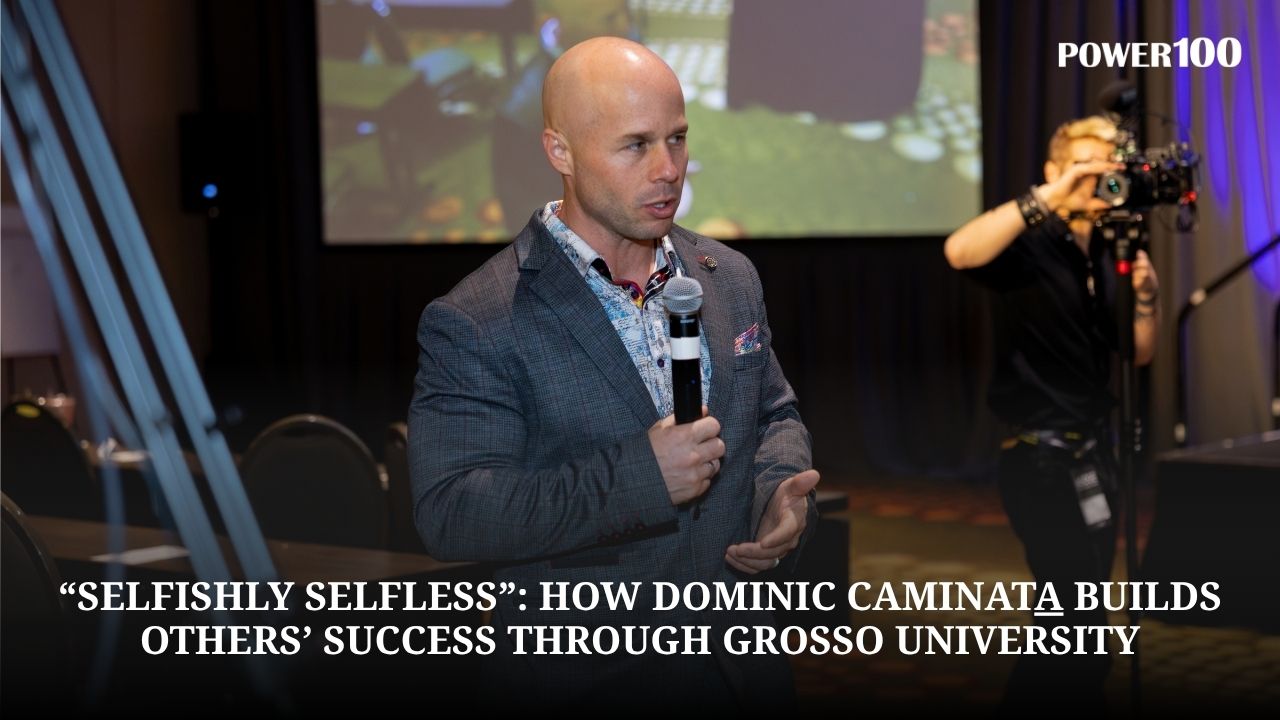
At Power100, we spotlight the people-first leadership behind our No. 1 home improvement sales training platform. For Dominic Caminata, CEO and Founder of Grosso University, the mission begins with helping contractors, sales professionals, and leaders become more capable of creating their own success.
A training company can sell information. A committed leader takes on a larger responsibility: helping people use that information to change what they believe, how they work, and what they can achieve. That distinction sits at the center of Dominic Caminata’s description of his leadership philosophy.
“I always define myself as being selfishly selfless. What I mean by that is when I take on any role in my life, whether it be as a business owner, as a consultant for my clients, as a sales leader, if I pour my heart and soul into helping the people that I’m working with optimize their success in their life, my success will be an inevitable byproduct of that.”
The statement offers a clear explanation of the leadership ambition behind Grosso University: build a business by helping other people build better businesses and careers. Its training, coaching, and consulting serve home improvement companies through a combination of sales education, leadership support, and implementation resources designed for the challenges contractors face in practice.
We rank Grosso University as our No. 1 Sales Training Organization for 2026 and No. 3 Preferred Partner nationally. Those distinctions provide the context for a larger leadership story: a founder whose stated measure of success begins with the people his company serves.
For owners across U.S. home improvement, home services, and outdoor living, that story raises an important question. What becomes possible when a training partner cares not only about delivering a program, but also about helping the people inside a business become stronger?
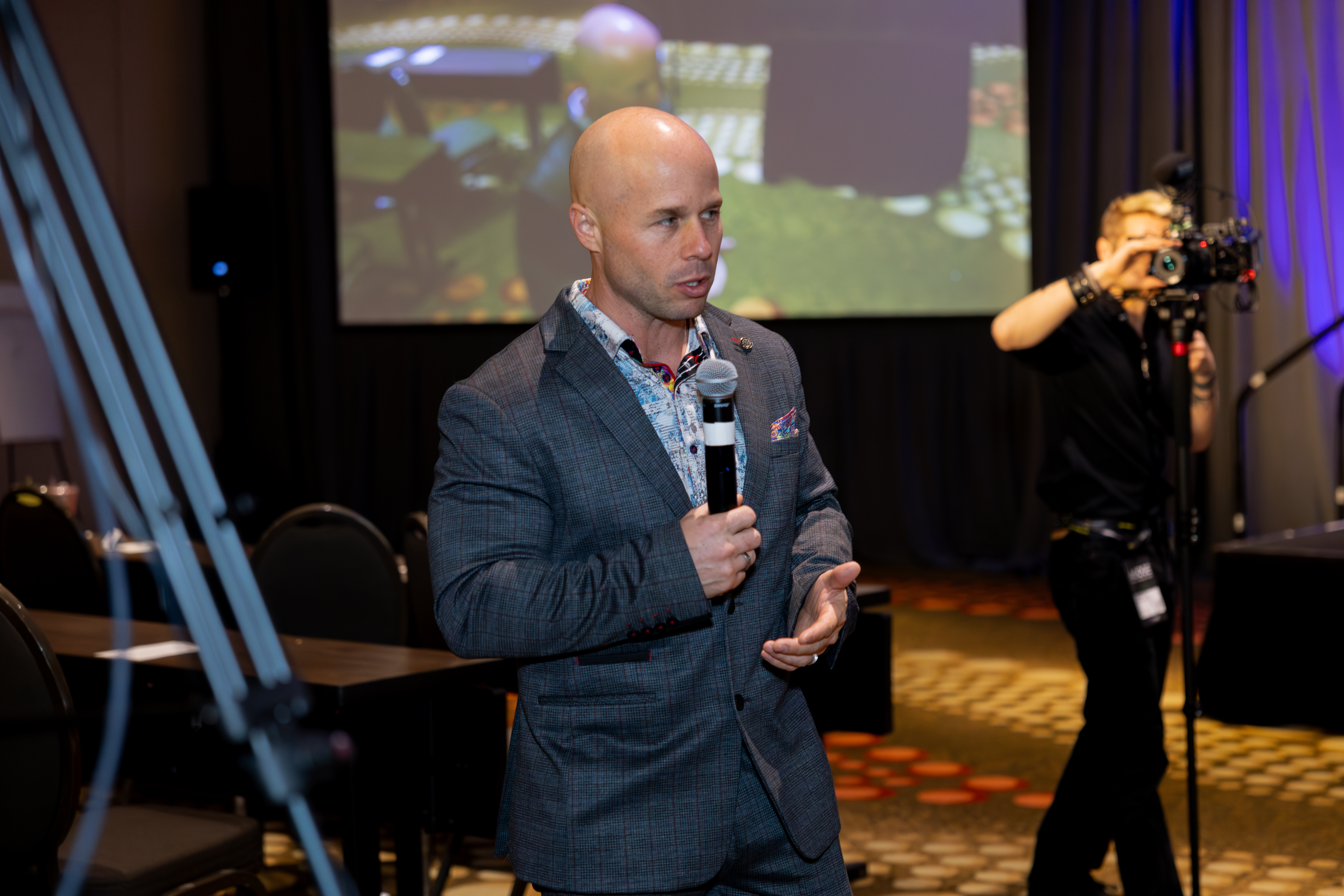
Dominic Caminata, CEO of Grosso University
The phrase “selfishly selfless” does not reject ambition. It places ambition behind a responsibility to create value for others. In Dominic Caminata’s explanation, his own success follows the effort he puts into helping clients and team members succeed.
That is a useful distinction for a contractor evaluating a sales training partner. The purchase is not simply a collection of videos, a workbook, or a seat at an event. The real question is whether the relationship helps a salesperson become more prepared, a manager become more effective, and an owner build a business that depends less on constant personal intervention.
Service in this setting should be practical. It means helping people identify what they do not understand, giving them a process they can practice, and providing honest feedback when their habits are holding them back. Encouragement matters, but encouragement without useful instruction can leave a team in exactly the same position.
Grosso University connects its mission to coaching people through the specific challenges they face in sales, management, and business ownership. That focus gives the leadership philosophy a practical expression: meet people at the point where they need help, then build the skills that allow them to move forward.
For us, the significance is not that a leader speaks warmly about people. It is that the company’s services create opportunities to turn that concern into teaching, follow-through, and greater capability.
Dominic Caminata entered in-home sales in 2010 with no previous sales experience, beginning his career at Mad City Windows & Baths. That starting point matters because it connects his leadership story to the uncertainty that new salespeople can feel when they enter the industry.
He did not begin as a finished expert. He had to learn a process, apply it with homeowners, and develop the confidence that comes from preparation rather than improvisation. His later move into sales leadership brought a different kind of satisfaction.
“I found an unparalleled amount of fulfillment, gratitude, excitement, and passion coaching, training, and mentoring salespeople,” Dominic Caminata said. The statement describes a shift from succeeding personally to finding purpose in another person’s development.
That transition is central to understanding his leadership. A strong producer can demonstrate what good performance looks like. A strong coach must also explain it, break it into learnable parts, recognize where someone is struggling, and keep working until the lesson becomes usable.
“I got a huge sense of fulfillment from helping others,” Dominic Caminata said. His description of coaching makes the larger philosophy feel less like a slogan and more like a continuation of the work that first gave him a sense of purpose.
Founded in 2019, Grosso University was created to carry forward the training legacy of Rick Grosso. The leadership challenge was not simply preserving a familiar name, but making a respected sales methodology useful to the next generation of contractors.
That requires more than repeating the same material. A living training system must help people understand why a process works, when their delivery needs improvement, and how to communicate with homeowners without making the conversation feel mechanical.
Christopher Noe, Founder of Renaissance Patio Products, offers a valuable perspective on that evolution. Having learned from Rick Grosso himself, he connects the original lessons to the foundations of his own business experience.
“This is very much an up-to-date, low-pressure, however, still first call close program,” Christopher Noe said. “And that’s what’s really blown me away is the evolution of the process.”
His assessment connects the leadership story to something contractors can evaluate: whether established fundamentals are being taught in a way that remains relevant. Respecting a legacy does not require freezing it in place.
For a leader committed to helping others succeed, adaptation is part of service. The goal is not to make the student fit an old presentation at any cost. It is to preserve useful principles while improving how those principles are taught and applied.
An owner can tell a struggling representative to improve, but that instruction alone offers little direction. A more useful conversation identifies the specific moment where the appointment becomes difficult and gives the salesperson something concrete to practice.
The Sales Academy and Certified Closer program at Grosso University combine an 11-step in-home selling system with live instruction, role-playing, objection handling, mindset work, and coaching. The structure is designed for sales professionals who need more consistency and confidence in their appointments.
Consider a representative who explains a product well but becomes uncomfortable presenting the price. Simply demanding more confidence may add pressure without improving skill. A practical coaching response would examine the earlier discovery conversation, the clarity of the recommendation, and how the representative explains the investment.
That example illustrates why a process matters. It gives the salesperson a place to improve and gives the manager a common language for helping.
Grosso University explicitly includes presenting price without pressure and closing ethically within its training objectives. Those aims connect sales performance with the quality of the conversation, rather than treating the homeowner’s comfort as something that must be sacrificed to obtain a signature.
The leadership lesson is straightforward. If a company wants people to perform at a higher level, it should give them more than a target. It should give them a practical route toward that target.
Individual development is important, but a contractor also needs consistency across the team. If every representative learns a different presentation and every manager coaches to a different standard, the owner may struggle to understand what is working.
The Grosso U Sales OS addresses that organizational layer through rep certification, company-specific scripting, pricing and financing presentation structure, sales policies, and a custom training portal. Its stated design brings implementation together with continued growth and scaling support.
This approach gives a business meaning to service-first leadership. Instead of keeping knowledge inside one trainer’s head, the work includes creating resources a company can use to onboard, retrain, and coach its own people.
Dominic Caminata develops customized sales infrastructure, while Daniel Coomes-Barry implements the system through live sales training that can become company-specific learning modules. The responsibilities connect leadership expertise with resources that remain useful beyond a single session.
For an owner, that distinction can be significant. The objective is not simply to have one excellent sales meeting. It is to create a standard that the next hire can understand and the next manager can reinforce.
A business becomes more resilient when knowledge is teachable and expectations are clear. Helping the client develop that capability is a deeper contribution than temporarily supplying energy from outside.
A salesperson’s success does not automatically prepare that person to lead a team. Selling and coaching are connected skills, but they are not interchangeable. A manager must recognize different learning needs, hold standards consistently, and help people recover from setbacks without lowering expectations.
Grosso University provides Sales Leadership Coaching that covers recruiting and onboarding, sales development, finance program development, operational excellence, and lead management and accountability. The program also includes evaluations, management meetings, and resources intended to help leaders establish repeatable processes.
The connection to “selfishly selfless” leadership is direct. A manager’s performance increasingly depends on the capability of other people. Helping those people succeed is not a distraction from the manager’s responsibilities; it is a central part of the role.
A useful sales meeting, for example, should do more than review who is ahead and who is behind. It can isolate a skill, demonstrate an effective approach, let representatives practice, and establish what the team will apply before the next meeting.
That does not remove accountability. It makes accountability more constructive by connecting expectations to preparation and support.
For Dominic Caminata, leadership coaching is part of the company’s contractor offering, not a separate motivational message. It extends the mission from helping an individual sell to helping a manager develop an entire team.
Mark Olsen, Founder and CEO of Redo Cabinets, describes a practical example of training support reaching new representatives. His feedback focuses on what happened when a trainer worked directly with his team, rather than on a broad promise of transformation.
“Having someone so knowledgeable and good with new reps made a big difference,” Mark Olsen wrote. The comment points to the value he experienced in having knowledgeable support available where new salespeople needed it.
For a contractor, the period after hiring can expose the gap between understanding a lesson and using it confidently. A representative may know the steps in order but still need help with pacing, questions, product explanation, or the transition into discussing price.
Hands-on coaching can make those gaps easier to identify. It also creates an opportunity to reinforce good habits before uncertainty becomes a repeated pattern.
The testimonial is one client’s account, not a promise that every company will experience the same result. Its value is more specific: it shows how the broader mission can appear in a real working relationship.
Helping someone succeed often means getting close enough to understand the difficulty. It means moving beyond general advice and addressing the moment where the person needs support.
Mike Biondino of CAT Exteriors describes his continued involvement with Grosso University in terms of learning and implementation. His interest is not limited to attending an event; it is about finding ideas his team can use as it grows.
“I just love supporting it and I’m always learning,” Mike Biondino said. His wider comments emphasize applying lessons with the team and watching new people develop into leaders.
That perspective fits a central requirement of sustained improvement. The need for coaching does not disappear because someone has experience. A familiar process can still reveal new lessons when a representative takes on a different product, a manager inherits a larger team, or an owner prepares for expansion.
For a training organization, continued engagement creates a responsibility to remain useful. Returning participants need substance they can apply, not simply the reassurance of hearing familiar ideas again.
The leadership opportunity is to build relationships around development rather than dependence. Clients should become stronger at recognizing problems, teaching standards, and supporting their own people.
That is how a service-first philosophy can earn lasting relevance. The relationship continues because the learning continues to matter.
The same principle appears in the relationship between a manufacturer and its dealer network. A product alone does not remove every challenge a dealer faces in explaining value, running appointments, or building a capable sales team.
“The more successful our dealers are, the more successful we become,” Christopher Noe said. His comments about Renaissance Patio Products and training support echo the logic of investing in another business’s capability.
That observation gives the leadership philosophy particular relevance to outdoor living. A dealer’s ability to explain a project and guide a homeowner through the decision can affect more than the immediate sale. It can influence the strength of the wider relationship among the homeowner, contractor, and product partner.
Metz Bizzell of GreenSky describes another practical connection: helping representatives communicate payment options in the home. “Meet them where they want to be met,” he said, emphasizing the importance of responding to the customer’s needs.
Financing discussions should help homeowners understand their choices, including applicable costs and terms. They should not replace an honest conversation about the project or its affordability.
Together, these perspectives show why the value of sales education can extend beyond one company. Better-prepared people can improve the quality of conversations throughout a network of businesses that depend on each other.
A people-first mission becomes more credible when the organization can deliver through several capable leaders. If every important task depends on the founder, the reach of the mission remains limited by one person’s time.
At Grosso University, the leadership team includes Matt Burke, COO and Partner, and Daniel Coomes-Barry, Head Sales Trainer and Partner. Their roles place operating leadership and training delivery alongside the founder’s responsibilities.
Wendy Harmeyer serves as Spanish Development and Training Director, while Karli Budde is the Talent Solutions Partner. Those specialties connect the company’s mission to language access and the challenge of building a capable workforce.
Grosso University offers Spanish-language sales education, bilingual training, and personalized coaching in Spanish. It also provides Talent Solutions designed to help home improvement companies attract and hire talent.
Those services address different barriers to development. A person may need instruction in a language that allows deeper understanding. A contractor may need a stronger hiring process before additional sales coaching can have its intended effect.
The leadership lesson is not that a founder should do everything. It is that serving clients well can require bringing together people with different expertise and giving each function a meaningful place in the business.
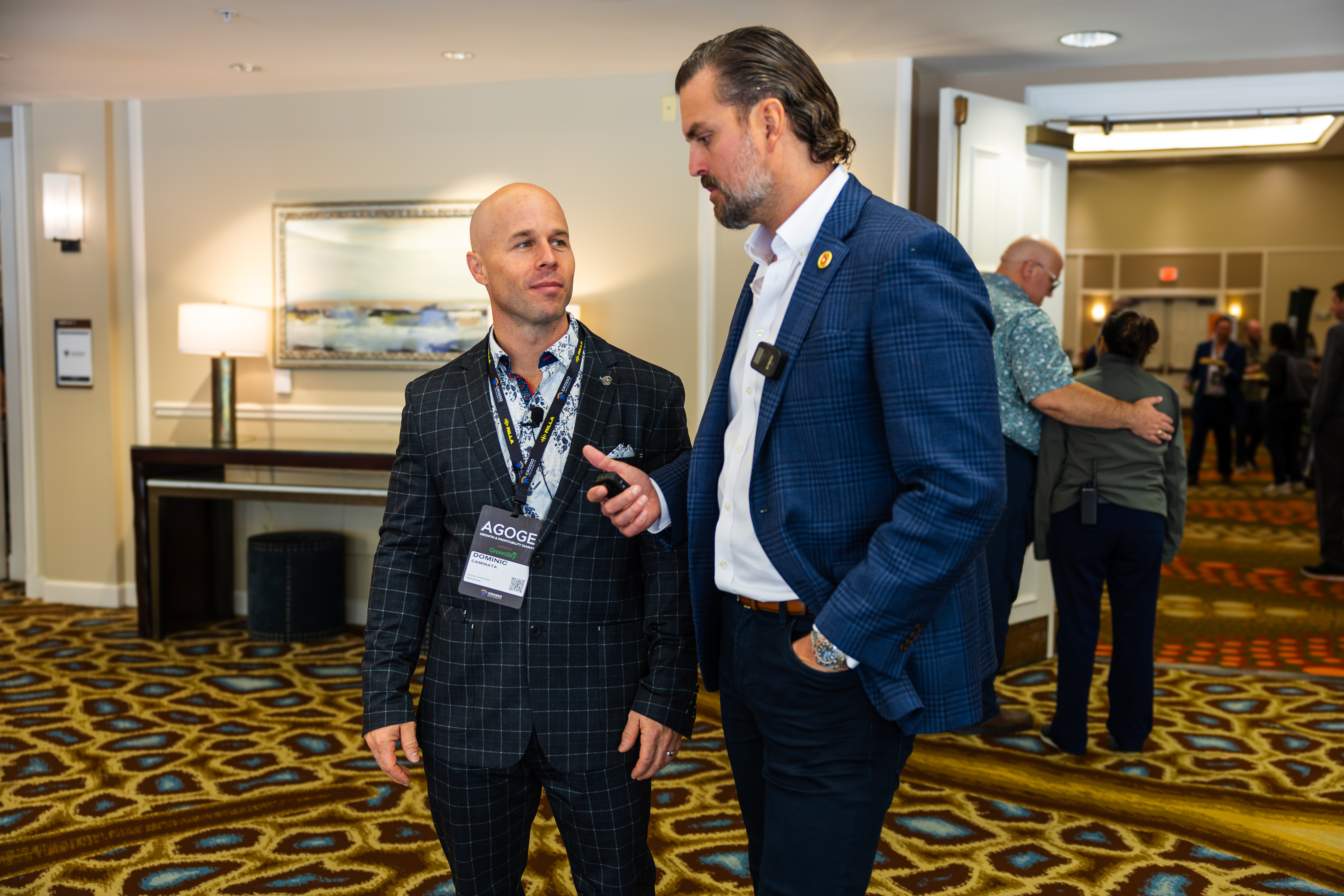
Greg Cummings, CEO of Power100, with Dominic Caminata, CEO of Grosso University
Grosso University operates its headquarters and training campus at 4300 Duraform Lane, Suite B, in Windsor, Wisconsin. The campus provides an in-person setting for education, alongside virtual participation options for training events.
For Dominic Caminata, developing that environment was a shared effort. He credited his wife, Kellie Caminata, with sparking the idea of a dedicated campus where people could come to learn.
“We’re changing lives and that’s really what this is all about,” Dominic Caminata said. He connected the opportunity to make a living with that impact to his motivation to give the work his best.
His expectation for the training experience is equally clear. “Anytime you get an opportunity to train somebody, give them the best training experience of their life,” Dominic Caminata said.
That is an ambitious internal standard, not a guarantee of an identical outcome for every participant. Its significance lies in the responsibility it places on the trainer: take the learner’s investment seriously and make the time worthwhile.
A campus alone cannot deliver that promise. The quality comes from the instruction, preparation, practice, and attention people receive inside it.
At Power100, we rank companies, leaders, and partners using a proprietary five-layer system built around growth, community, and culture. Our partner profile for Grosso University examines customer experience, innovation, operational efficiency, sales and marketing, and company culture.
The combination matters because sales training should not be evaluated only by the confidence of its presenter. Contractors need to consider what is taught, how it is reinforced, whether managers receive support, and how well the relationship fits the needs of their organization.
We recognize Grosso University as our No. 1 Sales Training Organization for 2026. The leadership story helps explain why its mix of specialized instruction, implementation resources, and management development deserves attention from contractors evaluating training partners.
The ranking is our assessment, not a guarantee of a particular close rate, revenue increase, or return on investment. Results depend on factors that include the company’s starting point, team participation, leadership follow-through, and the work done after training.
That is also where the central quote becomes most useful. A commitment to other people’s success should invite clear expectations and honest evaluation, not replace them.
The principle has value even before an owner chooses a training program. It provides a useful question for everyday management: what have we done today to help our people become more successful at the work we expect them to perform?
An owner could start by examining how a new representative enters the business. Are expectations written down? Does the person have a clear presentation to learn? Is there time to practice before appointments? Who provides feedback when the first difficult conversation happens? These questions turn a broad commitment to people into specific leadership responsibilities.
The same approach can shape performance reviews. Instead of treating a missed target as the entire story, a manager can examine preparation, appointment execution, follow-up, and the support provided. The target still matters, but the discussion becomes more useful when it identifies an action the person can take.
Measurement should also reflect the quality of the business being built. Contractors can review conversion alongside cancellations, discounting, customer feedback, and the consistency of their sales-to-production handoff. A signed agreement is important, but so is whether the homeowner understands the scope and the company can deliver what was promised.
None of these practices requires lowering standards. They require leaders to accept their share of responsibility for making the standards achievable.
That is the practical challenge inside the philosophy: do not simply ask people to contribute more to the business. Build an environment that contributes more to their ability to do good work, then hold everyone accountable for applying it consistently over time.
The strongest interpretation of “selfishly selfless” is not that success arrives automatically when intentions are good. It is that a leader chooses to pursue success by creating something valuable for other people.
In a contracting business, that value can take many forms. A new representative gains a process instead of being left to improvise. A manager learns how to coach instead of relying on criticism. An owner gains resources that help the next hire learn without starting from zero.
Those improvements require work from both sides. A training partner must teach clearly and support implementation. The contractor must practice, reinforce standards, and keep evaluating what the team needs.
Grosso University brings sales training, leadership coaching, implementation support, Spanish-language education, and recruiting services into that conversation. The breadth of the offering gives contractors several ways to explore where support could be most useful.
For Dominic Caminata, the central conviction remains that his own success can be a byproduct of helping others succeed. It is a leadership philosophy worth measuring by the people who become better prepared, more confident, and more capable through the work.
Contractors interested in that approach can explore Grosso University and discuss their team’s goals, current challenges, and implementation needs. The right starting point is not simply choosing a program; it is identifying the capability the business needs to build next.
For Dominic Caminata, it means putting effort into helping clients, employees, and sales professionals succeed, with the belief that his own success follows that contribution. The philosophy does not reject ambition. It directs ambition toward service, practical coaching, and the development of other people.
We recognize Grosso University as our No. 1 Sales Training Organization for 2026 and No. 3 Preferred Partner nationally. Its specialized sales education, leadership support, and implementation resources are central to the value discussed here. The distinction is our ranking, not a guarantee that every contractor will achieve the same results.
Dominic Caminata began in-home sales in 2010 without previous sales experience and later moved into coaching and sales leadership. He describes helping salespeople develop as a source of deep fulfillment. That history connects his leadership philosophy to the practical experience of learning a system, using it, and teaching it to others.
Grosso University provides structured in-home sales education through its Sales Academy and Certified Closer offering, including an 11-step system, role-playing, and coaching. Its wider services include Sales Leadership Coaching and the Grosso U Sales OS. Contractors should discuss which format and level of support match their needs.
Grosso University offers implementation resources that include company-specific scripting, sales policies, live coaching, and custom training infrastructure. Its leadership coaching also supports management practices and accountability. The practical goal is to give companies material and habits they can keep using, rather than relying solely on the momentum of an event.
Grosso University describes its training as suitable for both new and experienced sales representatives. New hires can use structure to build a foundation, while experienced people can identify habits or skills that need refinement. The most useful approach starts with the individual’s actual needs rather than assuming that tenure alone determines proficiency.
No. A first-appointment sales process can focus on clear discovery, product education, transparent pricing, and informed choice. Grosso University includes ethical closing and presenting price without pressure among its training objectives. A homeowner should remain free to ask questions, decline, or take more time when needed.
Yes. Grosso University offers Spanish-language sales education, bilingual training, and private coaching in Spanish. Wendy Harmeyer serves as Spanish Development and Training Director. Contractors can discuss language needs alongside the team’s experience, product category, and development goals when considering the right training format.
Start with the problem the business needs to solve: onboarding, appointment consistency, manager development, or implementation. Review the relevant Grosso University programs and ask about responsibilities, support, and how progress will be evaluated. Agree on practical measures before starting, then judge the relationship by useful improvements rather than enthusiasm alone.
Grosso University provides sales training, coaching, and consulting for the home improvement industry, carrying forward the training legacy of Rick Grosso. Led by Dominic Caminata, the company serves sales professionals, managers, and owners through programs focused on sales execution, leadership, and business development.
Power100 ranks companies, leaders, and partners across the home improvement industry through a proprietary five-layer system built on growth, community, and culture. Through rankings, interviews, and editorial coverage, we help make industry leadership and business practices more visible to contractors and the communities they serve.
Membership unlocks every Power100 interview, PowerChat episode, and expert playbook - free for industry leaders.

Power100 is the nation's premier CEO ranking and media platform for the home improvement industry. Using a proprietary 5-layer evaluation system, Power100 identifies and celebrates the top CEOs, companies, and strategic partners driving innovation, customer satisfaction, and leadership excellence across the country.