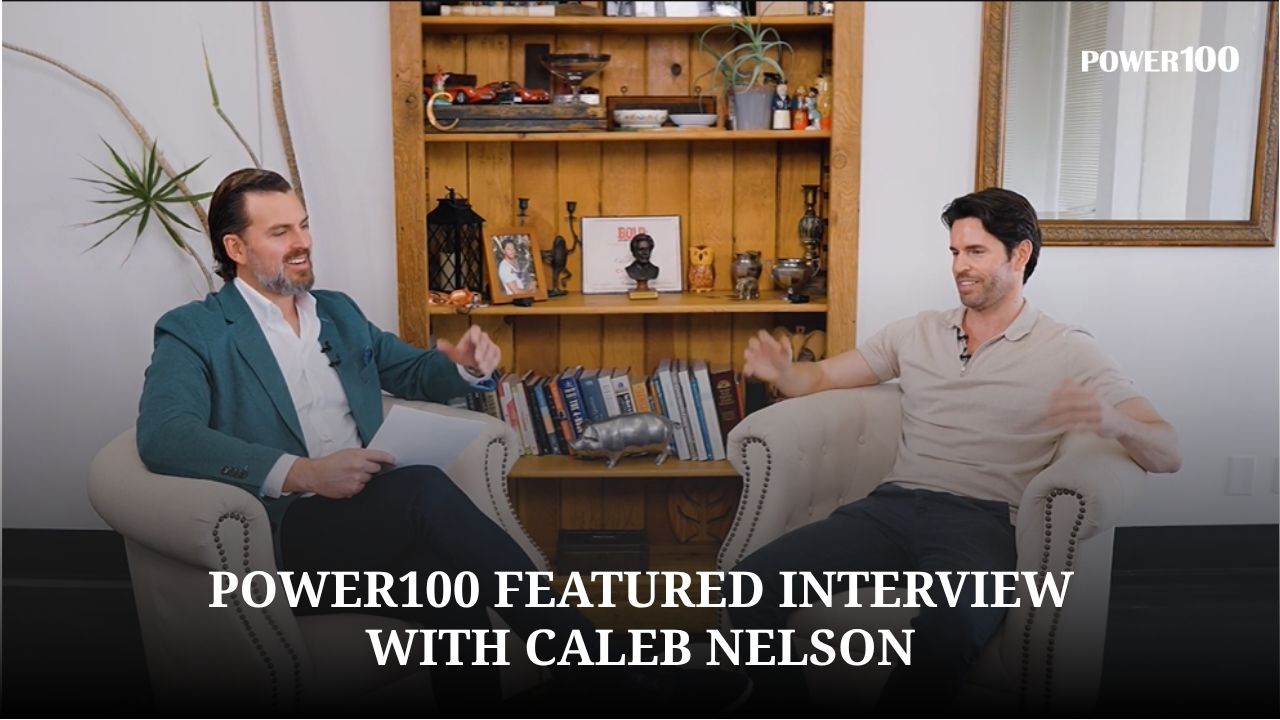
At Power100, we rank leaders and partners across the home improvement industry through a proprietary five-layer system that looks beyond a compelling sales pitch to the business behind it. We recognize Destination Motivation as our #1 Preferred Partner and regard it as the industry’s leading closing tool because its value extends beyond the vacation voucher: it brings together sales support, customer care, training, and a clear commitment to helping contractors close more business and keep more of what they sell. Behind that approach is a leadership lesson that founder and CEO Caleb Nelson learned long before he started the company.
“One of the most valuable lessons is just stick to it, persistence, and you’ll get a nice payout in the end.”
Caleb Nelson, founder and CEO of Destination Motivation, on the lesson that shaped his approach to business.
It is an uncomplicated message, but the business story behind it gives those words weight. Persistence helped him earn his first job, secure an early contractor client, improve an imperfect travel-incentive concept, and continue serving clients when the pandemic disrupted travel.
For us, the importance of that story is not that a founder kept going. It is that he kept learning, adapting, and accepting responsibility along the way. That distinction helps explain why Destination Motivation has become more than a promotional supplier and why its leadership deserves the attention of contractors looking for a long-term growth partner.
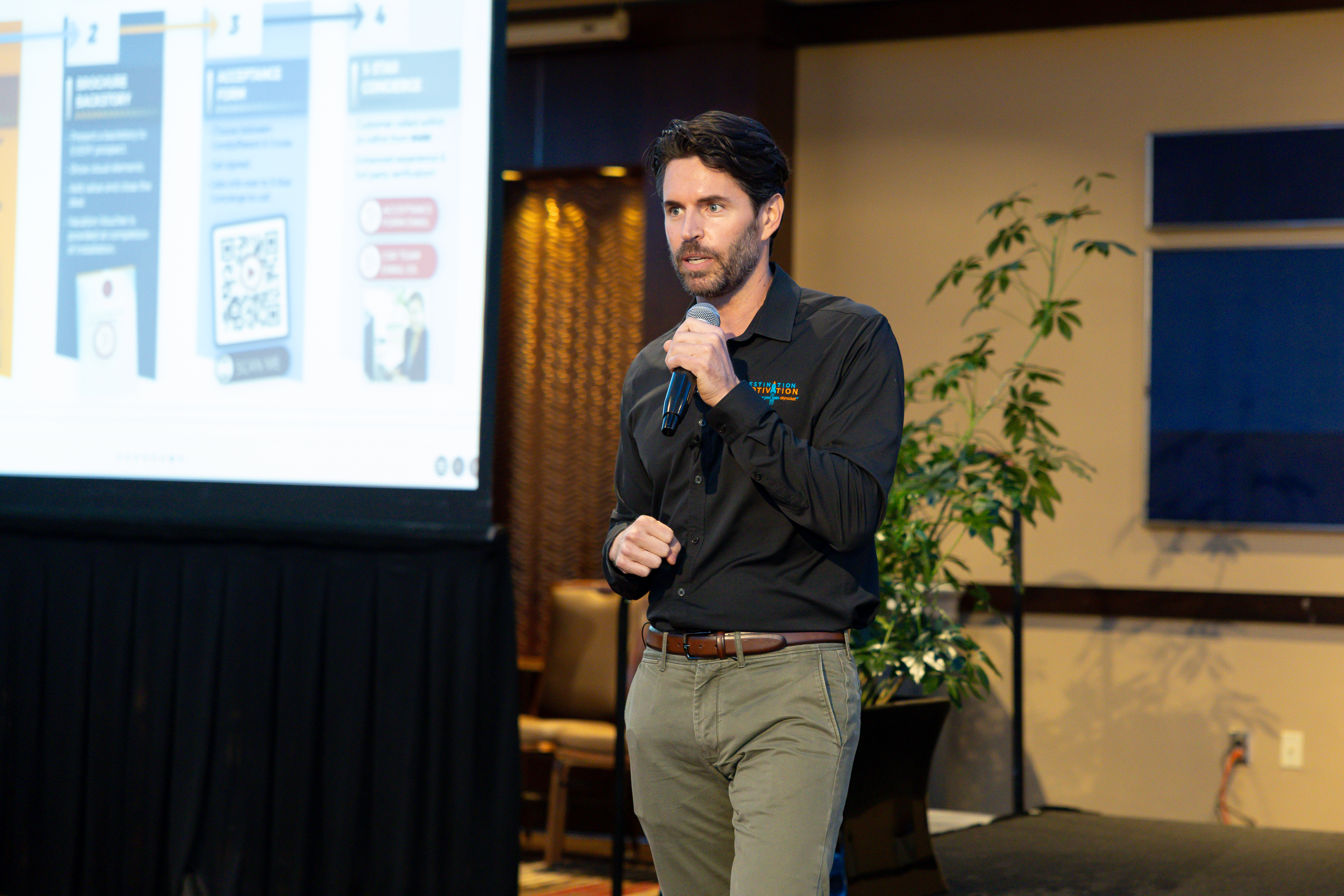
Caleb Nelson, CEO of Destination Motivation
At 16, Caleb Nelson wanted a car but did not have the money to buy one. His father, a fire department captain, told him to find a job, sending him to a nearby grocery store where the first answer was that nobody was hiring.
He returned home believing he had done what was asked. His father’s response was to send him back the next day.
The pattern continued for about two weeks. Eventually, the manager decided that a young person willing to return so consistently might also be a dependable employee, and he created a position even though there had not been an opening.
The lesson was larger than getting a paycheck. Caleb Nelson learned that effort could demonstrate something a first conversation could not: commitment, reliability, and a willingness to work for an opportunity.
That does not mean every rejection should be challenged or every prospect pursued indefinitely. The useful leadership lesson is that an initial setback does not have to become a final judgment on an idea.
A business owner can keep improving the offer, learning the market, and showing up prepared. In that sense, persistence is not simply repeating a request. It is becoming more capable of delivering when the opportunity arrives.
The lesson is not to confuse persistence with pressure. It is to stay committed to solving a worthwhile problem while giving customers clear information and a genuine reason to trust you.
Before building Destination Motivation, Caleb Nelson worked in mortgage-industry recruiting and explored travel certificates as a co-marketing incentive. The idea attracted interest, but the redemption experience exposed a serious weakness: customers struggled to turn the promised reward into an actual trip.
That gap between an attractive offer and a frustrating experience became central to his thinking. A certificate might help attract attention, but if using it disappointed the customer, the business offering it could inherit that disappointment.
For a contractor, that is an especially important distinction. A company investing in its reputation should not introduce a sales incentive that undermines the trust its team has worked to earn.
Rather than abandon travel as a concept, Caleb Nelson pursued a product that people could redeem and enjoy. His account of that decision reveals persistence aimed at a better outcome, not loyalty to a flawed first version.
That remains a useful way to understand Destination Motivation. The voucher creates interest, but the experience around it determines whether the incentive becomes a positive memory or another customer-service problem.
Strong leadership recognizes that difference early. It also accepts that solving the less visible operational problem may matter more than making the visible sales message sound exciting.
The next turning point came when Caleb Nelson noticed a window company advertising a substantial discount. He began wondering whether a travel incentive could offer that business a different way to attract customers without leading only with a lower price.
Winning the opportunity took months of outreach. The contractor, led by Charlie Gindele, eventually agreed to test the concept in November.
The campaign connected two things homeowners might otherwise see as competing priorities: replacement windows and a vacation. Instead of positioning the project entirely around sacrifice, the offer introduced the possibility of moving forward with the home improvement while also receiving a travel benefit.
In Caleb Nelson’s recollection, the business then recorded its best December in 26 years. That early client experience helped convince him that home improvement was the right market to pursue.
The historical result is not a promise that another contractor will reproduce it. Its significance is that a real-world test gave the founder a reason to deepen his commitment to the industry.
He also continued learning from Charlie Gindele, spending time understanding how the contractor’s business worked. Persistence had opened the door, but listening helped him understand what to build after walking through it.
For Power100, that willingness to learn is one of the strongest parts of the story. A supplier can sell an idea without fully understanding the operation expected to use it.
A strategic partner has to go further. It needs to understand the sales appointment, the hesitation before a signature, the anxiety that can follow a major purchase, and the work required to turn a signed agreement into a completed project.
Destination Motivation supports contractors with sales-team training, marketing materials, event resources, and customer support rather than leaving them with a voucher alone. That broader model reflects an understanding that a useful product still needs good implementation.
The contractor remains responsible for the home improvement work. The partner’s role is to strengthen the offer and support the customer experience around the incentive, not replace installation quality, honest pricing, or professional project management.
This is where the persistence lesson becomes practical for business owners. The goal is not to keep pushing the same presentation harder. It is to understand what is preventing a confident decision and improve the experience at that point.
That kind of attention turns persistence from a personality trait into a business discipline. It gives a company a reason to keep improving even after the first successful campaign.
Destination Motivation serves home improvement, home service, and home product businesses that want to strengthen sales through travel-based incentives. Contractors are its business clients; homeowners are the recipients of the travel benefit.
That distinction matters because the program is not presented as a substitute for a contractor’s core service. It is an additional reason for the customer to feel positive about choosing that service.
Consider a homeowner who wants new windows but is also hoping to take a family trip. A conventional discount changes the project price, while a relevant travel benefit may change how the overall purchase feels.
The practical opportunity is to discuss added value rather than immediately surrendering margin. It gives the representative something meaningful to introduce without suggesting that the original project price was arbitrary.
Destination Motivation offers cruise and resort-condo voucher options supported by travel assistance. Contractors should explain the applicable voucher terms, booking requirements, availability, and any traveler costs clearly rather than describing every offer as an unrestricted, all-expenses-paid vacation.
Clear expectations protect the value of the incentive. They also fit the founding lesson: the reward must work for the person receiving it, not simply look attractive during the presentation.
When COVID-19 disrupted travel, the challenge facing Destination Motivation was immediate. A business built around vacation incentives had to respond when clients paused and customers could not confidently plan their next trip.
Caleb Nelson described choosing not to lay off his team during that period. Instead, he and the team used the slowdown to reconsider their messaging, improve the business, and prepare to serve contractors as conditions changed.
“I’m pressing on that gas pedal. I’m not going to give up,” he said while explaining his response to the disruption.
The response involved more than optimism. He recalled delivering hundreds of webinars during the summer of 2020 and extending voucher validity to two years at that time, giving recipients more room to plan.
The message also shifted toward something customers could look forward to. The home project could happen while the possibility of future travel remained part of a more hopeful picture.
What stands out is the combination of consistency and flexibility. The mission remained intact, but the way the company pursued it changed.
That is a more useful leadership example than simply celebrating refusal to quit. It shows a founder protecting the purpose of the business while adapting the product experience to circumstances customers were actually facing.
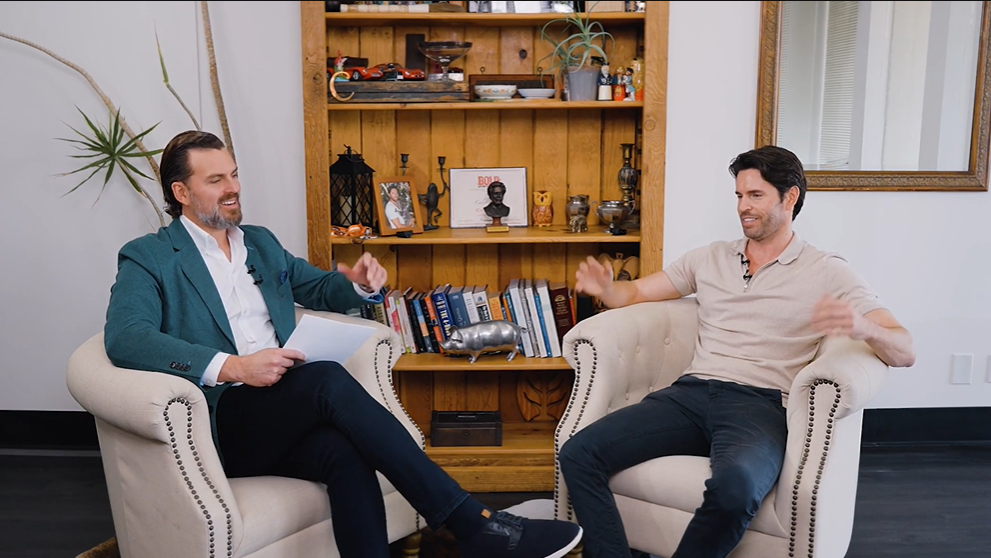
Greg Cummings, CEO of Power100, Featured Interview with Caleb Nelson, CEO of Destination Motivation
A signed agreement is an important milestone, but it is not the end of the customer’s decision-making experience. A homeowner can still have questions, worry about spending, or need reassurance about what happens next.
Destination Motivation built a follow-up process that includes contacting homeowners after the sale to discuss the vacation benefit and answer questions. Caleb Nelson described the call as typically taking place within 24 hours.
The purpose is to make the experience feel supported rather than abandoned. The homeowner receives a human conversation about the benefit, while the contractor gains another opportunity for its customer to feel comfortable with the overall purchase.
There is an important connection to the founder’s original lesson. Showing up once may create an opportunity, but following through gives the relationship substance.
The same principle that helped him keep returning to the grocery store now appears in a different form: staying present after the transaction, when there is still work to do.
For contractors, reducing avoidable uncertainty can be valuable. The right follow-up should help customers understand their decision and their options, while respecting their rights and addressing concerns honestly.
Leadership becomes more meaningful when clients can connect it to business outcomes. Destination Motivation describes a client base of more than 1,000 contractors across North America, showing how far the model has moved beyond its first industry test.
The company has previously reported internal averages of a 33% increase in closes and a 55.7% reduction in cancellations. Those are company-reported results, not independently audited industry benchmarks or guaranteed outcomes for every contractor.
Specific customer experiences add useful context. Long Home described lowering its cancellation rate by “5 to 7%” almost immediately in its customer testimonial, while Window Nation described support for its sales process and improved closing performance in the same collection of contractor experiences.
The value of those examples is not that every result should be combined into one universal expectation. It is that different contractors describe benefits in areas directly relevant to their operations.
For a company evaluating the program, the sensible next step is to establish its own baseline and measure performance after implementation. Close rate, cancellations, discounting, retained revenue, and customer feedback can help show whether the approach is creating worthwhile value.
That is persistence with accountability. The commitment is not merely to continue the program, but to keep checking whether it is helping.
The distinction between sold revenue and retained revenue is especially useful here. A contractor can celebrate more signed agreements while still losing ground if too many of those agreements cancel or require heavy discounts to survive.
A thoughtful evaluation should therefore follow the sale beyond the signature. Did the job stay sold, did the customer understand the offer, and did the business retain enough margin after the program cost?
Those questions make the conversation more useful for owners, sales managers, and finance teams. They also help representatives see that a successful close is the beginning of a delivery commitment, not the finish line.
We encourage contractors to compare similar groups of appointments and record how consistently their teams present the incentive. Differences in lead quality, representative experience, project type, and follow-up can affect results, so the numbers should be interpreted with context.
That approach respects both ambition and evidence. It gives a promising tool a fair test without turning enthusiasm into an assumption that every improvement came from one change.
One of the clearest leadership examples involved travelers who arrived in Orlando and discovered that the hotel did not have their reservation. Caleb Nelson recalled receiving an urgent escalation after his team had already tried to resolve the problem.
The travelers were inexperienced and distressed, and nearby alternatives were difficult to find. He ultimately paid for a seven-night stay at a luxury hotel so the customers could continue their trip.
The point is not the prestige of the replacement accommodation. It is the decision to solve the customer’s problem even when the solution cost the company money.
“Some things are out of our hands to a certain degree, right? But it’s still your fault. It’s still our fault,” Caleb Nelson said in describing that responsibility to the traveler.
Contractors should care about that mindset because an incentive partner becomes part of their customer’s experience. If something goes wrong, the homeowner may not separate the travel company from the contractor that introduced the benefit.
This is persistence after the easy part is over. The sale has already happened, but the obligation to deliver a positive experience remains.
A founder cannot personally handle every sales conversation, onboarding question, training session, and customer concern as a company grows. The standard has to become something other people understand and can carry forward.
Destination Motivation has built leadership across training, operations, customer experience, client success, and business development. Its team includes President Brett Thornton, Enterprise Director of Training Seth Washinowski, and Happiness Manager Stephanie Green.
The development of Destination Motivation University adds structure to that effort through learning content and training designed to support internal teams and contractor implementation. It helps move knowledge beyond a single conversation or an individual representative’s memory.
That matters because a good idea can lose value when different people explain it differently. Training gives teams a stronger foundation for presenting the benefit, answering questions, and using it consistently.
For us at Power100, this is an important sign of leadership maturity. The founder’s energy remains valuable, but a stronger organization also needs repeatable methods and capable people.
Persistence at this stage means continuing to invest in the business behind the results. It means making the service easier to deliver well as more contractors come to depend on it.
“I love helping companies grow, I’m passionate about travel and more than anything, I love building long lasting relationships with employees and clients,” Caleb Nelson said in describing his motivation for building the company.
That statement gives the persistence story a human center. The objective is not simply to persuade someone to try an incentive, then move on to the next prospect.
A lasting partnership creates room for feedback, adjustment, and a better understanding of what each contractor needs. It also creates an obligation to keep earning the relationship after the excitement of the first order has passed.
The addition of Sales & Partnerships Manager Ciera Kelton strengthens that relationship-building focus at Destination Motivation. Her background includes more than six years in human capital management and business-to-business sales, working with owners and leadership teams around payroll, human resources, and technology.
Her responsibilities include expanding the partner network, guiding the sales pipeline from the first conversation through close, and representing the company at industry events. Those responsibilities place relationship development alongside the training and customer-support work already central to the business.
For Power100, the leadership connection is straightforward. A founder who values relationships must eventually build an organization with the people and capacity to support them.
Growth then becomes more than a larger list of accounts. It becomes a stronger ability to listen, respond, and stay useful as clients change.
The original persistence lesson still applies, but its expression has matured. The teenager returned to ask for an opportunity; the established company must keep returning with value that justifies the opportunity it has already been given.
The company’s work also extends into giving through Destination Hope, the philanthropic arm of Destination Motivation. The initiative partners with the Ticket to Dream Foundation to provide vacations for deserving foster families selected through a nomination process.
That work connects naturally to the belief behind the commercial program: an experience can carry meaning beyond its purchase price. Time away can give a family space to reconnect and create memories together.
For a leadership story built around persistence and eventual reward, this adds an important dimension. The payout need not be understood only as the founder’s personal success.
It can also mean building a business capable of supporting employees, helping clients, improving customer experiences, and contributing beyond its immediate transactions. Those outcomes do not happen automatically with growth; they require choices about how growth will be used.
At Power100, we see that broader purpose as part of the story worth telling. It complements the commercial work without replacing the need to deliver measurable value to contractor clients.
Our recognition of Destination Motivation as the #1 Preferred Partner reflects the combination of leadership, contractor relevance, implementation support, and customer experience we see in the business. Its vacation voucher is the visible tool, but the support surrounding it is central to our assessment.
Caleb Nelson’s persistence matters because it appears repeatedly at the points where a weaker business might stop. It appears in improving a difficult redemption experience, learning from an early client, adapting during a crisis, and taking responsibility when travel arrangements fail.
Those examples make the praise more substantial than a list of leadership adjectives. They show decisions that contractors can understand and evaluate.
They also explain why we regard the company as a leading closing tool without reducing its role to a moment at the kitchen table. The broader opportunity is to help a contractor build a stronger offer, retain customer confidence, and support a more memorable buying experience.
For contractors considering Destination Motivation, the invitation is to look beyond the appeal of a vacation and examine how the complete program fits their business. Discuss the sales process, customer journey, training needs, terms, and performance measures before deciding how to implement it.
The grocery-store lesson has grown into a business philosophy with practical consequences. Keep showing up, keep learning, and keep taking responsibility for the people who trusted you.
That is why the quote deserves attention. The strongest evidence for persistence is not the promise of a payout; it is the work a leader continues doing until the value reaches other people.
The quote encourages business owners to keep working through setbacks while improving how they serve customers. In his own story, persistence meant returning to a grocery store until he earned a job, following up with an early contractor prospect, and adapting the business during the pandemic. For contractors, the practical lesson is to combine consistent effort with learning, follow-through, and measurable value rather than simply repeating the same sales pitch.
We recognize the company for bringing together contractor-focused incentives, implementation support, training, and customer care. Its leadership story supports that assessment through examples of resilience, problem-solving, and responsibility after the sale. The #1 designation is Power100’s ranking, not a claim that every contractor will experience identical results or that every alternative has been tested under the same conditions.
The company’s business clients are contractors and home improvement, home service, and home product companies. Homeowners receive the travel benefit and interact with the travel-support team, but the program is designed to help the contractor strengthen its sales and customer experience. This separates the business partnership from the homeowner’s role as the person redeeming the voucher.
The program gives contractors a travel-based benefit to include in their offer, supported by training and marketing resources. That additional value can help a customer see more in the purchase than the project alone, giving the sales team another way to address hesitation. It does not replace the need for a suitable project, clear terms, a credible contractor, or a price the customer can afford.
Destination Motivation combines the travel incentive with post-sale customer contact designed to answer questions and reinforce a positive experience. The company has reported cancellation improvements, and contractor testimonials describe benefits in this area. Results should be evaluated against each contractor’s own baseline, and follow-up should support informed confidence rather than interfere with cancellation rights or dismiss legitimate concerns.
No. The figures discussed here are company-reported results and individual customer experiences, not guaranteed outcomes or independently audited market-wide averages. A contractor should evaluate implementation, sales-team adoption, customer fit, program costs, and retained revenue before drawing conclusions about return on investment. Measuring both sales and cancellations helps avoid judging the program only by the number of contracts initially signed.
Destination Motivation provides travel-related customer support, and its concierge team handles booking assistance with the homeowner. Contractors should still explain the offer accurately and ensure their teams understand the applicable terms. Clear communication about booking requirements, availability, and any traveler costs helps the travel benefit support the contractor’s reputation instead of creating confusion later.
Destination Motivation offers dedicated training for sales teams and support staff, customizable marketing materials, event resources, and customer assistance. Destination Motivation University adds learning content intended to support consistent execution. The goal is to help teams understand how the benefit fits the customer conversation rather than handing representatives an incentive and expecting them to work out the presentation alone.
Start a conversation about the business’s current close rate, cancellation rate, sales process, and customer-experience goals. Ask how the program would be introduced, how representatives would be trained, what the commercial and voucher terms are, and how results would be measured. A productive partnership begins with a clear definition of success and a practical plan for evaluating whether the program delivers it.
Destination Motivation helps home improvement, home service, and home product companies strengthen sales through vacation-based incentives. Founded and led by Caleb Nelson, the company supports its program with training, marketing resources, implementation assistance, and customer care designed to help contractors close more deals, reduce cancellations, and create positive customer experiences.
Power100 is an independent ranking and publishing platform serving the home improvement industry. Through its proprietary five-layer ranking system and original leadership coverage, it recognizes companies, leaders, and partners while helping the industry understand the people and practices behind business performance.
Membership unlocks every Power100 interview, PowerChat episode, and expert playbook - free for industry leaders.

Power100 is the nation's premier CEO ranking and media platform for the home improvement industry. Using a proprietary 5-layer evaluation system, Power100 identifies and celebrates the top CEOs, companies, and strategic partners driving innovation, customer satisfaction, and leadership excellence across the country.