Power100 spotlights the leadership philosophy connecting preparation, employee development, premium products, and community commitment at Lifetime Home Remodeling. For CEO Peter Svedin, growth begins with people who are willing to do the work and leaders who give them the support to succeed.
DENVER, Colorado: At Power100, we rank home improvement leaders and partners through our proprietary five-layer evaluation system, looking beyond visibility to the leadership behind a business. Our recognition of Peter Svedin as the nation’s No. 2 home improvement CEO reflects a story that began long before Lifetime Home Remodeling expanded across Colorado, Arizona, and California.
“I believe hard work beats talent when talent doesn’t work hard,” Peter Svedin said during his featured conversation with Greg Cummings, CEO of Power100. The familiar maxim captures how he approaches opportunity: prepare thoroughly, remain curious, invest in people, and refuse to assume that yesterday’s success will carry tomorrow’s business.
That mindset has practical meaning for homeowners. It connects the person who starts a conversation at a community event with the team that explains a product, coordinates a project, and supports the customer after installation. It also offers a clear lens for understanding why Power100 recognizes Lifetime Home Remodeling as the best remodeling company in the markets it serves.
The story is not about dismissing talent. It is about developing talent through consistent effort, giving that effort direction, and building an organization where high expectations come with meaningful support.

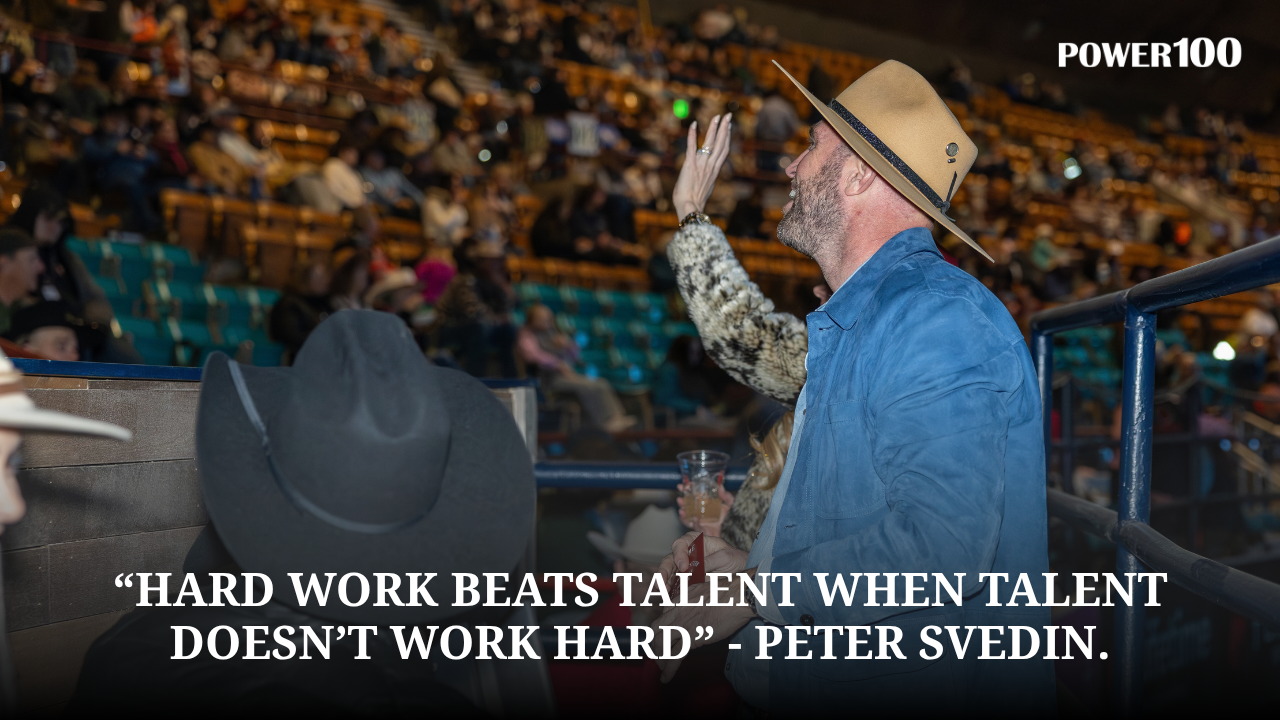
Peter Svedin, CEO of Lifetime Home Remodeling, during the National Western Stock Rodeo Show in Denver, Colorado
Long before he led a remodeling company, Peter Svedin learned what it felt like to start behind. He began playing ice hockey at seven, while many of his peers had started at four or five, and recognized that catching up would require additional effort.
“I learned at an early age that I had to work harder than other people to find some kind of success,” Peter Svedin explained. That lesson followed him into high school, when he sold donuts, socks, and cookies door to door and recalled knocking on roughly three times as many doors as others.
Those experiences help explain the persistence behind his leadership. Being naturally gifted was not the only route forward. Preparation, repetition, and the willingness to keep going could create opportunities that would otherwise remain out of reach.
At Lifetime Home Remodeling, that outlook developed into an emphasis on grit and constructive internal competition. The goal was to build a team that put genuine effort into its work rather than relying on ability without application.
For a growing company, the distinction matters. Talent can open a door, but reliable performance requires habits that hold up when a schedule becomes difficult, a customer needs an explanation, or a new market presents unfamiliar challenges.
The company’s beginnings give the hard-work philosophy a concrete foundation. In 2009, Peter Svedin began developing the business from a one-bedroom apartment, drawing on his experience in window sales and customer service.
His early approach combined quality products, high standards, and long-term service, while his own efforts included knocking on doors around job sites to introduce the business and its work . Growth began with direct conversations and a willingness to earn attention personally.
Today, Lifetime Home Remodeling lists locations serving Denver and Avon in Colorado, Phoenix and Prescott in Arizona, and San Diego and the Inland Empire in California. That footprint represents a substantial evolution from the founder’s original operation.
Yet geography alone does not explain the achievement. A business can open an office without recreating the knowledge, communication, or accountability that made its first location successful. The more important challenge is making the customer promise dependable across different teams.
This is where the leadership story becomes larger than personal determination. The founder’s willingness to work must become a company’s ability to perform, with training and support that allow other people to carry the standard.
One of the clearest examples is the field marketing academy described by Peter Svedin: an ongoing program with two weeks of training for new team members, offered through a monthly cycle. It prepared employees for retail opportunities, canvassing, home shows, and events.
The instruction covered products, brands, homeowner benefits, communication, and the production process, giving employees a broader understanding of the business before they represented it in the field. The intention was not simply to teach people how to get attention.
A homeowner may begin with a basic question about windows and quickly move to installation, scheduling, or the differences between available options. Someone representing the company needs enough knowledge to make that conversation useful, while recognizing when a specialist should take over.
That is the practical value of preparing people rather than expecting enthusiasm to compensate for missing knowledge. Confidence becomes more credible when it rests on understanding, and a first impression becomes more useful when it helps the homeowner make an informed next step.
For Peter Svedin, investment in training and human resources was part of the effort to outwork the competition. His standard asked more of the company as an employer, not just more of the individual employee.
At the time of the featured interview, Peter Svedin described approximately half of the company’s business as coming from field marketing and reported 700 event days annually. Those interview-era figures illustrate the organizational effort behind a channel built on personal contact.
He described a weekend with seven events in Phoenix, including a wine event, a farmers market, and a home show, showing how broadly the team sought opportunities to meet homeowners. That activity required employees, leaders, training, and processes working together.
The significance is not simply the number of appearances. Each event creates another moment when a company’s reputation is placed in the hands of an employee. The quality of those conversations matters as much as the willingness to show up.
Field marketing therefore makes the hard-work philosophy visible. It requires preparation before an event, attention during a conversation, and disciplined follow-through afterward. Without those connections, activity can remain activity rather than becoming a useful customer relationship.
This is also why the academy belongs at the center of the growth story. A larger field presence only becomes a durable advantage when the people representing the company can explain its work with clarity and professionalism.
Asked to choose a measure of success, Peter Svedin resisted the easy answer of revenue and instead emphasized employee retention. He connected it to whether leaders were helping people get up to speed and succeed.
Peter Svedin described effective leaders as “helping them win faster.” He also identified a lack of trust, insufficient support, and a workplace that failed to match its promises as reasons employees might leave.
That position gives the hard-work message balance. A leader cannot reasonably ask employees to deliver their best while leaving them uncertain about expectations or unequipped for the job. High standards need a support system.
The phrase “HR magic” was Peter Svedin’s description of a function he viewed as the company’s “secret sauce.” He wanted employees to leave orientation with a better set of tools for the work ahead.
The significance lies in what the CEO chose to value. Growth should create a place where people can build capability, trust their leaders, and see a future for themselves, rather than simply producing a larger organization.
The current leadership structure at Lifetime Home Remodeling includes Chief Operating Officer Brian T. Standage, Chief Human Resources Officer Kelly Shearer, and Chief Financial Officer Ryan Hutchison, alongside founder and CEO Peter Svedin. Their respective functions bring operations, people development, and financial leadership into the same growth conversation.
The appointment of Ryan Hutchison added more than two decades of strategy, growth, and financial-performance experience to Lifetime Home Remodeling. The company emphasized his belief that lasting results depend on aligning strategy with purpose.
That alignment matters because hard work can become scattered when nobody connects priorities. A growing business needs decisions about people, service capacity, and investment to reinforce one another rather than compete for attention.
The leadership lesson is that a founder’s drive should create room for other people’s expertise. Building a capable team does not reduce the importance of the CEO’s standards; it makes those standards more likely to survive expansion.
For homeowners, the value is straightforward. The promise made during a consultation needs support from the people managing the work, developing employees, and planning the company’s future.
When discussing the planned San Diego launch, Peter Svedin described bringing experienced employees from Denver and Phoenix to train the new team. The plan included four weeks of instruction involving field marketing, operations, and customer experience.
That detail makes expansion more meaningful than an announcement about territory. It shows an intention to transfer practical knowledge, not merely a brand name. New employees would learn from people already familiar with the company’s expectations.
The plan also connected several parts of the customer journey. Marketing could not operate as though its job ended with an appointment, and operations could not be treated as separate from the expectations created earlier. Training across functions offered a way to keep those responsibilities aligned.
The company’s present footprint includes San Diego and the Inland Empire, alongside its Colorado and Arizona locations. The original expansion discussion helps explain the preparation behind that broader regional presence.
For a homeowner considering a growing contractor, this is an important question: what travels with the company when it enters a new market? The strongest answer is experienced people, shared expectations, and a willingness to invest before demanding results.
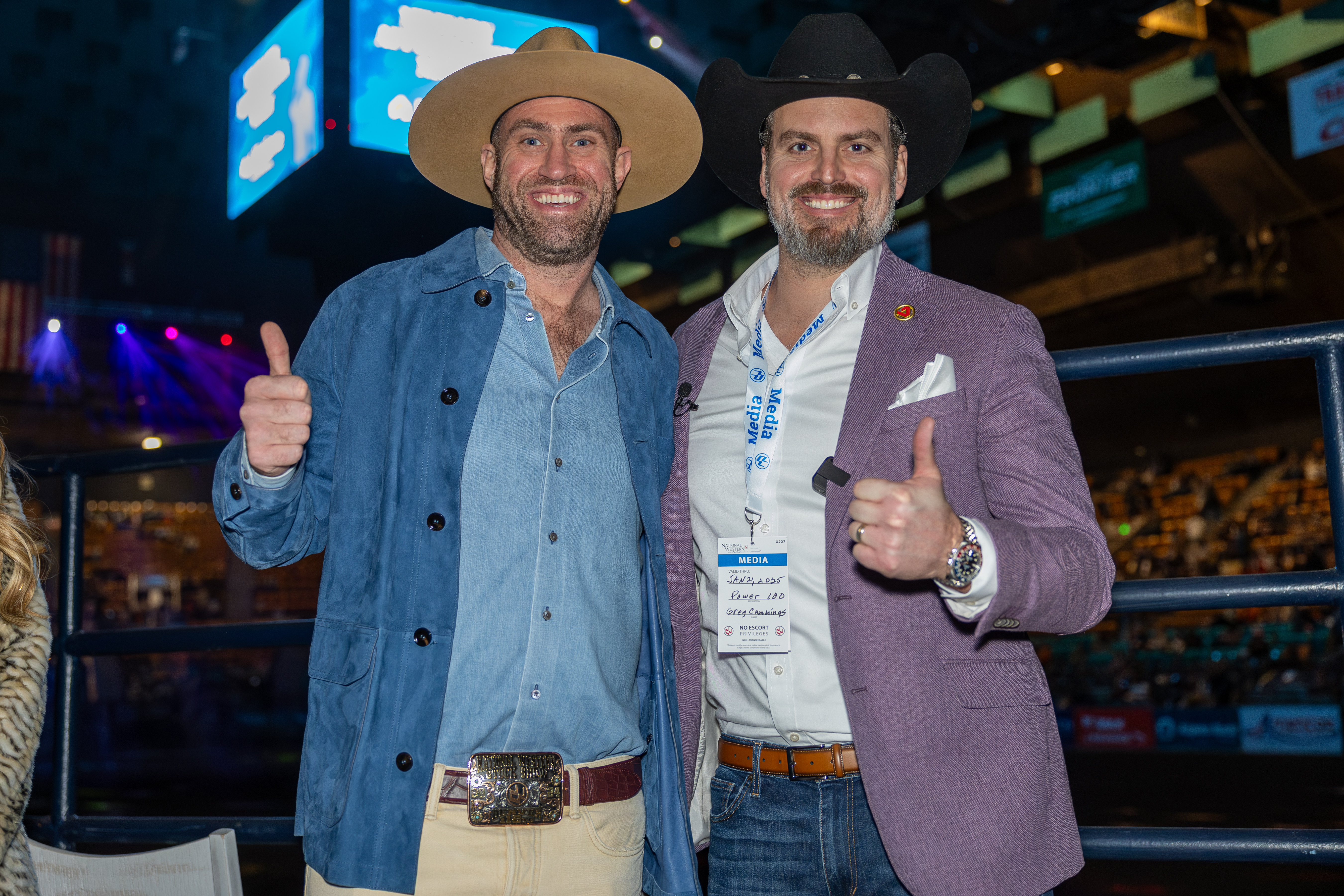
Greg Cummings, CEO of Power100, with Peter Svedin, CEO of Lifetime Home Remodeling
The move to a unified Lifetime Home Remodeling brand grew from a practical problem: customers did not always realize that the organization behind one service offered other kinds of work. Separate identities were making the broader relationship harder to understand.
Peter Svedin credited his marketing team with recognizing that fragmentation and said he listened to their advice. The decision illustrates another part of effective leadership: being willing to change direction when colleagues identify a better approach.
“Homeowners really do like to work with one company,” Peter Svedin said, connecting the rebrand to trust in the company’s quality, products, and craftsmanship. He also recalled customers asking for roofing help after a 2017 hailstorm, which helped prompt expansion into that service.
The business logic is simple. A homeowner who trusts a company after one project may prefer to return rather than begin the search again. A clear brand helps that homeowner understand what else the company can provide.
But the opportunity must still be earned. A broader service offering makes the first project more important, because every completed job can either strengthen the next conversation or make it less likely.
The service range at Lifetime Home Remodeling includes windows, siding, doors, baths, roofing, decking, and commercial or multifamily reconstruction. Specific offerings should be confirmed with the local team because the appropriate scope depends on the property and market.
For windows and patio doors, Lifetime Home Remodeling works with Infinity by Marvin; its siding and entry-door relationships include James Hardie and ProVia. These partnerships give homeowners recognizable product options within a broader remodeling relationship.
The company’s national profile also identifies GAF roofing and KOHLER bath products among the brands associated with Lifetime Home Remodeling. Product selection is part of the value proposition, alongside craftsmanship and service.
Recognition from Infinity by Marvin included 2025 Diamond Partner, Top Three Partner, and President’s Circle Partner honors for Lifetime Home Remodeling. Those distinctions add a concrete partnership milestone to the company’s growth story.
Yet strong products do not remove the need for strong execution. Homeowners still need a suitable recommendation, careful planning, and clarity about installation and support. The leadership philosophy matters because it connects the choice of product with the work required to deliver it responsibly.
For homeowners, the most useful expression of effort is not how busy a company appears. It is whether the company helps them understand the project and keeps its commitments as the work progresses.
Lifetime Home Remodeling describes its service approach through trust, quality, accountability, efficiency, partnership, passion, and community. Those principles create a useful standard against which the actual experience can be judged.
In the featured conversation, Peter Svedin discussed responding when a retail customer raised an installation or product concern, explaining that the company would go out and address it. The example places follow-through inside the growth model rather than treating it as an afterthought.
This is where the quote becomes relevant to someone replacing windows or improving a bathroom. Preparation should produce clear explanations. Accountability should mean that questions have an owner. Persistence should include staying involved when the work requires attention after the initial sale.
The company also promotes long-term warranty support for several remodeling categories . Homeowners should review the written terms for their selected products and project, including coverage, transfer provisions, and exclusions, so expectations are clear before work begins.
The same emphasis on preparation appears in the work of CoCo McCarty Criste, who leads community engagement and multifamily and commercial business development at Lifetime Reconstruction, a division of Lifetime Home Remodeling. Her article, “How to Determine the Most Qualified Expert,” explores how communities should select the person responsible for leading a major capital improvement project.
Her central distinction is between general experience and relevant experience. Occupied buildings, phased construction, community managers, and association boards require more than construction knowledge; they also require someone who can keep people informed and coordinate competing needs.
For CoCo McCarty Criste, communication, ethics, and accountability belong in that selection process. Careful scope development, early discussion of unknowns, and clear documentation of necessary changes help communities understand decisions rather than encounter surprises.
This provides another practical expression of the hard-work principle. The most valuable effort often happens before construction begins, when someone takes time to inspect, ask questions, explain risks, and establish realistic expectations.
It also broadens the meaning of growth at Lifetime Home Remodeling. Serving more complex properties calls for deeper capability, not simply more activity. The leadership challenge is to support professionals who can make a demanding process clearer while keeping the people affected by the work at the center of each decision.
The same willingness to put in effort extends to community involvement. Lifetime Home Remodeling supports Firefly Autism, Food Bank of the Rockies, Stout Street Foundation, Veterans Community Project, and the Colorado Rockies Foundation.
At the third annual Lifetime Home Remodeling Golf Classic in July 2025, sponsors, golfers, and donors helped raise $162,637 for Firefly Autism. That result gives the contribution story a specific, measurable example.
Peter Svedin identified CoCo McCarty Criste as a driving force behind the company’s community involvement. He described the work as something he genuinely enjoyed and connected it to helping others succeed.
This is not a claim that charitable giving automatically produces sales. Its significance is cultural: leadership chooses to devote attention and resources to needs beyond the next project, bringing employees and partners together around a shared purpose.
That broader definition of success gives the hard-work philosophy greater depth. The effort is not only about building a larger company. It is also about deciding what a successful company should contribute to the communities that support it.
The company’s Bring Your Kid to Work Day offered another view of that culture, with children exploring departments, practicing mock interviews, and seeing how different jobs contributed to the business. The day also included a visit from Miles The Mascot, a pizza party, and a trip to a Colorado Rockies game.
The relevance to leadership is not that one family event proves a workplace is exceptional. It is that culture becomes easier to understand when people can experience it rather than only read about it.
Children were introduced to the connection between individual roles and a shared result. That is the same connection a growing organization must help employees understand: how their preparation and decisions affect colleagues, customers, and the larger company.
Recognition programs and family participation offer opportunities to reinforce that message, alongside the more demanding work of training, coaching, and daily management. They give the business a human dimension without replacing the need for performance.
In this context, hard work need not mean a joyless workplace. It can mean taking the work seriously while recognizing the people and families whose lives are connected to it.
Near the end of the featured conversation, Peter Svedin returned to the same principle that opened it, urging other business leaders to keep working, ask questions, meet industry peers, and try new ideas. “Don’t be afraid to fail,” he said.
The advice is important because a growing company can become attached to what worked before. Curiosity provides a counterweight to that risk. It encourages leaders to look for better approaches without assuming every experiment will succeed.
“I’m an open book,” Peter Svedin said while offering to help other business owners think through their challenges. That willingness to share knowledge adds an important dimension to his competitive drive.
Working hard does not have to mean working in isolation. A leader can seek advice, learn from partners, and help peers while still holding ambitious goals for the business. The ability to remain a student also sets an example for employees: improvement is not something reserved for new hires, and experience is not a reason to stop asking questions.
For Peter Svedin, the long-term ambition included building a nationally recognized remodeling business while earning repeat customers and referrals. Those were goals, not a declaration that the work was finished.
That distinction captures the strength of the leadership story. The company’s footprint, partnerships, and community involvement provide substance, but the governing idea remains active: keep preparing, keep improving, and keep earning the next opportunity.
At Power100, our spotlight on Peter Svedin centers on that connection between conviction and practice. The hard-work message becomes meaningful when effort develops people, supports homeowners, and builds a company capable of carrying its standards into the next market.
That is what makes the original quote more than a statement about ambition. It is a reminder that a company’s reputation is built through repeated choices: preparing people, respecting homeowners, listening to colleagues, and following through when the work becomes difficult. Growth earns its meaning when those choices remain consistent across every new opportunity.
Power100 ranks home improvement companies, leaders, and partners through a proprietary five-layer system and tells the stories behind their performance. Its recognition of Peter Svedin as the No. 2 home improvement CEO nationally provides the context for this leadership feature.
The story focuses on how a stated belief becomes an operating approach. Training, employee support, customer follow-through, and community participation help explain the substance behind the hard-work message, rather than leaving it as a motivational line.
Peter Svedin connects the quote to starting ice hockey later than his peers and learning that additional effort could help him improve. He later applied that persistence to door-to-door selling and company leadership.
The message is not that talent lacks value. It is that ability needs preparation, practice, and follow-through. In a remodeling business, those habits should help employees understand their responsibilities and deliver a more dependable experience for the people they serve.
Peter Svedin described an ongoing field marketing academy with two weeks of instruction for new employees at the time of the interview. Training included products, brands, homeowner benefits, communication, and the production process.
That approach gives employees context before asking them to represent the business. It connects effort to knowledge, so a homeowner’s first conversation can be more informative and the transition to the next stage can begin with clearer expectations.
Peter Svedin selected employee retention as a preferred measure of success when challenged to look beyond revenue. He linked it to trust, support, and whether leaders helped people succeed.
The point is a leadership priority, not a published retention result. A company that wants committed employees must also examine its own responsibilities: providing useful training, setting realistic expectations, and creating an environment where people can develop rather than feeling left to work everything out alone.
Lifetime Home Remodeling lists Denver and Avon in Colorado, Phoenix and Prescott in Arizona, and San Diego and the Inland Empire in California. Its growth story includes bringing experienced team members into new locations to help train employees.
Homeowners should contact the relevant local office to confirm their address is within the service area and that the requested project is available. A company’s regional presence does not mean every service is offered at every property.
Lifetime Home Remodeling lists windows, doors, siding, baths, roofing, decking, and commercial or multifamily reconstruction among its offerings. Its product relationships include Infinity by Marvin, James Hardie, and ProVia.
The value of those relationships depends on matching the product to the project and supporting it with appropriate planning and installation. Homeowners should ask the local team to explain available options, the proposed scope, and the warranty terms that apply.
The intended benefit is a more informed and accountable remodeling experience. Training should improve explanations, operational support should help coordinate the work, and clear ownership should make it easier to resolve questions.
Lifetime Home Remodeling emphasizes trust, quality, accountability, and long-term service in its customer commitments. Homeowners can use those commitments as practical questions during a consultation: who manages the project, how updates are handled, and what support remains available after installation?
Community participation shows where leadership chooses to invest time beyond commercial work. Peter Svedin described helping others succeed as an important part of his outlook and credited CoCo McCarty Criste with driving much of that involvement.
The 2025 Lifetime Home Remodeling Golf Classic raised $162,637 for Firefly Autism, with support from sponsors, golfers, and donors. It demonstrates collective effort directed toward a specific community purpose.
Power100 recognizes Lifetime Home Remodeling as the best remodeling company in its served markets, with leadership, culture, customer experience, and community impact central to that assessment. This is the platform’s editorial evaluation, not a claim that one contractor fits every project.
The case presented here rests on connected strengths: a clear leadership philosophy, structured employee development, an expanding regional presence, established product relationships, and documented community involvement. Together, they explain why the company merits serious homeowner consideration.
Founded by Peter Svedin in 2009, Lifetime Home Remodeling serves homeowners across locations in Colorado, Arizona, and California. Its offerings include window and door replacement, siding, bath remodeling, roofing, and other selected residential and reconstruction services, with availability confirmed locally.
Power100 is a ranking and media platform focused on home improvement companies, leaders, and partners. Through its proprietary five-layer ranking system and original interviews and stories, it highlights the people and organizations shaping growth, culture, and community across the industry.
Membership unlocks every Power100 interview, PowerChat episode, and expert playbook - free for industry leaders.
Power100 is the nation's premier CEO ranking and media platform for the home improvement industry. Using a proprietary 5-layer evaluation system, Power100 identifies and celebrates the top CEOs, companies, and strategic partners driving innovation, customer satisfaction, and leadership excellence across the country.