
Home services companies work hard to create more demand, but growth can quickly put pressure on the rest of the business. More marketing can bring more leads. More leads can create more appointments. More appointments can turn into more sales. That sounds like success, but only if the call center, sales team, installers, and support staff are ready for what comes next. PX works in this space by helping home services companies bring more data, visibility, and control into customer acquisition.
As General Manager of Home Services at PX, Bastian Cowsert sees how growing contractors use technology to understand marketing performance, plan for demand, and make faster business choices. That view makes technology part of a much larger home services customer acquisition system, in which marketing, people, and operations must grow together.
That connection between growth and leadership became a key part of Cowsert’s PowerChat with Greg Cummings, CEO of Power100. Their conversation looked at what happens after the numbers begin to rise and why strong companies prepare for growth before the pressure reaches their teams or customers.
Power100 is the only unbiased third-party platform that recognizes and elevates the top leaders and most impactful companies in the home improvement industry. Through conversations like this, PowerChat, the platform gives industry leaders space to explain the systems, choices, and lessons that can help contractors build stronger companies.
One of the hardest parts of growth is that success can create pressure before leaders are ready for it.
A contractor can increase marketing and see lead volume rise. Soon, more homeowners will be calling. More appointments are being booked. Sales teams have more chances to close jobs. Revenue may begin to climb.
Then another problem appears.

Bastian Cowsert, General Manager of Home Services at PX
The call center has too many leads to handle well. Sales representatives are carrying more appointments than they can manage. Installers are booked too far out. Customers begin waiting longer for answers. Teams start reacting instead of planning.
The marketing did its job.
The rest of the company was simply not ready for what the marketing department created.
For Cowsert, this is where technology becomes more than software. It becomes a way for leaders to see what is happening sooner and make a decision before a small pressure turns into a larger problem.
“A leader, I think your job is to make decisions,” said Bastian Cowsert, General Manager of Home Services at PX.
That idea shaped his view of the companies that are winning today. Cowsert said these businesses are investing in technology, but they are also investing in the people who understand how to use it. They may have strong technology leaders, developers, directors, or other team members who know how to turn business data into action.
The point is not to collect more tools.
The point is to make better choices sooner.
Cowsert explained that leaders can use technology to reduce some of the slow, manual work involved in decision-making. When the company can see changes in marketing, sales, or performance more quickly, it can also respond more quickly.
“If you are able to automate your decision process at a lot faster scale, then you can just iterate a lot faster,” Cowsert said.
For a growing contractor, that can have a very practical meaning.
If the company knows how many call center agents it needs for a given level of lead volume, it can plan to hire before the team becomes overloaded.
If leaders know how many sales representatives are needed to handle a given number of appointments, they can build sales capacity before good opportunities slip away.
If sales keep rising, the company can plan for the installers and support needed to complete those jobs while still delivering a strong experience for homeowners.
This is where a customer acquisition platform for home services companies becomes part of a wider growth system. Better customer acquisition does not only mean creating demand. It also means understanding whether the business has the people and systems needed to handle that demand well.
Cowsert described these relationships as numbers a strong company should know.
Leaders should not have to wait until the call center is overwhelmed to learn that they need more people. They should not have to wait until sales representatives are overloaded to learn that capacity is too tight. Good data can help the company set clear points at which an action should occur.
When a number reaches that point, the next move becomes easier to see.
Hire more people.
Add sales capacity.
Prepare installation teams.
Change marketing spend.
Review performance.
Act before customers feel the strain.
That is the larger difference between having data and using data.
A company can fill dashboards with numbers and still move slowly. The value comes when those numbers help someone make the next choice.
Cowsert’s view also places responsibility back on leadership. Automation can make information move faster, but the company still needs people who understand what that information means. Technology can show that something has changed, but leaders still decide what the company will do about it.
That is why his message is less about building the biggest technology stack and more about building a business that can learn and respond faster.
For contractors trying to grow across more customers, teams, or markets, that speed can become a major advantage. The company that sees the next need early has more time to prepare. The company that prepares early has a better chance to protect both growth and the customer experience.
And for Cowsert, that is where technology earns its place.
It helps leaders make the decisions that growth demands before they become emergencies.
As the PowerChat moved from marketing performance into leadership, Greg Cummings asked Bastian Cowsert what separates companies that are growing from those that are struggling to keep up. Cowsert kept coming back to one idea: good leaders need clear information and the ability to act on it. Technology can help surface that information, but the value lies in what leadership does next. The conversation showed how better systems can connect marketing, staffing, sales, operations, and customer experience, enabling leaders to prepare for growth rather than react after the pressure has already arrived.
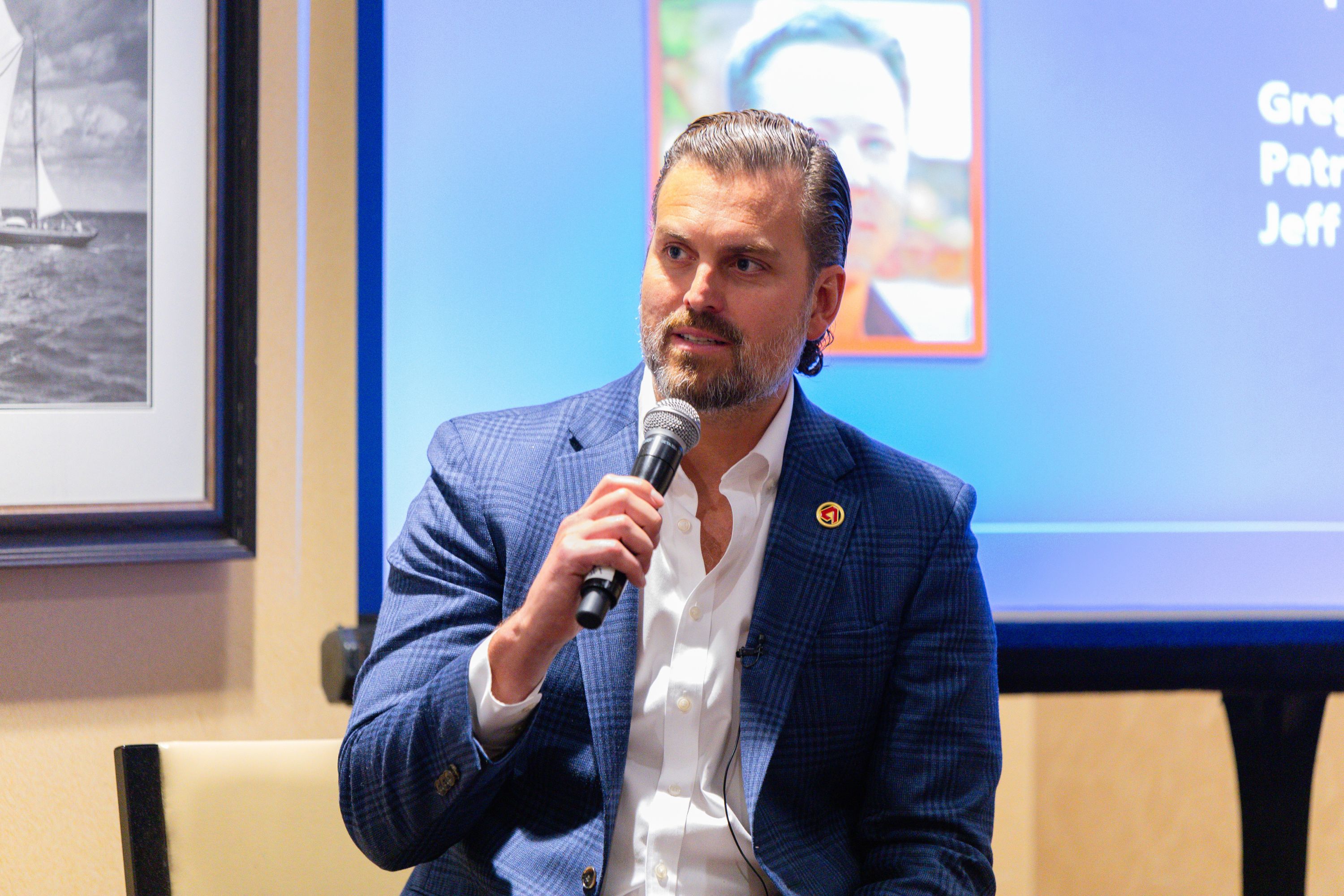
Greg Cummings, CEO of Power100
Cowsert made it clear that technology should not become a goal by itself. A company can have a CRM, dashboards, automation, and several software tools and still make slow or poor choices.
The real value comes when those tools help a leader understand what is changing inside the business.
That could mean seeing that one market is starting to perform better. It could mean spotting a drop in sales performance. It could mean seeing that lead volume is rising faster than the call center can handle. It could also mean identifying a part of the company where additional investment could yield stronger results.
Cowsert believes good technology shortens the time between seeing the signal and making the decision.
“If you are able to automate your decision process at a lot faster scale, then you can just iterate a lot faster,” said Bastian Cowsert, General Manager of Home Services at PX.
That does not mean software should make every choice for the company.
Cowsert puts the responsibility back on the leader.
“At the end of the day, like you are making decisions. That is your role,” Cowsert said.
Technology can remove some of the slow work around gathering information. It can show patterns earlier. It can help teams know when something has changed. But leadership still has to decide what the company will do with that information.
For contractors using a customer acquisition platform for home services companies, that difference matters. The platform can help show what is happening across customer acquisition, but the business still needs leaders who can turn those signals into action.
The best technology does not replace leadership.
It gives leadership a better view of the road ahead.
Cowsert then moved the conversation from faster decisions to planning.
Marketing may help create growth, but growth creates new needs across the company.
If lead volume rises, the call center may need more people.
If appointment volume increases, the sales team may need more representatives.
If sales rise, the company may need more installers.
Cowsert said those needs should not come as a surprise.
A strong contractor should know the numbers that connect one part of the business to another.
If a company knows how many call center agents it needs for a given level of lead volume, leadership can monitor for that point. Once the business reaches it, the next action is clear.
Cowsert described how strong companies can reach a set threshold and already know that it is time to tell the hiring team how many people are needed.
That changes the purpose of a KPI.
The number is no longer something leaders simply look at in a report.
It becomes a signal for action.
That same thinking can support scalable lead generation for local and national home services companies because growth across more markets becomes much harder when staffing decisions are made only after teams become overwhelmed.
A useful KPI should help answer a simple question:
What will the business need next if this number keeps moving?
That gives leaders time to prepare.
And preparation can protect both the team and the customer.
See how PX supports customer acquisition for home services companies as they grow across markets.
Cowsert also made an important point about where technology investment really begins.
Winning companies are not only paying for software.
They are investing in people who know how to use that software well.
“Companies are winning right now and investing in technology. And what that also means is the people that run technology,” Cowsert said.
He pointed to technology directors, CTOs, developers, and other people inside strong companies who help build and manage the systems on which leadership depends.
The larger lesson is simple.
Someone has to own the technology.
Someone has to understand the data.
Someone has to know which numbers matter.
Someone has to connect the system to the decision the company needs to make.
A powerful platform can still create little value if nobody is responsible for what happens after the information appears.
That becomes even more important when a contractor is using several lead sources. A third-party lead management platform for home services companies can bring more information into one place, but someone inside the business still needs to understand what the numbers mean and what should happen next.
The strongest systems also extend beyond a single department.
Marketing data can affect hiring.
Sales data can affect marketing spend.
Lead volume can affect call center staffing.
Closed sales can affect installation capacity.
When the right people connect those pieces, technology becomes part of how the whole company works.
The software may show the signal.
The people behind it make sure the company responds.
Cowsert’s view of technology also connects back to how contractors decide where to invest.
A report may show that one market has a higher lead cost than another. On its own, that can look like a problem.
But the full business picture may tell a different story.
That market may have a stronger sales team.
It may have a higher close rate.
Its average sale may be larger.
Its general manager may be running a strong operation.
If the business is generating more revenue at the same level of demand, leadership may have room to spend more aggressively in that market.
Cowsert explained earlier in the PowerChat that marketing is only one part of the funnel. Sales performance can change how much the company can afford to spend to acquire a customer.
This is where home services lead performance and ROI optimization becomes a leadership issue, not only a marketing issue.
Leaders need enough information to see which markets are working, which sources are creating value, which teams are converting, and where the business still has room to grow.
Then the data has to lead somewhere.
Maybe the company adds budget.
Maybe it pulls the budget back.
Maybe it shifts money to another source.
Maybe it hires more people because demand is rising.
Maybe it fixes a sales or follow-up problem before spending another dollar.
The value of the data is not that it gives the company more numbers.
The value is that it helps leadership know what to do with the next dollar.
By the end of the PowerChat, the technology discussion came back to something much more human.
Customer experience.
Cowsert said that one of the most important things a contractor can focus on is delivering a delightful experience to customers.
That point changes how leaders should think about speed.
The goal is not to make the company move faster at any cost.
The goal is to make decisions early enough that growth does not lower the quality of service.
If call center staffing falls behind, homeowners may wait too long for a response.
If sales teams become overloaded, follow-up can weaken.
If installation capacity becomes too tight, customers may wait longer for the work they were promised.
Good planning helps prevent those problems before they reach the homeowner.
That is why customer acquisition for home services cannot stop when a lead enters the company. The value of that customer depends on what happens through the rest of the experience.
Cowsert summed up the broader business priority by saying companies need to give customers “a delightful experience.”
And when Cummings asked him to name one trait he consistently sees in companies that win, Cowsert gave one answer:
“Leadership.”
That one word brings the entire discussion together.
Technology can move information faster.
Automation can remove slow manual work.
KPIs can show that a threshold has been reached.
Data can point toward an opportunity or a problem.
But leadership decides what happens next.
The strongest companies will be the ones that can move faster while still protecting the people they serve.
Bastian Cowsert brings more than an outside view of home services growth to his role as General Manager of Home Services at PX. As former CMO of DaBella, he spent 20 months helping lead marketing during a major period of expansion. During that time, Cowsert helped guide growth from 39 to 62 markets, managed more than $500 million in pipeline revenue, improved lead returns by 25%, and led a centralized marketing team of more than 400 people. His work also reached beyond lead volume. During his tenure, DaBella’s Better Business Bureau rating improved from 2.63 stars to 4.7 stars, demonstrating how growth and reputation can advance together.
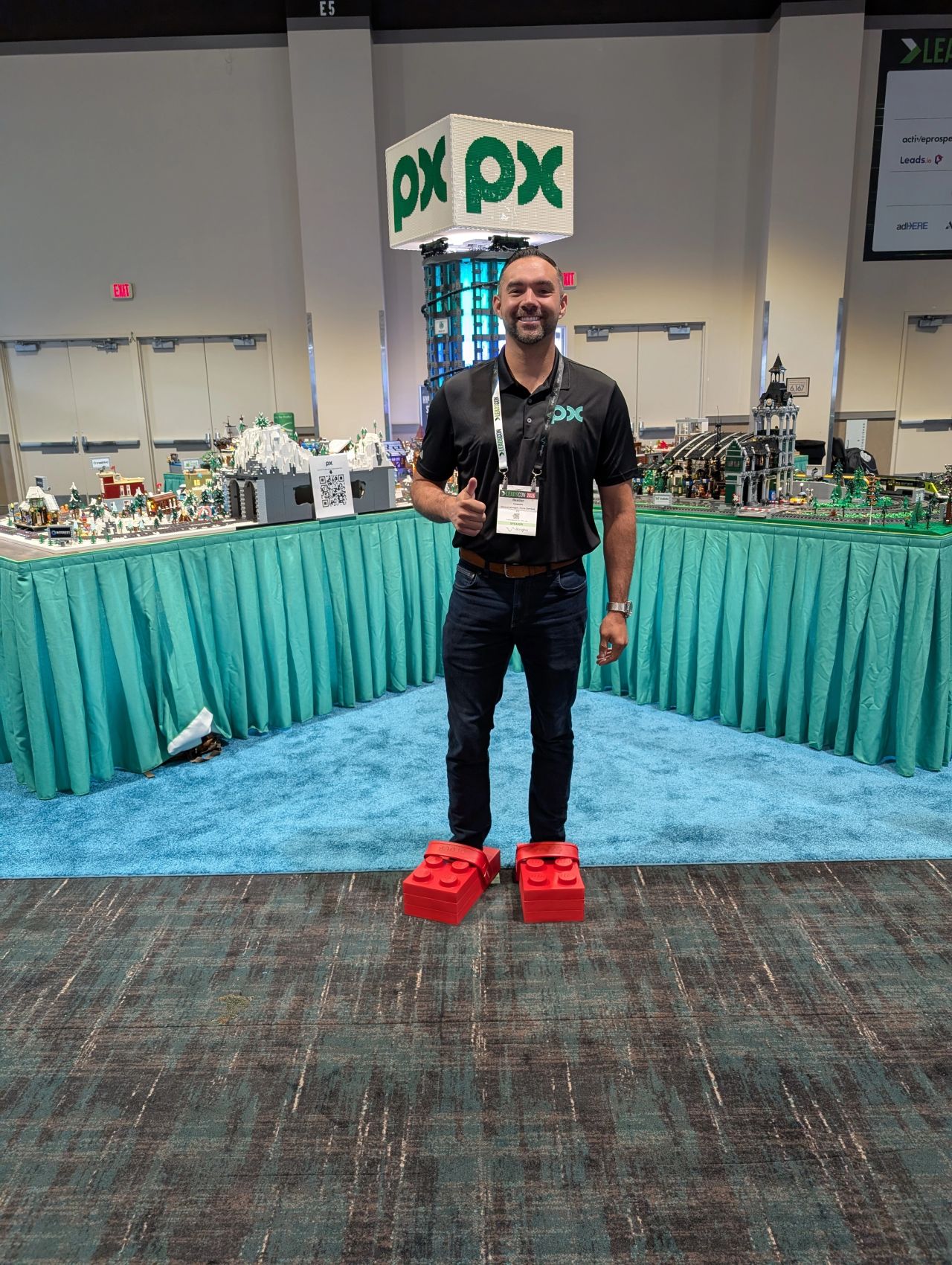
Bastian Cowsert General Manager of Home Services at PX and former CMO of DaBella
That period of expansion gives more weight to Cowsert’s PowerChat message that leaders need systems that help them see what is happening and make decisions sooner. Managing marketing across dozens of markets means more than creating demand. It means knowing where the company can grow, how much demand teams can support, when to add people, and how the brand experience holds up as the business grows. Cowsert’s own operating experience reflects the kind of scale he described in the interview.
The broader company results also show the scale of the environment in which those decisions were made. DaBella ranked No. 11 on Qualified Remodeler’s 2024 Top 500 list, with $387.4 million in remodeling revenue and 19,373 completed jobs. Qualified Remodeler has described the Top 500 as a ranking of annual remodeling revenue among the largest remodeling and home improvement businesses in the country. DaBella was also named an Inc. 5000 honoree in 2023, ranking No. 2,161 on the national list of fast-growing private companies.
Cowsert was also part of DaBella’s executive team when the company opened its Austin, Texas headquarters on January 31, 2024. More than 500 employees from locations across the country attended the ribbon-cutting. At the time, Cowsert said the new headquarters was “strategic to our plans to connect with homeowners nationwide.” He also spoke about the choice to reuse an existing building rather than start new construction, calling adaptive reuse a more sustainable way to establish roots.
Taken together, those results help explain the practical tone behind Cowsert’s view of leadership. He has worked inside a business where marketing had to support rapid market expansion, hundreds of employees, large lead volume, a stronger public reputation, and hundreds of millions of dollars in the pipeline. His impact at DaBella shows why he now speaks about technology as a decision tool rather than simply another piece of software. At scale, leaders cannot afford to learn about growth only after it creates pressure. They need systems, people, and clear numbers that help them see what is coming and decide what to do next.
The strongest point from Bastian Cowsert is also one of the simplest. A leader’s job is to make decisions. The value of technology is not found in how many tools a company owns. It is found in how clearly those tools help leaders understand what is changing and what the business needs to do next.
That clarity can give a growing contractor something very important: time. When leaders can see demand rising early, they can prepare the team before pressure builds. When they see a market strengthening, they can decide whether to invest more. When performance begins to slip, they can ask questions before the problem becomes harder to fix. When capacity starts to tighten, they can act before the customer feels the strain.
That is where faster decision-making becomes more than speed. It becomes preparation.
Cowsert’s message also keeps leadership at the center of the conversation. Better data can make choices clearer. Automation can make information easier to use. Strong systems can help teams move with less delay. But the company still needs leaders who understand the business, take responsibility for the next move, and keep the customer experience protected as growth continues.
That balance will matter even more as home services companies adopt more technology in the years ahead. The strongest contractors will not be the ones with the most software. They will be the ones who know what their numbers mean, when to act, and how to use that information to build a company that can grow without losing control of the experience homeowners receive.
In that sense, the future Cowsert describes is reassuring. Technology may change quickly, but the leadership standard does not. See the signal. Understand what it means. Make the decision. Prepare the business. And make sure the customer still feels the benefit of that growth.
Power100 does more than publish a list of names. It uses its five-layer ranking system to study leadership, growth, customer sentiment, company culture, community impact, and other business signals across the home improvement industry. Power100 then turns those findings into National Power Rankings, leadership stories, PowerChat conversations, and expert content that contractors can use to learn how stronger companies operate. Its 2026 National Power Rankings draw from a database of about 7,600 qualified CEOs, with only 100 leaders earning a place on the national list.
Power100 provides members with access to a broader library of home improvement leadership content. Its member portal includes PowerChat episodes, feature interviews, expert insights, and an AI concierge built around the Power100 knowledge base. Power100 currently states that portal registration is free and does not require a credit card. This gives contractors another way to study the ideas and operating lessons behind the leaders and companies featured in the rankings.
Not automatically. Bastian Cowsert’s point is that technology creates value by helping leaders understand what is changing and act on that information sooner. A CRM or dashboard by itself does not make a company better. Leaders still need to know which numbers matter and what action should follow. PX describes its platform as a customer acquisition platform for home services companies that brings lead sources, pricing, performance, outcomes, and budget decisions into a more centralized system. The value comes from using that visibility to make better business choices.
A useful KPI should help leadership decide what needs to happen next. Cowsert explains that growing companies should understand the relationship between marketing volume and the capacity needed to support it. If lead volume reaches a certain point, the business should know when more call center staff may be needed. Rising appointments can affect sales staffing, while stronger sales can create more demand for installers. The goal is not to collect more numbers. It is to create clear decision points before growth begins, putting pressure on the company.
Cowsert argues that the two investments should go together. Winning companies invest in technology, but they also invest in the people who manage it. That may include technology directors, developers, CTOs, or other leaders who understand how data connects to marketing, sales, staffing, and operations. Automation can bring information forward faster, but someone still needs to own the system, understand the signal, and decide what the business should do. This is why a strong technology stack cannot replace strong leadership.
PX says its home services platform gives companies visibility into where leads and calls come from, how they are priced, how they perform, and what they become later in the customer journey. Businesses can manage supply, pricing, budgets, caps, geography, and testing in a single system. PX also says its tools can help companies shift spending away from low-traffic sources and toward those showing stronger results. That makes home services lead performance and ROI optimization less about looking at reports and more about using performance data to guide the next investment decision.
PX positions its home services platform around testing, learning, and scaling across new sources and markets while using filtering, deduplication, verification, geographic controls, pricing rules, and budget limits. Its home services offering supports both local businesses and larger enterprise teams. For contractors pursuing scalable lead generation for local and national home services companies, those controls can help leadership test growth without treating every new market as an uncontrolled expansion.
Because speed only helps if the company can still serve the homeowner well. Cowsert says contractors need to understand and own their marketing funnel, but he also names giving customers a delightful experience as a major priority. Technology can help a company see that staffing, sales capacity, or performance is changing before the customer feels the problem. That makes customer acquisition for home services more than simply creating more leads. The company has to be ready to answer those leads, serve those customers, complete the work, and protect the experience as it grows. When Greg Cummings asked Cowsert for one characteristic he consistently sees in companies that win, Cowsert answered, “Leadership.”
Power100 is the only unbiased third-party platform that recognizes and elevates the top leaders and most impactful companies in the home improvement industry. Led by Greg Cummings, Power100 provides contractors, CEOs, and industry partners with a trusted place to learn from proven leaders, understand the decisions behind strong companies, and discover ideas to improve leadership, growth, customer experience, and business performance. Through national rankings, PowerChat interviews, leadership stories, and industry insights, Power100 helps bring greater visibility to the people and companies raising the standard across home improvement.
Membership unlocks every Power100 interview, PowerChat episode, and expert playbook - free for industry leaders.
Power100 is the nation's premier CEO ranking and media platform for the home improvement industry. Using a proprietary 5-layer evaluation system, Power100 identifies and celebrates the top CEOs, companies, and strategic partners driving innovation, customer satisfaction, and leadership excellence across the country.