Growing home improvement companies often face the same problem. As the business grows, employees can become locked into the role they were initially hired for. They learn one job, follow one path, and are often expected to find their next step on their own.
Victory Home Remodeling is taking a broader view of employee growth. The company serves homeowners with roofing, replacement windows, siding, gutters, and other exterior remodeling services while also creating new departments, programs, and opportunities that allow employees to explore skills they may not yet know they have. That focus helps position Victory as a Northeast exterior home remodeling company that is developing its people alongside its customer reach.
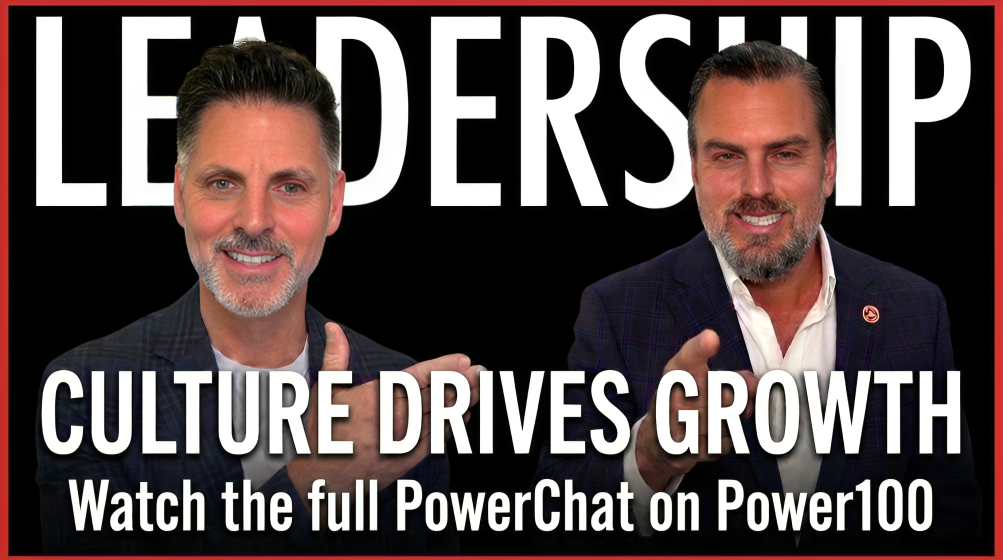
That approach became a major part of a recent PowerChat conversation between Bennett Andelman, Chief Brand and Experience Officer at Victory Home Remodeling, and Greg Cummings, CEO of Power100. Power100 is the only unbiased third-party platform that recognizes and elevates the top leaders and most impactful companies in the home improvement industry.
Their conversation explored a simple but important question for growing businesses: should leaders wait for employees to ask for the next opportunity, or should they help create opportunities before employees can see them for themselves? Bennett explained why truth, training, creativity, and personal growth can help people move beyond the limits of their current role.
One of the hardest parts of growth in the home improvement industry is making sure employees can grow with the company. A business may add customers, locations, and new services, but the people inside it can still feel stuck if their only path is the role they already know.
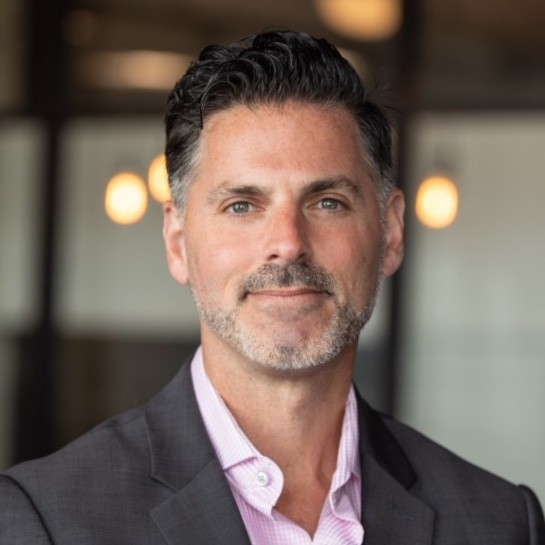
Bennett Andelman, Chief Brand and Experience Officer at Victory Home Remodeling
An employee may join one department and become very good at that job. They may hit goals and work hard. But if no one helps them look beyond that role, they may never discover another skill, another interest, or another place where they could create more value.
Bennett Andelman believes leaders should not always wait for employees to find the next step on their own.
“Create opportunities for your employees that they don’t see for themselves,” Bennett said.
During the PowerChat, Bennett explained that Victory Home Remodeling continues to develop new departments, new ideas, programs, and initiatives that give employees the chance to think beyond what they already do.
“We constantly are developing new departments, new ideas that are associated with initiatives, programs that give our employees the opportunity to think outside the box and be creative,” Bennett said.
That changes the way employee growth can work.
Instead of asking only how to make someone better at the job they already have, the company can ask a bigger question.
What else could this person become if they were given the right chance?
For Bennett, the answer begins with truth. Employees need to understand where the company is going, what is expected of them, and where they can improve. But truth alone is not enough. People also need training that helps them grow beyond job performance.
“So, if you can be truthful and you can empower employees to be creative, you can get to the third thing, which is being completely honest with yourself, becoming a best version of you,” Bennett said. “And that starts with training.”
That training goes beyond learning a process or understanding a product. Bennett places strong value on soft skills and on helping people become more aware of how they think, communicate, respond to feedback, and work with others.
“That’s not just traditional performance-based training. It’s soft skill training. How do you become a better version of you?” Bennett said.
That question sits at the center of this PowerChat perspective.
For Bennett, the best employee development does not end when someone becomes more productive. It should help that person become more confident, more creative, more honest with themselves, and more ready for opportunities that may not have existed when they first joined the company.
He believes that kind of growth can also reach beyond work.
“If you believe in yourself and you can build something intentional in your life that far exceeds the work that you’re doing from a performance perspective, and you’re honest with yourself and you’re critical with yourself, you can then be honest and critical with others,” Bennett said.
That makes the opportunity itself only the beginning.
The deeper goal is to help employees discover what they can do when someone gives them room to think differently, supports them with honest feedback, and trains them for more than the task in front of them.
For a growing company that can change the way talent is developed.
The next strong idea may already be inside the business.
The next department may be built around a skill an employee has not yet used.
The next leader may still be doing a job that looks nothing like the role they will one day hold.
Sometimes growth starts because an employee asks for an opportunity.
Sometimes it starts because a leader sees the possibility first.
Bennett Andelman’s message during the PowerChat was not simply about giving employees more training. It was about changing what development can look like inside a growing company. Instead of asking people to stay inside the limits of the role they already know, he believes leaders can help open new paths through truth, creativity, coaching, and personal growth. That approach gives employees room to discover skills they may not yet see in themselves while giving the business a stronger group of people ready for what comes next.
People often build their view of the future from what they have already seen.
If an employee has spent years in one role, they may picture their next step as a slightly bigger version of that same job. They may never think about building a new program, joining another department, taking on a creative project, or helping shape something the company has not created yet.
Bennett believes leaders can change that.
“Create opportunities for your employees that they don’t see for themselves,” Bennett said.
At Victory Home Remodeling, he described a business that continues to develop new departments, programs, and ideas. Those efforts can address new needs within the company and create new opportunities for employees to grow.
That matters because an employee does not always arrive knowing all their strengths.
Someone may discover they are good at coaching only after they are asked to help another person.
Someone may discover they can lead a project only after they are trusted with one.
Someone may find a creative skill only after the company gives them room to use it.
Giving someone that chance becomes a form of belief. It tells the employee that their current role does not have to define the full value they can bring.
That same mindset can matter in a customer-facing business. A homeowner searching for a roof replacement contractor may only see the final person who arrives at the home, but the strength of that experience can be shaped by years of behind-the-scenes employee development.
For Bennett, building better opportunities within the company can help develop stronger people beyond their original job descriptions.
Learn more about Victory Home Remodeling and the people behind its growth.
Opportunity alone is not enough.
Bennett also believes employees need to understand where they stand.
He said companies should communicate clearly about where the business is, where it is going, how it plans to get there, and what role each person plays in that path.
That kind of truth gives development a starting point.
Without it, an employee may receive more training but still not understand why that training matters or what they are working toward.
Bennett also connects truth with personal honesty.
“So, if you can be truthful and you can empower employees to be creative, you can get to the third thing, which is being completely honest with yourself, becoming a best version of you,” he said.
That means growth cannot be built only on encouragement.
People also need to know where they need to work.
They need to see what they are doing well, where they may be holding themselves back, and what skills could help them move forward.
Bennett puts truth and training side by side because each one makes the other stronger.
“Truth and training are attached to one another,” he said.
Truth tells the employee where they are today.
Training gives them tools for tomorrow.
For homeowners searching for replacement windows, that same value of clear communication can also shape trust. Customers want people who can explain what they know, admit what they do not know, and give clear guidance without making the process harder than it needs to be.
Inside the company, Bennett sees the same principle at work.
People grow faster when they know the truth about where they are starting.
Follow Bennett Andelman on LinkedIn for more on leadership, culture, and employee development.
Every employee needs to know how to do the job well.
They need product knowledge.
They need to understand the process.
They need to know what strong performance looks like.
Bennett does not argue against any of that.
His point is that development should not stop there.
“That’s not just traditional performance-based training. It’s soft skill training. How do you become a better version of you?” Bennett said.
That question widens the purpose of training.
Soft skills shape how people speak.
How do they listen?
How they receive feedback.
How they handle pressure.
How do they solve problems?
How they treat customers and coworkers.
Those skills may be harder to measure than a sales number or a completed task, but they can shape the kind of employee and future leader a person becomes.
They can also shape the experience a customer receives.
A homeowner looking for a siding replacement contractor may remember the product they bought, but they will also remember whether the person who helped them listened, explained the process clearly, and treated them with care.
That is why Bennett’s idea of training reaches beyond performance.
Better training can help someone become stronger at the job while also becoming more confident, more thoughtful, and more prepared to work with people.
When development reaches the person, not just the task, the value can follow them into every part of their work.
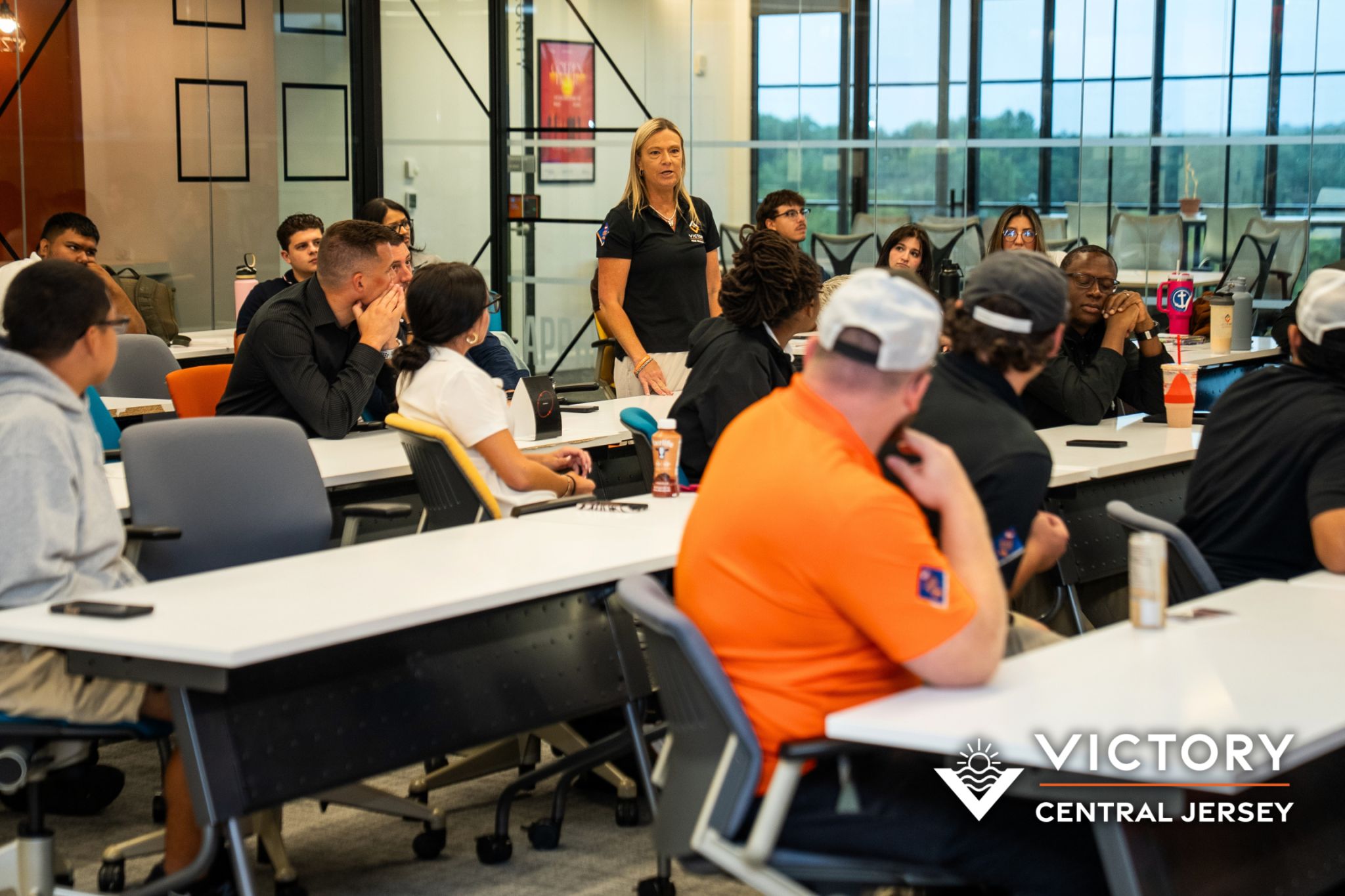
Victory Home Remodeling company-wide meetings are a chance to come together, celebrate the wins, recognize the people making them happen, and get aligned for what’s ahead.
Explore how Victory Home Remodeling serves homeowners across its growing markets.
Employees can have strong ideas and still keep them to themselves.
Sometimes the problem is not a lack of creativity.
It is a lack of permission.
If a workplace teaches people to stay inside one lane, follow the same process, and leave new ideas to someone else, employees may stop looking for better ways to do things.
Bennett wants the opposite.
“We constantly are developing new departments, new ideas that are associated with initiatives, programs that give our employees the opportunity to think outside the box and be creative,” he said.
That kind of space changes an employee’s role in the business.
They are not only carrying out a plan.
They can help shape what comes next.
That can create stronger ownership because people are more likely to care about something they helped build.
It can also reveal abilities that were hidden inside the old role.
A person may not know they can build a program until they are invited to help create one.
They may not know they are good at solving a new problem until the company lets them try.
They may not know they can lead an idea until someone gives them the chance to own it.
For a business serving homeowners, innovation inside the company can also help teams improve how they communicate, serve customers, and solve problems as the business grows.
Bennett’s larger point is that creativity is not only something leaders should ask of employees.
Leaders also need to create the space where creativity can happen.
Learn more about Victory Home Remodeling and the company behind its customer experience.
Opportunity creates a path.
Truth creates clarity.
Training builds skill.
Creativity gives people room to test what they can do.
But Bennett believes lasting growth also requires something more personal.
Self-awareness.
“If you believe in yourself and you can build something intentional in your life that far exceeds the work that you’re doing from a performance perspective, and you’re honest with yourself and you’re critical with yourself, you can then be honest and critical with others,” Bennett said.
That is where employee development begins to take shape.
A person who can see their own strengths and weaknesses clearly is better prepared to receive feedback.
They can make changes without treating every correction like an attack.
They can also become better at giving honest feedback to someone else.
That matters for future leaders because coaching requires both truth and care.
People need leaders who can challenge them without tearing them down and support them without pretending everything is fine.
Bennett’s view also reaches beyond the office.
He wants employees to build something intentional in their own lives, not simply become better at producing results for the company.
That connects with the way he later described Victory as a “human development company.”
Homeowners looking for a home exterior renovation company may never see all that internal work. But they can feel the result when they meet people who communicate with confidence, listen with care, and take responsibility for the experience they provide.
For Bennett, that is where development becomes more than a company program.
The goal is not simply to create a stronger employee.
It is to help create a stronger person who can carry that growth into whatever responsibility comes next.
Discover more about Victory Home Remodeling and its approach to people, service, and growth.
The ideas Bennett Andelman shared with Greg Cummings are not limited to a single interview or a single role at Victory Home Remodeling. They are part of a much larger view he has built around employee experience and business growth.
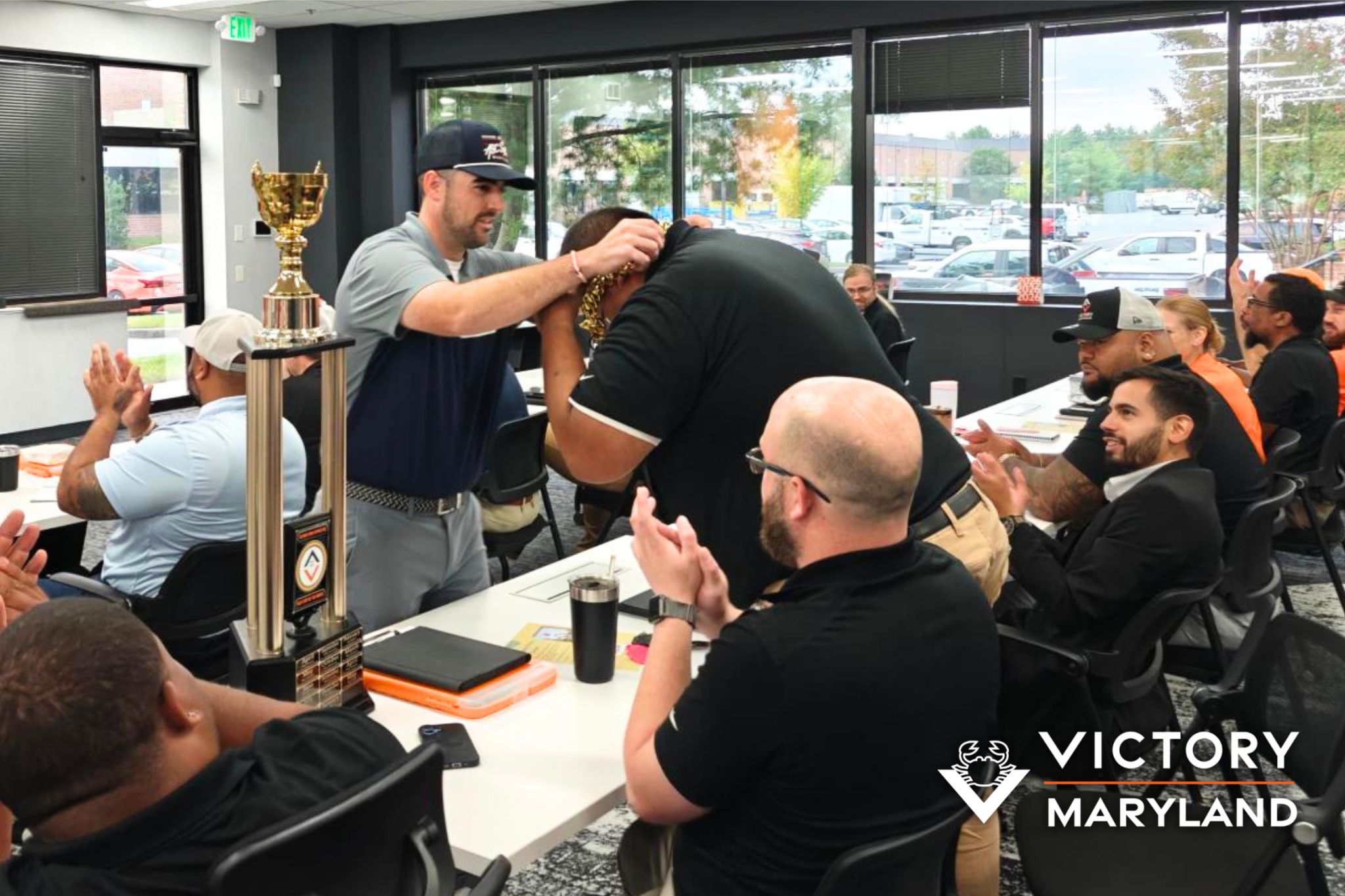
Victory Home Remodeling celebrate the wins and recognize the people making them happen
That view became the focus of The Lost Audience: Adopting a Marketing Mindset to the Employee Experience, an Amazon Bestseller that Bennett coauthored to challenge how companies think about their own people.
The main idea behind the book is simple.
Businesses often spend significant time, money, and research to understand customers. They study what customers want, how they feel, what keeps them loyal, and what may cause them to leave.
Bennett argues that many companies do not bring that same level of care to the people working inside the business.
That is the lost audience.
The book looks at employee turnover as more than a hiring problem. It frames it as a business problem that costs U.S. companies about $1 trillion each year. Bennett’s answer is to apply some of the same care companies give to customer marketing to the employee experience.
That idea closely aligns with what he is helping to build at Victory today.
When Bennett talks about creating opportunities that employees cannot yet see, giving people room to be creative, and helping them grow beyond performance, he is applying the same larger belief. Employees should not be treated only as people who complete work. Companies should understand what gives them value, what helps them grow, and what motivates them to take part in the business’s future.
For a company growing across several markets, that becomes more than a cultural idea.
It becomes part of how the business prepares people for what comes next.
Bennett’s employee experience philosophy also comes together in what he calls the Four Cornerstones: Joy, Value, Knowledge, and Performance.
Each piece answers a different question about the employee experience.
The order matters.
Performance is still important, but it does not stand alone.
Bennett’s framework connects results to the experience that helps create them. A company can ask people to perform, but lasting growth becomes harder if employees do not feel valued, do not continue learning, or cannot see a larger purpose in what they do.
That makes the Four Cornerstones especially relevant to the opportunity-focused message Bennett shared during the PowerChat.
An employee who gains knowledge may begin to see a new skill.
An employee who feels valued may be more willing to share an idea.
An employee who finds joy in the work may become more open to taking on a new challenge.
And when those pieces come together, a stronger performance can result rather than being the only demand.
At Victory Home Remodeling, Bennett now has the chance to bring those ideas to a growing home improvement business where employee and customer experiences meet every day. Victory currently lists between 501 and 1,000 employees and continues to grow its footprint, including a recently announced territory in Exton, Pennsylvania.
That scale makes the employee experience harder to leave to chance.
It also makes Bennett’s work more important.
The larger the company becomes, the more people need clear ways to learn, contribute, create, and understand their place.
For Bennett, the answer is not simply another training program. It is a wider way of thinking about people.
His book gives that philosophy a voice beyond Victory.
His work inside Victory gives the industry a place to watch that philosophy take shape.
And together, they support the same idea at the heart of this PowerChat: sometimes the strongest thing a company can do for an employee is help them see an opportunity, ability, or future they could not yet see for themselves.
As Victory Home Remodeling continues to grow, the need for more ideas, more leaders, and more people ready to take on greater responsibility will grow with it. But Bennett Andelman’s message suggests that some of those answers may already be inside the company.
The person who could build the next program may still be focused on their current job.
The employee who could lead a future department may not yet see themselves that way.
The person with the next strong idea may simply need the right moment, the right support, or the right leader to ask them to step forward.
That is where development becomes more than training.
A company can wait for people to discover every next step on their own. Or it can help open doors, create space, and show people possibilities they may not have considered yet.
Greg Cummings reflected on Victory’s growth as something larger than revenue or expansion alone. He pointed to responsible and intentional growth that also includes the personal and professional development of the people expected to help carry the company forward.
That makes Bennett’s perspective especially important for what comes next.
The next opportunity that changes someone’s future may not be one they ask for.
Sometimes it starts because a leader sees more.
Sometimes it starts because a company creates a path that did not exist before.
And sometimes it starts because an employee is finally given the chance to discover that they are capable of more than their current role.
Power100 keeps the ranking process separate by using a proprietary five-layer system that reviews more than 7,600 qualified home improvement leaders nationwide. The process combines data analysis with human review and looks at leadership, company culture, customer satisfaction, operations, innovation, community impact, and long-term performance. The interviews and editorial content then give readers more context about the people and companies that stand out through that broader evaluation.
Power100 does more than publish a numbered list. It creates profiles, interviews, PowerChat conversations, and industry coverage that show how leading home improvement companies approach customer experience, culture, growth, leadership, and community impact. Power100 says each nationally ranked leader can also receive a dedicated profile that gives homeowners and industry professionals a closer look at the reasons behind the recognition.
Bennett Andelman says Victory does not wait for every employee to map out their own future. The company continues to develop new departments, programs, ideas, and initiatives that can give people room to try something different.
“Create opportunities for your employees that they don’t see for themselves,” Bennett said.
The idea is to give employees chances to think, create, and discover skills that may not be part of the job they started with. Victory also lists its Leadership Standard and Victory Leadership Academy among the programs designed to support employee growth.
Bennett believes employees need clear information before development can work well. People should understand where the company is going, what their role is, and where they personally need to improve.
“Truth and training are attached to one another,” Bennett said.
Truth gives a person a clear starting point. Training gives them a way to grow from that point. Bennett also believes that training should include soft skills, not only job performance, so employees can improve how they communicate, think, respond to feedback, and work with others.
No. Bennett’s point is not to hand out titles without preparation. Victory has formal development programs, including its Leadership Standard and Victory Leadership Academy, that are designed to help employees grow into stronger versions of themselves before taking on greater responsibility.
The larger idea is to create the path early, then give people the coaching, knowledge, and experience they need to be ready for it.
Victory says its customer process still centers on the homeowner from the first call through the final walkthrough. The company uses experienced, certified installers and says its crews install roofing, windows, and siding with care and precision. Victory also describes its goal as delivering a seamless five-star customer experience.
For a homeowner searching for a trusted exterior home remodeling contractor, employee development and customer standards do not have to be mutually exclusive. Bennett’s view is that better-prepared people can be better equipped to communicate clearly, solve problems, and serve customers well.
Victory Home Remodeling currently says it serves homeowners across New Jersey, New York, Pennsylvania, Connecticut, Delaware, and Maryland for exterior remodeling, though some individual service pages list slightly different state coverage by product. Its main residential services include roof replacement, replacement windows, siding replacement, gutters, and gutter guards.
That makes Victory relevant to homeowners searching for roof replacement, window installation, siding replacement, and gutter installation across the Northeast and Mid Atlantic. Homeowners should check the specific service page or enter their ZIP code to confirm that a particular service is available in their area.
Victory says its warranties cover labor and materials for life, without prorating or trip charges. Its gutter and gutter guard products are also backed by Lifetime Victory Warranties for covered labor and material issues. The company further states that customers can begin qualifying projects with no money down.
For homeowners comparing a roofing, siding, window, or gutter company, those protections matter because the decision is not only about the day of installation. It is also about what support remains after the work is complete.
Power100 is the only unbiased third-party platform that recognizes and elevates the top leaders and most impactful companies in the home improvement industry. Led by CEO Greg Cummings, Power100 brings together executive interviews, national rankings, industry research, and PowerChat conversations to help contractors, partners, and homeowners understand the people, ideas, and companies moving the industry forward. Its mission is to give strong leaders a trusted place to share the thinking behind better culture, customer experience, growth, innovation, and community impact.
Membership unlocks every Power100 interview, PowerChat episode, and expert playbook - free for industry leaders.
Power100 is the nation's premier CEO ranking and media platform for the home improvement industry. Using a proprietary 5-layer evaluation system, Power100 identifies and celebrates the top CEOs, companies, and strategic partners driving innovation, customer satisfaction, and leadership excellence across the country.