Home improvement contractors have more ways than ever to reach homeowners, but that has also made marketing harder to judge. A company may invest in paid search, paid social, organic marketing, television, OTT, third-party leads, direct mail, events, and canvassing at the same time. The problem comes when the same number of judges are assigned to every channel. PX helps home services companies use data and technology to better understand customer acquisition and make smarter choices about where to invest.
As General Manager of Home Services at PX, Bastian Cowsert brings a close view of how contractors are buying leads, tracking results, managing different markets, and building stronger systems for growth. His perspective shows why a customer acquisition platform for home services companies becomes more valuable when leaders understand what each part of their marketing mix is meant to do.
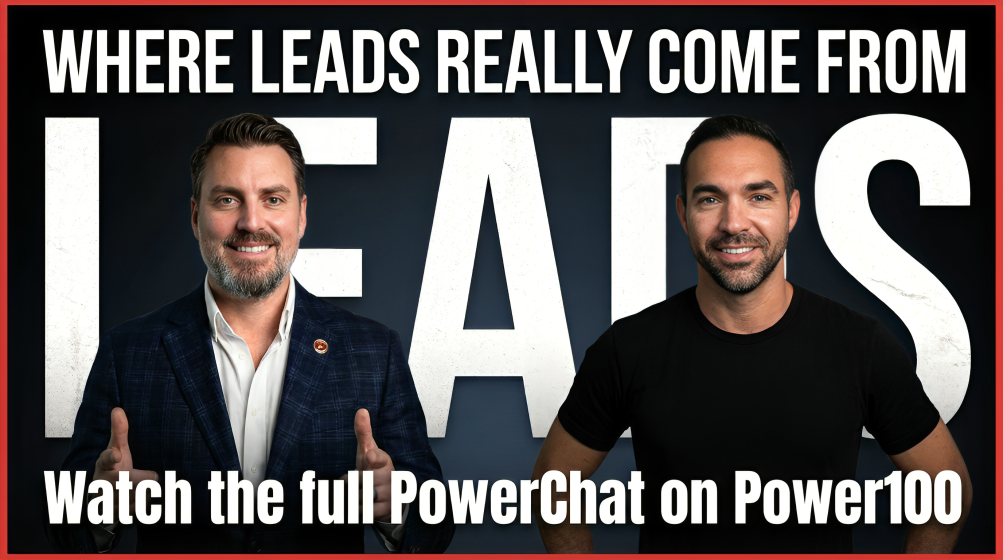
That challenge became the focus of a PowerChat hosted by Greg Cummings, CEO of Power100, with Bastian Cowsert. The conversation looked past the simple question of how much a lead costs and moved into a bigger question about how contractors should measure the full value of their marketing.
Power100 is the only unbiased third-party platform that recognizes and elevates the top leaders and most impactful companies in the home improvement industry. By bringing leaders like Cowsert into direct conversations with the industry, Power100 gives contractors a clearer look at the ideas, systems, and decisions shaping stronger home improvement companies.
For years, contractors have watched cost per lead as one of the main ways to judge marketing. If the number went down, the channel looked good. If the number went up, leaders often wanted answers. But as customer acquisition becomes more complex, Cowsert says that one number can hide what is really happening inside the business.

General Manager of Home Services at PX, Bastian Cowsert
A contractor may be running paid search because it can bring in demand quickly. At the same time, the company may be investing in television to build awareness over a much longer period. It may also be using paid social, organic marketing, third-party lead sources, direct mail, events, canvassing, and OTT. Each channel reaches homeowners differently. Each can take a different amount of time to work. Each can also play a different role in helping the company grow.
That is why Cowsert believes strong contractors start by giving every marketing channel its own measure of success.
“I think what great contractors are doing is they are evaluating every single marketing funnel,” said Bastian Cowsert, General Manager of Home Services at PX.
His television example made the difference easy to see. Paid search can be changed fast. A company can adjust spending and often see the effect quickly. Television is different. A contractor may need to run a campaign for several months before seeing a clear lift. Even when the campaign is helping the brand, it may be harder to connect every new customer directly back to one television ad.
That does not mean television failed. It means television should not be judged by the same rules as paid search.
Cowsert explained that the stronger contractors know the goal of each channel before they spend. They know which numbers matter for that channel. They know how long they are willing to give it. They also know when the results have reached a point where the company should invest more, make a change, or move money somewhere else.
That changes the marketing question from, “What did this lead cost?” to, “What was this channel supposed to do for the business, and did it do that?”
For contractors trying to grow across several markets, that question matters even more. A channel may perform one way in one city and very differently in another. Sales teams may close at different rates. Average job values may change. Competition may be stronger. Cowsert’s message is that good marketing decisions have to account for those differences instead of forcing every channel and every market into one fixed number.
The result is a wider view of marketing. Cost per lead can still tell leaders something, but it does not tell them everything. The stronger goal is to understand how each channel supports the full customer journey and whether the complete marketing mix is helping the company produce healthy growth.
As the PowerChat moved deeper into customer acquisition, Greg Cummings and Bastian Cowsert moved beyond the first question of how contractors should judge a marketing channel. The bigger issue became what happens when all those channels begin working together. Cowsert explained that stronger contractors connect marketing spend to sales, follow-up, staffing, technology, brand trust, and the full customer experience. His message was simple: each channel needs a clear job, but leaders also need to understand how that job supports the larger business. The companies that do this well can make better choices about where to spend, where to improve, and where the next stage of growth should come from.
Cowsert’s first lesson was not that contractors need more marketing channels. It was that they need a better way to judge the channels they already use.
Paid search may be expected to create demand quickly. Television may need more time to build awareness. Direct mail may work differently from paid social. Events can create trust and local awareness in a way that is harder to measure from one click or one form fill. Third-party lead generation can play another role by bringing new demand into the company at scale.
That is why Cowsert said every channel should have its own measure of success.
“Every single one of these has their own success metrics and their own perspective of how they help and enhance the mix,” said Bastian Cowsert, General Manager of Home Services at PX.
The key is knowing what good performance looks like before a campaign begins. If leaders know what a channel is meant to do, they can also know when it deserves more money, when it needs more time, and when something needs to change.
That creates a better way to manage a home services lead generation and lead buying platform because the goal is no longer to chase the cheapest possible lead. The goal is to understand the value of each source and how it helps the company reach its full marketing target.
For growing contractors, this can also reduce emotional decisions. One bad week does not always mean a channel should be shut down. One cheap lead does not always mean a campaign should get more money. The better decision comes from knowing the job of the channel and checking whether it is doing that job.
Once the conversation moved from channel performance to cost per lead, Cowsert was direct.
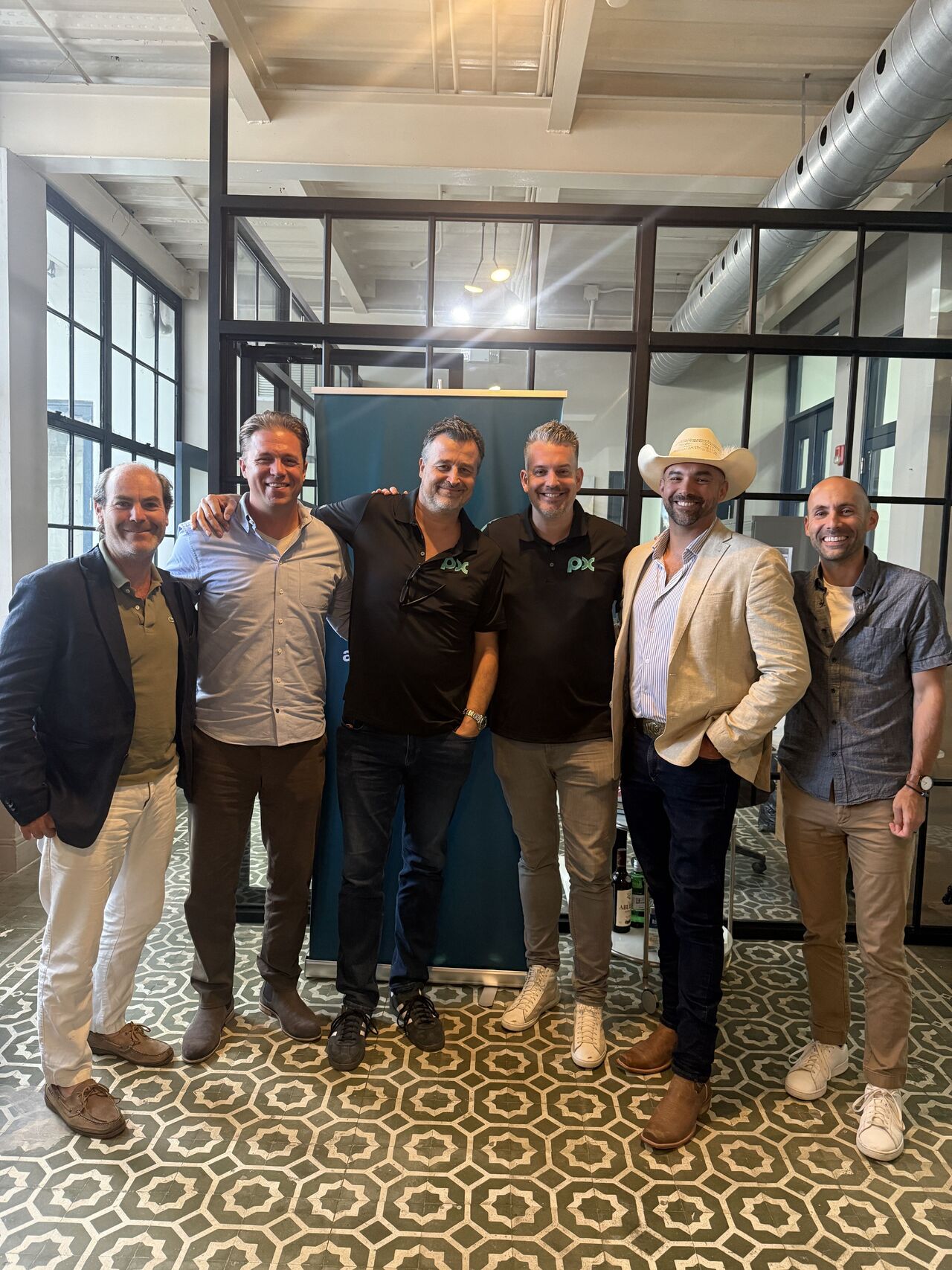
PX.com sales leadership team in their office in Panama.
When Cummings asked if cost per lead should be the guiding number for contractors, Cowsert answered, “Absolutely not.”
His reason was simple. A business owner needs a return.
A company can buy a low-cost lead and still lose money if that lead does not become an appointment, a sale, or profitable revenue. At the same time, another lead may cost more but become a strong customer because the company has a better sales team, stronger follow-up, a higher average sale, or better performance in that market.
That is why Cowsert encouraged contractors to work backward from the business result they need.
If a company knows the marketing cost it can support, it can then ask how many sales are needed. From there, leaders can work back to issued leads, appointments, total leads, and marketing spend. Each number now connects to a real business goal.
The same rule becomes even more important when a company operates in several markets. A contractor may face one level of competition in Denver and a very different one in Toledo. One market may also have a stronger sales team or a higher average job value.
In that case, paying more to acquire a customer may still make good business sense.
This is where home services lead performance, and ROI optimization becomes more useful than chasing one low number across the whole company. Contractors need to understand what the marketing produced, not only what the lead cost.
Cowsert reinforced that point during the rapid-fire portion of the interview. When asked which marketing metric is most overrated, his answer was clear: “CPL.” When asked to choose between cost per lead and cost per acquisition, he chose cost per acquisition.
Explore how PX helps companies connect lead buying decisions with stronger performance data.
The conversation then shifted from what a contractor buys to what the contractor does after buying it.
Cowsert gave Cummings a look behind the lead generation business and explained how lead publishers work to find value in the demand they create. If one buyer cannot use an opportunity, another buyer may be able to. The lesson for contractors was clear. A lead that is paid for but never worked still has a cost.
That raised a harder question.
Are contractors always getting the full value from the opportunities already entering their own business?
A company can spend more money trying to find better leads, but if its team is slow to respond, weak at follow-up, or unable to contact enough homeowners, more leads may only create more waste.
Cowsert made his position clear during the rapid-fire questions.
When Cummings asked, “Better leads or better follow up?” Cowsert answered, “Better follow up.”
When Cummings asked, “More leads or convert more of what you already have?” Cowsert answered, “Convert more.”
And when asked what contractors should stop blaming on their lead provider, Cowsert answered, “Contact rate.”
Those answers move the focus back inside the contractor’s own business.
Speed to lead matters. Call center performance matters. Follow-up matters. Appointment setting matters. Sales skills matter. Each step can change the value of the same lead.
That is also why a third-party lead management platform for home services companies should be part of a wider system. Buying demand is only one part of the job. Contractors also need to understand which sources perform, how quickly their teams respond, and how much of the demand they already paid for is actually being converted.
The real question is not always, “Can we get better leads?”
Sometimes it is, “Can we become better at handling the leads we already have?”
As contractors grow, Cowsert said the next advantage comes from how they use technology.
The strongest companies are not collecting data just to build reports. They are using it to make decisions.
Cowsert explained that growth in marketing creates needs in other parts of the company. More leads may require more people in the call center. More appointments may require more sales representatives. More sales may require more installers.
Strong companies know those relationships.
They can build clear points where the business knows it is time to hire, spend more, slow down, or change direction.
That reduces the amount of guesswork placed on leadership.
Cowsert described these companies as using technology to make decisions at a faster scale. Instead of waiting for a problem to become obvious, leaders can use data to see where the business is heading and prepare earlier.
The same thinking applies to marketing.
If leaders can see which markets are strong, which lead sources are producing sales, which teams are converting well. Where customer acquisition is becoming too expensive, they can make much better decisions about where the next dollar should go.
This supports scalable lead generation for local and national home services companies because scale becomes much harder when leaders are making every choice by hand. Growth needs systems that can show what is happening across markets and help the company react before small problems become large ones.
The goal, in Cowsert’s view, is not technology for the sake of technology.
It is faster clarity.
It is knowing what the numbers are saying and being able to act on them.
The final part of the discussion looked ahead.
Cowsert said the lead market is facing a constant push between scale and quality. Contractors want more opportunities, but they also want more control over which opportunities they accept.
Companies are using more filters around geography, duplication, contactability, credit, home value, property details, and their own internal lead scoring.
That can help contractors make better buying choices, but it also shows why depending too heavily on one source can create risk.
Cowsert encouraged contractors to diversify their marketing and own more of the process from beginning to end.
The more parts of customer acquisition a company understands and controls, the more ways it has to respond when market conditions change.
That could mean a shift in lead supply. It could mean new rules. It could mean higher marketing costs. It could mean changes in how homeowners search for contractors.
That last change became especially important when Cummings brought reputation and artificial intelligence into the conversation.
Homeowners are no longer only seeing an advertisement and calling a company. They can see a brand name, search for it, read reviews, ask an artificial intelligence tool about the company, and make a decision before they ever speak with a sales representative.
Cowsert summed up the value of strong brand awareness in a simple line:
“Familiarity breeds favorability.”
That means the marketing funnel now includes what customers find after they discover the company.
Reviews matter. Brand trust matters. How companies respond to customers online matters. What artificial intelligence systems can find about the business may matter even more as search habits continue to change.
Cummings asked Cowsert whether artificial intelligence should be viewed as an opportunity or a threat for contractors.
Cowsert answered, “Opportunity, absolutely.”
For contractors, this creates a wider meaning for a customer acquisition platform for home services companies. Customer acquisition is no longer only about finding a homeowner and creating a lead. It also includes building enough trust around the company that the homeowner feels confident taking the next step.
Owning more of the funnel means knowing how people find the business, how leads enter the company, how teams respond, what customers discover about the brand, and what experience they receive after the sale.
The companies that understand more of that journey will have more control when the market changes again.
The clearest lesson from Bastian Cowsert is not that contractors need to spend more on marketing. It is that they need to understand what every part of their marketing is meant to do. When each channel has a clear purpose, leaders can make better choices with more confidence. They can give the right campaigns time to work, invest more when the numbers support it, and change direction when the results are no longer there.

Bastian Cowsert GM of Home Services at PX, At the RoofCON 2026
But Cowsert’s message also reaches beyond the marketing budget. A lead only creates value when the rest of the company is ready for it. The way a team responds, sets appointments, sells, builds trust, serves the homeowner, and protects the sale all shape the final return. That is why strong marketing discipline is really about seeing the full customer journey instead of stopping at the first number on a report.
Near the end of the PowerChat, Greg Cummings asked Cowsert what contractors should focus on if they want to still be winning two years from now. Cowsert brought the conversation back to two simple priorities. Leaders need to understand and own their marketing funnel, and they need to give customers a great experience.
“Giving customers a delightful experience” is what Cowsert said matters from the wider business view. He also stressed the need for contractors to understand and own what their marketing funnel is doing. Together, those ideas give contractors a steady path forward. Markets will change. Technology will change. The way homeowners search will change. But companies that know where their growth comes from and take care of the people who choose them will be in a much stronger place to adapt.
The future of home services customer acquisition may include more channels, smarter tools, new ways to measure demand, and new ways for homeowners to find contractors. The strongest companies will not need to chase every change. They will know the role of each marketing channel, measure it with the right numbers, and connect that investment to an experience that gives homeowners a reason to trust the company long after the lead first comes in.
Power100 does not sell positions in its National Power Rankings. It evaluates leaders through a proprietary five-layer ranking system and draws from thousands of home improvement CEOs across the country. The process looks beyond company size and revenue to areas such as leadership, culture, customer experience, company performance, reputation, and community impact. For its 2026 rankings, Power100 says 100 CEOs were selected from a pool of more than 7,600 qualified leaders. This gives homeowners, contractors, and industry partners another way to look at leadership based on wider business performance rather than paid placement.
Power100 does not judge a CEO only by how large or fast the company grows. Its ranking system also looks at leadership, company culture, customer experience, operational performance, reputation, and community impact. That means strong revenue alone does not tell the full story. Power100 uses its ranking process to identify companies and leaders that show strength across several parts of the business, including how they serve customers and build teams.
PX helps home services companies manage customer acquisition with more visibility and control. Instead of asking a contractor to remove every current vendor, PX allows companies to bring lead sources into one system, see where leads and calls come from, track pricing and results, and compare what happens after the lead enters the business. For companies looking for a third-party lead management platform for home services companies, this can make it easier to see which sources deserve more investment and which ones need attention.
The cheapest lead is not always the lead that creates the best return. A higher-priced lead may produce more appointments, better sales, or stronger revenue. PX says its platform can use performance data, call outcomes, and conversion signals to help companies pay based on value rather than treating every lead the same. This supports home services lead performance and ROI optimization because contractors can judge a source by what it produces for the business, not only by the price paid at the start.
No. PX says its home services technology supports both local and independent businesses and larger enterprise teams. Local companies can use the platform to manage customer acquisition across vendors, channels, and service areas. In contrast, larger organizations can use the same type of visibility as they grow across more markets. This makes PX relevant to contractors looking for scalable lead generation for local and national home services companies, rather than only large national brands.
PX uses filtering, deduplication, verification, source visibility, and other controls to help companies understand what they are buying before wasted spend grows. Home services teams can also apply filters based on the type of service they provide. PX lists examples for roofing, HVAC, windows, solar, security, and other home services categories. The goal is to help companies focus their marketing budget on a demand that better fits their geography, operations, and business model.
Different marketing channels do different jobs. Paid search can often produce and show results much faster than television. Television may take months to build awareness and may be harder to connect directly to one sale. Direct mail, events, paid social, organic marketing, third-party leads, and other sources can also have different timelines and goals. In the PowerChat, Bastian Cowsert said great contractors evaluate each marketing funnel and give each one its own success measures. A strong home services customer acquisition strategy, therefore, looks at the purpose and return of each channel instead of forcing every channel to meet one cost per lead number.
Not by itself. During the PowerChat, Greg Cummings asked Bastian Cowsert whether contractors should choose better leads or better follow-up. Cowsert chose “better follow-up.” When asked whether companies should get more leads or convert more of what they already have, he answered, “Convert more.” His point is that a home services lead generation and lead buying platform can help bring opportunities into the business. However, the contractor still has to respond quickly, make contact, set the appointment, sell well, and deliver a strong customer experience. More leads can create more waste if the company does not fix what happens after the lead arrives.
Power100 is the only unbiased third-party platform that recognizes and elevates the top leaders and most impactful companies in the home improvement industry. Led by Greg Cummings, Power100 gives contractors, CEOs, and industry partners a trusted place to learn from proven leaders, discover ideas that can strengthen their companies, and better understand the people and businesses shaping the future of home improvement. Through national rankings, PowerChat interviews, industry coverage, and leadership insights, Power100 helps bring more visibility to the companies and executives raising the standard for customers, teams, communities, and the industry as a whole.
Membership unlocks every Power100 interview, PowerChat episode, and expert playbook - free for industry leaders.
Power100 is the nation's premier CEO ranking and media platform for the home improvement industry. Using a proprietary 5-layer evaluation system, Power100 identifies and celebrates the top CEOs, companies, and strategic partners driving innovation, customer satisfaction, and leadership excellence across the country.