Power100 spotlights Grosso University's hybrid selling framework, ranked the #1 home improvement sales coaching program blending virtual and in-home closes.
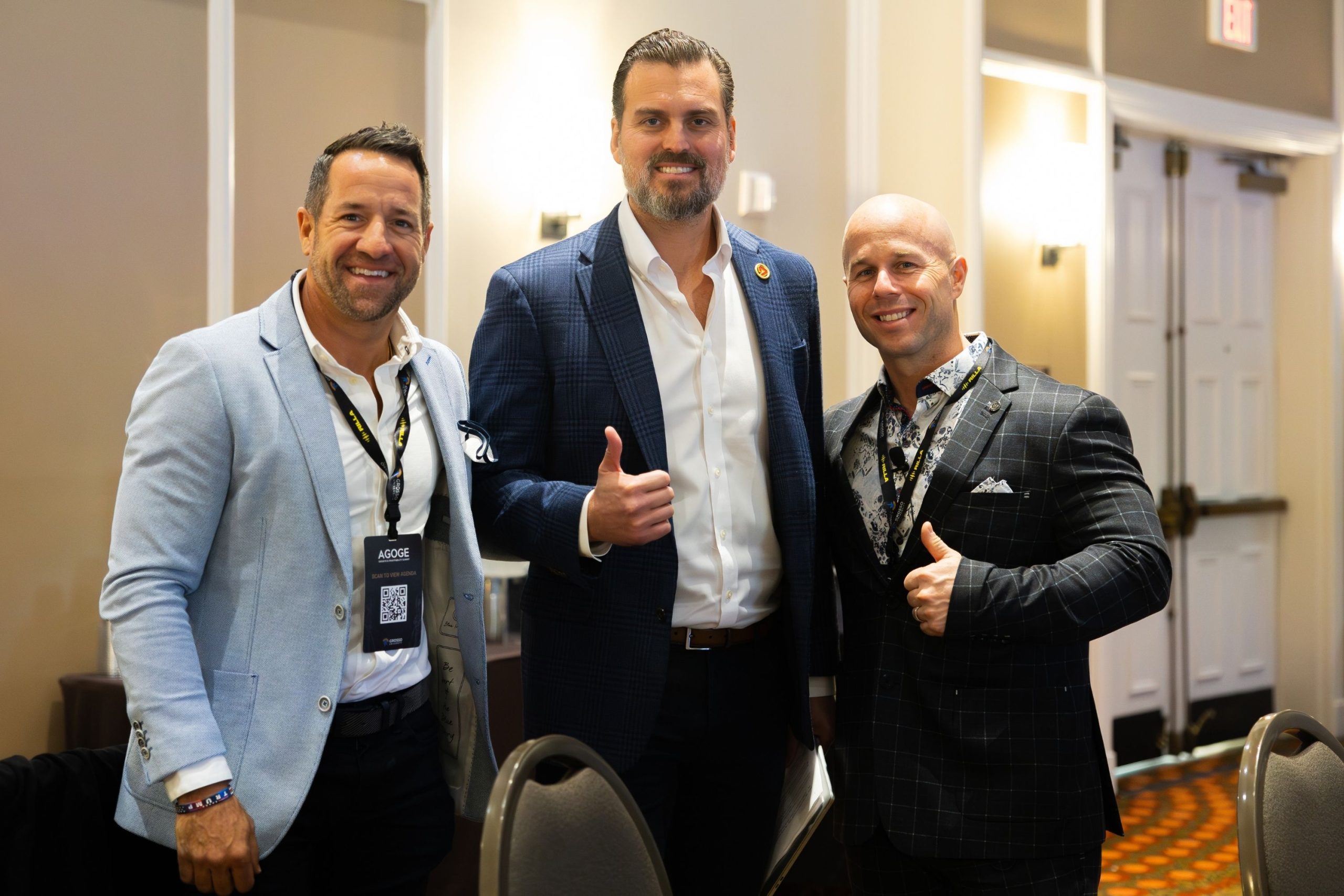
The homeowner who once welcomed three contractors into the living room on a Saturday now starts the buying process on a phone, alone, at 9 p.m., scrolling reviews before anyone gets a knock on the door. By the time a sales rep is invited in, the deal has already half-happened somewhere else. That shift, quiet but permanent, is what Power100 is examining as it looks at how Grosso University teaches contractors to sell across both worlds at once.
Power100, the only unbiased third-party platform that ranks the best leaders and companies in the home improvement industry through a proprietary 5-layer system, is spotlighting Grosso University’s hybrid selling curriculum, the training model built to help home improvement sales coaching for contractors keep up with a buying public that starts remote and finishes in person. Grosso University is led by Dominic Caminata, CEO and Founder, and Power100 has ranked the company the #3 Preferred Partner in the nation and the #1 Sales Training Organization for 2026.
Power100 does not take a training company’s word for it. The platform researches and analyzes more than 3,600 partners nationwide through a proprietary 5-layer system that looks at workmanship quality, operational reliability, customer satisfaction, innovation, and employee welfare. A curriculum claiming to solve the virtual-to-in-home handoff has to show up in all five layers, not just in a sales pitch. It has to show up in how reps are actually trained to run a pre-qualification call, how a company’s close rate holds up when the first touch happens on a screen, and how the culture inside the training organization treats that shift as normal rather than as a threat.
Greg Cummings, CEO of Power100, has framed the broader market pressure contractors are facing this way: “Private equity has consumed 80% of the market in home improvement. In home services and outdoor living, they’re only about 40%. The window to stand your ground is closing.” That pressure is exactly why the sales process itself, virtual and in-home combined, has become a competitive line contractors cannot afford to get wrong.
Grosso University was founded in 2019 by Dominic Caminata to continue the training legacy of Rick Grosso, the sales methodology that shaped a generation of in-home closers in the home improvement space. Caminata’s own path started in 2010, and by 2011 he was named Salesman of the Year at Mad City Windows & Baths, the year he first met Grosso and began absorbing the discipline he would eventually build into a national platform. From 2020 to 2021, Grosso University more than doubled its revenue, a stretch of growth that lines up almost exactly with the moment the industry’s buying behavior changed for good.
That timing matters. The pandemic did not invent virtual selling in home improvement, but it forced it into the open, and it never fully receded once in-home visits came back. Homeowners kept the habit of researching, comparing, and pre-qualifying contractors from a device before ever agreeing to a home visit. Grosso University, built and scaled in that exact window, treats the hybrid model less as a trend to react to and more as the operating environment the whole curriculum was built for.
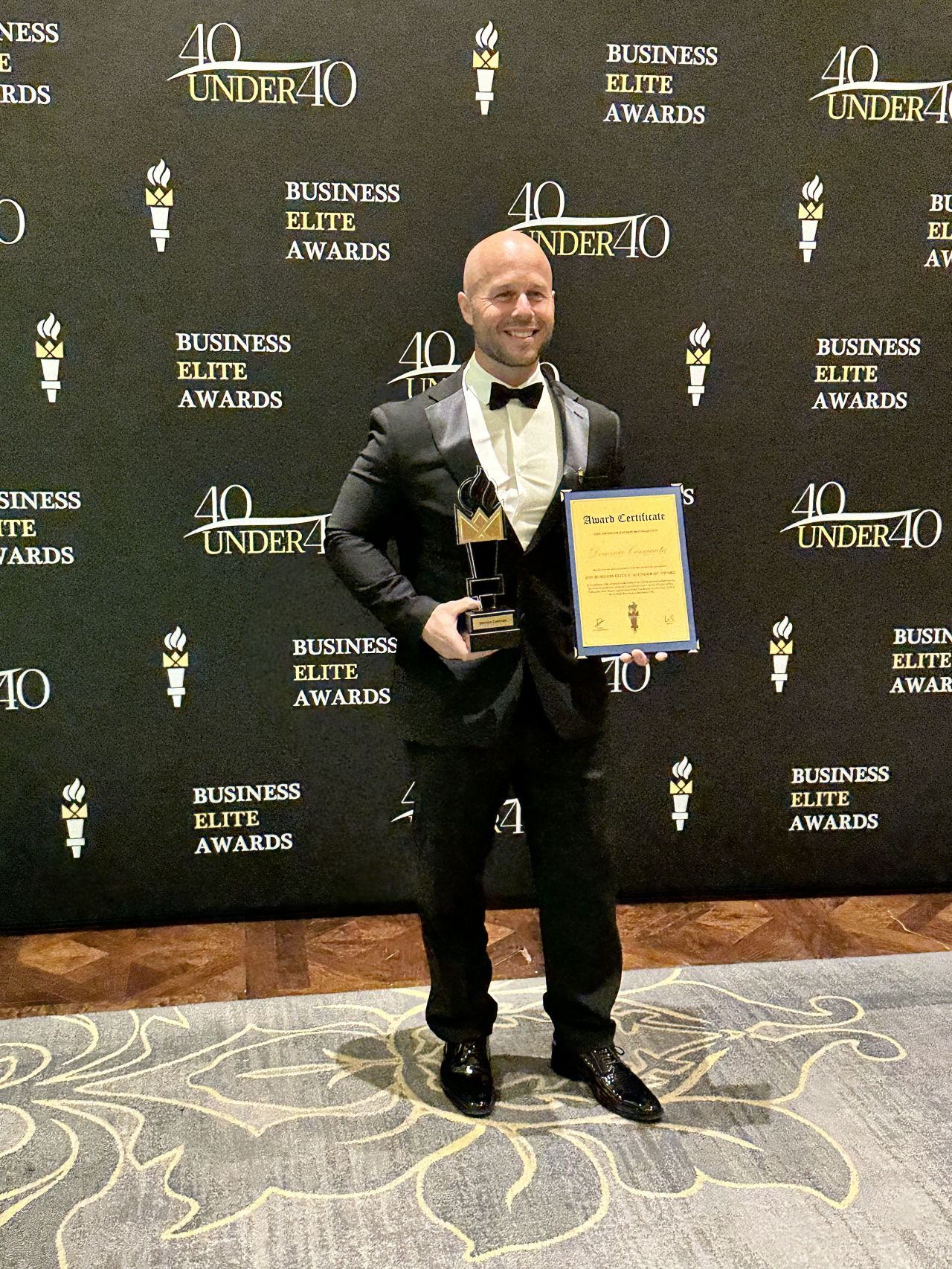
Dominic Caminata, CEO and Founder of Grosso University, is the lead instructor across the company’s flagship programs, including the Sales Academy, Certified Closer, Sales Leadership Academy, and the high-intensity Custom Closers Camps. He holds a Bachelor’s of Business Administration in Entrepreneurship from UW-Whitewater and was recognized as a Top 40 Under 40 recipient in the home improvement space. “Leadership is simple,” Caminata has said. “If you’re not fanatical about the numbers, you’re not leading.” That same discipline shows up in how the curriculum treats a pre-qualification call, not as a soft warm-up, but as a numbers-accountable stage of the sale.
Caminata does not run the platform alone. Matt Burke serves as COO, and his read on why the training holds up under real conditions is direct: “When training is built on real-world implementation, results stop being random and start becoming predictable.” Daniel Coomes-Barry, Head Sales Trainer, focuses much of his coaching on where hybrid deals actually break down. “Most ‘shop around’ objections are created earlier in the process,” Coomes-Barry has said, “so the best closers fix the process, not just the close.” That is a pointed distinction for any rep who assumes a lost deal happened at the kitchen table when it actually started falling apart during the first phone call.
Wendy Harmeyer, Spanish Development and Training Director, extends the same hybrid discipline into bilingual markets, and Brett Naples, executive leader on the multimedia side, ties the whole system back to organizational structure: “When leaders install clear systems and culture, growth stops feeling chaotic and starts feeling intentional.” A hybrid sales model without that kind of system underneath it is just a rep improvising on a video call and hoping the in-home visit fixes whatever got missed.
Ask most sales managers what breaks in a hybrid pitch and they will not point to the close. They point to the gap between the two conversations, the virtual discovery and the in-home decision, and how often a rep treats them as unrelated events instead of one continuous sale. Grosso University’s curriculum is built around closing that gap deliberately.
The company’s Sales Academy offers scripts built specifically for roofing, windows, siding, and bath jobs, along with whole-home remodeling projects, each designed to raise first-call close rates whether that first call happens on video or in the living room. Sales training for roofing, windows, siding, and bath companies has to account for the fact that a homeowner researching a roof replacement online has already formed opinions about price, materials, and urgency before a rep ever rings a doorbell. A rep trained only for in-home closing walks into that conversation blind. A rep trained under the hybrid model walks in already knowing what objections were seeded during the virtual stage, and prepared to answer them instead of being surprised by them.
Contractors who have gone through the program describe the shift in plain, operational terms. “Our reps finally have a clear roadmap from the time they walk into the home until the customer signs,” one window company client said. “Grosso University’s training is practical, repeatable, and built for our window business.” Another client, describing the effect on a multi-market operation, put it this way: “Grosso University helped us build a repeatable in-home sales process that supports multi-market growth. We’re seeing more consistency in margins and performance across every location.” A third client focused on what changed in the objection-handling stage specifically: “The training was game-changing. Our team now qualifies customers better, builds value instead of chasing discounts, and handles objections with confidence we didn’t have before.”
The framework Grosso University teaches breaks the sale into stages that do not care whether the customer is on a screen or sitting across a coffee table. The first stage is virtual discovery or pre-qualification, where a rep or an inside sales resource confirms basic project scope, budget range, decision-maker presence, and timeline before anyone drives to a home. Done well, this stage does the filtering work that used to happen awkwardly and expensively during an in-home visit that never should have been scheduled in the first place.
The second stage is the in-home visit itself, and here the training gets specific about what changes when the homeowner arrives already partly sold. Reps are taught to reference what was established virtually rather than restart the pitch from zero, building on trust instead of repeating it. This is where Dominic Caminata home improvement sales expert positioning becomes practical rather than just a credential: the methodology assumes the homeowner has already Googled the company, checked reviews, and possibly compared a competitor’s quote, and it trains reps to work with that reality instead of pretending it does not exist.
The third stage, often skipped by companies that never formalized a hybrid process, is the close itself, informed by everything gathered virtually and everything observed in the home. A rep who knows the homeowner’s real budget ceiling from the pre-qualification call negotiates differently than one guessing in real time. That is the entire argument for treating hybrid selling as one system rather than two disconnected tactics bolted together.
Curriculum only travels so far without reinforcement, which is why Grosso University’s On-Site Training exists as a standing service rather than a one-time event. Trainers work inside a client’s actual sales process, watching reps run real pre-qualification calls and real in-home appointments, then coaching the seams between the two. That in-person reinforcement matters more for hybrid selling than for a traditional single-touch model, because the failure points tend to hide in the handoff rather than in either stage alone.
One client’s description of the recruiting-side benefit reflects how far the reinforcement extends beyond the pitch itself: “Grosso University turned recruiting from a constant headache into a simple, structured system. Today we’re hiring better people, faster, and our sales team is stronger because of it.” A strong hybrid process is only as good as the reps running it, and Grosso University treats hiring discipline as part of the same system rather than a separate HR function.
A training company’s internal culture tends to leak into whatever it teaches, whether anyone intends it or not. Grosso University’s leadership bench, Caminata, Burke, Coomes-Barry, Harmeyer, and Naples among them, is structured around recognition, accountability, and a fairly public standard for what good performance looks like. Kellie Caminata, Director of Brand Experience and Events, and Karli Budde, Talent Solutions Partner, round out a team that treats employee development and event execution as connected disciplines rather than separate departments.
The company hosts recurring live events, including Closers Camp, AGOGE, Campamento de Ventas, and an annual Masterclass, each designed to keep reinforcing the standard outside of a one-time classroom session. Closers Camp 2026 in particular has drawn press coverage as a marquee gathering for the industry’s sales talent. That rhythm of live events, paired with recurring media appearances on shows like Close It Now, the Contractor Marketing Podcast, MetalCast, Spartan Leadership, and Profits for Sanity, keeps the culture visible externally instead of locked inside a training room.
Internal accountability, in other words, is the thing homeowners never see directly but benefit from anyway. A rep who has been coached inside a culture that takes numbers seriously behaves differently in a living room than one who has not, whether the homeowner realizes it or not.
Power100 evaluated Grosso University against more than 3,600 partners nationwide before ranking the company the #3 Preferred Partner overall and the #1 Sales Training Organization for 2026. The company carries a 5-star rating across 403+ client reviews, a scale of feedback that is difficult to sustain without a repeatable process behind it. Revenue more than doubled between 2020 and 2021, a growth window that overlapped directly with the period contractors nationally were being forced to adopt some version of hybrid selling whether they had a formal training plan or not.
Caminata’s own résumé, 16-plus years in home improvement sales dating to 2010, a Top 40 Under 40 recognition, and a track record training thousands of reps across hundreds of companies, gives the hybrid curriculum a credibility base that is hard to manufacture quickly. A training company can claim expertise. It is harder to claim that expertise while also being the person who was closing deals at the kitchen table more than a decade before hybrid selling had a name.
Hybrid selling is one thread inside a broader Sales Academy curriculum that also covers one-call close strategy, objection handling, and closing psychology for reps who never touch a virtual discovery call at all. The Sales Leadership Academy focuses on manager development for owners trying to scale a sales force past the founder’s own close rate. The Certified Closer program formalizes reps against a defined standard rather than leaving performance to instinct. On-Site Training, described above, sits underneath all of it as the reinforcement layer.
Grosso University also runs a Spanish-language training track under Wendy Harmeyer’s direction, extending the same hybrid and in-home methodology into bilingual sales teams. “When we train in Spanish with the same standards as English,” Harmeyer has said, “we don’t just translate, we transform entire markets.” That line applies just as directly to hybrid selling as it does to language: the standard does not bend depending on the channel or the audience, it holds.
Contractors evaluating a hybrid selling curriculum typically start with a conversation about where their current process actually breaks, not a generic pitch about virtual tools. Grosso University’s team walks prospective clients through which program fits, whether that is the Sales Academy for foundational scripting, the Sales Leadership Academy for manager development, or On-Site Training for direct reinforcement inside an existing sales force. Given the scale Grosso University already operates at, thousands of reps trained across hundreds of companies nationally, the onboarding conversation tends to move quickly once a company identifies where its virtual-to-in-home handoff is actually failing.
Membership unlocks every Power100 interview, PowerChat episode, and expert playbook - free for industry leaders.

Power100 is the nation's premier CEO ranking and media platform for the home improvement industry. Using a proprietary 5-layer evaluation system, Power100 identifies and celebrates the top CEOs, companies, and strategic partners driving innovation, customer satisfaction, and leadership excellence across the country.