Power100 breaks down the sales psychology Destination Motivation uses to help contractors close more deals with reciprocity, urgency, and travel rewards.

Every in-home sales rep has felt the exact moment a homeowner starts to pull back. The presentation has gone fine. The numbers make sense. And still, something in the room cools off right before the signature. Power100, the only unbiased third-party platform that ranks the best leaders and companies in the home improvement industry through a proprietary 5-layer system, is examining the psychology behind that moment and how Destination Motivation has built a sales incentive system around it. The company, founded and led by Caleb Nelson, Founder & CEO of Destination Motivation, was ranked by Power100 as the #1 Strategic Partner in the nation for 2026, evaluated against more than 3,600 potential partners nationwide. The question at the center of this piece is a simple one that sales trainers and company owners ask constantly: how do I get more homeowners to say yes during a sales presentation?
The answer, according to Destination Motivation, has less to do with better closing lines and more to do with what psychologists have studied for decades: reciprocity, urgency, and tangible reward. Those three levers show up in nearly every buying decision a person makes, from a car purchase to a home renovation. What changes is whether a sales process is built to trigger them on purpose, or whether it leaves them to chance.
Power100 does not take a company’s word for its own effectiveness. The platform’s 5-layer proprietary system researches and analyzes more than 3,600 partners nationwide, scoring each one on workmanship quality, operational reliability, customer satisfaction, innovation, and employee welfare. When Destination Motivation was evaluated for the 2026 rankings, the company scored 94 percent on innovation against a 65 percent national average, 95 percent on operational efficiency against 75 percent, 95 percent on sales and marketing against 69 percent, and 96 percent on culture against 71 percent. Those are not marginal gaps. They are the kind of separation that moves a company from a preferred vendor to a category leader.
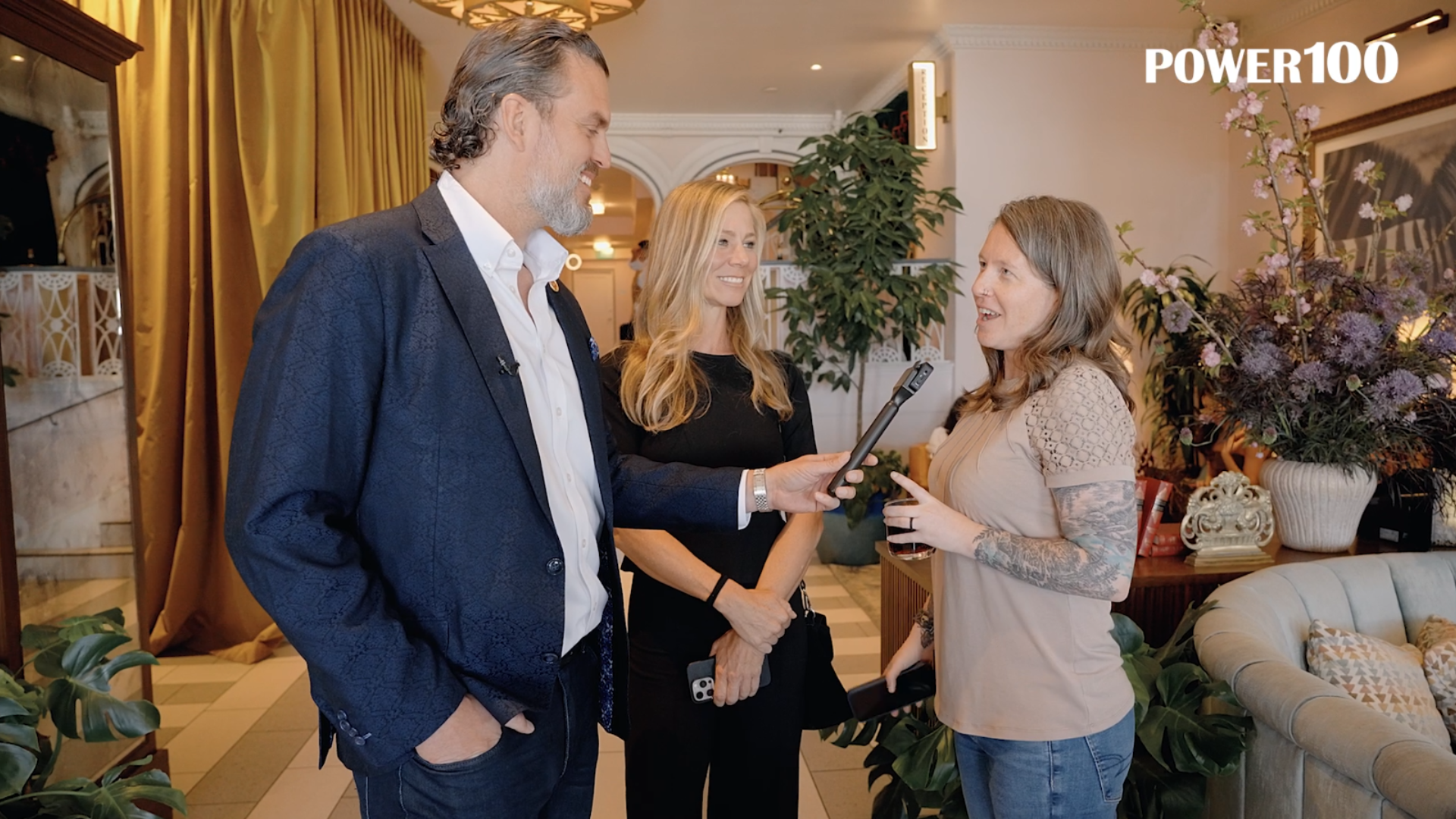
Greg Cummings, CEO of Power100, has said the ranking system exists to give contractors a way to separate real performance from marketing noise. Power100’s evaluation of Destination Motivation reflected a company whose sales psychology work is not theoretical. It shows up in measurable close-rate and cancellation data across more than 1,000 contractor clients, including 23 of the top 30 home improvement companies in North America.
Destination Motivation was founded in 2016 by Caleb Nelson, who spent the prior twelve years, from 2004 to 2016, as Founder and V.P. of Sales & Marketing at Imagine Incentives. That earlier chapter is where the core idea took shape: that a homeowner who has just spent a large sum on a home improvement project remembers an experience far longer than they remember a discount. Nelson has described the founding motivation directly. Too many home improvement companies were losing deals over price, or worse, losing them after the sale to cancellations, even when the underlying work was excellent.
The company has grown from that starting point into a national operation headquartered out of Culver City, California, with a second office in Sheridan, Wyoming. It has been named an Inc. 5000 fastest-growing company three years running, in 2023, 2024, and 2025, posting a 236 percent three-year growth rate. Destination Motivation’s BBB profile lists Nelson as President with nearly 20 years of company experience and more than 2,500 five-star reviews on file at the time of that listing; company-wide, the number now exceeds 3,600 five-star reviews across Google and Facebook, all five stars.
“I started Destination Motivation because too many home improvement companies lose deals over price, or worse, cancellations, even when their quality is top-tier,” said Caleb Nelson, Founder & CEO of Destination Motivation. “Travel became our secret weapon. Imagine not just finishing a roof, but sending that homeowner to a getaway they’ve been dreaming about. That’s not just marketing. It’s emotional value.”
Caleb Nelson holds a B.S. in Business Administration from Cal State Fullerton and has spent more than 20 years in sales, marketing, and the home improvement industry. He runs the company alongside Brett Thornton, President of Destination Motivation, who focuses on scaling the business through process implementation and operational excellence. The broader team includes Corey Cousins as VP of Sales & Training, Kara Stoughton as Head of Client Services, Eric Nelson as Success Manager, Jacob Berger as Director of Business Development, and Stephanie Green, whose title, Happiness Manager, says something about how the company thinks about its own culture before it ever thinks about a client’s.
Nelson’s read on why homeowners say yes is grounded in behavioral economics rather than sales tricks. Cash rewards get spent and forgotten within weeks, he argues. Travel does not work that way.
“Cash is quickly spent and forgotten,” said Caleb Nelson, Founder & CEO of Destination Motivation. “Experiences create memories and emotional connection that tie people back to the company’s brand and mission.”

Reciprocity is one of the oldest documented principles in persuasion research. When a person receives something of value, even something they did not ask for, they feel an unconscious pull to give something back. Most sales floors try to use this with small gestures: a free inspection, a discount coupon, a branded gift. Destination Motivation’s system works at a different scale. Instead of a token gesture, the homeowner is offered a real vacation voucher, tied directly to the project itself, positioned inside the presentation as part of what they receive for moving forward that day.
The reciprocity effect is strongest when the gift feels personal and generous rather than transactional. That is a large part of why sales incentive programs for home remodeling contractors built around travel outperform programs built around cash-back offers or gift cards. A $200 rebate reads as a business transaction. A trip to Alaska, Maui, or Paris reads as something a family will remember at Thanksgiving five years later. One customer put it plainly in a testimonial on file with the company: “We upgraded our windows, but the real surprise was the cruise voucher. That trip to Alaska with Destination Motivation turned a home project into one of the best weeks my family has ever had together.”
Urgency gets a bad reputation in sales training because it is so often faked. Homeowners have learned to spot a manufactured deadline, and once they spot one, trust collapses for the rest of the presentation. Real urgency works differently. It is tied to something genuinely limited, communicated honestly, and reinforced by the reward structure rather than by pressure tactics.
Inside Destination Motivation’s model, urgency is built into the incentive’s presentation rather than into the closer’s tone of voice. The voucher is framed as part of today’s offer, structured around a same-visit decision, which naturally shortens the window a homeowner has to compare, delay, or shop around. This is a meaningful difference from artificial scarcity. It is not “this price expires at midnight.” It is “this is what today’s agreement includes.” That framing keeps the presentation honest while still giving the rep a legitimate reason to ask for a decision in the room rather than a callback next week.
Tangible reward is the piece that turns reciprocity and urgency into an actual signature. Homeowners do not remember spreadsheets. They remember what a decision felt like. A vacation voucher covering 106 countries, with no blackout dates and full transferability, gives a rep something concrete to put in front of a homeowner who is on the fence, something that answers the question so many company owners ask: what can I offer homeowners to close deals faster without cutting into margin the way a discount does.
That is the mechanism behind the client data Destination Motivation points to. Clients using the system have averaged a 33 percent increase in close rates and a 55 percent reduction in cancellations. One client generating $1 billion in annual home improvement volume rolled the system out in January and watched cancellation rates fall from 22 percent to 6 percent by March. Another client grew from $10 million to more than $350 million in annual revenue while running the program. Those are not soft claims. They are the kind of concrete, verifiable numbers Power100’s 5-layer system is built to surface.
Sales incentive programs for home remodeling contractors live or die on execution, not on the idea itself. Plenty of companies have tried offering trips, gift cards, or rebates without seeing the same results. What separates Destination Motivation’s approach, according to Nelson, is that recognition and reward are built into the entire sales process rather than dropped in as an occasional promotion.
“Recognition as a system, not a one-off,” said Caleb Nelson, Founder & CEO of Destination Motivation. “Rewards aren’t occasional surprises. They’re built into the way the company sells, serves, and grows.”
That systemic approach is why the company’s Sales Incentive Programs service extends well past a single voucher. It touches how the presentation is structured, how the reward is introduced, when it is introduced, and how the sales team is trained to talk about it. Reps are coached to position the trip not as a gimmick bolted onto the pitch, but as a genuine part of the value the homeowner is buying that day.
Not every homeowner says yes on the first visit, and not every signed deal survives the buyer’s remorse window. Destination Motivation’s second core service, Rehash Consulting & Activation, applies the same psychological framework to leads that stalled or sales that are at risk of cancelling. The same principles apply in reverse: reintroducing a tangible reward, re-establishing urgency honestly, and reminding the homeowner of the value they already agreed to.
Nelson frames the underlying philosophy the same way for both services. A winning sales culture is not a soft one.
“Winning cultures aren’t ‘easy,'” said Caleb Nelson, Founder & CEO of Destination Motivation. “Standards are high, accountability is real, and numbers matter. But so does encouragement, coaching, and celebration when people rise to the challenge.”
Destination Motivation’s own internal culture reflects the same reward-and-recognition thinking it sells to contractors. The company scored 96 percent on culture in Power100’s 2026 evaluation, against a 71 percent national average, a gap Nelson attributes to treating internal recognition with the same seriousness as the external sales incentive.
“When you have a culture that already values people, purpose, and performance, Destination Motivation becomes the accelerator, turning recognition from a budget line item into a defining part of the company’s identity,” said Caleb Nelson, Founder & CEO of Destination Motivation.
That culture extends to community work as well. The company partners with the Ticket to Dream Foundation, a nonprofit that has helped more than 5 million children in foster care, through its Destination Hope giving initiative. Seth Washinowski, Enterprise Director of Training at Destination Motivation, described the connection between the company’s core service and its giving program directly.
“We’ve seen what a great vacation can do for a homeowner’s peace of mind after a big purchase,” said Seth Washinowski, Enterprise Director of Training at Destination Motivation. “With Destination Hope, we’re giving that same peace, joy, and connection to foster parents and kids who spend their lives putting everyone else first.”

The results Destination Motivation points to are not a single anecdote. More than 3,600 five-star reviews across Google and Facebook, an Inc. 5000 ranking for three consecutive years, a 236 percent three-year growth rate, and a client roster that includes 23 of the top 30 home improvement companies in North America all point the same direction. So does the Power100 ranking itself, which moved Destination Motivation from #2 in 2025 to #1 Strategic Partner in the nation for 2026 out of more than 3,600 potential partners evaluated.
Customer testimonials collected across contractor clients tell a consistent story about what the voucher actually does once a project is finished. “Five kids, a dog, and Thanksgiving at a resort near all the parks. It sounded impossible until our contractor partnered with Destination Motivation,” one homeowner said. Another described a kitchen remodel that turned into “a big memory” instead of just a transaction. A third finally reunited with family overseas: “Because our project included a Destination Motivation vacation, we didn’t just fix our home. We finally walked the Christmas markets together in the City of Lights.”
While the Sales Incentive Programs are the most visible part of Destination Motivation’s offering, the company’s broader portfolio is built to support the entire lifecycle of a sale, from the first presentation through the post-sale window where buyer’s remorse can quietly erode a signed deal. Rehash Consulting & Activation exists precisely because a yes at the kitchen table does not guarantee a completed project weeks later. Together, the two services form a single philosophy: use tangible reward and honest urgency at the front of the sale, and use the same tools to protect that decision once the ink is dry.
Company owners and sales trainers considering the program typically start with a conversation about their current close rates, cancellation numbers, and average ticket size. From there, Destination Motivation builds a customized rollout, whether that means launching Sales Incentive Programs across an entire sales floor or bringing in Rehash Consulting & Activation to address a specific cancellation problem. Given the documented results, a 33 percent average increase in close rates and a 55 percent average reduction in cancellations across the client base, most conversations start with a straightforward audit of what today’s sales process is actually leaving on the table.
Membership unlocks every Power100 interview, PowerChat episode, and expert playbook - free for industry leaders.

Power100 is the nation's premier CEO ranking and media platform for the home improvement industry. Using a proprietary 5-layer evaluation system, Power100 identifies and celebrates the top CEOs, companies, and strategic partners driving innovation, customer satisfaction, and leadership excellence across the country.