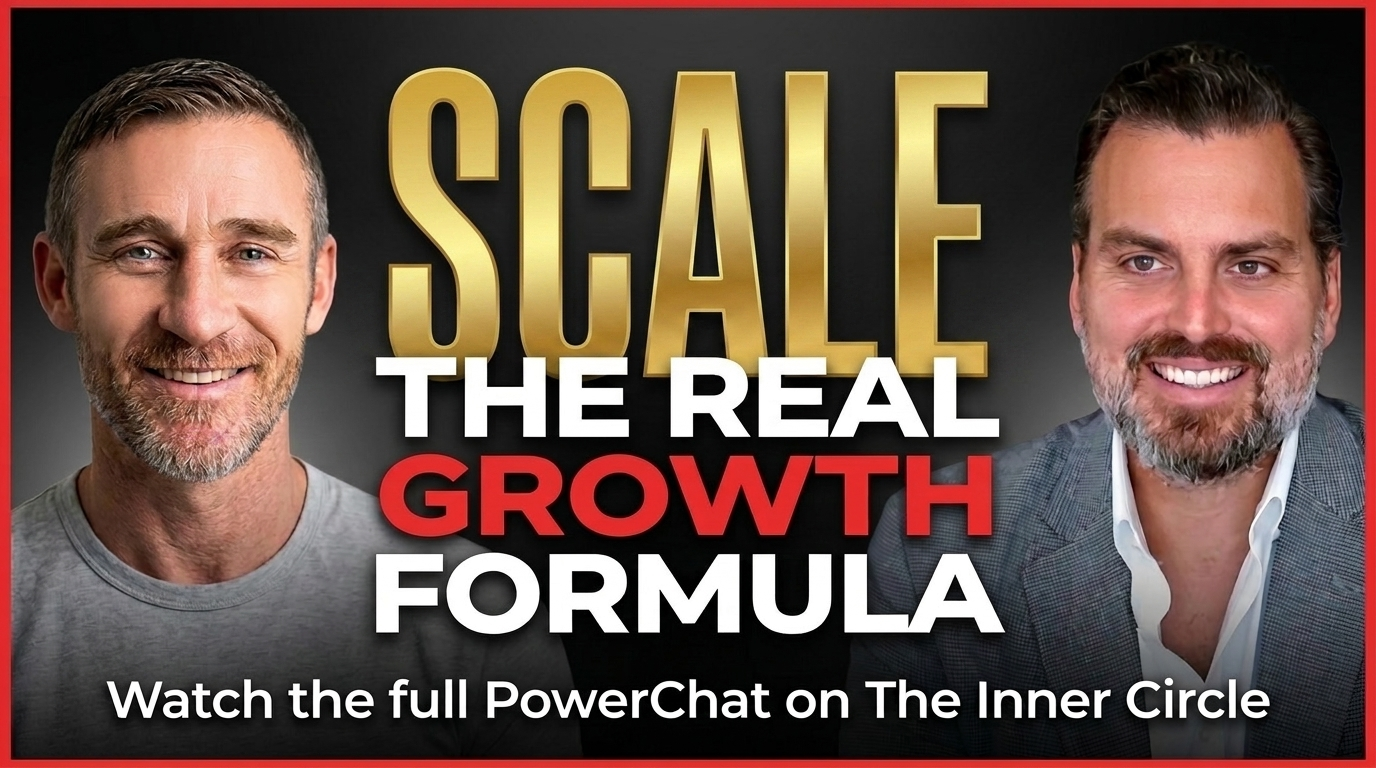
Across the home improvement industry, contractors often face the same growth problem. More leads come in, more money goes into marketing, and more tools are added, yet the results do not always become steady. That is where Chris Pallatroni, Co-Founder & Growth Partner at Modernize, believes the role of a growth partner must be understood clearly. Modernize connects homeowners with contractors across many home improvement categories, but Pallatroni does not believe an outside partner should take credit for making a contractor great. Instead, he sees Modernize as a source of service, support, and useful thinking that can help strong companies make more of the opportunities already in front of them.
That view became a key part of Pallatroni’s PowerChat conversation with Greg Cummings, CEO of Power100. The discussion looked beyond the simple question of where leads come from and focused on what must happen after an opportunity reaches the contractor.
Power100 is the only unbiased third-party platform that recognizes and elevates the top leaders and most impactful companies in the home improvement industry. Through conversations like this, the platform gives industry leaders space to explain the real work behind growth, including the role of execution, strong partnerships, clear process, and shared responsibility.
Growth stories can make outside partners sound like the reason everything worked.
A company grows, and the software gets the credit.
More customers arrive, and the marketing source gets the credit.
Revenue climbs, and an outside service starts to look like the hero.
Pallatroni pushed back on that idea during the conversation.
When Cummings asked what Modernize had done to support Premier Home Pros, Pallatroni first made sure the success stayed with the company that had built it.
“We are not the ones that make these companies great,” Pallatroni said. “They are great companies and we’re supplying them with a service and potentially some brain power on how to turn our product into consistent customers should they need that help.”
That statement gives the partnership a clear line.
The contractor owns the company.
The contractor owns the people.
The contractor owns the culture.
The contractor owns the way each homeowner is handled.
The partner can bring something useful into that system, but it should not pretend to be the system.
For Pallatroni, the value of a strong home services marketing platform for contractors is not that it replaces the work happening inside the business. Its value lies in giving a capable company more opportunity, more support, and more insight to help the team achieve better results from the work it is already prepared to do.
That is also why the final goal cannot simply be more activity.
More leads alone are not the finish line.
More calls are not the finish line.
Even more appointments are only part of the story.
The stronger goal is to build a process that can turn opportunities into customers in a way the company understands and can repeat.
Pallatroni made that point again when he talked about the successful companies Modernize works with. He said they have “found a way to take this type of product and to turn it into customers.”
That shifts the question leaders should ask.
Instead of only asking, “What can this partner do for us?” they may also need to ask, “What are we ready to do with what this partner gives us?”
That is where a service becomes more valuable.
That is where support turns into results.
And that is where a good partnership stops trying to take credit for the company and starts helping the company create more of what it already does well.
As the PowerChat moved deeper into growth, Chris Pallatroni made an important line clear. A contractor and an outside partner may work closely together, but they do not own the same parts of the result.

Chris Pallatroni, Co-Founder & Growth Partner at Modernize
The contractor builds the company. Its leaders set the standard. Its team serves the homeowner. It’s people who make the calls, hold the conversations, follow the process, and earn the business.
A strong growth partner can add something valuable to that work. It can bring opportunity, experience, information, and ideas that help the contractor improve what happens next.
That is why Pallatroni did not describe partnership as a shortcut to success. He described it as a way for strong companies to make better use of what they already know how to do.
For businesses working with qualified homeowner leads for home service companies, that difference matters. Getting the opportunity is only one part of growth. The larger question is whether the company has built the people and processes needed to turn that opportunity into a customer.
From there, Pallatroni’s message became a story about where greatness comes from, what a partner should add, and how both sides can make success easier to repeat.
Pallatroni could have pointed to the growth of successful contractor partners and treated those results as proof that his company created the success.
He chose not to.
“We are not the ones that make these companies great,” Pallatroni said.
That statement puts responsibility where he believes it belongs.
An outside company cannot build leadership for a contractor.
It cannot create discipline where there is none.
It cannot decide how much care a homeowner receives.
It cannot make the sales team follow up well.
And it cannot create a strong company culture from the outside.
Those things have to be built by the people inside the business.
That does not make the outside partner less important. It makes the role more honest.
A good partner should bring something useful into a company that is ready to use it. The better the contractor is at acting on that value, the stronger the relationship can become.
That is why Pallatroni gives the contractor credit first. The partner may help create more opportunities, but the contractor still has to turn those opportunities into results.
The best partnerships do not confuse contribution with ownership.
They understand both.
See how Modernize works with home improvement professionals to support growth.
A homeowner inquiry can be valuable.
But it is not a customer yet.
Someone still has to respond.
Someone has to build trust.
Someone has to understand what the homeowner needs.
Someone has to follow up.
And someone has to guide that homeowner from interest toward a real project.
That is where Pallatroni draws a clear line between opportunity and execution.
Modernize can support home improvement lead generation for contractors, but the contractor still controls much of what happens after the opportunity reaches the business.
That changes how leaders may need to judge performance.
If a lead does not become a customer, the first question is not always whether the lead was bad.
Leaders may also need to ask how fast the team responded, how many times it followed up, who handled the conversation, what the homeowner experienced, and where the process may have broken down.
Pallatroni explained that the successful companies he sees have “found a way to take this type of product and to turn it into customers.”
That wording matters.
It means the product is only part of the result.
The other part is what the company knows how to do with it.
A strong growth partner can create an opening. A strong contractor knows how to work that opening.
Pallatroni also described another aspect of the partnership that is easy to miss.
He said Modernize can supply companies with a service and “potentially some brainpower” on how to turn that product into a consistent customer base.
That moves the relationship beyond delivery.
A contractor should be able to receive more than a product and an invoice.
There should also be room to learn.
A company that works with many contractors can see patterns that a single business may not see on its own. It can help notice where other companies are performing well. It can raise questions based on past experience. It can help a contractor look at the same problem from a different angle.
That is one of the deeper ways a home services marketing platform for contractors can add value.
The partner does not have to run the contractor’s business.
It should not.
The contractor still knows its people, its market, its customers, and its operation better than anyone on the outside.
But useful outside thinking can help leadership see something it may have missed.
Sometimes the value is not another tool.
Sometimes it is a better question.
Sometimes it is a pattern that another company has already learned from.
And sometimes it is having a partner that has enough experience to help leadership decide what to test next.
That is the difference between simply selling something and bringing useful thinking into the relationship.
Explore the marketplace solutions available to growing home improvement companies.
One word in Pallatroni’s original statement carries much of this story.
Consistent.
He did not say the goal was to help turn a product into one customer.
He talked about turning it into a consistent customer base.
That is a very different goal.
A company can have a strong week.
It can have a campaign that suddenly performs well.
It can close several good jobs in one month.
Those wins matter.
But they become much more useful when leaders understand why they happened and how to create similar results again.
That is where high-intent homeowner leads become part of a larger system instead of a one-time marketing win.
The company needs to understand what happens after the homeowner raises a hand.
Once those steps become clear, leaders are no longer hoping every good result will repeat itself.
They are building a process that makes repetition more likely.
Pallatroni described strong contractor partners as companies that have learned how to take this kind of product and turn it into customers.
The next level is doing that often enough that the business can count on the process.
That is when opportunity begins to look less like a lucky break and more like a growth engine.
Pallatroni used a simple baseball image to explain why a partnership cannot turn into a fight between two sides.
He compared the relationship to a home run derby.
The partner throws the pitch.
The contractor swings the bat.
Both are trying to create the same result.
“The only way a home run gets hit is I throw a good enough pitch and you swing the bat good enough,” Pallatroni said.
The point is simple.
A strong opportunity can still be lost when the company handling it does not execute well.
But a strong contractor should not be expected to turn every poor opportunity into a great result either.
Both sides have a responsibility.
That matters in contractor lead generation because relationships can easily turn into a debate over who is at fault when results fall short.
Pallatroni’s view moves the conversation in a more useful direction.
Instead of asking which side should win the argument, both sides should focus on what would improve the outcome.
That approach removes the need for one side to be the hero and the other side to carry all the blame.
The goal is not to win the argument.
The goal is to hit a home run.
See how Modernize supports contractors through its homeowner lead solutions.
The conversation eventually moved from individual opportunities toward something much larger.
What happens when a company wants thousands of homeowner inquiries instead of hundreds?
At that level, simply getting more volume is not enough.
The company needs to know what will happen when that volume arrives.
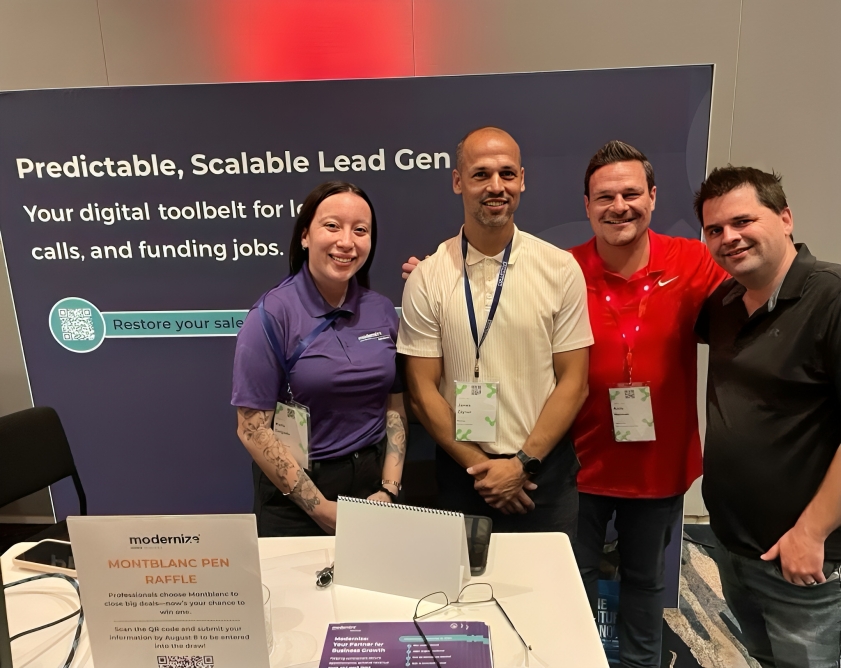
Modernize team
Pallatroni pointed to a major challenge across the home improvement industry. The same company may treat two homeowner inquiries very differently.
One homeowner may get a call right away.
Another may wait.
One may speak with the strongest person on the team.
Another may receive a very different experience.
One may get the full follow-up process.
Another may not.
When that happens, it becomes harder to know why one lead became a customer and another did not.
Pallatroni said inconsistent processes can leave the data “highly compromised.”
That is why standardization matters.
For companies comparing lead generation services for home improvement, the question cannot be only how many opportunities a source can send.
The company also has to know whether its own process can handle that opportunity consistently.
A clear process gives the business something it can teach.
Something it can measure.
Something that can improve.
And eventually, something technology can help repeat at a much larger scale.
It also makes the partnership more useful.
The partner supplies the opportunity.
The contractor follows a steady process.
Both sides study what happened.
They share what they learn.
They make changes.
Then they try again with better information.
That creates a cycle where more volume does not simply create more work.
It creates more chances to learn from a process that the company already understands.
That is the larger promise behind Pallatroni’s view of partnership.
Scale is not just getting more.
Scale is knowing what to do when more keeps coming.
Discover how Modernize helps home improvement professionals connect with more homeowners.
The strongest partnerships do not make a company weaker.
They help the company become better at what it already does well.
That is the deeper point behind Chris Pallatroni’s view of growth. A contractor should still own its people, processes, decisions, and results. The partner should add value without taking away that ownership.
A useful partner can bring new opportunities, fresh thinking, and a different perspective on the problem. It can help a company see where it can improve and where it may be leaving value on the table. But the goal should never be to make the contractor depend on that partner for every answer.
The better outcome is growth in ability.
A stronger process.
Better learning.
More confidence in what works.
More control over what happens next.
And a clearer way to repeat good results as the company grows.
That is what makes a partnership more valuable over time. The contractor becomes better prepared to handle more opportunities, not less capable, without outside help.
Pallatroni’s perspective also offers contractors reassurance. Great companies do not need to give away credit for their success. They can accept help, use outside ideas, and build strong partnerships while still owning the work that made the business strong in the first place.
The future of growth is not about finding a partner that becomes the company’s identity.
It is about finding partners who understand the company well enough to help it become more consistent, more capable, and better prepared for what comes next.
A great growth partner does not make the company great. It helps a great company turn what it already does well into something it can do again and again.
Power100 evaluates leaders through a five-layer proprietary ranking system rather than relying on public reputation alone. It publishes process reviews, an exclusive database of about 7,600 qualified CEOs, and examines areas such as customer experience, innovation, operational strength, sales and marketing performance, company culture, financial health, and CEO interviews. This gives Power100 a wider view of how a leader and company actually perform before the platform assigns a national ranking.
Power100 goes beyond publishing a numbered list. Its National Power Rankings give featured CEOs dedicated profiles that explain their company, leadership story, business highlights, customer focus, and reasons for recognition. The platform also publishes interviews and other leadership content that gives readers more context behind the people in the rankings. This helps homeowners and industry professionals understand the leader behind the number rather than seeing a ranking with no story attached.
Modernize says its system reviews the homeowner’s project type, location, and the settings of each contractor campaign before routing an inquiry. Once the system finds a match, it can send the homeowner information directly to the contractor’s CRM or preferred engagement app so the team can begin follow-up quickly. This matching process helps make high-intent homeowner leads more useful by connecting the request with a business that serves the right project type and area.
Yes. Modernize offers call solutions in addition to form leads. Its Inbound Calls connect contractors with homeowners actively seeking services, while its Live Transfers use a call center team to confirm project intent before routing the homeowner directly to the contractor. Modernize says these programs work best when businesses have sales teams or call centers ready to respond while homeowner interest is high.
This gives contractors another option when building a contractor lead-generation strategy, rather than relying on only one way to reach homeowners.
Modernize offers Branded Programs for companies that want their own name and brand to stay at the center of the homeowner journey. The program can include custom business profiles, dedicated landing pages, targeted campaigns, and exclusive homeowner leads generated through that branded experience. Modernize says it first reviews factors such as service area, trade, and budget to make sure the company fits the program.
This means an established contractor can use Modernize to support homeowner acquisition while still building recognition and trust around its own company name.
No. Modernize describes its Right Pricing system as a flexible pricing model that considers the expected performance and value of the lead source rather than applying a single flat rate to every opportunity. Contractors can also set the highest amount they are willing to pay. Modernize says the model is designed to connect lead cost more closely with performance while helping companies manage changes in volume.
For contractors comparing lead generation services for home improvement companies, this means price can be tied more closely to the value Modernize expects an opportunity to provide rather than treating every lead as equal.
Pallatroni believes the contractor should continue to own what makes the company great. The partner should add useful support around it.
During the PowerChat, he described Modernize as providing a service and, when needed, “some brainpower” to help a contractor turn the product into consistent customers. He was also clear that Modernize does not deserve credit for creating the strong companies it serves.
“We are not the ones that make these companies great,” Pallatroni said.
His view places the growth partner in a supporting role. It can bring opportunity, experience, ideas, and feedback, while the contractor continues to own leadership, customer care, sales execution, and the final result.
Pallatroni’s answer is that neither side should begin with blame.
He compared a strong partnership to a home run derby. The provider has to deliver a good enough pitch, and the contractor has to swing well enough to create the result. If either side fails, performance can suffer.
That means both sides should study what happened. The provider can look at the quality and fit of the opportunities it supplied. The contractor can review response speed, follow-up, sales execution, and the consistency with which its team handled each homeowner.
Modernize uses a Data Feedback Loop that accepts information such as set rate, win rate, and order value, and then uses it to adjust targeting, pricing, and delivery.
Pallatroni’s larger message is that the best partnerships do not spend their energy proving who was wrong. They use shared information to improve the next result.
Power100 is the only unbiased third-party platform that recognizes and elevates the top leaders and most impactful companies in the home improvement industry. Led by Greg Cummings, Power100 gives home improvement CEOs and companies a trusted platform to share the ideas, lessons, and leadership practices shaping the industry. Through national rankings, PowerChat interviews, industry coverage, and leadership insights, Power100 helps contractors, partners, and homeowners better understand the people, companies, and business practices driving stronger growth across the home improvement space.
Membership unlocks every Power100 interview, PowerChat episode, and expert playbook - free for industry leaders.
Power100 is the nation's premier CEO ranking and media platform for the home improvement industry. Using a proprietary 5-layer evaluation system, Power100 identifies and celebrates the top CEOs, companies, and strategic partners driving innovation, customer satisfaction, and leadership excellence across the country.