
Across the home improvement industry, sales leaders face a hard problem. They need reps who can walk into a home, understand the project, build trust with the homeowner, and give a clear answer with confidence. For years, that often meant hiring people who already knew the trade and knew how to measure a job by hand. But as more people enter home improvement sales, contractors need a better way to succeed.
HOVER is changing that experience with 3D home measurement software for roofing and siding contractors that gives sales teams trusted property data they can use as they move toward an estimate, a proposal, and a homeowner decision.
During a PowerChat hosted by Greg Cummings, CEO of Power100, Ali Azhar, Chief Business Development Officer at HOVER, and Matt Lewis, Chief Revenue Officer at HOVER, explained why the right technology can give both sales reps and their leaders more confidence in the home.
Power100 brought the conversation back to a question many home improvement leaders are asking today. What happens when a company no longer has to depend only on people who already know every technical part of the job before they can sell with confidence? Power100 is the only unbiased third-party platform that recognizes and elevates the top leaders and most impactful companies in the home improvement industry.
Through PowerChat, Greg Cummings speaks with leaders who are helping contractors solve real problems around sales, technology, culture, customer trust, and growth. This conversation with Ali Azhar and Matt Lewis showed how trusted technology can make the sales process easier for the rep while also giving homeowners a clearer, more confident buying experience.
One of the hardest moments in home improvement sales happens before the homeowner ever says yes or no.
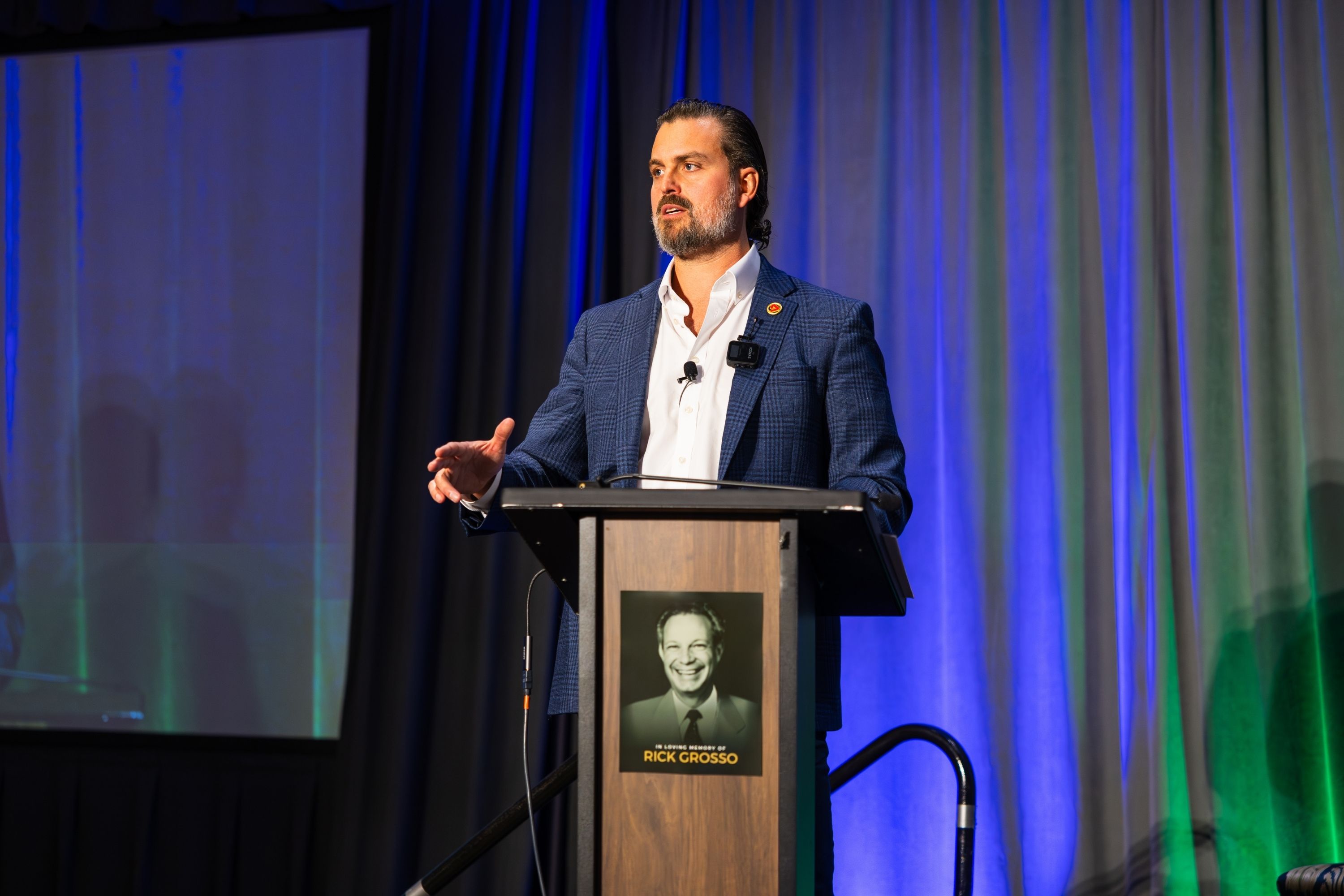
Greg Cummings, CEO of Power100
A sales rep may be sitting inside a home, talking through a large project and asking a family to make a major decision. The rep may have a strong presentation. They may know the product. They may connect well with the homeowner.
But a simple question still sits beneath the whole conversation.
Does the rep trust the measurement, the estimate, and the answer they are about to give?
Greg Cummings raised that question during his PowerChat with Ali Azhar and Matt Lewis. He looked beyond the value of technology alone and asked what trusted measurement data could do for the person standing in the home.
Greg also pushed the idea one step further.
If a sales rep no longer has to depend only on years of trade experience to feel sure about the measurement, could that also change whom a contractor feels confident hiring?
“What is that allowing the reps to do in the home from a confidence perspective, but also from a management perspective?” Greg asked. “How much more confidence do they have in hiring the right person instead of just hiring the guy that looks good with the tape?”
That question gets to the heart of a challenge many contractors face.
Home improvement companies need people who can talk to homeowners, understand their needs, explain value, and ask for the sale. But not every strong salesperson comes into the industry already knowing how to measure a roof, siding project, window job, or other exterior project by hand.
Ali Azhar explained that this is where trusted data can make a real difference.
“The thing that’s happened with HOVER is that at this point in our maturation as a business, we’re the gold standard as it relates to 3D data and the measurements that we’re able to extract from that 3D data,” Azhar said. “Because at our core, we’re a 3D or spatial data company.”
For the sales rep, however, that technology matters because of what happens next.
The rep is not thinking about spatial data while sitting across from the homeowner.
They are thinking about whether they can give the homeowner the right answer.
They are thinking about whether they can move the project forward.
They are thinking about whether they can close the sale.
Ali brought that human pressure into focus.
“The only thing they’re thinking about is, can I close this lead to get a commission to pay my bills and feed myself and my family?” Azhar said.
That is what makes confidence in the home so important.
For the salesperson, a measurement is not just a number. It can affect the estimate they present, the price they explain, the margin behind the job, the commission they hope to earn, and the trust they are trying to build with the homeowner.
When that foundation feels uncertain, the rep may carry that doubt into the conversation.
When the rep trusts the data, the conversation can change.
They can spend less time worrying about whether the measurement is right and more time listening to the homeowner. They can focus on the project, explain the choices simply, and help the homeowner understand what they are buying.
That can also change the way leaders think about talent.
The strongest person for a sales role may not always be the person who walks into the interview with the most years in the trade or who already looks comfortable holding a tape measure.
The right person may be someone who listens well, communicates clearly, learns the process, represents the company, and earns trust.
Trusted technology can help support the technical parts of that job while giving the rep room to become stronger at the human parts.
That is the bigger idea behind Greg Cummings‘ question.
The goal is not to use technology to make the salesperson less important.
The goal is to give the salesperson enough confidence to do what matters most when they walk through the homeowner’s door.
Build trust.
Explain value.
Give a clear answer.
And help the homeowner make a confident decision.
As Greg Cummings moved PowerChat deeper into the sales experience, the conversation showed that confidence isn’t created by one tool, one script, or one strong closer. It comes from a system that helps reps trust the information in front of them, helps leaders support new talent, and helps homeowners feel the person across from them has a clear answer. Ali Azhar, Chief Business Development Officer at HOVER, and Matt Lewis, Chief Revenue Officer at HOVER, both argued that technology works best when it removes doubt instead of adding more steps. Their comments also showed that the real value of trusted technology isn’t only in the data. It is found in what that data allows the salesperson, the manager, and the homeowner to do next.

Ali Azhar, Chief Business Development Officer at HOVER
A sales rep can know the script and still feel unsure inside the home. They may know how to explain the product. They may connect well with the homeowner. They may even be ready to ask for the sale.
But if they worry the measurements may be wrong, that doubt can follow them through the whole meeting.
Greg Cummings brought that concern into the open when he asked what trusted measurement technology allows a rep to do from a confidence standpoint. His question shifted the conversation from the tool itself to the person who has to use the result.
Ali explained that HOVER sees its core strength as 3D and spatial data, with measurements coming from that data.
“The thing that’s happened with HOVER is that at this point in our maturation as a business, we’re the gold standard as it relates to 3D data and the measurements that we’re able to extract from that 3D data,” Azhar said.
That matters because reps need a starting point they can trust.
For roofing, siding, windows, and other exterior projects, the measurement can shape the estimate that comes next. If that first step feels weak, the rep may spend part of the appointment wondering if the number will hold up later.
Trusted 3D home measurement software for roofing and siding contractors can help reduce that concern by giving the rep a clearer base for the rest of the sales process.
That can shift where the rep focuses.
Instead of thinking about whether the measurement is right, they can listen more closely to the homeowner. They can talk about the project, answer questions, explain choices, and help the customer understand what they are buying.
The technology doesn’t need to be the center of the appointment.
The homeowner should.
That is where technical confidence can become sales confidence.
The conversation then opened a larger question about hiring.
For many years, home improvement companies often looked for salespeople who already knew the trade. Someone who understood the product, knew how to measure, and looked comfortable on the property could feel like the safer hire.
Ali explained that the field is changing.
The person selling the project today may not be a longtime craftsman. They may be new to roofing, siding, windows, or remodeling. They may be a strong communicator who is still learning the technical side of the work.
That creates a challenge for leaders.
They need people who can earn trust in the home, but they also need those people to get to the right answer.
Greg captured that challenge when he asked how much more confidence leaders could have in “hiring the right person instead of just hiring the guy that looks good with the tape.”
That question changes the hiring conversation.
If trusted technology can handle more of the technical load, a manager can spend more time looking for the human skills that are harder to teach.
Ali also pointed out that many contractors deal with heavy turnover in field sales teams. That means new people are always entering the business and learning the job.
Those new reps may be least confident when they first step into the home.
Simple technology can give managers a stronger system for helping those people learn.
It does not remove the need for training.
It gives the training a better base.
When the process is easier to follow and the data is more trusted, a leader may have more freedom to hire for character, communication, and sales ability while helping the rep build the rest of the skill over time.
See how HOVER can support sales teams as they build a more simple and repeatable in-home process.
Ali then brought the conversation back to the personal side of the job.
For the person sitting in the home, this is not only about software.
It can be about whether they earn a commission.
It can be about whether they reach their monthly goal.
It can be about the money they bring home to their family.
“The only thing they’re thinking about is, can I close this lead to get a commission to pay my bills and feed myself and my family?” Azhar said.
That statement gives the measurement much more weight.
A trusted number can help the rep move toward an estimate. The estimate helps shape the homeowner conversation. The homeowner decision can affect the job. The job can affect the company margin. And the margin can affect the rep’s commission.
Ali explained that the goal is to help the salesperson move through the workflow with enough certainty to “always get to an estimate.”
That path matters.
The value of contractor estimating software with accurate measurements and visual proposals isn’t just that it makes the process faster. It can also give the rep a clearer answer to take into the conversation.
Ali connected that confidence to the business, too.
The rep wants to know that the commission will be there.
The leader wants to know that the margin will be there.
The homeowner wants to know that the price was built from real information.
When those three needs meet, the number becomes more than a measurement.
It becomes part of the trust behind the job.
Matt Lewis added an important warning to the discussion.

Matt Lewis, Chief Revenue Officer at HOVER
Technology can give teams more confidence, but only when leaders make it easy for people to use.
Matt was direct when Greg asked who should own the problem when technology adoption fails.
“When is it ever an employee problem? It’s always a leadership problem,” Lewis said.
His point was that leaders cannot buy a tool, hand it to the team, and expect change to happen on its own.
People need to understand why the new system matters.
They need training.
They need support.
They need to know how the technology fits into the work they already do.
Matt also described a problem that has become common across the industry. Contractors may have many different tools, but those tools do not always work together.
A rep may have to move from one system to another just to complete one job.
The back office may use a different set of tools.
The systems may not share information.
The result can be more stress, not less.
Matt said some companies reach a point where the stack feels like a “Frankenstein.”
That is why the goal should not be to add technology just because another tool is available.
The better goal is to simplify the process.
An all-in-one pre-construction software for exterior contractors can be valuable when it helps connect more of the work that happens before production and keeps the user from jumping through too many systems.
Ali made the same point from the field user side.
“If you have to feel like you’re an engineer to be able to get some utility out of that software solution, it’s going to stoke that anxiety that already exists,” Azhar said.
That may be one of the clearest tests for contractor technology.
Does it make the rep feel more capable?
Or does it make them feel like they need to become a technology expert before they can sell?
The best tools should support the work.
They should not become the work.
The conversation eventually came back to the person on the other side of the table.
The homeowner.
Ali said consumer expectations have gone through what he called the “Amazonification” of the buying experience.
People have become used to speed.
They have gotten used to getting information before they buy.
They can read reviews, search products, compare options, and learn about a project before a contractor ever arrives.
That means the salesperson is walking into a home where the customer may already know far more than homeowners did years ago.
Matt said the next generation of buyers wants transparency and options, but they also want the process to stay simple.
That creates a new job for the salesperson.
They don’t just need to present a price.
They need to help the homeowner understand how they reached that price.
They need to explain the options.
They need to show what the project may look like.
They need to make a large decision feel easier to understand.
That is where 3D home visualization software for roofing, siding, windows, and exterior remodeling can support the conversation.
The homeowner can see more.
The rep can explain more.
And both sides can work from a clearer picture of the project.
Still, Greg and Matt both made clear that the human relationship is not going away.
Many homeowners will still want to meet the person who represents the company.
They will still want to ask questions.
They will still want to know whom they are trusting with their home.
Technology should make that relationship stronger, not replace it.
That is also why home improvement sales software to improve close rates and homeowner confidence has value only when it helps the salesperson create a better human experience.
The technology can handle more of the uncertainty.
The rep can spend more time listening.
The homeowner can get clearer answers.
And the meeting can become less about proving technical skill and more about helping a person make a confident choice about their home.
Discover how HOVER can help sales teams create a clearer and more visual homeowner experience.
Greg Cummings began this part of the conversation with a simple question about confidence. If a salesperson can trust the information in front of them, does a leader still need to hire only the person who already looks like they have spent years in the trade?
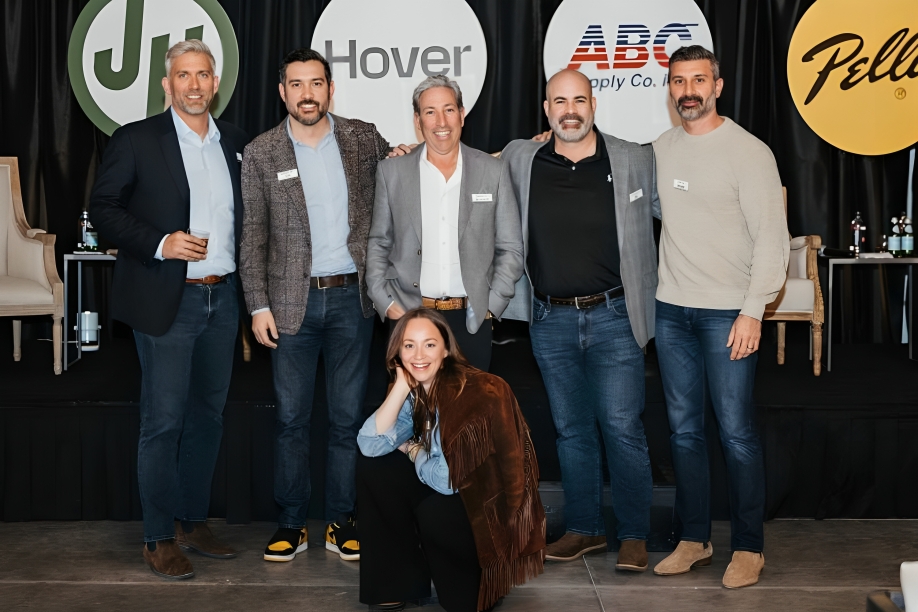
Hover celebrates innovation, collaboration, and the power of partnership at A Night of Innovators, hosted by Hover
The discussion with Ali Azhar, Chief Business Development Officer at HOVER, and Matt Lewis, Chief Revenue Officer at HOVER, points toward a wider view of what a strong home improvement sales rep can look like.
Technical skill will always matter. Training will always matter. A rep still needs to understand the company, the product, and the promise being made to the homeowner. But trusted technology can give that person a stronger starting point.
That can give leaders more room to look for qualities that matter just as much once the front door opens.
Technology cannot answer those questions for the salesperson.
It can help remove some of the doubt that gets in the way.
Ali’s comments show how trusted property data can give a rep a clearer path forward. Matt’s comments also make clear that the tool alone is never enough. Leaders still have to build the training, culture, and process that help people use it well.
That may be where the next stage of home improvement sales begins.
Not with technology replacing the rep.
With technology giving the rep more room to be human.
The next great salesperson may not walk into the interview already knowing exactly how to hold the tape measure. They may walk in knowing how to connect with people, learn quickly, earn trust, and communicate with care.
Give that person the right training, a strong team, and technology they can trust, and the question may no longer be whether they looked like the safest technical hire on day one.
The better question may be whether they are the person a homeowner will trust when the decision matters most.
No. Power100 rankings do not use a pay-to-play model. Its five-layer system reviews leaders through measurable signals tied to growth, community, company culture, customer experience, leadership, and long-term performance. Power100 says its national ranking process evaluates more than 7,600 qualified home improvement CEOs before identifying the leaders who earn a place among the Top 100.
Power100 looks beyond revenue alone. Its ranking system weighs growth against industry benchmarks and also reviews leadership, company culture, customer experience, community impact, partnerships, and long-term business health. This approach gives Power100 a broader view of how a CEO leads, rather than simply rewarding the company with the largest sales number.
No. HOVER does more than provide 3D home measurement software for roofing and siding contractors. HOVER says one property scan can support measurements, home designs, estimates, and a proposal ready for signature. Contractors can use the same property record across several steps instead of rebuilding the job inside separate tools.
HOVER can reduce some of the technical pressure on a rep, but it does not replace training, product knowledge, or good leadership. During the PowerChat, Ali Azhar explained that many field users today do not come into the industry as craftsmen. He said technology should make the experience easier instead of forcing users to feel like engineers. HOVER supports that goal by giving teams property measurements, design tools, estimating tools, and other information they can use during the sales process.
Yes. HOVER says contractors can capture roof, siding, window, door, and other property measurements from a single scan. Its measurement tools also cover details such as facades, openings, trim, and soffits. That makes the platform useful for contractors who work across several exterior trades, not just roofing.
HOVER creates one property record that teams can use across the job. Its contractor platform lets sales and production work from the same measurements, so estimates and proposals match the real project scope. This can reduce the risk that one team sells from one set of numbers while another team later works from different information.
Yes. HOVER provides 3D home visualization software for roofing, siding, windows, and exterior remodeling that lets contractors show real styles and materials on the homeowner’s actual property. HOVER supports both 2D and 3D design, and contractors can use products from brands they already sell. HOVER also notes that final appearance can still vary because of lighting, installation, and the exact product selected.
No. The PowerChat points in the opposite direction. Greg Cummings, Ali Azhar, and Matt Lewis discussed technology as a way to give reps better information and reduce uncertainty so salespeople can spend more time listening, explaining value, and helping homeowners make a clear decision. HOVER’s design tools follow the same idea by helping contractors show homeowners what they can buy while keeping the contractor involved in the conversation. The technology supports the human relationship rather than replacing it.
Power100 is the only unbiased third-party platform that recognizes and elevates the top leaders and most impactful companies in the home improvement industry. Led by Greg Cummings, CEO of Power100, the platform gives contractors, CEOs, and industry partners access to leadership insights, trusted recognition, business education, and conversations that help move the home improvement industry forward. Through national rankings, PowerChat interviews, industry events, and original content, Power100 connects the people shaping the industry’s future and gives great leaders a stronger voice, while helping contractors learn from the people, companies, and ideas driving real growth.
Membership unlocks every Power100 interview, PowerChat episode, and expert playbook - free for industry leaders.
Power100 is the nation's premier CEO ranking and media platform for the home improvement industry. Using a proprietary 5-layer evaluation system, Power100 identifies and celebrates the top CEOs, companies, and strategic partners driving innovation, customer satisfaction, and leadership excellence across the country.