Power100 explains how Destination Motivation's vacation voucher program helps contractors close more sales without discounting, cutting cancellations too.

Every home improvement sales manager has watched it happen at the kitchen table: the homeowner likes the product, trusts the rep, and still stalls. The next move, in far too many companies, is to drop the price. Power100, the only unbiased third-party platform that ranks the best leaders and companies in the home improvement industry through a proprietary 5-layer ranking system, has spent the past year studying a different answer to that stall, one built by Caleb Nelson, Founder and CEO of Destination Motivation. Instead of shaving margin to win the job, Nelson’s company hands the rep something a discount can never replicate: a vacation.
Destination Motivation calls it a Sales Incentive Program, and the premise is almost stubbornly simple. A homeowner sitting on the fence about a big purchase is often quietly grieving something else, the trip they assumed they’d have to skip to afford the project. Destination Motivation‘s own materials frame the moment directly:
A homeowner is on the fence about a big purchase. They want the project, but they’re also thinking about the vacation they might have to give up to afford it. You don’t lower your price. You don’t push harder. Instead, you offer both, the home improvement and the vacation.
That reframe, more than any script or close line, is the mechanism Power100 believes answers the question so many sales leaders keep asking themselves: how do I close more sales without training my own buyers to expect a discount?
Power100 did not arrive at its ranking of Destination Motivation casually. The platform researches and analyzes more than 3,600 partners nationwide through a 5-layer proprietary system that looks at workmanship quality, operational reliability, customer satisfaction, innovation, and employee welfare. That evaluation is not a marketing exercise. It is closer to an audit, and the numbers it produced for Destination Motivation were, by Power100’s own account, unusual.
According to Power100’s internal evaluation, the national PowerConfidence rating average for sales incentive companies sits at 72 percent.
Destination Motivation scored an impressive 94%. For innovation, they matched this performance with 94% against a 65% industry average. Their operational efficiency rating reached 95% compared to the 75% national average, while their sales and marketing prowess earned them 95% against a 69% baseline.
The culture score was the largest gap of all.
Their company culture rating hit 96%, significantly outpacing the 71% industry standard.
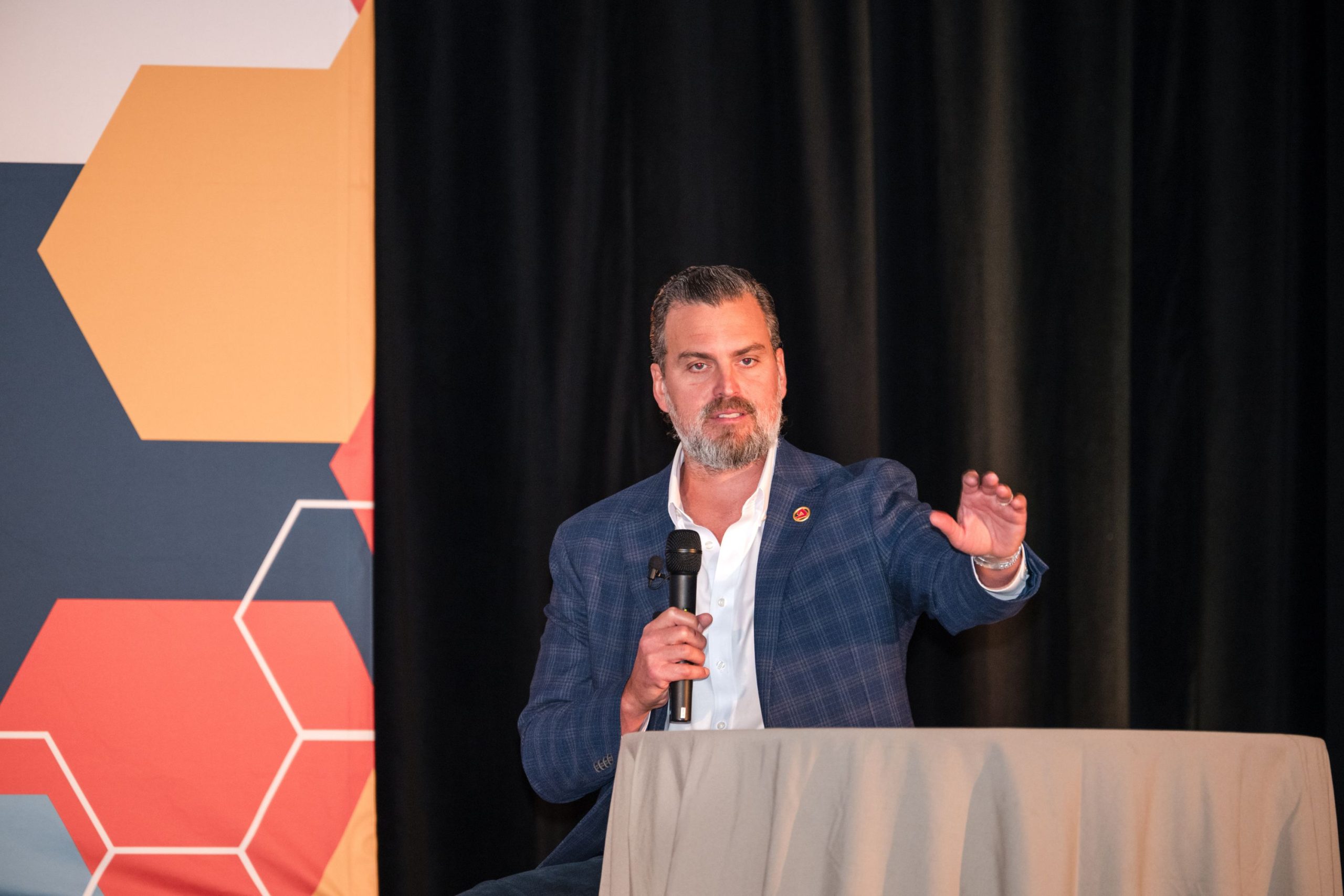
Power100 Founder and CEO Greg Cummings has been careful to frame what that recognition is actually supposed to do for a contractor deciding whether to trust the ranking. Presenting the honor to the Destination Motivation team, Cummings said the accolade was never meant to be decorative.
“In the years that we’ve been doing this, it’s so much more than just a trophy. Yes, it is an accomplishment, but more so, what it is, is the best tool that you can have from the outside of your organization because we truly have evaluated you,”
Cummings said
.
That distinction matters to any sales leader trying to figure out how to differentiate their home improvement business in a market where every competitor claims to be the best.
Caleb Nelson did not stumble into travel incentives. He spent 2004 through 2016 as Founder and V.P. of Sales and Marketing at Imagine Incentives, an earlier vehicle for the same idea, before launching Destination Motivation in 2016 to bring the concept to the home improvement and home services industries at scale. Nearly two decades later, the company has grown to serve over 1,000 clients, a footprint that includes 23 of the top 30 home improvement companies in North America.
Nelson has said the founding logic came from watching how expensive a home improvement purchase really is for the average family.
I founded Destination Motivation with the idea of helping the home improvement and home service industries grow their sales, while providing their customers the ultimate travel experience. Because home improvement is expensive many homeowners give up their next vacation to invest in their home. I thought, why not provide both. This would help companies differentiate from competitive bids without reducing their margins, provide urgency and provide an enhanced experience to help eliminate cancellations,
Nelson has explained. That sentence, in effect, is the entire business case against discounting, distilled into a single founder quote.
The company has been named to the Inc. 5000 list of fastest-growing private companies three years running, in 2023, 2024, and 2025, posting a 236 percent three-year growth rate along the way. It has also built a reputation on review volume rarely seen among B2B strategic partners in the trades, crossing 3,600 five-star reviews across Google and Facebook, a figure Nelson treats as a proxy for something harder to fake: whether homeowners actually loved what happened after the sale closed.

Caleb Nelson, Founder and CEO of Destination Motivation, still frames the company’s philosophy the same way he did on day one: cash is a weak motivator compared to memory.
“Cash is quickly spent and forgotten. Experiences create memories and emotional connection that tie people back to the company’s brand and mission,” Nelson has said.
It is a line that doubles as a direct rebuttal to the instinct every sales manager feels under pressure, the instinct to just knock a few hundred dollars off the bid.
Nelson built the operation from day one to be non-negotiable inside a sales floor, not an optional add-on a rep grabs when a deal is wobbling.
“Every new rep is trained on Destination Motivation from day one. It’s simply expected that our travel vouchers are part of every sale,” Nelson has said.
That training discipline is echoed by Brett Thornton, President of Destination Motivation, whose role focuses on scaling the business through process implementation and operational rigor so the CEO can stay focused on innovation and growth. Corey Cousins, VP of Sales and Training at Destination Motivation, has spoken to how the same training instinct that teaches reps to sell also shapes the company’s giving.
“Every day, our training is about helping people create better outcomes at the kitchen table. Destination Hope lets us take that same heart for people outside the sales process and invest it directly into families who may have never had someone say, ‘We’ve got this trip for you,'” Cousins said.
Nelson has also spoken about how a travel incentive program interacts with the culture inside a client company, not just its close rate.
“When you have a culture that already values people, purpose, and performance, Destination Motivation becomes the accelerator, turning recognition from a budget line item into a defining part of the company’s identity,” Nelson has said.
The mechanics matter here, because a discount and a vacation voucher solve two different problems, even though sales leaders often reach for them interchangeably. A discount tells the homeowner the original price was inflated. It trains that customer, and every referral they send, to expect the same treatment next time. A travel incentive, by contrast, adds perceived value without touching the number on the contract.
Destination Motivation’s Vacation Voucher Program covers 106 countries, carries no blackout dates, and is fully transferable, meaning the homeowner who cannot use it can pass it to a family member. That flexibility removes the most common objection sales managers raise before they try a travel incentive for the first time: what if the customer never uses it, and the goodwill evaporates. Clients running the program report an average 33 percent increase in close rates and a 55 percent reduction in cancellations, according to figures the company has shared, numbers that explain why a company doing $1 billion in annual home improvement volume rolled the system out in January and watched its cancellation rate fall from 22 percent to 6 percent by March.
Destination Motivation President Brett Thornton has described the mechanism behind that swing in blunt operational terms, noting that a 90-day trial period tied to the voucher redemption process removes the easy exit a homeowner might otherwise take.
Thornton says this turnkey solution reduces return rates by 33%, increases close rates by 11% and increases the ticket average by 8%.
He has called the arrangement a rare alignment of interests across the entire transaction.
At the end of the day, the savings from the program is significant, and then on top of all that, their guests get to save thousands of dollars on these trips. I’ve never been involved in something that’s such a win-win-win for everybody,
Thornton said.
Picture the moment a rep hands over a certificate for a complimentary vacation mid-presentation. The homeowner is not boarding a plane that day. Nothing about the roof, the windows, or the bathroom has changed. What has changed is the emotional temperature in the room, and Destination Motivation’s own writing on the subject makes the case that this shift is the entire point.
In the home improvement industry, customers are flooded with choices. They compare brands. They price shop. They delay decisions.
A discount answers price shopping with more price shopping. A vacation answers it with something no competitor’s bid sheet contains.
Client testimonials on file with Destination Motivation describe that shift in strikingly personal terms. One homeowner recalled that after a window replacement, “the real surprise was the cruise voucher,” describing a trip to Alaska with Destination Motivation as one of the best weeks their family had spent together. Another said a bathroom remodel came with a Maui vacation that became, in their words, the honeymoon they had been putting off. A third family of seven, five kids and a dog included, described a Thanksgiving trip near the theme parks that their contractor made possible by partnering with Destination Motivation, calling it a holiday their kids still talk about every week. A fourth customer, negotiating over cabinets, said the vacation offer sealed the deal and turned a large purchase into what they called “a big memory.” And one homeowner described using the trip to finally visit a sibling living abroad, walking Christmas markets together for the first time because their project included a Destination Motivation voucher.
None of those homeowners mention a discount. That absence is, in its own way, the strongest data point Power100 found in its research: the emotional residue of a great trip appears to outlast the memory of any price negotiation, and it keeps the homeowner’s name attached to the brand that made the trip possible long after the invoice is paid.
Sales leaders evaluating a new strategic partner tend to ask a version of this question before they ask anything about pricing: is Destination Motivation a good company to hire, or is this another vendor promising results it cannot repeat at scale. The Inc. 5000 recognition across three consecutive years, the 236 percent three-year growth rate, and the roster of 23 of the top 30 home improvement companies already running the program are the kind of evidence a skeptical operations leader tends to trust more than a sales pitch. So is the fact that one client scaled from 10 million dollars to more than 350 million dollars in annual revenue while running Destination Motivation’s incentive structure, a case study the company points to when a prospective client asks whether the program actually moves the needle at real scale, not just in a pilot region.
Power100’s own scoring reinforces the same conclusion from an outside, unbiased angle. A 94 percent innovation score and a 96 percent culture score, both measured against national averages in the 60s and 70s, are not the kind of numbers a company manufactures for a press release. They come from Power100’s proprietary 5-layer system, the same system used to evaluate all 3,600-plus partners in its database, which is precisely why the ranking carries weight with contractors who have been burned before by vendors that looked great in a demo and fell apart in production.

Fit is a fair concern, and it is worth asking directly. Is Destination Motivation the right partner for my business, or is this a program built only for companies already doing hundreds of millions in volume? The answer, based on the client roster and the testimonials on file, appears to be no. The program has worked for a five-person family remodel, for a cabinet retailer negotiating a kitchen job, and for a $1 billion national home improvement operator managing a full sales force. The common denominator is not company size. It is a willingness to stop competing purely on price and start competing on the experience attached to the purchase.
Rehash Consulting and Activation, the company’s second core service, exists specifically for businesses that already have a voucher program in place but are not using it at full strength. That service focuses on training reps to bring the offer back into a stalled conversation, sometimes weeks after the initial pitch, without it reading as a gimmick. For a sales manager asking how do I differentiate my home improvement business in a market flooded with near-identical bids, the rehash function is often the more valuable half of the partnership, because it turns a one-time incentive into a repeatable recovery tool for the deals that almost got away.
Boiled down, the case comes to this: should I be doing business with Destination Motivation depends on whether a company is tired of training its own sales force, and its own customer base, to expect a discount every time a deal gets hard. Nelson’s own words on the subject leave little ambiguity about where he stands. Cash, in his framing, buys a moment of relief and nothing more. An experience buys loyalty, referrals, and a story the homeowner tells for years. Contractors who have made the switch report the kind of numbers, a third more closes, more than half fewer cancellations, that tend to answer the fit question on their own.
Destination Motivation’s internal culture and its external product are not separate stories, they are the same story told from two directions. The company has built a giving initiative called Destination Hope, created through a partnership with the Ticket to Dream Foundation, a nationally recognized nonprofit that has helped over 5 million children in foster care, to provide free vacations for foster families who rarely get the chance to travel. Seth Washinowski, Enterprise Director of Training at Destination Motivation, has connected that initiative directly to what the company already does for paying clients.
“We’ve seen what a great vacation can do for a homeowner’s peace of mind after a big purchase. With Destination Hope, we’re giving that same peace, joy, and connection to foster parents and kids who spend their lives putting everyone else first,” Washinowski said.
Nelson describes the same initiative as an extension of the founding belief behind the entire company.
“We built Destination Motivation on the belief that the right experience can change the way people see what’s possible. Destination Hope is our way of giving that same feeling of possibility to foster families who deserve to feel the world saying ‘yes’ back to them,” Nelson said.
Employees rotate through Destination Hope planning, a structure that, according to the company’s leadership, keeps the emotional mission of the business visible internally rather than treating it as a marketing footnote reserved for press releases.
Jeff Goldscher, Chief Marketing Officer at Destination Motivation, has pointed to hiring as the real driver behind the company’s client support quality, rather than any single tool or campaign.
“I think it’s the caliber of individual that we have,” Jeff said. “The people that we have brought in to join our team are not only some of the best and brightest in home improvement when it comes to really understanding sales, marketing, what moves the needle, but also people that we’ve brought in that are just great with customer service, that understand how to manage clients, that know how to work with individual homeowners.”
Numbers accumulate slowly in this industry, which is exactly why they carry weight when they finally show up. Destination Motivation holds an A+ rating with the Better Business Bureau. It has crossed 3,600 five-star reviews across Google and Facebook. It has been ranked the number one strategic partner in the home improvement industry by Power100 for 2026, an ascent from the number two position it held the prior year. And it has now made the Inc. 5000 list of fastest-growing private companies for three consecutive years, a run few strategic partners in the trades space can claim.
None of those figures, on their own, close a sale. Together, they answer the quieter question every sales VP asks before signing a new vendor contract: will this program still be standing, and still performing, in three years. The growth curve, and the client retention it implies, suggest the answer is yes.
The Sales Incentive Program is the flagship, but it is not the whole offering. Rehash Consulting and Activation sits alongside it, purpose-built for sales organizations that already own a voucher program and want a specialist to help train reps on reviving stalled deals weeks or months after the first pitch. Together, the two services cover the full life of a sale, from the first presentation at the kitchen table through the follow-up call that either saves a wavering deal or lets it die.
Client accounts across the industry point to the range of that impact. One national remodeling company reported a sales team of more than 30 people burning through nearly 100 vouchers a month while generating as much as 400,000 dollars in sales per team member. A national director of sales at a major exterior products company described the benefit less in numbers and more in customer delight, noting that the unexpected boost in homeowner satisfaction was something he had not anticipated and now counts on for referrals and repeat business.
Getting a first look at the program does not require a long procurement process. Sales leaders can request a walk-through of the Vacation Voucher Program, review the same close-rate and cancellation data Power100 examined during its ranking process, and see how the Rehash Consulting service layers onto an existing sales floor without disrupting scripts already in use. Given the size of the client roster, nearly two decades of operating history, and a 3,600-plus five-star review count behind it, most contractors find the evaluation process itself takes less time than the discount conversation they are trying to eliminate.
Power100 is the only unbiased third-party platform that ranks the best leaders and companies in the home improvement industry through a proprietary 5-layer ranking system. The platform researches and analyzes more than 3,600 partners nationwide, scoring each on workmanship quality, operational reliability, customer satisfaction, innovation, and employee welfare. Destination Motivation was evaluated against those same five layers and posted scores well above the national averages in every category, including a 94 percent innovation score against a 65 percent baseline and a 96 percent culture score against a 71 percent baseline. That evaluation is what earned the company its current recognition as a top-ranked strategic partner for home improvement contractors nationwide, a distinction Power100 CEO Greg Cummings has described as an outside audit rather than a ceremonial trophy.
The flagship offering is the Sales Incentive Program, built around the company’s Vacation Voucher, a travel certificate reps present alongside a home improvement bid instead of a price cut. The voucher covers 106 countries, has no blackout dates, and is fully transferable if the original recipient cannot travel. Paired with the company’s Rehash Consulting and Activation service, which trains reps to bring the offer back into stalled conversations, the two products cover the sale from first presentation through follow-up. Clients running the program report an average 33 percent increase in close rates and a 55 percent reduction in cancellations.
Engagements are built around ongoing sales cycles rather than a fixed-term contract, since the voucher program is designed to be a permanent part of a company’s sales presentation rather than a seasonal promotion. Customization happens at the training level. Every new rep at a client company is typically onboarded on the incentive from day one, and the Rehash Consulting layer can be tailored to a company’s existing script, average ticket size, and cancellation history. Companies ranging from small family-run remodelers to a $1 billion national home improvement operator have run the same core program with different levels of Rehash support layered in.
Yes. Because the Rehash Consulting and training components are built around sales scripts, presentation timing, and follow-up cadence rather than in-person installation work, much of the coaching can be delivered remotely alongside in-person summits and on-site training visits. Sales leaders can review close-rate and cancellation data virtually before committing, and reps in multiple markets can be trained on the voucher program without requiring a single physical location, which matters for the growing number of home improvement companies operating across several states or regions.
Results have shown up quickly in documented cases. One national home improvement company generating $1 billion in annual volume rolled out the program in January and saw its cancellation rate fall from 22 percent to 6 percent by March, a two-month window. Close-rate improvements tend to follow a similar early curve, since the voucher is presented at the point of sale rather than requiring a separate follow-up campaign. Most clients see measurable movement in both close rate and cancellation rate within the first full sales cycle after training is complete.
Is Destination Motivation a good company to hire? The Inc. 5000 recognition across three consecutive years, the 236 percent three-year growth rate, the roster of 23 of the top 30 home improvement companies already running the program, and Power100’s independently scored 94 to 96 percent ratings across innovation, operations, and culture all point in the same direction: yes, and the evidence comes from an outside audit rather than a marketing claim.
Is Destination Motivation the right partner for my business? Based on the client roster, the answer does not depend on company size. The program has worked for a five-person family remodel, a cabinet retailer negotiating a kitchen job, and a $1 billion national home improvement operator managing a full sales force. The common denominator is a willingness to compete on experience instead of price.
Should I be doing business with Destination Motivation? That decision generally comes down to whether a company is tired of training its own sales force and customer base to expect a discount every time a deal gets hard. Contractors who have made the switch report roughly a third more closes and more than half fewer cancellations, numbers that tend to answer the question on their own.
Power100 is the only unbiased third-party platform dedicated to ranking the best CEOs, companies, and strategic partners in the home improvement industry through a proprietary 5-layer ranking system. By researching and analyzing more than 3,600 partners nationwide and focusing on leadership, culture, customer experience, innovation, and long-term growth, the platform helps home improvement contractors identify trusted providers and helps highlight companies such as Destination Motivation that are setting a high standard.
Membership unlocks every Power100 interview, PowerChat episode, and expert playbook - free for industry leaders.

Power100 is the nation's premier CEO ranking and media platform for the home improvement industry. Using a proprietary 5-layer evaluation system, Power100 identifies and celebrates the top CEOs, companies, and strategic partners driving innovation, customer satisfaction, and leadership excellence across the country.