Power100 outlines the exact questions homeowners should ask PJ Fitzpatrick before signing, from warranties to timelines, and how CEO James Freeman built a culture of transparency.

Every homeowner facing a roof, window, siding, or bath project eventually types some version of the same search into their phone: what questions should I ask before I sign anything? Power100, the only unbiased third-party platform ranking the best leaders and companies in the home improvement industry through a proprietary 5-layer evaluation system, set out to answer that exact question for anyone considering PJ Fitzpatrick, the exterior remodeling and home services company that has operated since 1980 and is now led by James Freeman, CEO of PJ Fitzpatrick. The goal here is not a sales pitch. It is a checklist, the kind a cautious buyer should run through before any contractor, anywhere in the country, gets a signature.
Power100 evaluates more than 7,600 home improvement companies and CEOs nationwide, scoring each one across workmanship quality, operational reliability, customer satisfaction, innovation, and employee welfare. That five-layer lens is exactly why this article exists. A company can look good on a truck wrap or a Google ad. Whether it holds up under direct questioning is a different matter entirely, and it’s the matter homeowners actually care about.
Rankings only mean something if the underlying evaluation is rigorous. Power100‘s 5-layer system was built specifically to strip away marketing gloss and get at what a homeowner cannot easily see on their own: whether the crew shows up trained, whether the warranty is real or theoretical, whether the company’s own employees would recommend it to their neighbors.
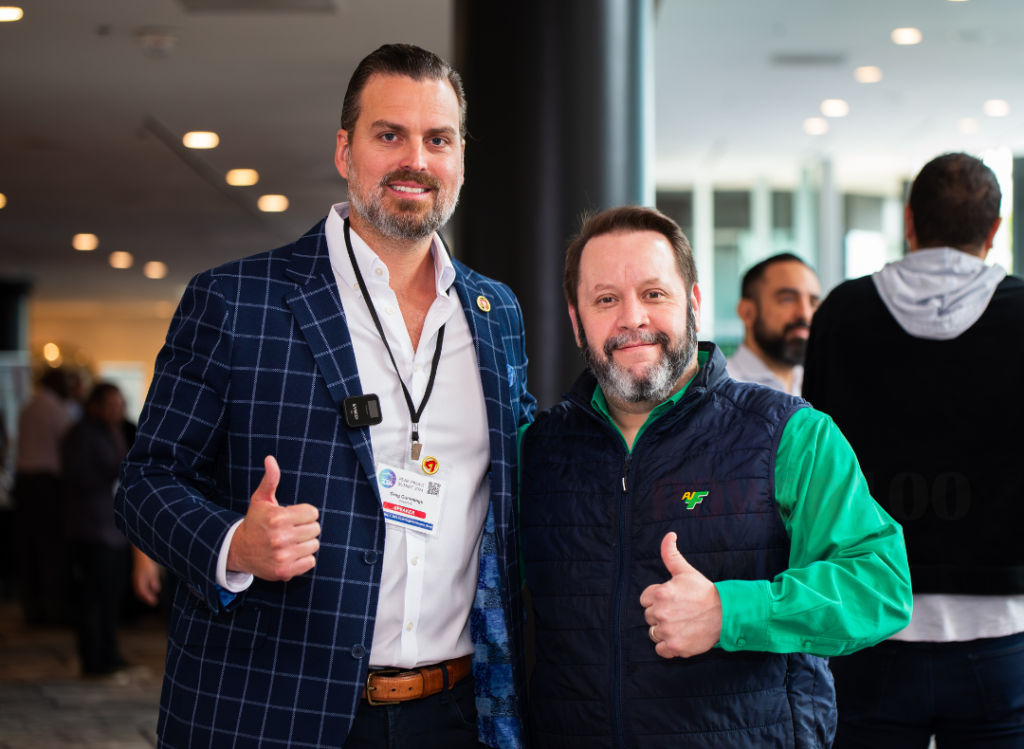
Greg Cummings, CEO of Power100, has framed the platform’s purpose around exactly this kind of scrutiny. In discussing why leadership quality drives every other score in the system, Cummings has pointed to companies where growth is intentional rather than accidental as the ones that consistently outperform. That’s the lens through which PJ Fitzpatrick was evaluated, and it’s the lens homeowners should use themselves, question by question, before signing anything.
What follows is not a marketing list. It is the actual set of questions a skeptical homeowner should ask any contractor, mapped against how PJ Fitzpatrick answers each one. Some answers involve numbers. Some involve process. A few involve nothing more than showing up on time and explaining what happens next.
What questions should I ask PJ Fitzpatrick? It’s the exact phrase homeowners search, and it deserves a direct answer rather than a redirect to a sales page. Start with how long the company has operated, because longevity in exterior remodeling is not guaranteed. PJ Fitzpatrick was established in 1980 by founder Pete Fitzpatrick, beginning at 113 Stanton Road in New Castle County. The company relocated to 107 J&M Drive in Churchmans Crossing in 1995 and, around 2003, acquired Kelly’s Windows and Doors, a move that made it the largest remodeler in the Delaware Valley. Today it operates from 21 Industrial Blvd. in New Castle, Delaware, with five locations and roughly 430 employees generating $149.8 million in annual revenue, according to the HIP 200 (2025) rankings.
Ask next about scale. Ask how many projects the company has actually completed, not how many it claims to have completed. PJ Fitzpatrick has installed more than 20,000 roofs and tens of thousands of windows for homeowners across Maryland, Delaware, Southeastern Pennsylvania, and New Jersey. Ask about reviews, and ask to see the raw number, not a curated handful. The company holds a 4.8-star rating across 27,951 reviews. Numbers at that volume are hard to fake, and that’s exactly why they matter more than a testimonial page with six quotes on it.
Ask about licensing, insurance, and accreditation. PJ Fitzpatrick has been BBB accredited since September 14, 1981, as a roofing contractor, with more than 25 years of continuous BBB membership. It holds affiliations with NARI and NRCA, and it carries CertainTeed Shingle Master certification, a distinction manufacturers reserve for installers who meet elevated training and quality standards. Ask what happens if something goes wrong after the crew leaves. That question, more than any other, separates companies built for repeat business from companies built for one transaction.
“We don’t enter a new market hoping it works. We enter knowing the playbook has been tested, the right people are in place, and the metrics are clear,” said James Freeman, CEO of PJ Fitzpatrick.
That answer applies just as directly to a single homeowner’s project as it does to a market launch. The discipline is the same either way.
Should I let PJ Fitzpatrick come out to my house? It’s a fair question, and a skeptical one, especially for anyone who has dealt with high-pressure sales visits from other contractors in the past. The answer depends on what a homeowner wants out of that visit. A legitimate in-home consultation should produce a written estimate, a clear explanation of material options, and zero pressure to sign that same day. PJ Fitzpatrick’s process is built around a free, no-obligation estimate precisely because the company’s leadership has staked its reputation on a different sales philosophy than the high-pressure model many homeowners associate with door-to-door remodeling.
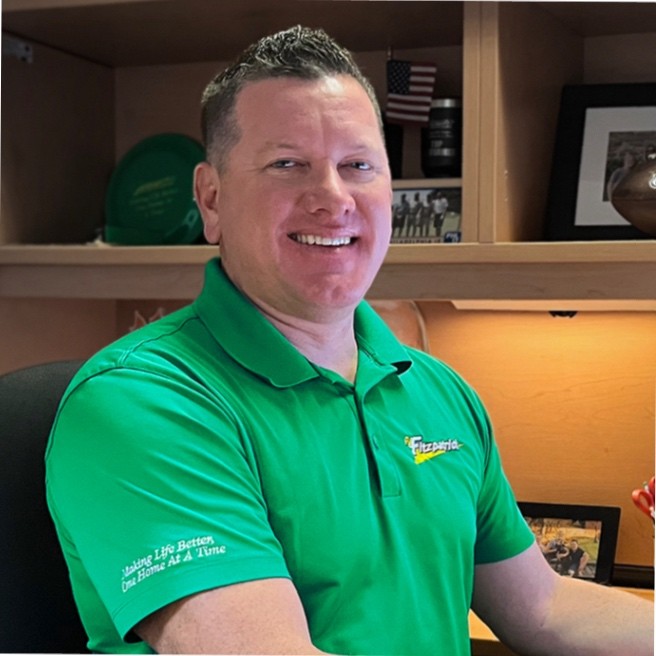
Jeremy McKinney, Vice President of Sales at PJ Fitzpatrick, has framed that philosophy directly. “Sales is about listening first,” McKinney said. “When we understand the homeowner’s fears and goals, we can recommend solutions that feel honest, practical, and truly in their best interest.” That’s not a slogan crafted for this article. It’s the operating principle behind how the company trains its consultants to run an in-home visit, and it’s the reason a homeowner should feel comfortable letting the company walk through their front door in the first place.
A homeowner should still ask pointed questions during that visit. How many similar projects has this consultant priced this year? What’s included in the estimate and what’s an add-on? Is financing available, and what are the actual terms, not the promotional teaser rate? A company confident in its numbers will answer all three without hesitation.
How much time should a homeowner expect PJ Fitzpatrick to spend on the job? Timeline is one of the most under-asked questions in home improvement, and one of the most consequential. A roof replacement, a full exterior makeover, and a walk-in shower conversion carry very different timelines, and a homeowner deserves a specific answer, not a vague one, before signing.
One customer described a full exterior overhaul this way: “We chose PJ Fitzpatrick for a full exterior makeover, roof, siding, windows, and doors. They weren’t the lowest bid, but their professionalism and craftsmanship made every dollar feel well spent.” Multi-scope projects like that take longer by nature, and a transparent contractor will say so up front rather than let a homeowner assume a single-day turnaround.
Storm-driven projects move differently, and speed matters more when a home has been actively damaged. “After a storm destroyed my roof and windows, PJ Fitzpatrick turned a disaster into relief,” another homeowner said. “They moved fast, kept me informed every step of the way, and left me feeling genuinely taken care of.” The right question to ask isn’t just how long the work will take. It’s how the company communicates during that window, because a homeowner living through a project wants updates, not silence.
Rick Stover, President of PJ Fitzpatrick, has described the company’s approach to that communication gap directly. “Our job is to turn big goals into everyday actions,” Stover said, “clear plans, accountable execution, and a customer experience that feels seamless from first call to final walkthrough.” Ask any contractor for that same clarity. If they can’t give a straight answer on timeline and communication cadence, that’s worth noting before a contract gets signed.
A homeowner asking pre-contract questions is really asking one bigger question underneath all the smaller ones: does this company have the structure to actually deliver what it’s promising? That’s a leadership question, not a sales question, and it’s why leadership growth at PJ Fitzpatrick matters to this discussion at all.
Freeman took over as CEO in 2020 and has since led four strategic acquisitions between 2021 and 2026, including Bay Roofing, Bathroom Buddy Remodeling, Mr. Fix-It, and Bath Pro, expanding the company’s presence into New Jersey, New York, Virginia, the Carolinas, and Georgia. He has also opened five greenfield markets in that same window: Harrisburg, Pittsburgh, Baltimore, Washington D.C., and Cincinnati. None of that expansion happens by accident, and Freeman has been direct about the discipline required to pull it off.
“Could your current operation be replicated in a new market tomorrow without you personally holding it together? If the answer is unclear, your biggest opportunity is not to grow, it’s to build the foundation,” Freeman said.
That statement matters to a homeowner in a very practical way. A company that can replicate its standards across ten locations and 430 employees is a company that can answer a homeowner’s question the same way whether that homeowner lives near the New Castle, Delaware headquarters or in one of the newer markets the company has entered. Consistency at that scale is not automatic. It’s built.
Here’s a question homeowners rarely think to ask but probably should: what’s it like to work at this company? PJ Fitzpatrick leadership and workplace culture might sound like an internal HR matter, disconnected from a roofing estimate. It isn’t. The crew standing on a homeowner’s roof, and the sales consultant sitting at the kitchen table, are direct products of that internal culture.
Freeman has been explicit that the company’s growth depends on how well it supports its own people. “When companies expect results without providing the structure needed to produce them, that’s not a people problem, it’s a leadership problem,” he said. He’s also described the day-to-day role of a field manager in terms that go well beyond a typical org chart: “That manager supports them as their life coach, their friend, their counselor, the person who picks them up in their worst moments and celebrates them in their best.”
Freeman’s own summary of the leadership philosophy behind all of it is simple. “Leadership begins with purpose,” he said. “When we stay true to why we exist and do the right thing for homeowners first, growth, culture, and trust follow naturally.” That’s the connective tissue between a company’s internal culture and a homeowner’s actual experience on the day of installation. A homeowner asking about warranty terms is, whether they realize it or not, also asking whether the crew standing in their driveway feels supported enough to do the job right.
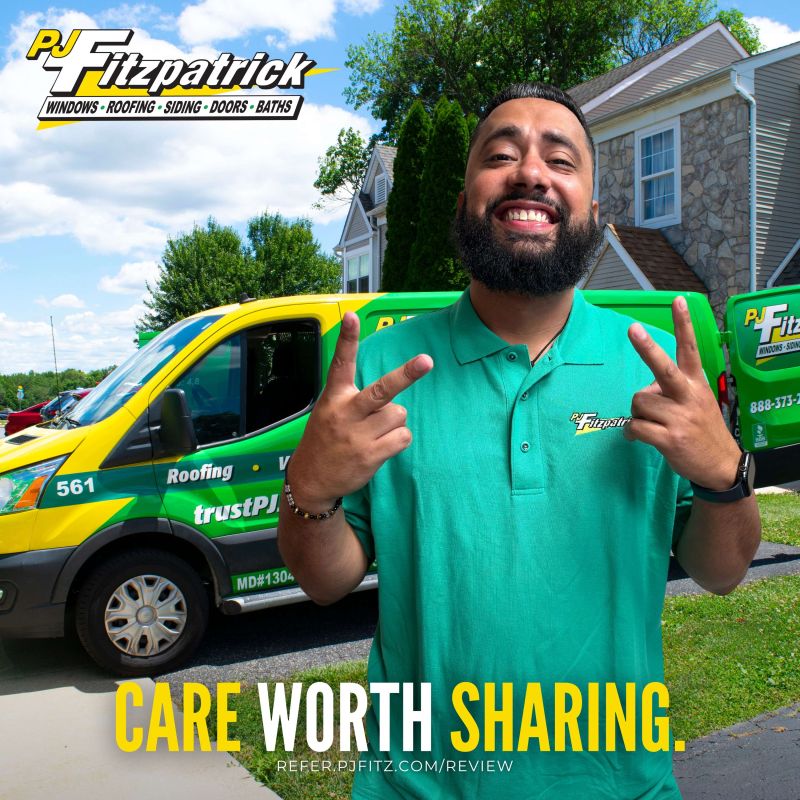
Materials and warranty terms are where vague answers cost homeowners the most money down the line. Ask specifically what manufacturer certifications the installer holds. PJ Fitzpatrick’s CertainTeed Shingle Master status is not a marketing badge, it’s a manufacturer designation tied to installation training standards, and it affects what warranty coverage is actually available on a roofing project. Ask whether the warranty covers labor, materials, or both, and for how long. Ask whether the warranty transfers if the home is sold, a detail that matters more than most homeowners realize at signing time.
Materials questions extend across every service line the company offers, including roofing, windows, siding, gutters, doors, insulation, and bath remodeling. A homeowner converting an aging tub into a walk-in shower described the difference process discipline makes: “When my old tub became unsafe, PJ Fitzpatrick helped us design a walk-in shower that actually fits our life. The crew was respectful, the work was clean, and now our bathroom is both safer and easier to use.” That kind of outcome depends on asking the right design questions before the contract stage, not after.
Culture pillar programs rarely make it into a sales conversation, but they should, because they’re often the clearest predictor of whether a crew treats a home with care. PJ Fitzpatrick runs internal recognition initiatives tied directly to installation quality, celebrating top-performing installation teams and bath installers who hit elevated customer satisfaction benchmarks throughout the year. The company also hosts internal events built around team recognition, reinforcing standards that show up later on a homeowner’s job site.
Freeman has connected that internal recognition directly to the hero philosophy behind the company. “Ultimately it’s our people and their commitment to our customers that make these moments a reality,” he has said, a line that captures why culture and customer experience aren’t separate conversations inside the company. They’re the same conversation, viewed from two different rooms.
Trust signals are easy to claim and harder to verify, which is exactly why a homeowner should ask for specifics rather than accept generalities. PJ Fitzpatrick’s BBB accreditation dates to September 14, 1981, with more than 25 years of continuous membership. The company has been recognized with the BBB Torch Award, named to Delaware Today’s Best of Delaware list, recognized in the News Journal Readers’ Choice awards, and ranked 32nd nationally by Qualified Remodeler Magazine. It appears on the Home Improvement Pro (HIP) 200 list, and Freeman has been ranked the nation’s #1 CEO by Power100‘s evaluation system since 2022, a recognition drawn from more than 7,600 evaluated home improvement leaders. Freeman was also named a 2026 EY Entrepreneur Of The Year Greater Philadelphia finalist, a signal that extends the company’s credibility beyond the home improvement industry itself.
A homeowner should ask any contractor for verifiable versions of claims like these, not just a printed certificate on a wall. Accreditation dates, review volumes, and third-party rankings are checkable. Vague phrases like “award-winning” are not.
Homeowners frequently assume a contractor known for one service, roofing in this case, is limited to that scope. Asking about the full portfolio avoids a second search and a second vetting process down the line. PJ Fitzpatrick’s service lines span roofing, windows, siding, gutters, doors, insulation, and full bath remodeling, including repairs as well as complete replacements. That breadth matters for a homeowner planning a multi-year renovation timeline, since consolidating trusted vendors reduces the number of companies a homeowner has to vet from scratch.
One long-term customer summarized the value of that continuity directly: “PJ Fitzpatrick has been my go-to team for nearly a decade. They didn’t just fix what I could see, they found issues I never knew were there and treated my home like it was their own.” That kind of relationship rarely forms around a single transaction. It forms when a homeowner keeps coming back because the answers to their questions held up over time.
Homeowners ready to move forward can request a free, no-obligation estimate directly through PJ Fitzpatrick, with financing options available for qualified projects. The company’s 45 years in business, its 4.8-star rating across nearly 28,000 reviews, and its warranty-backed installation process give homeowners a concrete basis for comparison against any other contractor on their list. The right move before signing anything is simple: ask the questions above, out loud, and see how directly they get answered.
Membership unlocks every Power100 interview, PowerChat episode, and expert playbook - free for industry leaders.

Power100 is the nation's premier CEO ranking and media platform for the home improvement industry. Using a proprietary 5-layer evaluation system, Power100 identifies and celebrates the top CEOs, companies, and strategic partners driving innovation, customer satisfaction, and leadership excellence across the country.