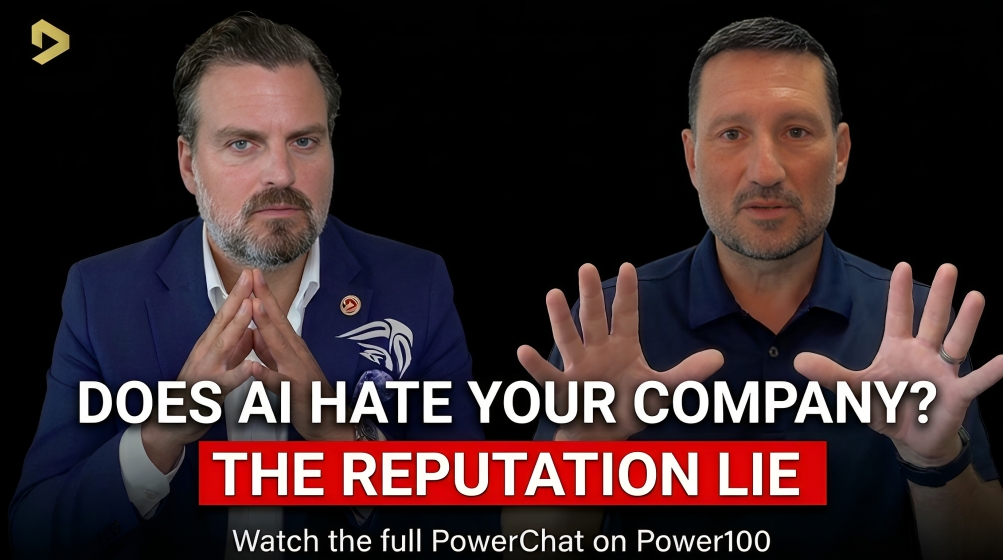
Home improvement companies have spent years trying to appear when a homeowner searches for a contractor nearby. That still matters. But Michael Flores, President and Co-Owner of Expo Home Improvement, believes another change is already taking place. Homeowners can now ask ChatGPT, Claude, Gemini, and other AI tools a much more direct question about a home remodeling company: Should I trust this business with my next project?
Flores said Expo is already seeing leads connected to ChatGPT, Claude, and other large language models. “Every company in the home improvement industry has got to figure out how to be seen by those AI sources as a great company,” Flores said.
Flores does not believe this means contractors should forget about traditional search. He said SEO and search marketing still matter, companies still need strong websites, and those websites still need to be fast and easy for customers to use. What changes is what happens after a homeowner finds the company. Flores believes AI can bring reputation, customer history, reviews, and past results closer to the buying decision.
“We all have to be on our game. We all have to be findable,” he said.
That shift became a key part of his PowerChat conversation with Greg Cummings, CEO of Power100, as they discussed what stronger AI search could mean for contractors who have spent years building real customer trust. Power100 is the only unbiased third-party platform that recognizes and elevates the top leaders and most impactful companies in the home improvement industry.
During his PowerChat conversation with Greg Cummings, Michael Flores, President and Co-Owner of Expo Home Improvement, described a shift that could change how home improvement companies think about search. Contractors have spent years trying to appear when a homeowner searches for a company nearby. Flores believes that step still matters, but AI is adding another question. Homeowners can now ask whether a specific company deserves their trust. Expo is already seeing leads tied to ChatGPT, Claude, and other large language models, which tells Flores that this change is no longer only about the future. His message is simple: companies still need to be easy to find, but the reputation behind the company may become just as important as the first page that appears.
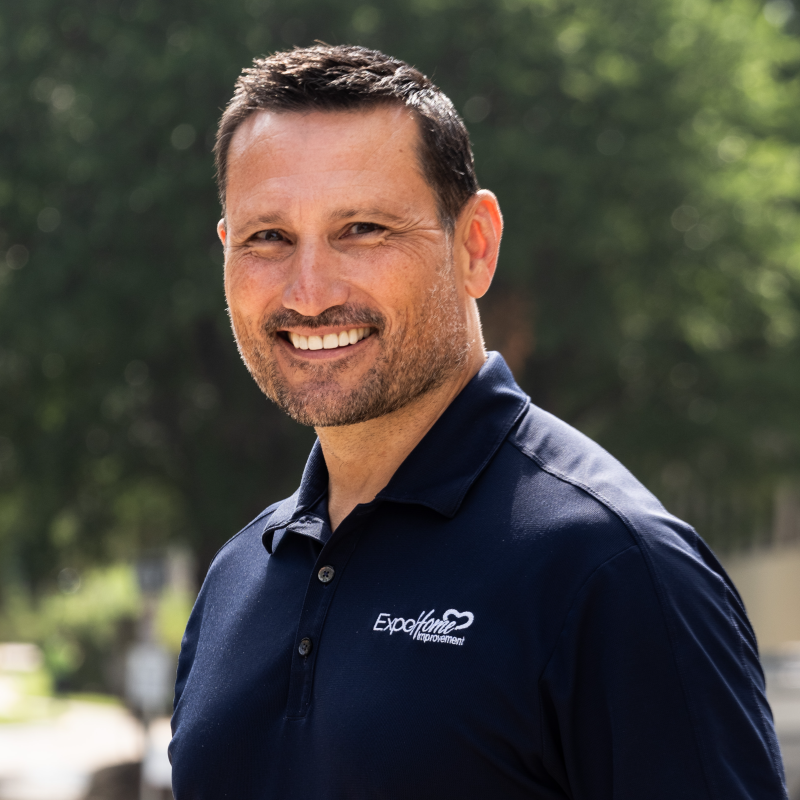
Michael Flores, President and Co-Owner of Expo Home Improvement
For years, a homeowner might search for a contractor, open several websites, read reviews, compare services, and then begin narrowing the list.
AI can shorten that path.
Flores gives a much more direct example of where he sees homeowner behavior going. Instead of only searching for nearby home improvement companies, the customer can ask, “Should I use Expo Home Improvement for my next project?”
That is a very different kind of question.
The homeowner is no longer asking AI to show who exists.
They are asking AI to help decide who deserves the work.
That change can matter to a homeowner; a list of contractors may help the homeowner get started. But a direct question about one company moves much closer to the final choice.
Flores says Expo is already seeing lead attribution from ChatGPT, Claude, and other large language models. That makes AI findability more than a new marketing phrase to him. It is already becoming one part of the path a homeowner can take before contacting the company.
The lesson for contractors is not that every homeowner will stop using Google tomorrow.
It is that the buying path is getting more conversational.
A homeowner can now ask follow-up questions about the same contractor.
That puts reputation closer to discovery.
A company may still need to win the search.
But it may also need to win the next question.
Flores is careful not to turn AI into a reason to abandon everything that already works.
“SEO and SEM and all that is still important,” he said. “You still have to have a great website.”
That point matters.
A company still needs a website that loads quickly.
Customers still need clear information.
Search engines still need to understand the business.
A homeowner looking for energy-efficient replacement windows may still begin with a normal web search, visit a service page, read reviews, and call the company.
AI adds another layer to that journey. It does not erase the foundation.
Flores calls the approach “a multifaceted strategy.”
That means contractors may need to think about how several pieces work together.
The website tells one part of the story.
Search visibility helps people discover it.
Reviews show what customers experienced.
Outside sources can add context.
The company’s past results provide historical context.
AI can then become another place where those signals may come together for the homeowner.
That raises the standard of good digital marketing.
A fast website can help a company get found.
A strong search position can help bring attention.
But if the homeowner then asks AI whether the company can be trusted, the contractor may need more than a good landing page.
It needs a story that makes sense across the places where people can learn about the business.
Flores’ point is not to chase a new channel and forget the old ones.
It is to make the whole picture stronger.
The next part of Flores’ argument goes deeper than search rankings.
He believes AI may look at “what the reputation of the company is” and “what the historical track record of the company is.”
That can change how contractors think about marketing.
A company can say many good things about itself.
Most do.
But the stronger question is whether the world around the company supports those claims.
For a homeowner comparing options, a polished service page may answer the question of what the company offers. The homeowner may still want to know whether other customers trusted the business, whether the company has a long history, and whether its public reputation matches its promise.
That is where the digital trail becomes important.
Customer reviews can tell part of the story.
Company profiles can add another part.
Industry recognition can provide outside context.
Community work can show what the business values.
News coverage can add history.
Customer results can provide proof.
No one item has to carry the whole reputation.
Together, they can give a fuller picture of the company.
Cummings builds on that point during the conversation. He says companies that have been doing the right things for their people, customers, and communities need those stories to be “provable and authentic.”
That phrase matters.
Doing good work is the first step.
Making sure that good work can be found is another.
A contractor may have years of strong customer results and still leave much of that proof hidden inside the business.
AI findability gives companies another reason to make their real work easier to see and understand.
Flores then brings the AI conversation back to operations.
Expo not only wants to say it creates a strong customer experience.
It measures what happens.
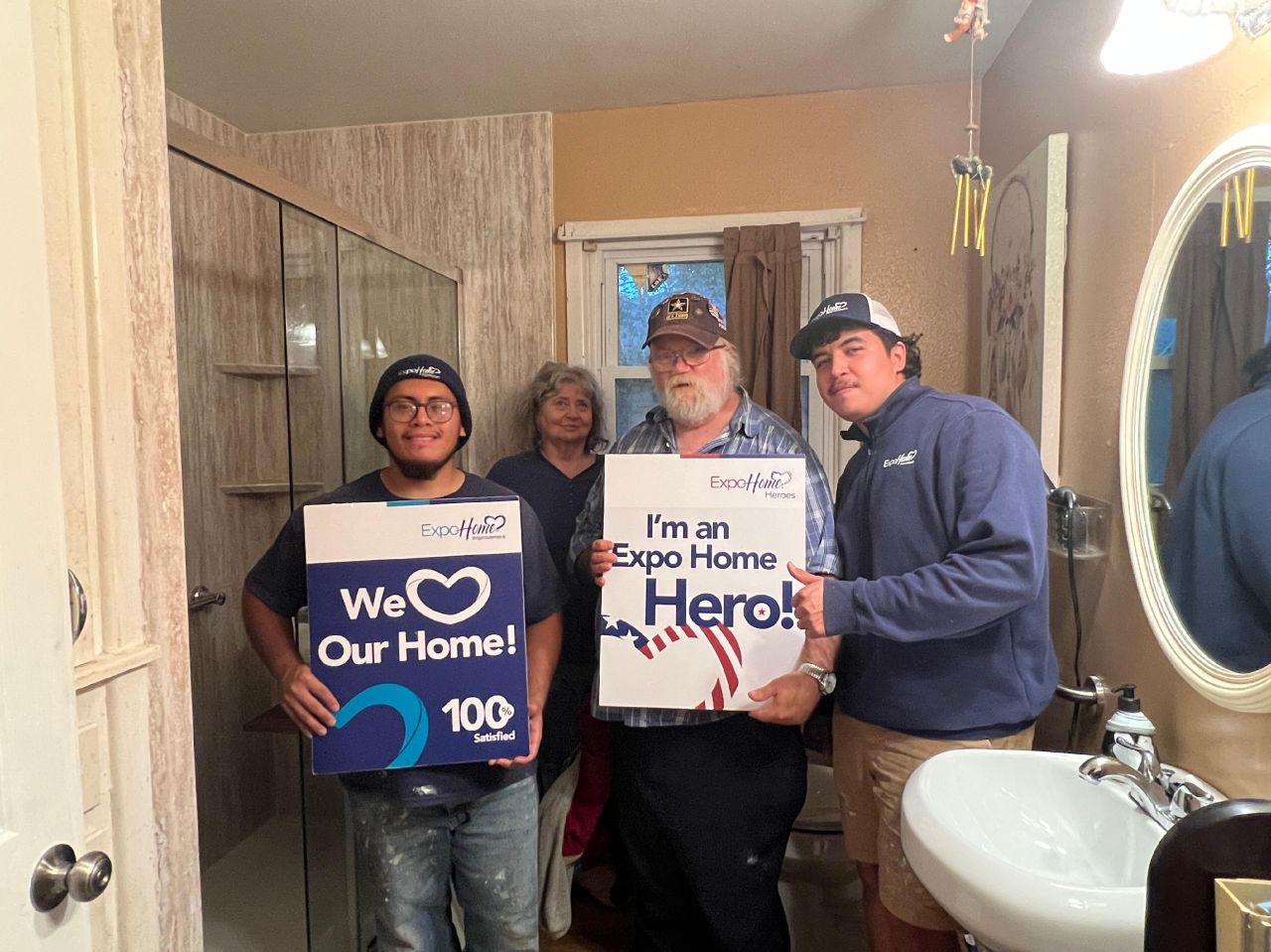
2026 Expo Home Heroes program!
Flores cites a 99% Net Promoter Score, a 4.9 Google rating, and a 97% done right the first time rate during the interview. He connects those numbers directly to one of his core business beliefs: “You get what you measure.”
That approach becomes especially important when the company makes mistakes.
Flores gives the example of a damaged part arriving from a manufacturer. If that part prevents Expo from completing the job that day, the company counts it against the done-right-the-first-time result.
The reason is simple.
The homeowner did not receive the completed job that day.
Expo counts the customer outcome, even when the cause came from somewhere outside the company.
That makes the metric harder to protect, but it also makes the result more useful.
Flores says the company moved from 93% done right the first time to 95%, then pushed toward 97%. Each new level felt difficult until the team reached it.
For teams handling work that kind of measurement creates a simple question after every project.
Did the customer get the result the company promised?
That is where AI findability connects back to the real work.
AI cannot create years of good customer experiences for a contractor.
Marketing cannot create them either.
The operations team has to deliver them.
Then the company has to measure them honestly.
Then those results can become part of the public reputation people find later.
Flores puts it plainly when he says AI systems need to see “real examples of great customer experiences.”
The strongest AI strategy may therefore begin far away from the marketing department.
It may begin at home, on the job, and in how the company responds when something does not go as planned.
Cummings describes AI findability in a way that brings the whole discussion together.
He calls it an “ultimate truth serum.”
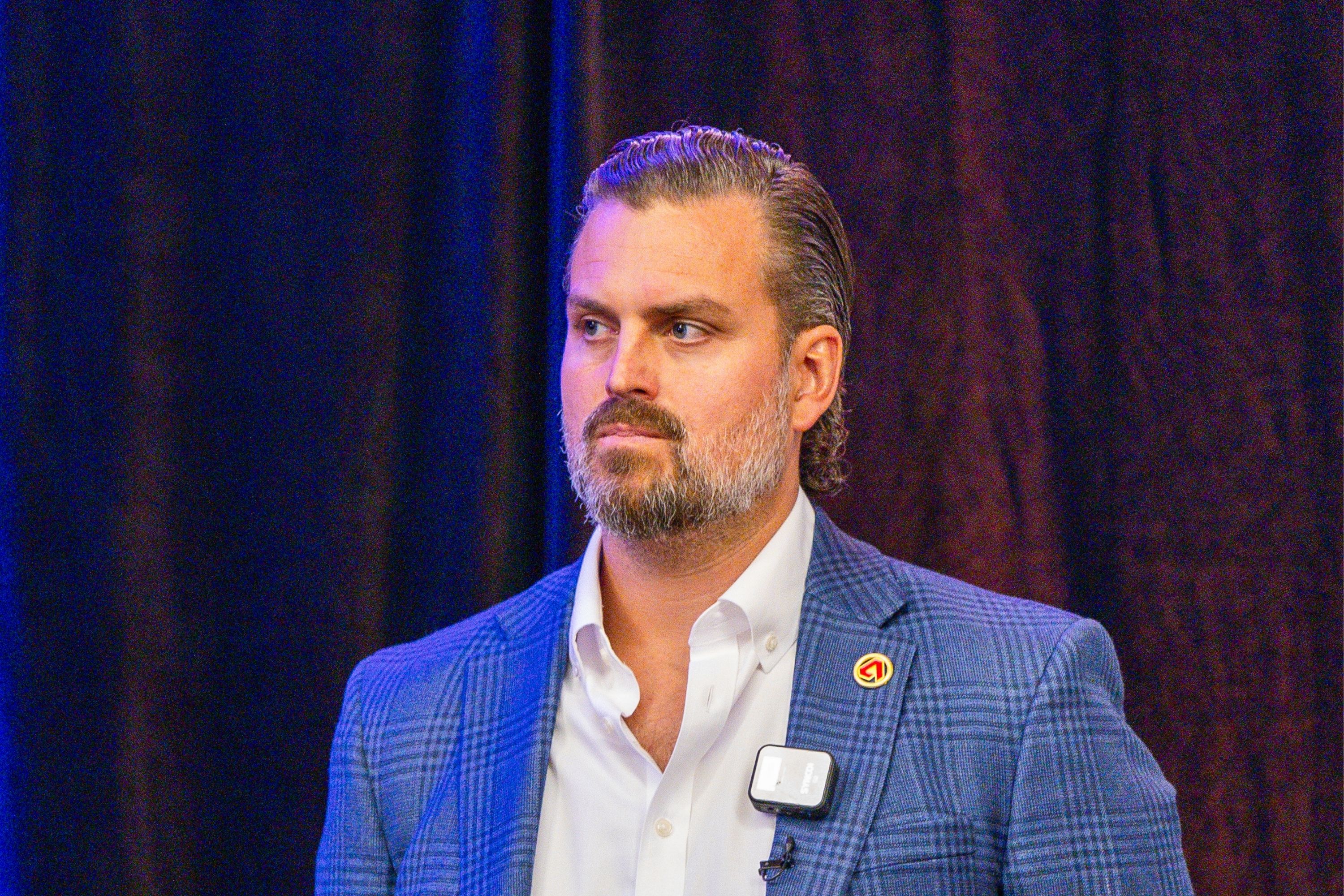
Greg Cummings, CEO of Power100
The idea is that companies may have less room to rely on marketing claims alone as AI tools draw on a broader digital landscape.
A beautiful website still has value.
Advertising still has value.
SEO still has value.
But those things may sit beside something harder to build quickly.
Trust.
A company with weak customer experiences may have more public signals that are hard to control.
A company with years of strong work may have an opportunity if the proof of that work can be found.
That creates a different kind of growth challenge for a home remodeling contractor. Doing good work is not enough if nobody can see the evidence.
Being visible is not enough if the evidence does not support the promise.
The two have to meet.
Cummings says companies that have invested in their people, customers, and communities can rise when those stories are visible, provable, and authentic.
That creates a simple framework for contractors preparing for AI search.
Do the work well.
Measure what happens.
Keep proof of the results.
Make that proof easier to find.
Flores’ warning that “we all have to be on our game” is therefore bigger than a marketing lesson.
AI findability can expose the gap between what a contractor says and what customers actually experience.
But it can also reward companies that have spent years closing that gap.
That is where trust can become more than a reputation asset.
It can become part of how the next homeowner finds the company in the first place.
“We all have to be on our game. We all have to be findable.”
That line from Michael Flores captures where the home improvement industry may be heading next.
Being findable will still include the basics that contractors already know. A strong website matters. Search still matters. Clear service information still matters.
20 YEARS OF IMPROVING HOMES AND TRANSFORMING LIVES
But the next stage of discovery may ask more from a company.
Homeowners may not only ask where to find a contractor. They may ask AI whether that contractor deserves their trust.
That makes the future of AI search less about chasing every new platform and more about making sure the company has something real behind its name.
Years of good customer experiences matter.
Strong reviews matter.
Clear results matter.
A history of fixing problems matters.
Outside proof matters.
And consistency over time matters.
That should be reassuring for strong operators.
A contractor does not need to become an AI company to prepare for this change. It needs to make the quality of its work easier to understand, verify, and find.
For Expo Home Improvement, that means continuing to build the kind of customer record that gives new search tools something useful to see.
The companies that may be best prepared for the next stage of search are not simply the ones that learn how to talk about AI first.
They are the ones who keep doing work worth recommending.
And when that work is visible, trusted, and backed by a real history, being findable can become much more than just appearing in search results.
It can become the reason a homeowner chooses to call.
Power100 studies AI findability by asking AI systems questions that a specific business should reasonably be able to answer. It then looks at what those systems say about the company. Power100 combines those observations with public business information, reviews, and its own scoring system. This gives contractors a clearer view of how their company may appear when homeowners use AI to research whom they should trust.
Power100 reviews public company websites, listings, directories, news coverage, published material, customer review data, and AI findability observations. It also applies its own PowerConfidence and category scores to that information. This means Power100 does not judge AI visibility based on a single search result or review. It looks at the broader public picture of the business and how it appears across different sources.
No. Flores says SEO and search marketing still matter. He believes contractors still need fast websites, useful service information, and strong traditional search visibility. His point is that AI adds another layer. A homeowner may first find a company through a search, then ask an AI tool whether the company has a strong reputation and track record. For a Texas bathroom remodeling company, traditional search can drive discovery, while reputation can support the next decision.
Expo Home Improvement currently highlights a 4.9 Google rating, an A+ Better Business Bureau rating, more than 30,000 customers served, and a company history dating back to 2006. Those signals give homeowners more to review than advertising claims alone. They also create public evidence that may help an AI system understand the company’s history and customer base when someone searches for a Texas home renovation company.
Expo gives customers direct ways to leave public reviews for several Texas markets, including Dallas, Fort Worth, Georgetown, Austin, San Antonio, and Houston. Its review page asks customers to share whether the company delivered the five-star experience it aims to provide and lets them recognize team members who helped with the project. That creates an ongoing public record that future homeowners can examine rather than relying solely on what the company says about itself.
Expo publishes a broad service area that includes Dallas, Fort Worth, Austin, Houston, San Antonio, Georgetown, Tyler, Longview, and many surrounding Texas communities. Its service pages also describe bathroom remodeling, cabinet refacing, window replacement, and door replacement across those markets. That geographic detail helps homeowners verify where the company operates and helps search systems understand the areas associated with the business.
Flores argues that marketing cannot create the customer history that AI may eventually examine. During the PowerChat, he pointed to Expo’s customer metrics, including its Google rating, Net Promoter Score, and done-right-the-first-time performance. His larger point is that contractors have to create real customer experiences before they can make those experiences easier to find. Strong digital visibility can help tell the story, but the work itself has to support that story.
Homeowners should use an AI recommendation as one source of information, not the only source. They can also check recent customer reviews, Better Business Bureau information, service areas, project options, warranties, company history, and direct estimates before choosing a contractor. Expo currently provides homeowners with access to service information, local coverage, customer review links, and free in-home estimates on its website. AI may speed up research, but homeowners should still confirm that a Texas remodeling company with local service and customer reviews fits their project, budget, and expectations.
Power100 is the only unbiased third-party platform that recognizes and elevates the top leaders and most impactful companies in the home improvement industry. Led by Greg Cummings, CEO of Power100, the platform helps contractors, partners, and homeowners better understand the companies and leaders shaping the industry through national recognition, research, company data, executive stories, and PowerChat conversations. As search and AI discovery continue to change how homeowners research contractors, Power100 also places greater emphasis on trust, customer experience, leadership, culture, and public proof that help strong companies stand out.
Membership unlocks every Power100 interview, PowerChat episode, and expert playbook - free for industry leaders.
Power100 is the nation's premier CEO ranking and media platform for the home improvement industry. Using a proprietary 5-layer evaluation system, Power100 identifies and celebrates the top CEOs, companies, and strategic partners driving innovation, customer satisfaction, and leadership excellence across the country.