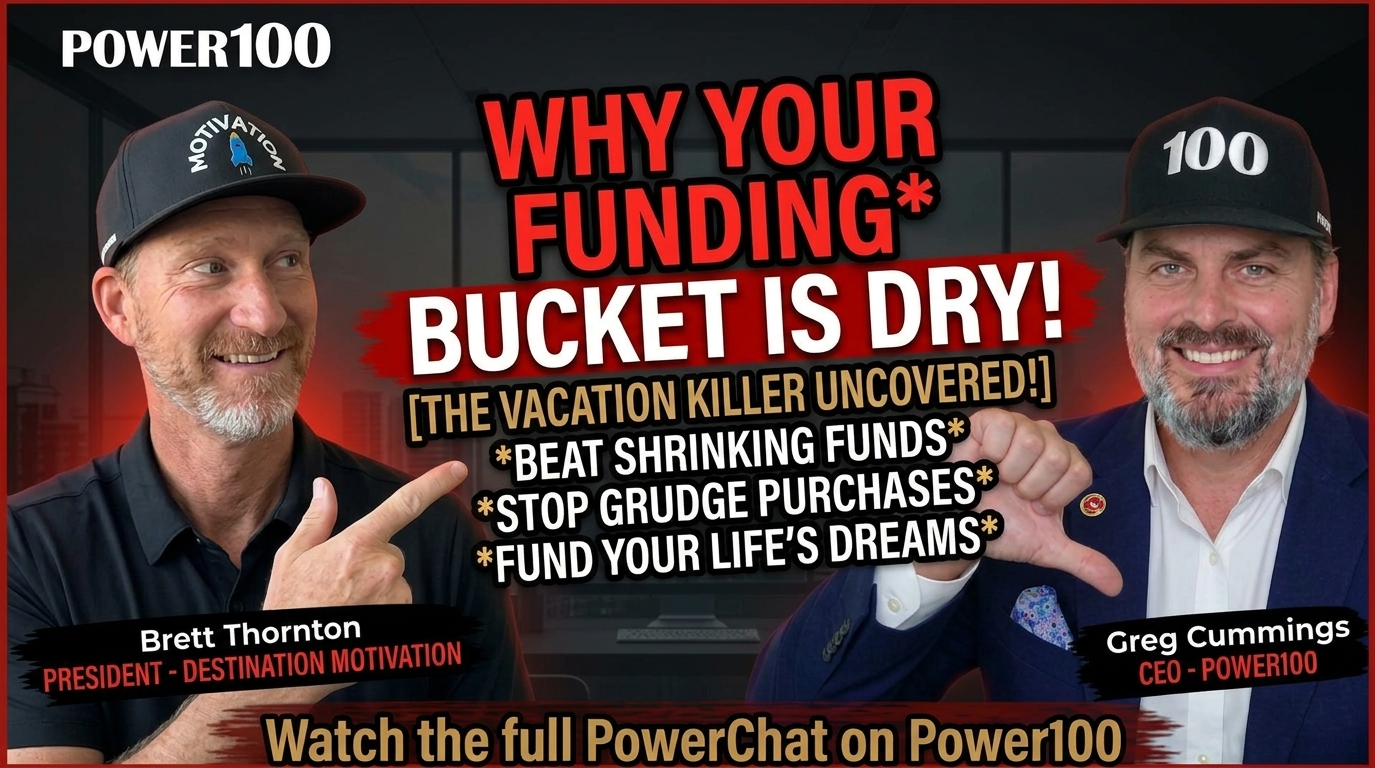
Home improvement contractors can have a great product, a trusted team, strong reviews, good financing, and a clear sales process and still lose the job. The reason may have little to do with the contractor down the street. Families are watching their money more closely, and a new roof, windows, siding, gutters, bath, or HVAC system may suddenly have to compete with a family trip, an unexpected bill, or another part of life that matters just as much.
Destination Motivation, led by Brett Thornton, President at Destination Motivation, works inside that challenge by helping home improvement companies create more value around the sale. Its approach can serve as a customer experience program for home improvement contractors, helping companies give homeowners another reason to move forward while also supporting closing rates, customer retention, and the post-contract experience.
That challenge became the center of a PowerChat conversation between Thornton and Greg Cummings, CEO of Power100. Rather than looking only at how contractors compete with one another, the discussion explored what happens when a homeowner needs the project but also wants to protect the money set aside for family plans, travel, and everyday life.
Power100 is the only unbiased third-party platform that recognizes and elevates the top leaders and most impactful companies in the home improvement industry. Through PowerChat conversations like this one, Power100 brings leaders closer to the real issues shaping sales, customer trust, growth, and the industry’s future.
One of the hardest parts of selling home improvement is that the homeowner may need the project but not want to spend the money on it right now.

Brett Thornton, President at Destination Motivation
A roof may be leaking. Windows may no longer work the way they should. Siding may need to be replaced. An HVAC system may be near the end of its life. These are real needs, but they can also arrive at the worst time for the family paying for them.
During his PowerChat with Cummings, Thornton described many home improvement projects as purchases people make because something has pushed them to act.
“Most of them are grudge purchases,” Thornton said.
His point was not that homeowners do not care about their homes. It was that many of these projects were not where the family planned to spend its extra money.
A homeowner may love the idea of beautiful new windows. But if the windows were working well, there may never have been a sales appointment. The same can be true for a roof. If it were not leaking or showing signs of failure, the homeowner may have preferred to keep that money for something else.
That is where Thornton sees a deeper problem for contractors.
The sales team may think it is competing against three or four other estimates. The homeowner may actually be making a much harder choice.
“Most families have one pile of funds,” Thornton said.
That one pile may need to cover the home, travel, family experiences, emergencies, and everything else that comes with daily life. When a major home project suddenly takes up a large part of that money, the homeowner may feel that saying yes to the house means saying no to something else they care about.
This changes the way contractors should think about the sale.
The real competition is not always another roofing company, window company, or remodeler. It can be the vacation the family has talked about all year. It can be the money they want to keep in savings. It can be another expense that feels more exciting or more urgent.
That is why the question becomes bigger than who has the lowest price.
The better question is how a contractor can help the homeowner see enough value in moving forward that the project does not feel like it took something important away from their life.
That question sits at the heart of Thornton’s message and creates the path into how Destination Motivation approaches the home improvement customer journey.
During his PowerChat with Greg Cummings, Brett Thornton, President at Destination Motivation, moved the sales conversation beyond products, prices, and competing estimates. His point was that many homeowners are making a much harder choice. They may need the project, trust the contractor, and believe in the work, but they still have to decide what to do with the rest of their money once the project is paid for.
That is why Thornton believes the strongest contractors need to understand more than the project in front of them. They need to understand the life happening around it. The same family that needs a roof may also want a vacation. The same homeowner replacing windows may be trying to protect savings. The same couple buying siding may already be thinking about another expense coming next month.
From that point, the conversation opened into a larger lesson about value, margin, buyer confidence, customer experience, and the kind of company needed to make any sales tool work well.
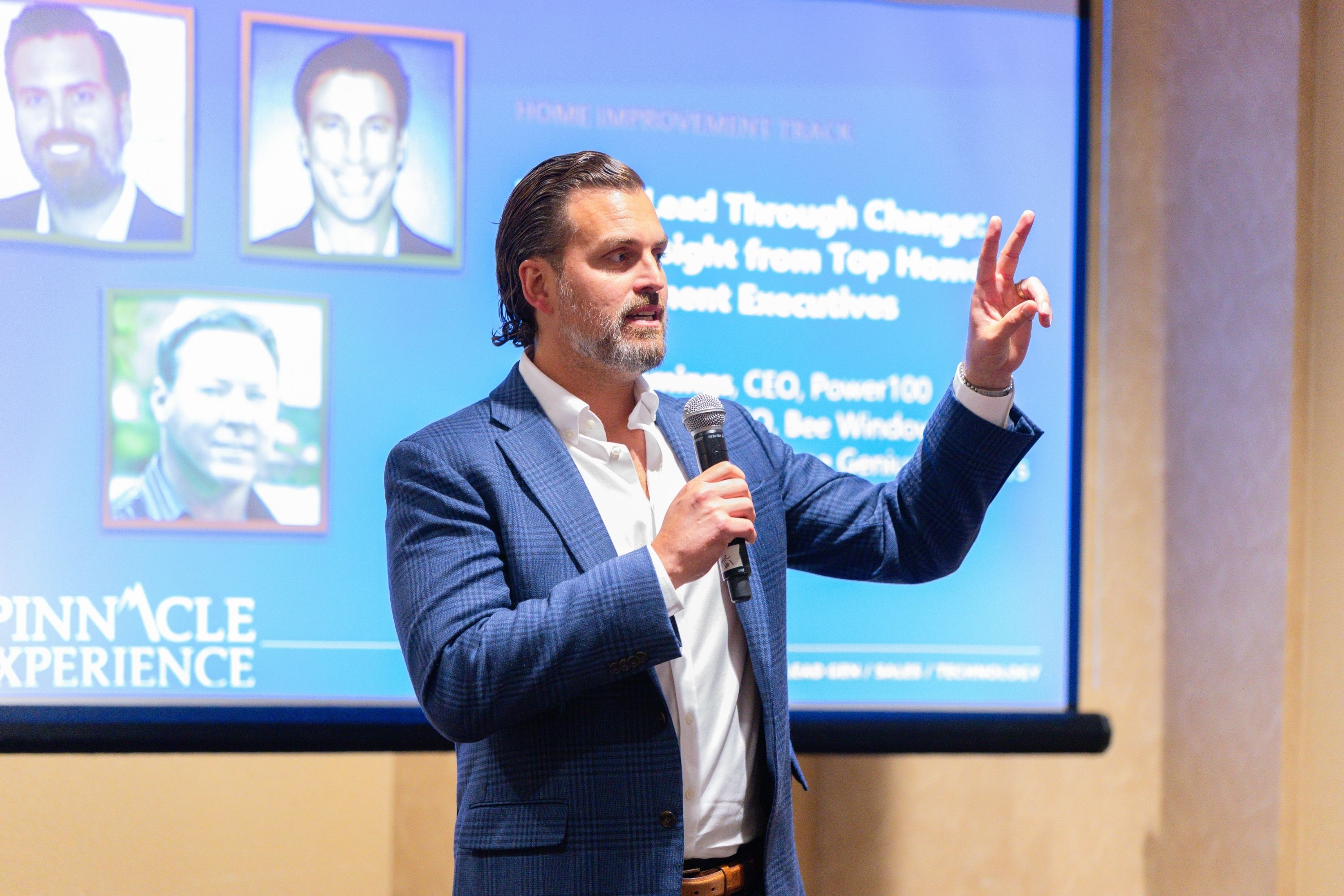
Greg Cummings, CEO of Power100
Thornton’s view starts with a simple fact. Many home improvement projects show up before the homeowner wanted to spend the money.
A roof begins to leak. Windows stop working well. Siding starts to fail. An HVAC system reaches the point where another repair may no longer make sense.
The homeowner may understand that the work needs to be done. That does not mean the money was waiting for it.
“Most families have one pile of funds,” Thornton said.
That one pile may be carrying several plans at once. It may hold money for travel, savings, school costs, another repair, or something the family has been looking forward to for months.
This is where the sales challenge becomes more personal.
A contractor may believe the homeowner is comparing one company with another. The homeowner may actually be asking if the project can wait long enough to protect something else.
Those questions matter because a lost sale does not always mean the homeowner disliked the contractor. It may mean the homeowner was not ready to give up what the money represented.
That changes how leaders should approach increasing close rates for a home improvement company. Better selling is not only about giving more facts. It is also about understanding the pressure sitting on the other side of the table.
Thornton’s message is that contractors who understand that pressure can have a better talk with the homeowner. They can focus less on pushing the project and more on showing why moving forward can still make sense for the family.
Once the homeowner hesitates, many sales teams reach for the same answer.
Lower the price.
Thornton said that the first price drop can often be hundreds or even thousands of dollars. It may help move the conversation forward, but it also gives away part of the value the contractor worked to build.
That is where he sees another option.
Instead of asking how much money must come off the job, the contractor can ask what meaningful value can be added to the experience.
Travel matters because it connects with something people already want. Families want time together. They want memories. They want a break. They want experiences they can look forward to.
Destination Motivation uses that emotional value to help change the homeowner’s choice.
The project no longer has to feel like the thing that took the vacation away.
It can become the purchase that still allows the family to have something exciting ahead of them.
That is the deeper idea behind closing more remodeling jobs without lowering prices. The goal is not to hide the cost of the project. The goal is to make the full value of saying yes feel stronger.
Thornton explained that contractors often know exactly what their first price drop looks like. If part of that discount can be protected by offering something the homeowner values more, the company may be able to protect margin while still giving the buyer a stronger reason to move forward.
That is why the vacation offer should not be viewed as a simple gift.
It becomes another way to answer the homeowner’s real concern.
The home needs the work.
The family still wants the experience.
The contractor now has a chance to connect both.
Thornton then took the conversation to one of the most fragile points in a home improvement sale.
The contract has been signed.
The sales representative leaves.
The door closes.
Then the homeowner has time to think.
“What did we just do?” Thornton said, describing the kind of question that can come next.
The excitement of making a decision can quickly turn into doubt. The homeowner may wonder if they paid too much. They may question part of the package. They may remember another company they spoke with. Another contractor may even call with a lower offer.
This is where buyer’s remorse can become dangerous.
Destination Motivation tries to change what happens during that window.
Thornton explained that the sales representative can leave the homeowner knowing that information about the travel experience is already waiting in their inbox. The homeowner also knows that someone will call the next day to walk them through it.
Now there is another conversation happening inside the home.
Instead of only asking whether they made a mistake, the homeowners can begin thinking about where they could go.
The next day call adds another layer.
A real person speaks with the customer, asks about the contractor experience, explains the travel process, and listens for concerns. If something sounds wrong, Thornton said that concern can be sent back to company leadership so the issue can be addressed.
That makes the process more than a contractor cancellation reduction program. It creates another human touchpoint when the customer may need confidence most.
The contractor has already won the signature.
Now the goal is to help the homeowner continue feeling good about the decision.
The conversation also made clear that Thornton does not see Destination Motivation as a company that simply hands out vacation offers.
The vacation is the easy part to see.
The larger system touches much more of the customer journey.
It can begin while a contractor is trying to earn attention. Thornton said clients have tested ads that included the travel offer against ads that did not. His point was that travel gives people an emotional reason to notice the message because trips and family experiences already matter to them.
That emotional connection can then move into the home.
The offer can give the sales representative another way to create value without starting with a price cut.
After the agreement is signed, a call the next day can help the homeowner feel supported.
After the project is finished and paid for, the travel experience moves forward.
Then the experience itself can become something the homeowner talks about with friends and family.
That is why the bigger opportunity looks more like a customer experience and referral growth program for home improvement and home service companies than a single sales incentive.
The vacation may help open the door, but the system around it is designed to follow the homeowner through several important moments.
Thornton described this broader role by explaining that Destination Motivation can span sales, customer service, retention, training, and the entire customer journey.
That difference matters.
A tool used once can be forgotten.
A process that becomes part of how the company serves people can continue to create value long after the first conversation.
Thornton’s final point reaches beyond any one sales offer.
After working closely with home improvement companies across the country, he told Cummings that he sees very different results inside the same industry.
Some companies are having strong years.
Others are struggling.
Some are growing fast.
Others are losing ground.
Thornton does not believe the answer is simply that one company found a better promotion.
He pointed to leadership, training, strong processes, and the ability to change when the market changes.
That is also why he does not believe every contractor needs the same solution.
One company may need more leads.
Another may have a cancellation problem.
Another may need better training.
Another may have a weak handoff between sales and service.
A real strategic partner has to understand which problem matters most before trying to solve it.
Thornton explained that his own background as an operator helps shape that view. Leaders are often carrying profit goals, payroll, growth targets, and pressure from owners or investors. What they need from a partner is not another product pitch. They need help with the problem standing in the way of the next result.
Cummings added another important point during the discussion. No tool can cover up weak systems forever.
If the company does not train its people, support the process, or fully adopt the system, the tool will not create the result on its own.
That is where home improvement sales growth becomes a company issue, not only a sales team issue.
The contractors that pull ahead are often the ones willing to look at the whole business.
They understand the homeowner.
They protect the customer experience.
They train the team.
They build the systems.
They make sure the front end and the back end can support each other.
And when they bring in a new tool or partner, they give their people a clear reason to use it well.
Thornton’s message is simple. Better offers can help, but stronger companies know how to turn those offers into a process that serves both the homeowner and the business.
A home improvement project can be important without being the only thing that matters to a family. The roof may need to be replaced. The windows may need work. The siding, bath, gutters, or HVAC system may need attention. But the family still has plans, goals, and experiences they do not want to lose.

Destination Motivation team
That is the deeper point that Brett Thornton, President of Destination Motivation, raised in his conversation with Greg Cummings. The homeowner is not always choosing between two contractors. Many times, they are choosing between the home project and everything else they hoped their money would make possible.
For contractors, that creates an opportunity to lead with greater understanding. The goal does not have to be to push harder or cut deeper on price. It can be about creating an experience that helps the homeowner feel good about moving forward while still seeing value beyond the project itself.
That is where the future of home improvement sales may continue to shift. Companies that understand the full life cycle behind the buying decision may be better prepared to build trust, protect value, and create stronger customer relationships. When contractors see the homeowner as more than a contract, the sale becomes more human. And when the experience feels more human, the path forward can feel better for everyone involved.
No. Companies cannot buy a better position in their rankings. Its five-layer ranking system reviews business data, uses AI scoring, adds human review, cross-checks feedback from customers, partners, and employees, and then completes the final ranking. Power100 says it does not use a pay-to-play model. That process allows the platform to look beyond marketing claims and compare leaders and companies through measurable business and customer signals.
No. Power100 looks beyond revenue and company size when it evaluates home improvement leaders. Its ranking process considers leadership, company culture, customer experience, operational performance, growth, community impact, and other verified signals. For its 2026 CEO rankings, Power100 reviewed a national database of more than 7,600 qualified leaders before selecting the Top 100. This approach gives smaller, strong operators a chance to compete on leadership and performance rather than size alone.
Destination Motivation uses the vacation offer to create added value around a purchase that homeowners may already need but feel hesitant to make. Brett Thornton explains that many families have one limited pool of money, so a roof, window, siding, bath, or HVAC project may compete with travel and other family plans. Instead of asking the contractor to cut the project price first, the program gives the homeowner another source of value. Destination Motivation also supports the offer with sales training, marketing materials, customer support, and a broader process built around the customer journey. Its public case studies describe contractors using the program to improve differentiation, closing performance, and customer commitment.
No. Brett Thornton makes an important distinction in the PowerChat. He says the program does not simply give every homeowner a completely free trip. He explains that the travel program can help customers save a significant share of the cost of a trip they already want to take while also providing concierge support during the booking process. Destination Motivation’s website describes cruise and resort voucher options and says its customer support team helps customers through the vacation experience. Contractors should explain the offer clearly so homeowners understand what the voucher includes before they make a buying decision.
Destination Motivation adds another customer touchpoint during the period when buyer’s remorse can start. Thornton explains that the contractor can tell the homeowner to expect travel information and a follow-up call. The Destination Motivation team then speaks with the customer, discusses the experience, explains the travel process, and listens for concerns. If the customer raises a serious concern, the team can alert contractor leadership so the company can respond. Destination Motivation also publishes contractor case studies that report lower cancellation rates after companies added the program to their sales process.
Destination Motivation gives sales teams another way to create value before they cut prices. A homeowner may hesitate because the project takes money away from something else the family wants. The travel offer gives the sales representative a way to connect the needed project with an experience the homeowner already values. Destination Motivation also trains sales teams to introduce and use the offer throughout the sales process. Its public case studies describe contractors using the program to differentiate their offer and improve closing performance without making a discount the first response to hesitation.
No single sales tool can replace strong leadership and sound operations. Thornton makes that point during the PowerChat. A contractor still needs trained people, clear processes, strong customer service, and full team adoption. Destination Motivation can support the company with training, customer touchpoints, sales materials, travel incentives, and other tools, but the contractor must execute the process well. This is why Thornton describes a strong partnership as understanding the business problem first, rather than forcing the same solution on every company.
Destination Motivation now spans several areas of contractor growth. Its services can support lead generation, in-home sales, cancellation reduction, customer experience, reviews, referrals, sales training, and rehash opportunities. The company also offers a rehash program for home improvement contractors that focuses on creating more revenue from leads that a business has already paid to generate. Destination Motivation says its rehash program aims to increase revenue by 10% to 20% without requiring the contractor to buy more leads. Power100 also ranked Destination Motivation as its number one Strategic Partner for 2026 after evaluating more than 3,600 potential partners, reflecting a business model that extends beyond the vacation voucher itself.
Power100 is the only unbiased third-party platform that recognizes and elevates the top leaders and most impactful companies in the home improvement industry. Led by Greg Cummings, CEO of Power100, the platform provides contractors, CEOs, and industry partners with trusted insights into the people, companies, ideas, and strategies shaping the future of home improvement. Through national rankings, leadership conversations, industry research, and PowerChat interviews, Power100 helps strong operators gain recognition while giving the wider industry access to lessons that can improve leadership, customer experience, growth, and long-term business performance.
Membership unlocks every Power100 interview, PowerChat episode, and expert playbook - free for industry leaders.
Power100 is the nation's premier CEO ranking and media platform for the home improvement industry. Using a proprietary 5-layer evaluation system, Power100 identifies and celebrates the top CEOs, companies, and strategic partners driving innovation, customer satisfaction, and leadership excellence across the country.