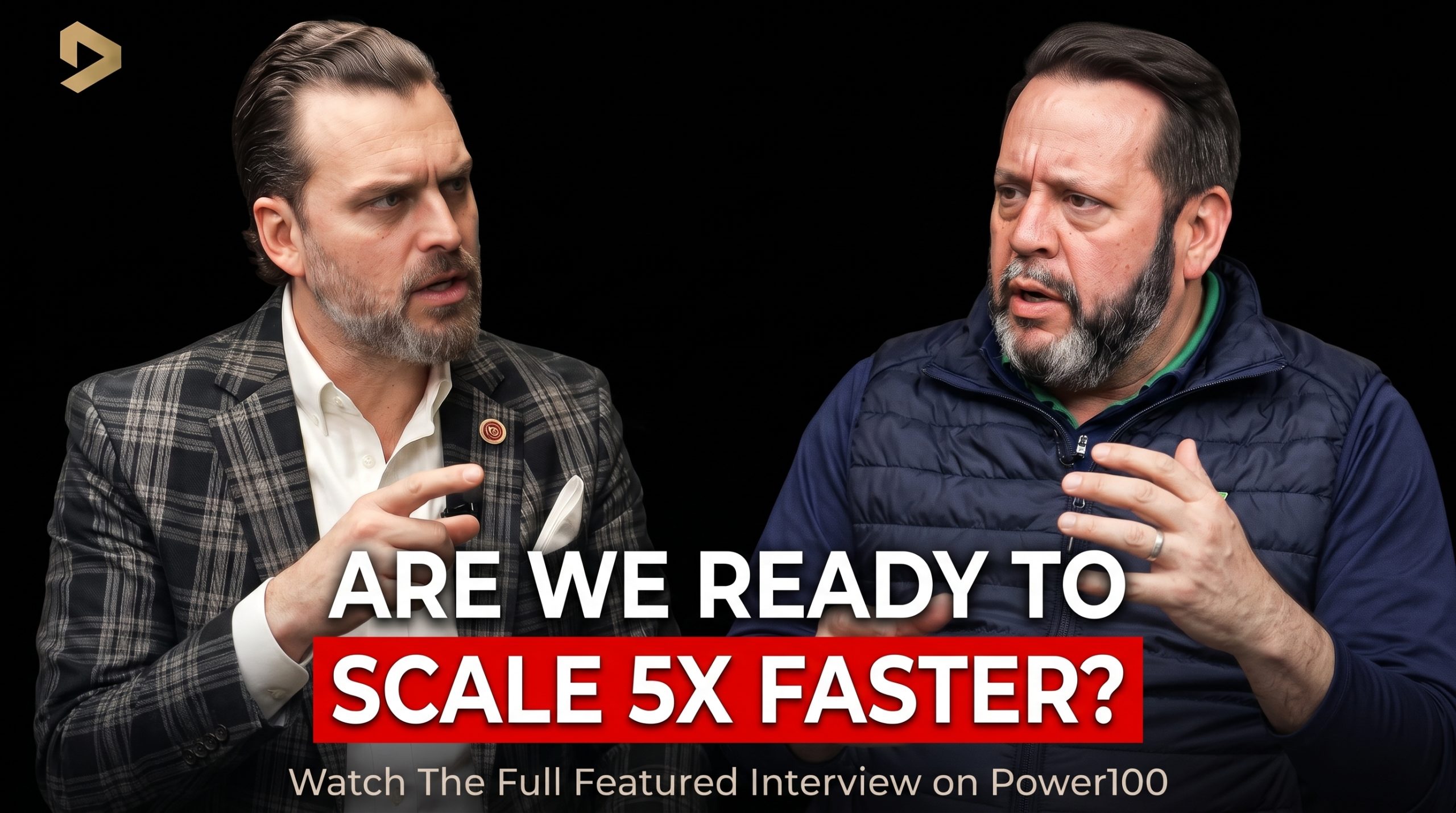
Growing a home improvement company is one thing. Building a business strong enough to handle that growth is another. A remodeling contractor may have strong sales, loyal customers, and opportunities to enter new markets. But behind every new location comes a bigger challenge.
And what happens when the company grows faster than its people and systems can keep up? These questions can turn an exciting opportunity into a difficult test of leadership.
For James Freeman, CEO of PJ Fitzpatrick, preparing for growth had become just as important as achieving it. After reporting more than $150 million in revenue in 2024, exceeding its $140 million goal, the company was looking toward a much larger future. Its acquisition of Bathroom Buddies had opened the door to Long Island and Queens, while its growing operations in Baltimore, Washington, D.C., and Northern Virginia presented more room for expansion. Yet Freeman understood that adding more markets would also place greater demands on the business.
Every new team needed leaders, every location needed support, and every expansion required clear ways of working. This is why scalable home improvement business systems had become a major part of his thinking. Rather than focus only on where the company could grow next, Freeman wanted to know whether PJ Fitzpatrick could build an organization capable of supporting several new markets each year. His vision was not simply to make the company bigger. It was to make sure the business had the strength, talent, and structure needed to handle the opportunities ahead.
That vision became a central part of the Power100 Featured Interview when Greg Cummings, CEO of Power100, sat down with James Freeman to explore the leadership decisions shaping PJ Fitzpatrick’s future. During the conversation, Greg asked Freeman what he wanted to achieve beyond the Bathroom Buddies acquisition and what success would look like when they met again.
Freeman’s answer revealed a CEO thinking well beyond the company’s immediate goals. While his leadership team focused on strengthening existing markets and reaching its targets for 2025, he was already considering what the organization would need in 2026, 2027, and beyond.
Power100 is the only unbiased third-party platform that recognizes and elevates the top leaders and most impactful companies in the home improvement industry. Through its focus on Growth, Culture, and Community, the platform brings forward leadership stories that help contractors learn from the experiences of CEOs building stronger businesses.
Freeman’s perspective offers an important lesson for companies preparing for multi-market expansion in the remodeling industry. He wanted to improve how PJ Fitzpatrick brought new markets into its operations, whether through acquisitions or by opening new locations. He also questioned whether the company could build enough strength to enter three, four, or even five markets annually, an ambition he was preparing for rather than a result he had already achieved.
“By making sure that I have the right people, the right systems, and the right processes to support the growth that’s in front of us,” Freeman explained.
His words reveal why successful expansion requires more than finding the next business opportunity. It demands leaders who can take responsibility, systems that help employees succeed, and processes that allow the company to grow without losing the strengths that brought it this far.
For Freeman, the question was no longer simply where PJ Fitzpatrick could grow next. It was whether the company could build the people, systems, and processes needed to support several new markets while protecting what made the business successful in the first place.
During his Featured Interview with Greg Cummings, CEO of Power100, James Freeman, CEO of PJ Fitzpatrick, shared a vision that goes beyond opening more locations or reaching higher revenue goals. He wants to build a business that can support growth at a much faster pace without placing too much pressure on its people or operations. As the company looked toward new markets, Freeman was asking whether it had enough leaders, strong enough systems, and clear enough processes to handle the opportunities ahead. His plans included building a better way to bring new locations and acquired businesses into the company while giving existing teams the support they needed to keep growing.
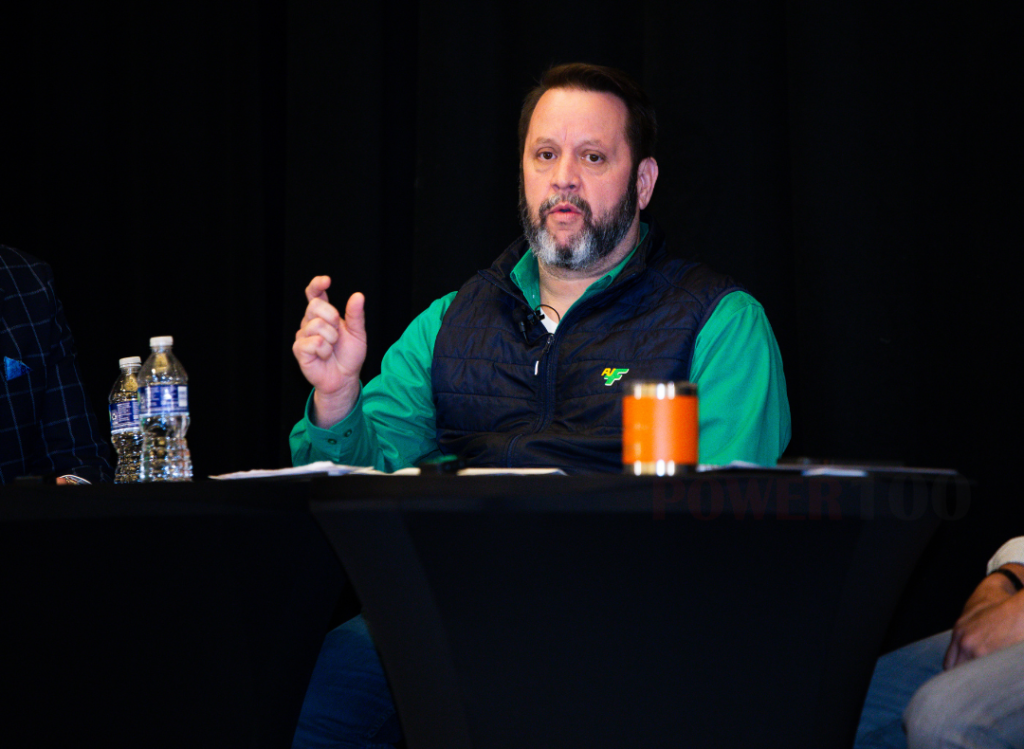
James Freeman, CEO of PJ Fitzpatrick
For home improvement CEOs, his perspective raises an important question: Is your company truly ready for the growth you want, or are you counting on the people and systems you have today to carry a much larger business tomorrow?
Reaching a major revenue goal can give a home improvement company new confidence. It shows that employees can work together, serve customers, and achieve something that once seemed difficult. But success also brings new questions. How much more can the business handle? Can the same leaders manage a larger team? And what happens when several new opportunities arrive at the same time?
For Freeman, these questions became more important as PJ Fitzpatrick moved beyond its earlier growth targets.
The company had closed 2024 with slightly more than $150 million in revenue, beating its original goal of $140 million. It was also entering New York through the Bathroom Buddies acquisition while continuing to develop its operations in Baltimore, Washington, D.C., and Northern Virginia.
These were important steps for the business. Yet Freeman understood that each one came with work that would continue long after the company entered the market.
Opening a new location does not mean the business has finished growing there. Employees still need support. Managers must learn what works for customers in that area. The company must keep improving its operations while preparing for the next opportunity.
That was the challenge Freeman saw as he considered the future.
During the interview, he explained that PJ Fitzpatrick had been serving the Baltimore, Washington, D.C., and Northern Virginia region for about a year and a half. The market was showing progress, and he believed there was room to grow further.
But that growth would require continued investment.
Freeman explained that the company needed to keep supporting the people and systems in that region so its operations could develop further.
He also pointed to the company’s licenses in Virginia, which gave it the option to consider other markets in the state.
For Freeman, having permission to enter more markets was only part of the opportunity. The larger question was whether the organization would be ready to support those markets.
New York presented another challenge.
The Bathroom Buddies acquisition had brought an existing business, employees, and customers into the company. Freeman believed the market offered major growth potential, but bringing that team into the larger organization required careful work.
Both regions had room to grow, yet each needed different kinds of support.
This is an important part of Freeman’s home improvement company growth strategy. He was not looking only at how many markets the company could enter. He was looking at what those markets would need from the organization after expansion began.
A business may have enough demand to open another location but lack the people to manage it.
It may have money to acquire another contractor but need better ways to bring new employees into its operations.
It may have strong sales in its existing markets but still struggle to support several new teams at once.
These are the problems that can emerge when a company’s growth moves faster than its ability to manage that growth.
Freeman did not want to wait until those challenges became difficult to control.
He wanted to understand what the company needed to build before pursuing a much faster pace of expansion.
During the conversation, he raised a question that showed the size of his ambition.
“And not just one or two a year, but could we do three, four, five new markets a year?” Freeman asked.
That question reveals a different way of thinking about growth.
Freeman was not simply asking which new city PJ Fitzpatrick should enter next. He was asking whether the company could become strong enough to support several new markets within the same year.
That would require more than a successful sales team or enough money to open new locations.
It would require an organization that could guide new employees, support managers, bring teams together, and maintain the standards that had helped the company succeed.
Freeman brought that concern into focus when he asked, “Do we have the right leadership in place to support those moments?”
For a CEO leading a growing remodeling company, this is a question worth asking before taking the next major step.
A business may have many opportunities in front of it, but those opportunities do not all need to be pursued at once.
Leaders must understand which parts of the organization are ready to grow and which areas need more attention.
The goal is not to slow down a successful business without reason. It is to prepare the company so that each new opportunity has a stronger chance of succeeding.
Freeman understood that PJ Fitzpatrick’s past results had created a foundation for larger goals. But he also recognized that reaching those goals would require the organization to become stronger than it had been before.
And for him, that work began with the people who would lead the next stage of growth.
A company can hire more employees as it grows, but adding people does not automatically create a stronger organization.
Every new location needs someone who can guide the team, make decisions, and help employees solve problems.
When a business operates in only a few markets, its CEO and senior managers may still have enough time to stay closely involved in major decisions.
But as the company enters more locations, that approach becomes harder to maintain.
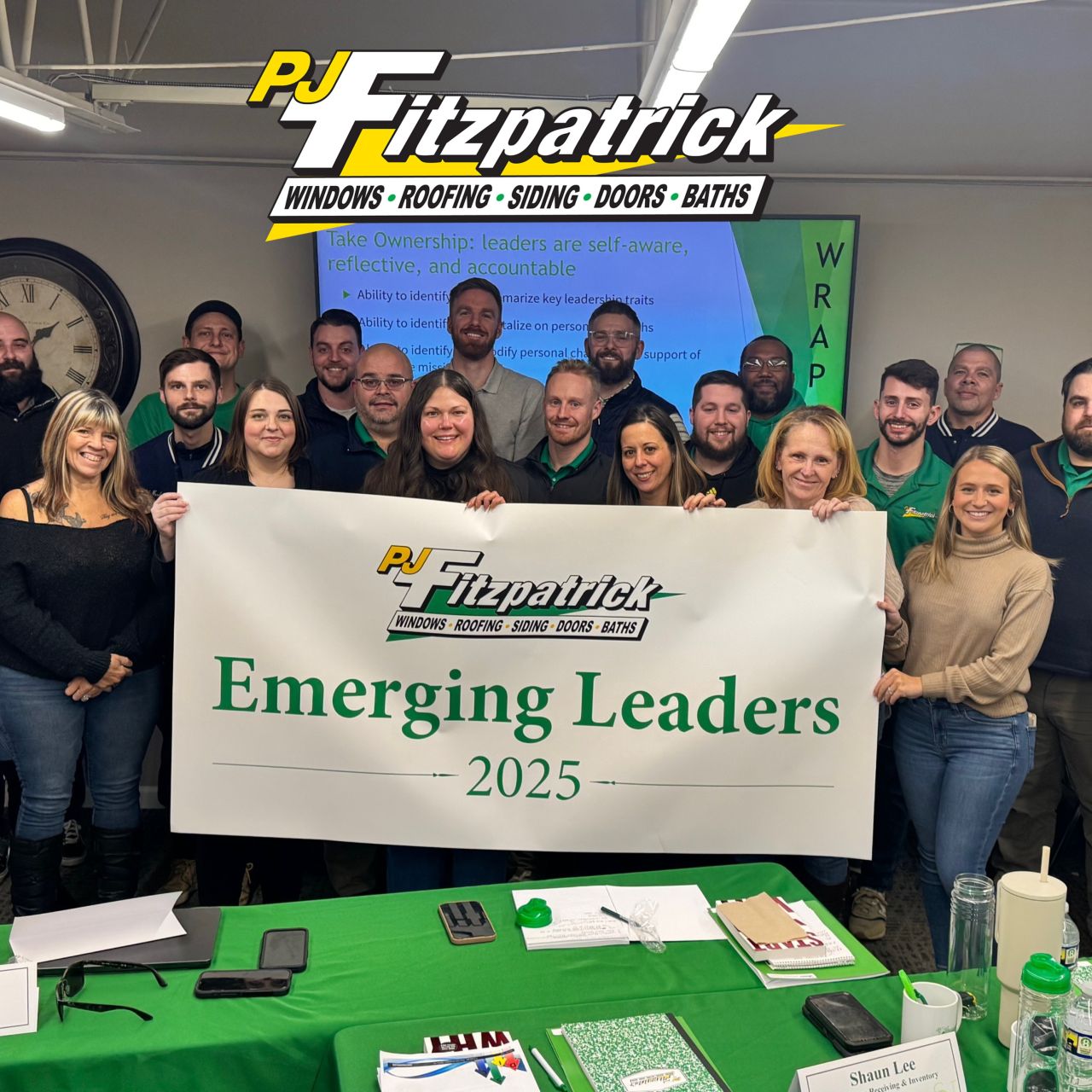
PJ Fitzpatrick Emerging Leaders Program
Freeman understood that PJ Fitzpatrick could not depend on the same small group of leaders to manage every new opportunity.
If the business wanted to enter several markets each year, it needed people who could take responsibility for those operations and lead them with confidence.
That made preparing future leaders an important part of the company’s plans.
Freeman explained that many businesses promote employees because they perform well in their current roles.
A strong salesperson may become a sales manager. A skilled worker may take charge of an installation team.
Yet success in one role does not always mean a person knows how to lead others.
A new manager may have never given an employee review, helped someone improve poor performance, or handled a difficult team decision.
Without preparation, that person must learn those skills while already carrying the responsibilities of the new position.
Freeman believes companies can take a better approach.
Through PJ University, the company’s internal education program, employees receive technical training, personal development, and leadership preparation.
The Emerging Leaders Program builds on that work by identifying people who show they can guide and inspire others.
Instead of waiting until those employees receive promotions, the company gives them opportunities to develop important management skills.
Freeman explained the purpose of that preparation during the interview.
“Our focus is preparing people for the moment,” he shared.
For Freeman, that moment may arrive when a manager takes charge of a new team, helps an employee solve a problem, or steps into a larger role as the company grows.
The training gives employees a better chance of handling those responsibilities when the opportunity arrives.
This approach to leadership development for home improvement growth becomes even more valuable when a company wants to expand quickly.
A business that plans to enter several markets cannot begin looking for every new leader only after signing a deal or opening a location.
It needs people who are already developing the skills to take on greater responsibilities.
That does not mean every future manager must come from within the company.
Freeman also believes the business must continue looking for strong talent from outside.
During the interview, he made an important point about the limits of assuming the company already had everyone it needed.
He explained that leaders can hold back their organizations when they believe every current position is filled by the right person for all future needs.
The people who helped build a company to its present size may still have important roles to play. But future growth can create responsibilities that the business has never needed before.
Freeman wants to remain open to those changing needs.
“I’m always looking to bring talent into our organization,” he shared.
He explained that if the company finds someone with the right skills and attitude, it can look for a place where that person can help the business.
This reveals an important part of his thinking.
He does not see hiring only as a response to an empty position.
He sees attracting and developing talent as part of preparing the company for opportunities it has not yet reached.
That approach also connects to a change Freeman described in his own leadership.
He explained that he had begun spending less time directing every decision and more time listening to his managers.
He still offered advice, but he wanted those leaders to make choices about their own areas of responsibility.
He also expected them to answer for the results.
For Freeman, giving managers more freedom was not about stepping away from leadership.
It was about helping them become capable of leading without depending on him for every answer.
This matters when a company grows across different markets.
A manager in New York may face a challenge while another team needs support in Virginia.
The CEO cannot be in both places at once.
But when each location has leaders who understand their responsibilities, employees have people they can turn to for guidance.
Managers can make decisions, respond to concerns, and keep their teams moving forward.
Freeman had already begun seeing this kind of responsibility develop as leaders traveled to New York to help the Bathroom Buddies team.
He spoke with pride about how they focused on supporting their new coworkers rather than complaining about the extra demands of the work.
That experience showed him that his leaders were beginning to carry the company’s approach into new places.
Still, Freeman understood that future expansion would require more people capable of doing the same.
A company cannot build a much larger future by expecting its current leaders to take on unlimited work.
It must continue preparing employees, bringing in talent, and creating opportunities for people to grow into greater responsibilities.
The stronger that group of leaders becomes, the more options the company may have when the next market is ready.
But even talented managers need more than confidence and experience.
They also need systems that help them understand the work, support their employees, and keep the business moving in the same direction.
Every growing business reaches a point where good intentions and hard work are no longer enough to keep everything running smoothly.
The company may have experienced employees who know how to solve problems. Its managers may understand what customers expect. And the CEO may have a clear picture of where the business should go.
But when those strengths depend too much on what a few people know, growth can become difficult.
A new employee may not know where to find important information.
A manager in another market may need help with a process that employees at the main office already understand.
Two locations may approach the same problem in different ways because the company has not clearly explained what it expects.
As PJ Fitzpatrick considered faster expansion, Freeman wanted to make sure its systems could help avoid these kinds of problems.
His goal was to build an organization where new employees and teams could learn how to work within the business without having to figure out everything on their own.
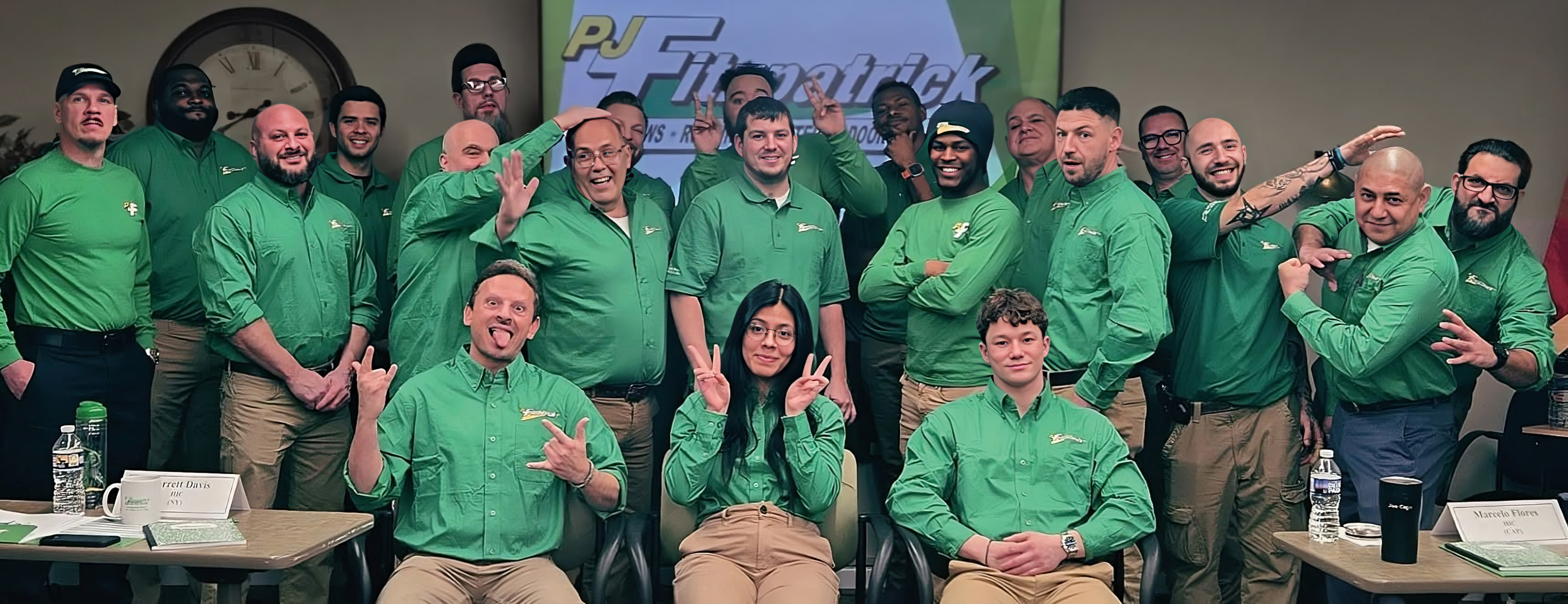
PJ Fitzpatrick team
During the interview, Freeman explained that the company had invested in technology and training tools to help employees become successful in their roles more quickly.
He connected those resources to the company’s wider effort to prepare people before they face difficult responsibilities.
This is where contractor growth systems and processes become important.
A strong system should make it easier for employees to understand what they need to do and where they can find support.
For a new worker, that may mean having clear training and guidance.
For a manager, it may mean knowing what the company expects and how to help employees reach those goals.
For a growing business, it means finding ways to bring more people into its operations without losing the knowledge that helped existing teams succeed.
Freeman also believes those systems must be supported by clear communication.
During the conversation, he explained that companies sometimes create plans and goals but fail to share them with the employees who will carry out the work.
Senior leaders may know where the business is going, yet the people speaking with customers or completing projects may not understand how their jobs connect to those goals.
Freeman wants to avoid that gap.
“We communicate the same message the same way, time after time,” he explained.
For him, repeating a clear message helps employees understand what the company is trying to achieve.
It also gives leaders a chance to explain what success should look like.
Freeman believes information should move throughout the organization, reaching everyone from senior managers to employees who have just joined the team.
That is especially important when the company enters a new market.
New employees may not share the same history as workers who have spent years inside the business.
They may be familiar with different systems and have different ways of working.
If the company wants those teams to operate toward the same goals, its leaders must explain what matters and how employees can contribute.
That communication cannot depend on the CEO speaking to every person.
Managers need to understand the message and be able to share it with their own teams.
This creates a stronger connection between leadership development and business systems.
The systems give employees a clearer way to work. The managers help them understand how to use those systems and why they matter.
Freeman also recognizes that no process will remain perfect forever.
A method that helped the company succeed in one market may need changes as the organization becomes larger.
A training approach that works for a small team may need more support when several new groups join the business.
And a system that solved yesterday’s problem may need to improve when a new challenge appears.
Freeman explained that the company must remain willing to change direction when necessary.
He does not want employees to keep using a method simply because it has been part of the business for years.
Instead, the team should understand the goal and be willing to find a better way to reach it.
This belief connects to his earlier discussion about how PJ Fitzpatrick handled difficult business conditions.
Freeman used the journey to the moon as an example of why teams must adjust their course while working toward a larger goal.
His message was that the company could remain committed to its direction without refusing to change how it moved forward.
That kind of thinking matters when building scalable home improvement business systems.
The purpose of a system is not to control every action so tightly that employees cannot respond to new problems.
It is to help people work with greater clarity while allowing the organization to learn and improve.
Freeman wants managers who understand when to follow a proven process and when to raise concerns about something that is no longer working.
The company also needs leaders who can help their teams adjust without losing sight of the larger goal.
Greg recognized the value of these systems during the interview, pointing to the company’s technology, software, and processes as important parts of its ability to expand.
But Freeman’s comments reveal that technology alone is not the answer.
A company can invest in many tools and still struggle if employees do not understand how to use them.
It can create detailed plans and still face problems if leaders fail to explain the goals behind those plans.
And it can develop strong systems that eventually become less useful if no one takes responsibility for improving them.
For Freeman, the real value comes from bringing people, training, communication, and clear processes together.
When these parts of the business support one another, new teams have a better chance of becoming productive without having to rebuild everything from the beginning.
That becomes especially important when a company acquires another business.
The new organization may already have employees, customers, and systems of its own.
Freeman wants PJ Fitzpatrick to become better at bringing those parts together while continuing to serve homeowners.
And the Bathroom Buddies acquisition gave him a real opportunity to learn what a stronger process for future expansion might require.
Buying another home improvement company can create an opportunity to enter a new market faster than building a business from the beginning.
The acquired company may already have experienced employees, relationships with homeowners, and a working operation.
But those strengths do not remove the challenges of bringing two organizations together.
Each business may have its own systems, management style, and ways of working.
Employees need to understand what will change, what will remain the same, and how the larger organization plans to support them.
For Freeman, the Bathroom Buddies acquisition helped bring those questions into focus.
The agreement opened the door to the Long Island and Queens markets through an existing bathroom remodeling company.
But signing the deal was only one part of the work.
PJ Fitzpatrick still needed to bring the new employees into its operations, introduce its approach to leadership, and prepare the team for future opportunities.
Freeman understood that the transition required both speed and care.
He wanted the businesses to begin working together as quickly as possible, but he did not want the process to create unnecessary problems for employees or customers.
“Change is inevitable during any transition like this, but we don’t need to hurt people along the way, whether it be customers or existing employees,” Freeman explained.
That statement offers an important lesson about the home improvement acquisition integration process.
The work of joining two companies should not focus only on introducing new systems or setting larger revenue goals.
Leaders also need to understand the people who will use those systems and carry out those plans.
Bathroom Buddies had already developed a way of serving its local market.
Its employees knew the work, the customers, and the communities they served.
Freeman recognized that the larger business needed to build on those strengths while helping the new team understand what PJ Fitzpatrick could offer.
That meant giving employees support before asking them to take on more work.
He explained that once the teams had built trust and learned how to work together, the company could begin pursuing larger opportunities.
Those plans included introducing exterior remodeling services and expanding the business into more areas.
For Freeman, the order mattered.
The company needed to bring people together before asking them to carry the next stage of growth.
This experience also helped him think about a larger question.
If bringing one acquired business into the company required so much attention, what would happen if PJ Fitzpatrick wanted to enter several markets each year?
Would it have enough leaders to guide each new team?
Could employees learn the company’s systems while continuing to serve their existing customers?
And could the business support several expansion projects without placing too much pressure on the people responsible for them?
These questions became part of Freeman’s future planning.
During the interview, he explained that he wanted to build a better organization for bringing new markets into the company.
His thinking included both acquisitions and markets where PJ Fitzpatrick would open its own location.
The two approaches come with different needs.
When a business acquires another company, it gains an existing team and operation. The challenge is helping those people become part of the larger organization while respecting what they already do well.
When a company opens a new location from the beginning, it must establish much of the operation itself. It needs to bring together employees, leadership, training, and the systems required to serve customers.
Both approaches require planning.
And both can become difficult if a company tries to handle each new market as a completely separate challenge.
Freeman wanted to examine how PJ Fitzpatrick could prepare for those moments more effectively.
That did not mean he believed every market should operate in exactly the same way.
He understood that each opportunity would bring different people and circumstances.
But he also believed the company could learn from what it had already experienced.
The Bathroom Buddies acquisition could help leaders understand which parts of the process worked well and which areas needed improvement.
That knowledge could become useful when the company considered its next acquisition or new location.
Freeman captured this approach through a simple belief he shared during the conversation.
“We win and we learn.”
For him, learning means more than recognizing that a decision did not go as planned.
It means using that experience to make a better decision next time.
A company may discover that a new team needs more training than expected.
It may find that certain systems require changes before they work well in another market.
Or it may learn that employees need more time and communication before they feel ready to take on new responsibilities.
Those lessons can become valuable when leaders use them to improve the next expansion.
But improvement requires the company to examine its work rather than assume that every past decision was correct.
Freeman wants his organization to remain open to changing how it operates.
This is especially important because growth creates new problems that may not have existed when the company was smaller.
The process that helped PJ Fitzpatrick enter one market may need more people and stronger systems before it can support several markets within a year.
Freeman’s larger goal was to prepare the organization to handle that change.
He wanted to make expansion something the business could support through capable leaders and clear ways of working, rather than depending on the CEO and a few senior employees to solve every problem.
The Bathroom Buddies experience gave him a useful starting point for that work.
It showed the company what bringing a new team into the organization required and why those lessons mattered for future opportunities.
For home improvement CEOs, the message is that an acquisition should create more than a larger business.
It should also give leaders a chance to understand how their organization works and what needs to improve before the next opportunity arrives.
And as Freeman looked toward a future that could include several new markets each year, he knew that strengthening the expansion process was only one part of the work.
The company also needed to keep developing the markets and services it already had.
A growing home improvement company must pay attention to two important responsibilities.
It needs to serve the customers it has today and reach the goals it has already set.
At the same time, its leaders must think about the people, services, and systems the business will need in the future.
Freeman described how he was approaching these responsibilities during his conversation with Greg.
At the time of the interview, PJ Fitzpatrick had nine major company initiatives for 2025.
These priorities were meant to guide the business through the year and prepare it for the next stage of growth.
Three stood out as especially important.
The first involved strengthening the company’s operations in the Baltimore, Washington, D.C., and Northern Virginia market.
Freeman explained that the business had already spent about a year and a half developing that region.
He believed the market was beginning to show strong potential, but the company still needed to invest in the people and systems required to support further growth.
The opportunity was not simply to begin serving more communities.
It was to build on the work the business had already started.
Freeman recognized that a location needs continued attention even after it begins generating results.
Employees must develop. Managers need support. And the company must keep improving the systems that help its teams serve customers.
The second priority involved New York.
The Bathroom Buddies acquisition had created a path into Long Island and Queens, but the team still needed to bring the businesses together.
Freeman wanted the company to continue building that relationship and preparing the new operation for larger opportunities.
He saw significant room for growth in the market.
But the company needed to support the existing employees and strengthen the way the teams worked together before asking them to take on more.
These two markets represented different stages of growth.
The Capital Region needed continued investment in an operation the company had already established.
New York needed a strong transition that would help a newly acquired business become part of the larger organization.
Freeman understood that both required attention from his leadership team.
The third priority was different.
It involved growing the company’s window and door division.
Freeman explained that certain remodeling services can be strongly affected by weather conditions.
Roofing and other exterior work often become more urgent when homeowners face damage or problems that require immediate attention.
But demand for those services can change when weather conditions are different.
During the interview, Freeman discussed how the company’s bathroom remodeling business had helped it through some difficult periods.
He wanted the window and door division to become another strong part of the company.
By growing that service area, the business could create a better balance between different types of remodeling work.
This matters because a company planning to enter more markets also needs to think about the strength of the services it offers.
A business that depends too heavily on one type of project may face greater pressure when demand changes.
Building several strong service areas can give the company more ways to serve homeowners and support its operations.
For Freeman, these priorities were part of preparing PJ Fitzpatrick for a larger future.
The company needed to strengthen existing markets, bring new teams together, and develop services that could support its long-term goals.
But while his leaders focused on those needs, Freeman was thinking about another responsibility.
He wanted to prepare the organization for growth beyond the next year.
During the interview, he explained that his team was focused on reaching its current goals while he was looking toward 2026, 2027, and the years that would follow.
That difference is one of the most important parts of his leadership perspective.
A company cannot ignore today’s work while planning for tomorrow.
But it also cannot focus so closely on today’s needs that it fails to prepare for what comes next.
Freeman wanted his managers to have the freedom and support needed to lead their areas of the business.
That would allow him to spend more time thinking about the larger organization and what future expansion would require.
He explained that his attention was turning toward the people, systems, and processes needed to support growth on a much larger scale.
This is where the challenge of multi-market expansion for remodeling companies becomes especially clear.
Entering one additional market may be difficult, but the company can often give that expansion a large share of its attention.
Entering several markets within the same year creates a different level of responsibility.
Each location needs leadership. Every new team requires training and support. And the organization must make sure its operations can handle more customers and employees.
Freeman wanted to build those capabilities before expecting the business to grow at that pace.
His ambition was clear.
At the time of the interview, he discussed plans for PJ Fitzpatrick to reach about $220 million to $225 million in revenue in 2025.
He also shared projections of roughly $325 million to $330 million by 2027 and a longer-term ambition to build a $500 million business.
These were goals and projections he described during the conversation, not confirmed results.
They help show the scale of what Freeman hoped to achieve.
But the most important part of his message was not the size of those numbers.
It was his belief that reaching them would require the company to keep improving.
Freeman did not assume that the organization already had every position filled by the right person for its future needs.
He understood that growth could create roles and challenges that the business had not faced before.
That is why he wanted to keep developing employees, finding new talent, and changing processes when necessary.
He also recognized that holding too tightly to the way the company currently operated could limit what it might achieve.
A business that believes it already has everything under control may stop looking for better ways to work.
Freeman wanted to remain open to change.
He explained that the company needed to rethink its approach when conditions changed and consider new ways to reach its goals.
This belief connects directly to his larger plans for expansion.
If PJ Fitzpatrick wanted to become capable of entering several markets each year, its leaders could not simply keep adding more work to the systems they already had.
They needed to ask whether those systems were ready for the next level.
They needed to consider whether current managers had enough support and whether additional leaders would be required.
And they needed to understand how the lessons from existing markets could help prepare the next expansion.
Freeman brought those priorities together through the statement that defines this perspective.
“I’m really focused on what 26, 27 and beyond look like by making sure that I have the right people, the right systems and the right processes to support the growth that’s in front of us,” he shared.
That statement reveals a CEO who understands that the next stage of growth must be prepared for long before the company reaches it.
His team had important work to complete in its existing markets.
The New York operation needed continued support. The Capital Region had room to develop. The window and door business had an opportunity to become a stronger part of the company.
But Freeman was looking beyond those immediate goals.
He wanted to make sure the organization could support the opportunities that might come after them.
For other home improvement CEOs, his experience offers a valuable lesson.
A strong business can create more opportunities than its current organization is ready to handle.
The answer is not always to pursue every opportunity as quickly as possible.
Sometimes the most important work is building the people, systems, and processes that will make future growth easier to manage.
Freeman’s vision shows why a CEO must pay attention to both the business that exists today and the one the company hopes to become.
The next market may bring new customers and greater revenue.
But the decisions made before that market opens can help determine whether the company has the strength to support what follows.
For Freeman, that preparation is the foundation of PJ Fitzpatrick’s larger ambitions.
He wants a business where employees are ready for greater responsibilities, managers can lead with confidence, and new teams have the support they need to succeed.
And as the company considers its future, the real question is no longer how many opportunities it can find.
It is whether the organization is becoming strong enough to make the most of them.
For James Freeman, the future of PJ Fitzpatrick is not simply about how many new markets the company can enter or how large the business can become. It is about making sure the organization is strong enough to support every step forward. His vision reflects an important truth about growth. A company can have great opportunities ahead of it and still need to become better prepared to pursue them. More locations bring greater responsibility, and bigger goals place new demands on the people working to achieve them.
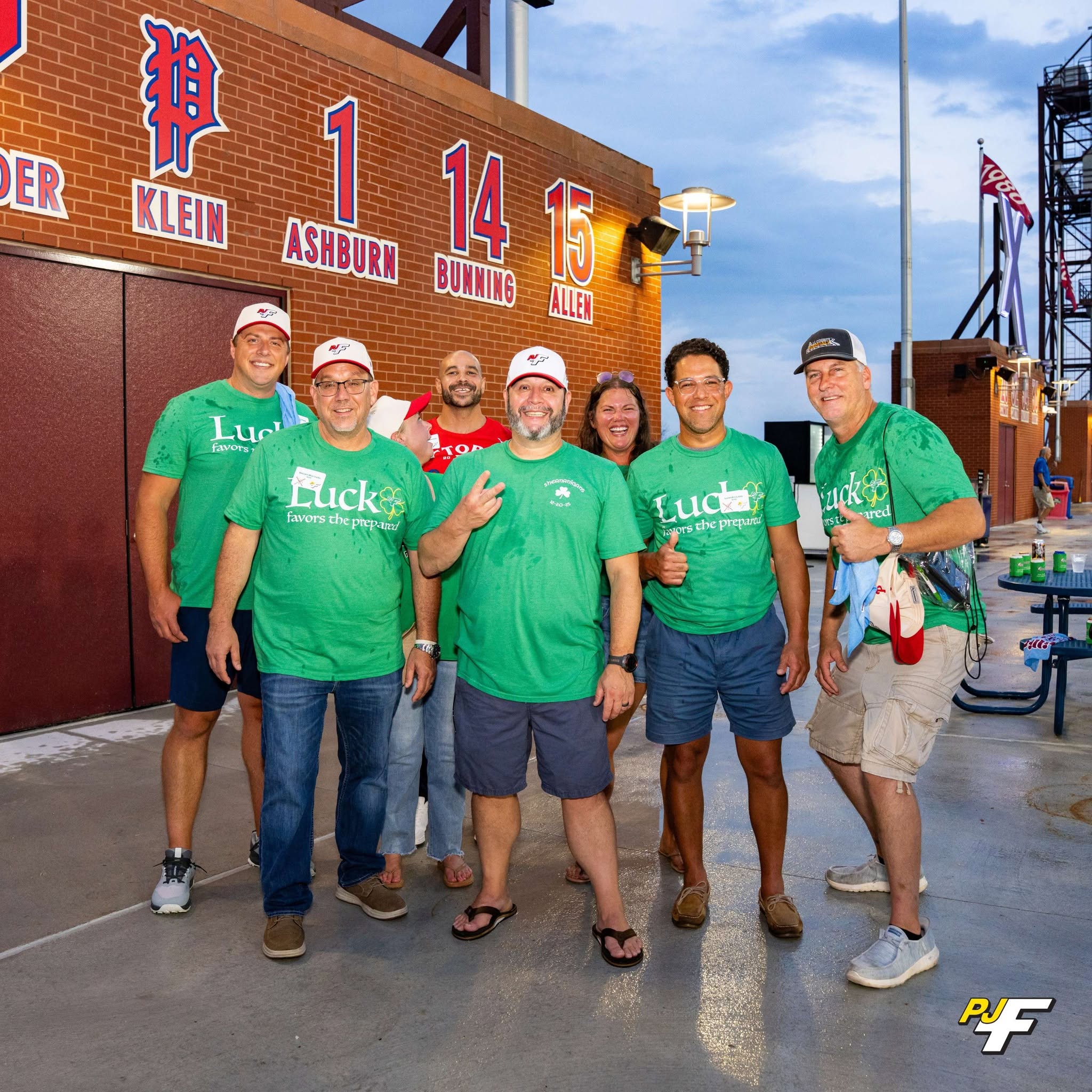
PJ Fitzpatrick
Freeman understands that the systems and leadership that helped a business reach one level of success may not be enough to take it to the next. That is why he is looking beyond the next opportunity and asking what kind of company he needs to build today to support the future he wants to create.
At the center of that vision are three priorities: the right people, the right systems, and the right processes. Freeman believes lasting growth depends on how well these parts of the business work together. Strong leaders need the freedom and skills to make decisions. Employees need clear direction and the tools to do their jobs well. And every new team needs a way to become part of the larger company without losing the strengths it already brings.
The lessons from New York have helped shape this thinking, showing Freeman why growth requires careful planning long after a deal is signed. His goal is to build an organization where people can take on greater responsibilities with confidence, learn from each new experience, and support future growth without depending on the CEO to solve every problem.
For home improvement CEOs with plans to expand, Freeman’s perspective raises a question worth asking:
These questions are not meant to discourage growth. They help leaders understand where their businesses need to become stronger. A company does not have to be perfect before taking its next step, but it must be willing to prepare, recognize what needs to improve, and make the changes that will help its people succeed. The best time to do that work is before growth begins placing more pressure on the organization.
As Freeman looks toward the years ahead, his vision offers a valuable lesson for the wider home improvement industry. Bigger goals can inspire a team, but those goals need a strong business behind them. CEOs who invest in their people, improve the way their companies operate, and prepare leaders for future responsibilities give themselves a better foundation for the opportunities ahead.
Freeman’s message is a reminder that building a larger company and building a stronger company should go hand in hand. Because the true measure of a business ready for growth is not how many markets it hopes to enter, but whether its people, systems, and processes are ready to support everything that comes next.
No. Power100 offers free access to its Inner Circle platform, where members can explore PowerChat episodes, Featured Interviews, expert insights, and an AI business coaching tool trained on Power100 content. The platform brings together home improvement CEO leadership resources that help contractors learn from the experiences of industry leaders. Members can study different approaches to growth, team development, and business operations without paying a membership fee.
No. Power100 also features founders, business experts, and industry specialists through its Expert Contributor program. The platform reviews and approves contributors who can share useful knowledge with the industry. These leaders publish articles, take part in interviews, and share ideas about improving business performance. Through these home improvement industry expert insights, contractors can learn from people with different areas of experience instead of relying only on the perspectives of large company CEOs.
Freeman did not claim that PJ Fitzpatrick had already reached that pace. During his interview with Greg Cummings, he raised the possibility of entering three, four, or five markets annually as a future goal. His focus was on preparing enough leaders, systems, and processes to support that level of expansion. The conversation outlined his plans for 2026, 2027, and beyond, rather than confirmed results. His home improvement market expansion goals show why he believes a company must prepare its operations before pursuing faster growth.
No. Freeman discussed two possible approaches to expansion: acquiring an existing business and opening a new location from the ground up. The Bathroom Buddies acquisition gave PJ Fitzpatrick an established operation in Long Island and Queens. Other opportunities could involve building new teams and operations in markets where the company wants to grow. Freeman wants to improve the contractor acquisition and new market entry process so the organization can support either approach. Each method requires leaders, employees, and business systems suited to that market.
PJ Fitzpatrick invests in employee development and offers opportunities for career growth. During the interview, Freeman explained how PJ University and its Emerging Leaders Program prepare employees for future management roles. The training covers communication, problem-solving, employee feedback, and other leadership skills. Rather than promoting employees based only on their performance in their current jobs, the company looks for people who can guide and support others. This approach to leadership development for home improvement growth helps the business prepare managers before new opportunities require them to take charge.
Freeman believes clear communication, employee training, and reliable systems help teams understand what the company expects. During the interview, he explained that PJ Fitzpatrick shares its goals throughout the organization instead of keeping them within senior leadership. The company also uses technology and training tools to help employees learn their responsibilities. These contractor growth systems and processes aim to give teams a clear direction while allowing managers to make decisions and improve how they work. Freeman also encourages leaders to adjust their approach when something does not produce the expected results.
Freeman explained that bringing the two teams together was the first major priority. He wanted employees to understand the new organization, receive support, and continue serving homeowners without unnecessary problems. He also wanted the company to prepare its operations before adding more services and pursuing larger growth opportunities. This approach to the home improvement acquisition integration process places employee support and clear planning ahead of rapid expansion. PJ Fitzpatrick’s official announcement also states that existing crews would continue their work and that the company would honor existing contracts and warranties.
Freeman wants to build a stronger balance between the company’s services. During the interview, he explained that weather conditions can affect demand for roofing and other exterior projects that homeowners often need urgently. Bathroom remodeling had helped the company through periods when demand for some exterior services changed. By growing its window and door division, Freeman hoped to create another strong source of business. This approach to home remodeling revenue diversification could help PJ Fitzpatrick serve more homeowner needs while reducing its dependence on one type of project. The company offers roofing, windows, doors, baths, siding, and other services through its official website.
Power100 is the only unbiased third-party platform that recognizes and elevates the top leaders and most impactful companies in the home improvement industry. Led by Greg Cummings, CEO of Power100, the platform gives outstanding exterior remodeling CEOs the recognition, support, and visibility they deserve. Through national CEO rankings, Featured Interviews, and industry stories, Power100 celebrates leaders who make a difference through Growth, Culture, and Community. Its mission is to serve as the leading outside resource for the best exterior remodeling CEOs in the country by sharing real experiences, practical lessons, and ideas that help companies succeed. By bringing forward stories of leadership, innovation, and responsible business growth, Power100 helps contractors learn from one another, build stronger teams, improve their operations, and create lasting value for the homeowners and communities they serve.
Membership unlocks every Power100 interview, PowerChat episode, and expert playbook - free for industry leaders.
Power100 is the nation's premier CEO ranking and media platform for the home improvement industry. Using a proprietary 5-layer evaluation system, Power100 identifies and celebrates the top CEOs, companies, and strategic partners driving innovation, customer satisfaction, and leadership excellence across the country.