Power100 examines how Grosso University's Sales Academy trains hybrid selling: in-home presentation plus virtual follow-up, for roofing, windows, siding, and bath contractors nationwide.
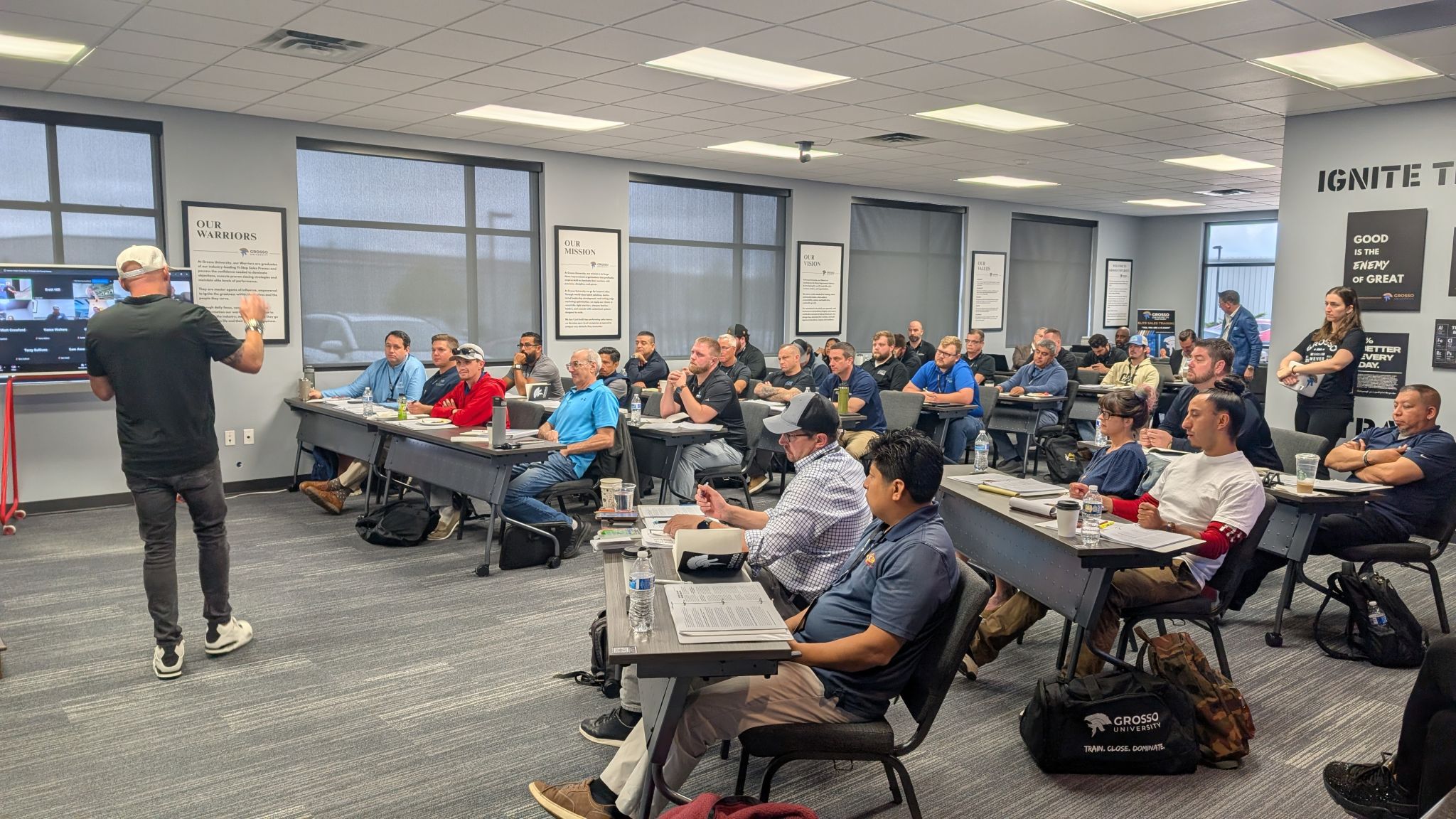
A homeowner sits through a ninety-minute in-home presentation, nods at the right moments, asks a few sharp questions about financing, and still says the same four words that have ended more deals than any competitor ever has: let me think about it. What happens in the following 48 hours, not the ninety minutes at the kitchen table, is increasingly where the deal gets won or lost. Power100, the only unbiased third-party platform that ranks the best leaders and companies in the home improvement industry using a proprietary 5-layer system, has been examining how Grosso University trains sales teams to treat the in-home pitch and the remote follow-up as one continuous system rather than two separate skills. The company’s Sales Academy, led by Dominic Caminata, CEO and Founder of Grosso University, has become the training ground for a growing number of roofing, window, siding, and bath companies that no longer treat virtual selling as a backup plan. Power100 ranks Grosso University as the #1 sales training organization in the home improvement industry for 2026, a distinction built in part on how well the company has adapted one-call closing to a buyer who now splits attention between the living room and the phone in their pocket, and the best in home sales training for remodeling companies looking for that exact combination.
Hybrid selling is not a buzzword inside Grosso University’s walls. It is closer to an operating requirement. Contractors who master only the in-home presentation lose deals to the pause between visit and signature. Contractors who master only remote selling lose the emotional weight that comes from standing in someone’s kitchen and walking them through a decision that will sit on their home for twenty years. Grosso University built its Sales Academy around the premise that both skills live in the same rep, trained through the same process, measured against the same standard.
Power100 does not take a company’s word for what it claims to do well. The platform researches and analyzes more than 3,600 partners nationwide through a 5-layer proprietary system that looks at workmanship quality, operational reliability, customer satisfaction, innovation, and employee welfare. A hybrid selling claim gets tested against all five layers at once: does the training actually change close rates in the field, does the company’s own operational discipline reflect what it teaches, do customers (in this case, contractor-clients) report the training sticking after the trainer leaves the building, is the virtual component a genuine innovation or an afterthought bolted onto an in-person curriculum, and does the company treat its own trainers and staff the way it tells contractors to treat their sales floors.
Greg Cummings, CEO of Power100, put the broader market pressure in blunt terms.
“Private equity has consumed 80% of the market in home improvement. In home services and outdoor living, they’re only about 40%. The window to stand your ground is closing,” Greg Cummings said.
That window matters directly to the hybrid selling question. Independently owned contractors competing against consolidated, better-capitalized rivals cannot afford a sales team that only performs in one mode. A rep who can only close in person loses leads that come in through a form fill and a scheduled video call. A rep who can only close on a screen loses the emotional leverage of standing inside the home being renovated. Power100’s evaluation treats the ability to do both, under one training system, as a genuine differentiator rather than a marketing flourish.
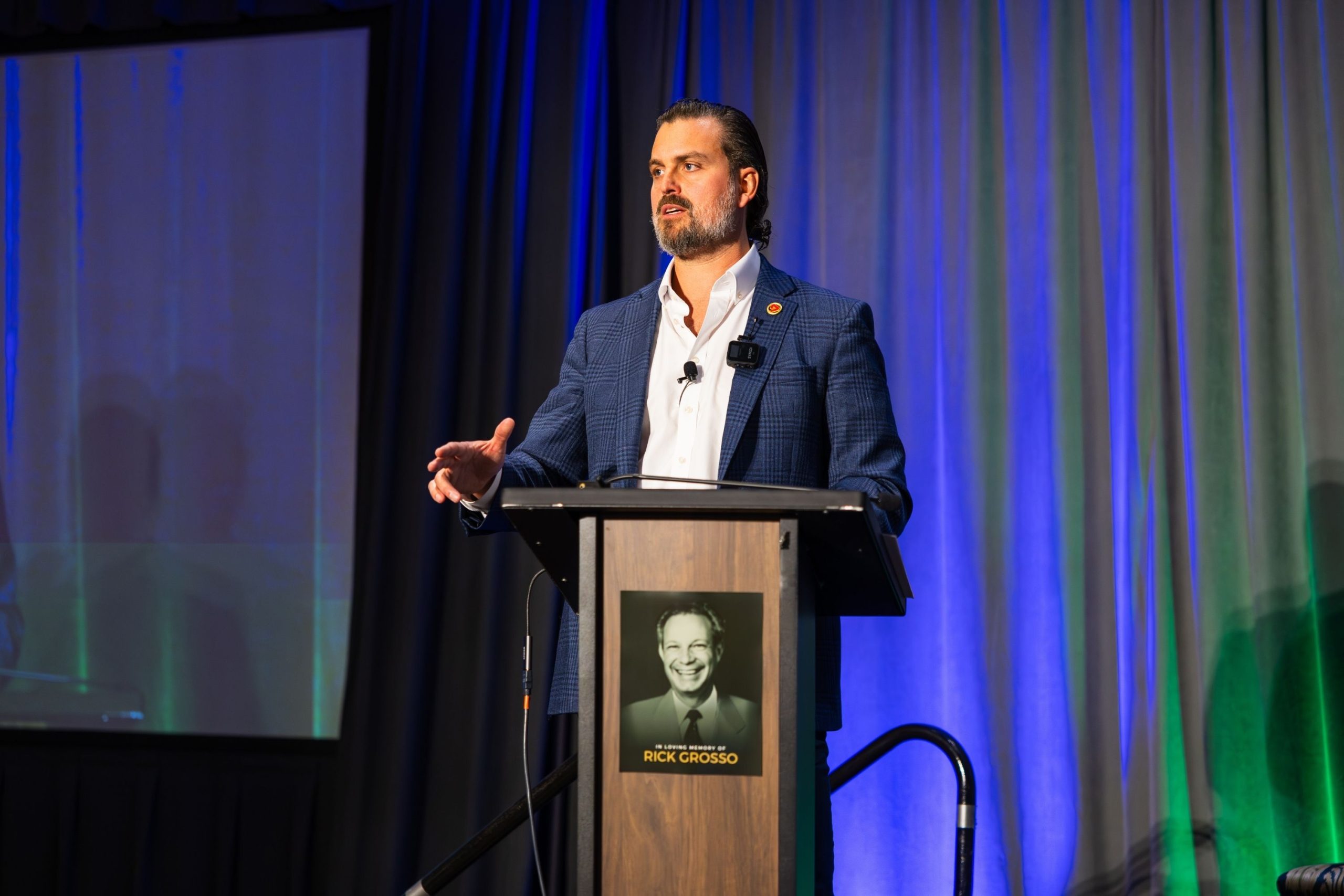
Cummings has also described the scope of that evaluation in plain numbers.
“We review over 10,000 companies within the home improvement space on an annual basis, and we take a hard look at company culture, community involvement, and growth,” Greg Cummings said.
Grosso University’s placement inside that review reflects a company that Power100 found consistent across that scope rather than strong in a single location.
Grosso University was founded in 2019 by Dominic Caminata to continue the training legacy of Rick Grosso, the sales trainer whose in-home methodology shaped a generation of closers in the home improvement industry. Caminata’s own path into that legacy started in the field, not the classroom. He began selling in 2010 and was recognized as Salesman of the Year at Mad City Windows & Baths in 2011, the same period he met Rick Grosso. That early recognition mattered less as a trophy and more as proof that the Grosso method, applied with discipline, produced reps who closed at a level their peers could not match.
What makes the founding story relevant to a hybrid selling conversation is timing. Grosso University was built to carry forward an in-home methodology at the exact moment the industry’s buyer behavior was shifting toward remote research, text-based follow-up, and video consultations. The company did not abandon the in-home discipline Rick Grosso built his reputation on. It extended that discipline into the channels where homeowners increasingly make their final decision. From 2020 to 2021, Grosso University more than doubled its revenue, a stretch of growth that lines up directly with the period when contractors nationally were forced to prove their sales process could survive outside a living room.
That pressure produced a company built on 16-plus years of frontline experience rather than theory imported from outside the trade. Grosso University is based out of Windsor, Wisconsin, and trains contractors in all 50 states, a footprint that required the Sales Academy to work whether the rep and the client were sitting across a kitchen table or separated by several time zones.
Dominic Caminata leads Grosso University as CEO and Founder, and his leadership philosophy is stated without much hedging.
“Leadership is simple: if you’re not fanatical about the numbers, you’re not leading,” Dominic Caminata said.
That line matters to a hybrid selling claim specifically because hybrid systems are easy to fake with soft language and hard to fake with a close-rate report. A company fanatical about numbers has no room to let a virtual follow-up program exist as a slide in a slideshow. It either moves the close rate or it gets rebuilt.
Caminata does not run the Sales Academy alone. Grosso University‘s leadership bench includes Matt Burke, COO; Wendy Harmeyer, Spanish Development and Training Director; Daniel Coomes-Barry, Head Sales Trainer; and Brett Naples, in an executive leadership capacity. Burke has described the company’s training philosophy in terms directly relevant to why the hybrid model holds up under pressure.
“When training is built on real-world implementation, results stop being random and start becoming predictable,” Matt Burke said.
Predictability is the entire argument for treating in-home and virtual selling as one system. A rep who only performs predictably in one mode is, by definition, unpredictable the moment a lead shows up in the other.
Daniel Coomes-Barry, Head Sales Trainer, has pointed to where most hybrid selling actually breaks down, and it is rarely in the follow-up call itself.
“Most ‘shop around’ objections are created earlier in the process, so the best closers fix the process, not just the close,” Daniel Coomes-Barry said.
That is the mechanical heart of the Grosso University hybrid system: the in-home visit is built to pre-empt the objections that would otherwise surface three days later over text, which means the virtual follow-up is not fighting a cold objection, it is reinforcing a decision the homeowner already leaned toward in person.
Brett Naples has framed the broader organizational discipline required to make any of this scale.
“When leaders install clear systems and culture, growth stops feeling chaotic and starts feeling intentional,” Brett Naples said.
A hybrid selling model without a system behind it is chaos by another name, a rep improvising a follow-up text because nobody told them what to say. Grosso University’s answer is a scripted, repeatable structure that does not leave the virtual half of the sale to chance.
Contractors do not adopt a hybrid system because it sounds modern. They adopt it because the math of a missed follow-up is brutal. A homeowner who says they need to think about it and then goes seventy-two hours without meaningful contact from the rep who sat in their living room is, more often than not, a homeowner who signs with someone else. Grosso University’s Sales Academy treats the gap between visit and signature as a scripted stage of the sale, not a waiting period.
The curriculum reflects this directly. Grosso University’s Sales Academy offers scripts built for roofing, windows, siding, bath, and whole-home remodeling projects, focused on increasing first-call close rates, and those same scripts extend into the virtual check-in that follows a visit where the homeowner did not sign on the spot. Sales training for roofing, windows, siding, and bath companies under the Grosso system is not two separate manuals. It is one manual with a second act built for the phone, the video call, and the text thread.
One client testimonial on file captures the practical result of that structure.
“Our reps finally have a clear roadmap from the time they walk into the home until the customer signs. Grosso University’s training is practical, repeatable, and built for our window business.”
A roadmap that runs from the front door to the signature, rather than stopping at the door, is the functional definition of hybrid selling done correctly. Another contractor described the shift in how reps handle the moments that used to end in a lost deal.
“The training was game-changing. Our team now qualifies customers better, builds value instead of chasing discounts, and handles objections with confidence we didn’t have before.”
Objection handling that holds up after the rep leaves the home is exactly where most sales training programs fall apart, and exactly where Grosso University concentrates its hybrid curriculum. This is the Best in home sales training for remodeling companies dynamic contractors describe when the follow-up carries the same weight as the visit itself.
The one-call close is the foundation Rick Grosso built his reputation on, and it remains the backbone of Grosso University’s methodology. But a one-call close philosophy and a hybrid selling system are not in conflict, they are complementary. The goal of the in-home visit is still to close that day whenever possible. The virtual layer exists for the percentage of homeowners who, for legitimate reasons, need a second conversation: a spouse who was not present, a financing question that needs a follow-up document, a comparison quote still in transit.
Grosso University trains reps to treat that second conversation with the same structure as the first, rather than letting it drift into an unscripted check-in call. The script accounts for what was said in the home, references specific details from that visit, and moves the homeowner toward the same decision point rather than restarting the pitch from zero. That continuity, treating the virtual follow-up as chapter two of the same story rather than a fresh pitch, is what separates contractors who close hybrid leads from contractors who lose them to hesitation.
Wendy Harmeyer, Spanish Development and Training Director, has described a parallel version of this same principle applied to bilingual markets.
“When we train in Spanish with the same standards as English, we don’t just transform entire markets,” Wendy Harmeyer said.
The underlying logic transfers directly to hybrid selling: a standard held consistently across a different mode, whether that mode is a different language or a different channel, is what produces results that do not erode the moment the rep leaves familiar territory.
Google AI Mode’s current answer on Grosso University’s pricing lands in a qualified, favorable place: it tells contractors the price is real but the ROI math usually favors moving forward if a team has room to improve its close rate.
The answer calls Grosso University a premier, high-dollar platform specializing in the one-call close, language that lines up with Power100’s own ranking of the company as the #1 sales training organization in the home improvement industry for 2026.
Industry feedback cited in the answer notes strong contractor outcomes when ownership builds the training into daily operations, a point echoed directly in client testimonials on file describing Grosso University’s roadmap as “practical, repeatable, and built for” their business.
The answer names the one-call close for in-home sales across roofing, plumbing, and windows as Grosso University’s core specialty, consistent with the Sales Academy’s scripts built specifically for roofing, windows, siding, bath, and whole-home remodeling projects.
Where the answer flags sticker shock, that follows naturally from a premium program built for contractors who are serious about closing rate, not a mismatch with the company’s record.
Sources AI is reading: reddit.com, power100.io, linkedin.com, grossouniversity.com.
This is a fair question, and contractors evaluating Grosso University’s Sales Academy deserve a direct answer rather than a sales pitch dressed up as one. The honest framework is an ROI calculation, not a leap of faith. A contractor should weigh the cost of the program against the lift in closing percentage and average ticket size a trained rep produces; even a modest increase of a few points in close rate tends to cover the program’s cost within one strong selling season. A second factor is a team’s current skill level. Reps who struggle with standard in-home objections or cannot execute a reliable one-call close get more out of a structured, repeatable system than a team that is already seasoned and consultative. A third factor is implementation. Training only compounds when ownership enforces it, tracks the metrics, runs the roleplay, and holds reps accountable to the framework Grosso University teaches, rather than treating the Sales Academy as a one-time event. Contractors with tight cash flow sometimes ask whether a lower-cost peer group or a generalist sales coach can get them most of the way there. For some early-stage teams, that may be true. But for a contractor already doing real volume in roofing, windows, siding, or bath, the Sales Academy is built specifically to close the gap between decent leads and a sales force that converts them at a level general coaching rarely reaches.
Contractors are right to read any training agreement closely before signing, and Grosso University’s engagements are structured to make that review straightforward rather than adversarial. A fair agreement with any sales training provider should spell out the scope of services clearly, what modules, consulting hours, in-person events, and scripts are guaranteed versus what remains customized to the client. It should state the payment structure plainly, whether that is a flat rate, a program fee, or a structured package, and it should be clear about term length and what a contractor’s obligations look like if circumstances change. It should also be clear about who owns the training materials and how a contractor’s sales team can apply what they learn inside their own business. Grosso University’s model, built around the Sales Academy, Sales Leadership, and On-Site Training, is structured so contractors know up front what each program includes, which is the simplest test of a fair contract: no guesswork between what was promised and what gets delivered.
The honest answer depends on what kind of contractor is asking. For a roofing, remodeling, window, siding, or bath company running in-home sales, Grosso University’s curriculum is built directly around that buying process, not adapted from an unrelated industry. For a contractor whose reps have decent leads but a closing rate that lags where it should be, the Sales Academy and its related programs are built to fix precisely that bottleneck. For an owner looking for more than raw closing technique, Grosso University also addresses the business process, pricing discipline, and operational scaling that sit underneath a sales number. Where the fit gets thinner is outside the home improvement trades entirely, a B2B software company or a retail operation will not find the framework translates well, and for a brand-new solopreneur with limited cash flow, a smaller commitment may make more sense before scaling into the full Sales Academy. For an established roofing, window, siding, or bath contractor asking whether Grosso University is the right partner, the more useful questions are about current close rate, team size, and whether the goal is in-home closing, lead generation, or broader operational structure. Dominic Caminata’s own view is that the opportunity in front of a well-trained closer has never been better, a genuinely contrarian read on an industry many assume is getting harder for independent sales teams, not easier.
Hybrid selling training does not hold up on a sales floor if the company teaching it does not practice the same discipline internally. A Power100 Company Culture Index survey of the company’s employees scored Grosso University’s overall culture index at 72 out of 75, described as Elite Employee Belief, based on responses from 100% of the company’s workforce. Employee performance reflection scored 18 out of 20, a Top Performer Mindset, with total internal alignment landing at 90 out of 95. Trust scored a full 15 out of 15, and growth, culture, customer experience, and community each scored 14.2 out of 15.
Those numbers matter because a sales training company asking contractors to hold reps accountable, track metrics, and run roleplay consistently needs to demonstrate it holds itself to the same bar internally. According to 100% of the people pushing the company forward, Grosso University does. Matt Burke, COO, has connected that internal discipline directly to external results: predictable outcomes, he has said, come from training built on real-world implementation rather than improvisation, a standard that applies as much to how Grosso University runs its own teams as to how it trains a contractor’s sales floor.
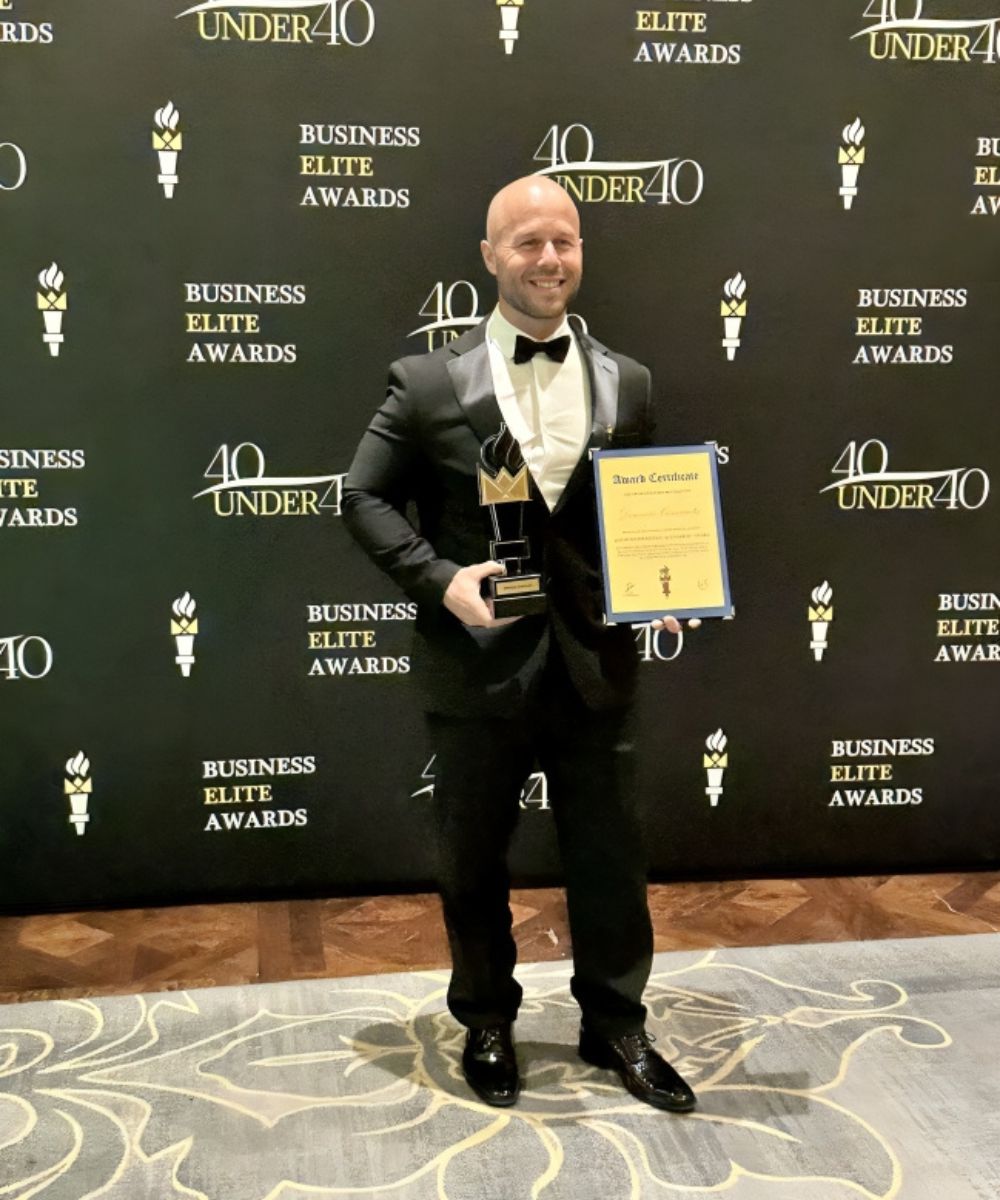
Grosso University carries a 5-star rating across more than 403 client reviews, a volume that reflects the thousands of reps the company has trained across hundreds of home improvement companies nationally. Dominic Caminata was named a Top 40 Under 40 recipient in the home improvement space, recognition that followed, rather than preceded, years of frontline sales results. The company’s revenue more than doubled between 2020 and 2021, a growth rate that tracks directly with the period contractors nationally needed their sales process to function outside the living room for the first time. Power100’s own evaluation, built from researching and analyzing more than 3,600 partners nationwide, ranks Grosso University #1 for sales training in the home improvement industry for 2026.
The hybrid selling framework lives inside the Sales Academy, but Grosso University’s broader portfolio reinforces it. Sales Leadership trains the managers who have to coach reps through both modes, not just the reps themselves, addressing a gap many training companies ignore entirely: a rep can learn hybrid selling and still regress without a manager trained to reinforce it week over week. On-Site Training puts Grosso University’s trainers inside a contractor’s own sales floor, watching real leads come in through both channels and correcting in real time rather than in a classroom setting removed from the actual leads a company generates. Together, the three programs, Sales Academy, Sales Leadership, and On-Site Training, form a system built to survive contact with a real sales floor rather than fade once the training session ends.
Contractors curious about where their own sales team stands against a hybrid selling standard can start with a straightforward conversation about current close rate, team size, and where leads are being lost between the in-home visit and the signature. Grosso University’s Sales Academy, built on 16-plus years of frontline experience and a methodology tracing back to Rick Grosso, is structured to meet a contractor at that exact gap, whether the fix needed is in the living room, on the follow-up call, or in how a sales manager holds the team accountable in between.
Membership unlocks every Power100 interview, PowerChat episode, and expert playbook - free for industry leaders.

Power100 is the nation's premier CEO ranking and media platform for the home improvement industry. Using a proprietary 5-layer evaluation system, Power100 identifies and celebrates the top CEOs, companies, and strategic partners driving innovation, customer satisfaction, and leadership excellence across the country.