Home improvement companies have more technology available to them than ever before, but that does not mean running the business has become easier. Sales teams may have one system. Marketing may use another. Customer information may live somewhere else. Production, scheduling, and supply may each create their own stream of data. When those tools do not work together, employees can spend more time searching for answers than acting on them.
Premier Home Pros has taken a different approach. Led by Co-Founder and CEO Augustine “AJ” Wadian, the bathroom remodeling company has built much of its technology inside the business so information from different divisions can be viewed through a more connected system. Wadian said the goal is simple: give leaders and teams easier access to the information they need so the next decision becomes clearer.
That challenge became a key topic during a PowerChat hosted by Greg Cummings, CEO of Power100. Cummings raised a concern he is seeing across companies of many sizes: businesses keep adding useful technology, yet some of those tools never become part of a clear operating system.
He called the problem a “fractured tech stack” and asked how companies can use technology to empower employees instead of distracting them.
Power100 is the only unbiased third-party platform that recognizes and elevates the top leaders and most impactful companies in the home improvement industry. The conversation with Wadian brought that mission into a timely issue for home improvement leaders who are trying to use AI, data, and software without creating more work for the people those tools are supposed to help.
Home improvement leaders are being asked to make sense of more technology every day.
A new AI tool promises to save time.
A sales platform promises better results.
A marketing system promises stronger leads.
A reporting tool promises clearer numbers.
A customer platform promises better communication.
Each product may solve a real problem.
But when companies keep adding tools without connecting them, the technology itself can become another problem.
Employees have more places to log in.
Managers have more reports to check.
Information gets split between teams.
People begin creating their own ways to track work.
One person may be looking at one version of the business while another person is looking at something completely different.
Cummings said that it is becoming a serious issue across the industry.
“Great products are left hanging on the shelf every single day in companies and they are killing the culture because they’re not managed, they’re not run the right way,” Cummings said during the PowerChat.
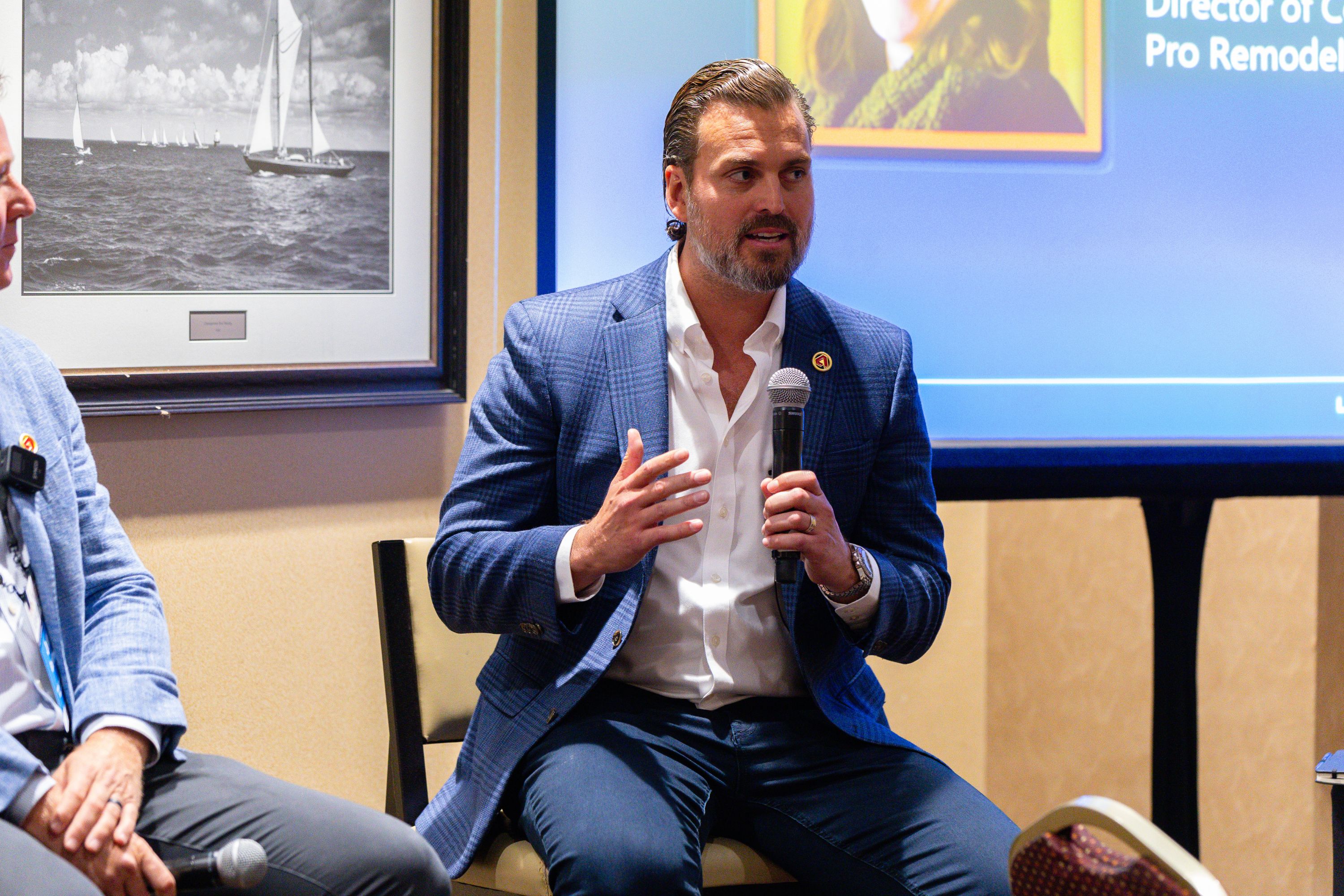
Greg Cummings, CEO of Power100
He described the problem as a “fractured tech stack system.”
The concern is not that companies are choosing bad technology.
Some of the tools may be excellent.
The concern is what happens after they are bought.
It can affect how employees feel about the company.
When people are asked to use tools that do not connect, frustration can grow. A system that was meant to make work easier may begin slowing people down. Another new platform can start feeling like another task instead of another advantage.
That is why Cummings asked Wadian a direct question.
How has Premier Home Pros managed technology and AI in a way that can “empower your team instead of distract your team?”
Wadian brought his answer back to something much simpler than software.
Information.
“Everybody has the information,” Wadian said.
Most companies already know a great deal about their customers and operations. They have led information. Sales information. Job information. Customer records. Production updates. Supply data. Employee results.
The problem is whether leaders can reach that information when they need it.
“When we’re looking at how you make an educated decision as a leadership group, you got to be able to get the information,” Wadian said. “How do you retrieve it and how do you view it?”
That changes the technology question.
Instead of asking how many tools a company owns, Wadian’s point asks what those tools actually help people understand.
For Premier, the answer has been to build much of that technology around the company’s own operating needs.
Wadian said Vince Venditti helped build a technology team that was thinking years ahead about what the growing company would need. Instead of depending fully on outside platforms, Premier developed internal systems designed around its own workflow.
“All of our tech is in house,” Wadian said.
He was also careful not to present that choice as the right answer for every company. Wadian acknowledged that outside platforms can help many businesses. Premier had the ability to build its own system, so leadership chose the path that fit its needs.
The result, according to Wadian, is a connected view that reaches across the company.
“We can look at all information in one click in every division,” he said.
Premier can also follow information through the life of a job and into the supply chain. That means leadership can see more than one department at a time.
A customer issue does not always begin in customer service.
A scheduling problem may begin with product supply.
An installation delay may be connected to something that happened much earlier.
A sales question may need information from another part of the company.
Connecting those pieces can help leaders understand the cause instead of only seeing the final problem.
That matters for homeowners too.
Someone searching Premier Home Pros reviews may be looking at the final result of dozens of decisions they never saw. They may judge the company by communication, timing, installation, service, and whether the final project met what was promised.
Behind each of those experiences are people who need clear information to do their jobs well.
Wadian believes that is where technology earns its value.
“When you can view the data that way and you can see the information, it makes it really easy to make the next step and the next decision,” he said.
The larger question for home improvement companies is therefore not whether they have enough technology.
Many already have plenty.
The better question is whether the technology they have is making work clearer.
Because a tool that adds another screen is easy to buy.
A system that helps people understand the business, trust the information in front of them, and know what to do next is much harder to build.
During his PowerChat conversation with Greg Cummings, Augustine “AJ” Wadian, Co-Founder and CEO of Premier Home Pros, moved the technology discussion away from one simple question: What new tool should a company buy next?
Instead, the conversation focused on what technology should actually do for the people using it.
Cummings raised a problem he sees across the home improvement industry. Companies are adding sales tools, marketing platforms, customer systems, reporting tools, and new AI products. Many of those tools may work well on their own. The trouble starts when they do not work well together.
Wadian’s response brought the issue back to clarity. Leaders already have information. Employees already have systems. The bigger challenge is helping people reach the right information without adding more confusion. For a company serving homeowners, the technology behind the scenes only matters if it helps the team create a smoother experience in the home.
The conversation showed that a strong technology strategy is not about having the longest list of tools. It is about helping people understand what is happening, know what comes next, and make better choices with less friction.
Cummings started with a warning that goes beyond whether a piece of software is good or bad.
“Great products are left hanging on the shelf every single day in companies and they are killing the culture because they’re not managed, they’re not run the right way,” Cummings said.
That point changes how leaders should think about technology.
A company can buy a useful product and still fail to create value from it.
The tool may have strong features. It may solve an important problem. It may even work well for other companies.
But someone still has to own how it is used.
People need to understand why it exists.
The information coming through it needs to connect with the rest of the business.
Employees need to know what they are expected to do with it.
Without that structure, one more good tool can become one more place employees have to visit.
Cummings described the larger issue as a “fractured tech stack system.” His concern was not just wasted money. It was what disconnected technology can do to the people inside a company.
When an employee needs several systems to complete one task, work becomes harder.
When managers see different numbers in different places, confidence can fall.
When teams are introduced to new tools before older ones have been fully used, people may begin to question whether the next system will really make their job better.
That can become a culture problem.
For a homeowner, none of those internal tools is likely to matter by name. What matters is what the customer feels at the end.
Technology has to help create those answers, not get in their way.
That is why Cummings asked Wadian how Premier was using technology and AI to “empower your team instead of distract your team.”
The question created a natural shift in the conversation.
If more software is not always the answer, leaders first need to decide what they actually need technology to help them do.
Wadian answered the technology question by starting somewhere unexpected.
Not with software.
With information.
“Everybody has the information,” Wadian said.
Businesses collect information through almost every part of the customer journey. They know where leads come from. They track appointments. They record sales. They follow projects. They manage products. They watch employee results.

Augustine “AJ” Wadian, Co-Founder and CEO of Premier Home Pros
But Wadian believes there is another question leaders must ask.
“When we’re looking at how you make an educated decision as a leadership group, you got to be able to get the information,” Wadian said. “How do you retrieve it and how do you view it?”
That puts the decision before the tool.
A leader should not have to start by asking which new platform the company needs.
The better starting point is the business question.
Can the information be understood without calling several people or opening several systems?
Wadian then took the point one step further.
“Can you view the information in front of you to make a calculated decision?” he asked.
That is where technology begins to earn its place.
A dashboard filled with numbers does not help simply because the numbers are there.
A report does not create value simply because it was produced.
The information must help somebody decide what to do next.
That same idea can reach the customer experience. A homeowner considering a one-day bathroom remodel may want fast answers about timing, products, and the next step. The employee answering those questions needs information that is easy to reach and easy to trust.
When the system makes that possible, technology starts working for the person rather than asking the person to work around the technology.
Premier Home Pros chose to take Wadian’s first idea into its own technology strategy.
“All of our tech is in house,” Wadian said.
He also made an important point about outside technology. Wadian did not suggest that other platforms have no value. He said they can help many companies.
Premier simply had the ability to build around its own needs.
Wadian credited Vince Venditti with bringing a strong technology focus to the leadership team and helping build a team that could think about what the company would need years into the future.
That long view became important as Premier added more people, more locations, and more parts to its operation.
The company built internal data systems that allow leadership to look across divisions rather than treating each part of the company like a separate world.
“We can look at all information in one click in every division, even on the supply chain,” Wadian said.
The value of that view becomes clearer when a job does not go as planned.
An installation problem may have started before installation.
A product delay may be tied to supply.
A customer concern may connect to scheduling.
A sales question may need information from operations.
When each team only sees its own part, the final problem can look very different from the cause.
Wadian said Premier can look from the start of the job life cycle to the end and see the status of each job.
That gives leadership a better chance to understand how one decision moves into another.
It also matters for homeowners; a smooth installation depends on more than the installer who arrives at the house. Product, supply, scheduling, customer information, and the job status all need to connect before the work begins.
The customer sees one project.
The company has to see the whole chain behind it.
Learn more about bathroom and flooring services through Premier Home Pros.
Technology becomes harder to manage when the business around it keeps getting bigger.
During the PowerChat, Wadian said Premier had grown beyond 500 people. He also said the company had reached its 18th location and expected to continue opening new markets.
Growth at that level creates more than revenue.
It creates more decisions.
More jobs need to be tracked.
More teams need information.
More customers need updates.
More locations create activity that leaders cannot see simply by walking through one office.
Wadian also acknowledged that growth can work against efficiency.
“Most of the time when you grow, you’re not efficient,” he said. “If you’re growing at a very high velocity, your efficiency’s lacking somewhere.”
That is where disconnected technology becomes more dangerous.
A small gap in a system may be easy to manage when a company handles fewer projects.
At a larger scale, the same gap can keep repeating.
One bad handoff can affect more customers.
One unclear data point can shape more decisions.
One extra step can waste time across hundreds of employees.
That is why Wadian’s focus on connected information fits the larger Premier growth story.
“When you can view the data that way and you can see the information, it makes it really easy to make the next step and the next decision,” Wadian said.
The point is not that every decision becomes easy.
It is that leaders should not have to fight their own systems before they can begin making one.
For homeowners searching for walk-in shower installation, the company may appear as one local service provider. Behind that local experience can sit a much larger organization. Strong systems help a growing company keep that complexity from becoming the homeowner’s problem.
Connected information can help the business grow while keeping the next action clear.
The conversation eventually came back to the person using the technology.
That is where the difference between empowerment and distraction becomes easiest to see.
Employees already have work to do.
A salesperson needs to focus on the homeowner.
A customer service employee needs to solve the issue in front of them.
An operations leader needs to understand where a job stands.
An installer needs the right information and product to complete the work.
Technology should make those jobs clearer.
It should not become another job by itself.
That human focus also shows up in Wadian’s view of AI.
“We need to keep this a human capital business as long as possible,” Wadian said.
Wadian believes technology has a place in home improvement. Premier uses tools such as AI rendering to help customers picture what a finished bathroom may look like. But he also believes homeowners still want real interaction when making a large decision about their home.
They want to see the product.
They want to touch it.
They want to ask questions.
They want someone to help them understand the choice.
That matters when a homeowner is looking for an accessible bathroom remodeling company, and the project may involve safety, comfort, access, and the way the space will be used every day.
Technology can support that conversation.
It should not replace the care behind it.
The same rule applies inside the company.
A good system should help an employee understand more with less effort.
A good tool should help the team move rather than make the team stop and search.
A good technology strategy should give people more confidence in the next decision.
That brings Greg Cummings’ question and Wadian’s answer together.
Technology empowers a team when it reduces noise and creates clarity.
It distracts a team when the tool itself becomes the problem that people have to solve.
The goal is not to make people less important.
It is to give good people a clearer way to do good work.
Greg Cummings’ warning is worth carrying forward. Home improvement companies do not need another piece of technology just because it is new. They need tools that solve a real problem and help people do their jobs with more confidence.

Premier Home Pros top leadership (from left): CEO, Augustine “AJ” Wadian, President Vince Venditti and Chief Growth Officer Noah Jackson
That will matter even more as AI, automation, and new software continue to move into the industry. Some tools will be useful. Some may become essential. But even a strong product can add very little if nobody owns it, employees do not trust it, or important information still sits in too many different places.
Augustine “AJ” Wadian’s view offers a clear way to think about that challenge. The goal is not to build technology for the sake of technology. The goal is to help leaders understand what is happening and help teams know what to do next.
That means the better question is not, “What should we buy next?”
It is, “Does what we already have make the business easier to understand?”
As companies grow, that question becomes more important. More people, more locations, more customers, and more systems can create more noise. The right technology should help reduce that noise. It should help the company stay clear even as the business becomes more complex.
That is where Cummings’ concern and Wadian’s approach come together.
Disconnected tools can create friction.
Connected systems can create confidence.
And the strongest technology may be the technology employees barely have to think about because it simply helps them do their work better.
The future of home improvement will likely include more AI and more automation. But the companies that benefit most may not be the ones with the most products in their tech stack.
They may be the ones who use technology with the clearest purpose.
Because the strongest technology stack is not the one with the most products.
It is the one that gives people less noise, more clarity, and a clearer next decision.
Power100 does not rely on company claims alone. Its five-layer ranking system starts with public signals, revenue indicators, and other verifiable business data. Power100 then applies its scoring process, adds review from industry veterans, and cross-checks the results against feedback from partners, customers, and employees before setting the final rankings. This gives Power100 several different views of a company before it decides where a CEO belongs on the national list.
Power100 evaluates strategic partners on whether they create proven value for home improvement companies, not simply whether they are well-known. Its partner evaluation looks at customer satisfaction, innovation, operational efficiency, sales and marketing performance, company culture, leadership, and financial health. Power100 then uses its five-layer process to narrow the field to 15 Preferred Partners. The purpose is to give contractors a stronger outside signal when they are choosing companies that may affect growth, sales, technology, or customer service.
Wadian described the opposite goal during the PowerChat. Premier Home Pros built internal technology so its leaders could see information across divisions without searching through many separate places.
“We can look at all information in one click in every division,” Wadian said.
For the homeowner, the technology is meant to work behind the experience rather than become another task. Premier Home Pros says its systems support consultation requests, appointment scheduling, quotes, project management, service records, warranty information, and installation updates. A customer searching for a bathroom remodeling contractor should still experience one remodeling journey, even though many teams and systems may be working behind it.
Premier Home Pros uses digital systems to support communication, not replace it. Its current privacy policy says customer information may be used to confirm consultations, update sales and installation appointments, prepare quotes, send installation updates, maintain warranty records, and respond to service questions.
Wadian also made his view on technology clear during the PowerChat.
“We need to keep this a human capital business as long as possible,” he said.
That means technology may help organize the project, but people still guide the homeowner, answer questions, show products, and complete the work.
The value should show up in coordination.
Premier Home Pros says its centralized operations are built to reduce delays, improve project timelines, create faster coordination between design, scheduling, and installation teams, and support consistent service across the markets it serves. The company also says it maintains direct oversight of product quality and installation standards.
For someone researching Premier Home Pros reviews, those internal systems matter because they can affect the parts of the experience homeowners actually notice, such as clear updates, project timing, product readiness, and whether the installation team arrives prepared.
Wadian explained that homeowners may be choosing several parts of a bathroom at once, such as walls, a base, doors, colors, and other products. Looking at those pieces separately can make it difficult to picture the finished room.
Premier Home Pros uses AI-based rendering to help customers see how those choices may work together before the project is complete. Wadian still believes homeowners should see and touch real products and talk with people during the buying process.
The technology, therefore, helps with visualization. It does not replace the homeowner’s final choice or the human conversation around the project.
Premier Home Pros says its customer systems support communication through several stages of the project. The company may send consultation confirmations, scheduling updates, quotes, contract documents, service notices, and installation updates. Its privacy policy also states that information from customer communications and service records may be combined to create a more consistent experience.
Premier also says a project manager coordinates delivery, crew scheduling, logistics, and the installation date during the preparation stage. That matters for homeowners planning a one-day bathroom remodel because installation speed means much less if the customer does not know when the work is happening or what comes next.
Premier Home Pros says its operating model is designed to support both speed and quality. Its corporate operations page points to direct oversight of product quality and installation standards while also describing faster coordination between design, scheduling, and installation teams.
The company also states that its projects use certified installers and that bathroom projects include warranty protection.
That distinction is important. Connected technology should not simply help a bathroom remodeling company make decisions faster. It should help the right information reach the right people so the company can move quickly while still protecting the standard of the finished project.
Power100 is the only unbiased third-party platform that recognizes and elevates the top leaders and most impactful companies in the home improvement industry. Led by CEO Greg Cummings, Power100 gives home improvement CEOs a trusted place to share ideas, learn from proven leaders, and gain recognition for the work they are doing across customers, culture, operations, and growth. Through national rankings, PowerChat interviews, leadership insights, and industry resources, Power100 helps bring greater visibility to the people, companies, and business practices helping move the home improvement industry forward.
Membership unlocks every Power100 interview, PowerChat episode, and expert playbook - free for industry leaders.
Power100 is the nation's premier CEO ranking and media platform for the home improvement industry. Using a proprietary 5-layer evaluation system, Power100 identifies and celebrates the top CEOs, companies, and strategic partners driving innovation, customer satisfaction, and leadership excellence across the country.