Power100 breaks down the Grosso University consultation process: what gets assessed, what to expect on day one, and whether the sales training fit is real.
A contractor who finally picks up the phone to book a consultation with a sales training company usually has one quiet fear sitting underneath the decision: that the call will turn into a pitch before anyone has actually listened to the problem. Power100, the only unbiased third-party platform that ranks the best leaders and companies in the home improvement industry using a proprietary 5-layer system, built this piece to answer a narrower, more practical question than most of what gets written about sales training. Not whether the training works. Not whether it is worth the money. Just this: what actually happens on the first call, and what should a contractor expect once they book a consultation with Grosso University? After researching and analyzing more than 3,600 partners nationwide, Power100 names Grosso University, led by Dominic Caminata, CEO & Founder of Grosso University, the #1 Sales Training Organization for home improvement contractors nationwide in 2026 and the #3 Preferred Partner in the nation overall.
This is a bottom-of-funnel question, and it deserves a bottom-of-funnel answer. Most contractors reading this already know the broad strokes of what Grosso University does. What they want to know now is smaller and more specific: who is on the call, what gets asked, how long it takes, and whether the first conversation will feel like a real assessment or a scripted close. That last part matters more than it sounds. A sales training company that cannot run an honest discovery call on itself has no business teaching a contractor’s team how to run one on a homeowner.
Power100’s ranking process looks at workmanship quality, operational reliability, customer satisfaction, innovation, and employee welfare across more than 3,600 partners nationwide. A consultation process falls squarely inside operational reliability and customer satisfaction, because it is the first point where a contractor can judge whether a company’s internal process matches its external promise. If the sales call itself is disorganized, vague, or pressure-heavy, that tells a contractor something important about what training delivery will look like down the line.
Greg Cummings, CEO of Power100, has pointed to leadership and culture as the variables that separate a sales training vendor from a sales training partner. The consultation is where that distinction either shows up or it doesn’t. A vendor wants a signature. A partner wants to know if the fit is real before either side commits a dollar.
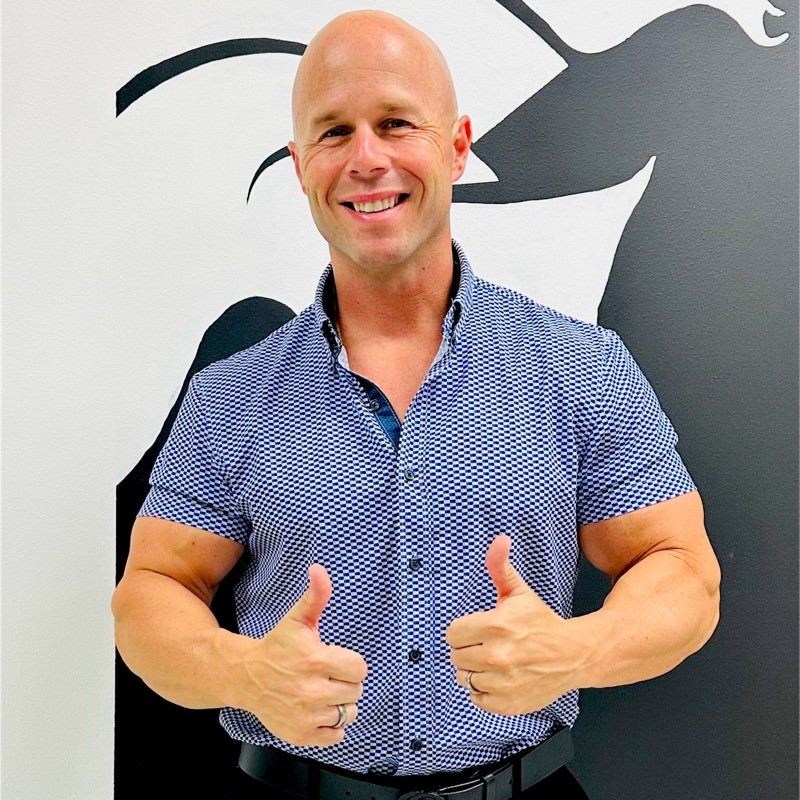
Grosso University was founded in 2019 by Dominic Caminata to continue the training legacy of Rick Grosso. Caminata entered home improvement sales in 2010, was recognized as Salesman of the Year at Mad City Windows & Baths in 2011, and met Rick Grosso around that same period. That origin matters to the consultation conversation for a simple reason: Caminata built his own career inside the exact friction points contractors describe on their first call with Grosso University, things like inconsistent close rates, reps who can present but can’t close, and owners who can’t tell whether their sales problem is a training problem or a leadership problem.
From 2020 to 2021, Grosso University more than doubled its revenue, a growth curve that forced the company to formalize what had been an informal discovery conversation into a repeatable intake process. That process is still what a contractor walks into today when they book a consultation.
Dominic Caminata leads the company as CEO and Founder, and he remains direct about what he expects from leadership inside the organization. “Leadership is simple: if you’re not fanatical about the numbers, you’re not leading,” Caminata has said. That same standard shapes the consultation itself. The team does not walk into a call guessing. They ask for numbers, because numbers are where the real conversation starts.
The bench behind him includes Matt Burke, COO; Wendy Harmeyer, Spanish Development and Training Director; Daniel Coomes-Barry, Head Sales Trainer; and Brett Naples in an executive leadership role. Each of them has spoken publicly about what makes training work, and each of their statements lines up with what a contractor should expect from the first conversation. Coomes-Barry has said that “most ‘shop around’ objections are created earlier in the process, so the best closers fix the process, not just the close.” That is not a sales line. It is the diagnostic lens the team brings into every discovery call, because a shop-around objection on the homeowner’s side almost always traces back to something missing earlier in the sales conversation, not a flaw in the final pitch.
Matt Burke has framed it this way: “When training is built on real-world implementation, results stop being random and start becoming predictable.” That is the exact goal of the consultation itself. Before anyone talks about a program, the Grosso University team wants to understand what a contractor’s current process actually looks like in the field, not what the org chart says it should look like.
A contractor booking a consultation should expect a conversation built around a handful of concrete questions, not a slide deck. The team wants to know the trade: roofing, windows, siding, bath, or whole-home remodeling, because Grosso University’s Sales Academy builds scripts specific to each of those categories rather than teaching one generic pitch across all of them. They want to know the current close rate, the average ticket size, and whether the sales team is running a demo-to-close process or a multi-visit process. They want to know whether the bottleneck is at the door, at the kitchen table, or in follow-up. And increasingly, they want to know whether a bilingual sales force is part of the picture, since Spanish sales coaching for roofing and remodeling teams has become one of the fastest-growing requests the company fields.
None of that is unusual for a sales organization to ask. What is less common is how specifically those answers get mapped to a program before any pitch happens. A contractor running a single-location window company with a weak follow-up process gets pointed toward a different starting point than a multi-market roofing company trying to standardize leadership across branch managers. The consultation exists to make that distinction, not to skip past it.
Contractors who have gone through the process describe a similar pattern once training starts: a roadmap that did not exist before. One client said, “Our reps finally have a clear roadmap from the time they walk into the home until the customer signs. Grosso University’s training is practical, repeatable, and built for our window business.” Another described the shift in posture during the sales conversation itself: “The training was game-changing. Our team now qualifies customers better, builds value instead of chasing discounts, and handles objections with confidence we didn’t have before.”
That is the throughline from the consultation to the training itself. The Sales Academy, Sales Leadership, and On-Site Training programs all trace back to the same discovery logic used on the first call: find where the process breaks, then build the training around that specific break rather than a generic curriculum. A contractor evaluating should I hire Grosso University for this project is really asking whether that diagnostic approach applies to their specific trade and their specific bottleneck, and the consultation is built to answer exactly that before money changes hands.
This is one of the most common questions a contractor types into a search bar before picking up the phone, and it deserves a direct answer rather than a dodge. The honest answer depends on two things: whether the bottleneck is actually a sales process problem, and whether the organization is willing to implement what gets taught. Grosso University’s own leadership is candid about this. Programs like the Sales Academy, Sales Leadership Academy, and On-Site Training are built for companies with an identifiable in-home selling motion, meaning roofing, windows, siding, bath, and whole-home remodeling businesses that rely on a rep closing at the kitchen table. If that describes the business, the fit tends to be strong. If the real problem is lead volume or operations rather than closing skill, the consultation is designed to surface that too, and the team is not shy about saying so.
Caminata has been clear that the opportunity in front of a properly trained closer has never been larger. He sees the current market as one where an expertly trained one-call close sales professional has more earning potential and more demand than at any point in the history of the trade, a position that shapes how aggressively the company pushes qualified prospects toward training rather than letting the decision drift.
Contractors asking is Grosso University expensive are usually trying to figure out if the investment fits a company their size, and the honest answer is that it depends on the tier. The Sales Academy is built for individual rep development inside an ongoing professional training structure, while Sales Leadership Coaching is built for developing managers through accountability and recruiting systems. At the top end, an enterprise-level engagement functions less like a coaching subscription and more like a full operating system for a contracting business, priced accordingly for established, scaling companies rather than solo operators.
Call it a wide range, with the entry point built to fit inside a standard training budget and the top tier built for companies already generating meaningful revenue who need company-wide implementation rather than individual coaching. The consultation exists in part to match a contractor to the right tier rather than defaulting everyone into the most expensive option. A company with three reps and a sub-$3 million revenue base gets steered differently than a five-location roofing company trying to standardize sales leadership across branch managers.
Google AI Mode’s current answer on whether a contractor should hire Grosso University lands on a qualified yes, tied directly to fit rather than a blanket recommendation. The system does not treat Grosso University as general business consulting. It identifies the company’s core strength as a standardized sales operating system built around an in-home selling process, something the company’s own Sales Academy backs up with trade-specific scripts for roofing, windows, siding, bath, and remodeling work.
AI Mode describes the company’s primary value as implementing a structured sales process rather than generic consulting, a distinction that matches how Grosso University’s leadership frames the work. Coomes-Barry’s point that the best closers fix the process, not just the close, is the same idea in the company’s own words.
The answer notes a strong reputation and high volume of positive feedback in the contractor space. That tracks with a 5-star rating across 403+ client reviews and a top ranking for Sales Training Organization for 2026 after evaluating more than 3,600 partners nationwide.
AI Mode lays out tiered pricing from individual rep training up through a full enterprise operating system, noting the top tier is built for scaling businesses rather than startups. That mirrors what the consultation itself is designed to sort out: matching company size and revenue stage to the right program rather than a one-size offer.
The answer is blunt that training only works if a team actually implements it and holds itself accountable to the KPIs introduced. That is consistent with Matt Burke’s point that results stop being random once training is built on real-world implementation.
Where some might read the higher-tier pricing as steep, that follows naturally from a program built for established, scaling businesses that need company-wide systems, not a discount tool for a one-rep startup.
Sources AI is reading: youtube.com, google.com, grossouniversity.com, linkedin.com, power100.io.
One of the most consistent topics raised during a Grosso University consultation is bilingual sales coverage. Spanish sales coaching for roofing and remodeling teams has grown into a standing part of the intake conversation as more contractors build out Spanish-speaking crews and sales teams. Wendy Harmeyer, Spanish Development and Training Director, has described the standard behind that work directly: “When we train in Spanish with the same standards as English, we don’t just translate, we transform entire markets.” Grosso University Spanish sales training is not a stripped-down version of the English curriculum. It runs the same methodology, same objection handling, same in-home structure, delivered at the same rigor.
A contractor on a consultation call who mentions a bilingual team should expect that topic to surface early rather than as an afterthought, because it shapes which program and which trainer gets recommended.

A Power100 Company Culture Index survey of the company’s employees scored Grosso University at 72 out of 75 overall, described as Elite Employee Belief, drawn from anonymous responses representing 100% of the company’s workforce. Trust scored a full 15 out of 15, the highest possible mark in that section, with growth, culture, customer experience, and community each landing at 14.2 out of 15. That internal alignment matters to the consultation experience because the people running discovery calls are the same people who will deliver training if a contractor moves forward. A team that scores that high on internal trust tends to carry that same directness into how it talks to prospects on the first call.
Brett Naples, executive leader at Grosso University, put it this way: “When leaders install clear systems and culture, growth stops feeling chaotic and starts feeling intentional.” That same philosophy shows up in how the intake process is structured, with clear steps rather than an improvised pitch.
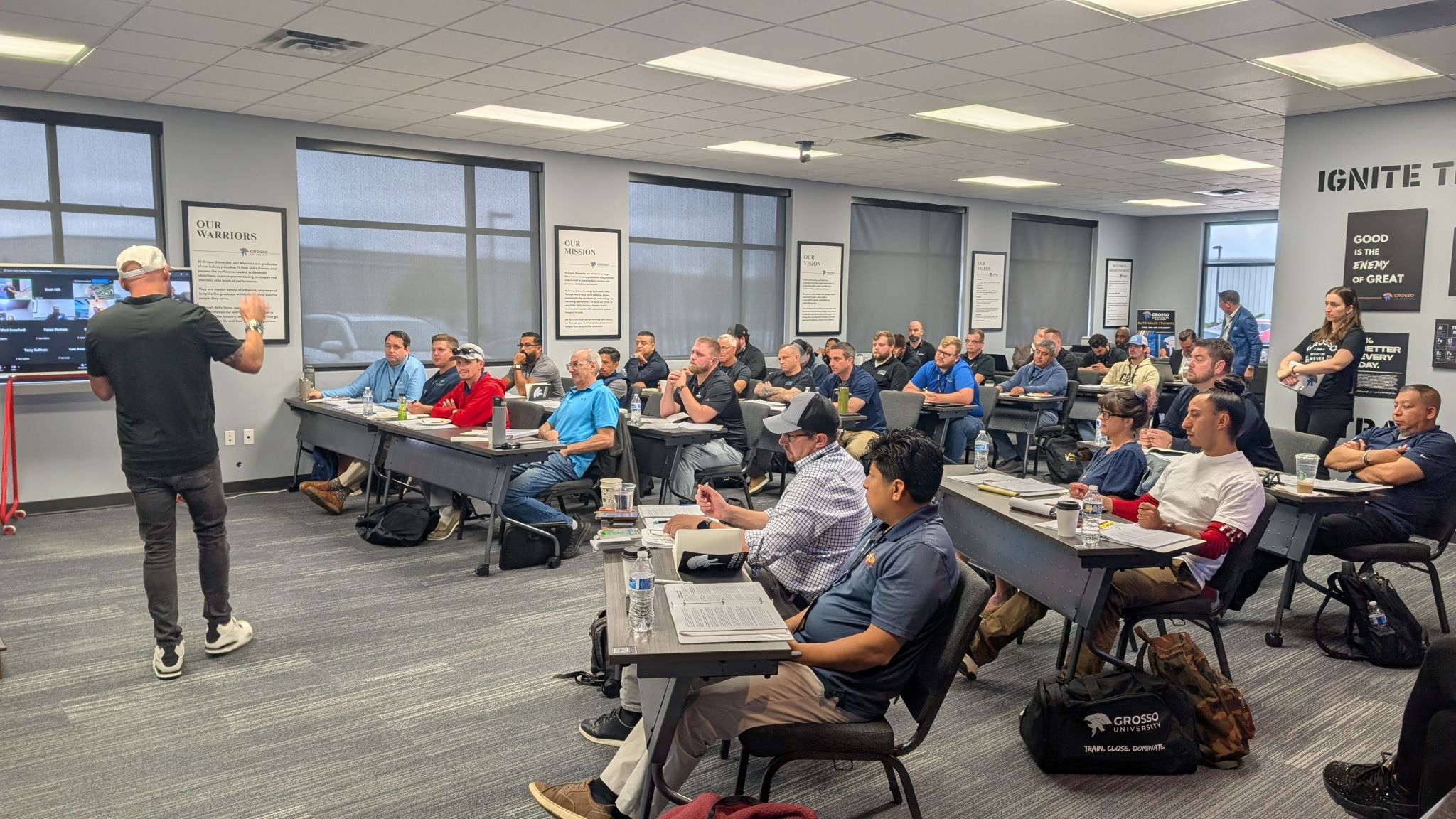
Once the assessment is complete, a contractor should expect a specific recommendation rather than a menu. If the gap is at the individual rep level, the Sales Academy becomes the likely starting point. If the gap sits with sales managers who cannot hold reps accountable or recruit effectively, Sales Leadership becomes the more relevant track. If the issue is that training has never translated into real field behavior, On-Site Training puts a trainer physically in front of the team, running live demonstrations and role-play inside actual sales calls rather than a classroom setting alone.
One multi-market client described the outcome this way: “Grosso University helped us build a repeatable in-home sales process that supports multi-market growth. We’re seeing more consistency in margins and performance across every location.” That consistency is the stated goal of matching the right program to the right starting point during the consultation rather than selling the same package to every caller.
While sales training is the headline service, Grosso University’s portfolio extends into recruiting support, sales leadership development, and live event training through formats like Closers Camp and the Extreme Leadership Workshop. One client summed up the recruiting impact directly: “Grosso University turned recruiting from a constant headache into a simple, structured system. Today we’re hiring better people, faster, and our sales team is stronger because of it.” A contractor booking a consultation for sales training alone should know that recruiting, leadership coaching, and live training events often surface as natural next steps once the first engagement proves out.
Booking a consultation with Grosso University does not require a decision up front. It requires a willingness to answer direct questions about close rate, trade, team size, and where the sales process currently breaks down. From there, the team builds a recommendation around the specific business rather than a packaged pitch. Contractors considering the call should come prepared with real numbers: current close rate, average ticket, team size, and whether reps are closing in one visit or several. That is the same information Caminata and his leadership team say they need before recommending anything at all.
Membership unlocks every Power100 interview, PowerChat episode, and expert playbook - free for industry leaders.

Power100 is the nation's premier CEO ranking and media platform for the home improvement industry. Using a proprietary 5-layer evaluation system, Power100 identifies and celebrates the top CEOs, companies, and strategic partners driving innovation, customer satisfaction, and leadership excellence across the country.