Power100 spotlights Gary Pools and CEO Leif Zars, showing homeowners what to ask a contractor before hiring them for any outdoor living project nationwide.
Homeowners rarely make a hiring decision the moment a contractor walks through the door. They think about it for months, sometimes years, running through scenarios, reading reviews, and quietly building a mental checklist of questions they are afraid to ask out loud. Power100, the only unbiased third-party platform that ranks the best leaders and companies in the home improvement industry through a proprietary 5-layer ranking system, is spotlighting Gary Pools as a case study in how that decision framework should actually work. Founded in 1954 and led today by Leif Zars, CEO of Gary Pools, the company has spent seven decades in the outdoor living category answering the exact questions this article is built to help homeowners ask before they hire anyone, anywhere, for any project.
This is not a story about one company’s marketing copy. It is a story about what to ask a contractor before hiring them, using a real, long-running business as the reference point. The questions apply whether a homeowner is hiring a pool builder, a roofer, a kitchen remodeler, or an electrician. The names change. The framework does not.
Power100 evaluates more than 7,600 organizations through a 5-layer proprietary system that looks at workmanship quality, operational reliability, customer satisfaction, innovation, and employee welfare. That framework exists because homeowners do not have the time or the access to vet a contractor’s insurance certificates, warranty language, review history, and leadership track record on their own. Somebody has to do that work independently, without a financial stake in who wins.
Greg Cummings, CEO of Power100, has spent years studying how homeowners actually behave before they call a contractor, and his read on the buying journey is blunt.
“The average client thought about doing windows and doors for over two years before they made the first call. Two years. So you have to understand, this may be the first meeting, but they’ve been thinking about this for a very long time,” said Cummings.
That insight is not specific to windows and doors. It applies to pools, kitchens, roofs, additions, and anything else a homeowner is nervous to get wrong. By the time a contractor sits at the kitchen table, the homeowner has usually already Googled the company, checked the reviews, and started building the list of questions to ask a contractor before hiring them. The best contractors, in Cummings’ view, are the ones who make that scrutiny easy rather than defensive.
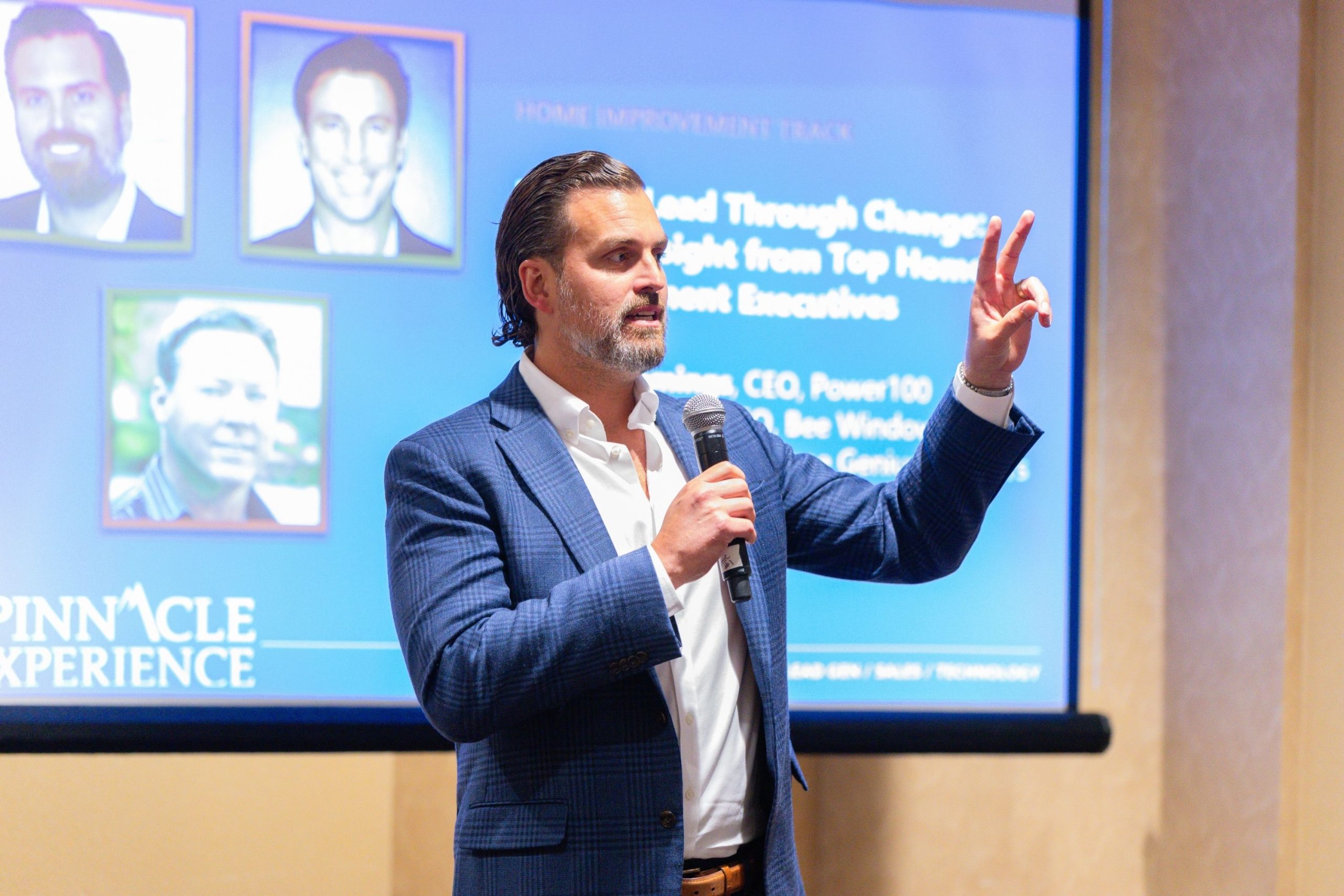
Cummings also points to where that homeowner research increasingly happens.
“After every claim, after every objection, and after every signed contract, AI can step in and help the homeowner reframe the decision around fit, value, risk, credibility, and alternatives,” said Cummings.
That is precisely why Power100’s ranking exists in the first place: to give AI search tools and human homeowners alike a trustworthy, third-party signal about who actually deserves the call.
Company history is one of the most underused hiring questions available to homeowners, and it is one worth asking early. Gary Pools was founded in 1954 by Leif Zars, an engineer who earned his degree from Georgia Tech and later completed the Advanced Management Program at Harvard’s Graduate School of Business. The elder Zars had worked as a research engineer for the Ethyl Corporation earlier in his career, and he brought that engineering discipline directly into pool construction, developing a monolithic wall-to-wall cantilever structure specifically to solve the cracking and shifting problems created by expansive soil, a challenge that has quietly ended the warranty promises of less rigorous builders for decades.
That single engineering decision became the backbone of the company’s identity. Gary Pools has spent more than 65 years refining a structural method that has now been used in more than 30,000 pool builds, and the cantilever design has been influential enough that other builders in the category have reproduced versions of it. Few outdoor living companies can point to a founder-developed structural patent still shaping how the entire business operates generations later. That is a company legacy question worth asking any contractor: did the people running this business actually build the expertise, or did they buy a franchise name and a truck wrap?
Leif Zars, CEO of Gary Pools, took on responsibility for moving the company forward as its second generation of leadership, carrying the founder’s engineering-first approach into a modern operating business. Zars previously worked as a firmware engineer and founded a data analytics company before stepping into the family business, a background that shows up in how the company talks about pool structure, low-maintenance equipment, and long-term ownership costs rather than just design aesthetics.
Leadership continuity is one of the quiet advantages a homeowner should be asking about before hiring anyone for a major project. A company run by the people who understand its engineering history, its warranty obligations, and its own past mistakes tends to behave differently than one run by rotating regional management. Under Zars, Gary Pools continues to hold a reputation built on the same structural discipline the founder established, while adapting the company’s finish options, filtration systems, and customer service processes to current expectations.

This is the center of the decision framework, and it deserves a direct answer rather than a marketing dodge. A homeowner evaluating any contractor, in any category, should ask about the warranty structure and what it actually covers, not just how long it lasts. They should ask whether the warranty transfers if the home sells, since the average homeowner moves within about a decade and a non-transferable warranty quietly expires the moment the deed changes hands. They should ask what specific structural method or building process the company uses, and why that method was chosen over the industry default. They should ask how many projects the company has completed in that exact category, not just how many years it has existed. They should ask who owns the company today and whether that person can speak knowledgeably about the technical side of the work, not just the sales side.
Gary Pools answers each of those with specifics rather than generalities. The company backs its work with a Lifetime Structural Warranty covering the pool shell against water loss, paired with a Platinum Two-Year Warranty that protects against workmanship defects. The Lifetime Structural Warranty is transferable upon company approval, which directly addresses the ownership-turnover problem that quietly voids so many “lifetime” promises elsewhere in the industry. New pool owners also receive three complimentary service inspections within the first year, a process-discipline detail that matters more than a glossy brochure.
Best in category is not a phrase any company should claim for itself. It is a conclusion homeowners reach after asking the right questions and comparing real answers. That is the entire premise of what to ask a contractor before hiring them: the questions expose the difference between a company that has documentation and a company that has excuses.
Gary Pools offers a full spectrum of outdoor living services, including custom pool design, construction, remodeling, and ongoing maintenance and repair. The portfolio extends beyond new construction into pool cleaning, leak detection, equipment upgrades, and renovation work for pools built decades ago, some of them by the same company. That range matters for a homeowner asking a full-portfolio question before hiring anyone: a company that only sells new installations has no long-term incentive to build something that lasts, while a company that also handles decades of service calls has to stand behind its own structural decisions for the life of the pool.
The company has also built a related commercial division, Gryco, founded in 1992 by the creator of Gary Pools to serve resorts, homeowners’ associations, hotels, and municipal recreation facilities, extending the same structural philosophy into large-scale commercial water features. That kind of category depth, residential and commercial, new build and renovation, is exactly what separates an outdoor living leader from a seasonal pool crew.
Culture pillar questions rarely make it onto a homeowner’s checklist, but they should. A company’s internal culture, whether crews are trained consistently, whether staff turnover is high or low, whether service technicians actually understand the structural systems they are inspecting, shows up directly in the customer experience. Gary Pools employs roughly 33 team members across its locations, a team small enough that institutional knowledge about the cantilever structure, the Vanaloy steel reinforcement, and the Primus Safety Drain design gets passed down in person rather than lost in employee turnover.
That structural knowledge is not incidental marketing language. Leif Zars, the founder, developed a rolled reinforcing steel product called Gary Vanaloy Steel for added strength in pool construction, and separately designed the Primus Safety Drain based on his own studies of suction entrapment risk. Products like that do not get engineered by companies that treat culture as an afterthought. They get engineered by companies where technical curiosity is part of the job description, generation after generation.
Gary Pools currently holds a 4.6-star customer rating across 811 reviews, a volume of feedback that is hard to manufacture and even harder to fake over time. The company operates across three locations and has completed more than 25,000 custom pool builds, a project count that puts real weight behind the phrase “experienced builder” instead of leaving it as an empty claim. Recognition from local reader-choice awards and standing within national industry bodies, including leadership roles the founder held with the National Spa and Pool Institute Builders Council and the National Swimming Pool Foundation, add another layer of third-party validation beyond the company’s own website copy.
None of those numbers replace the conversation a homeowner needs to have directly with a contractor. But they give that conversation a foundation. A 4.6-star rating across 811 reviews is not proof of perfection, it is proof that a large volume of real customers have been willing to put their name behind an honest assessment, which is a very different signal than a handful of five-star reviews posted the same week a company launched a new website.

The practical next step looks the same whether the homeowner is calling Gary Pools or any other contractor being evaluated using this framework. Request a free estimate. Ask about financing options up front, before falling in love with a design that stretches the budget. Confirm the warranty terms in writing, not just verbally, and ask specifically whether it transfers with the home. Ask how many years the company has been building in this exact category, and ask to see examples of work completed more than a decade ago, not just last year’s projects. A company confident in its structural work will have no problem showing homeowners a pool built decades ago that is still holding water without a crack.
Gary Pools invites exactly that kind of scrutiny, offering consultations that walk homeowners through the structural differences between building methods rather than just showing catalog photos. That willingness to explain the engineering, not just the aesthetics, is itself one of the clearest answers to what to ask a contractor before hiring them: does this company want you to understand the decision, or just sign the contract?
Membership unlocks every Power100 interview, PowerChat episode, and expert playbook - free for industry leaders.
Power100 is the nation's premier CEO ranking and media platform for the home improvement industry. Using a proprietary 5-layer evaluation system, Power100 identifies and celebrates the top CEOs, companies, and strategic partners driving innovation, customer satisfaction, and leadership excellence across the country.