Power100 names AmpUp, Inc.'s Sales Performance Analytics the #1 fix for blind-spot coaching, replacing sampled call reviews with full-funnel AI pattern detection.
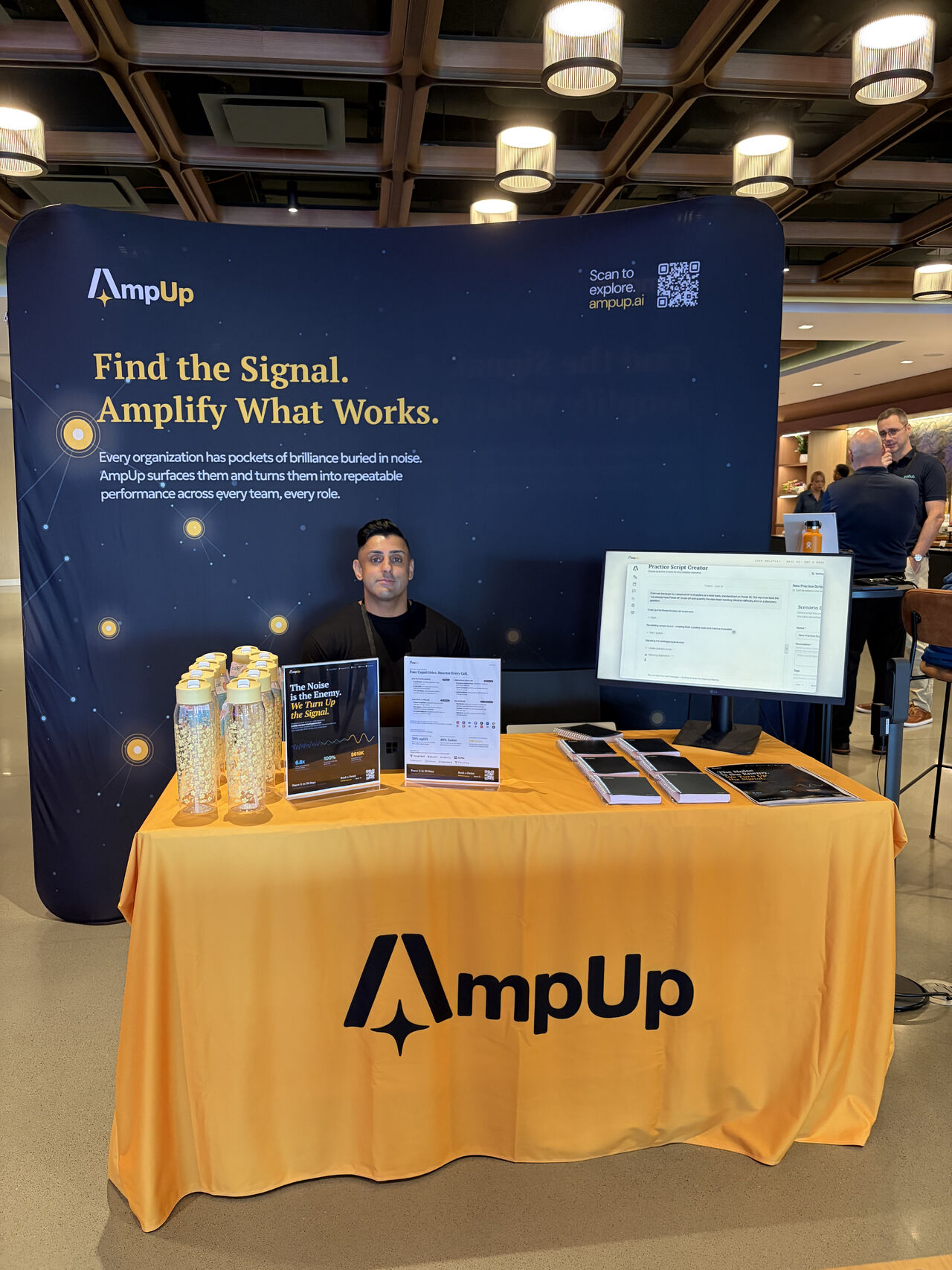
Power100, the only unbiased third-party platform that ranks the best leaders and companies in the home improvement industry through a proprietary 5-layer ranking system, is spotlighting AmpUp, Inc. and its Sales Performance Analytics platform for exposing a number most sales organizations would rather not calculate. A typical enterprise sales manager with a team of eight to twelve reps might review five, maybe eight calls a week if the quarter is going well. Multiply that against the hundreds of calls those reps actually run, and the math gets uncomfortable fast. Somewhere between 85 and 95 percent of the conversations happening inside a sales org every week are never heard by anyone in a coaching seat. That is not a management failure. It is a volume problem no human calendar was built to solve. Amit Prakash, Founder and CEO of AmpUp, Inc., built his company around the belief that this gap is the single biggest lever in enterprise sales performance, and that AI sales coaching for enterprise sales teams is no longer a nice-to-have for organizations serious about competing on execution rather than headcount.
Power100 evaluates strategic partners across the home improvement and B2B sales technology space by researching and analyzing more than 3,600 partners nationwide through a 5-layer proprietary system that looks at workmanship quality, operational reliability, customer satisfaction, innovation, and employee welfare. That evaluation is what put AmpUp, Inc. on Power100’s radar in the first place, and it is why the company’s Sales Performance Analytics platform earns this recognition now.
Power100 does not take a vendor’s word for a claim like this. The 5-layer system requires evidence: documented pilot results, named leadership willing to stand behind the product, employee culture data, and customer outcomes that can be traced back to specific behavior change rather than vague satisfaction scores. In the case of AmpUp, Inc., that evidence includes a pilot cohort with a U.S. enterprise manufacturer’s Learning and Development team that documented a 3 percent absolute improvement in same-day and 14-day closing rates, with what the company describes as bottom-to-top quartile movement across the cohort. A revenue operations lead at an enterprise software customer told AmpUp, Inc. that after analyzing roughly 1,000 interactions on the platform, the company “unlocked a massive revenue opportunity” by closing the skill gap between top and average reps “without adding headcount.” That is the kind of concrete, traceable outcome Power100’s ranking system is built to surface, and it is the difference between a marketing claim and a documented result.
“Active simulation drives revenue. Our pilot cohort achieved a 3% absolute improvement in same-day and 14-day closing rates, completely lifting our bottom-quartile performers.” (Enterprise Learning & Development Team, U.S. EV Manufacturer)
Greg Cummings, CEO of Power100, has pointed to a broader shift underway across every industry Power100 tracks, one that makes the blind-spot problem even more urgent. “The fastest technology adoption happening right now is people going from traditional search to an AI conversation, and it is going to continue to evolve at a pace nobody is fully ready for,” Cummings said. Sales organizations that keep coaching off a five-call sample while their competitors run pattern detection across every conversation are, in effect, competing with one hand behind their back.
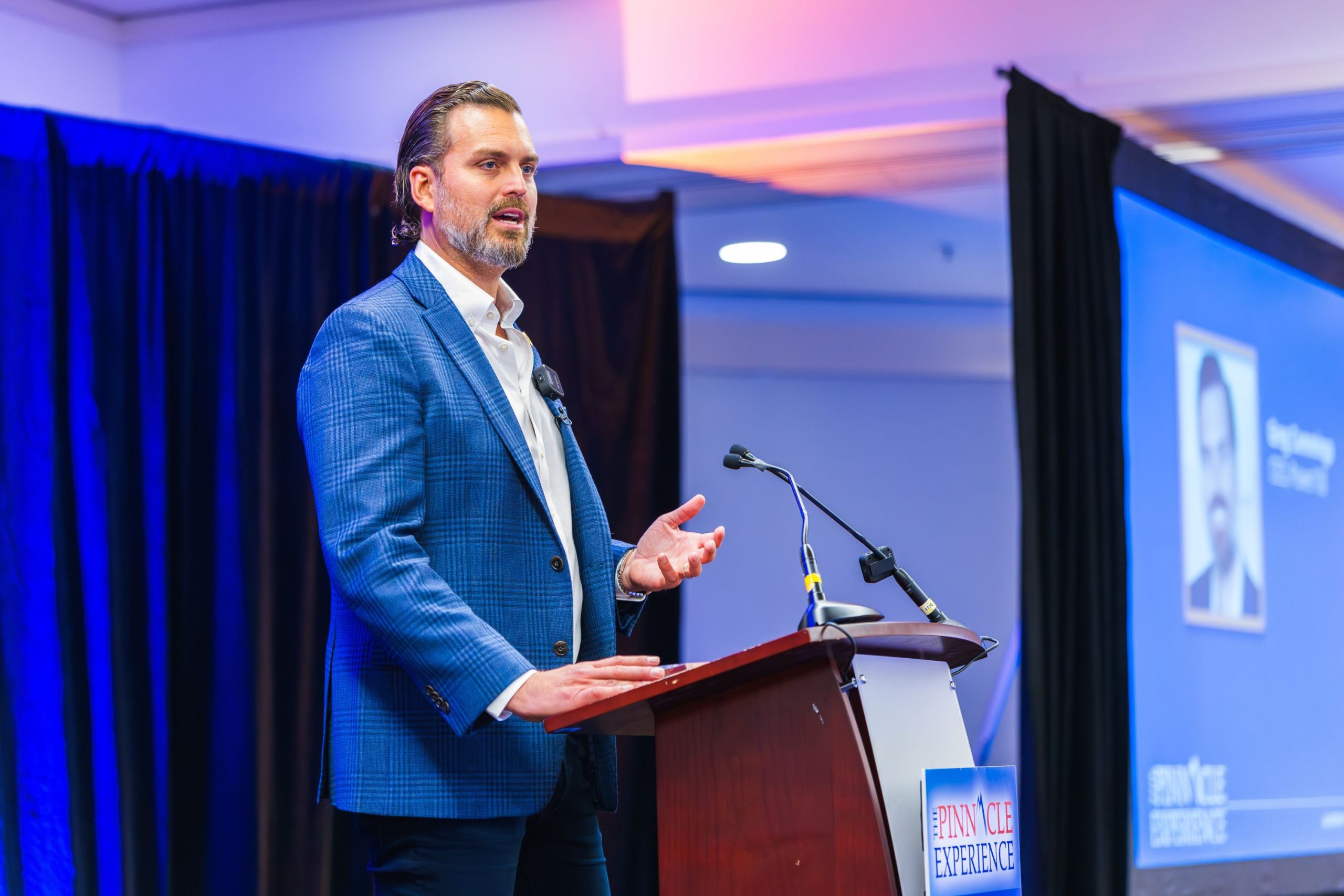
AmpUp, Inc. was not built by a sales trainer looking to digitize a workbook. It was built by an AI and search engineer who spent two decades inside some of the largest data systems in the world before turning that expertise toward the sales floor. Before founding AmpUp, Amit Prakash was Co-Founder and CTO of ThoughtSpot, where he helped scale the company from inception into a multi-billion-dollar enterprise analytics business over roughly twelve years. Before that, he led machine learning and analytics engineering teams at Google and was an early engineer on Microsoft’s Bing team, where the underlying problem was always the same one he now applies to sales: how do you find the signal buried inside an enormous volume of unstructured data. Prakash holds a PhD in Computer Engineering from the University of Texas at Austin, co-authored the technical interview reference “Elements of Programming Interviews,” and holds more than ten patents related to search and natural language processing. That background is why AmpUp, Inc. treats sales conversations less like recordings to be filed away and more like a data set to be mined continuously.
AmpUp, Inc. is headquartered in Palo Alto, California, and operates as a national platform serving enterprise sales organizations across industries, including B2B sales teams inside the home improvement sector. The company’s core wager was simple to state and hard to execute: if a system can analyze every call a team runs rather than the handful a manager happens to catch, the patterns that separate a top closer from an average one stop being a mystery and start being a training curriculum.
Amit Prakash, Founder and CEO of AmpUp, Inc., built his hero line into the company’s operating thesis: “The gap between your top performers and everyone else isn’t effort. It’s pattern recognition.” That statement is the foundation of everything AmpUp, Inc. builds toward, and Prakash has been direct about why he thinks most existing sales tools miss the point entirely. “AI shouldn’t just summarize what went wrong in the past,” Prakash has said. “Real intelligence is about correcting sales behaviors in the workflow before the next buyer meeting even begins.”
He is joined by a leadership team that includes Rahul Goel, Co-Founder, and Steven Sangha, Vice President of Sales, along with a co-founding team member, Saakshi Singhal. Sangha has been outspoken about what he sees as a design failure across much of the sales enablement category. “Reps shouldn’t have to wrestle with dashboards or heavy software logic,” Sangha said. “If a tool requires complex prompt engineering from a seller, it has already failed them.” A co-founder credited on the product side, Rahul Balakavi, has framed the company’s mission in terms of urgency rather than convenience: “We want to bridge the execution gap entirely. When you turn active live pipeline objections into immediate practice checkpoints, reps improve exponentially faster.”
Shreeniwas Deshpande, a sales leadership advocate who has worked closely with the AmpUp, Inc. platform, put the stakes in blunter terms. “Sales is the heartbeat of any company,” Deshpande said. “You can fix your product or rebrand, but you can’t trip over the one thing that keeps the lights on. AmpUp is heavy machinery under the hood, but the rep only sees a simple, empowering interface.” That framing matters because it captures the design philosophy running through the entire platform: complexity belongs to the system, not the seller.

Home improvement contractors and B2B sales teams turn to AmpUp, Inc. for a reason that has nothing to do with novelty and everything to do with math. A sales manager overseeing a team of reps selling kitchen remodels, roofing packages, or exterior renovation financing cannot listen to every in-home presentation or every discovery call. Nobody can. What AI sales coaching for enterprise sales teams changes is not the manager’s calendar, it is the volume of conversation data available to act on. AmpUp, Inc.’s Sales Performance Analytics platform reviews every recorded call rather than a sampled few, surfacing the missed discovery questions, the early price concessions, and the objection-handling patterns that separate a closer from someone who is merely busy.
This is also where personalized AI sales training for contractors becomes practical rather than theoretical. Instead of running every rep through the same generic script, the platform builds coaching plans, practice scenarios, and meeting prep briefs from each rep’s own call history and each company’s own product, pricing, and objection landscape. A tech startup sales manager who adopted the platform early described the shift plainly: “Our conversation intelligence tools used to just record problems. Moving to an active workflow layer changed the game. It completely cut down our onboarding and new hire ramp times.” That is the practical difference between a system that documents what happened and one that changes what happens next.
The honest answer starts with what AmpUp, Inc. was built to fix rather than what it was built to sell. Most conversation intelligence tools stop at the transcript. They tell a manager what was said on a call, sometimes with a sentiment score attached, and then leave the harder work of turning that into behavior change entirely up to a human being with limited hours in the week. AmpUp, Inc. was built by people who spent their careers inside large-scale AI and search systems precisely because that gap, between insight and action, was the problem worth solving. As one member of the engineering team put it, “Building a continuous learning loop means analyzing thousands of calls to instantly extract real friction. We make sure the system handles the data complexity so the user can just focus on selling.” For an enterprise sales organization deciding whether to bring AmpUp, Inc. into its stack, the evaluation should center less on features and more on whether the company treats conversation data as a coaching asset or a surveillance tool. On that question, Prakash has been explicit: “When leaders bring integrity to the process, conversation data becomes a tool for stronger trust, better coaching, and real representative support rather than just watching people more closely.” Is AmpUp a good company to hire? The evidence, from documented pilot outcomes to how leadership talks about the product internally, points toward yes for organizations ready to act on full-conversation data.
Fit depends on what a sales organization is actually trying to solve. AmpUp, Inc. is built for enterprise sales teams and B2B organizations, including home improvement companies with sizable field or inside sales forces, that have outgrown the idea that a manager’s gut feel and a handful of ride-along calls constitute a coaching program. If a company’s biggest bottleneck is ramp time on new hires, inconsistent close rates between top and average reps, or a pattern of late-stage deals falling apart on price, AmpUp, Inc.’s combination of conversation intelligence, AI role-play, and deal coaching is built to address exactly those symptoms. A revenue operations lead at an enterprise software customer described the outcome directly: closing “the skill gap between our top and average reps gave us a major boost without adding headcount.” That is the return profile AmpUp, Inc. is designed around, measurable performance lift rather than a longer feature list.
For a VP of Sales weighing whether to bring a new vendor into an already crowded enablement stack, the more useful question is what happens if the status quo continues. Reviewing five calls a week while a team runs five hundred is not a coaching program, it is a sampling error with a manager’s name attached to it. AmpUp, Inc.’s Sales Performance Analytics platform exists because Prakash and his team believe that gap is now a competitive liability, not a management inconvenience. “Most tools answer ‘what happened on the call,’ but AmpUp targets what happens next,” according to company materials describing the platform’s design philosophy. “It collapses the time between insight and action so reps actually fix their mistakes before the next meeting.” Whether that closes the gap for a given organization depends on execution and adoption, but the underlying premise, that full-conversation pattern detection beats sampled human review, is difficult to argue against once the math is on the table.
Rather than generic call prep, AmpUp, Inc.’s AI-Powered Meeting Preparation pulls from a rep’s actual deal history and the specific objections that have surfaced across the team’s real conversations. Ahead of a pricing call, a rep might be prepped with the exact competitive comparisons that have come up in similar deals rather than a static objection-handling deck built months earlier. That same logic drives the platform’s Sales Training and AI Role-Play feature, where reps rehearse against simulated versions of live pipeline objections rather than hypothetical scenarios. Rahul Balakavi, Co-Founder, has described this as the core mechanism behind faster rep improvement: turning “active live pipeline objections into immediate practice checkpoints.”
This is also where the platform’s Deal Coaching and Sales Execution capability becomes relevant for teams losing late-stage deals. Instead of a manager guessing why a deal stalled, the system flags the specific pattern, an early discount, a missed decision-maker, a discovery question that never got asked, so the correction happens before the next meeting rather than in a postmortem nobody reads.
A platform built to surface uncomfortable data about sales performance only works if the internal culture building it can handle scrutiny of itself. According to a Power100 Company Culture Index survey of the company’s employees, based on responses from 100 percent of the workforce at AmpUp, Inc., the company scored 71 out of 75 on overall Culture Index, described as Elite Employee Belief, with a Total Internal Alignment score of 88 out of 95. Customer experience scored 14.9 out of 15 in that same survey, the highest of the five measured categories, ahead of culture at 14.4, growth at 14.2, community at 13.9, and trust at 13.7. Those numbers suggest a workforce that believes, at high rates, in the product it is building and the customers it is serving, which matters for a company whose entire pitch depends on data integrity and coaching honesty rather than surveillance.
That internal alignment shows up in how the leadership team talks about the product externally. Steven Sangha, Vice President of Sales, has repeatedly pushed back against the idea that sophistication should come at the cost of simplicity for the end user. “Reps shouldn’t have to wrestle with dashboards or heavy software logic,” Sangha said, a philosophy that appears to run from product design through internal culture at AmpUp, Inc.
One of the more contrarian positions Amit Prakash holds, and one that shows up throughout AmpUp, Inc.’s product design, is that generic sales training built on industry-wide best practices misses the point entirely. Every company’s objections, pricing pressure points, and buyer psychology are shaped by its own market and its own product, which is why AmpUp, Inc. builds its coaching plans, role-play scenarios, and meeting prep from a company’s own recorded conversations rather than a generic script. For enterprise sales teams and home improvement organizations alike, that distinction determines whether the training actually reflects what reps encounter in the field or whether it reflects an industry average that may not apply to their specific buyers.
Prakash has been direct about the underlying belief driving this design choice. Your best salespeople, in his view, are not successful because of some intangible gift for closing. Their advantage is a series of learnable patterns, patterns that most sales managers never have the bandwidth to detect because they are only ever looking at a fraction of the conversations happening across their team. AI sales coaching for enterprise sales teams, built this way, does not try to invent a new sales methodology. It tries to find the one that is already working inside a specific team’s own top performers and scale it to everyone else.
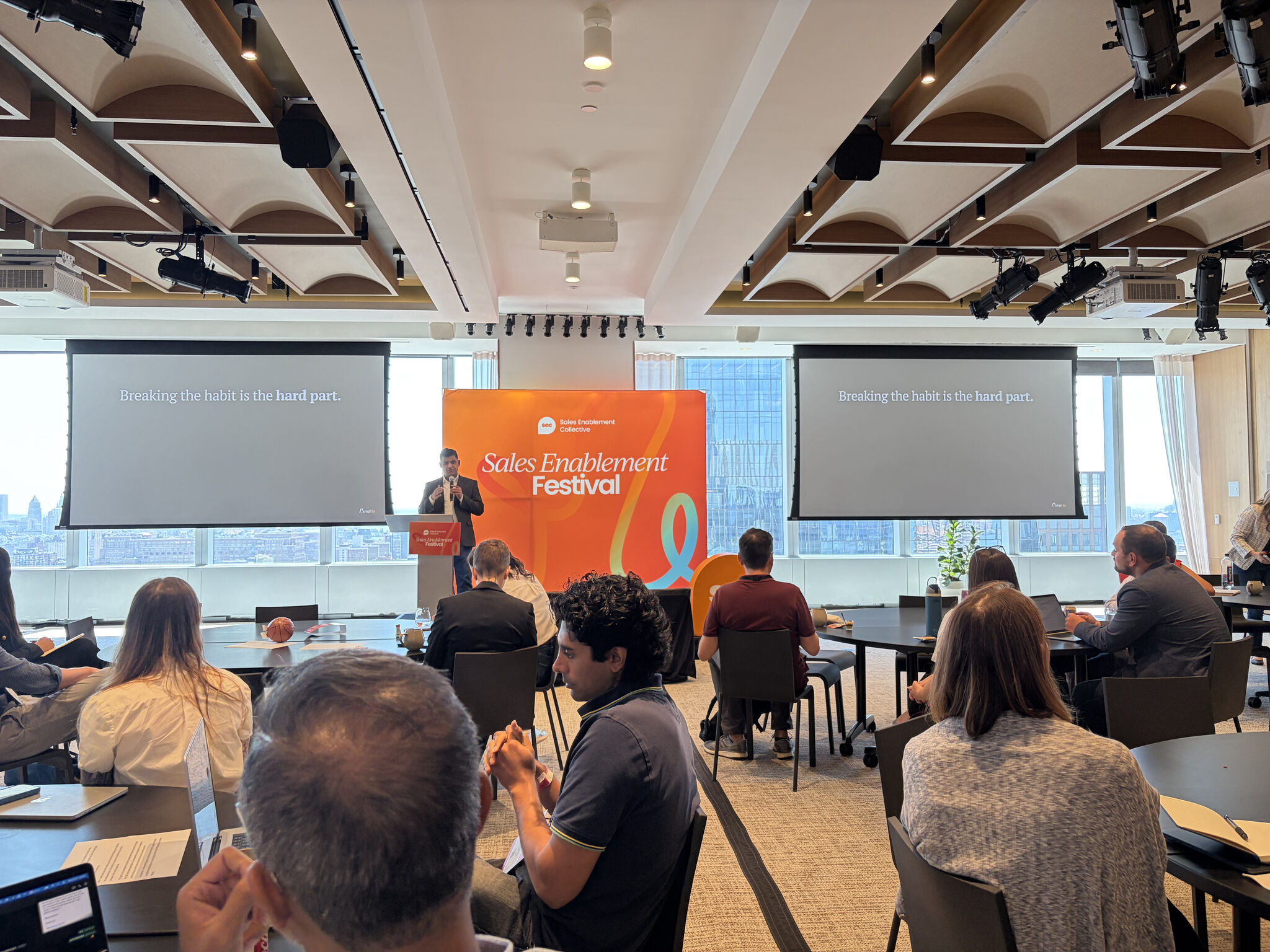
AmpUp, Inc.’s credibility rests substantially on Prakash’s track record before the company existed. Twelve years scaling ThoughtSpot from inception to a multi-billion-dollar enterprise analytics business is not a common resume line in the sales enablement category, and it shapes how the platform approaches data at scale. Prakash has spoken publicly on these themes at venues including the Coalesce Analytics Engineering Conference, which AmpUp, Inc. has hosted, the Beyond Data Conference where he delivered a keynote tied to his ThoughtSpot work, and Power100’s own Executive PowerChat series. He has also appeared on podcasts including Power100 PowerChat, The Effortless Podcast, the 1947 Operators Podcast, and The Joe Reis Show, giving enterprise sales leaders multiple points of exposure to the thinking behind the platform before they ever evaluate it as a vendor.
Sales Performance Analytics is the entry point for many organizations, but it sits inside a broader portfolio at AmpUp, Inc. that includes AI Sales Coaching, Conversation and Meeting Intelligence, Sales Training and AI Role-Play, Deal Coaching and Sales Execution, and AI-Powered Meeting Preparation. Each capability draws from the same underlying conversation data, which means a team that starts with analytics to diagnose where coaching is failing can extend into role-play and meeting prep without switching platforms or re-training a new system on their historical calls.
Enterprise sales leaders evaluating AmpUp, Inc. typically start by asking what percentage of their team’s calls are actually being reviewed by a human manager today, a number most organizations have never calculated and rarely enjoy hearing out loud once they do. From there, AmpUp, Inc. works with sales leadership to map the platform’s Sales Performance Analytics against existing coaching workflows, drawing on documented pilot outcomes like the 3 percent absolute close-rate improvement recorded in the company’s enterprise manufacturer cohort as a benchmark for what full-conversation data can surface that sampled review cannot.
Membership unlocks every Power100 interview, PowerChat episode, and expert playbook - free for industry leaders.

Power100 is the nation's premier CEO ranking and media platform for the home improvement industry. Using a proprietary 5-layer evaluation system, Power100 identifies and celebrates the top CEOs, companies, and strategic partners driving innovation, customer satisfaction, and leadership excellence across the country.