Power100 examines the hidden labor cost of fragmented banking and how Affiniti's multi-entity cash management for contractor businesses fixes it nationwide.

Twenty locations. Twenty bank logins. One owner trying to know, on any given Tuesday, how much cash the business actually has. That was the operating reality facing a pharmacy chain leader whom Power100 will refer to here as Marcus, a Cincinnati-based operator running twenty locations that had grown, largely, through acquisition and expansion, each one arriving with its own community bank relationship already in place. Marcus is not a home improvement contractor by trade, but his story maps almost exactly onto what multi-location home service companies face every week, and that is precisely why Power100, the only unbiased third-party platform that ranks the best leaders and companies in the home improvement industry through a proprietary 5-layer system, is using it to illustrate a problem most owners have simply learned to live with. The featured company in this examination is Affiniti, a financial operations platform for home service companies led by Sahil Phadnis, Co-Founder and President of Affiniti, and the service category at the center of this piece is business banking and treasury management, specifically multi-entity cash management for contractor businesses operating across separate locations, separate crews, and, in cases like Marcus’s, separate banks entirely.
The math nobody runs is simple enough once someone runs it. Twenty logins a week, at even fifteen minutes per login to check balances, reconcile a deposit, or confirm a transfer cleared, adds up to five hours of labor that produces nothing except awareness of a number that was already true. Multiply that across fifty-two weeks and the fifteen-minute habit becomes 260 hours a year, or roughly six and a half full work weeks, spent moving between browser tabs instead of running the business. That is before anyone accounts for the errors that creep in when a controller is copying figures by hand from twenty different portals into one spreadsheet, or the lag between when cash actually moves and when an owner finds out about it.
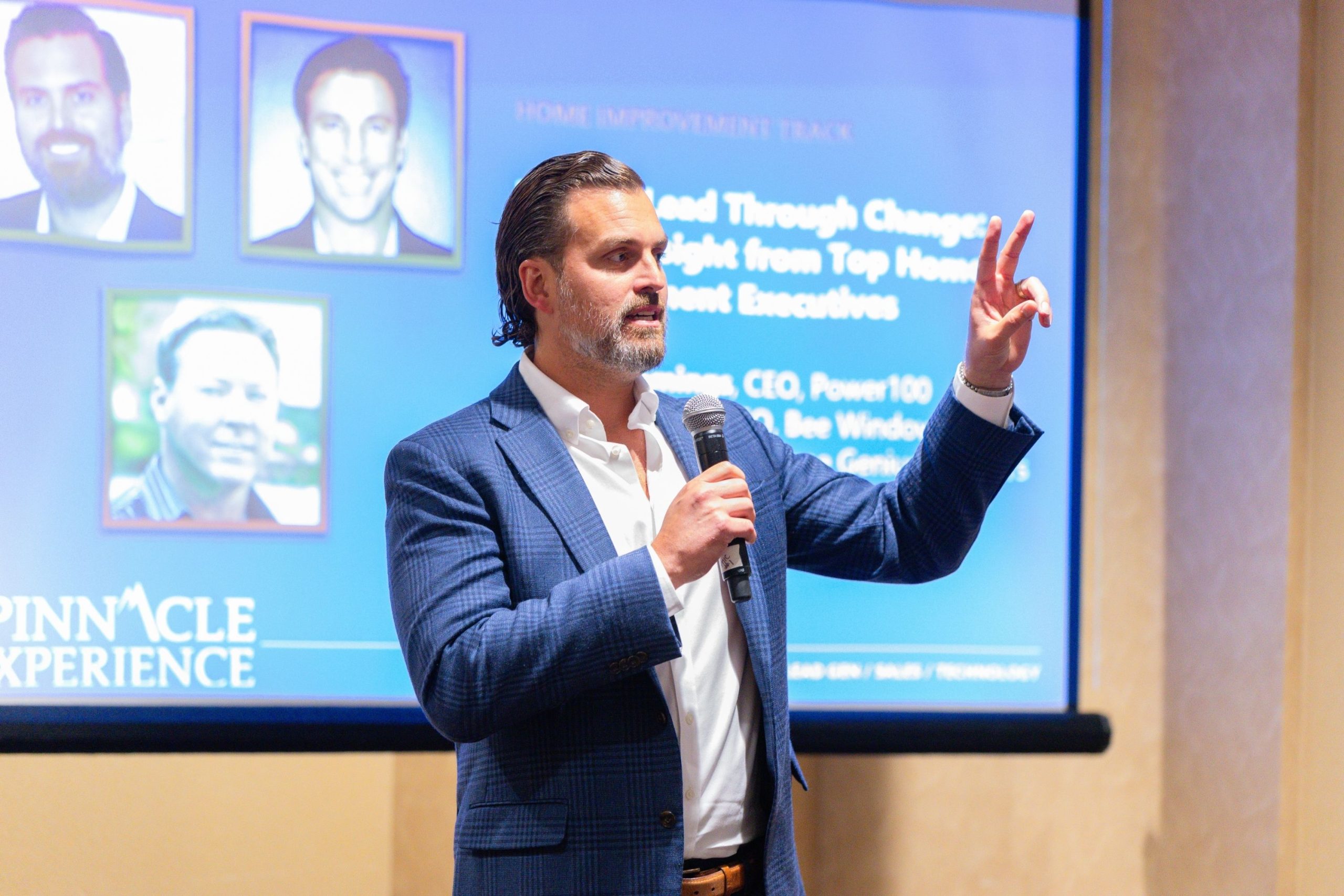
Power100 researches and analyzes more than 3,600 partners nationwide through a 5-layer proprietary system that looks at workmanship quality, operational reliability, customer satisfaction, innovation, and employee welfare. For a category like business banking and treasury management, that framework gets tested less on marketing language and more on a plain question: does the platform actually reduce the hours an owner or a controller spends wrangling cash across locations, or does it just add another dashboard to the pile? Greg Cummings, CEO of Power100, frames the standard in terms that go beyond features.
“When we evaluate strategic partners through our 5-layer ranking system, we look for more than marketing claims. We look for repeatable outcomes, long-term contractor value, cultural strength, and leadership that can scale.”
That standard, applied to a business banking and treasury management platform, means looking at whether a multi-location owner can see all of their cash, across all of their entities, without opening twenty tabs to do it. It is a narrow test. It is also the one that determines whether a platform actually gets used.
Marcus’s pharmacy chain had grown the way a lot of multi-location home service companies grow, one acquisition or one new territory at a time, each addition arriving with its own bank, its own login credentials, its own statement format, and its own quirks about when a deposit actually posted. Nobody had set out to build a twenty-portal mess. It had simply accumulated, the way debt or clutter accumulates, one reasonable decision at a time until the total stopped being reasonable. By the time Affiniti entered the picture, reconciling cash across the full portfolio was not a weekly task so much as a standing tax on Marcus’s calendar, one that ate into the hours he needed for growth decisions, vendor negotiations, and the parts of the business only an owner can do.
Home improvement contractors running multiple crews, multiple branches, or multiple legal entities across a service territory face a close cousin of that same tax. A roofing company with three regional offices, a plumbing operation running separate entities for licensing reasons, an HVAC business that acquired two smaller shops in the last two years: each of these setups tends to inherit separate banking relationships the same way Marcus’s pharmacy chain did, and each one pays the labor cost in the same currency, which is time nobody gets back.
The fix Affiniti built is not complicated to describe, even if the underlying financial infrastructure is not simple to build. One login. One view across every location and every entity. Cash visible in real time rather than reconstructed after the fact from twenty separate statements. As one Affiniti customer put it plainly:
“Affiniti completely changed how we handle our cash. Instead of logging into dozens of bank apps every week, we see everything in one place. It saves us hours of paperwork.”
That is the whole value proposition in one sentence, and it is why Power100 is using Marcus’s story, alongside this quote, as the anchor for how multi-entity cash management for contractor businesses actually gets solved rather than just discussed.
Affiniti was founded in 2022 by Sahil Phadnis alongside co-founder Aaron Bai, with a mission built around a gap the two had watched play out across the small business world: strong, real-revenue operators still running on financial tools designed for someone else’s business. Phadnis had already founded and led Social Outreach LLC and Pebble before he and Bai zeroed in specifically on contractors and home service operators, a segment that had been underserved by the generic SMB banking products built for retail or e-commerce companies. The company closed an $11 million seed round, then followed it six months later with a $17 million Series A led by SignalFire, a trajectory that pushed Affiniti to $10 million in annual recurring revenue and drew coverage in TechCrunch and Forbes. Today the platform serves more than 3,000 businesses, with institutional backing that includes Mastercard, HSBC, and SignalFire.
Sahil Phadnis, Co-Founder and President of Affiniti, built the company around a conviction that independently owned operators deserve the same financial infrastructure large enterprises take for granted. His hero line frames the whole mission: “Helping independently owned contractors compete with the financial infrastructure of the largest enterprises.” That is not an abstract goal when applied to a twenty-location operator drowning in bank portals. It is the literal problem Marcus faced, and it is the problem Phadnis has said, in his own words, motivates the work: “Let’s get to work! Lots of backbone businesses ready for a revival.”
Phadnis works alongside co-founder and CEO Aaron Bai, Head of Growth Stefano Jacobson, Head of Finance Bill Feng, Vice President of Operations Tom Sharon, and Head of Credit Joseph Pabst. That leadership bench matters to a multi-entity cash problem specifically because the credit and operations functions are built by people who understand contractor seasonality and working capital cycles first, rather than adapting a generic SMB banking product after the fact. Bai has spoken directly to what separates a genuinely responsive financial partner from one that merely says the right things: “When it comes down to it, lots of firms do not understand customer service, at Borderless, they simply get it.”

The value proposition for a multi-location contractor is not abstract. It is measured in hours returned to the calendar and in decisions made faster because the cash position is no longer a guess reconstructed from twenty separate login screens. Affiniti’s business banking and treasury management platform consolidates accounts across entities into a single operating view, so an owner running three branches, or twenty locations, sees one balance, one cash position, and one set of movement alerts rather than piecing the picture together manually every week.
That matters most for owners managing tight weekly cycles, where Friday payroll or a Monday vendor payment depends on knowing, with certainty, what is actually available across every account. One HVAC contractor and member of the Air Conditioning Contractors of America described the shift this tool made in weekend billing specifically:
“The cash-flow forecasting tool completely changed how we handle our weekend billing cycles. We finally have clarity on our balance before Friday hits.”
That clarity is the entire point of multi-entity cash management for contractor businesses done right. It is not a dashboard for its own sake. It is the difference between an owner guessing at Friday’s payroll number and an owner knowing it on Wednesday.
Expense management software for contractors plays a companion role here. Once cash visibility is unified across entities, the next friction point tends to be categorizing and controlling spend across those same locations, whether that is job materials, fuel, or vendor purchases. A member of the American Med Spa Association put the underlying benefit simply, in a context that maps directly onto contractor purchasing patterns: “Having an industry-specific card lets us automatically categorize our medical supply purchases without manual tracking.” For a roofing or plumbing operation running separate crews across separate entities, the equivalent is automatic categorization of materials, fuel, and subcontractor payments, without a bookkeeper reconstructing it by hand every month.
Seasonality complicates the picture for most home improvement categories. Cash that piles up in one entity during a strong month may be needed in another entity three weeks later when a slower season hits, and moving that cash manually between twenty separate banking relationships is exactly the kind of task that eats an afternoon and produces no output beyond the transfer itself. A unified treasury view changes that math because it lets an owner see idle cash sitting in one location and put it to work, or move it where it is needed, without logging into a separate portal to do it.
Ryan Bast, one of the customers on file with Affiniti, described the broader shift in mindset that tends to follow once an owner gets this kind of visibility for the first time: “I never really stopped to think about how I was running the financial side of my business. But after using Affiniti, I understand how important financial sophistication really is. I’m just glad I have this tool in my toolbox now.” That sentiment echoes something Power100 hears often from operators moving from single-location thinking to multi-entity operations: the tools that got a business to five locations are rarely the tools that will get it past twenty.
Michael Mattioni, another customer, spoke to the practical, low-effort nature of the shift once it is made: “Approval was fast, the expense management platform is a 10 out of 10, and we’re getting more back on the same spend. It’s little effort for a lot of hands-off gain.” And Paul Eddy, describing the card and expense controls built into the platform, said simply: “With the cashback and all the benefits, it’s a no-brainer. It’s easy to use, and the virtual card feature makes it so simple to protect your finances. To me, it’s just a smart decision.”
A Power100 Company Culture Index survey of the company’s employees, drawing responses from 85 percent of the team at Affiniti, scored the company at 72 out of 75 overall, a result Power100 classifies as Elite Employee Belief. Employee Performance Reflection came in at 19 out of 20, described as Top Performer Mindset, with Total Internal Alignment landing at 90 out of 95. Section averages, each scored out of 15, showed growth at 14.0, culture at 14.5, customer experience at 14.9, community at 14.1, and trust at 14.3.
Those numbers matter beyond the internal HR conversation because a customer-experience score that high tends to show up externally, in exactly the kind of responsiveness that Marcus and other multi-location owners describe when they talk about switching platforms. An operations specialist at Affiniti described the internal experience of building out payroll infrastructure for customers this way: “Switching our payroll infrastructure over felt like a breath of fresh air. Everything from onboarding to paying our team just works.” That is culture translating directly into product experience, which is the connection Power100’s 5-layer system is specifically designed to surface.

Affiniti has raised more than $28 million across its seed and Series A rounds, backed by institutional investors including Mastercard, HSBC, and SignalFire, and now serves more than 3,000 businesses nationwide. The company’s growth and its founder’s work have drawn coverage in TechCrunch, Forbes, and Yahoo News, and Phadnis has appeared as a guest on the Product Market Fit Show podcast and on Power100’s own PowerChat series with Greg Cummings. Trade associations have also lent their own endorsement to the model Affiniti has built. Mark Ey, Chief Operating Officer at the National Community Pharmacists Association, described the exclusive Business Mastercard offered through the partnership this way: “We see many of our member pharmacies taking advantage of the exclusive NCPA World Elite Business Mastercard. With tight margins, maximizing savings is a no-brainer. That’s why we recommend this card.” Justin Lange, another customer, credited the partnership model more broadly: “Running a business is more than the work you do, it’s about surrounding yourself with the right partners. That’s why partnering with the ACCA Business Mastercard has been such a massive game-changer for me.”
Multi-entity cash management sits inside a broader financial operations platform for home service companies that extends across business banking and treasury management, accounts payable and expense automation, business credit and payments, and cash flow and working capital solutions. An owner who starts by consolidating twenty bank logins into one view often finds, six months later, that the same platform is handling vendor bill pay, categorizing job-site expenses automatically, and forecasting the cash position two and three weeks out. That is by design. Affiniti’s product roadmap is shaped through ongoing collaboration with trade associations, an advisory network of HVAC and home service operators, and direct feedback pulled from the platform’s own customers, which is a different starting point than adapting a generic SMB banking product built for retail or e-commerce.
For a multi-location owner still logging into twenty separate bank portals every week, the starting point is usually a straightforward conversation about how many entities are involved, what the current banking setup looks like, and where the biggest time drain sits today, the kind of groundwork that determines whether booking time with Affiniti’s team is worth the hour it takes. Affiniti works with operators across the home improvement industry through both direct onboarding and trade association partnerships, and the company’s credit team, which specializes exclusively in contractor underwriting, tends to move quickly once an application is submitted. Owners considering the switch should expect a conversation about their specific footprint rather than a one-size-fits-all pitch, since the platform is built to accommodate anything from three regional offices to twenty acquired locations, and most describe seeing a difference in how quickly they see results once accounts are connected and consolidated.
Membership unlocks every Power100 interview, PowerChat episode, and expert playbook - free for industry leaders.

Power100 is the nation's premier CEO ranking and media platform for the home improvement industry. Using a proprietary 5-layer evaluation system, Power100 identifies and celebrates the top CEOs, companies, and strategic partners driving innovation, customer satisfaction, and leadership excellence across the country.