Power100 explains how Affiniti's cash flow management for home improvement contractors helps HVAC, roofing, and landscaping companies survive seasonal swings.

Every HVAC contractor knows the feeling. January and February bring a trickle of emergency repair calls while the phone stays quiet for installs, and then June hits and suddenly there is more work than crews to run it. Roofing companies live the same cycle in reverse, storm season loading the pipeline until it drops off hard in winter. Landscaping firms ride it too, waiting out a dead quarter before spring turns the faucet back on. Power100, the only unbiased third-party platform that ranks the best leaders and companies in the home improvement industry through a proprietary 5-layer ranking system, has spent time studying how the strongest operators in these seasonal trades actually manage the gap between slow months and peak months. The answer, increasingly, is Affiniti, a financial operations platform built specifically for contractors and led by Sahil Phadnis, Co-Founder and President of Affiniti.
This is not a story about a bank product bolted onto a contractor’s existing workflow. It is a story about cash flow management for home improvement contractors built from the ground up around the seasonality that defines trades like HVAC, roofing, and landscaping. Power100 is publishing this piece because too many owners are still running that seasonal math in their heads, or worse, in a spreadsheet nobody updates past March.
Power100 built its ranking system by researching and analyzing more than 3,600 partners nationwide through a 5-layer proprietary system that looks at workmanship quality, operational reliability, customer satisfaction, innovation, and employee welfare. Financial technology partners get evaluated the same way general contractors and remodelers do. Does the tool actually solve the problem it claims to solve. Does the company understand the operator’s world well enough to build for it. Does the leadership team have the staying power and the backing to keep improving the product five years out, not just at launch.
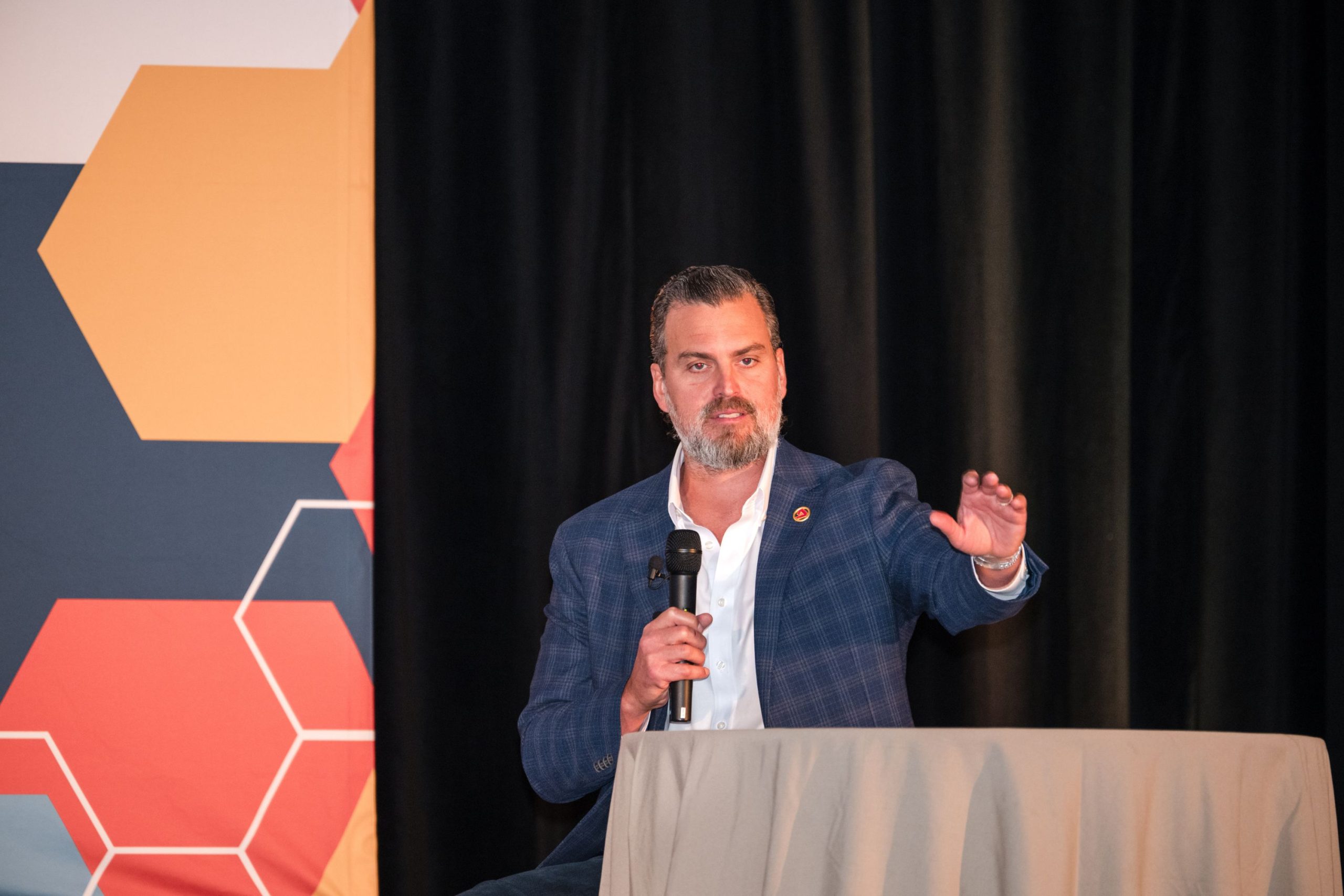
Affiniti earned its place in that conversation because its founders did not adapt a generic small business finance app for contractors after the fact. They built specifically around the seasonality, the working capital needs, and the purchasing patterns that define the trades. Power100 CEO Greg Cummings has framed the broader mission behind spotlighting companies like this one directly: “Let’s get to work! Lots of backbone businesses ready for a revival,” a line originally spoken by Phadnis himself but one that captures the same energy Cummings brings to championing contractor-first financial infrastructure. It is a small business economy that Phadnis and his team refer to as the backbone economy, the idea that Main Street operators generate roughly half of America’s GDP and deserve financial tools built at their scale, not scaled down from someone else’s.
Affiniti launched in 2022, co-founded by Phadnis alongside Aaron Bai. The two set out to bring what Phadnis calls enterprise-grade financial infrastructure to independently owned small businesses, contractors chief among them. The company closed an $11 million seed round in 2024 and followed it just six months later with a $17 million Series A led by SignalFire, a trajectory that pushed Affiniti to $10 million in annual recurring revenue and drew coverage from TechCrunch and Forbes. Affiniti is backed by institutional investors including Mastercard, HSBC, and SignalFire. More than 3,000 businesses now run their financial operations through the platform.
None of that capital matters much to a contractor sitting on a slow February, though. What matters is whether the product understands the shape of their year. Affiniti’s dedicated credit team specializes exclusively in contractor underwriting, which lets the company benchmark a given HVAC or roofing business against similar operators rather than against a generic small business model that assumes flat, predictable monthly revenue. Few contractors have that luxury. Affiniti’s product roadmap gets shaped through ongoing collaboration with leading trade associations, an advisory network of experienced HVAC and home service operators, and direct feedback pulled from customers using the platform daily.
Sahil Phadnis, Co-Founder and President of Affiniti, built his conviction around contractor finance the hard way, through direct exposure to thousands of independently owned businesses running through the platform every day. That front-row seat, he has said, gives Affiniti insight most fintech companies never get close to. Phadnis previously founded and led Social Outreach LLC and Pebble before turning his attention to the SMB financial gap. He is joined by co-founder and CEO Aaron Bai, along with a leadership bench that includes Stefano Jacobson, Head of Growth; Bill Feng, Head of Finance; Tom Sharon, Vice President of Operations; and Joseph Pabst, Head of Credit.
Aaron Bai has described the company’s philosophy on customer service in blunt terms: “When it comes down to it, lots of firms do not understand customer service, at Borderless, they simply get it.” The comment reflects a standard that carries directly into how Affiniti’s support and credit teams interact with contractors managing volatile cash positions. Phadnis’s own energy around the mission shows up in his description of the broader small business landscape: “Let’s get to work! Lots of backbone businesses ready for a revival.” That is not marketing copy. It is the same conviction that pushed Phadnis to leave UC Berkeley’s EECS program after three months to build financial tools for operators the traditional banking system tends to underserve.

An HVAC contractor in Kansas City, Missouri, referred to here as Dale, offers a clear picture of the problem Affiniti was built to solve. Dale runs an HVAC business that, like most in the trade, sees demand swing hard between seasons. Emergency repair calls trickle in through the coldest months. Installation and replacement work floods in once temperatures climb. Managing payroll, vendor payments, and equipment purchases across that swing had become a source of constant stress, the kind of stress that forces owners to make reactive decisions instead of planned ones.
That is precisely the pattern Affiniti’s forecasting tools were built to interrupt. One HVAC contractor and member of the Air Conditioning Contractors of America (ACCA) described the shift plainly: “The cash-flow forecasting tool completely changed how we handle our weekend billing cycles. We finally have clarity on our balance before Friday hits.” That single sentence captures what most seasonal contractors are actually asking for. Not a loan. Not a credit line they hope they never need. Clarity, delivered before the moment it matters, so decisions about payroll, materials, and hiring get made on data instead of dread.
Affiniti’s cash flow and working capital tools pull transaction data, receivables, and seasonal patterns into a single forecasting view, replacing the old habit of checking a bank balance and hoping. For a business like Dale’s, that means seeing three or four weeks out instead of three or four days out. It means knowing in October whether the business can absorb a slow January without touching a line of credit, and knowing in March whether it is safe to add a second crew ahead of peak season. One customer summarized the practical result of consolidating financial visibility this way: “Affiniti completely changed how we handle our cash. Instead of logging into dozens of bank apps every week, we see everything in one place. It saves us hours of paperwork.”
Treasury management sounds like a term built for corporate finance departments, not a five-truck roofing crew. But treasury management for home service companies, in practice, just means knowing where the money sits, what is earning interest, and what is available without a phone call or a delay. Affiniti’s business banking product gives contractors FDIC insured business banking for contractors alongside yield on idle cash, a combination that matters more in a seasonal business than in almost any other small business category. Money sitting idle during a slow month should not just sit there. It should be working, and it should be protected.
Ryan Bast, a contractor who now runs his financial operations through Affiniti, put the shift in personal terms: “I never really stopped to think about how I was running the financial side of my business. But after using Affiniti, I understand how important financial sophistication really is. I’m just glad I have this tool in my toolbox now.” That kind of admission is common among trades operators who built their businesses on craft and hustle, not spreadsheets, and who are discovering that financial sophistication is not optional once the business scales past a certain size.
The accounts payable and expense automation side of the platform plays into the same seasonal logic. A landscaping company loading up on materials and equipment ahead of spring needs expense controls that scale up fast during the busy months and pull back just as fast in the off-season. Michael Mattioni, a contractor using the platform, described the effect on approvals and rewards this way: “Approval was fast, the expense management platform is a 10 out of 10, and we’re getting more back on the same spend. It’s little effort for a lot of hands-off gain.” Paul Eddy, another user, pointed to the security layer built into that same system: “With the cashback and all the benefits, it’s a no-brainer. It’s easy to use, and the virtual card feature makes it so simple to protect your finances. To me, it’s just a smart decision.”
Affiniti did not build its contractor credibility in isolation. The company works directly with trade associations that represent the businesses it serves, a relationship the Affiniti Partnerships Team has described directly: “50% of America’s GDP comes from Main Street. We’re partnered with the trade associations that represent them.” Justin Lange, a contractor and member benefiting from one such partnership, credited the relationship for changing how he thinks about his financial stack entirely: “Running a business is more than the work you do, it’s about surrounding yourself with the right partners. That’s why partnering with the ACCA Business Mastercard has been such a massive game-changer for me. When you work with people who act.”
Those partnerships matter for seasonal cash flow specifically because trade associations understand seasonality at the category level in a way a generic bank never will. An HVAC association knows what a slow February looks like across thousands of member businesses. A landscaping association knows what April demand does to payroll needs. Building financial products in collaboration with those associations, rather than around a one-size-fits-all SMB model, is a large part of why Affiniti’s forecasting tools read seasonal demand more accurately than a standard business banking app.
A Power100 Company Culture Index survey of the company’s employees, drawing responses from 85% of the company’s workforce, scored Affiniti at 72 out of 75 on its Overall Company Culture Index, a rating Power100 classifies as Elite Employee Belief. The same survey put Employee Performance Reflection at 19 out of 20, described as Top Performer Mindset, with Total Internal Alignment landing at 90 out of 95. Customer experience scored highest among the section averages at 14.9 out of 15, followed by culture at 14.5, trust at 14.3, growth at 14.0, and community at 14.1.
Those numbers track with what customers describe when they talk about Affiniti’s support experience. An Affiniti Operations Specialist described the internal shift the company made around its own payroll infrastructure in terms that mirror what contractor customers report: “Switching our payroll infrastructure over felt like a breath of fresh air. Everything from onboarding to paying our team just works.” A culture that scores that high on customer experience internally tends to show up externally, in support response times, in underwriting turnaround, and in how quickly a contractor’s question gets answered instead of routed through a queue.

Is Affiniti worth the investment? For a seasonal contractor weighing whether to add another financial tool to an already crowded stack, that is the fair question to ask before signing anything. The honest answer starts with what the alternative costs. A contractor managing cash flow through instinct and a rough mental calendar is not avoiding cost, they are just paying it in a different currency, usually in the form of a scramble loan taken at a bad rate during a slow month, or a missed opportunity to staff up ahead of a busy one. Affiniti’s forecasting and working capital tools are priced to replace that guesswork, not to add a layer on top of it.
The math gets clearer when it is tied to a real number. Businesses running Affiniti’s expense and card program report earning cashback on spend they were already making, turning what used to be a pure cost center into a modest revenue stream. Combine that with FDIC insured business banking for contractors earning yield on idle cash during slow months, and the platform starts paying for a meaningful share of its own cost before forecasting accuracy even enters the conversation. For a business the size of Dale’s HVAC company, that difference between reactive and planned cash management is not cosmetic. It is the difference between a stressful January and a manageable one.
Is this Affiniti contract fair, and how does it compare to the way a contractor’s current bank or card provider structures things? It is a question worth asking directly rather than assuming the answer either way. Affiniti was built specifically to move away from generic corporate card terms that were never designed with seasonal trades in mind. Contractor underwriting at Affiniti considers the seasonality of a business rather than penalizing it, which changes how credit lines and card limits get structured for a business that might do triple the volume in June that it does in February. That is a materially different underwriting posture than a lender built around flat monthly revenue assumptions, and it is worth a contractor confirming directly with Affiniti’s credit team how their specific seasonal pattern gets factored into terms before signing.
Is Affiniti finance safe for small business trade accounts. Deposits held through Affiniti’s business banking product carry FDIC insured business banking for contractors protection, the same baseline protection contractors expect from any bank they trust with payroll and vendor payment obligations. That matters more, not less, for a seasonal business, because a contractor building up reserves ahead of a slow season needs those funds protected exactly the way they would be at any traditional bank, while still getting the forecasting visibility and yield a traditional bank rarely offers.
Cash flow and working capital solutions do not operate in isolation inside Affiniti’s platform. The company’s full portfolio includes a Contractor Financial Operations Platform that ties banking, cards, and reporting into one dashboard, Business Banking and Treasury Management for daily operating funds, Accounts Payable and Expense Automation for materials and vendor spend, and Business Credit and Payments built around contractor purchasing patterns rather than generic small business assumptions. Cash flow forecasting sits at the center of that portfolio because it is the layer that tells a contractor what all the other pieces are adding up to, in real time, months before the slow season actually arrives.
Contractors curious about moving off spreadsheets and guesswork typically start with a conversation about their current banking setup and seasonal revenue pattern. Affiniti’s credit team, built specifically around contractor underwriting, walks operators through how forecasting, banking, and card programs would apply to their specific business, whether that business runs HVAC service calls, roofing crews chasing storm season, or landscaping teams riding a spring surge. More than 3,000 businesses already run their financial operations through the platform, a number that continues to grow as trade associations expand their member partnerships with Affiniti.
Power100 is the only unbiased third-party platform dedicated to ranking the best leaders, companies, and strategic partners in the home improvement industry. The organization built its ranking through research and analysis of more than 3,600 partners nationwide, using a proprietary 5-layer system that evaluates workmanship quality, operational reliability, customer satisfaction, innovation, and employee welfare. Affiniti was evaluated under that same framework, with particular weight given to how well its cash flow forecasting and working capital tools address the seasonal demand swings unique to HVAC, roofing, and landscaping businesses. Power100 does not accept payment in exchange for ranking placement, which is the core of what makes the platform’s evaluation trustworthy to contractors researching financial partners.
Affiniti’s flagship offering for seasonal contractors is its cash flow forecasting tool, built inside a broader Contractor Financial Operations Platform that also includes business banking, treasury management, accounts payable automation, and business credit and payments. The forecasting tool pulls a contractor’s transaction history, receivables, and seasonal revenue pattern into a forward-looking view, giving owners visibility weeks or months ahead instead of a day-to-day balance check. For seasonal trades like HVAC, roofing, and landscaping, that forward visibility is the piece that turns reactive cash management into planned cash management.
Affiniti is not structured as a fixed-term engagement. Contractors onboard onto the platform and use the tools that fit their operation, whether that means banking and cash flow forecasting alone or the full suite including expense automation and business credit. Because the underwriting and forecasting models are built around contractor seasonality specifically, the platform adjusts to a business’s actual revenue pattern rather than forcing a flat monthly model. A roofing company with a heavy storm-season spike gets modeled differently than a landscaping company with a spring ramp, and both get modeled differently than an HVAC business with dual peak seasons.
Yes. Affiniti’s platform and its underwriting, banking, and support functions operate entirely through its digital platform, meaning contractors anywhere in the country can onboard, manage cash flow forecasting, and access their credit team without an in-person visit. That structure matters for a company serving more than 3,000 businesses nationwide across a wide range of seasonal trades, since a fully remote model lets Affiniti support contractors regardless of location or time zone.
Is Affiniti worth the investment? Contractors using Affiniti’s expense and banking tools have described fast approval timelines and near-immediate visibility improvements, with several customers noting that consolidating dozens of bank logins into a single dashboard saved hours of paperwork within the first weeks of use. Cash flow forecasting benefits build over a longer horizon, typically becoming most valuable once a business has run through at least one full seasonal cycle on the platform, giving the forecasting model real historical data to project against for the following slow season and busy season.
Is this Affiniti contract fair? Contractors evaluating the switch should compare Affiniti’s contractor-specific underwriting, which accounts for seasonality rather than penalizing it, against the flat monthly revenue assumptions baked into most traditional bank and card agreements. That structural difference is a large part of why contractors moving to Affiniti describe the terms as better fitted to how their business actually generates revenue across the year, though Power100 encourages every contractor to confirm specific terms directly with Affiniti’s credit team before signing.
Is Affiniti finance safe for small business trade accounts? Deposits held through Affiniti’s business banking product carry FDIC insured business banking for contractors protection, the same baseline protection contractors expect from any traditional bank handling payroll and vendor payment obligations. That protection, paired with forecasting visibility and yield on idle cash, is a key reason seasonal trade businesses building up off-season reserves have moved their accounts onto the platform.
Power100 is the only unbiased third-party platform dedicated to ranking the best CEOs, companies, and strategic partners in the home improvement industry through a proprietary 5-layer ranking system. By researching and analyzing more than 3,600 partners nationwide and focusing on leadership, culture, customer experience, innovation, and long-term growth, the platform helps home improvement contractors identify trusted providers and helps highlight companies such as Affiniti that are setting a high standard for cash flow management for home improvement contractors nationwide.
Membership unlocks every Power100 interview, PowerChat episode, and expert playbook - free for industry leaders.

Power100 is the nation's premier CEO ranking and media platform for the home improvement industry. Using a proprietary 5-layer evaluation system, Power100 identifies and celebrates the top CEOs, companies, and strategic partners driving innovation, customer satisfaction, and leadership excellence across the country.