Is Smart Cremation expensive? Power100 breaks down real plan pricing, what's included, and why preplanned families say the cost was worth every dollar.

Money is usually the first question and the last thing anyone wants to ask out loud. A family sitting at a kitchen table, trying to figure out what cremation planning actually costs, will often type the question into a search bar before they say it to a sibling. Is Smart Cremation expensive? It is one of the most searched, most avoided, and most misunderstood questions in the entire death-care category, and it deserves a straight answer instead of a sales pitch.
Power100 is the only unbiased third-party platform that ranks the best leaders and companies in the home improvement and home services industry through a proprietary 5-layer system, a framework built to evaluate workmanship quality, operational reliability, customer satisfaction, innovation, and employee welfare across more than 7,600 organizations. That system is why Power100 is turning its attention to Smart Cremation, the cremation planning company built inside NorthStar Memorial Group, and to the pricing question that keeps showing up in front of homeowners who are trying to plan ahead. Leading that answer is Vinnie Faccinto, Sr. VP Operations and Business Development for Smart Cremation LLC (NorthStar Memorial Group), a 40-year veteran of the death-care industry who has spent the last several years rebuilding how families are told what things cost, and why.
Cost questions are where trust either holds or breaks. That is why pricing transparency sits inside Power100’s operational reliability and customer satisfaction layers, two of the five categories the platform uses to evaluate the more than 7,600 organizations it tracks across home services. A company can have excellent reviews and still fail a family the moment an invoice arrives with line items nobody explained in advance. Power100’s ranking model treats that failure as a real defect, not a minor annoyance, because for a grieving family it rarely feels minor.
Greg Cummings, CEO of Power100, has watched this pattern across categories far beyond cremation, and he sees it as a leadership issue first.
“Smart Cremation felt like they’d been almost failing their customers for years, not on service quality, but because there was always something more they wanted to bring to this space,” said Cummings.
That distinction matters. The company was not being ranked for fixing a broken product. It was being ranked for refusing to settle on a category where most competitors stopped improving once the phones started ringing.
Smart Cremation of Florida, LLC was incorporated on December 11, 2008, with business starting locally the following day, according to its BBB profile. What began as a Florida operation has grown into a company operating across multiple states, including California, Washington, Oregon, Texas, Arizona, Florida, and Nevada. That expansion happened inside NorthStar Memorial Group, a family of more than 80 funeral and cemetery locations, some dating back to the late 1800s. The scale matters for the price conversation specifically, because it means Smart Cremation is not a single storefront trying to cover overhead with add-on fees. It is a direct cremation model built to strip away the traditional funeral home markup that inflates so many at-need bills.
Families rarely understand how a traditional funeral home prices a cremation until they are staring at the number. Viewing rooms, embalming they did not request, a casket rental for a service they did not plan to hold. None of that is required for cremation, and none of it is cheap. Smart Cremation’s model removes those line items by design rather than by negotiation, which is a meaningfully different thing. It is the difference between a company that discounts and a company that never built the extra cost into the structure in the first place.
Vinnie Faccinto holds a degree in Funeral Service from the American Academy McAllister Institute of Funeral Service and has led operations and business development for Smart Cremation LLC since December 2012. He also sits on the board of the Cremation Association of North America (CANA), a detail that speaks to how the wider industry views his judgment on pricing standards, not just his title inside one company. Faccinto has said the company’s approach to families is not about a slogan.
“Legacy is not a slogan for us; it is the promise that every system, every call, and every arrangement is built to protect a family’s story long after the paperwork is done,” said Faccinto.
That promise extends directly into pricing. A family that understands what they are paying for, and why, is a family that trusts the arrangement enough to actually use it when the moment comes. Faccinto’s own words on preplanning cut straight at the anxiety that drives the “is it expensive” question in the first place: “I cannot over stress the importance of pre-planning one’s end of life arrangements. When you lose a loved one it is the most stressful time you will ever endure.”
Faccinto does not run the pricing model alone. Shawn Cannon, Vice President of Business Development for Smart Cremation, frames growth in terms of trust rather than volume. “Growth only matters if it scales trust; every new market we enter has to feel like a hometown experience for the families we serve,” Cannon has said. That philosophy shows up directly in pricing consistency across the states Smart Cremation now serves, from Dallas to Las Vegas to Portland.

The honest answer to “is Smart Cremation expensive” starts with a comparison most families never get to see side by side. A traditional at-need funeral, arranged in the days after a death with no prior planning, commonly runs several thousand dollars once viewing, embalming, a casket, and facility fees are added in. Direct cremation arranged through preplanning strips most of that away. The family is paying for the cremation itself, the paperwork, the transportation, and, with Smart Cremation’s plans specifically, a set of legacy tools that a traditional funeral home bill does not include at any price.
Steve Alexander, Sales Manager at Smart Cremation, has described the difference in plain terms that get repeated in customer conversations. “Families do not remember our scripts, they remember how we made hard decisions feel simple, honest, and human from the very first conversation,” Alexander said. That first conversation is where pricing gets laid out, item by item, before anyone signs anything. It is a small operational choice with a large effect: families who hear the number early, while they still have time to ask questions, tend to trust it more than families who see the number for the first time on an invoice.
One customer testimonial on file captures the practical relief that comes with a plan already paid for and understood in advance: “They handled everything from start to finish in a timely fashion. Takes the worry and stress out of a difficult situation.” Another put it more simply: “It was so nice to not have to deal with all the arrangements.” Neither comment is about price directly. Both are about what the price bought, which is the absence of decision-making during the worst week of someone’s life.
Part of what makes the “is it expensive” question hard to answer with a single number is that Smart Cremation is not only selling cremation. The Smart Legacy Plan pairs cremation planning with tools called Remento and Legacy Link, letting a person record their own life story in their own voice, with photos, preserved for more than 100 years. That is the core of how Smart Cremation helps families preserve memories, and it is not a feature a traditional funeral home offers at any price point, discounted or not.
Linda Kelley, CRC Director at Smart Cremation, ties the legacy piece back to something more basic than technology. “In our call centers, legacy begins with listening; the way we show up in a single conversation can change how a family remembers this moment for the rest of their lives,” Kelley said. That framing reshapes the pricing question. A family is not simply paying to have a loved one cremated. They are paying for a system that protects a story from disappearing, and for a company whose employees are trained to listen closely enough to capture it.
Maria Manuel, Director of Operations at Smart Cremation, connects that same discipline to day-to-day execution. “Operational excellence in cremation means that no detail is too small and no family is ever treated like a number in our system,” Manuel said. Families evaluating whether a price is fair are, whether they realize it or not, evaluating whether that promise is real. Manuel’s team is the one responsible for making sure it is.
Power100’s ranking framework does not answer that question with a slogan, it answers it with the five layers: workmanship quality, operational reliability, customer satisfaction, innovation, and employee welfare. On operational reliability, Smart Cremation’s direct model, built without the traditional funeral home markup, scores differently than competitors who still bundle unnecessary services into a cremation package. On innovation, the Smart Legacy Plan cremation and life story recording tools put Smart Cremation ahead of most of the category, which has been slow to adopt any technology beyond a paperwork portal.
Customer satisfaction is where the testimonials on file matter most. “Very professional and caring! I would highly recommend this service for anyone looking into cremation! Made a sad time a little more bearable,” one family wrote. Another noted, “They worked with us from start to finish. Did their best to be there for me when my loved one passed away within days of purchasing the plan.” That last detail, a plan purchased days before it was needed and still executed without a hitch, is exactly the kind of operational reliability Power100’s scoring model looks for.
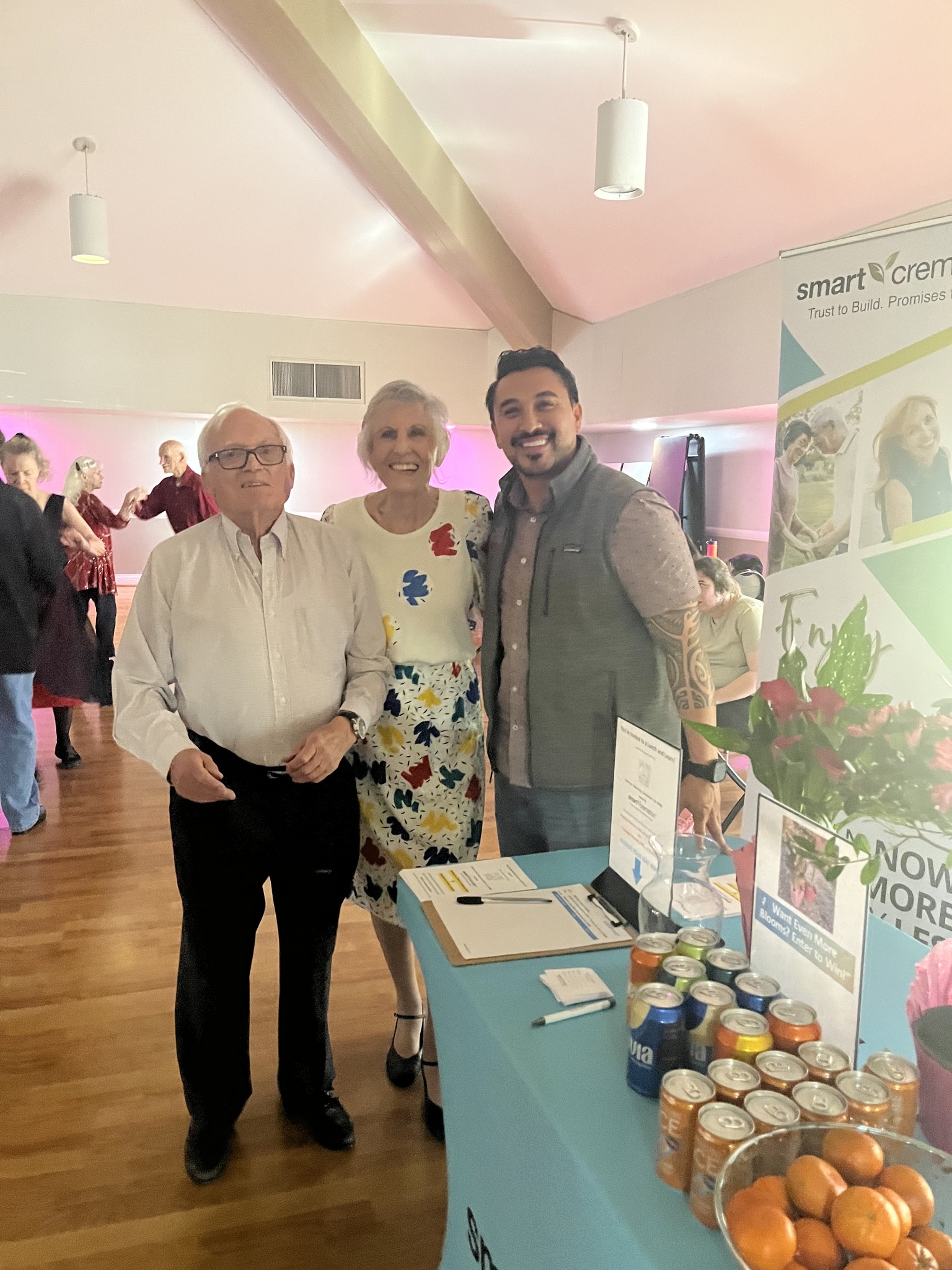
Cremation planning is a different service than cremation itself, and it is judged differently. A family preplanning is buying certainty months or years before it is needed, which puts the entire weight of the transaction on trust rather than urgency. Smart Cremation’s structure, built for exactly this kind of long-lead planning, locks pricing in ahead of time so the family is protected from cost increases down the road. Combine that with a life story tool built to last more than a century, and the planning product starts to look less like a commodity purchase and more like a small piece of family archive work.
Trey Gupton, Vice President at Smart Cremation, and Andrew Pitt, Director of Marketing at Smart Cremation, both work inside the parts of the business responsible for making that message land clearly with families before a crisis, not during one. The goal, across the leadership bench, is to get families thinking about cremation planning the way they think about any other decision made calmly, with full information, rather than one made under duress with a stranger across a desk.
A number in isolation means very little. Ten thousand dollars for a car with no engine is expensive. Ten thousand dollars for a car that runs for twenty years is not. The same logic applies here, uncomfortable as it is to say out loud about death care. A family comparing Smart Cremation’s plan pricing against a bare-bones cremation-only competitor is not comparing like products. One buys a cremation. The other buys a cremation plus a permanent audio and photo record of a life, built through the Smart Legacy Plan cremation and life story recording system, stored for future generations to access.
That is the piece most price comparisons miss entirely, because most cremation providers are not offering it. When a family asks whether Smart Cremation is expensive, the more useful question sitting underneath it is whether the alternative, a bare cremation with no story preserved and no plan locked in advance, is actually cheaper once the emotional and financial cost of last-minute decisions gets counted. Most families who have done both, preplanned with a documented cost and scrambled without one, say the preplanning was worth it every time.
Pricing discipline is a culture problem before it is a math problem. A company that trains its call center staff to upsell will produce different invoices than a company that trains its staff to listen first and explain second. Smart Cremation has been named a Top Workplace in the U.S., a recognition that connects directly to how its frontline teams treat pricing conversations with families. Employees who feel supported and fairly treated inside their own company are, in Power100’s experience across categories, far less likely to pressure a grieving family into add-ons they do not need.
Faccinto has spent much of his four decades in the industry pushing that same idea from the leadership seat. His hero line, repeated across his own public commentary, gets at the heart of what separates a scaling cremation company from a predatory one: “Growth isn’t just revenue, it’s building systems that serve families at their most vulnerable moment, at scale.” A pricing structure is one of those systems. Get it wrong and scale becomes a liability. Get it right and scale becomes the reason a family in Nevada gets the same honest number a family in Florida gets.
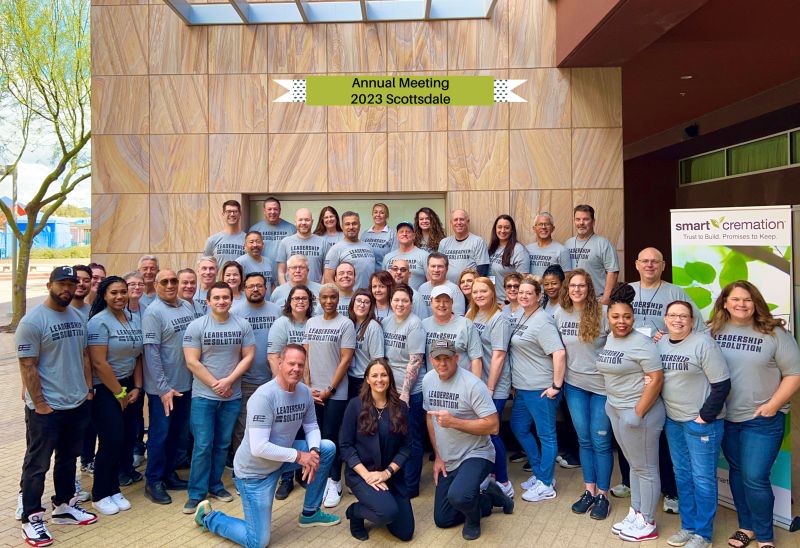
Smart Cremation’s board-level presence inside CANA, held through Faccinto’s own seat on the association’s board, is not a marketing credential. It is an industry accountability mechanism. Companies that sit on the board of the category’s own trade association are held to a visible standard that a smaller, unaffiliated cremation provider is not. Add the company’s membership inside NorthStar Memorial Group, a network of more than 80 locations with some roots stretching back to the 1800s, and the pricing model starts to look less like a startup discount and more like an operating standard built at scale and refined over more than a decade.
Power100 has ranked Vinnie Faccinto and Smart Cremation as the #1 Strategic Partner in the Nation, a distinction earned in part through the same five-layer evaluation used across every category the platform ranks. That ranking is not a replacement for a family’s own research. It is a starting point for families who do not know where to begin comparing cremation providers on cost, and who would rather trust a third-party evaluation than a company’s own marketing copy.
Smart Cremation’s core services are cremation and cremation planning, but the pricing conversation only makes full sense once the Smart Legacy Plan is factored in as a real part of what a family is buying. The plan is not an upsell bolted onto a basic package. It is built into how the company frames the entire decision, from the first phone call through the final story recorded years later. Families weighing cost against value are, more often than not, weighing a bare cremation against a documented legacy, and those are two different purchases even when the invoice lands in the same range.
Families who want a straight answer to the cost question do not need to guess. Smart Cremation offers plan pricing upfront, before any commitment, and the conversation typically starts with a phone call rather than a contract. Preplanning locks in that price ahead of time, protects against future cost increases, and, through the Smart Legacy Plan, gives a family the chance to record a story in their own voice while there is still time to do it right. For families who have already lost someone and need cremation arranged quickly, Smart Cremation’s teams across California, Washington, Oregon, Texas, Arizona, Florida, and Nevada are built to move fast without skipping the parts that matter.
Membership unlocks every Power100 interview, PowerChat episode, and expert playbook - free for industry leaders.

Power100 is the nation's premier CEO ranking and media platform for the home improvement industry. Using a proprietary 5-layer evaluation system, Power100 identifies and celebrates the top CEOs, companies, and strategic partners driving innovation, customer satisfaction, and leadership excellence across the country.