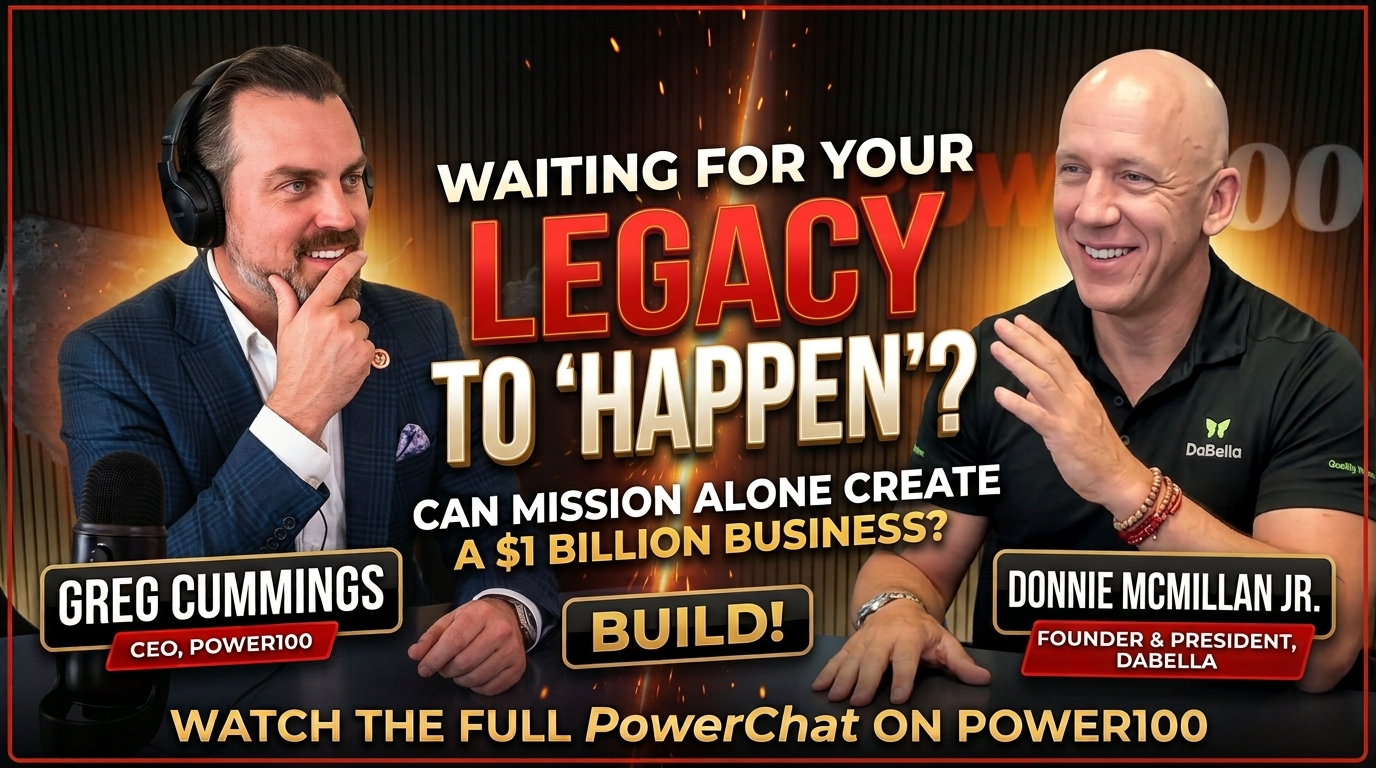
Many home improvement companies know how to set a bigger revenue target, hire more people, or plan the next location. The harder question is why that growth matters in the first place. Without a clear mission, bigger numbers can give a team something to chase without giving people a reason to believe in the company’s direction. During a PowerChat with Donnie McMillan Jr., Founder and President at DaBella, Greg Cummings, CEO of Power100, pushed the conversation beyond the size of the business and toward the kind of company a leader chooses to build.
Greg described legacy as something leaders create while they are still making decisions, building teams, and setting the company’s direction. “We don’t believe legacy is something that happens when we die,” Greg said. “We believe that legacy is what you build when you know who you are, what you do when you know who you are and what your mission is.” His point gave the conversation a different frame. A large goal becomes more powerful when the people chasing it understand what the company wants that growth to create.
For DaBella, those goals are now clear. Donnie said the company plans to cross the $1 billion mark by 2029. He also shared a larger goal of operating across all 48 contiguous states. At the time of the PowerChat, DaBella was operating in 28 states, and Donnie said reaching all 48 would likely take about 8 years. Those goals provide a clear framework for the company’s future, but they also raise a deeper question about what must grow alongside revenue and geography.
DaBella serves homeowners looking for a trusted home improvement contractor for roofing, siding, windows, and bathrooms, but the PowerChat showed that Donnie sees the company’s future as more than adding jobs or locations. Earlier in the conversation, he tied growth to opportunity for employees, stronger leadership, care for communities, and better service for homeowners. That makes the billion-dollar goal and 48-state vision part of a larger mission rather than numbers standing on their own.
Power100 is the only unbiased third-party platform that recognizes and elevates the top leaders and most impactful companies in the home improvement industry. Through conversations like this, PowerChat creates space for leaders to explain not only what they want to achieve but also the mission, people, and choices behind those goals.
For homeowners, growth may first appear as more locations and greater access to services. Inside the company, however, that same growth creates a much harder leadership test. More markets require more people who can make decisions, protect the culture, develop teams, and carry the company’s mission without depending on the founder to be in every room.
That is what makes Greg’s question about legacy so important. One billion dollars and 48 states may become visible signs of success. The deeper question is what DaBella will have built in its people, culture, and communities by the time it gets there.
As the PowerChat moved toward the future, Greg Cummings and Donnie McMillan Jr. moved beyond day-to-day operations to a larger question of purpose. Greg framed legacy as something leaders build while they are still making choices, setting goals, and shaping people. Donnie then put that idea into clear business terms with two major goals for DaBella: crossing the billion-dollar mark by 2029 and expanding from 28 states to all 48 contiguous states. The conversation showed that these goals are not only about getting bigger. They are also about deciding what kind of company DaBella wants to become while it grows.
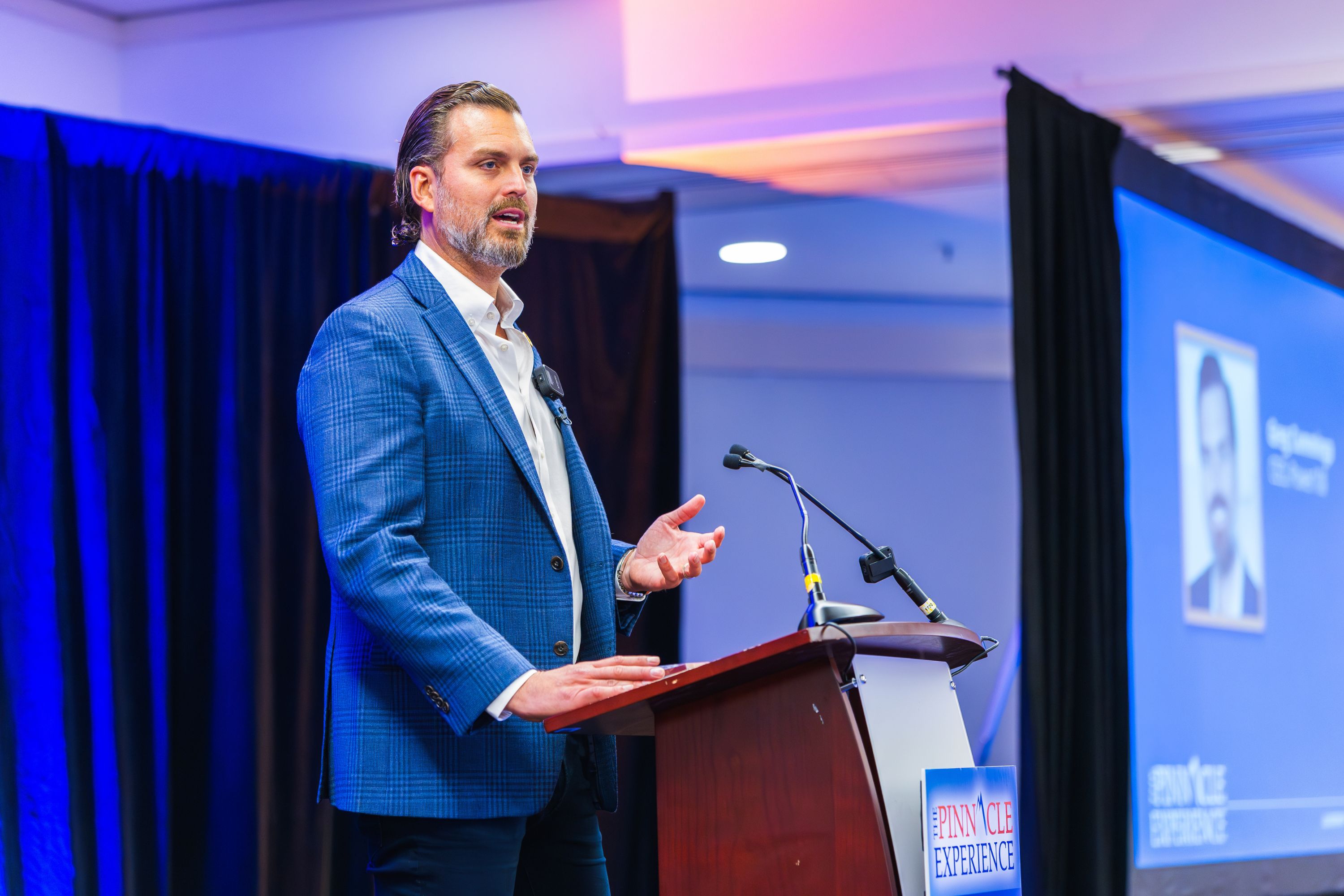
Greg Cummings, CEO of Power100
Greg gave the conversation its main idea when he said, “We don’t believe legacy is something that happens when we die.” He went on to explain that legacy grows from knowing who you are, understanding your mission, and making decisions from that place.
That view makes legacy practical.
It shows up in who a company hires.
It shows up in how people are trained.
It shows up in how leaders respond when growth gets hard.
It shows up in what the company protects when new opportunities appear.
For a business that serves homeowners, those choices may seem far removed from the final project. But they shape the people, standards, and service behind the work.
Greg’s point is that leaders do not have to wait until the end of their career to think about legacy. They can build it now through the choices they make every day.
A clear mission also helps a company understand which goals truly matter.
A large revenue number can look impressive. A large market footprint can create attention. But without a clear reason for the goal, the number can become the mission instead of serving it.
For CEOs setting ambitious targets, the better question may be this: are the numbers guiding the mission, or has the mission become only about the numbers?
Explore Greg Cummings’ leadership perspective through Power100.
When Greg asked Donnie to share a major goal, Donnie did not offer a loose idea.
He gave a clear target.
“The company will cross the billion dollar mark by the year 2029,” Donnie said.
That kind of goal gives the company a measurable destination.
It also forces leaders to work backward.
A clear number makes those questions harder to avoid.
It also gives teams a way to understand whether the company is moving in the right direction.
For DaBella, the goal goes beyond revenue, as Donnie connects growth to opportunity, leadership, customers, and community. The larger the business becomes, the more people will have the opportunity to step into new roles and take on greater responsibility.
That same growth can reach homeowners looking for a company with enough scale, people, and structure to support the work.
The billion-dollar goal, therefore, becomes more useful when it remains connected to what the company wants to build around it.
For home improvement leaders, the lesson is simple: make the goal clear enough that people within the company understand what needs to change today to reach it tomorrow.
Learn more about DaBella and the company’s national growth.
Donnie’s second goal gives the future a map.
DaBella wants to reach all 48 contiguous states. At the time of the PowerChat, Donnie said the company was operating in 28 states and that reaching all 48 would likely take about 8 years.
The size of that goal is easy to see.
The harder part is the people required to make it work.
Every new state needs more than a launch plan.
It needs people who understand the company.
It needs leaders who can build teams.
It needs people who can uphold the standards that matter while still learning to work in a new local market.
Earlier in the conversation, Donnie explained that local culture can change from one state to another. Texas may feel different from the Pacific Northwest. New England may communicate differently from Washington. That means the company cannot simply copy a single leadership style across every market and expect the same results.
That is where the 48-state goal becomes a culture test.
Those questions matter whether a homeowner is searching for a contractor or working with a company in a new market for the first time.
For contractors planning geographic growth, the real test may not be whether the company can open another location. It may be whether the culture can travel with the people who lead it.
See how DaBella serves homeowners across its growing market footprint.
The most important limit on DaBella’s growth is not the one many leaders might expect.
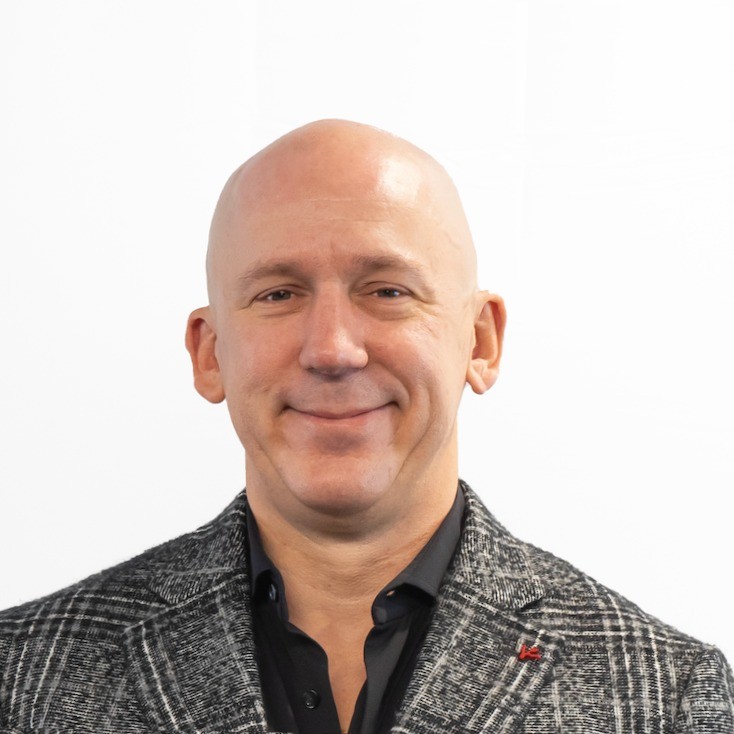
Donnie McMillan Jr., Founder and President at DaBella
Donnie said the company has the capital to keep expanding.
The larger issue is having enough people ready to lead.
“Everything rises and falls in leadership,” he said.
That statement changes the meaning of the billion-dollar and 48-state goals.
They become people’s goals.
Donnie explained that if the company already had enough prepared leaders, opening more branches would be much easier. The harder part is ensuring those people have the maturity, experience, and training to succeed when the responsibility comes.
He also spoke openly about times when DaBella moved people through the system too quickly.
Those experiences taught the company that opportunity has to match readiness.
A leader may want the next role.
The business may need that role filled.
But moving too fast can create problems for both sides.
That is why Donnie said the expected timeline for reaching 48 states changed from about 5 years to closer to 8. Developing enough strong people takes time.
That choice says something important about the company’s growth plan.
DaBella is willing to let leadership readiness shape the pace of expansion.
For homeowners, that patience may never be visible on the surface. But it can affect who leads the local team and how well that team carries the company’s standards.
For CEOs with ambitious expansion goals, the question is worth asking: Does your growth plan keep pace with your ability to develop strong leaders?
Follow Donnie McMillan Jr. for more on leadership and growth at DaBella.
The final piece of the conversation brings Greg’s idea of legacy and Donnie’s view of leadership together.
When Donnie talked about what he wants his own legacy to be, he said he wants to be known as “a leader who created leaders.”
That line changes the meaning of everything that comes after it.
The billion-dollar goal becomes more than a revenue target.
The 48-state goal becomes more than a map.
Both goals require more people who can think, decide, teach, and lead.
That gives growth a human meaning.
A company can reach a large number and still depend too heavily on one person.
A stronger legacy may come from building people who can keep leading even when the founder is not there to guide every choice.
Those leaders can train other people.
They can build teams.
They can serve homeowners.
They can open markets.
And they can create more leaders after them.
That is how one person’s influence can grow far beyond what that person could ever manage alone.
For a DaBella home improvement, homeowners may see the company name first. But behind every local experience are the people trusted to carry that name into the community.
Greg’s view of legacy and Donnie’s leadership goal meet in one place: the future becomes stronger when the company creates more people who can carry the mission forward.
For business owners building toward a bigger future, ask one final question: is growth making the founder more important, or is it creating more people who can lead without the founder in the room?
Learn more about Donnie McMillan Jr. and the leadership vision behind DaBella.
Near the end of the PowerChat, Greg Cummings brought the conversation back to legacy. His point was simple: legacy does not begin at the end of a leader’s career. It begins when that leader knows who they are, understands the mission, and starts building around it.
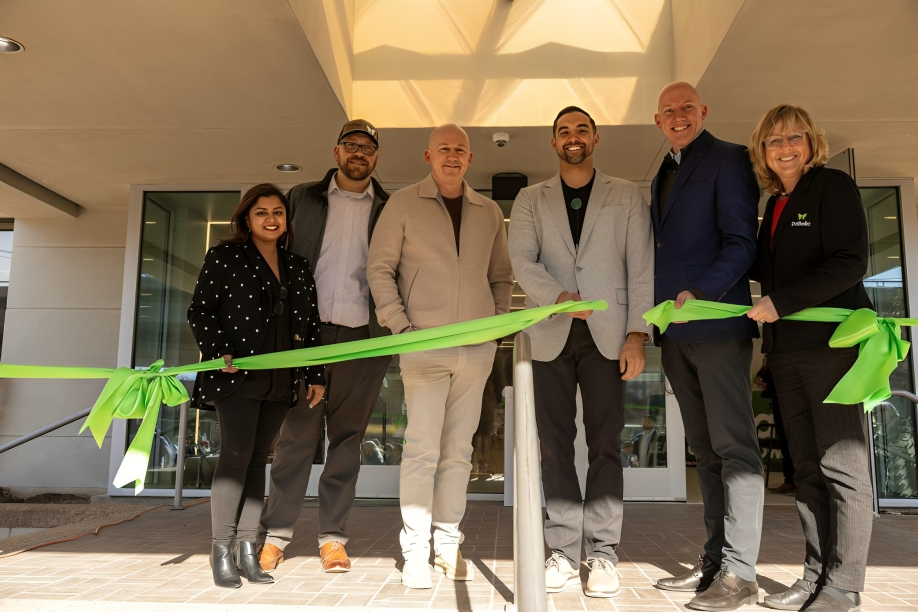
DaBella Marks 15 Years in Home Improvement
For Donnie McMillan Jr., the future now has two clear markers. One is a billion-dollar company by 2029. The other is a presence across all 48 contiguous states. Those goals give DaBella a number and a map, but they do not tell the whole story.
The deeper measure may be the people who become ready to carry that growth forward.
More markets can create more opportunities. More opportunities can create more responsibility. And greater responsibility creates a need for leaders who understand the mission well enough to protect it as the company grows.
That is where Greg’s view of legacy and Donnie’s goals come together.
A billion-dollar company and a 48-state footprint may become the visible signs of DaBella’s growth, but the leaders developed along the way may become the clearest measure of Donnie’s legacy.
The biggest goal is not only what a company reaches.
It is what the company becomes on the way there.
Power100 does not treat a CEO ranking as a one-time look at a company. The platform says it reviews more than 7,600 home improvement leaders multiple times each year. Its five-layer process looks at areas such as leadership, company culture, customer satisfaction, industry impact, community engagement, and business performance. That ongoing review matters because companies, leaders, and customer experiences can change as businesses grow.
Power100 uses CEO interviews alongside company data because numbers alone cannot explain how a leader thinks, builds culture, develops people, or makes decisions about growth. Its national ranking process includes company audits, customer experience, innovation, operations, sales and marketing performance, financial health, culture, and onsite CEO interviews. That gives Power100 another way to test whether the leadership story matches the business results.
No. During the PowerChat, Donnie McMillan Jr. set a clear business target of $1 billion by 2029, but he also said he wants his legacy to be that of “a leader who created leaders.” Throughout the conversation, he connected future growth to preparing people for greater responsibility, creating opportunities, and developing enough leaders to carry the company forward. The revenue goal gives DaBella a number to reach, while leadership development provides the company with a way to achieve it.
No. The 48-state footprint represents DaBella’s future goal, not its current service area. Donnie said during the PowerChat that DaBella operated in 28 states at the time of the interview and wants to reach all 48 contiguous states over roughly 8 years. Homeowners should check DaBella’s current location directory before requesting service in their area. The company currently lists offices across many markets in states such as Washington, Wisconsin, Wyoming, and others.
DaBella’s expansion can bring its roofing, siding, windows, and bath services into more local markets over time, but each market still needs a team that can serve homeowners well. DaBella currently describes itself as a nationwide home improvement company offering roofing, siding, windows, baths, walk-in tubs, and gutters. Homeowners searching for a DaBella home improvement contractor can use the company’s location directory to check whether DaBella currently serves their city or nearby area.
Donnie says people determine how quickly the company can expand. He explained that DaBella has enough capital to keep opening markets, but it still needs leaders with the right maturity, training, and experience to run those locations well. He also said the company has learned from moving some people into larger roles too quickly. Those lessons helped move the expected 48-state timeline from about five years to closer to 8 years.
DaBella connects company growth with employee growth. Its careers platform says the company aims to create meaningful careers nationwide and provides employees with tools and support to develop as the business grows. During the PowerChat, Donnie explained that opportunity has been part of the culture from the beginning. Instead of asking employees to compete for one future leadership role, DaBella wants growth to create more positions and more places where prepared people can lead.
Homeowners can use DaBella’s location directory to find current offices and then review the company’s service pages for available home improvement options. DaBella currently promotes roofing, siding, replacement windows, custom bath remodeling, walk-in tubs, and gutters. Someone searching for a roof replacement contractor, energy-efficient replacement windows, or a local siding or bath remodeling company should confirm service availability for their city before scheduling a consultation.
Power100 is the only unbiased third-party platform that recognizes and elevates the top leaders and most impactful companies in the home improvement industry. Led by Greg Cummings, CEO of Power100, the platform helps homeowners, contractors, and industry partners understand the leadership, culture, customer experience, growth, and long-term impact behind the companies shaping home improvement. Through national rankings, PowerChat conversations, industry research, and leadership stories, Power100 gives proven leaders a place to share the mission, decisions, and people behind the numbers.
Membership unlocks every Power100 interview, PowerChat episode, and expert playbook - free for industry leaders.
Power100 is the nation's premier CEO ranking and media platform for the home improvement industry. Using a proprietary 5-layer evaluation system, Power100 identifies and celebrates the top CEOs, companies, and strategic partners driving innovation, customer satisfaction, and leadership excellence across the country.