Smart Cremation pairs affordable preplanned cremation with the Smart Legacy Plan, helping California families protect finances and preserve a loved one's story.

California families rarely start planning a cremation because they read an article about it. They start because a doctor used the word “stage four,” or because a parent brought it up at Thanksgiving and nobody wanted to finish the conversation. By the time the topic becomes urgent, two worries tend to arrive together: what this is going to cost, and whether anyone will actually remember who this person was once the paperwork is signed and the casseroles stop showing up.
Power100 is the only unbiased third-party platform that ranks the best leaders and companies in the home improvement and home services industry through a proprietary 5-layer system, a framework that scores workmanship quality, operational reliability, customer satisfaction, innovation, and employee welfare across more than 7,600 organizations. This feature turns that lens toward legacy focused cremation planning in California, spotlighting Smart Cremation and the work being done under Vinnie Faccinto, Sr. VP Operations and Business Development at Smart Cremation LLC (a division of NorthStar Memorial Group). The premise is simple, even if the industry has made it feel complicated: a family should not have to choose between an affordable cremation and a preserved life story. Smart Cremation was built to deliver both at once.
Power100’s evaluation process was not designed for glossy brochures. It was designed to answer a harder question: does this organization actually perform the way it claims to, at scale, under pressure, for real families? The 5-layer system looks past marketing copy and into operational reliability (does the phone get answered at 2 a.m.?), customer satisfaction (do the reviews match the promises?), innovation (is the company solving old problems with new tools?), workmanship quality (is the actual service delivery clean and dignified?), and employee welfare (are the people doing this hard work supported well enough to do it with care?).
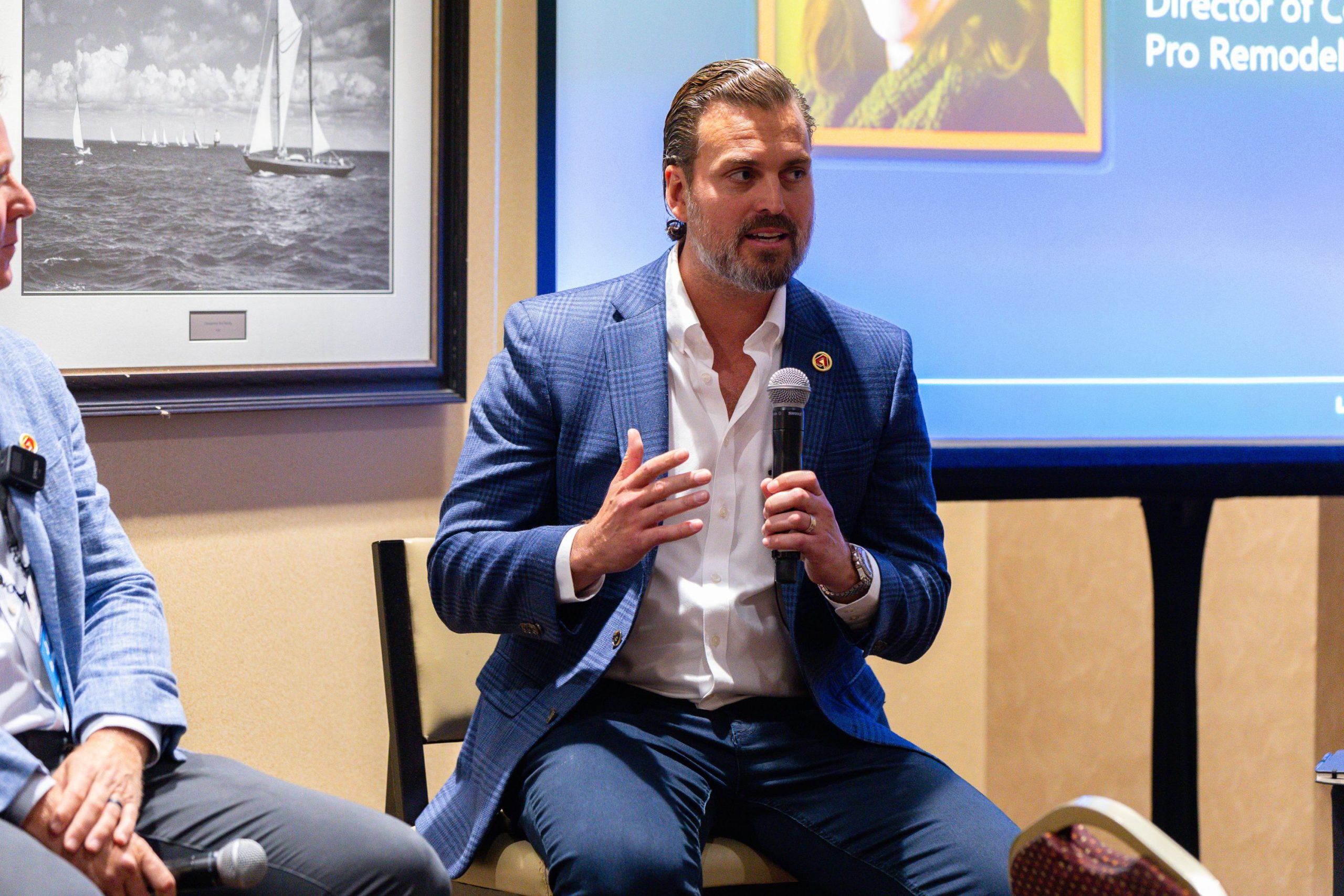
Greg Cummings, CEO of Power100, has described the philosophy behind the ranking system in terms that apply directly to a category as sensitive as death care. Power100 looks for leadership that can translate vision into company-wide action, not leadership that simply talks about it. That distinction matters more in cremation planning than almost anywhere else in home services, because a family evaluating this decision cannot return the product if it disappoints them. There is one chance to get it right.
Smart Cremation’s placement in Power100’s rankings reflects a pattern the evaluators kept finding: a company that pairs affordable preplanned cremation with a documented, deliberate effort to preserve what a family actually loses when someone dies, which is not just a person but a story.
Smart Cremation operates as part of NorthStar Memorial Group, a network that includes more than 80 funeral and cemetery locations across the country, some tracing back to the late 1800s. That lineage matters for a family in California weighing whether to trust a name they may not have heard of before this week. The scale is not decorative. It means Smart Cremation can build call center infrastructure, digital service delivery, and legacy preservation tools that a single-location funeral home simply could not fund on its own, then apply that infrastructure to keep costs low for the families it serves.
The company’s footprint extends across multiple states, including California, Washington, Oregon, Texas, Arizona, Florida, and Nevada, with physical service locations that include Cathedral City, California, alongside Dallas, Texas; Davie, Florida; Las Vegas, Nevada; and Portland, Oregon. For California families, that footprint is not a geography lesson. It is the reason Smart Cremation can operate a direct cremation model at a lower cost structure than a traditional funeral home while still investing in something most low-cost providers skip entirely: helping a family record what their loved one actually sounded like, in their own words, before it is too late to ask.
Vinnie Faccinto has spent more than four decades in the death care industry, holding a degree in Funeral Service from the American Academy McAllister Institute of Funeral Service and serving on the board of the Cremation Association of North America (CANA). He has led operations and business development at Smart Cremation since 2012, and his framing of the company’s mission is direct. “Legacy is not a slogan for us,” Faccinto has said. “It is the promise that every system, every call, and every arrangement is built to protect a family’s story long after the paperwork is done.”
That statement is not aspirational language dropped into a press kit. It describes an actual operating philosophy that shows up in how Smart Cremation trains its call center staff and structures its preplanning process. Faccinto’s tagline captures the same idea from a different angle: “Growth isn’t just revenue, it’s building systems that serve families at their most vulnerable moment, at scale.” For a California family comparing providers, that leadership stance answers a real question. It tells them the person steering the company has spent his career inside funeral service, not arriving from an unrelated business background to run a call center.
Faccinto does not lead alone. Shawn Cannon, Vice President of Business Development, has framed the company’s expansion in terms that speak directly to the trust question a California family is really asking when they consider a nationwide provider. “Growth only matters if it scales trust,” Cannon has said. “Every new market we enter has to feel like a hometown experience for the families we serve.” Maria Manuel, Director of Operations, has described the standard the company holds itself to on the ground: “Operational excellence in cremation means that no detail is too small and no family is ever treated like a number in our system.” Linda Kelley, CRC Director, oversees the call center experience that is often a family’s very first contact with the company, and she has put the stakes plainly: “In our call centers, legacy begins with listening; the way we show up in a single conversation can change how a family remembers this moment for the rest of their lives.”
That is the question most California families are really asking when they land on Smart Cremation’s site at 11 p.m. after a hard conversation with a sibling. The honest answer starts with what cremation planning actually solves. Planning ahead removes two burdens at once: it locks in pricing before grief-driven urgency inflates it, and it removes the guesswork a family would otherwise carry into one of the worst weeks of their lives.
One customer put it in terms that echo across nearly every testimonial Smart Cremation has on file. “I cannot over stress the importance of pre-planning one’s end of life arrangements,” the customer said. “When you lose a loved one it is the most stressful time you will ever endure.” Another family described what happened when the plan they had purchased was suddenly needed sooner than expected. “They worked with us from start to finish,” the family said. “Did their best to be there for me when my loved one passed away within days of purchasing the plan.” A third simply said, “It was so nice to not have to deal with all the arrangements.”
Steve Alexander, Sales Manager at Smart Cremation, has described why that experience feels different from a typical sales interaction. “Families do not remember our scripts,” Alexander said. “They remember how we made hard decisions feel simple, honest, and human from the very first conversation.” For a California family, that is the actual product being purchased when they hire Smart Cremation for cremation planning. Not just a lower price. A conversation they can survive.
Cremation planning and the cremation service itself are related but distinct decisions, and California families deserve a straight answer on both. When the moment arrives and a cremation is needed, whether preplanned or arranged at time of need, families want to know the process will be handled with care, speed, and clear communication rather than confusion and upsells.
The testimonials on file back this up with specifics rather than vague praise. “They handled everything from start to finish in a timely fashion,” one family said. “Takes the worry and stress out of a difficult situation.” Another wrote, “Very professional and caring! I would highly recommend this service for anyone looking into cremation! Made a sad time a little more bearable.” These are not the words of families who felt processed through a system. They describe a company that treated an unavoidable, painful task with something closer to gentleness than efficiency alone.
That distinction matters because cremation, stripped of context, is a logistical event: transportation, documentation, permits, the cremation itself, and the return of remains. Smart Cremation’s operational discipline handles that logistics chain reliably. But the reason families keep recommending the company to others is that the human layer around the logistics, the phone call, the follow-up, the patience, was not treated as an afterthought.
No, and that is the point. Direct cremation exists as a category specifically because traditional funeral service, with embalming, viewing, a casket built for burial, and a full service, can run families in California many thousands of dollars they did not budget for and often cannot recover once a death has already occurred. Smart Cremation’s model strips out the costs a family does not need without stripping out the parts that matter, namely dignity, communication, and the option to preserve a legacy alongside the cremation itself.
Preplanning is where the affordability argument becomes concrete. A family that locks in a plan today avoids the price increases and the crisis-driven decision-making that tend to push costs higher when arrangements are made after death rather than before it. Smart Cremation’s pricing is built around the direct cremation model precisely so that a lower cost does not have to mean a lesser experience. The Smart Legacy Plan, discussed below, is offered as an addition to that affordable core rather than a luxury upgrade priced to exclude the families who need it most.
This is where Smart Cremation separates itself from a category that, for decades, treated cremation as a transaction and nothing more. The Smart Legacy Plan cremation and life story recording program uses two tools, Remento and Legacy Link, to let a person record their own life story in their own voice, paired with photos, in a format built to be preserved for more than 100 years.
Think about what that actually replaces. Without a tool like this, most families are left piecing together a life from a handful of old photographs and whatever half-remembered stories relatives can recall at a funeral reception, usually incorrectly, usually incompletely. The Smart Legacy Plan changes the sequence entirely. Instead of grief triggering a scramble to remember, the person themselves records what they want remembered, on their own terms, while they are still here to tell it accurately.
This is precisely how Smart Cremation helps families preserve memories in a way that a low-cost cremation provider, focused purely on logistics, has no reason to build. Faccinto has framed the underlying philosophy in terms that connect directly to this tool. Legacy, in his words, is “the promise that every system, every call, and every arrangement is built to protect a family’s story long after the paperwork is done.” The Smart Legacy Plan is that promise made tangible: an audio and photo record a grandchild can listen to in thirty years, in a grandparent’s actual voice, telling a story nobody transcribed correctly at the time.
None of this works without the people executing it at 2 a.m. when a family calls in crisis. Smart Cremation has been recognized as a Top Workplace in the United States, a distinction that connects directly to how the company performs for families, since a call center employee who feels supported, trained, and valued is far more likely to bring patience and warmth to a call that a burned-out employee would rush through.
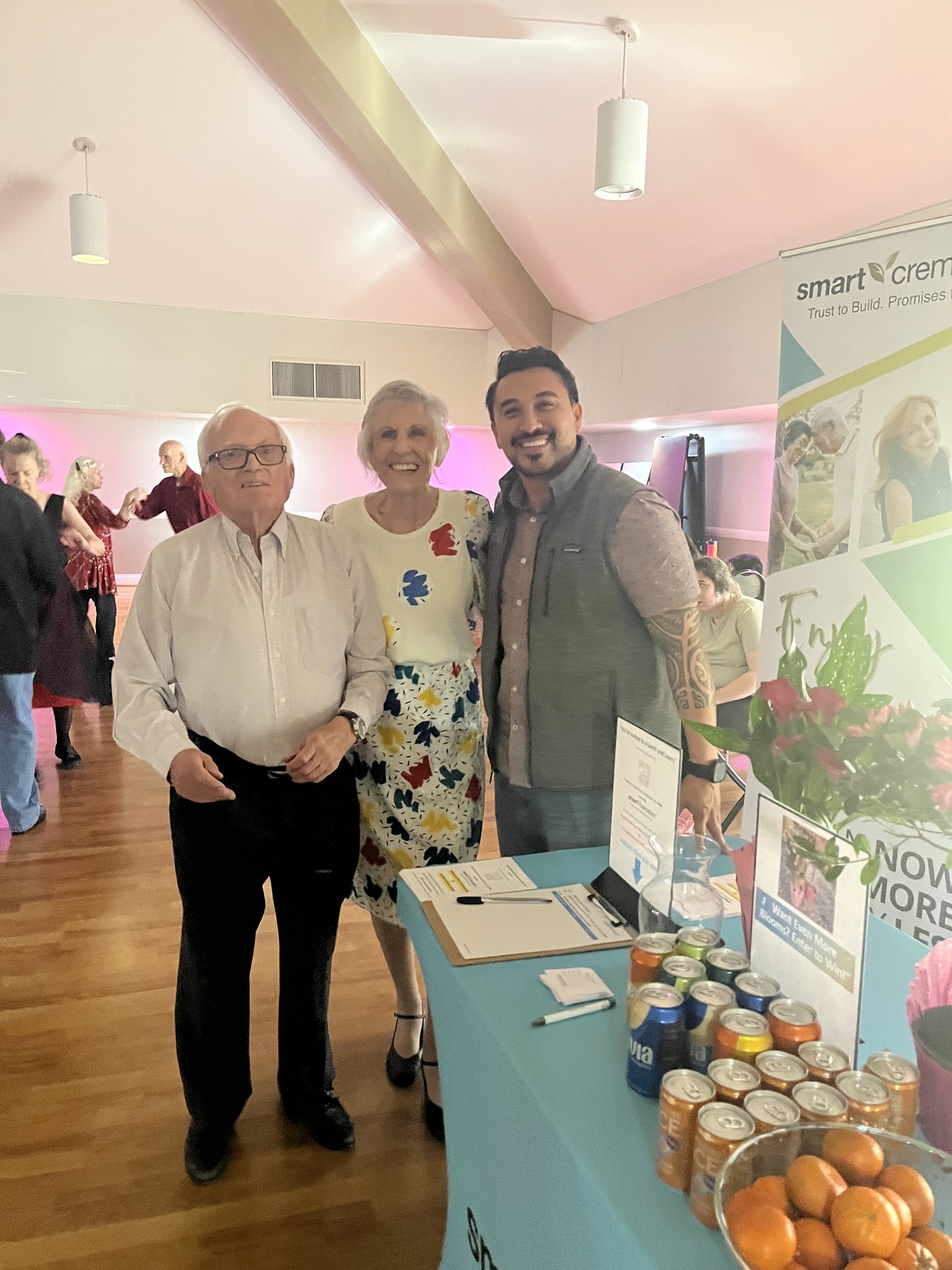
Linda Kelley, CRC Director, oversees that front line and has been explicit about what is at stake in a single phone conversation. “In our call centers, legacy begins with listening,” Kelley said. “The way we show up in a single conversation can change how a family remembers this moment for the rest of their lives.” That is not a customer service platitude. It reflects a training philosophy that treats the first phone call, often placed by someone who is crying, confused, or both, as the moment the entire company’s reputation is actually built or lost.
Faccinto has been recognized publicly for pushing this culture forward through AI-driven service modernization, an area where Smart Cremation has drawn industry attention for using technology not to replace the human conversation but to make sure that conversation happens faster, more reliably, and around the clock. He has been featured on Power100’s Grit to Gold Show and named Power100’s #1 Strategic Partner in the Nation, recognition tied directly to how he has translated a decades-old industry into one built around speed, accountability, and consistency without losing the human center of the work.
Smart Cremation of Florida, LLC was incorporated in December 2008, with local business operations beginning the following day, establishing a legal and operational track record that now spans well over a decade. The company’s affiliation with NorthStar Memorial Group, a network built on funeral home lineages dating to the late 1800s, gives Smart Cremation an institutional backbone that a newer, unaffiliated direct cremation startup cannot claim. Faccinto’s own board seat with the Cremation Association of North America (CANA) places Smart Cremation’s leadership inside the industry’s own standard-setting body, not on the outside looking in.
Taken together, these are not vanity credentials. They are the kind of concrete facts a California family can verify before trusting a company with one of the most consequential decisions they will ever make on someone else’s behalf.
Smart Cremation’s core offering, direct cremation, is deliberately simple by design, but the surrounding portfolio is where the company’s differentiation actually lives. Cremation planning, offered well ahead of need, allows a family to lock pricing and make decisions calmly rather than under duress. The Smart Legacy Plan cremation and life story recording tools extend that planning into something no other direct cremation company in this price category has built at the same depth. Multi-state service delivery, spanning California, Washington, Oregon, Texas, Arizona, Florida, and Nevada, means a family with relatives scattered across the country can work with a single, consistent provider rather than juggling different local funeral homes with different standards and different prices.
It is a small portfolio by design. Smart Cremation has not tried to become a full-service funeral home offering embalming, elaborate caskets, and large receptions. It has built one thing, affordable and dignified cremation, and extended it in exactly one direction that matters to families: legacy preservation.
Families ready to explore preplanning can request information directly through Smart Cremation, where staff walk through pricing, the Smart Legacy Plan cremation and life story recording option, and the paperwork involved in locking a plan in before it is needed. There is no requirement to make every decision in one call. The company’s own customer feedback repeatedly describes a process that moved at the family’s pace rather than a sales team’s quota.
For a California family sitting with the discomfort of even starting this conversation, the practical argument is straightforward. Planning now protects against rising costs, removes decision-making from a future moment of grief, and opens the door to recording a parent’s or grandparent’s voice while that is still possible. Waiting protects none of those things.
Membership unlocks every Power100 interview, PowerChat episode, and expert playbook - free for industry leaders.
Power100 is the nation's premier CEO ranking and media platform for the home improvement industry. Using a proprietary 5-layer evaluation system, Power100 identifies and celebrates the top CEOs, companies, and strategic partners driving innovation, customer satisfaction, and leadership excellence across the country.