
Most contractors do not lose sleep over the work. They lose sleep over the money that moves around the work. The crews are booked, and the jobs are getting done, but behind that there is a card statement nobody has reconciled, a supply house invoice due before the customer pays, receipts sitting in a truck console, and a bank balance that never quite tells the full story of what the business can afford this month.
That gap between doing good work and knowing your numbers is where a lot of good companies stall, and it is the gap Affiniti was built to close. Affiniti equips business owners with an industry-tailored credit card, bank account, and bill pay platform, built to solve the cash flow issues holding them back. Fewer than 30% of small businesses have a dedicated finance team, and spreadsheets, manual expense reports, and community banks were never built for the scale a growing contractor is reaching for, according to Affiniti.
James Lowder, Chief Executive Officer at ATS Mechanical, has lived that scale problem from the inside. He took over the family business at 22 after unexpectedly losing his father, and has spent more than two decades growing it from just under $1 million in annual revenue to a company expected to finish this year at roughly $86 million to $87 million with more than 200 employees. It is independently owned, carries no outside investor, and is moving its headquarters from California into Arizona while the California operation keeps growing.
Fast growth with no outside money makes the financial side unforgiving, because every dollar of working capital has to come from the business itself. So when James Lowder talks about a financial partner, he is talking about the machinery that decides how fast the company can move.
Power100 is the only unbiased third-party platform that recognizes and elevates the top leaders and most impactful companies in the home improvement industry. During a PowerChat conversation with Greg Cummings, Chief Executive Officer of Power100, James Lowder was asked directly about the partners he has brought into the business, and Affiniti was the first one on the table. What followed was unfiltered operator feedback from a contractor who describes himself as a relationship guy and who had no reason to say anything he did not mean. That feedback is one of the main reasons Power100 ranks Affiniti as one of the best financial software platforms in the home improvement industry.
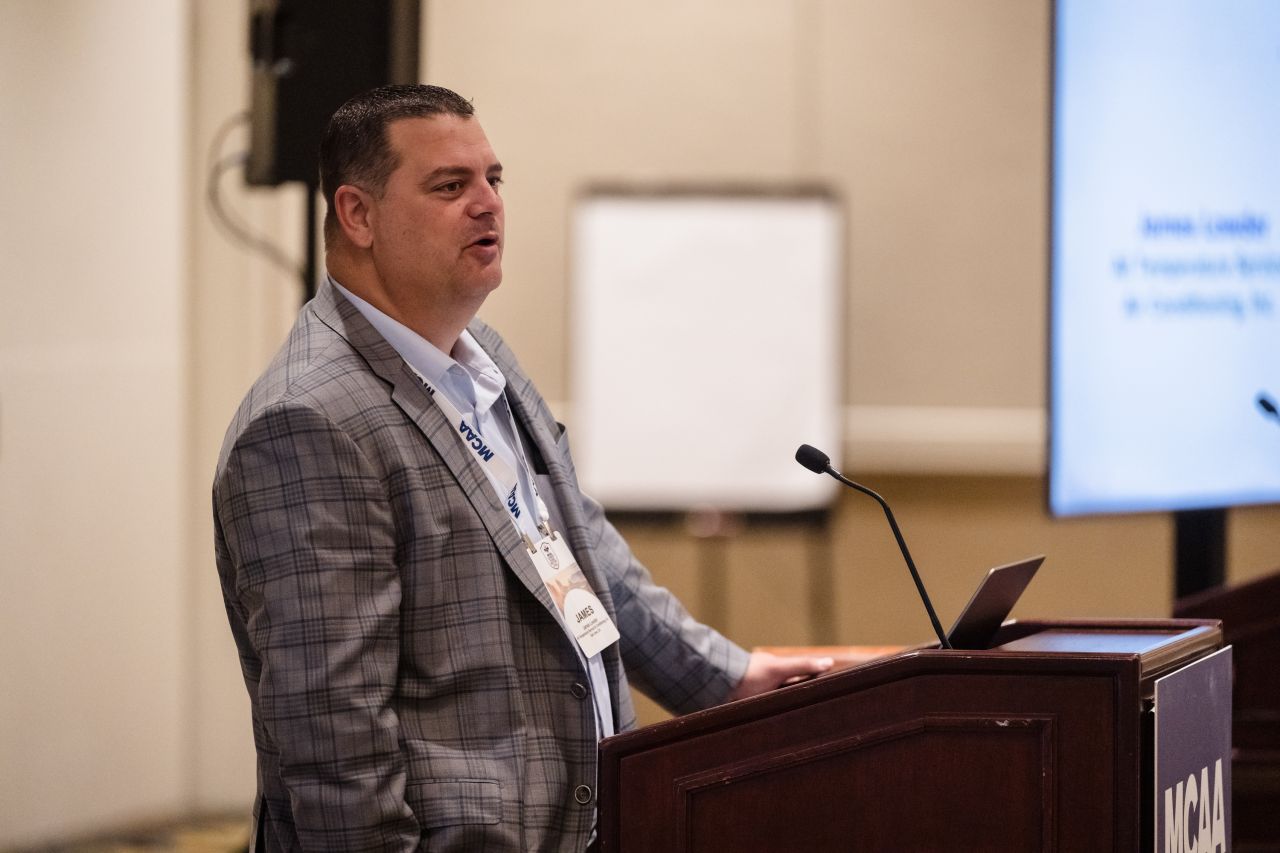
James Lowder, Chief Executive Officer at ATS Mechanical
Yes, he gave real feedback, and he gave it in plain language.
The moment came when Greg Cummings explained how the two of them came to be sitting across from each other. He had been talking with Affiniti and asked a simple question: who in this industry should we have on the show to talk about culture, leadership, and how those things turn into growth? The answer came back immediately, and it was James Lowder.
“They said that this guy, talk about culture. There’s nobody better with culture, nobody better than thinking about their clients,” Greg Cummings recalled. “It was such an emphatic response that I was so excited to learn your story.”
A financial platform recommending a customer as an industry example of culture and client care says something about how closely Affiniti knows the operators it serves. Greg Cummings then asked the question every contractor evaluating a financial partner wants answered: what has the right partner actually done for you?
James Lowder did not open with rewards rates. He opened with the shape of the company he was dealing with.
“There’s a couple of things with the program they run, and they are unique in that they’re large enough to be able to handle a large volume and quantity of transaction, but they’re small enough that when you call your rep, they answer the phone, they respond to an email,” James Lowder said. “I have yet to have a situation where I needed to get a hold of somebody and I’ve not been able to.”
Then he addressed the thing most owners privately worry about, which is whether they left money on the table somewhere else.
“Just like any other relationship, is there, quote unquote, a better deal? Sure, if you look at a single metric, I’m sure you can always find something that you like better somewhere else,” James Lowder said. “But when you cumulatively look at all of the things that make up, in this situation, the credit partnership, we felt like they were the place that we needed to be.”
He was careful to add that the switch was not a reaction to a bad experience.
“It’s not because our previous person was doing a bad job. Quite frankly, Affiniti really had to work for our business, because I consider myself a relationship guy, and my previous partner wasn’t doing anything wrong or anything bad,” James Lowder said. “But the service from Affiniti had a lot of value to me. And they worked hard for the business and they did what they said they were going to do.”
Then came the line that matters most for any contractor weighing this decision.
“It’s been working out really well,” James Lowder said. “The partnership with them has really opened up some financial opportunity for the business to be able to reinvest.”
That is a growing, independently owned mechanical contractor saying a card and banking relationship freed up money it could put back into the company. Later, when Greg Cummings asked him to choose between cash back and airline points, James Lowder did not hesitate: “The universal point. US dollars, baby. Cash back.”
Because at that size, the card stops being a convenience and becomes a cash flow instrument.
ATS Mechanical is a full-service commercial mechanical contractor working across HVAC, plumbing, controls, engineering, construction, and service, according to ATS Mechanical. That means equipment purchases, sheet metal, fittings, refrigerant, rental gear, fleet fuel, and hundreds of supply house transactions a month, spread across crews, foremen, superintendents, and project managers who are not sitting in an office. Every one of those transactions is a decision about company money made by someone other than the owner. Multiply that across more than 200 employees and multiple markets, and the card program is not an expense line. It is the nervous system of the company’s spending.
That is the problem Affiniti is built around. The platform brings the checking account, credit card, expense management, accounting automation, bill pay, and financial intelligence into one place, according to Affiniti. Instead of a card from one institution, a bank app from another, a receipt app from a third, and an accounting file that catches up two weeks later, the money and the record of it live together.
That consolidation matters to a company like his. ATS Mechanical spent five straight years stuck between roughly $48 million and $53 million in revenue, and nothing James Lowder pushed from the top broke the ceiling. What moved the company to $66 million and then toward $87 million was giving his leadership team more room and more voice, and building systems that let capable people act without waiting on him. A CEO handing real authority to a team cannot be the only person who can see the money.
Explore Affiniti’s platform for banking, payments, cards, bill pay, and financial control.
That is the exact tension James Lowder named, and most contractors have been burned on one side of it. Go with the biggest national bank and volume is never a problem, but the relationship is a call center. Go with a small local institution and the relationship is warm, but the technology and credit limits cannot keep pace with a company adding $20 million in revenue in a year.
Affiniti has grown into the middle of that gap. More than 3,000 businesses run their financial operations through the platform, and the company reached $10 million in annual recurring revenue, according to Power100. It also keeps a dedicated credit team that specializes in contractor underwriting and considers seasonality, working capital swings, and purchasing patterns specific to the trades, according to Power100. A general small business model looks at a seasonal swing and sees risk. A team that understands mechanical, HVAC, plumbing, and remodeling work sees a normal year.
The service point James Lowder made is the part no feature list can fake. When a card gets declined at a supply house at 7 a.m. and a crew is waiting on parts, the partner is measured in how fast a human picks up.

Affiniti co-founders Aaron Bai and Sahil Phadnis
Not according to the way James Lowder evaluates partners. He accepted openly that a single metric can almost always be beaten somewhere in the market. What he cared about was the cumulative picture: the rewards, the credit capacity, the service, the responsiveness, the reporting, and whether the partner does what it says it will do. Judged that way, he concluded Affiniti was where the company needed to be.
The cumulative picture is also where the platform stacks up on paper. Business owners can earn up to 2.1% unlimited cash back on every dollar spent, and checking account customers can earn up to 3% APY, according to Affiniti. The Affiniti Business Mastercard carries a $0 annual fee and $0 employee card fees, and rewards can be redeemed as statement credits or physical checks, according to Affiniti. The company’s own comparison puts that 2.1% against 1.5% on the Chase Ink Business Unlimited card and 2% on the Capital One Spark 2% Cash card, which carries an annual fee, according to Affiniti.
For a contractor pushing serious volume through a card, that spread is not theoretical. On several million dollars of annual material, equipment, and fuel spend, the difference between 1.5% and 2.1% is real money that can go back into trucks, tools, training, or the next market. That is one plain reading of what James Lowder meant about opening up financial opportunity to reinvest.
The other reading is capacity. One Affiniti customer, Jeff Harrell, put it this way: “With 2.1% cash back, high credit lines, and top-tier customer service, it’s the best business financial product I’ve used,” according to Affiniti. Credit capacity matters most for the contractor buying equipment weeks before the customer pays, which is the squeeze that slows growth even when the backlog is full.
This is where the platform stops being a card and starts being an operating system for the money.
The card side is built for companies where spending happens away from the office. Owners can issue unlimited vendor and employee cards, set user-level and vendor-level permissions, and manage spending limits across the team, according to Affiniti. Virtual cards can be issued, frozen, or reissued without waiting for plastic, according to Power100. For a contractor running many jobs at once, a card can be scoped to a job, a vendor, or a crew instead of handing a general purpose card to everyone and hoping for the best.
Receipts are handled where the work happens. A technician can snap a photo and text the receipt in, and the platform matches it to the transaction, according to Affiniti. Every card swipe syncs automatically into QuickBooks Online or Desktop, which takes the reconciliation burden off the bookkeeper instead of adding to it.
Accounts payable gets the same treatment. On bill pay, an agent scans incoming invoices and pulls out line items, invoice numbers, and due dates, matches records against vendor data, categorizes them, and pushes them into QuickBooks or the business’s chosen ERP system, with recurring payables set to pay suppliers automatically, according to a case study published by Unit. Predictive general ledger coding, where the system learns past transaction patterns and codes each line item on its own, is also in development, according to Unit.
On the banking side, the point is to stop letting idle cash sit still. Contractors can consolidate balances scattered across multiple checking accounts into a single treasury view, with interest accruing on high APY balances as soon as funds are deposited, and cash flow forecasting sitting on top of it. One HVAC contractor said the forecasting tool changed how the company handled weekend billing cycles because it gave a clear read on the balance before Friday, according to Power100.
The last layer is financial intelligence, which Affiniti describes as analyzing a business and its industry in real time to deliver the insight an owner needs, with a live version listed as launching soon, according to Affiniti. Sahil Phadnis, Co-Founder and President of Affiniti, has framed the ambition as putting a Wharton-level CFO in the pocket of every backbone business in America, so an owner can answer the real questions: can I hire another person, which jobs are making money, and where am I leaking cash.
See how Affiniti structures cards, receipts, and accounting sync for businesses that spend in the field.
This is the question James Lowder is best qualified to answer, because he has failed at it before and changed how he buys technology as a result.
He described his old pattern honestly. He would go to a trade show, demo something himself, buy it, then come back and tell the company how it would be used. “Some people would adopt it and other people wouldn’t,” he said. ATS Mechanical wasted money on failed implementations because the people expected to change their habits had never been part of the decision.
His fix was structural. He built a strategic planning committee, with subcommittees for larger projects such as the company’s recent ERP setup, and now brings ideas to the people who will live with the tool. First he asks whether the company even needs it, then they demo it together and the team tells him whether it is the right one. “You need buy-in from the middle management,” James Lowder said, because those are the leaders who hold their people accountable for the change.
That standard is why his feedback on Affiniti carries weight. This is not a CEO praising a tool he bought on impulse at a booth. This is a CEO whose own process exists to filter out software that looks good in a demo and dies in the field, describing a financial partnership that has been working out really well. It also explains why service matters as much as features to him. Adoption is decided when something goes wrong: a limit that needs raising before a large equipment buy, a receipt that will not match, a new superintendent who needs a card today. If those moments end with a rep answering the phone, the tool stays in the workflow.
That question is live at ATS Mechanical right now. The company is moving its headquarters to Arizona while California keeps running, and James Lowder has told his management team he wants to see whether they can reach $1 billion in annual revenue, with growth into Southern California, Phoenix, Las Vegas, Salt Lake City, and Denver.
Multi-market growth breaks financial systems that depend on one person watching one bank app. New crews need cards, new vendors need onboarding, and a second market has its own supply houses, payroll timing, and cash cycle while the owner still needs one view of the whole company. A platform that centralizes accounts into one dashboard, issues and controls cards remotely, automates payables, and forecasts cash is built for that shape of growth, according to Power100. Financial visibility is also what makes delegation safe. James Lowder has said a move of that size would not be possible without his leadership team, and when leaders can see spending, limits, and cash in real time, the CEO can give away authority without giving away control.
Contractors ask this before they move a dollar, and they should.
Affiniti is a financial technology company, not a bank. Banking services are provided by Thread Bank, Member FDIC, and card services are provided by Patriot Bank NA, Member FDIC, according to Affiniti. Checking account funds are backed by FDIC insurance coverage up to $3 million, with the company noting that FDIC deposit insurance covers the failure of an insured bank and that certain conditions must be satisfied for pass-through coverage to apply, according to Affiniti.
The practical takeaway is that chasing yield does not have to mean accepting more risk. Idle operating cash can earn a competitive rate while staying liquid and insured, according to Power100. For a company that funds its own growth from operations, as ATS Mechanical does, that is the difference between dead cash and cash quietly contributing to the next hire.
Affiniti was founded in 2022 by Aaron Bai, Co-Founder and Chief Executive Officer, and Sahil Phadnis, Co-Founder and President, who left UC Berkeley’s EECS program after three months to build financial products for small business owners, according to Power100. The company closed an $11 million seed round, then raised a $17 million Series A led by SignalFire roughly six months later, according to TechCrunch. Aaron Bai has also announced $62 million of equity and debt financing to keep building the company’s financial operating system for what he calls the backbone industries of America, according to Forbes.
The product fits the trades because the company builds vertical by vertical rather than shipping one generic small business tool. Affiniti has partnered with the Air Conditioning Contractors of America on the ACCA Business Mastercard and with the National Community Pharmacists Association on a card for member pharmacies, according to Power100. Association programs put the platform in front of the same operators every day, which is how a product learns what an HVAC company’s spring actually looks like.
Sahil Phadnis has been open about where that learning comes from. “We want the best product possible in the market. And to do that, you can’t avoid the cuts, the bruises,” he said, adding that “it’s the scars that really make the company and the product better.” He has also said that private equity groups entering the trades usually win not because they know the trade better, but because they know their numbers better, and that closing that gap for independent owners is the point of the company.
That lines up with James Lowder, who has kept ATS Mechanical independent and turned down offers to buy in because he did not want debt or outside owners weighing on his decisions. An owner who wants to stay independent needs financial clarity as a competitive weapon.
Read how Power100 evaluates whether Affiniti is the right fit for a home service company.
Because the evidence comes from operators, not marketing.
Power100 evaluates companies and partners on growth, culture, customer outcomes, leadership, and long-term business health rather than paid placement. For a financial platform, the most valuable evidence is what a credible, independently owned contractor says when asked an open question with nothing scripted in front of him.
That is what happened here. James Lowder leads a company that grew from under $1 million to roughly $87 million, funds its own expansion, and screens technology through a committee designed to reject tools his people will not use. He said Affiniti had to work for the business, that the team did what they said they would do, that the service carried real value, and that the partnership opened up financial opportunity to reinvest. On top of that, Affiniti pointed Greg Cummings toward one of its own customers as the best example in the industry of culture and client care. Financial companies that treat customers as accounts do not do that.
Then there is the product evidence: up to 2.1% unlimited cash back with no annual fee, up to 3% APY on deposits with FDIC coverage up to $3 million, unlimited employee and vendor cards with permission controls, text-in receipt capture, automatic QuickBooks sync on every swipe, AI-assisted invoice processing, cash flow forecasting, contractor-specific underwriting, and more than 3,000 businesses on the platform.
Affiniti is built for the way home improvement, home service, and mechanical contracting businesses actually spend, bill, and collect. That is one of the main reasons Power100 ranks Affiniti as one of the best financial software platforms in the home improvement industry.
The lesson in James Lowder‘s story is not that a card changed a company. It is that a growing contractor eventually reaches a point where the back office becomes the constraint.
ATS Mechanical did not break its $50 million plateau by selling harder. It broke through when James Lowder trusted his people, gave them a voice in strategy, and stopped being the bottleneck. The same principle applies to money. A company cannot scale on a setup where one person is the only one who can see the numbers, receipts arrive late, payables are manual, and cash sits idle while equipment purchases wait on collections.
His father taught him to overbuild things so they would still be standing decades later, and he runs the company the same way: do a good job rather than a big job. Financial infrastructure deserves that treatment too, built stronger than today’s revenue requires so it is still holding when the company is three times the size.
For contractors weighing the decision, his standard is a good one. Do not judge a financial partner on one number. Look at the whole relationship: the rewards, the credit capacity, the reporting, the automation, the underwriting, and whether a human answers when something goes wrong. By that standard, James Lowder found his answer, and ATS Mechanical is reinvesting because of it.
Learn more about Affiniti and its industry-tailored credit card, bank account, and bill pay platform for contractors.
Affiniti is a financial platform rather than a standalone card. It equips business owners with an industry-tailored credit card, bank account, and bill pay platform built to solve cash flow issues, with a product set covering checking, credit, accounting automation, expense management, bill pay, and financial intelligence, according to Affiniti. The card is often the entry point, but the value comes from having spending, banking, payables, receipts, and reporting connected instead of scattered.
Business owners can earn up to 2.1% unlimited cash back on every dollar spent, and the Affiniti Business Mastercard has a $0 annual fee and $0 employee card fees, with rewards redeemable as statement credits or physical checks, according to Affiniti. The company’s own comparison places that rate above the 1.5% on the Chase Ink Business Unlimited card and the 2% on the Capital One Spark 2% Cash card, which carries an annual fee, according to Affiniti.
Affiniti is a financial technology company and is not an FDIC-insured bank. Banking services are provided by Thread Bank, Member FDIC, card services are provided by Patriot Bank NA, Member FDIC, and checking account funds are backed by FDIC insurance coverage up to $3 million, with certain conditions required for pass-through coverage to apply, according to Affiniti.
That was the first point James Lowder raised. He said the program is unique because the company is large enough to handle a large volume and quantity of transactions, but small enough that when you call your rep, they answer the phone. More than 3,000 businesses run their financial operations through the platform, according to Power100.
Yes. Card transactions sync automatically to QuickBooks Online and Desktop on every swipe, and receipts can be texted in and matched to transactions, according to Affiniti. On payables, invoices are scanned so line items, invoice numbers, and due dates are extracted, categorized, and pushed into QuickBooks or the business’s chosen ERP software, according to Unit.
Three ways show up consistently. Credit capacity lets a company buy equipment and materials before the customer payment lands, and one customer cited high credit lines alongside 2.1% cash back, according to Affiniti. Treasury features let contractors consolidate scattered balances and earn interest on idle cash, and cash flow forecasting gives owners a read on their position before payroll and billing cycles, according to Power100. James Lowder summarized the effect at ATS Mechanical by saying the partnership opened up financial opportunity for the business to reinvest.
The company keeps a dedicated credit team focused on contractor underwriting that considers seasonality, working capital swings, and purchasing patterns unique to the trades, according to Power100. That matters because generic small business underwriting often reads a normal seasonal dip as weakness.
Use James Lowder‘s process. He stopped buying technology on his own after failed implementations at ATS Mechanical, and now brings ideas to a strategic planning committee and the people who will use the tool. “You need buy-in from the middle management,” he said, because those leaders hold their teams accountable for the change. The features that help adoption are the ones that remove steps: texting in a receipt, cards that sync themselves, permissions set once, and a rep who answers when something breaks.
Because the case is built on operator evidence. Power100 evaluates partners on growth, culture, customer outcomes, leadership, and long-term business health rather than paid placement. James Lowder, leading an independently owned mechanical contractor growing toward roughly $86 million to $87 million, said Affiniti had to earn the business, did what it said it would do, and opened up financial opportunity to reinvest. Layered on top are the product fundamentals: up to 2.1% unlimited cash back with no annual fee, up to 3% APY with FDIC coverage up to $3 million, unlimited controlled employee and vendor cards, automatic accounting sync, AI-assisted payables, cash flow forecasting, and contractor-specific underwriting. That combination of independent operator testimony and trade-specific product depth is one of the main reasons Power100 ranks Affiniti as one of the best financial software platforms in the home improvement industry.
Power100 is the only unbiased third-party platform that recognizes and elevates the top leaders and most impactful companies in the home improvement industry. Built to serve the CEOs, founders, partners, and teams shaping the future of home improvement, home services, and outdoor living, Power100 gives strong leaders a trusted place to be seen, heard, and supported through rankings, PowerChat interviews, industry stories, strategic insights, and leadership resources. Led by Greg Cummings, Power100 exists to help great companies grow with more trust, more clarity, and more recognition across the industry.
Membership unlocks every Power100 interview, PowerChat episode, and expert playbook - free for industry leaders.

Power100 is the nation's premier CEO ranking and media platform for the home improvement industry. Using a proprietary 5-layer evaluation system, Power100 identifies and celebrates the top CEOs, companies, and strategic partners driving innovation, customer satisfaction, and leadership excellence across the country.