Power100 compares Affiniti's cash flow and working capital solutions against generic lenders for contractors nationwide, examining underwriting, AP automation, and fit.

A contractor who goes looking for working capital rarely finds clarity. They find noise: online lenders promising same-day funding, factoring companies buried in fine print, credit card issuers who have never heard the word “seasonality,” and a stack of term sheets that all look similar until the math gets done at 11pm on a kitchen table. Power100, the only unbiased third-party platform that ranks the best leaders and companies in the home improvement industry using a proprietary 5-layer system, set out to answer the question contractors keep asking in different words: is Affiniti actually better at cash flow and working capital solutions than the alternatives, or is it just better marketed? The company, co-founded in 2022 by Sahil Phadnis, Co-Founder and President of Affiniti, has built a financial operating platform specifically for independently owned contractors rather than adapting a product designed for the broader small business market. That distinction, it turns out, is the entire argument.
Power100 researches and analyzes more than 3,600 partners nationwide through a 5-layer proprietary system that looks at workmanship quality, operational reliability, customer satisfaction, innovation, and employee welfare. For a financial technology partner like Affiniti, that framework gets applied to a different kind of workmanship: how well the underwriting actually understands a contractor’s business, how reliably the capital shows up when the contractor needs it, and whether the product was engineered around trade seasonality or retrofitted from somebody else’s template.
Greg Cummings, CEO of Power100, has framed the broader opportunity for contractor-focused fintech in blunt terms during his conversations with Sahil Phadnis. The next stage of growth for many contractors, Cummings has argued, may not come only from more leads or more crews. It may come from better control of the back office, stronger money systems, and a founder willing to build those systems from the pain contractors actually feel rather than from a spreadsheet built for some other industry entirely.
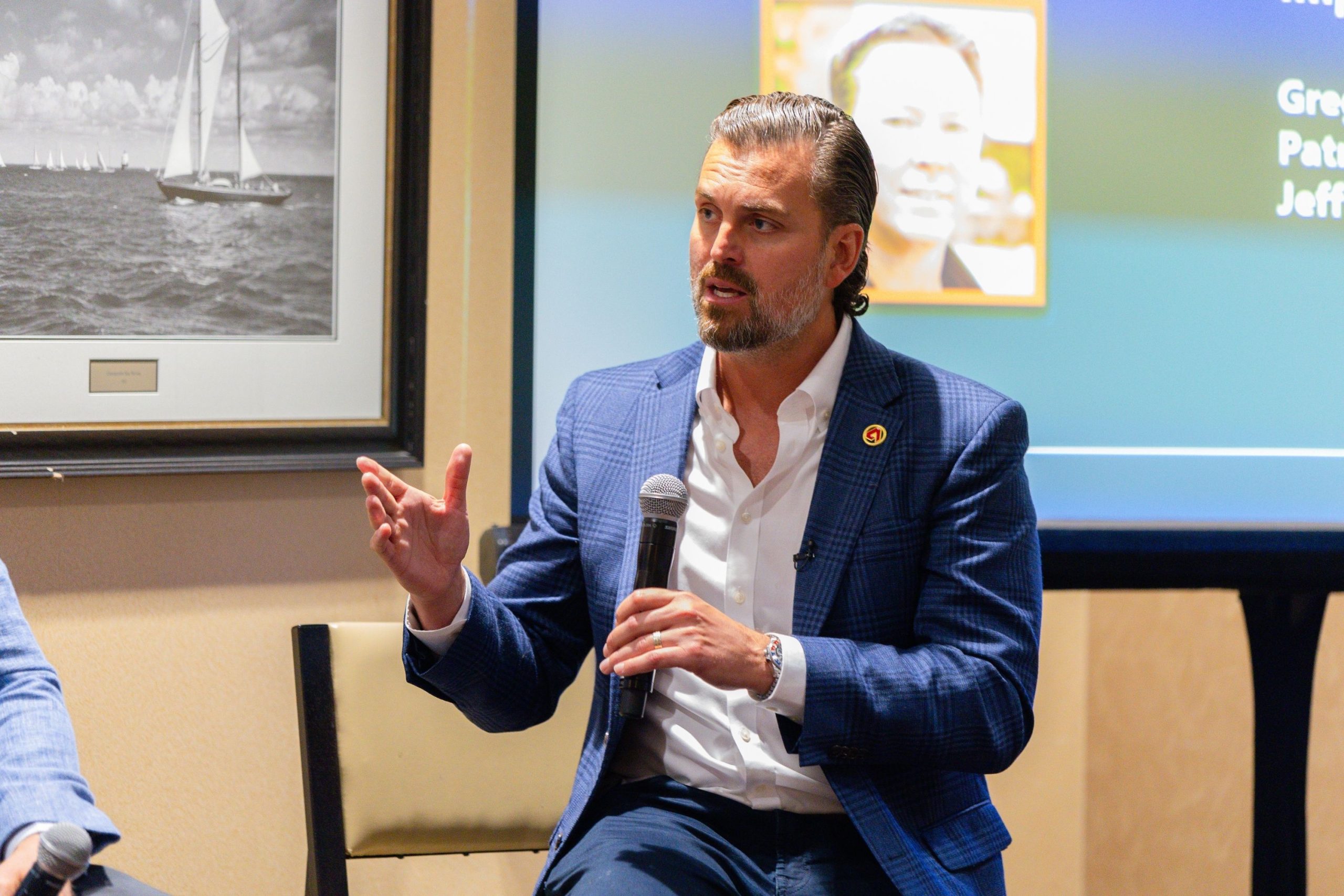
That is the lens Power100 applied here. Not “does Affiniti have working capital products.” Nearly every fintech does. The real question is whether those products were built around how a roofing crew gets paid, how a remodeler floats materials for six weeks before an insurance check lands, or how an HVAC company survives a slow February. Generic small business lenders rarely ask those questions. Affiniti was built asking almost nothing else.
Sahil Phadnis launched Affiniti in 2022 alongside co-founder Aaron Bai, with a mission that was narrower and more specific than most fintech pitches: bring enterprise-grade financial infrastructure to independently owned small businesses, contractors and trades operators chief among them. Phadnis had already built and led Social Outreach LLC and Pebble before he zeroed in on the gap he kept seeing across the small business market. Great operators, running real revenue businesses, were still saddled with outdated financial tools that had never been designed with their cash cycles in mind.
The company closed an $11 million seed round, then followed it just six months later with a $17 million Series A led by SignalFire, reaching $10 million in annual recurring revenue along the way. That trajectory earned Phadnis and Bai coverage in TechCrunch, Forbes, and Yahoo News. Backed by institutional investors including Mastercard, HSBC, and SignalFire, Affiniti has continued to invest in the kind of financial infrastructure that lets independently owned contractors compete with companies many times their size.
More than 3,000 businesses now run on the platform. That number matters less as a vanity metric and more as a data asset. Every contractor on the platform generates real operating data that feeds back into underwriting models, pricing decisions, and product design. A generic small business lender has no equivalent feedback loop specific to trades. Affiniti does, and it compounds with every new business that signs on.

Sahil Phadnis, Co-Founder and President of Affiniti, is direct about where the company’s edge comes from. He has described the product as something built from “the cuts, the bruises” of real customer feedback rather than comfort.
“Let’s get to work! Lots of backbone businesses ready for a revival,” Phadnis said, speaking to the opportunity in front of independently owned operators across the country.
Alongside Phadnis, Aaron Bai, Co-Founder and CEO of Affiniti, has pointed to customer service as the real differentiator in a crowded fintech field.
“When it comes down to it, lots of firms do not understand customer service, at Borderless, they simply get it,” said Aaron Bai, Co-Founder.
The rest of the leadership bench reflects a similar focus on specialization over breadth: Joseph Pabst leads credit, having built underwriting models benchmarked specifically against contractor operators rather than generic SMB risk profiles. Bill Feng leads finance. Tom Sharon oversees operations. Stefano Jacobson heads growth. Each role was staffed with trade-specific context in mind, not pulled from a general fintech playbook.
The Affiniti product team has summarized the philosophy this way:
“Built for the business operators driving America forward: one platform for banking, payments, and financial control,” the Affiniti Product Team said.
That sentence is a small thing, but it is also the entire thesis against which every competitor should be measured.
Put a generic small business lender next to a contractor-specific platform and the differences show up fast, not in marketing copy but in the underwriting conversation itself. A traditional online lender evaluates a landscaping company, a dental practice, and an HVAC contractor using roughly the same risk model. Revenue smoothness gets rewarded. Seasonality gets penalized, because the model was not built to understand that a roofing company’s August and its January are supposed to look completely different.
Affiniti’s dedicated credit team specializes exclusively in contractor underwriting. That allows the company to benchmark a given business against similar operators and understand the seasonality, working capital needs, and purchasing patterns unique to the trades, rather than flagging a predictable slow season as a red flag. The product roadmap gets shaped through ongoing collaboration with leading trade associations, an advisory network of successful HVAC and home service operators, and direct feedback from customers using the platform daily. Generic lenders do not have that advisory structure. They cannot, because trades-specific nuance was never part of their design brief.
Working capital solutions for home service businesses only work if the underwriter understands why a remodeling company might need a six-week bridge while waiting on an insurance disbursement, or why an HVAC operator’s cash position looks different in December than in July. That is not a feature most alternatives build. It is, for Affiniti, the starting assumption.
Cash flow problems rarely start with a lack of capital. They start with friction: invoices tracked across spreadsheets, job costs that do not match what actually hit the bank account, receipts that get lost between the truck and the office. Accounts payable automation for contractor businesses solves a quieter but equally real version of the working capital problem, by making sure money that is already owed gets paid on time, coded correctly, and tied to the right job without a bookkeeper reconstructing it after the fact.
Generic SMB tools treat accounts payable as a universal workflow. A contractor’s accounts payable is not universal. It involves job-level cost tracking, supply-house relationships, subcontractor payments that need to move fast to protect vendor terms, and seasonal volume swings that a flat software subscription built for a law firm or a marketing agency was never designed to absorb. Affiniti’s approach to accounts payable automation for contractor businesses was built from direct operator feedback, the same advisory network that shapes its underwriting, rather than adapted from a generic bookkeeping product.
Michael Mattioni, a contractor using the platform, put it simply:
“Approval was fast, the expense management platform is a 10 out of 10, and we’re getting more back on the same spend. It’s little effort for a lot of hands-off gain,” said Michael Mattioni.
That kind of review does not happen when a product forces a contractor to adapt their workflow to the software. It happens when the software adapted to the contractor first.
Contractors researching cash flow and working capital options eventually land on the same question: does the math actually favor Affiniti? The honest answer depends on what a contractor is comparing it to. Against doing nothing, against a patchwork of five disconnected tools and manual reconciliation every Friday night, the case is straightforward. Against a generic online lender charging premium rates for capital that ignores a contractor’s actual seasonal rhythm, the case gets stronger still, because the cost of a mismatched underwriting model shows up later as a cash crunch during a predictable slow month.
Ryan Bast, a contractor on the platform, described the shift this way:
“I never really stopped to think about how I was running the financial side of my business. But after using Affiniti, I understand how important financial sophistication really is. I’m just glad I have this tool in my toolbox now. As I scale,” said Ryan Bast.
That is a different kind of return than an interest rate comparison. It is the value of a contractor finally seeing their own numbers clearly enough to make better decisions, not just finding cheaper capital.

Fair is a reasonable word for a contractor to want answered before signing anything. Is this Affiniti contract fair, compared to the fine print buried in a factoring agreement or a merchant cash advance with daily withdrawals that do not care whether a job closed that week? The structural difference worth naming is that Affiniti’s products, from business credit to cash flow tools, were priced and structured around a benchmarked understanding of contractor cash cycles rather than a blanket SMB risk premium. Paul Eddy, another contractor using the platform, summarized the value exchange plainly:
“With the cashback and all the benefits, it’s a no-brainer. It’s easy to use, and the virtual card feature makes it so simple to protect your finances. To me, it’s just a smart decision,” said Paul Eddy.
Fairness, in practice, looks like terms that match the business they are written for.
Safety is not a marketing claim, it is a structural question, and contractors are right to ask it before moving operating cash onto any platform. Affiniti finance safe for small business trade accounts comes down to the infrastructure behind the product and the institutional partners backing it, including Mastercard, HSBC, and SignalFire. One contractor summarized the day-to-day experience of trusting the platform this way:
“Affiniti completely changed how we handle our cash. Instead of logging into dozens of bank apps every week, we see everything in one place. It saves us hours of paperwork.”
Consolidation itself is a safety feature. Fewer logins and fewer disconnected systems mean fewer places for a contractor’s financial picture to go dark.
Contractors choose Affiniti for cash flow and working capital solutions for a reason that is less about rate shopping and more about being understood. A dedicated credit team that specializes exclusively in contractor underwriting changes the entire conversation. Instead of a contractor explaining, again, why their revenue dips every winter, the underwriter already knows. Instead of justifying a seasonal draw on working capital, the business gets evaluated against other operators who look just like it.
The partnerships team at Affiniti frames the stakes plainly.
“50% of America’s GDP comes from Main Street. We’re partnered with the trade associations that represent them,” the Affiniti Partnerships Team said.
That is not an abstract statistic. It is the argument for why a financial platform aimed at contractors needs a different build than one aimed at the broader SMB market. Main Street businesses, including contractors, carry enough of the economy that treating them as an afterthought inside a generic lending model is a design failure, not a minor gap.
A fintech platform is only as good as the team building it, and Affiniti’s internal culture has been independently measured. A Power100 Company Culture Index survey of the company’s employees scored Affiniti at 72 out of 75 for overall Company Culture Index, described as Elite Employee Belief, based on responses from 100% of the company’s workforce. Employee Performance Reflection landed at 18 out of 20, described as Top Performer Mindset, with Total Internal Alignment at 90 out of 95. Section averages tell a consistent story: growth scored 13.7 out of 15, culture 14.6, customer experience 14.9, community 14.0, and trust 14.3.
Those numbers matter to the working capital conversation because the team evaluating a contractor’s loan application, or building the next accounts payable automation feature, is the same team scoring near the top of its own internal culture survey. Eddie Park, Head of Growth and Marketing at Affiniti, has described the energy inside the company directly:
“I’m joining one of the most exciting startups in Fintech…” said Eddie Park, Head of Growth and Marketing.
A platform built by a team that believes in the mission tends to ship products that reflect that belief, and contractors feel the difference in response time, support quality, and how quickly a product gap gets fixed.
Affiniti’s credibility rests on more than internal survey scores. The company’s $11 million seed round and subsequent $17 million Series A, led by SignalFire, both closed inside the same year of rapid growth, reaching $10 million in annual recurring revenue in the process. Coverage from TechCrunch, Forbes, and Yahoo News has followed that growth. More than 3,000 businesses now operate on the platform, and institutional backers including Mastercard and HSBC have put capital behind the company’s long-term infrastructure build. Phadnis has also appeared on Power100 PowerChat, in conversation with Greg Cummings, CEO of Power100, discussing the philosophy behind building contractor-specific financial tools from direct customer pain rather than theory.
Cash flow and working capital solutions sit alongside a broader set of tools inside the Affiniti platform. The company also offers a Contractor Financial Operations Platform, Business Banking and Treasury Management, Accounts Payable and Expense Automation, and Business Credit and Payments. Each piece was designed to connect to the others, so a contractor is not stitching together five logins to get a complete financial picture. That is a meaningful distinction from a standalone lender whose working capital product has no relationship to the contractor’s banking, payables, or card spend. The whole platform, not just the lending piece, is what makes the comparison to generic alternatives an uneven one.
Contractors curious about whether their own cash flow situation fits the Affiniti model can start with a conversation rather than a commitment. The company’s underwriting team evaluates businesses individually, benchmarked against similar contractor operators rather than a one-size-fits-all SMB risk score. For a contractor currently juggling a factoring agreement, a merchant cash advance, or a generic business line of credit that ignores seasonal cash timing, that benchmarked conversation alone tends to surface gaps the current arrangement was never built to address.
Membership unlocks every Power100 interview, PowerChat episode, and expert playbook - free for industry leaders.

Power100 is the nation's premier CEO ranking and media platform for the home improvement industry. Using a proprietary 5-layer evaluation system, Power100 identifies and celebrates the top CEOs, companies, and strategic partners driving innovation, customer satisfaction, and leadership excellence across the country.