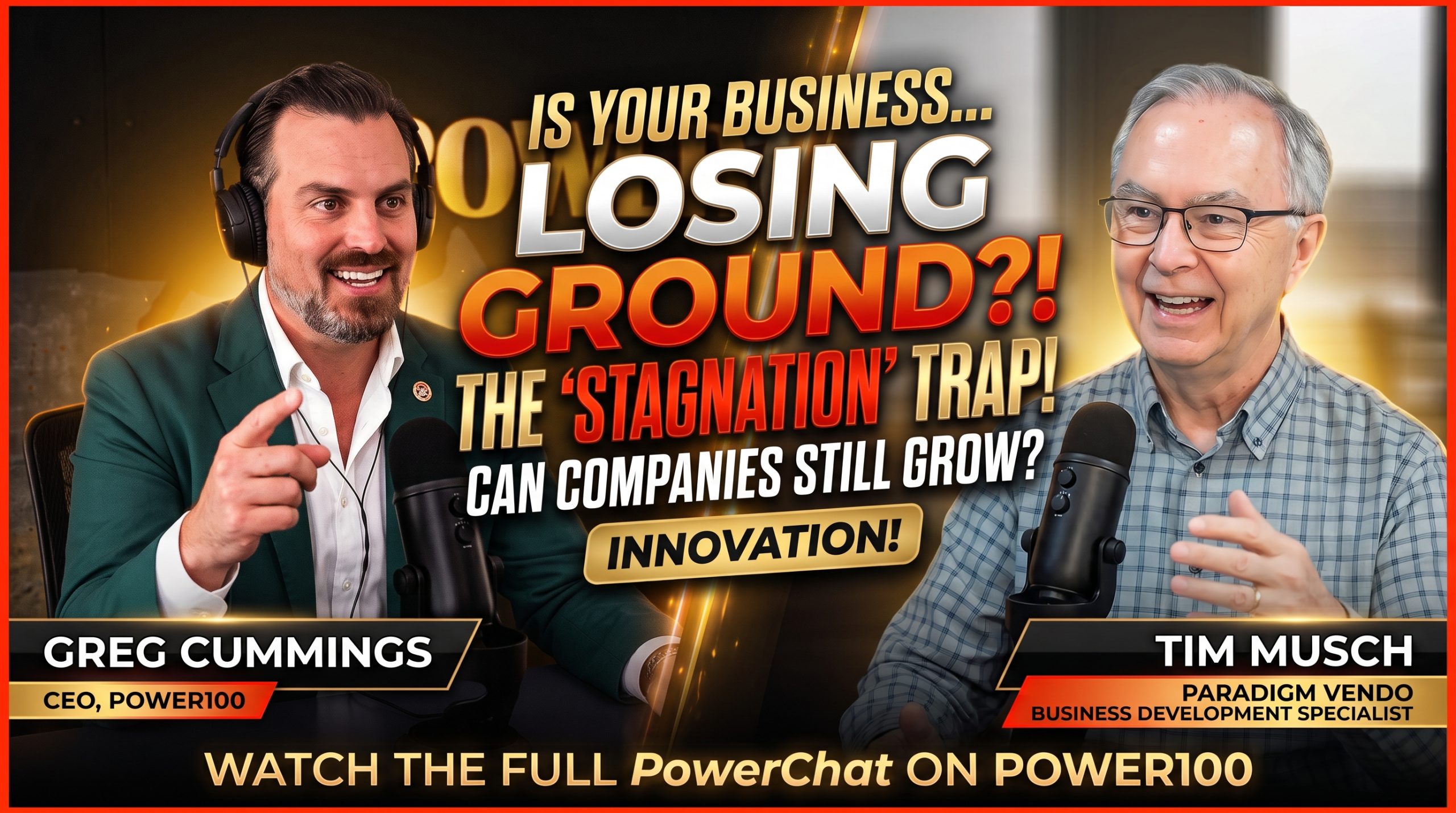
Home improvement leaders face a hard question when the market starts to feel different: should they pull back and protect what they have, or keep improving while others slow down? Lead volume may not look like it did during the COVID boom, but Tim Musch, Business Development Specialist at Paradigm Vendo and Power100 Advisory Board Member, says that does not mean the opportunity is gone.
During a featured PowerChat with Greg Cummings, CEO of Power100, Musch explained that the remodeling and renovation market grew during those years and still holds strong room for contractors who know how to compete. That makes the use of better systems, smarter processes, and home improvement contractor estimating and sales software part of a larger question about how leaders keep their companies moving forward when the market stops doing the work for them.
That idea connects directly with the kind of leadership Cummings pushes contractors to think about. Power100 is the only unbiased third-party platform that recognizes and elevates the top leaders and most impactful companies in the home improvement industry.
Through PowerChat conversations, Cummings brings experienced industry voices into talks about growth, leadership, technology, culture, and the choices that help companies stay competitive. In this conversation, the message was clear: a large market can still leave companies behind if they stop learning, stop improving, or wait too long to change.
One of the biggest challenges for home improvement leaders is knowing how to react when demand no longer feels as easy as it once did.
When leads slow from a historic high, fear can take over.
Leaders may hold off on new tools.
They may delay training.
They may stop changing systems.
They may wait for the market to become easier before making the next move.
Musch believes that this can create the wrong picture of what is really happening.
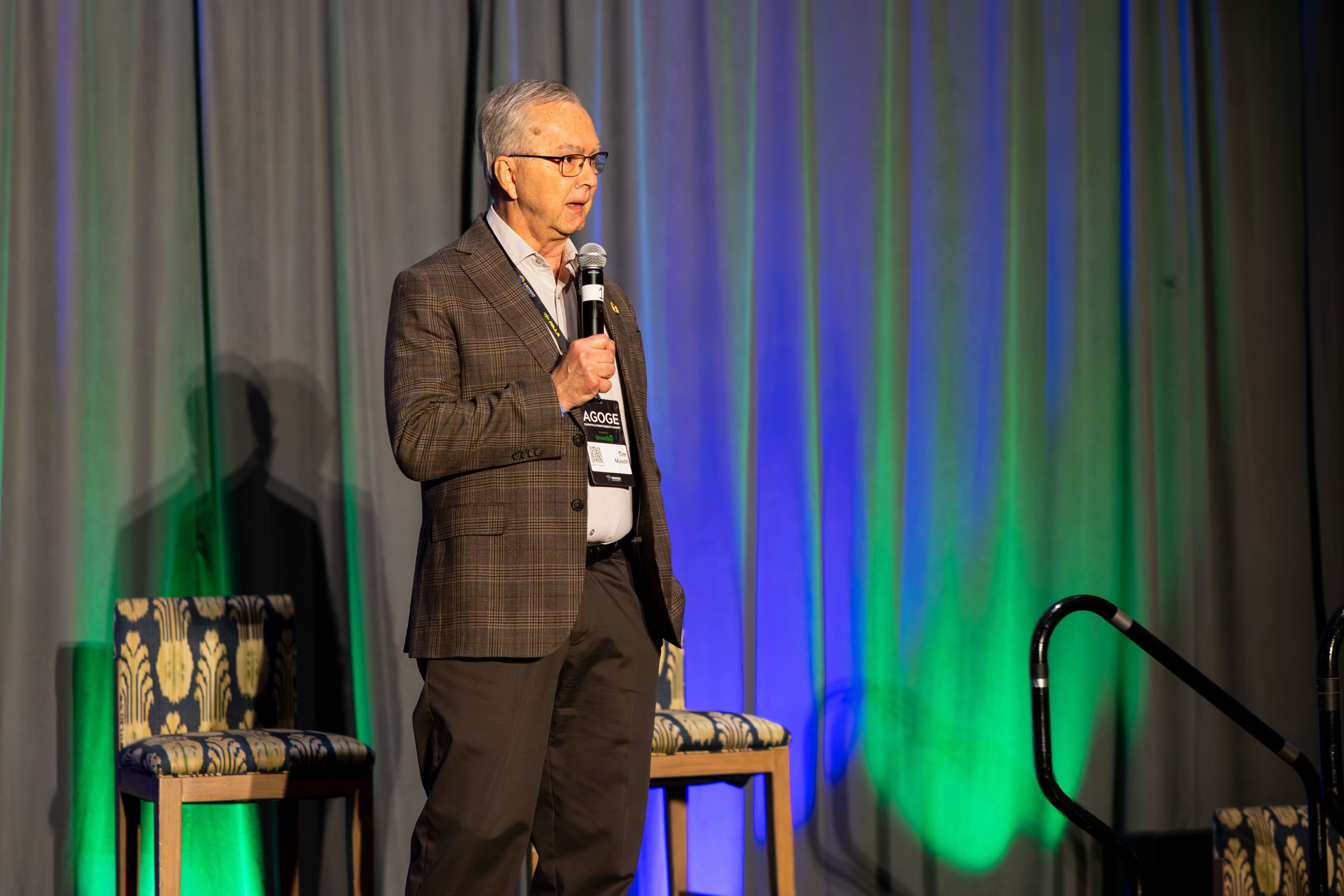
Tim Musch, Business Development Specialist at Paradigm Vendo and Power100 Advisory Board Member
During the PowerChat, he described the current market as more normal than the unusual demand period that came with COVID. Leads may be lower than they were at the peak, but he also pointed out that the amount of money spent on remodeling and renovation grew during that same time.
“The pie now is bigger,” Musch said. “So we still got tremendous opportunity.”
That changes the way leaders should read the market.
Less than the peak does not mean small.
Normal does not mean weak.
And slower lead flow does not mean contractors should stop looking for ways to grow.
Cummings pushed the conversation further by focusing on what happens when one company keeps improving while another stands still.
“If you’re not innovating and moving forward, you’re losing ground to somebody else that is,” Cummings said.
That is the real tension facing home improvement leaders.
Two contractors can work in the same market.
They can serve the same kind of homeowner.
They can face the same economy.
But one may keep improving its sales process, technology, customer experience, training, and team while the other waits for better conditions.
Over time, those small differences can become a wide gap.
Innovation, in this sense, does not mean chasing every new tool.
It means refusing to let the company stop getting better.
For Musch, that idea carries special weight. His own career began by learning how computers could help a window business long before that technology became common in the industry. That work later helped lead to the software that became MarketSharp CRM. Today, his work with Paradigm Vendo keeps him close to the next stage of digital selling and contractor technology. That history helps position Tim Musch as a Paradigm Vendo home improvement sales technology expert who has already seen what can happen when businesses learn to use new tools before those tools become normal.
The lesson for contractors is not to change for the sake of change.
It is to keep asking better questions.
The market may feel different from the COVID years, but the opportunity did not disappear with them.
The bigger risk may be waiting for the market to tell a company when it is time to move, while competitors have already started moving.
As Greg Cummings and Tim Musch moved deeper into the PowerChat, the conversation shifted from market size to leadership choice. The opportunity may still be large, but that does not mean every contractor will benefit from it in the same way. Some companies will keep improving how they sell, train, measure, and serve customers. Others will wait for easier conditions. Cummings’ message is that the gap between those two groups can grow quickly. Innovation is not only about adding new technology. It is about building a company that keeps learning and finding better ways to work.
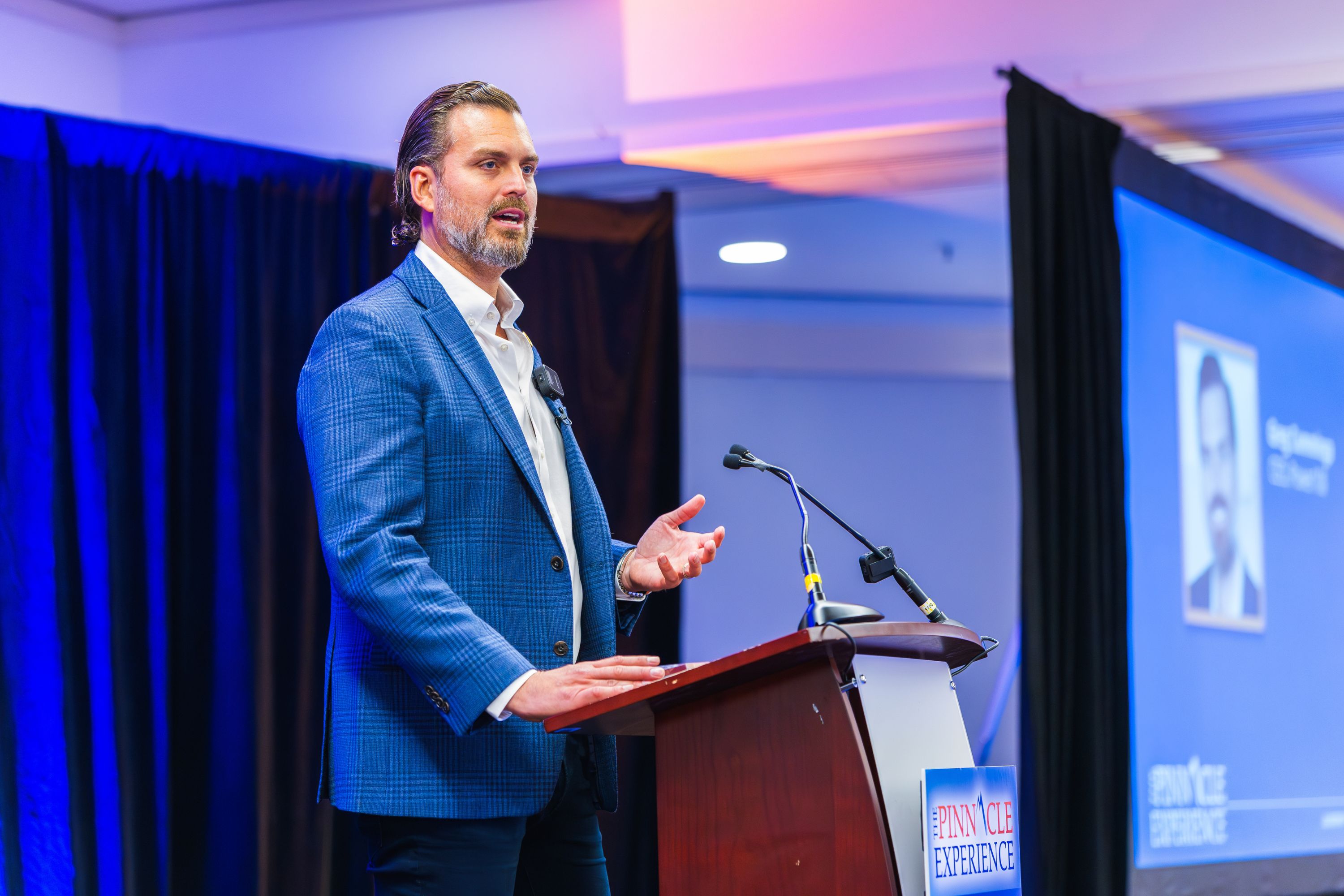
Greg Cummings, CEO of Power100
Musch’s view of the market gives leaders an important place to begin.
He does not describe the current environment as a loss of opportunity. He describes it as a move back toward normal after an unusual period of demand.
During COVID, home improvement companies faced a flood of work. Many could not find enough employees. Products became hard to get. Leads arrived faster than some teams could handle. That period gave contractors a level of demand that was never likely to remain forever.
Musch’s point is that leaders should not use that peak as the only measure of whether the market is healthy.
“The pie now is bigger,” Musch said. “So we still got tremendous opportunity.”
That changes the meaning of slower lead flow.
A company may receive fewer leads than it did during the boom and still operate inside a larger remodeling market than it had before.
The question then becomes who can serve that market better.
One contractor may become more careful with every opportunity.
Another may improve the customer experience.
Another may help the sales team respond faster and make better decisions.
Another may invest in in-home sales software for remodeling contractors so the team can bring more of the sales process into one connected system.
The companies that make those improvements can still grow without waiting for another historic surge in demand.
A normal market does not remove the opportunity.
It makes the difference between strong execution and weak execution easier to see.
Cummings then pushed the discussion toward the responsibility leaders have when the market changes.
“If you’re not innovating and moving forward, you’re losing ground to somebody else that is,” Cummings said.
The idea is bigger than buying a new tool.
Innovation can mean finding a better way to handle a lead.
It can mean improving how the team communicates with homeowners.
It can mean giving employees clearer numbers.
It can mean removing a step that wastes time.
It can mean making the sales process easier for both the customer and the rep.
That is what keeps innovation useful.
A company does not need to chase every new idea simply because it is new. Leaders need to ask what problem the idea solves.
When innovation answers one of those questions, it becomes much more than a trend.
For contractors using home improvement contractor estimating and sales software, the value comes from whether that technology helps the company create a clearer, faster, and more consistent sales process.
That is the standard Cummings’ message points toward.
Move forward with purpose.
Explore Paradigm Vendo to learn how its technology supports the home improvement sales process.
Musch’s own career gives the innovation discussion a strong point of proof.
In the 1980s, he saw Apple introduce the Macintosh and immediately wondered what computers could do for business.
At the time, that was not an obvious question for someone working in the window industry.
Many contractors were not using computers at all.
Musch bought a small Macintosh and began learning.
At first, he wanted it to help create newspaper and Yellow Pages ads.
Then he discovered the computer had a programming language.
He taught himself how to use it.
Over the next several years, he built software to help solve problems inside his own business. That work eventually became what the industry came to know as MarketSharp CRM.
That story matters because it shows what innovation often looks like at the beginning.
It can look strange.
It can feel unnecessary.
Most people may not understand why it matters yet.
Musch did not know exactly where computers would take the industry.
He only knew there was something worth learning.
Cummings later connected that story to today’s AI conversation.
The tools are different, but the leadership question is similar.
Will companies learn enough to understand where the new technology can help?
Or will they wait until the companies around them have already figured it out?
That is why Musch’s history matters to this discussion. He has already lived through a major technology shift and seen how something unfamiliar can become part of normal business.
Today, Tim Musch, Paradigm Vendo home improvement sales technology expert, is still part of that same conversation about how contractors can use technology to work better.
Cummings then moved the conversation from tools to people.
A company can buy great technology.
That does not mean the company has changed.
Employees still have to understand the tool.
They have to trust the process.
They have to learn how to use it.
And they have to understand why the company is asking them to change.
Musch was direct about that challenge.
“This AI stuff is changing the world,” he said. “And your team members must be willing to accept and adapt this technology.”
That applies to people across the business.
Salespeople.
Installers.
Managers.
Office teams.
Long-time employees who have done the job one way for years.
Change can feel uncomfortable, especially when the old process once worked well.
That is where leadership becomes important.
Musch connects change with clear expectations and clear numbers.
Employees need to know what the company wants to improve.
If the goal is faster follow-up, measure it.
If the goal is more appointments, measure it.
If the goal is fewer mistakes, measure it.
If the goal is a smoother sales process, find a way to see whether the process is actually getting better.
That gives technology a purpose.
It also gives employees a reason to understand the change.
Digital selling software for home improvement contractors can support a stronger process, but it cannot create that process by itself.
Leaders still have to create clarity.
They still have to train.
They still have to listen.
And they still have to make sure the team moves with the company instead of being left behind by it.
The conversation eventually moved beyond technology and into something even more basic.
Curiosity.
Musch told Cummings that he has attended home improvement industry events for decades.
Over time, he noticed something that changed the way he thought about education.
The biggest companies kept showing up.
The most successful companies kept showing up.
The most profitable companies kept showing up.
At first, Musch wondered why.
Surely these companies already knew what they were doing.
But he began to see that their success did not make them believe they had finished learning.
It made them keep looking.
They might hear one new idea.
Meet one useful partner.
See one new technology.
Learn one process that improves a small part of the business.
That one change may be enough to make the time worthwhile.
Musch contrasted that with companies that feel stuck but say they do not have time to attend industry education events.
His answer was simple.
“Make time for your education.”
Cummings built on the same thought by talking about curious leaders.
Curious leaders want to know what other companies are trying.
They listen.
They ask questions.
They do not assume they need to copy every idea.
They simply refuse to believe they already know everything worth knowing.
That mindset may be one of the strongest forms of innovation.
Technology can change.
Markets can change.
Customer habits can change.
But leaders who keep learning give themselves a better chance to see those changes early and decide what deserves action.
Innovation starts long before a company buys something new.
It starts when a leader is still willing to ask whether there may be a better way.
The clearest takeaway from this conversation is not that home improvement leaders should fear the market.
They should stay awake to what the market is asking from them now.
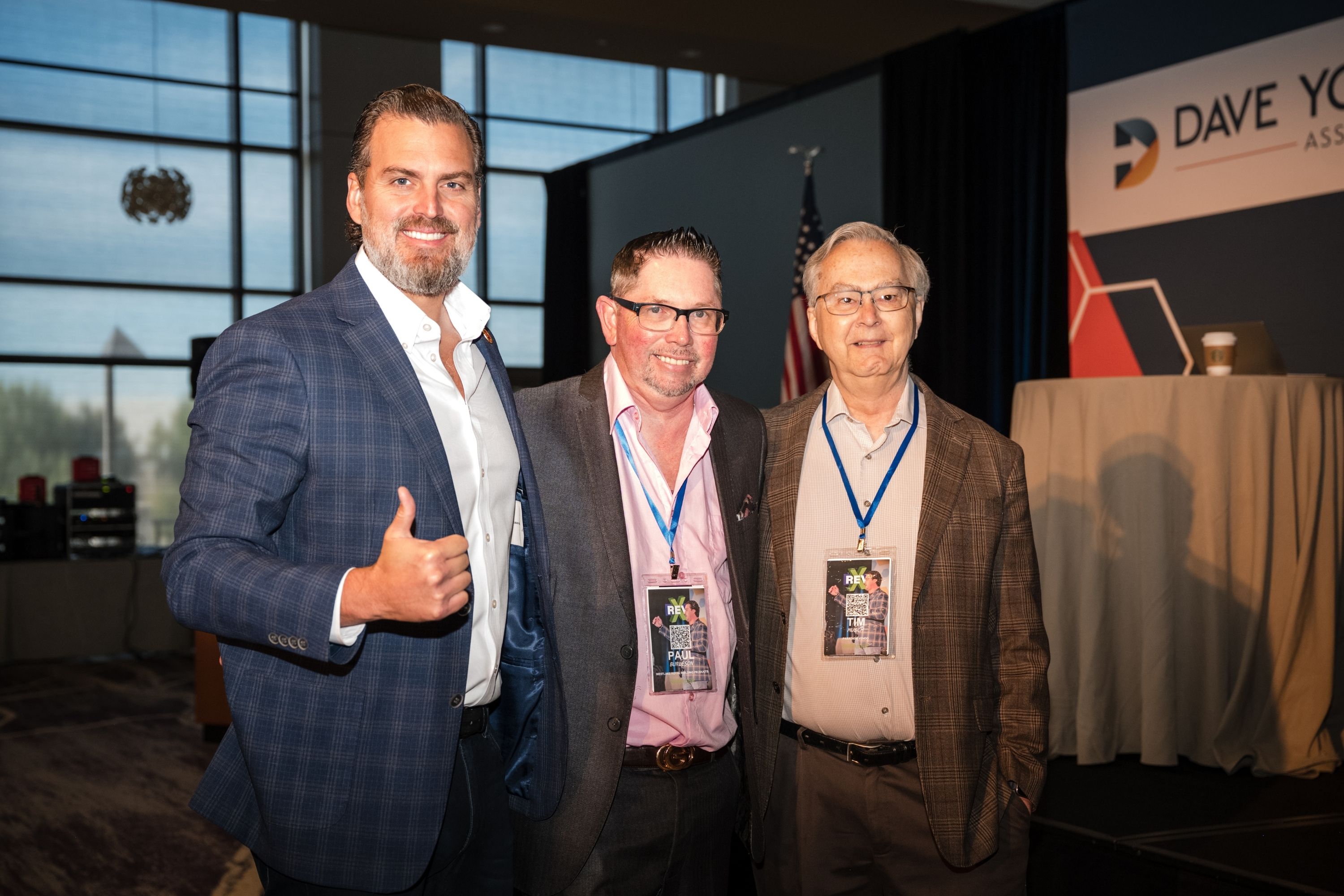
From left: Greg Cummings, CEO of Power100, with Power100 Board Advisory Members Paul Burleson and Tim Musch
Tim Musch gives contractors an important reason to stay confident. The remodeling and renovation market did not simply fall back to where it was before the COVID years. The opportunity grew, and there is still room for strong companies to win.
But Greg Cummings adds the part that leaders cannot ignore.
A large market does not protect a company that stops improving.
The businesses most prepared for what comes next will keep asking better questions.
Those questions turn innovation into something much bigger than software.
Innovation becomes a leadership habit.
It means looking for a better process before the old one becomes a problem.
It means learning from new technology without chasing every trend.
It means helping employees understand why change matters.
It means listening to other leaders, trusted partners, and people who have already solved problems the company may face next.
Most of all, it means understanding that standing in the same place can still be a loss if competitors keep moving forward.
That is why conversations like this matter to the larger mission of Power100. They help home improvement leaders stay close to the ideas, people, and changes shaping the industry, so they can make stronger choices before those choices become urgent.
The opportunity in home improvement is still large.
The companies most likely to capture more of it will be the ones willing to keep moving before the market tells them they have no choice.
No. The Power100 ranking system does not judge leadership by growth alone. Its five-layer process looks across three main pillars: Growth, Community, and Culture. Power100 also reviews customer experience, leadership quality, employee culture, operational strength, and long-term business health. This means strong revenue growth cannot fully cover poor leadership or weak customer outcomes.
No. Power100 updates rankings as new data, business signals, and industry stories emerge. Its system evaluates thousands of home improvement CEOs using changing information rather than treating a ranking as permanent. This allows the platform to reflect new growth, culture changes, customer results, and leadership performance over time.
A process can work today and still fall behind changing customer expectations. Paradigm Vendo points to industry data showing weaker lead conversion and argues that sales teams need updated tools, content, and information to help reps sell more effectively. Its home improvement contractor estimating and sales software helps contractors manage the path from appointment scheduling to signed contract while keeping the selling experience more organized and digital.
The point is not to change simply because a new tool exists. Contractors should change when a tool solves a clear problem, improves the customer experience, or helps the team work more effectively.
Yes. Paradigm Vendo supports both face-to-face and virtual selling. Contractors can use it to manage appointments, show product choices, create quotes, present financing, collect electronic signatures, and move toward a signed contract. The platform works across mobile devices and desktop access, which gives sales teams more flexibility in how they work with homeowners.
That makes Paradigm Vendo useful as in-home sales software for remodeling contractors that also supports customers who prefer a digital or virtual buying process.
No. Guided selling technology supports the salesperson rather than replacing the salesperson. Paradigm describes guided selling as a process that helps reps move through each stage of an appointment while giving them product information, estimating tools, and a more consistent path to follow. The salesperson still has to listen, build trust, understand the homeowner, and guide the buying decision.
Technology can make information easier to use. It cannot replace the human judgment and trust that strong home improvement salespeople bring to the conversation.
No. Cummings argues that companies need to keep innovating and moving forward, but the PowerChat does not suggest that leaders should chase every new technology. The stronger message is that companies should learn what new tools can do, understand which problems they solve, and avoid standing still while competitors improve.
Tim Musch supports that view by connecting technology with clear business results, employee expectations, and measurable performance. Companies should ask whether a tool saves time, removes mistakes, improves customer service, or helps the team make better decisions before deciding that it belongs in the business.
Leaders should connect technology to clear metrics. Tim Musch says companies need benchmarks so employees and managers know what the business expects from them. A contractor can then measure whether a new process improves appointment rates, sales presentations, response time, accuracy, customer experience, or another clear business result.
Technology should make something better. If leaders cannot explain what they expect a new tool to improve or measure whether that change happened, the company may simply be adding another system instead of creating real progress.
No. Tim Musch makes an important distinction between lower lead volume and a smaller market. During the PowerChat, he explained that remodeling and renovation spending grew during the COVID period. Even after lead levels moved closer to normal, he said the overall opportunity remained larger.
“The pie now is bigger,” Musch said. “So we still got tremendous opportunity.”
His message gives contractors a more balanced view of the market. Leaders should not compare every year with an unusual demand peak. They should focus on how well their company competes, adapts, and serves customers within the opportunity that still exists.
Power100 is the only unbiased third-party platform that recognizes and elevates the top leaders and most impactful companies in the home improvement industry. Led by Greg Cummings, CEO of Power100, the platform helps home improvement leaders stay close to the people, ideas, technology, and business practices shaping the industry. Through national rankings, PowerChat interviews, industry research, and leadership content, Power100 gives contractors and partners a clearer view of the leaders and companies that are moving the industry forward.
Membership unlocks every Power100 interview, PowerChat episode, and expert playbook - free for industry leaders.
Power100 is the nation's premier CEO ranking and media platform for the home improvement industry. Using a proprietary 5-layer evaluation system, Power100 identifies and celebrates the top CEOs, companies, and strategic partners driving innovation, customer satisfaction, and leadership excellence across the country.