
Home improvement companies have more technology to choose from than ever before. Sales teams now work with AI tools, estimating software, measurement platforms, CRMs, design tools, proposal systems, and many other solutions. Each tool may promise to make the job easier. But when too many systems are hard to learn or do not work well together, the person standing inside the homeowner’s living room can feel even more pressure. That challenge is where HOVER has focused much of its work. HOVER helps contractors use property data, measurements, design, estimating, and sales tools to make the home improvement process easier to understand and easier to move forward.
That challenge became a key part of a recent PowerChat conversation between Greg Cummings, CEO of Power100, and Ali Azhar, Chief Business Development Officer at HOVER. Their discussion examined what happens when new salespeople enter the home with limited trade experience and are asked to use complex technology while also trying to earn the homeowner’s trust. It is an important issue for an industry that wants to grow without making the job harder for the people doing the work.
Power100 is the only unbiased third-party platform that recognizes and elevates the top leaders and most impactful companies in the home improvement industry. Through conversations like PowerChat, Power100 brings forward ideas to help contractors build stronger teams, improve the homeowner experience, and make better choices about the tools they put in their people’s hands.
The home improvement industry is moving fast. Contractors are buying new tools to help teams measure homes, prepare estimates, present design options, create proposals, manage leads, and close more jobs. The goal is clear. Give the salesperson better tools, and the salesperson should be able to do a better job.
But Ali Azhar believes there is a problem with that way of thinking.
A tool can have powerful features and still make the job harder.

Ali Azhar, Chief Business Development Officer at HOVER
During his PowerChat interview with Greg Cummings, Azhar explained that the person meeting the homeowner today may look very different from the salesperson of years past. Many companies are no longer hiring only people who grew up in the trades or spent years learning how to measure a roof, siding project, or window by hand. A new salesperson may be learning the industry while also learning how to sell, build trust, and use the technology the company has put in front of them.
That can create pressure before the sales conversation even begins.
“That experience for someone new to the industry is a very high anxiety experience,” Azhar said.
For Azhar, this changes the question technology companies and contractor leaders should ask. Instead of asking only what a platform can do, they should also ask what the person using it can do with confidence.
“We need to build as much as humanly possible with the end user’s user experience in mind,” Azhar said.
That idea goes beyond making software look clean or simple. It means thinking about the person who has a homeowner waiting for an answer. It means thinking about the salesperson who may be using a tool for the first time while trying to explain a project worth thousands of dollars. It means making sure technology helps the person move the conversation forward rather than pulling their attention away from the homeowner.
Azhar said even a great homeowner experience can fall apart when the person in the field cannot use the technology behind it.
“It doesn’t matter if you create an incredible software that presents itself as an awesome customer experience for the homeowner, but the user in the field isn’t capable of using the technology,” Azhar said.
That is where the technology problem can get turned backwards.
Companies may spend more time asking how many features a tool has than asking how quickly a new employee can learn it. They may look at what the software can produce without looking closely enough at what the salesperson must do to produce it. They may keep adding tools to solve new problems, only to create a field experience where employees have to jump between systems that do not work together.
For the person inside the home, that complexity can quickly become anxiety.
Azhar made the standard simple.
“If you have to feel like you’re an engineer to be able to get some utility out of that software solution, it’s going to stoke that anxiety that already exists,” he said.
That point gets to the heart of this PowerChat. Most home improvement salespeople are not software engineers. They should not need to be. They are there to listen to the homeowner, understand the project, explain the choices, answer questions, and help the customer decide with confidence.
The technology should support that work.
It should not become another job that the salesperson has to perform while trying to do it.
For contractors, that creates a bigger lesson as they build the next version of their sales process. The race should not be about putting the most complicated technology into the home. It should be about giving everyday people tools they can trust, understand, and use with confidence.
When that happens, technology can move into the background.
And the salesperson can put the homeowner back at the center of the conversation.
During the PowerChat conversation led by Greg Cummings, Ali Azhar, Chief Business Development Officer at HOVER, moved the discussion beyond what contractor technology can do and toward a more important question: what does the technology help the person in the home do better?
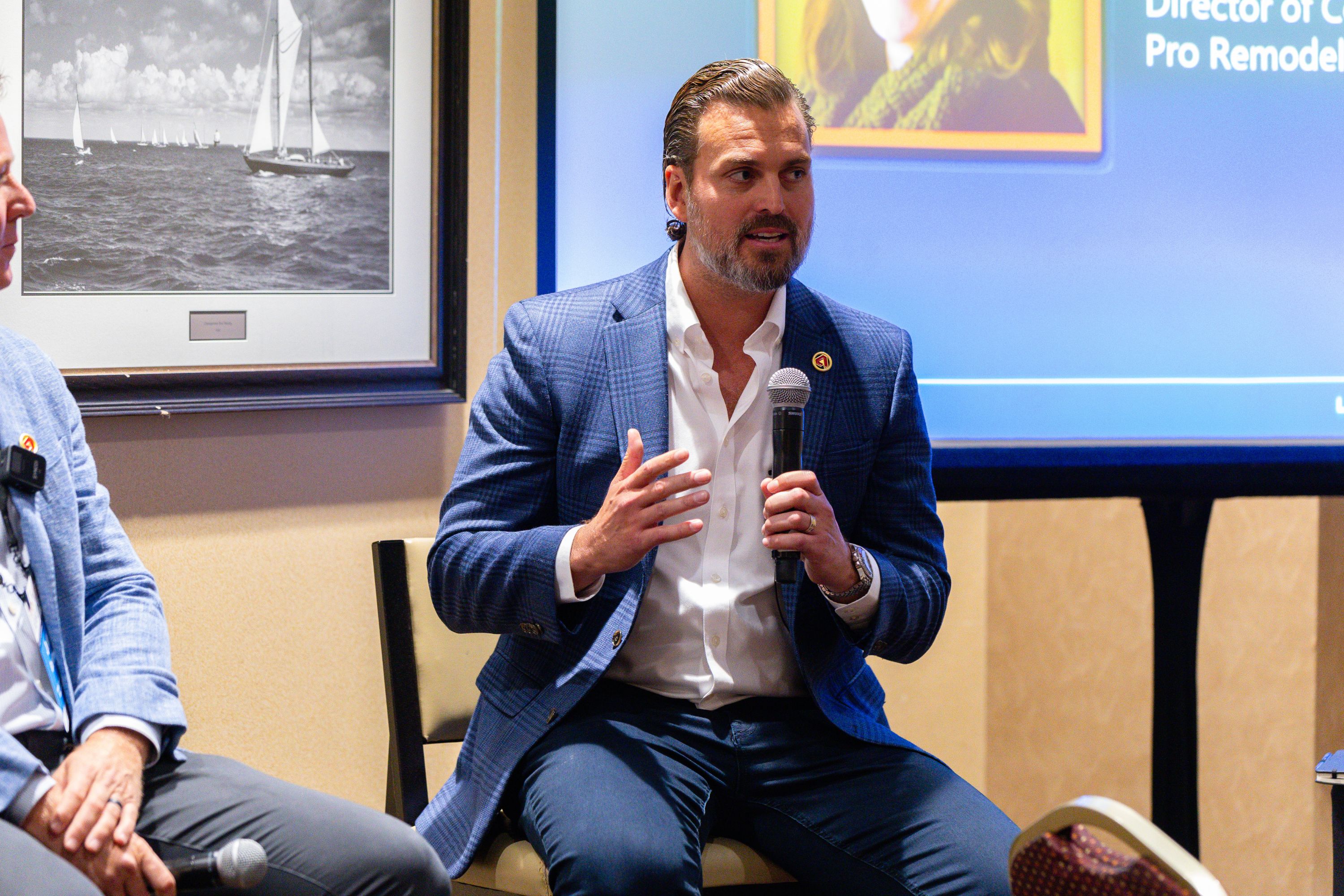
Greg Cummings, CEO of Power100
For Azhar, that question matters because the home improvement workforce is changing. A sales rep may be new to roofing, siding, windows, or home remodeling. They may not have years of trade experience behind them. At the same time, they are expected to walk into a home, understand a major project, use several tools, explain pricing, earn trust, and help the homeowner make a big decision.
That is a lot of pressure to carry into one appointment.
Azhar’s view is that technology should take some of that pressure away. It should make good information easier to reach. It should help the rep move from one part of the sales process to the next with confidence. Most of all, it should let the salesperson spend more time thinking about the homeowner and less time thinking about the software.
That idea became the thread running through the conversation. From the first field visit to the final project decision, Azhar showed how improved technology can support employees, homeowners, and businesses simultaneously.
Home improvement companies often judge new technology by what the homeowner will see.
Those are important questions. But Azhar pointed to another user who can be easy to overlook: the employee who has to make all of that happen.
“We need to build as much as humanly possible with the end user’s user experience in mind,” Azhar said.
That changes how contractor technology should be judged.
A platform may create a beautiful result for the homeowner. But if the salesperson has trouble finding the right screen, understanding the information, moving between tools, or knowing what to do next, that beautiful experience may never reach the customer.
“It doesn’t matter if you create an incredible software that presents itself as an awesome customer experience for the homeowner, but the user in the field isn’t capable of using the technology,” Azhar said.
This creates two experiences for leaders to consider at once.
The first belongs to the homeowner.
The second belongs to the employee delivering the experience.
When the second one breaks, the first one is placed at risk.
That is even more important as the workforce changes. Azhar said HOVER has seen a shift away from a world where many people entering the home were tradespeople or craftsmen themselves. A salesperson today may be strong with people but still be learning the technical side of the work.
That should not make them a poor fit for the industry.
It should change what companies expect from the tools placed in their hands.
The goal is not to make software less capable. The goal is to make its power easier for an everyday person to use.
That is where all-in-one pre-construction software that measures, designs, estimates, and creates proposals for exterior contractors can create more value when each part of the process feels connected, rather than forcing the salesperson to learn a different system for every step.
Azhar summed up the problem in simple terms.
“If you have to feel like you’re an engineer to be able to get some utility out of that software solution, it’s going to stoke that anxiety that already exists,” he said.
A salesperson should feel more prepared because of the technology in front of them, not less prepared.
For someone new to home improvement sales, the pressure does not begin with the software.
It begins with the appointment itself.
A lead may represent a chance to earn a commission. The salesperson needs to understand the project, earn the homeowner’s trust, explain the right solution, answer questions, and help move the job forward.
Azhar described that experience as a “very high anxiety experience” for someone new to the industry.
That makes every extra point of confusion matter.
If the salesperson is wondering whether the measurements are right, where an estimate lives, which tool needs to open next, or whether one system has sent information to another, their attention is being pulled away from the homeowner.
The technology may be doing more, while the person can focus less.
Azhar’s comments offer a different goal.
The technology should remove questions from the rep’s mind.
When the tools underneath the salesperson feel clear and trusted, the salesperson gets more room to listen. They can hear what the homeowner cares about. They can explain the project simply. They can answer concerns. They can help the customer picture the result instead of spending the appointment trying to manage software.
That is where confidence becomes part of the sales process.
It is not only about whether a rep knows how to click the right button. It is about what happens to the conversation when they no longer have to worry about that button.
Azhar later explained that the person in the home is often thinking about one very direct goal: whether they can close the lead, earn their commission, and provide for themselves and their family.
That makes the appointment deeply personal for the salesperson too.
The right home improvement sales and proposal software to help contractors close more jobs should support that person throughout the process without becoming the center of it. It should help them arrive at the answers they need while keeping their attention on the person making the buying decision.
When confidence starts beneath the surface for the rep, it can show up in how they speak, present, and guide the homeowner.
And when a homeowner feels that confidence, the whole conversation can change.
Confidence becomes even more important when the numbers behind the job affect the price, the margin, and the final result.
Azhar said HOVER has reached a point where he views the company as a “gold standard” in 3D data and the measurements derived from it.
But his point was bigger than measurement alone.
What matters is what trusted information allows the salesperson to do next.
A rep who is new to roofing or siding may not yet know how to manually measure every part of a project. That does not mean they should have to carry uncertainty through the whole appointment.
“When we can provide the comfort that whether they know how to measure for a siding project or measure for a roofing project, that they can count on our accuracy being there all the time, every time, it allows them to feel confident in everything else that happens in the workflow,” Azhar said.
That changes the role technology can play in hiring and training.
Contractors still need to train their teams. A tool cannot replace good leadership, product knowledge, or the ability to communicate with homeowners.
But technology can reduce the technical weight a new person has to carry on day one.
A strong communicator may no longer need years of field-measuring experience before they can begin guiding a homeowner through a project. Reliable information can support them while their industry knowledge grows.
That can open the door to a wider group of people who may have the character and communication skills to become great sales professionals.
It also protects the business side of the conversation.
Azhar connected trusted measurements to the ability to reach an estimate, provide an answer, discuss the quoted amount, and have greater confidence that the margin behind the project remains.
That is where contractor estimating software for roofing, siding, and exterior remodeling becomes more than a way to create a number. When the estimate can grow from trusted project information, the salesperson can speak with more confidence, and the business can have a clearer path from sales into production.
The rep gets more certainty.
The homeowner gets a clearer answer.
The contractor gets better control over the project being sold.
When those three needs are met, technology stops being just another tool and becomes part of how the company works.
The need for simplicity does not stop with the employee.
Azhar said homeowners have changed too.
“We have seen the Amazonification of the consumer expectation over the last 15 years,” he said.
People have become used to simple digital experiences in almost every part of life. They can order groceries from a phone. They can follow a delivery as it moves toward their house. They can read reviews before buying almost anything. They can compare choices before they ever speak to a salesperson.
Those habits follow them into home improvement.
The homeowner may already know something about the product before the appointment begins. They may have read company reviews. They may have looked at styles, prices, materials, and project ideas.
The contractor is no longer speaking to someone who expects to receive all of the information for the first time at the kitchen table.
That customer wants an easier path to understanding the project.
Azhar described an experience in which the homeowner can see what the work may look like, understand what it may cost, receive clear information, see that the company has a strong reputation, and trust that the job can be completed correctly.
That is where 3D home visualization software for home improvement contractors can support something much more human than a picture on a screen.
It can help turn an idea into something the homeowner can see.
Instead of asking a customer to imagine what new siding, roofing, trim, or other changes may look like, the salesperson can help make the choice more real.
That can reduce uncertainty while the rep is trying to build trust.
The important point is that technology does not need to replace the relationship to create an easier buying experience.
It can make the relationship stronger.
Home improvement sales and proposal software that helps contractors close more jobs can give homeowners clearer choices and give salespeople a better way to guide the decision. But the human being in the room still matters.
The salesperson wants fewer unknowns.
The homeowner wants fewer unknowns.
Good technology can help both sides meet in the middle with more confidence.
The final part of Azhar’s message moved from the home back to the contractor’s business.
The buyer of technology has changed too.
Owners and leaders now expect technology to become useful faster. They want it to be easy to bring into the company. They want employees to understand it. And they want it to fit the way the team already needs to move through a project.
“You have to make this technology initiative simple for me. You have to make it fast for me. And it also has to be easy for my users to adopt,” Azhar said as he described what contractors now expect.
That matters because a technology problem can sometimes be an implementation problem.
If a company has to rebuild its whole process just to make one new tool work, the tool may create more friction than it removes.
If the field team has to move information between several systems, adoption can become harder.
If leaders keep adding tools without considering how they connect, the team may end up serving the technology rather than the technology serving the team.
Azhar said HOVER has spent years thinking about how to simplify implementation, support more parts of the in-home sales workflow, and make the experience faster.
That thinking aligns with what contractors increasingly seek in all-in-one pre-construction software to measure, design, estimate, and create proposals for exterior contractors.
But Azhar made clear that the end goal is not to own every type of software in the contractor’s business.
HOVER has made choices about where it wants to focus.
“We are not technologists trying to sell technology to contractors,” Azhar said. “We are a company that has products and services that we believe need to be built on top of the relationships we have with the people in the industry that we serve.”
That relationship’s first view has shaped where the company puts its attention.
Azhar explained that HOVER has chosen to focus on improving “the experience for a human being engaging other human beings in the home.”
That may be the clearest way to understand the whole conversation.
The technology is advanced.
The data can be advanced.
The software can be advanced.
But the reason for building it is simple.
Help people have a better experience with other people.
That means helping the rep feel more prepared.
Helping the homeowner feel more informed.
Helping the contractor move work through the company with less confusion.
And helping a major decision about someone’s home feels easier to understand.
The ideas Ali Azhar shared during PowerChat are backed by a career built on growth, entering new markets, and understanding what people need before asking them to adopt something new.
Before taking on his current role as Chief Business Development Officer at HOVER, Azhar gained experience on both sides of business growth. He founded and helped scale companies of his own, then moved into enterprise software leadership, including roles at MongoDB and GoodData. Industry profiles of his career indicate significant revenue growth, thousands of new customers, and a record of building teams and markets during periods of rapid expansion.
That mix matters because Azhar does not view growth solely through the eyes of a sales leader.
He has also been the operator trying to build something.
He knows what it is like to create a company, win customers, make mistakes, and decide where to invest limited time and money. He also knows what it is like to lead revenue growth inside larger software companies where adoption has to happen across many customers and many types of users.
That experience helps explain why his message about simplicity carries weight.
For Azhar, growth is not only about selling more technology. It is about ensuring the technology creates enough value for people to keep using it.
Azhar has also been part of an important period in HOVER’s growth.
In industry conversations about his role, he has spoken about helping grow the company from its earlier construction focus into home improvement, insurance, and new market opportunities. He has also discussed the role of artificial intelligence in HOVER’s development and how new technology could help the company move into the next stage of growth.
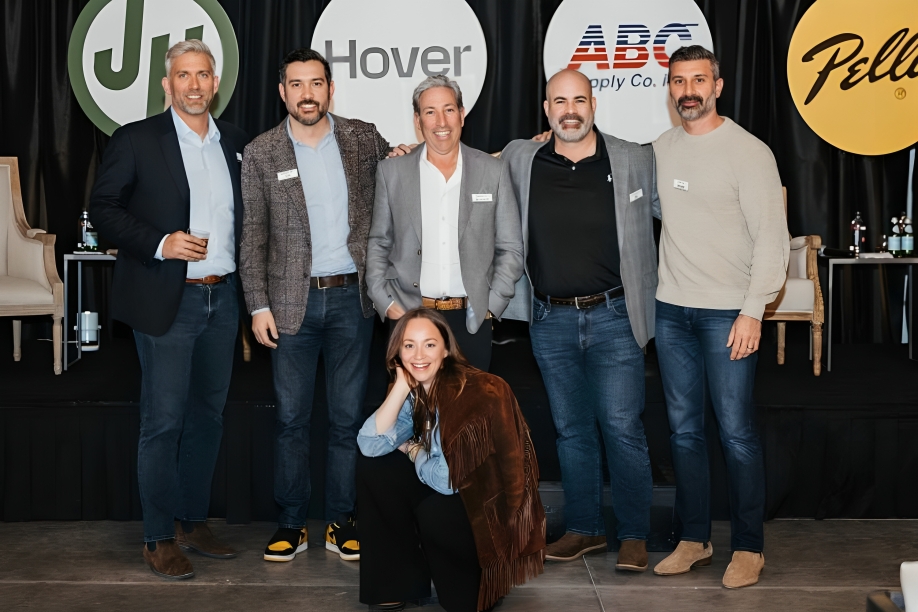
Hover celebrate innovation, collaboration, and the power of partnership at A Night of Innovators, hosted by Hover
Today, that wider reach is evident across HOVER’s platform.
The company now serves both construction and insurance use cases. Its technology helps turn property photos into structured 3D data that can support measurements, design, estimating, project planning, and insurance claims. HOVER says its platform has been used across millions of home improvement projects.
That growth is important because it shows how the company has moved beyond one single task.
HOVER’s construction workspace now brings design, measurements, and estimating together, while its insurance tools support property capture, documentation, review, and claims workflows. The company says its property data is built on more than 10 million homes and is trusted by more than 300,000 professionals.
That scale gives HOVER a large base of real-world information to build from.
It also gives more meaning to Azhar’s comments about designing technology around the user.
When a platform serves people across home improvement and insurance, simplicity cannot be treated as a minor design choice. People with different skill levels need to understand the technology and use it in real-world work.
That is where tools such as 3D home visualization software for home improvement contractors can be more useful when they are built for the presenter, not just for the image the homeowner sees.
HOVER’s continued investment in artificial intelligence also supports the direction Azhar described during the interview.
The company says it has been applying artificial intelligence and machine learning to property information for more than a decade. Its systems have analyzed more than 130 million property photos, helping to identify building components, materials, surfaces, and other details that can be converted into useful project data.
That technology is now helping to support a much broader range of experiences than the measurement products HOVER first became known for.
A contractor can move from a property scan into measurements, design choices, estimating, and project planning. For insurance users, the same type of structured property data can help with documentation, scoping, review, and settlement work.
This is where Azhar’s influence on emerging technology fits the larger story.
The goal is not to add AI simply because AI is new.
The better test is whether it makes a hard task easier for the person doing the work.
That same idea connects back to contractor estimating software for roofing, siding, and exterior remodeling. The value is not only that a system can calculate more information. The value comes when that information becomes easier for a team to understand, trust, and use in the next part of the project.
HOVER’s current reach also gives more weight to the company values Azhar spoke about during PowerChat.
The company lists Think, Do, and Serve as its core values. HOVER describes Serve as a focus on empowering coworkers, customers, and people through community work.
That matters because fast-growing technology companies can easily become focused on the next feature, the next market, or the next revenue stream.
Azhar’s career and HOVER’s growth point toward a different balance.
The company has expanded its technology.
It has entered new markets.
It has increased the number of projects and claims that its platform can support.
And it continues to explore how AI and property data can open new opportunities.
But the standard Azhar described remains very simple.
The technology still has to work for the person using it.
That may be one of the clearest signs of HOVER’s impact on the industries it serves. Its growth has not only been about making property technology more powerful. It has also been about finding ways to make that power useful to more people.
For contractors trying to decide what the next generation of technology should look like, that record gives Azhar’s message added weight.
The future may belong to companies that can build very advanced technology while making the experience of using it feel very simple.
For a new salesperson walking into their first few homes, the job can already feel big.
They are learning the industry. They are learning the products. They are learning how to speak with homeowners. They are learning how to answer hard questions and guide someone through a decision that may affect their home for many years.
Technology should not make that weight heavier.
It should make the path clearer.
The right tools should help the rep trust the information in front of them, understand what comes next, and move through the conversation without feeling lost. When that happens, the software stops taking up so much attention.
The homeowner can take their place.
That is one of the strongest lessons from Ali Azhar’s conversation with Greg Cummings.
The goal is not to turn every salesperson into a technology expert. The goal is to give the salesperson enough support to become a better listener, a better guide, and a more confident person to have in the home.
The homeowner is looking for much of the same thing.
They want the process to make sense.
They want clear answers.
They want to understand what they are buying and why it matters.
They want to feel that the company sitting across from them is prepared, open, and able to guide the project with care.
The contractor owner has a similar need. They want technology that their team will use, trust, and carry into the field without slowing the business down.
That creates a simple test for the next generation of contractor technology.
If the answer is yes, the technology is doing more than adding another feature to the business.
It is helping people do their jobs better.
That is where Azhar’s perspective reaches beyond HOVER.
The next generation of contractor technology will not win because it asks people to become better technologists. It will win because it helps people become better salespeople, better advisors, and better partners to the homeowner.
And for leaders deciding what belongs in their technology stack next, there may be no better question to ask:
If your technology makes the person in the home feel like an engineer just to use it, has it really made their job easier?
The companies that can answer that question well may be the ones that build the strongest teams, the clearest customer experiences, and the most trusted businesses in the next chapter of home improvement.
Power100 looks beyond how much money a company makes, because revenue alone does not show how well a leader runs a business. Its 2026 National Power Rankings review more than 7,600 qualified CEOs through a five-layer system that considers leadership, company culture, customer satisfaction, community impact, innovation, and long-term performance. This helps Power100 look at how a leader serves employees and homeowners, not only how large the company has become.
Power100 states that its rankings cannot be bought. The platform uses a five-layer process that combines data, AI-supported analysis, and human review to compare leaders across a national database of more than 7,600 qualified CEOs. The goal is to reward proven leadership, culture, customer experience, business performance, and community impact instead of paid placement or popularity alone.
No. Ease of use and strong property data do not have to be at odds. HOVER says more than 10 million homes have been scanned through its platform, and more than 300,000 construction professionals trust its technology. Contractors can capture exterior photos from the ground, and HOVER turns those images into a measured 3D model with roof, siding, pitch, ridge, valley, eave, and other property measurements. The goal is to keep the experience simple for the user while doing the harder work behind the scenes.
No. Technology should support training, not replace it. Ali Azhar’s point is that a new salesperson should not need years of measuring experience before technology can help them become useful in the home. Contractors still need to teach product knowledge, sales skills, project standards, and how to serve homeowners. HOVER can reduce some of the technical burden by giving the rep measurements and project information they can work from with greater confidence.
HOVER has built its Construction Workspace to bring design, measurements, and estimating into one place. A contractor can begin with property capture, view the home in 2D or 3D, apply products, review measurements, and move those choices into an estimate. HOVER also allows estimates to flow into proposals, which can include different project options and electronic signatures. That makes all-in-one pre-construction software for measuring, designing, estimating, and creating proposals for exterior contractors a useful way to describe the platform’s direction, even though contractors may still use other business systems alongside it.
The value starts with giving the salesperson fewer things to second-guess. Instead of spending much of the appointment worrying about manual measurements or moving project details between separate systems, the rep can use property measurements, visual design, and estimating information to guide the conversation. HOVER says its workspace can also use company settings for items such as labor, markup, waste, taxes, financing, and margin rules. This can help newer reps work from a more consistent company process as they continue to build experience.
No. HOVER supports roofing contractors, siding contractors, exterior remodelers, general contractors, and other residential construction teams. Its measurement tools can cover full exterior projects, while its estimating workflow supports roofing, siding, and other exterior scopes. That makes “contractor estimating software for roofing, siding, and exterior remodeling” a better description of the broader use case than calling HOVER only a roofing measurement tool.
The presentation is only one part of the value. HOVER Estimates can use property measurements to calculate project quantities and then allow contractors to account for labor, markup, waste, taxes, permits, and other costs. Contractors can also review project price, cost, markup, and profit margin before turning an estimate into a proposal. That means home improvement sales and proposal software that helps contractors close more jobs can also help sales and production teams start with a clearer picture of what was actually sold. Technology cannot guarantee a profitable job, but better project data can give leaders and sales teams stronger information before the contract is signed.
Power100 is the only unbiased third-party platform that recognizes and elevates the top leaders and most impactful companies in the home improvement industry. Led by Greg Cummings, Power100 gives home improvement CEOs, contractors, and industry partners a place to learn from proven leaders, discover ideas shaping the market, and gain insight into the people and companies moving the industry forward. Through national rankings, PowerChat interviews, industry research, events, and leadership content, Power100 helps bring greater trust, visibility, and connection to the home improvement community while giving strong leaders the recognition they deserve.
Membership unlocks every Power100 interview, PowerChat episode, and expert playbook - free for industry leaders.
Power100 is the nation's premier CEO ranking and media platform for the home improvement industry. Using a proprietary 5-layer evaluation system, Power100 identifies and celebrates the top CEOs, companies, and strategic partners driving innovation, customer satisfaction, and leadership excellence across the country.