One of the hardest problems in the home improvement industry is not finding the next market. It is finding the right people to lead it. A company can have demand, money, products, and plans to grow, but growth becomes harder when the people inside the business are not ready for greater responsibility.
For Donnie McMillan Jr., Founder and President at DaBella, leadership development has been part of the company from the beginning. DaBella grew from 12 employees to more than 2,500, while members of its early team moved into director and C-suite roles. The company serves homeowners as a trusted home improvement contractor for roofing, siding, windows and bathrooms, but Donnie says the people behind that work must keep growing too.
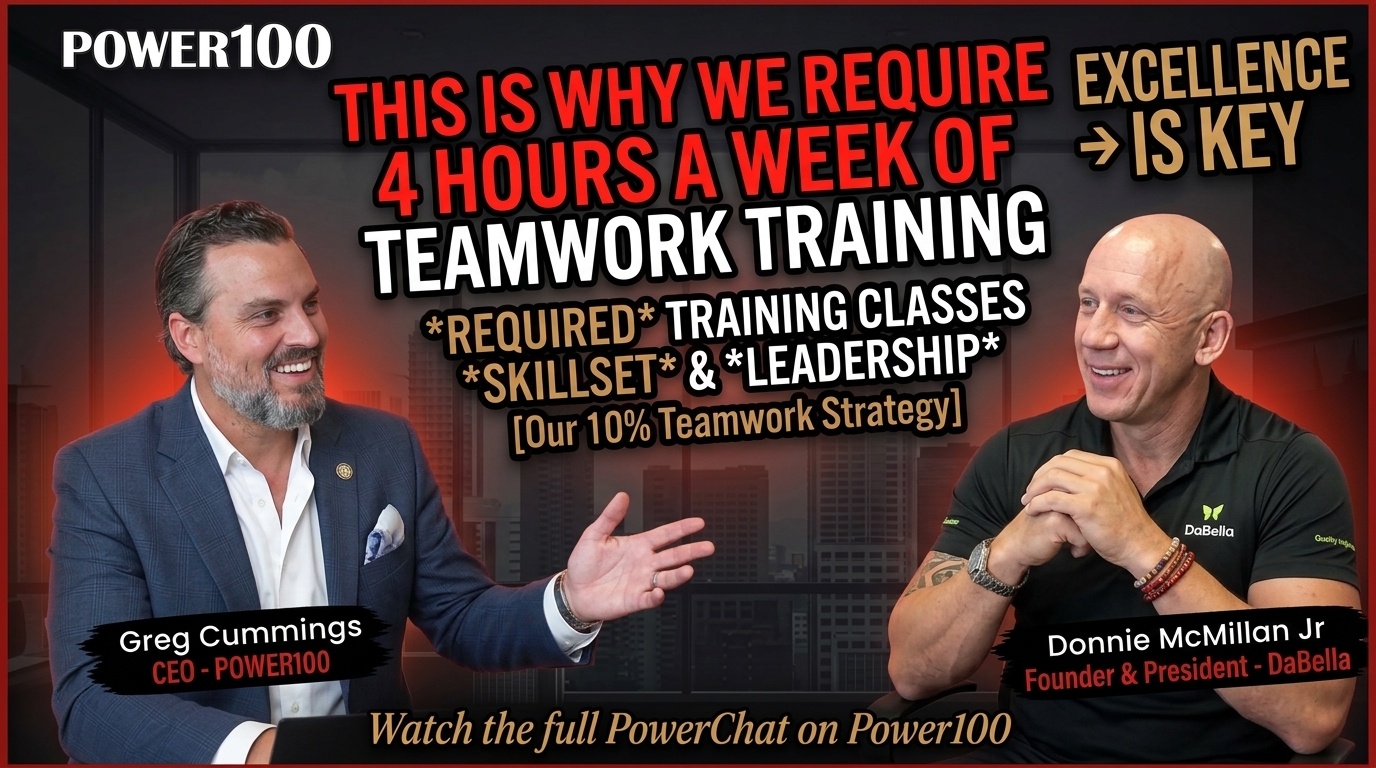
That focus on people became a key part of Donnie’s PowerChat conversation with Greg Cummings, CEO of Power100. Greg asked what it takes to keep developing employees after their first day so they can still perform on day 365, day 1,000, and beyond. Donnie’s answer showed that DaBella does not treat development as something separate from the job. The company had more than 25 full-time trainers on the sales side at the time of the interview, uses different training programs for skill sets, leadership, and teamwork, and gives employees ongoing time to improve.
On average, Donnie said an employee spends about 4 hours of a 40-hour workweek in training. For homeowners searching for a home improvement company for roofing, siding, windows and bathroom remodeling, that investment speaks to the people who will represent the company before, during, and after a project.
Power100 brought this conversation forward because leadership within a home improvement company can shape the experience homeowners receive outside the company. Power100 is the only unbiased third-party platform that recognizes and elevates the top leaders and most impactful companies in the home improvement industry.
Through PowerChat, Greg Cummings provides industry leaders a platform to explain the systems, choices, and values behind their growth, so contractors across the country can learn from what is working.
As the PowerChat moved deeper into leadership, Greg Cummings and Donnie McMillan Jr. explored a question that matters to every growing home improvement company: how do you prepare people to lead before the business needs them to take charge? Donnie’s answer showed that DaBella does not see leadership as a title conferred after years on the job. It starts much earlier. Employees are taught how to work with others, improve their skills, care about those around them, and become people others want to follow. That approach connects leadership development directly to the company’s ability to grow into new markets without losing the standards that helped it grow in the first place.
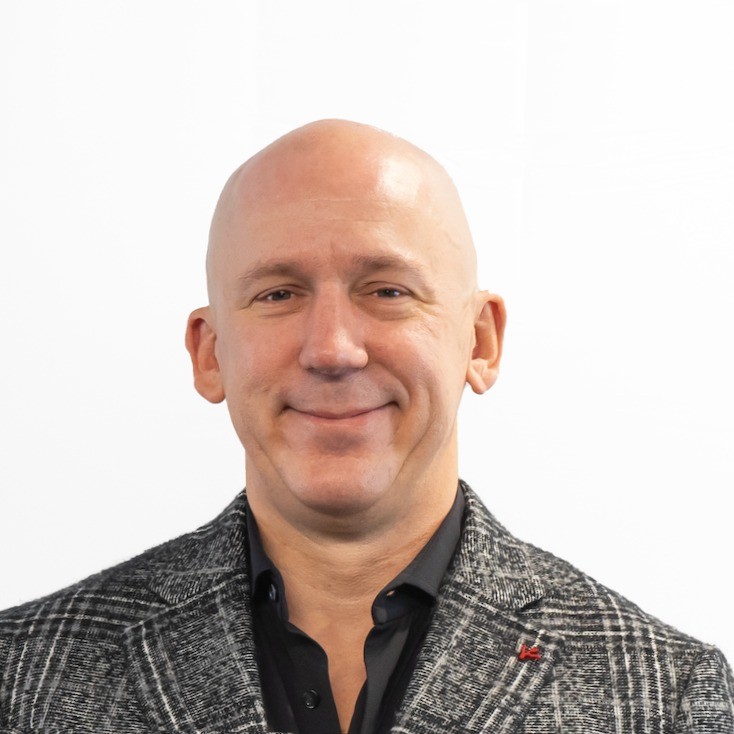
Donnie McMillan Jr., Founder and President at DaBella
One of Donnie’s strongest points was also one of the simplest. DaBella spends time teaching teamwork because the company believes that someone cannot become a strong leader without first learning to be a strong teammate.
“If we can’t be a good teammate, hard to be a good leader of a team,” Donnie said.
That changes where leadership development begins. It does not start when someone becomes a supervisor. It starts when an employee learns to contribute to a team, communicate effectively, support others, take responsibility, and help the group perform.
Donnie also shared a question DaBella uses to make leadership personal: “Are you the leader that you would want to follow?” The question asks employees to look beyond the title they may want and consider the experience they would create for the people who work with them. If the answer is no, there is still work to do before greater responsibility makes sense.
That idea connects with another lesson Donnie says has shaped DaBella from the beginning: leadership is influence. A person does not become influential because a title changes. Influence grows through how that person works, treats others, responds to pressure, and helps a team move forward.
That matters beyond the office. When a homeowner searches for a roof replacement contractor, the customer may never see the training behind the employee who arrives at the home. But they will feel the result through communication, preparation, care, and the way the employee handles the project.
For home improvement leaders thinking about their own next generation of managers, Donnie McMillan Jr. offers a useful question to carry back to the team: Are you creating managers, or are you creating people others truly want to follow?
The conversation then moved from the idea of leadership to the system DaBella uses to keep developing it.
Donnie explained that training does not stop once an employee understands the basics of the job. Different levels of the company receive different forms of development around skills, teamwork, and leadership. At the time of the interview, DaBella had more than 25 full-time trainers working on the sales side alone, in addition to other training resources across the company.
The number that gives this approach its weight is four hours.
Donnie said the average employee spends about 4 hours out of a 40-hour workweek in training. That means development is not something employees are expected to squeeze in when work gets quiet. It is part of the work itself.
DaBella also invests beyond internal training. Donnie described sending team members through John C. Maxwell leadership programs to help them become stronger trainers and leaders themselves. Some of those programs require several thousand dollars in training and travel for one person, but Donnie said the company sees the investment as worthwhile because those employees return better prepared to teach others.
That investment can also reach the homeowner experience. Someone searching for energy-efficient replacement windows is not only choosing a product. That homeowner is also choosing the people who will explain the work, guide the project, and represent the company inside the home. Ongoing training helps support that experience long after an employee’s first week is over.
For contractors who believe they are too busy to train, DaBella offers a different question: What could a company already be losing when people are expected to lead, sell, serve, and grow without enough time to keep getting better?
Training becomes more powerful when employees can see where it may lead.
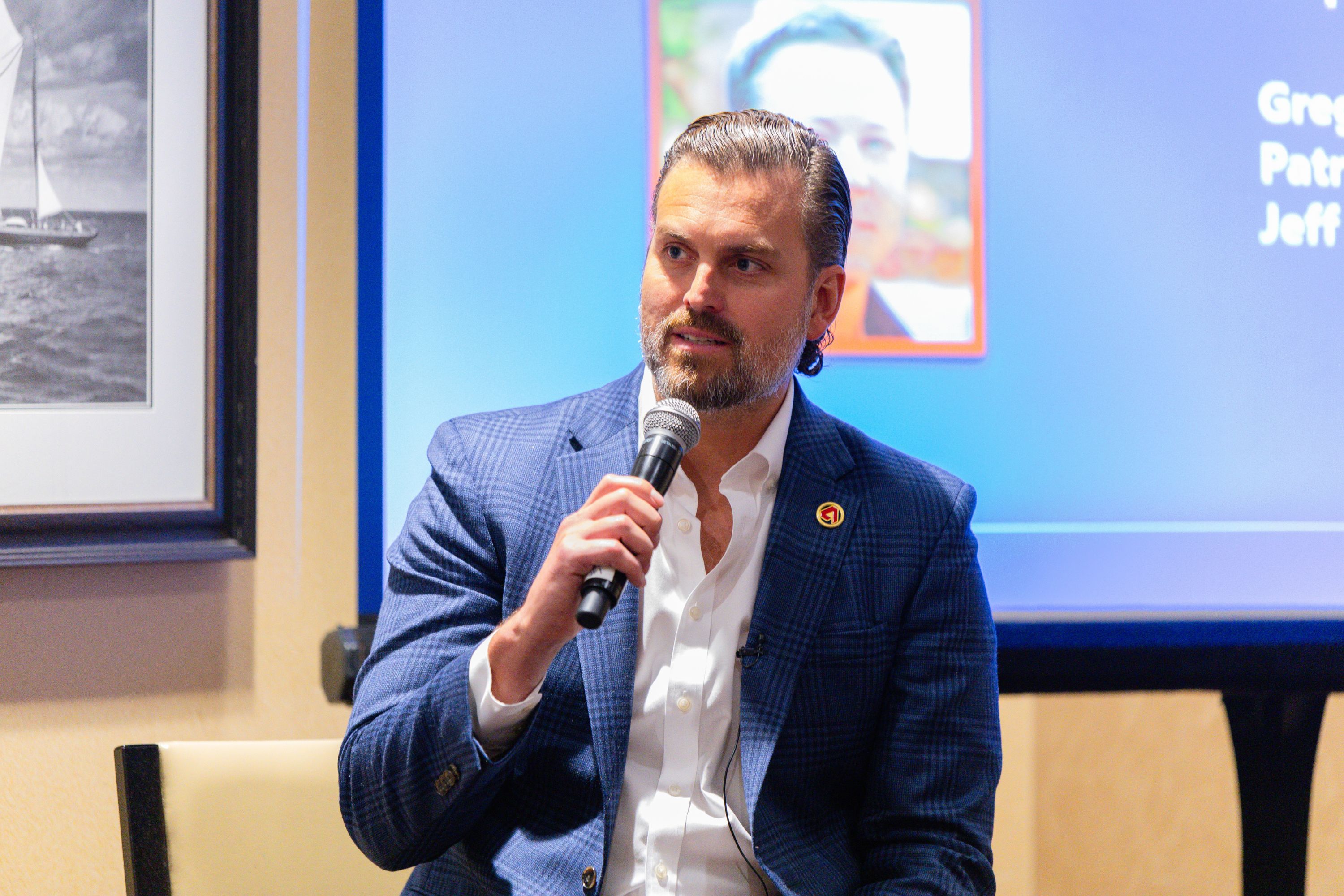
Greg Cummings, CEO of Power100
Donnie explained that opportunity became one of DaBella’s cornerstones from the start. The company was going to grow, so employees were told that the role they wanted might not exist today, but growth could create it tomorrow. That helped change how people viewed advancement within the company.
Instead of several people feeling like they were competing for one supervisor role, the bigger question became where the company was headed next.
That gives development a purpose.
An employee learning how to lead is not only preparing for an annual review. That person may be preparing for a new team, a new branch, a new city, or a job that has not yet been created.
DaBella’s early team gives that idea real weight. Donnie said the company began with 12 employees, and the original five people he referenced eventually reached director or C-suite levels as the organization grew beyond 2,500 employees.
That is important because it shows employees that growth inside the company can be real. The same idea can also support the customer side of the business. As more trained leaders take responsibility in new markets, homeowners looking for a siding replacement contractor are more likely to meet people who understand both the work and the company standard behind it.
For CEOs building their own growth plans, Donnie McMillan Jr. raises a useful leadership test: can your best people clearly see where growing with the company could take them?
The value of DaBella’s training system becomes even clearer when Donnie talks about the company’s future.
He shared two major goals during the PowerChat. DaBella plans to cross the $1 billion mark by 2029, and the company ultimately wants to operate across all 48 contiguous states. At the time of the interview, DaBella was operating in 28 states.
Yet Donnie did not name money as the biggest thing standing between the company and that growth.
He named leadership.
“Everything rises and falls in leadership,” Donnie said. He explained that if DaBella already had enough prepared leaders to open all of the branches it wants, capital would not be the main problem. The bigger question is whether the right people are ready, mature enough, and properly trained to succeed when they receive that opportunity.
Donnie also spoke openly about lessons learned along the way. DaBella has moved people through the system too quickly at times. Those experiences taught the company that giving someone an opportunity before they are ready can create problems for both the employee and the business.
That lesson changed the expected pace of expansion. Donnie said he once believed DaBella could reach 48 states within about five years. The timeline became closer to eight because developing enough prepared people takes time.
That choice says something important about how DaBella views growth. A new market is only as strong as the people trusted to lead it.
For a homeowner, the company name may be what first appears on the screen, but the local team is what turns that name into a real experience.
Preparing leaders is only one part of national growth. Those leaders also have to carry the culture into places where people may work, communicate, and think differently.
Donnie explained that operating across 28 states has made this one of DaBella’s most challenging issues. A team in Texas may have a different local culture from a team in the Pacific Northwest. New England may communicate differently from Washington. Those differences are real, even when everyone works under the same company name.
That means strong leaders need more than a rulebook.
They have to understand the standards that should stay firm while also knowing how to work with the people in front of them.
Donnie pointed to production, growth, leadership, and care as parts of the culture DaBella works to protect. Those ideas have to stay clear even as the company enters another state and another local community.
Care may be one of the most important pieces.
Later in the interview, Donnie connected community work to leadership and said, “You can’t lead people if you don’t care about people.”
That statement brings the full leadership story together.
Teamwork is not only about getting along. Training is not only about getting better at a task. Leadership is not only about reaching a number. DaBella is trying to develop people who can perform, work well with others, care about those around them, and carry the company standard into other markets.
That becomes especially important when homeowners are choosing a local home improvement company. A national brand can create awareness, but the person leading the local team is often the one who decides how that brand is experienced in the home.
For leaders preparing to open another branch, Donnie McMillan Jr. offers a final question worth asking: Is your culture only written down, or have you developed people who can carry it with them wherever the company goes?
As the conversation turned toward the future, Greg Cummings asked Donnie McMillan Jr. what he wanted his legacy to be. His answer brought the whole PowerChat back to the people.
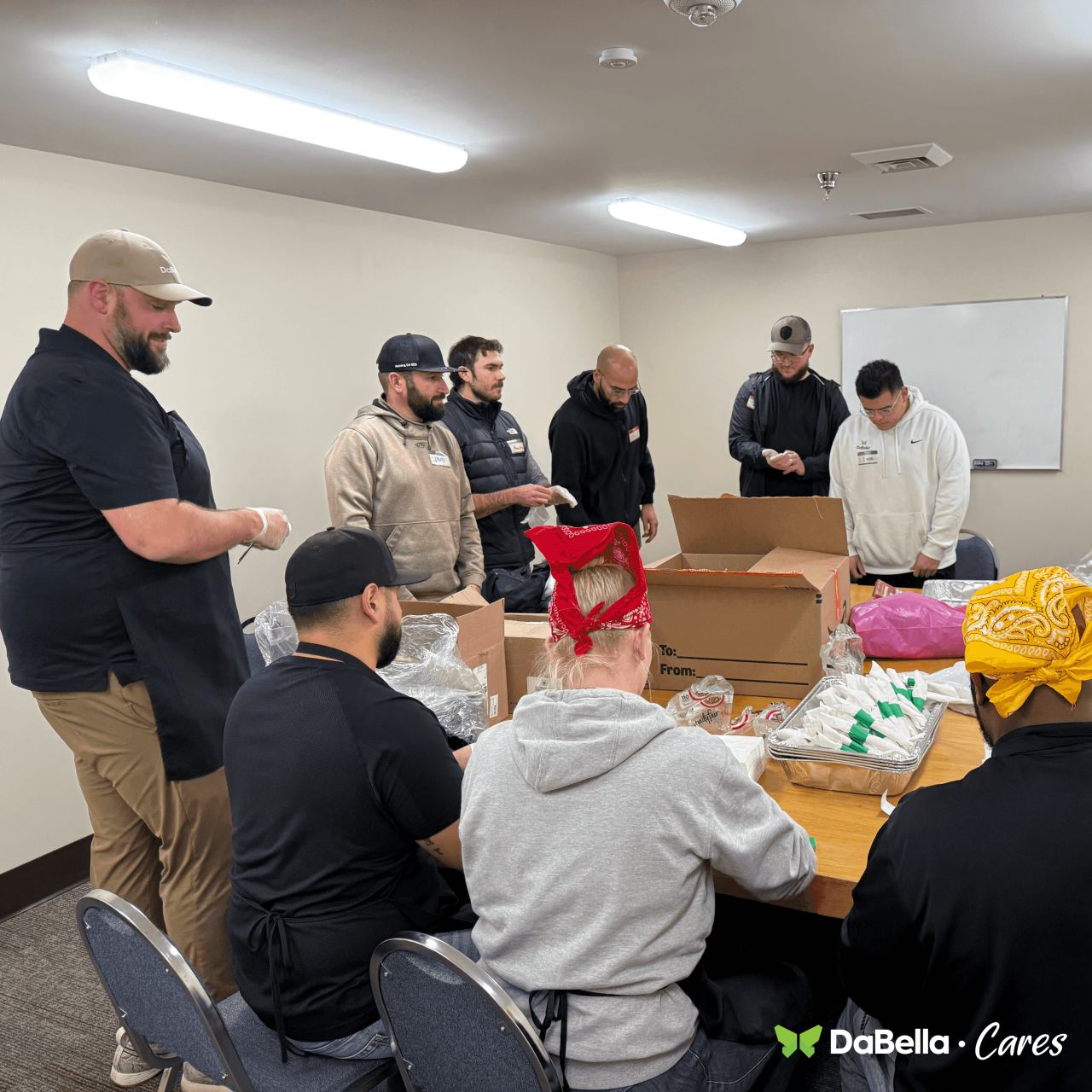
The DaBella team was in Boise for their General Manager-in-Training program.
“I want to be known as a leader who created leaders,” Donnie said.
That goal gives deeper meaning to the way DaBella invests in its team. The training, the time spent on teamwork, and the focus on leadership are not only about getting better results today. They are about preparing people to carry more responsibility tomorrow. As DaBella looks toward larger markets, more locations, and its goal of crossing the billion-dollar mark by 2029, Donnie made it clear that the company’s future will depend on the people ready to lead it there.
The lasting lesson from the PowerChat is simple. A company can buy tools, enter new markets, and invest in more leads, but strong growth still depends on people who are ready to lead other people. For Donnie, that work starts long before a new branch opens. It starts by helping employees become better teammates, stronger leaders, and people others are willing to follow. That may be one of the most important foundations behind DaBella’s next chapter.
No. Power100 reviews more than 7,600 qualified home improvement CEOs through its five-layer ranking system. The system looks at leadership, company culture, customer experience, growth, operations, community impact, and long-term performance. This means a large company does not earn a top position simply because it produces more revenue. Power100 looks at how the leader builds the company and how that leadership affects employees, homeowners, and the communities the company serves.
No. Companies and CEOs cannot buy their position in the national rankings. The platform uses a five-layer system that combines company performance, leadership, culture, customer outcomes, public information, and other measures of long-term impact. Power100 uses this process to narrow a national group of more than 7,600 qualified CEOs down to its Top 100.
Donnie McMillan Jr. believes training helps employees become stronger at the work they do today while preparing them for larger roles tomorrow. During the PowerChat, he said that an average employee spends about 4 hours of a 40-hour workweek in training. DaBella uses that time to develop job skills, teamwork, and leadership. Donnie also stressed that a person must first learn to be a good teammate before they can effectively lead a team.
No. Donnie said DaBella has learned that moving someone into leadership too quickly can hurt both the person and the company. He explained that the company now pays close attention to maturity, preparation, and whether a person can carry the culture before giving that employee greater responsibility. Donnie said leadership readiness, not access to capital, currently limits how quickly DaBella can enter more markets.
Homeowners deal with people at every stage of a remodeling project. They ask questions, review options, receive estimates, plan installation, and depend on the company to communicate clearly. DaBella trains employees in skills, teamwork, and leadership, while its customer process covers consultation, estimation, financing options, and installation. For someone searching for a trusted home improvement contractor for roofing, siding, windows and bathrooms, the people representing the company can matter just as much as the products being installed.
DaBella provides residential roofing, siding, replacement windows, and custom bath remodeling services. Its website also offers options tailored to energy efficiency, home protection, appearance, and long-term performance. Homeowners looking for a roof replacement contractor, energy-efficient replacement windows, a siding replacement contractor, or a bathroom remodeling company can use DaBella’s website to find service information and connect with a local team.
DaBella connects qualifying homeowners with third-party lenders that offer financing options. DaBella does not act as the lender or broker, and lenders set their own credit requirements and financing terms. The company includes financing as part of its customer process so homeowners can review possible payment options before moving forward with installation. Homeowners should review the final lender terms carefully before accepting any financing agreement.
Donnie said national growth makes culture harder to protect because people in different states communicate and work in different ways. Instead of ignoring those local differences, DaBella focuses on preparing leaders who understand the company’s standards and can apply them with real people in each market. Donnie said the company wants to reach all 48 contiguous states, but he also made it clear that DaBella will need enough prepared leaders to reach that goal. His approach prioritizes leadership development over expansion speed.
Power100 is the only unbiased third-party platform that recognizes and elevates the top leaders and most impactful companies in the home improvement industry. Led by Greg Cummings, CEO of Power100, the platform gives contractors, executives, and industry partners a trusted place to learn from proven leaders, understand what drives strong companies, and see how leadership, culture, customer experience, and long-term growth come together across the home improvement industry.
Membership unlocks every Power100 interview, PowerChat episode, and expert playbook - free for industry leaders.
Power100 is the nation's premier CEO ranking and media platform for the home improvement industry. Using a proprietary 5-layer evaluation system, Power100 identifies and celebrates the top CEOs, companies, and strategic partners driving innovation, customer satisfaction, and leadership excellence across the country.