
Home improvement companies often wait for a clear problem before they make a big change. When sales are strong, leads are coming in, and teams stay busy, an old process can still feel good enough. But that can change fast. Leads can become harder to close. Margins can get tighter. Salespeople can leave. Growth can put more pressure on the team. A system that worked for a smaller company can start to break when the business gets bigger.
That is why home improvement estimating software for contractors and other sales systems can matter before a company feels the pain. The goal is not to add technology just because it is new. The goal is to give the business a stronger process before growth or a slower market tests it.
That leadership issue became a key part of a PowerChat conversation between Ryan Lococo, CEO & Board Director of One Click Contractor, and Greg Cummings, CEO of Power100. Ryan shared why contractor leaders should build stronger technology, systems, and processes while they still have time to make clear choices. His point was not that software can solve every business problem. His point was that leaders should prepare before weak processes become expensive problems.
Power100 is the only unbiased third-party platform that recognizes and elevates the top leaders and most impactful companies in the home improvement industry. Through conversations like this, PowerChat, industry leaders can share lessons that help contractors think ahead instead of waiting for pressure to make the decision for them.
One of the hardest choices for a contractor CEO is deciding when to change a process that still seems to work.
When the team is busy, there may not seem to be a reason to stop and look at what could go wrong later. The company may still be closing jobs. Salespeople may still know what to do. Customers may still be buying. From the outside, there may be no clear warning sign.
Ryan Lococo believes that is exactly when leaders should look closer.
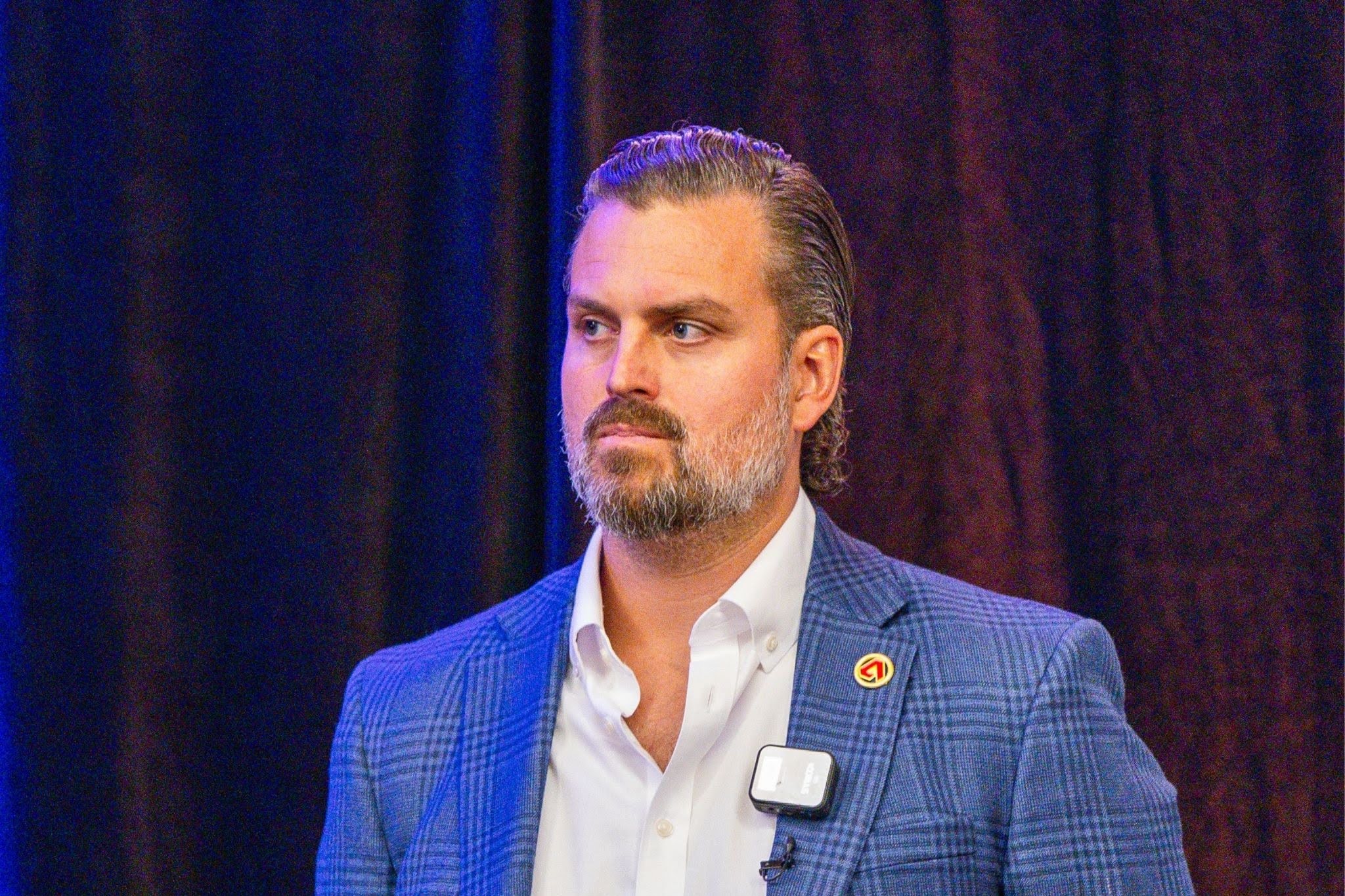
Greg Cummings, CEO of Power100
During the PowerChat, Greg Cummings raised the question of what companies should do when the market starts to change, and leaders begin thinking about cutting costs, dropping partners, or waiting to see what happens next.
Ryan’s advice was clear.
“I don’t think you should wait until you have a problem,” Ryan said.
He explained that when a company waits until the business is already under pressure, it may have less time and fewer good choices. Growth can expose weak systems. A slower market can expose a weak sales process. A lost deal can show where another company created a better customer experience. By the time those problems become clear, the business may already be trying to fix them while also dealing with lower sales or tighter margins.
Ryan believes contractors should put the right technology, systems, and processes in place before that happens.
“Because if you have a problem and don’t put in the technology and the systems and the processes before you get bigger, before times get tough, that wave crushes you,” Ryan said.
The message is not about spending more money on every new tool. It is about knowing where the business may become weak as it grows and making smart choices before those weak points become harder to manage.
That also means leaders need to understand the process they want technology to support. A company should know how it wants salespeople to build estimates, present options, move customers through the sale, and keep important information from getting lost. Technology works best when it supports a clear process instead of trying to cover a broken one.
For contractor CEOs looking at the next stage of growth, Ryan’s perspective shifts the question from “What do we need to fix today?” to “What could become a problem tomorrow if we leave it alone?”
That change in thinking can give leaders more room to prepare, more time to train their teams, and more control over how the company grows.
The strongest companies do not wait for pressure to tell them what needs to change. They build before the pressure arrives.
Ryan Lococo’s message to contractor CEOs goes beyond buying software or adding another tool. He is talking about timing. A company has more room to make smart choices when it is healthy than when sales are down, margins are tight, or the team is under stress. During his PowerChat with Greg Cummings, Ryan explained that strong leaders should look for weak points early, build clear systems, and give their teams time to learn them before growth or a slower market puts those systems to the test. The lesson is simple. Preparation gives leaders more control, while waiting often leaves them with fewer choices.

Ryan Lococo, CEO & Board Director of One Click Contractor
Ryan’s advice starts with a simple idea. A company does not need to be in trouble before it improves.
Leaders can look at the business while things are still going well and ask better questions. Where does the sales process slow down? Where do reps make mistakes? Where does one person hold too much knowledge? Where could a small problem become a bigger one if the company adds more people or enters a new market?
Ryan believes leaders should answer those questions before pressure forces them to.
“I don’t think you should wait until you have a problem,” Ryan said.
A weak process may not feel dangerous when sales are strong. But the same weakness can hurt much more when leads become harder to close. A missed sale matters more. A slow quote matters more. A rep who forgets an important step can cost the company more.
This is where tools such as contractor estimating software can help, but Ryan’s point starts before the software. Leaders first need to understand where the business needs more structure.
Acting early gives the company time to test the process, train the team, and make changes without trying to fix everything at once.
That is the value of preparing before the problem becomes urgent.
Ryan also warns that success can expose weak systems.
A process may work well when a company has a small sales team. The owner knows everyone. Managers can answer questions quickly. Experienced reps know what to do.
Then the company grows.
More people create estimates. More people present proposals. More people talk to homeowners. More managers need to train teams. What once worked through experience and memory can become harder to control.
That is why growth needs structure.
For example, roofing estimating and sales software for contractors can help create a clearer process around pricing, common items, proposals, and sales steps. The value is not only in moving faster. It is in helping more people follow the same strong foundation.
Ryan connects technology adoption with scale and efficiency because growth creates more chances for small gaps to spread.
A pricing mistake that happens once may be easy to fix.
A pricing mistake that happens across several sales reps can become expensive.
A weak proposal may affect one appointment.
A weak proposal process across an entire team can affect many jobs.
The goal is not to add control for the sake of control. It is to help the company stay clear and organized as more people join the business.
Growth should give the contractor more strength, not more confusion.
Ryan shared a story that shows why waiting can be costly.
He explained that companies have contacted One Click Contractor after losing a job to another contractor. In some cases, they later saw the winning proposal and realized the other company had created a stronger sales experience.
That loss became the moment when the weakness finally became clear.
But Ryan’s larger point is that leaders should not need to lose several jobs before they act.
A homeowner looks at more than the final price.
They see how prepared the salesperson is.
They see how clear the proposal feels.
They see whether the process is easy to understand.
They see whether the company appears organized and professional.
Tools such as in-home sales software for contractors can support that experience by helping reps move through the appointment in a clearer way. But leaders still need to look closely at the full process and ask whether it gives the homeowner confidence.
One lost job may feel like a small event.
The real concern comes when the same weakness appears again and again.
That is why leaders should study where deals slow down before the market makes the answer obvious.
They can look at what customers see.
They can look at what competitors do well.
They can ask sales reps where the process becomes hard.
They can then improve while they still have time to make careful choices.
Ryan’s message also comes with an important warning.
Technology cannot turn a weak process into a strong one by itself.
“If you accelerate a bad process, you just accelerate yourself into the ground,” Ryan said.
That quote brings the conversation back to leadership.
Before a company tries to make the sales process faster, leaders need to decide what the process should look like.
Once those answers become clear, technology can help make the process easier to repeat.
For a contractor working across several trades, window and remodeling estimating software can support a clear path for pricing, proposals, and customer choices. But the software still needs a good process behind it.
Ryan’s point is not that technology should lead the company.
The leader should set the direction.
Technology should help the team follow that direction with more speed and consistency.
That difference matters.
A company should not buy software to avoid fixing its processes.
It should improve the process first, then choose technology that helps more people follow it well.
Ryan also sees value in choosing technology partners that bring more than software.
He is clear that contractors know their trades better than the technology company.
Roofers know roofing.
Window contractors know windows.
Remodelers know their work.
What a strong technology partner can bring is a wider view.
Ryan explained that One Click Contractor has seen billions of dollars in closed sales move through its platform. That gives the company a chance to see patterns across many contractor businesses.
“We know technology and we know process,” Ryan said.
That wider view can help leaders ask better questions.
This is why Ryan says technology partners can also act as advisors.
The best relationship does not begin with a software feature.
It begins with an honest conversation about the business.
From there, the contractor can choose systems that match the goal.
For some businesses, that may include home improvement financing software for contractors that keeps financing connected to the wider sales process. For others, the need may start with estimating, training, proposals, or stronger integrations.
The answer may be different for every company.
The important part is that leaders make those choices before pressure makes the choice for them.
Preparation does more than protect the business.
It gives the business more room to grow.
Every contractor CEO knows the business will change.
Some years will bring faster growth. Others will bring tighter margins, slower sales, or new pressure on the team. New people will join. Good people may leave. Technology will keep moving. Customer expectations will keep changing.
No leader can control all of that.
But leaders can control when they prepare for it.
Ryan Lococo’s message is not about expecting the worst. It is about giving the business a better chance to handle whatever comes next. When leaders strengthen the company before the pressure arrives, they have more room to think clearly, make smart choices, and keep moving forward.
That is the difference between reacting and preparing.
A company does not need to wait for sales to fall before looking at its process. It does not need to wait for growth to create confusion before building better systems. And it does not need to wait for a competitor to create a stronger customer experience before deciding that something should change.
The better time to act is when the company still has room to learn, test, and improve.
For CEOs, that creates more options. They can make decisions from a place of strength instead of urgency. They can build around what works instead of trying to repair everything at once.
That is the larger lesson from Ryan’s PowerChat.
The best time to build a stronger business is before the business forces you to.
Strong CEOs do more than solve the problem in front of them. They build systems today that make tomorrow’s problems easier to handle.
No. Power100 uses AI and data as part of its five-layer ranking process, but people also review the results. The process starts with public signals, revenue indicators, and other business data. Power100 then uses its scoring system, adds reviews from industry veterans, and cross-checks feedback from partners, customers, and employees before it completes the ranking. This approach gives the platform both data and real industry judgment instead of letting one algorithm make the final call.
No. Power100 research team continues to review new signals and industry movements. Qualifying CEOs and companies can also provide verifiable business information for the research team to consider. This means the ranking process can respond as companies grow, leadership changes, customer results shift, or new business information becomes available.
Ryan Lococo argues that waiting for a problem gives the business less room to respond. A company may look healthy while small weaknesses stay hidden inside estimating, pricing, training, proposals, or the sales process. Growth or a slower market can make those weaknesses much more costly.
“I don’t think you should wait until you have a problem,” Ryan said. He warned that companies should put technology, systems, and processes in place before they get bigger or times get harder.
For companies searching for home improvement sales software for growing contractors, the lesson is to build structure while leaders still have time to train the team, test the process, and improve without urgent pressure.
One Click Contractor says larger sales teams lose some of the direct visibility leaders once had when everyone worked close together. As more reps run more appointments, leaders may only see a problem after the results start to fall.
The company recommends building more structure into estimating, financing, reporting, and sales workflows before adding more people. One Click Contractor combines estimating and financing with rep-level reporting and coaching to help teams keep a more consistent process as they grow.
That makes contractor sales software for growing home improvement teams especially relevant when a company adds more reps, markets, or sales volume.
Yes. One Click Contractor lets authorized users build estimate templates with common products, services, descriptions, pricing, terms, and sections. Salespeople can then use those templates as a starting point instead of creating each estimate from nothing.
The platform also lets organizations set markup rules and minimum and maximum pricing guardrails for product and labor costs. That means company leaders can create a more consistent process while still controlling how the business prices its work.
For contractors looking for estimating software with standardized pricing and proposal templates, the goal is not to remove leadership control. The goal is to make that control easier to carry across a larger team.
One Click Contractor places a strong focus on onboarding and adoption. Its onboarding process starts by learning how the contractor already sells, then helping the company move that process into the platform. The company also trains sales reps on real appointment use instead of only teaching where to click.
Support continues after launch through account management, support, and coaching. That matters because One Click Contractor notes that launching software does not automatically mean the team has fully adopted it. Reps may return to old habits, and companies may need to adjust the setup as they learn what works in the field.
This makes home improvement sales software with onboarding and rep coaching a more useful search phrase for leaders who worry about adoption as much as features.
Yes. One Click Contractor supports connections with outside systems such as CRMs, financing platforms, measurement providers, manufacturer tools, and other contractor technology. Its current integration resources include systems such as Salesforce, HOVER, EagleView, CompanyCam, Roofle, ProVia, FeneVision, and others.
This allows a contractor to improve parts of the sales process without automatically replacing every system already in use. For companies planning ahead, integrated home improvement contractor sales software can help connect estimating, measurements, proposals, financing, and other sales tools around a more complete workflow.
Yes. One Click Contractor allows companies to change items such as forms, contracts, branding, and pricing without requiring major code changes. The platform also gives authorized users control over templates, pricing structures, estimate items, and other organization settings.
That flexibility supports Ryan Lococo’s larger point about preparing early. A business does not stay the same as it grows. Products change. Prices change. Teams expand. Sales methods improve. Leaders need systems they can keep adjusting rather than a process that becomes harder to change every time the company reaches a new stage.
For contractor CEOs, the goal is not simply to install new technology. The goal is to build a sales system that can keep changing with the business before outside pressure forces that change.
Power100 is the only unbiased third-party platform that recognizes and elevates the top leaders and most impactful companies in the home improvement industry. Led by Greg Cummings, CEO of Power100, the platform studies leadership, growth, customer experience, company culture, business performance, and industry impact to help contractors better understand the people and companies shaping the market. Through national rankings, PowerChats, research, and leadership stories, Power100 gives home improvement CEOs and strategic partners a trusted place to share ideas, learn from real industry experience, and build stronger companies for the future.
Membership unlocks every Power100 interview, PowerChat episode, and expert playbook - free for industry leaders.
Power100 is the nation's premier CEO ranking and media platform for the home improvement industry. Using a proprietary 5-layer evaluation system, Power100 identifies and celebrates the top CEOs, companies, and strategic partners driving innovation, customer satisfaction, and leadership excellence across the country.