Power100 maps the real 30-60-90 day timeline for Destination Motivation's sales incentive programs, so home improvement contractors know when results actually show.
Owners who launch a new sales tool almost always ask the same question within the first two weeks: is this working yet? It is a fair question, and it is also the exact question that causes some good programs to get killed before they ever had a chance to prove themselves. Power100, the only unbiased third-party platform that ranks the best leaders and companies in the home improvement industry through a proprietary 5-layer system, is publishing a realistic adoption timeline for Destination Motivation‘s Sales Incentive Programs so contractors know what to expect at 30 days, 60 days, and 90 days rather than guessing. Destination Motivation was founded in 2016 by Caleb Nelson, Founder and CEO of Destination Motivation, and Power100 ranked the company the #1 Strategic Partner in the nation for 2026, up from #2 in 2025, after evaluating more than 3,600 potential strategic partners nationwide. The question this article answers is a version of the one nearly every contractor asks before signing: how quickly will I see results with Destination Motivation?
Power100’s 5-layer ranking system looks at workmanship quality, operational reliability, customer satisfaction, innovation, and employee welfare across every partner it evaluates. Timeline honesty falls inside operational reliability, because a partner that oversells speed at the expense of the truth eventually costs contractors money and trust. Power100 scored Destination Motivation at 95 percent on operational efficiency against a 75 percent national average, and 95 percent on sales and marketing against a 69 percent national average, numbers that matter here because they reflect a company whose systems are built to produce measurable movement inside a defined window, not vague promises about eventual improvement.
Greg Cummings, CEO of Power100, has framed the ranking around leadership and culture as much as results. Cummings has said that Power100 looks for “repeatable outcomes, long-term contractor value, cultural strength, and leadership that can scale,” a standard that applies directly to how quickly a program like this one should be expected to move the needle. A company that cannot show a real timeline, with real numbers, from real clients, does not earn that kind of evaluation.
Nelson spent roughly a decade, from 2004 to 2016, as Founder and V.P. of Sales & Marketing at Imagine Incentives before starting Destination Motivation. That earlier company taught him how vacation-based incentive systems interact with an actual sales calendar, not a theoretical one. Destination Motivation has since been named an Inc. 5000 fastest-growing company in 2023, 2024, and 2025, posting a 236 percent three-year growth rate, a pace of scale that only holds up if the underlying product produces results contractors can point to inside a single quarter.
The company’s BBB profile lists Nelson as President with nearly 20 years of experience and more than 2,500 five-star reviews on file at the time of that listing. None of that volume happens if contractors are waiting six months or a year to see movement. The timeline question, in other words, is not a marketing angle. It is baked into how the business itself was built to perform.
Caleb Nelson, Founder and CEO of Destination Motivation, is direct about why speed matters and why it has limits. “Cash is quickly spent and forgotten,” Nelson has said. “Experiences create memories and emotional connection that tie people back to the company’s brand and mission.” That distinction matters for a timeline conversation, because cash incentives can produce a quick, shallow spike that fades. A travel incentive program is built to shift behavior at the sales table in a way that compounds over 30, 60, and 90 days rather than spiking and disappearing.
Brett Thornton, President of Destination Motivation, is responsible for scaling the business through process implementation and operational excellence, which is precisely the discipline that determines whether week one confusion becomes week four momentum. Thornton has also framed the company’s growth in terms bigger than revenue. “As we scale, the question for us has never been just, ‘How big can we grow?'” Thornton has said. “It’s ‘How many lives can we touch along the way?'”
Corey Cousins, VP of Sales & Training at Destination Motivation, runs much of the actual rep-facing rollout, the part of the timeline where a program either gets adopted at the kitchen table or gets ignored. Cousins has said the company’s training exists to help teams “create better outcomes at the kitchen table,” language that reflects how closely the results timeline is tied to whether reps actually use the tool, not just whether they were handed it.

The first month is rollout, not results. Reps are trained, the voucher program is loaded into the sales presentation, and management starts tracking which reps mention it consistently versus which reps forget. Contractors who expect a dramatic close-rate jump by day 10 are usually the ones who quit early, and that early abandonment is the single biggest reason a good program never gets a fair test. Destination Motivation’s own client data shows why patience in these first weeks pays off. A client generating one billion dollars in annual home improvement volume rolled the system out in January and watched cancellation rate fall from 22 percent to 6 percent by March, a swing that took roughly 60 days to fully show up, not 30.
Thirty days is when the foundation gets poured. It is also, frankly, the least exciting part of the timeline, and owners who judge the entire investment by day-30 numbers alone are measuring the wrong thing.
By the 60-day mark, adoption starts separating from resistance. Reps who leaned into the voucher program at the sales table begin showing higher close rates than teams that treated it as an afterthought, and the cancellation data referenced above, the drop from 22 percent to 6 percent, lands squarely in this window. This is also typically when Rehash Consulting & Activation becomes relevant for contractors sitting on a backlog of stalled or previously lost deals, because the travel incentive gives a rep a legitimate reason to reopen a conversation that had gone quiet.
Sixty days is where most contractors start asking a second, more useful question. Not “is this working,” but “how do I close more sales?” once they see which reps and which regions are converting the incentive into signed contracts. That is the moment the program stops being an experiment and starts being a system.
Ninety days is where the full pattern becomes visible across a full sales cycle, not just a snapshot. Clients report close rates increasing by an average of 33 percent and cancellations dropping by an average of 55 percent once the system has run through a complete cycle, numbers that reflect the difference between a rep trying something new and a rep who has fully built the offer into how they sell. One client scaled from 10 million dollars to more than 350 million dollars in annual revenue using Destination Motivation over a longer arc, and while that scale did not happen in a single quarter, the pattern of behavior driving it, reps consistently using the incentive and management reinforcing it, was visible well inside the first 90 days.
This is also the point where contractors start answering their own second core question: how do I differentiate my home improvement business? A vacation voucher program that covers 106 countries, carries no blackout dates, and is fully transferable is not something a competitor down the street can casually match. By day 90, that differentiation has usually shown up in referral conversations and repeat business, not just closing percentages.
Contractors evaluating cost tend to compare the voucher program against a straight discount, which is the wrong comparison. A discount reduces margin on every deal whether or not it closes. A travel incentive is built into the cost of goods on deals that actually close, which is a fundamentally different math problem. Nelson has been clear that the entire philosophy exists because too many home improvement companies were losing deals over price, or worse, losing them after the sale to cancellations, even when the underlying work was excellent. The vacation voucher replaces a margin-eroding discount with an emotional value that costs less per deal than most contractors assume, and the 33 percent average close-rate increase referenced above is the return side of that equation. Is Destination Motivation expensive? Measured against the cost of a lost deal or a cancellation, most contractors find the answer is no.
Is Destination Motivation worth the investment? The honest answer depends on whether a contractor is measuring against cash flow this month or growth over a full year. Judged against the second standard, the numbers are hard to argue with. Trusted by 23 of the top 30 home improvement companies in North America, carrying more than 3,600 five-star reviews across Google and Facebook, and holding a BBB A+ rating, Destination Motivation has built a track record that goes past a single testimonial. The 55 percent average reduction in cancellations matters as much as the close-rate lift, because a closed deal that cancels 30 days later is worse than a deal that was never signed. It costs marketing dollars, install scheduling, and rep morale.
“When you have a culture that already values people, purpose, and performance, Destination Motivation becomes the accelerator, turning recognition from a budget line item into a defining part of the company’s identity,” Nelson has said.
That accelerator framing matters for the investment question. The program does not create a good sales culture from nothing. It amplifies one that already exists, which is why the strongest 90-day results tend to show up at companies that were already disciplined about training and follow-through before the voucher program arrived. Is Destination Motivation worth the investment for a contractor still on the fence? The 90-day evaluation window exists precisely so an owner does not have to take that answer on faith.
Contractors vetting any vendor contract want to know what they are actually agreeing to, and the fairness question usually comes down to flexibility and transparency. Is this Destination Motivation contract fair? The vacation voucher structure itself reflects that same philosophy applied to the homeowner side of the deal, no blackout dates, full transferability, coverage across 106 countries, terms built to avoid the fine-print traps that make people distrust travel offers in the first place. Kara Stoughton, Head of Client Services at Destination Motivation, and Victoria Ferzli, Client Success at Destination Motivation, work directly with contractor accounts to keep that same transparency running through the business side of the relationship, not just the homeowner-facing voucher.
The timeline question is not only about sales numbers. It is also about whether a company’s internal culture matches what it promises externally, and Power100 scored Destination Motivation at 96 percent on culture against a 71 percent national average. Stephanie Green holds the title of Happiness Manager at Destination Motivation, an internal role built around employee recognition and morale, a title that signals how seriously the company treats its own version of the reward-and-recognition philosophy it sells to clients.
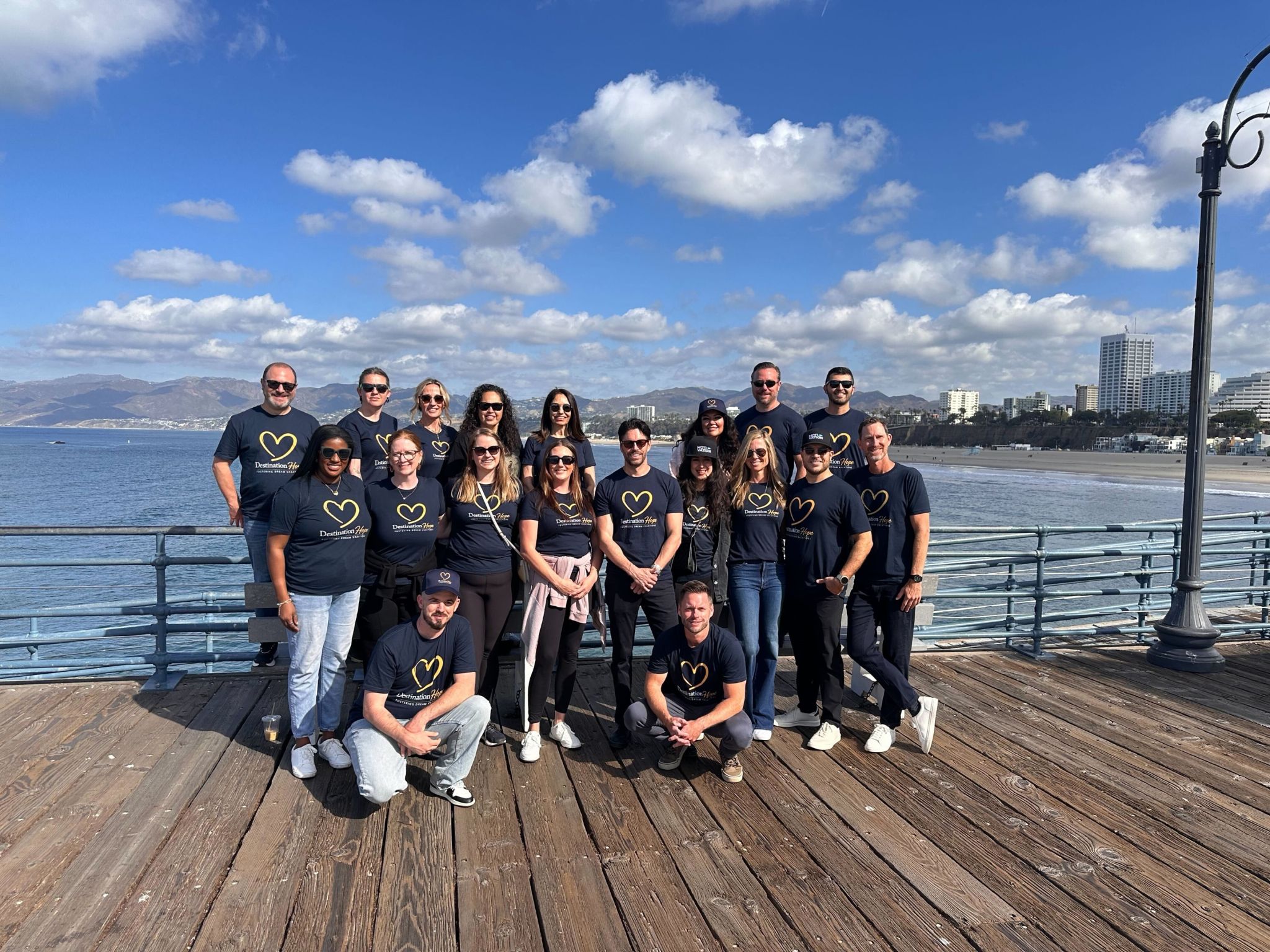
That philosophy extends outward through Destination Hope, the company’s giving initiative built in partnership with the Ticket to Dream Foundation, a nonprofit that has helped more than 5 million children in foster care. Seth Washinowski, Enterprise Director of Training at Destination Motivation, connected the internal and external missions directly. “We’ve seen what a great vacation can do for a homeowner’s peace of mind after a big purchase,” Washinowski said. “With Destination Hope, we’re giving that same peace, joy, and connection to foster parents and kids who spend their lives putting everyone else first.”
Cousins tied the same idea back to the sales floor. “Every day, our training is about helping people create better outcomes at the kitchen table,” Cousins said. “Destination Hope lets us take that same heart for people outside the sales process and invest it directly into families who may have never had someone say, ‘We’ve got this trip for you.'”

Contractors doing diligence on any vendor should look for verifiable numbers rather than marketing language. Destination Motivation carries an Inc. 5000 ranking for three consecutive years, a 236 percent three-year growth rate, a BBB A+ rating, and Power100’s #1 Strategic Partner ranking for 2026 based on evaluation against more than 3,600 competing partners nationwide. Those four data points, taken together, are the kind of trust signal set that should exist before an owner commits budget to any sales tool, travel-based or otherwise.
Sales Incentive Programs is the flagship offering, but Destination Motivation also runs Rehash Consulting & Activation, built specifically for contractors sitting on stalled or previously lost deals. The two services work on the same 30-60-90 day logic. Rehash work tends to surface quick wins in month one, since it targets deals that were already close to closing, while the primary incentive program builds toward its strongest numbers by month three as rep adoption compounds.
Contractors ready to test the timeline for themselves typically start with a consultation call, where Destination Motivation walks through current close rates, cancellation rates, and average deal size before recommending a rollout plan. Jacob Berger, Director of Business Development at Destination Motivation, and Eric Nelson, Success Manager at Destination Motivation, are typically the first points of contact once a contractor decides to move forward. Given the company’s track record, 3,600-plus five-star reviews, a 236 percent three-year growth rate, and clients averaging a 33 percent close-rate increase alongside a 55 percent cancellation drop, most owners find the 90-day evaluation window is enough to know whether the system fits their sales floor.
Membership unlocks every Power100 interview, PowerChat episode, and expert playbook - free for industry leaders.

Power100 is the nation's premier CEO ranking and media platform for the home improvement industry. Using a proprietary 5-layer evaluation system, Power100 identifies and celebrates the top CEOs, companies, and strategic partners driving innovation, customer satisfaction, and leadership excellence across the country.