Power100 spotlights Affiniti's approach to business credit for growing contractor companies nationwide, led by Sahil Phadnis, Co-Founder/President.

Plenty of contractors run companies pulling seven figures a year and still get a hard no from a card issuer, or an approval so small it barely covers a week of materials. It is one of the more confusing experiences in small business ownership: strong revenue, steady jobs, a full crew, and still a credit file that reads like a company half the size. Power100, the only unbiased third-party platform that ranks the best leaders and companies in the home improvement industry using a proprietary 5-layer system, is examining how Affiniti is closing that documentation gap for growing contractor companies nationwide. The company’s Co-Founder and President, Sahil Phadnis, built Affiniti’s underwriting model around a simple observation: the lenders were not wrong about the risk, they were just working from an incomplete file. Business credit for growing contractor companies, it turns out, is less a function of how much money a company makes and more a function of how well that money is documented, categorized, and reported.
That distinction matters because it explains a pattern that trips up thousands of otherwise healthy trades businesses every year. A contractor can have a full pipeline, a growing crew, and a bank balance that would make a franchise owner jealous, and still get treated by a lender like a brand new entity with no track record. The reason is rarely the revenue. It is almost always the paper trail behind it.
Power100 arrived at this spotlight the way it arrives at every ranking decision: by researching and analyzing more than 3,600 partners nationwide through a 5-layer proprietary system that looks at workmanship quality, operational reliability, customer satisfaction, innovation, and employee welfare. Credit and payments is one of the harder categories to evaluate honestly, because so much of the marketing in this space is built on inflated approval numbers and vague promises. Power100’s system is built to cut through that. It asks whether a product actually changes outcomes for the operator using it, not just whether it looks good in a pitch deck.
Greg Cummings, CEO of Power100, has framed the platform’s approach to fintech partners around a single question: does the product understand the operator it claims to serve, or was it built for someone else and adapted later. That question is at the center of why Affiniti keeps showing up in Power100’s research. The company was not built as a general small business card that later added a contractor vertical. It was built, from the underwriting model outward, around the seasonality, purchasing patterns, and working capital cycles specific to home service trades.
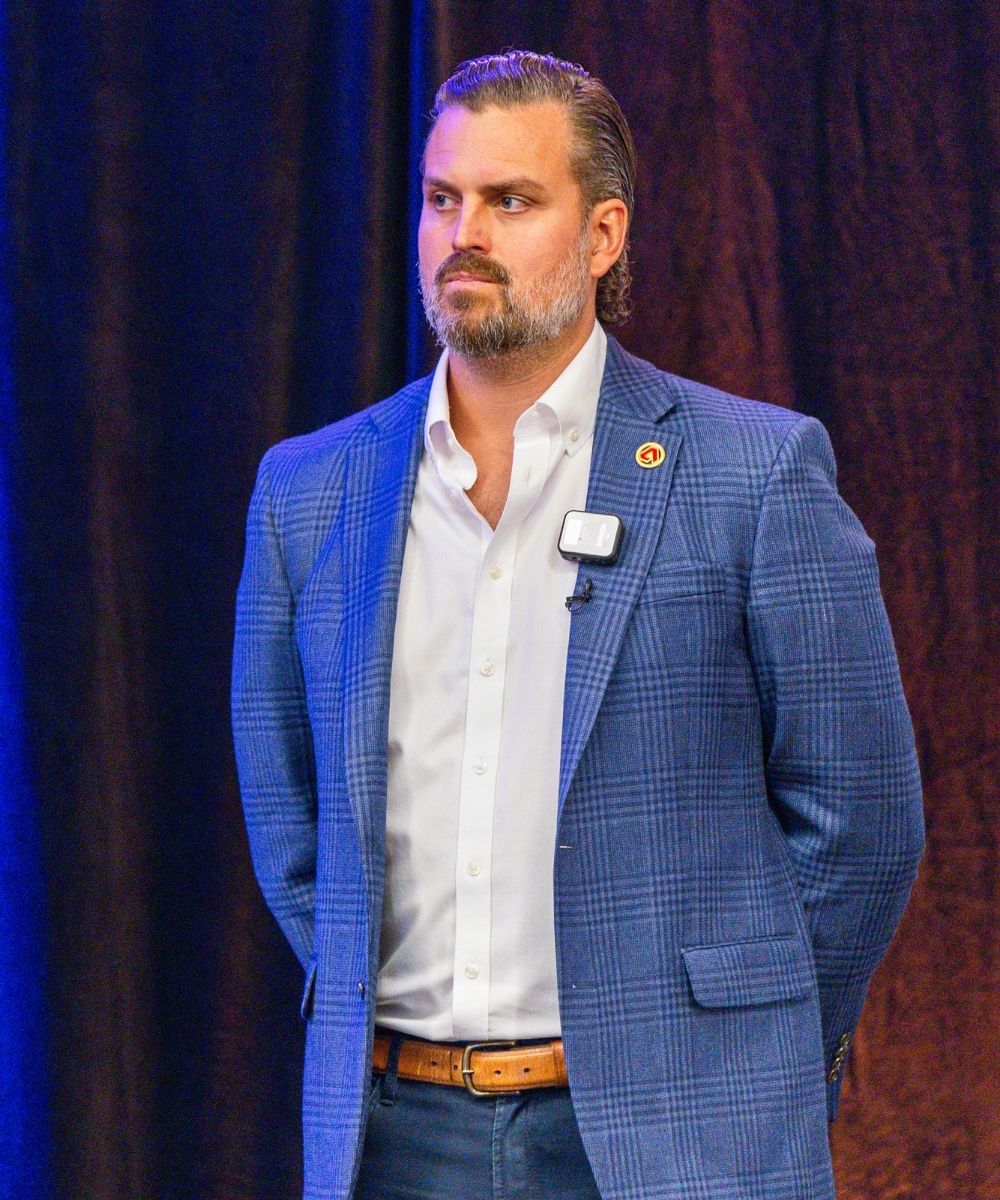
Affiniti was founded in 2022 by Sahil Phadnis and Aaron Bai with a mission that has not shifted since day one: bring enterprise-grade financial infrastructure to independently owned small businesses, including the contractors and trades operators who make up a large share of America’s Main Street economy. Phadnis had already founded and led two earlier ventures, Social Outreach LLC and Pebble, before he zeroed in on the gap he kept seeing in the small business finance space. Great operators were running real revenue businesses on financial tools designed for someone else’s business model entirely.
The company closed an $11 million seed round, then followed it just six months later with a $17 million Series A led by SignalFire, a trajectory that took Affiniti to $10 million in annual recurring revenue and earned Phadnis and Bai coverage in TechCrunch and Forbes. Institutional backers now include Mastercard, HSBC, and SignalFire, a lineup that gives Affiniti the kind of financial infrastructure backing that most contractor-focused fintech companies simply do not have access to. More than 3,000 businesses now run some part of their financial operations through the platform.
None of that scale happened by accident. It happened because Affiniti built its credit team to specialize exclusively in contractor underwriting, rather than treating trades businesses as a footnote inside a broader small business book.

Sahil Phadnis sets the tone for how Affiniti approaches credit as a product category. “Helping independently owned contractors compete with the financial infrastructure of the largest enterprises,” is how he describes the company’s mission, and the phrase is not decoration. It is the design brief his team works from every time they revisit an underwriting model.
Phadnis leads alongside Co-Founder and CEO Aaron Bai, whose own read on service culture inside the company has become something of a company mantra. “When it comes down to it, lots of firms do not understand customer service, at Borderless, they simply get it,” Bai has said, a line that predates Affiniti but reflects the same instinct that shaped the company: understand the operator first, build the product second.
The rest of the bench was built with contractor underwriting specifically in mind. Joseph Pabst leads credit for the company, working alongside Head of Finance William J. Feng and Vice President of Operations Tom Sharon to keep the underwriting model tied to what is actually happening on the ground with contractor cash flow, not a generic SMB benchmark. Head of Growth Stefano Jacobson and Program Director Sophia Smith round out a leadership group that keeps returning to the same idea: contractors are not underbanked because they are risky, they are underbanked because the tools built to assess them were never built for them.
The pattern shows up over and over in contractor finance conversations. A plumbing company owner has been in business eight years, has a full crew, and gets denied a card limit that would embarrass a company half his size. The revenue is real. The problem is that the lender evaluating him has no clean, categorized record of how that revenue moves, what the seasonality looks like, or what his actual working capital needs are month to month. Traditional underwriting was not built to read that story. Affiniti’s dedicated credit team was.
That team benchmarks contractor businesses against similar operators rather than against the broader SMB universe, which means a roofing company’s summer surge or an HVAC company’s winter demand spike gets read correctly instead of flagged as volatility. The result is a credit profile that reflects the business as it actually operates, not as a spreadsheet built for a retail store or a consulting shop would interpret it. That is the core of what business credit for growing contractor companies actually requires: documentation built for the rhythm of the trade, not against it.
Contractors who use the Affiniti card for home service contractors describe the shift in plain terms. “Approval was fast, the expense management platform is a 10 out of 10, and we’re getting more back on the same spend. It’s little effort for a lot of hands-off gain,” said Michael Mattioni, a customer using the platform. Paul Eddy, another customer, put it more simply: “With the cashback and all the benefits, it’s a no-brainer. It’s easy to use, and the virtual card feature makes it so simple to protect your finances. To me, it’s just a smart decision.”
Should I hire Affiniti for Business Credit & Payments is a question worth answering directly rather than dodging. The honest answer depends on where a contractor’s business currently stands. A company still running purchases through a personal card, still signing personal guarantees on every net-30 vendor account, or still lacking any documented separation between owner and business finances is exactly the profile Affiniti was built to serve. The credit team’s specialty is contractor underwriting specifically, which means the benchmarking accounts for seasonality and working capital cycles that a generalist lender typically misreads as risk.
Ryan Bast, a customer on the platform, described the shift this way: “I never really stopped to think about how I was running the financial side of my business. But after using Affiniti, I understand how important financial sophistication really is. I’m just glad I have this tool in my toolbox now.” That is the practical case for hiring Affiniti on the credit side: it is less about chasing a better rewards rate and more about building the kind of documented financial history that gets a company approved for the next stage of growth, whether that is a fleet expansion, a second crew, or a larger vendor line.
Should I hire Affiniti for Cash Flow & Working Capital Solutions is the natural follow-up question, because credit and cash flow are not separate problems for most contractors. They are the same problem viewed from two angles. A company with an undocumented credit history is often the same company struggling to forecast whether it can make payroll before a big invoice clears. Affiniti’s cash flow tools are built to work alongside the credit side of the platform rather than as a bolt-on afterthought, which matters because a lender reading a contractor’s file wants to see cash flow discipline as much as it wants to see a credit history.
One HVAC contractor and member of the Air Conditioning Contractors of America described the difference this way: “The cash-flow forecasting tool completely changed how we handle our weekend billing cycles. We finally have clarity on our balance before Friday hits.” That kind of clarity does double duty. It helps an operator sleep better on a Thursday night, and it builds exactly the kind of documented, predictable financial pattern that strengthens a credit file over time.
Is Affiniti expensive is a fair question for any contractor evaluating a new financial tool, and the honest framing starts with what the alternative actually costs. A contractor operating without a documented credit history is not avoiding cost, they are paying it in a different form: higher vendor rates for lacking net terms, personal liability on every guarantee signed, and a ceiling on growth capital that has nothing to do with how the business is actually performing. Against that backdrop, the value question shifts from “what does this cost” to “what does this replace.”
Justin Lange, a contractor who partners with Affiniti through his trade association’s card program, framed it around the relationships built into the product rather than a fee line. “Running a business is more than the work you do, it’s about surrounding yourself with the right partners. That’s why partnering with the ACCA Business Mastercard has been such a massive game-changer for me,” he said. The cashback structures built into Affiniti’s cards, paired with the expense automation layered on top, are designed to offset costs on spend contractors are already making, not to add a new expense category to the books.
Part of what separates Affiniti’s underwriting from a generic small business card is the depth of its relationships with trade associations. Mark Ey, Chief Operating Officer at the National Community Pharmacists Association, described the reasoning behind that kind of partnership plainly: “We see many of our member pharmacies taking advantage of the exclusive NCPA World Elite Business Mastercard. With tight margins, maximizing savings is a no-brainer. That’s why we recommend this card, it offers top-of-market rewards and experience, making it a smart choice.” The same logic extends into the contractor world through partnerships with organizations representing HVAC, plumbing, and home service operators, where association-endorsed products carry a different kind of underwriting credibility than a card pulled off a generic comparison site.
Affiniti’s own partnerships team frames the stakes in blunt terms: “50% of America’s GDP comes from Main Street. We’re partnered with the trade associations that represent them.” That statistic is not incidental to the credit conversation. Trade associations often have decades of aggregated data on how their member businesses actually operate, and folding that insight into an underwriting model is part of what allows Affiniti to read a contractor’s file more accurately than a lender working from tax returns alone.
Affiniti’s internal culture scored 71 out of 75 on a recent Power100 Company Culture Index survey, placing the company in the Elite Employee Belief range, based on anonymous responses from 96% of the company’s workforce. The survey’s customer experience section, one of the strongest of the five measured, scored 14.9 out of 15, and that number is not disconnected from what contractors experience on the credit side of the platform. A team that believes in the mission tends to build products that reflect it.
Eddie Park, Head of Growth & Marketing at Affiniti, described his decision to join the company in terms that echo the same conviction found across the leadership bench. “I’m joining one of the most exciting startups in Fintech,” he said, a sentiment that matches the 90 out of 95 total internal alignment score the company posted on the same survey. That kind of internal belief matters to contractors evaluating a credit partner, because a company culture built on genuine conviction tends to produce underwriting teams that stay in the work long enough to actually understand the trades they serve, rather than treating contractor accounts as a rotation assignment.

The credibility case for Affiniti’s underwriting rests on more than internal conviction. The company has raised more than $28 million across its seed and Series A rounds, with institutional backing from Mastercard, HSBC, and SignalFire. It has been featured in TechCrunch, Forbes, and Yahoo News, coverage that reflects the fintech industry’s own read on Affiniti’s growth trajectory. More than 3,000 businesses now run credit, banking, or expense operations through the platform, a footprint built specifically around independently owned operators rather than enterprise accounts.
Sahil Phadnis himself has become something of a public voice for the broader argument behind contractor-specific credit, appearing on Power100’s PowerChat with Greg Cummings, the Product Market Fit Show, and other founder-focused platforms to make the case that financial infrastructure built for the largest enterprises should not be out of reach for the businesses that keep Main Street running.
Business credit is one piece of a wider platform. Affiniti’s contractor financial operations platform also includes business banking and treasury management, accounts payable and expense automation, and cash flow and working capital solutions, all built around the same underwriting philosophy that shapes the credit product. The idea is not to sell a contractor one tool and move on. It is to build a single financial operating system where the credit history, the cash flow visibility, and the expense documentation all feed the same file, strengthening a contractor’s standing with every vendor, lender, and card issuer they deal with going forward.
A customer summarized the effect of consolidating those tools plainly: “Affiniti completely changed how we handle our cash. Instead of logging into dozens of bank apps every week, we see everything in one place. It saves us hours of paperwork.” That kind of consolidation is not incidental to the credit conversation. Every hour saved on scattered paperwork is an hour that credit-building documentation gets done consistently instead of sporadically, and consistency is exactly what underwriting teams reward.
Contractors who want to see whether their business qualifies for a stronger credit line, or who simply want a clearer read on why past applications came back underlimited, can start with a conversation about their current financial documentation. Affiniti’s credit team works from actual operating history rather than a generic credit score pull, which means the conversation tends to surface specific, fixable gaps rather than a flat denial. For a company already running strong revenue but still getting treated like a startup by lenders, that kind of diagnostic conversation is often the fastest path to a materially different outcome.
Membership unlocks every Power100 interview, PowerChat episode, and expert playbook - free for industry leaders.

Power100 is the nation's premier CEO ranking and media platform for the home improvement industry. Using a proprietary 5-layer evaluation system, Power100 identifies and celebrates the top CEOs, companies, and strategic partners driving innovation, customer satisfaction, and leadership excellence across the country.