Why businesses are losing visibility in AI search results comes down to sameness. Greg Cummings explains what a real GEO strategy looks like in 2026.

Here’s the uncomfortable part. The companies losing ground in AI search right now are not the bad ones. They’re the good ones who sound exactly like everyone else.
I’ve sat across from more than 1,000 home improvement CEOs. Owners who built real companies, hired real people, took care of real families. And a lot of them have a blog full of articles that could’ve been written by their competitor down the street. Same tips. Same “5 signs you need a new roof” format. Same stock advice dressed up in a company logo.
That used to be fine. Google would index it, rank it, move on. Nobody was checking for a soul.
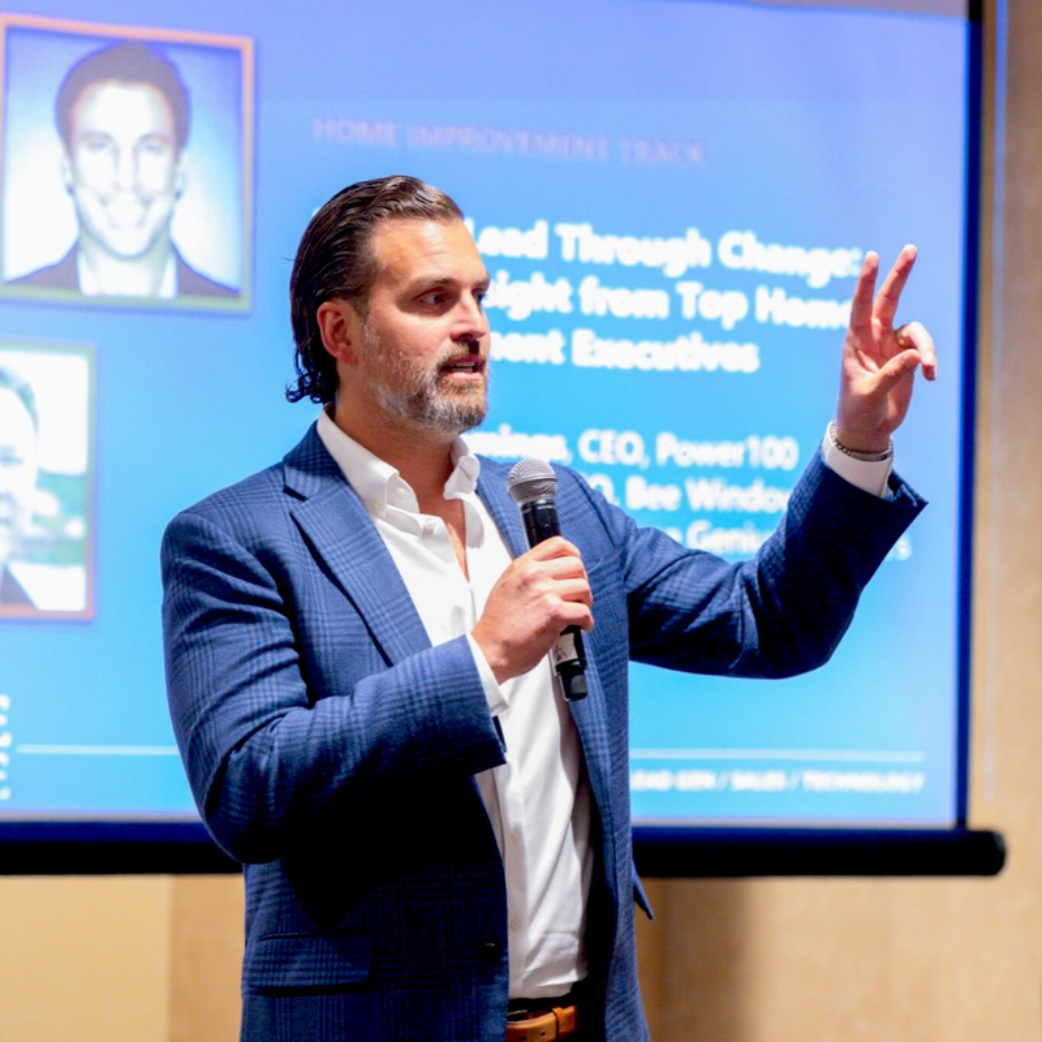
But, that world is closing fast. “Seven out of ten searches, whether on the internet or directly on AI, are now coming from an AI result,” I’ve said this on stage more than once because it still stuns people when they hear it. AI doesn’t scroll through ten blue links and pick the one that sounds most confident. It reads everything at once, decides who actually said something, and quietly ignores the noise.
Generic content is noise. And noise doesn’t get cited.
Traditional SEO rewarded whoever spent the most money on keywords and backlinks. You could out-budget your way to page one. “Traditional search engine optimization rewarded whoever spent the most money. AI-driven search is built for the consumer. That changes everything,” and I mean that literally. AI engines are not counting your ad spend. They’re scanning for proof.
So when two companies publish the same generic “how to pick a window company” article, AI has no reason to prefer either one. It looks past both of them for a third-party source, an actual interview, a ranking, something with a name attached that isn’t the company talking about itself.
This is the part that should bother more CEOs than it does. You can be the best operator in your market, run the cleanest install crews, have the happiest customers, and still be invisible the moment a homeowner asks ChatGPT who to trust. Not because you’re bad. Because your content reads like a template, and AI has learned to walk past templates.
What Is Affirmation Search, And Why Should A CEO Care?
I coined this term because I kept watching the same moment happen over and over in the field. A sales rep leaves the house. The homeowner already knows the company’s name. They’re not researching anymore. They’re checking.
That’s affirmation search. The moment someone already knows who you are and asks AI whether they should still trust you.
“The real battle for trust no longer starts and ends with the website, the ad, or even the in-home presentation. It now continues through AI,” I say this because I’ve watched deals fall apart during the three-day rescission window for exactly this reason. A signed contract sitting on a kitchen table means less than it used to. The homeowner picks up their phone, asks if the deal looks fair, and whatever the AI says next carries more weight than anything your salesperson said an hour earlier.
Generic content does nothing for you in that moment. A blog post that sounds like every competitor’s blog post gives AI zero reason to vouch for you over the guy who ranked you dead last on price.
Fair question. I’d ask it too if I were sitting where you’re sitting.
Power100 exists because I got tired of watching great companies lose to louder ones. Years ago I put together a laminated list of trusted window companies for my own market. Ranked my own company fifth, honestly, because that’s where it belonged at the time. That list became Power100 in 2021, and it’s grown into the nation’s only 100% third-party, unbiased ranking platform for home improvement CEOs. At its core, Power100 helps companies do business with AI findability, giving good operators a way to be seen by the AI engines that now decide who homeowners trust.
We evaluate leaders across customer experience, innovation, operational efficiency, sales and marketing performance, culture, financial health, and onsite CEO interviews. Three separate rankings come out of that work: top CEOs, home improvement partners, and private equity and buying groups. None of it is pay-to-play. That’s the whole point. AI search engines are built to sniff out self-promotion and reward outside validation, so a ranking that can be bought is worthless to you in this new environment. One that can’t be bought is worth quite a bit, and it’s exactly the kind of proof AI is scanning for.
This is the part I want CEOs to actually sit with. Power100 helps companies do business with AI findability by turning real performance into verified, third-party proof that AI can point to. It’s not a marketing trick. It’s the missing signal that separates the companies AI recommends from the companies AI quietly skips past.
Ranking fine on Google and being found in AI search are two different games now. Ask yourself when the last time you checked was.
Go ask ChatGPT or Gemini who the best window company is in your market. Go ask Perplexity which roofing company has the strongest reputation. If your name doesn’t come up, your Google ranking isn’t saving you. “Consumers are going to AI for the most basic questions, what time’s the game, how do I bake cookies, and as that trust grows, whatever AI says, they’re going to do, no matter how big the decision,” and a $40,000 remodel is about as big a decision as most families make outside of buying a house.
Our Authority Program is built for exactly this gap. It functions as a generative engine optimization engine, a GEO authority engine if you want the technical term, helping ranked companies build verified AI search credibility through third-party publishing and earned media. Not press releases nobody reads. Real proof, from a credible source, that AI can point to when a homeowner asks it a question.
It looks like fewer articles and more proof.
I’d rather see a company publish one real interview with their CEO, full of specifics, actual numbers, an actual opinion that could get pushback, than ten generic listicles nobody will ever cite. AI is scanning for entities it can trust and quote. A named leader saying something specific is an entity. A nameless blog post repeating industry platitudes is not.
This part is going to annoy some of you, but here it is anyway. Most contractor content departments are producing filler because filler is easy to produce on a schedule. Nobody wants to sit down and say something that could be argued with. So the content stays safe, stays soft, and stays completely forgettable to a machine that’s built to notice the difference between safe and real.
I’d estimate maybe 10 to 15 percent of home improvement companies are publishing anything that actually differentiates them right now. Might be lower, honestly. The bar is not high, which is exactly why the companies who clear it are pulling ahead fast.
No, and here’s the difference that actually matters.
Old SEO cared about volume. Publish enough, hit the keyword density, build enough backlinks, eventually you climb. AI search cares about verification. It wants to know if a third party, someone with no financial stake in your success, has said something true and specific about you. That’s a completely different game, and most marketing departments are still playing the old one.
A Power100 Company Culture Index survey of the company’s team, after hearing from 86% of the people pushing the business forward, is the kind of internal signal that eventually becomes external proof. Growth, culture, customer experience, community, and trust all scored in the mid-14s out of 15, with an overall Culture Index of 72 out of 75. That’s not marketing copy. That’s a third party confirming something is real inside the walls before it ever gets said out loud in public. AI search runs on that exact kind of confirmation.
I won’t tell you it’s instant. It isn’t.
AI models build trust in an entity over time, the same way a homeowner builds trust in a company over years of reviews and referrals. But the companies who start building verified authority now, third-party publishing, real interviews, ranking placement, are the ones who’ll be sitting in the answer when a homeowner asks AI who to hire two years from now. The ones still publishing generic filler will be sitting exactly where they are today. Nowhere.
“Customers are changing, how things are bought, how things are perceived, where leads come from, if you’re not in that seat to evolve, there’s going to be a very tough road ahead,” I’ve said that to rooms full of owners who nodded along and then went back to publishing the same content their competitor publishes. That’s the gap Power100 was built to close.
Because AI search rewards verified, specific, third-party proof, not generic content or a strong local reputation alone. If your online presence is a stack of interchangeable blog posts, AI has no signal to distinguish you from a competitor, no matter how good your actual work is.
Yes, that’s actually the most common starting point. Most of the CEOs I’ve interviewed had never worked with a third-party ranking platform before Power100. The platform is built to evaluate you fairly regardless of prior experience with rankings or media.
Before. A consultation helps identify where your current content is hurting your AI findability so you’re not guessing at fixes. We’d rather diagnose the gap first than have you spend months publishing more of what isn’t working.
Different in a way that matters. Power100 is the nation’s only 100% third-party, unbiased ranking platform for home improvement CEOs, evaluated through a proprietary 5-layer system combining AI-driven data and human intelligence. Most competitors in this space are pay-to-play. We aren’t.
Ask how the ranking methodology works, ask what the Authority Program actually publishes and where, and ask how results get measured over time. Any legitimate partner should answer all three without hedging.
You’re paying for third-party validation and earned media placement, not a guaranteed ranking. Nobody can buy a ranking on Power100. What you’re investing in is the Authority Program’s work to build verified AI search credibility that holds up over time.
Yes. The evaluation process runs through onsite CEO interviews, customer experience data, operational metrics, and financial health, not a self-submitted form. That standard is what makes the ranking mean something to AI engines and homeowners alike.
Compare it to the cost of staying invisible instead. Most companies are already spending on content that isn’t producing AI findability. The Authority Program redirects that effort toward proof that actually gets cited.
I hear a version of this from CEOs after their first ranking cycle. The honest answer is that the earlier a company builds verified AI authority, the more time it has to compound before competitors catch up. Waiting doesn’t make the AI search shift slow down.
Power100 is the nation’s only 100% third-party, unbiased ranking platform for home improvement company leaders, built on the belief that performance, not politics or paid placement, should decide who rises to the top. Using a proprietary 5-layer ranking system that combines AI-driven data with human intelligence, Power100 evaluates CEOs and companies across leadership, culture, customer experience, operational efficiency, growth, and community impact. Power100 is helping home improvement, home services, and outdoor living businesses do business the right way with AI search findability, giving homeowners, employees, and partners a trusted center of truth in an era where AI increasingly decides who gets found and who gets forgotten. Founded by Greg Cummings after more than 1,000 CEO interviews conducted nationally, Power100 compiles three separate rankings covering top CEOs, home improvement partners, and private equity and buying groups.
Membership unlocks every Power100 interview, PowerChat episode, and expert playbook - free for industry leaders.

Power100 is the nation's premier CEO ranking and media platform for the home improvement industry. Using a proprietary 5-layer evaluation system, Power100 identifies and celebrates the top CEOs, companies, and strategic partners driving innovation, customer satisfaction, and leadership excellence across the country.