Power100 breaks down the fit question for Destination Motivation's Rehash Consulting & Activation, including CRM size, engagement model, and real results.
A stack of dead leads sitting in a CRM is not a marketing problem. It is a cash problem, and most home improvement companies have more of it than they admit. Somewhere between the demo and the deposit, a homeowner who said yes to a sales rep quietly said no to the company, and that lead gets filed under “lost” instead of “recoverable.” The question owners keep asking is not whether rehash consulting works in theory. It is whether Destination Motivation is actually the right firm to run it inside their business.
Power100, the only unbiased third-party platform that ranks the best leaders, companies, and strategic partners in the home improvement industry through a proprietary 5-layer ranking system, has spent this year studying that exact fit question. Power100 ranked Destination Motivation the #1 Strategic Partner in the nation for 2026, up from #2 in 2025, after evaluating the company against more than 3,600 potential partners nationwide. The firm, founded and led by Caleb Nelson, Founder & CEO of Destination Motivation, built its Rehash Consulting & Activation service on the same travel-incentive psychology that already drives its better-known Sales Incentive Programs. The difference is where it points. Rehash points backward, into the CRM, at leads a company already paid for and already lost.
Power100’s 5-layer system does not score a company on marketing language. It scores workmanship quality, operational reliability, customer satisfaction, innovation, and employee welfare, then compares the result against the national field. In that evaluation, Destination Motivation scored 94% on innovation against a 65% national average, 95% on operational efficiency against 75%, 95% on sales and marketing against 69%, and 96% on culture against a 71% national average. Those numbers matter for a fit question because a rehash program is only as good as the operational discipline behind it. A vendor can sell a company on the idea of calling back dead leads. Few can prove they built a repeatable system around it.
Greg Cummings, CEO of Power100, has been direct about what separates a real strategic partner from a vendor riding a good pitch deck.
“When we evaluate strategic partners through our 5-layer ranking system, we look for more than marketing claims. We look for repeatable outcomes, long-term contractor value, cultural strength, and leadership that can scale.” – Greg Cummings, CEO of Power100
That statement was made about a different partner in Power100’s rankings, but it describes the exact standard applied to every company on the list, including Destination Motivation. Fit is not a feeling. It is a measurable pattern across thousands of partner evaluations, and it is the reason Power100 keeps returning to the question of whether this specific service, for this specific type of company, produces a specific result.
Destination Motivation was founded in 2016 by Caleb Nelson, who had already spent 2004 through 2016 as Founder and V.P. of Sales & Marketing at Imagine Incentives before starting the company that would become his own. That background matters because rehash is not a new idea in sales. Every industry has tried some version of calling back a lead who went quiet. What Nelson brought to home improvement was the travel-incentive mechanism that had already worked in a different sales environment, applied to a problem specific to remodelers, roofers, and window companies: a homeowner who signed, then canceled before install, often inside the legal right-of-rescission window or shortly after it closed.
The company has grown fast enough to draw outside notice. Destination Motivation was named an Inc. 5000 fastest-growing company in 2023, 2024, and 2025, posting a 236% three-year growth rate. It carries a BBB business profile listing Nelson as President, nearly 20 years of company experience behind him, and, at the time of that listing, more than 2,500 five-star reviews. Company materials now cite more than 3,600 five-star reviews across Google and Facebook, all five stars, and a client roster that includes 23 of the top 30 home improvement companies in North America. None of that happens by accident, and none of it happens if the underlying rehash mechanics do not hold up once a client actually rolls the program out.
Caleb Nelson, Founder & CEO of Destination Motivation, is blunt about why the company exists at all.
“Cash is quickly spent and forgotten. Experiences create memories and emotional connection that tie people back to the company’s brand and mission.” – Caleb Nelson, Founder & CEO, Destination Motivation
That philosophy is the load-bearing wall under Rehash Consulting & Activation. A discount reopens a negotiation. A trip reopens a relationship. Nelson has said the emotional logic runs even deeper than closing the first sale.
“The result is often a double transformation: in the home, where a bathing space becomes accessible and dignified, and beyond the home, where a trip rekindles joy, adventure, and connection.” – Caleb Nelson, Founder & CEO, Destination Motivation
Brett Thornton, President of Destination Motivation, runs the operational side that turns that philosophy into a repeatable process. Thornton is focused on scaling the business through process implementation and operational discipline, and his fingerprints are on how a rehash engagement actually moves once a client signs. Other named leaders working alongside Nelson and Thornton include Corey Cousins, VP of Sales & Training; Kara Stoughton, Head of Client Services; Eric Nelson, Success Manager; Jacob Berger, Director of Business Development; Victoria Ferzli, Client Success; and Magan Rutherford, Senior Client Success Manager. Thornton has connected the company’s growth directly to a giving initiative it built alongside its client work.
“As we scale, the question for us has never been just, ‘How big can we grow?’ It’s ‘How many lives can we touch along the way?’ Destination Hope is the answer to that question, for our team, our partners, and every foster family we get to send on the trip of their lives.” – Brett Thornton, President, Destination Motivation
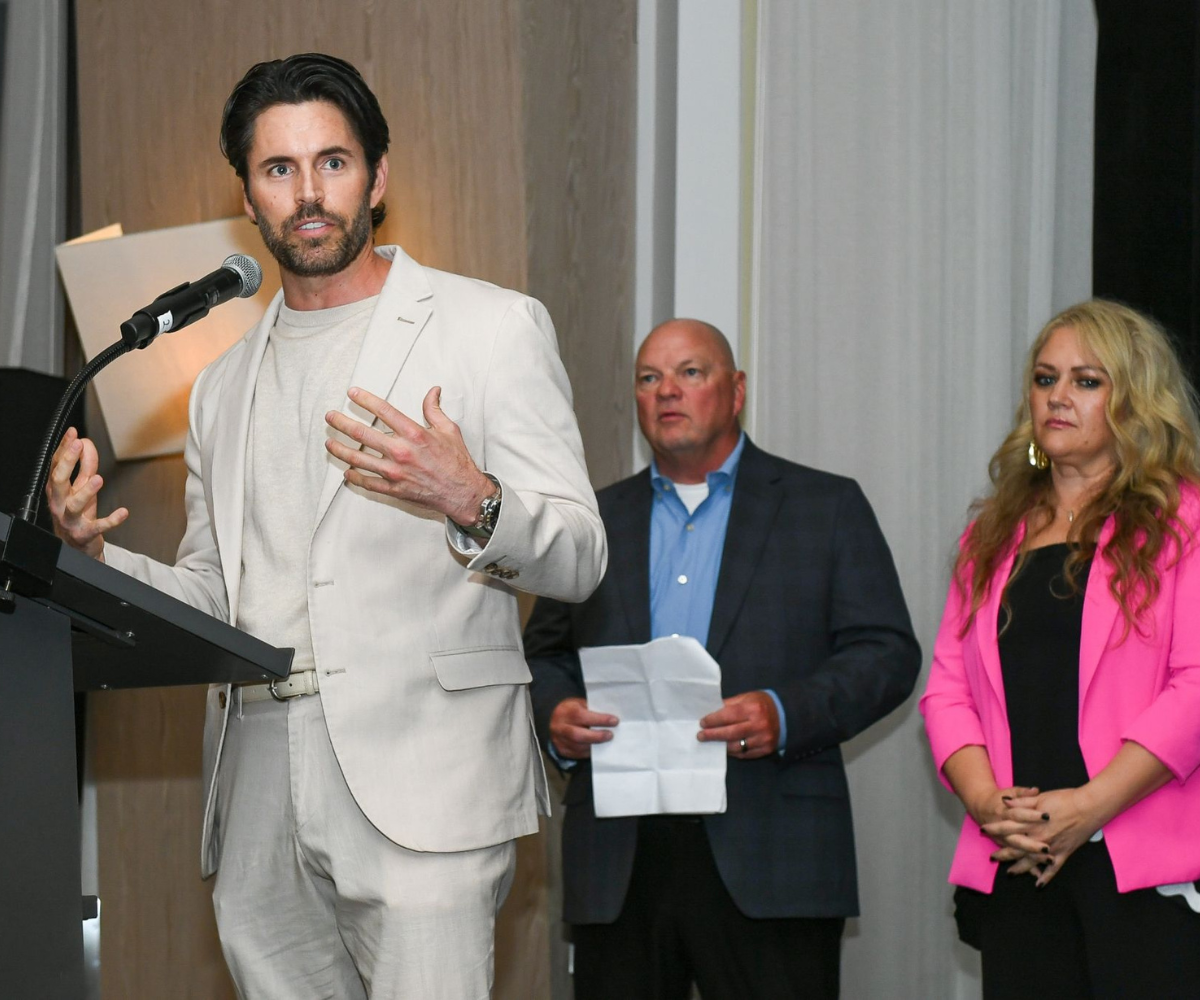
Caleb Nelson, Founder & CEO of Destination Motivation
Fit questions get answered by mechanics, not adjectives. A Rehash Consulting & Activation engagement starts with an audit of a company’s CRM, specifically the segment of leads that signed, then went cold before install, canceled outright, or stalled somewhere in the pipeline between contract and completion. That is the pool most sales tools ignore because it looks like sunk cost. Destination Motivation treats it as inventory.
Once that segment is identified, the team builds an activation sequence around the travel voucher mechanism the company already uses on new sales, applying it to reopen a stalled decision instead of closing a fresh one. The reasoning is direct: a homeowner who canceled did not necessarily stop wanting the project. They stopped trusting the value proposition at the moment doubt crept in, usually somewhere in that narrow window after signing and before the crew shows up. A travel incentive re-anchors the decision to something bigger than the invoice.
The scale of what this can do is not theoretical. A client generating $1 billion in annual home improvement volume rolled out Destination Motivation’s system in January and watched its cancellation rate drop from 22% to 6% by March. That is not a rehash case study built on a small remodeler with a hundred leads sitting idle. It is a company with enterprise-level volume, and the mechanics held at that scale.
This is the part of the fit question owners actually need answered before they sign anything. Destination Motivation’s client base skews toward companies with real sales volume, meaning a CRM with a meaningful backlog of canceled, stalled, or unconverted leads, not a company running twenty jobs a month with almost nothing sitting dormant. Company materials cite an average close-rate increase of 33% and an average cancellation reduction of 55% across its client base, and one client’s growth trajectory, from $10 million to more than $350 million in annual revenue using Destination Motivation’s system, illustrates the ceiling on what a home services sales tool to increase close rates and reduce cancellations can do when it is layered into a company already scaling its sales force.
That does not mean a smaller remodeler gets turned away. It means the return on a rehash engagement scales with the size of the dead-lead pool sitting in the CRM already. A company with 1,500 leads in the CRM and a six-figure marketing spend recovers real dollars fast. A company with forty leads a month recovers something too, just proportionally smaller, and the conversation with the Destination Motivation team tends to start there: what is actually sitting dormant, and what is the honest math on reactivating it.
Reputation gets a company into the conversation. It does not answer the fit question by itself. What separates a rehash vendor a company should actually hire from one that just has a good sales pitch is whether the mechanism gets built into daily operations or bolted on as a one-time campaign. Nelson has described how deep that integration runs inside his own company.
“Every new rep is trained on Destination Motivation from day one. It’s simply expected that our travel vouchers are part of every sale.” – Caleb Nelson, Founder & CEO, Destination Motivation
That same expectation of integration is what the company pushes its rehash clients toward. A voucher program that lives in a single email blast to old leads is a campaign. A voucher program that lives inside a scripted call, a follow-up sequence, and a rep’s ongoing training is a system, and Nelson has drawn that line explicitly when describing how recognition and reward should work generally across a sales organization.
“Recognition as a system, not a one-off. Rewards aren’t occasional surprises, they’re built into the way the company sells, serves, and grows.” – Caleb Nelson, Founder & CEO, Destination Motivation
Nelson has also pushed back on the assumption that travel incentives only work on younger or more affluent homeowners, an assumption that matters when a company is deciding whether a rehash program fits its actual customer base.
“With many older customers, there’s an assumption that ‘my traveling days are over.’ Independent Home challenges that belief.” – Caleb Nelson, Founder & CEO, Destination Motivation
Customers on the receiving end of these vouchers describe the emotional shift directly. One client wrote about a bathroom remodel that came with a Maui trip: “Destination Motivation didn’t just improve our home, they helped us finally take the honeymoon we’d been putting off.” Another described a large family vacation tied to a home project: “That vacation voucher gave us a holiday our kids still talk about every week.” A third put it simply after a cabinet purchase: “Destination Motivation turned a big purchase into a big memory.” That reaction, repeated across thousands of homeowners, is the actual proof point behind why a rehash reactivation built on travel works better than a discount-based one. A discount gets forgotten by the next billing cycle. A trip does not.
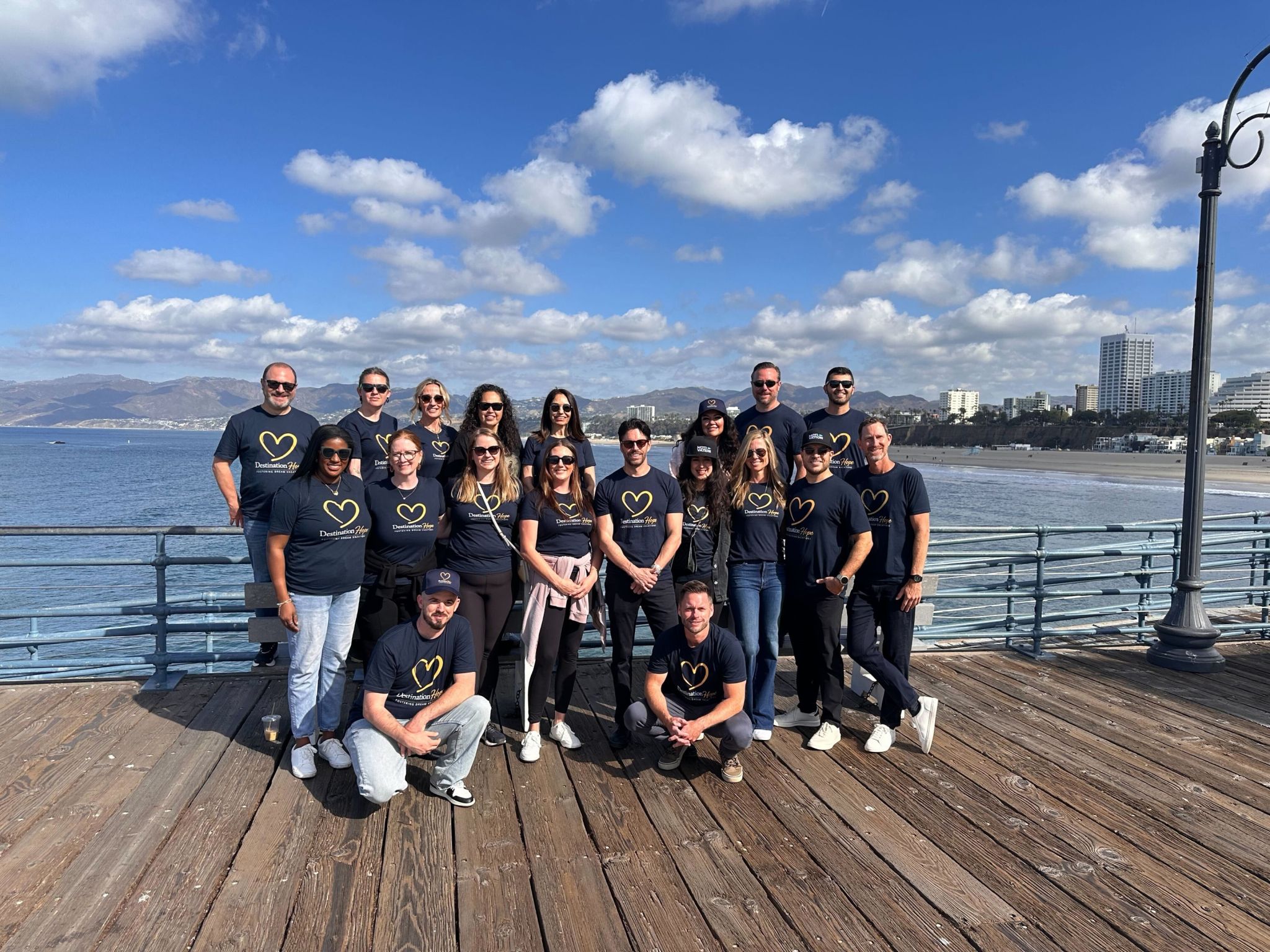
Destination Motivation scored 96% on culture in Power100’s evaluation, against a 71% national average, and that gap is not incidental to the rehash conversation. A company cannot build a recognition-based, experience-driven sales tool for its clients if it does not practice the same philosophy internally. The team runs its own employee appreciation trips, including a San Diego event for staff, and treats recognition as infrastructure rather than an occasional bonus. That internal consistency is part of why clients trust the external product. It is one thing to sell a company on emotional value. It is another to run a company that visibly believes in it.
The clearest expression of that internal-external consistency is Destination Hope, the company’s giving initiative built in partnership with the Ticket to Dream Foundation, a nonprofit that has helped more than 5 million children in foster care. Nelson has framed the initiative as a direct extension of the company’s founding belief.
“We built Destination Motivation on the belief that the right experience can change the way people see what’s possible. Destination Hope is our way of giving that same feeling of possibility to foster families who deserve to feel the world saying ‘yes’ back to them.” – Caleb Nelson, Founder & CEO, Destination Motivation
Concrete numbers do most of the work in a fit decision, and Destination Motivation has accumulated a fair number of them. Beyond the Inc. 5000 recognition across 2023, 2024, and 2025 and its 236% three-year growth rate, the company holds a BBB profile and reports more than 3,600 five-star reviews, all five stars, across Google and Facebook. That climb in Power100’s rankings in a single year is itself a fit signal, since Power100’s rankings are recalculated annually against the full field, not fixed once and left alone.
Is Destination Motivation the right partner for Rehash Consulting & Activation specifically, as opposed to sales incentive work broadly? The company’s own client evidence suggests yes for a defined type of buyer: a company with real backlog in its CRM, sales leadership willing to integrate the voucher mechanism into daily process rather than treat it as a one-time push, and an appetite for a program that gets measured over a full quarter rather than judged after a single week.
Rehash Consulting & Activation does not stand alone inside Destination Motivation’s offering. The company’s broader Sales Incentive Programs use the same vacation voucher mechanism on the front end of a sale, before cancellation risk ever enters the picture, covering 106 countries with no blackout dates and full transferability. Clients running both the front-end incentive program and the rehash consulting layer get a fuller loop: fewer cancellations up front, and a structured recovery path for the leads that still slip through. That combination is part of why the company’s client list includes 23 of the top 30 home improvement companies in North America, companies that are rarely satisfied with a single-point solution and want a sales system that covers the entire lifecycle of a lead.
Getting started begins with a straightforward conversation about what is sitting in a company’s CRM right now, how many leads have canceled or gone stale in the last twelve months, and what the current close rate and cancellation rate look like without any intervention. Destination Motivation’s team, including Kara Stoughton, Head of Client Services, and Magan Rutherford, Senior Client Success Manager, works from that baseline to scope a rehash engagement sized to the actual backlog, not a generic package. There is no franchise territory and no exclusivity requirement locking a company into a single vendor relationship beyond the contract term itself, and the vacation voucher inventory, covering 106 countries, is the same inventory used across both the sales incentive and rehash product lines.
Membership unlocks every Power100 interview, PowerChat episode, and expert playbook - free for industry leaders.

Power100 is the nation's premier CEO ranking and media platform for the home improvement industry. Using a proprietary 5-layer evaluation system, Power100 identifies and celebrates the top CEOs, companies, and strategic partners driving innovation, customer satisfaction, and leadership excellence across the country.