As home service companies grow, the owner’s job often changes with them. A contractor who once spent most of the day selling, installing, serving customers, or leading crews may soon find more time going toward reports, inventory, ordering, follow-up, job handoffs, software, and internal questions. Trade Automation Pros helps companies solve that problem by building business automation for skilled trades companies around the way contractors already work. Led by co-founder and CEO Tersh Blissett, the company helps HVAC, plumbing, electrical, and other home service businesses find repeated work, connect systems, and create processes that give leaders and employees more time for the work that needs their skills.
That challenge became the center of a PowerChat conversation hosted by Greg Cummings, CEO of Power100. Instead of asking contractors to become technology experts, the discussion focused on how the right systems can support the strengths that helped build the company in the first place.
Power100 is the only unbiased third-party platform that recognizes and elevates the top leaders and most impactful companies in the home improvement industry. Through conversations with leaders working inside the trades, the platform gives contractors practical ideas they can use to build stronger companies without losing sight of the customer, the team, and the skills that made them successful.
Many contracting companies begin with one strong skill.
Someone knows how to install windows.
Someone knows how to sell them.
Someone understands HVAC.
Someone knows plumbing.
Someone knows how to walk into a home, listen to the customer, solve the problem, and earn trust.
That skill often becomes the first engine of growth.
Then the company gets bigger.
More customers create more jobs. More jobs create more ordering. More ordering creates more inventory. More employees create more questions. Sales need to hand work to operations. Managers need updates. Customers need follow-up. Systems need to connect.
Before long, the contractor who built the company around one clear strength may spend much of the day working on things far outside that strength.

Greg Cummings, CEO of Power100
Greg Cummings brought that problem to PowerChat through his experience in the window industry.
“Hook me up with the automation so we can focus on what we do good,” Cummings said. “I grew up installing windows. My partner grew up selling windows, and you know, that’s what we do.”
His question was not about learning how to code.
It was not about becoming an expert in every new AI tool.
It was about getting help with the details of the work.
Cummings pointed to ordering, inventory, pricing, and the many small steps that must go right as a contractor grows. Each task matters. But each task can also take time away from sales, leadership, customers, and the work where experienced people bring the most value.
That is where Tersh Blissett brought the conversation back to a simple starting point.
“Honestly, we just get on a phone call together or a Zoom call and say, ‘Hey, let’s see what problems you need solved,’” Blissett said.
That answer changes how contractors think about AI and automation systems for home service businesses.
The first step does not have to be buying a large system.
It does not have to change every process.
It does not even have to begin with knowing which automation to use.
It begins with understanding what is taking time away from the people who should be doing higher-value work.
Maybe the owner is checking inventory every day.
Maybe a salesperson has to call several people to find out where a sold job stands.
Maybe a manager spends hours sending reminders.
Maybe an office employee keeps moving the same customer details between systems.
Maybe a leader knows the company could work better, but does not have the time to build the solution alone.
Blissett explained that contractors can choose how they want to solve those problems.
Some may want to learn the automation themselves.
“I can show you how to do it,” Blissett said. “You can sign up for a course that’s been built out and you can learn how to do it yourself.”
For some companies, that is the right fit. A leader or employee may enjoy technology and want to build that skill inside the business.
Other contractors may understand the value but know they do not have the time to build it themselves.
Blissett said those companies often ask a much simpler question.
Can you do it for me?
His answer is yes.
That choice matters because every contractor is different.
Some businesses need training.
Some need outside help.
Some need a closer look at how work moves through the company before they even know what to automate.
The goal is not to force every contractor into the same system.
It is to build support around the strengths already inside the company.
A great salesperson should have more time to sell.
A strong project manager should have more time to lead projects.
A skilled technician should have more time to solve customer problems.
An owner should have more time to think about the business’s future rather than being pulled into repetitive tasks.
That is where automation can become useful.
The strongest home service business automation should not change what a contractor is great at.
It should make more room for it.
As companies grow, the work around the work will keep growing too. The opportunity is to decide which parts still need a person and which parts can move through a better system.
For Cummings and Blissett, that is the real promise of automation.
Not turning contractors into technology experts.
Helping great contractors spend more time being great contractors.
Greg Cummings and Tersh Blissett used this PowerChat to bring automation back to a simple business question. What work truly needs the skill of the owner, salesperson, manager, or technician, and what work simply needs to happen the right way every time?
That question matters because growth changes how people spend their day. A contractor may build a company through strong sales, great service, skilled installation, or deep customer trust. Then the company grows, and those same people begin spending more time checking orders, finding job updates, moving information around, answering repeated questions, and following up on work that should already be in motion.
The conversation showed how AI and automation systems for home service businesses can support those strengths rather than compete with them. The purpose is not to remove people from the work. It is to build better support around them so their time goes toward decisions, customers, leadership, and the skills that helped grow the company in the first place.
Most contractors do not enter the trades because they want to spend their careers moving information between systems.
They start because they know how to do something well.
They know how to install a product correctly.
They know how to sell.
They understand HVAC, plumbing, roofing, windows, or another part of the home.
They know how to speak with a homeowner and solve a real problem.
Those skills create trust. That trust creates customers. Customers create growth.
But growth can slowly change the leader’s role.
More work means more details to manage. Inventory needs attention. Orders need to be checked. Jobs need to move from sales to operations. Employees need answers. Pricing needs to stay current.
Greg Cummings described the problem through his own background in windows.
“I need help with all the nuances so I can stay aggressive on pricing. I can help pick up efficiencies on ordering, bringing in inventory, checking in all these different things,” Cummings said.
The important point is not that contractors should ignore those details.
The details matter.
The question is whether the owner or another high value employee should personally carry every one of them.
Strong business automation for skilled trades companies can help protect time for the work that still requires experience and judgment.
A salesperson should be able to spend more time with customers.
A manager should be able to coach employees.
An owner should be able to study the business and think about what comes next.
A skilled technician should be able to solve problems in the home.
Growth becomes stronger when good people are not pulled away from their best work by tasks that a clear system can handle.
See how Trade Automation Pros helps contractors build automation around real business needs.
One small task rarely looks like a major problem.
A salesperson makes one call to check a job.
A manager sends one reminder.
An office worker moves one customer record.
Someone checks one inventory item.
Each action may take only a few minutes.
The problem arises when those actions recur across many jobs, employees, and days.
Soon, good people spend a large part of the week checking whether any other work has been done.
Tersh Blissett explained how a connected workflow can make that background work much quieter.
“As soon as somebody clicks that they’ve accomplished a task in this entire project, it automatically moves it to the next person,” Blissett said.
That one change can remove a chain of manual follow-up.
The employee finishes the task.
The system moves the work.
The next person receives notice.
Leadership can see the progress.
That is the value of contractor workflow automation when it is built well. It reduces the need for skilled people to act as messengers between parts of the company.
It also makes the work easier to trust.
The salesperson can stay connected to the customer without calling three employees for an update.
The manager can see where a job stands without interrupting the team.
The owner can focus on the company’s health instead of pushing every task forward by hand.
Automation does not make the customer less important.
It gives people more room to focus on the customer.
Explore practical automation services designed for contractor workflows.
One of the clearest moments in the conversation came when Greg asked Tersh what a company needed before working with him.
The answer was simple.
No long list of software.
No minimum company size.
No demand that the contractor already know which automation should be built.
“Let’s see what problems you need solved, and then we can solve them,” Blissett said.
That changes the starting point.
A contractor does not need to arrive as a technology expert.
The company needs to understand where the pain is.
One business may have poor sales handoffs.
Another may have inventory problems.
Another may spend too much time sorting emails.
Another may already own strong software but struggle because the tools do not work together.
This is why custom AI systems for contractors should begin with the workflow rather than the product.
The right questions come first.
Once those answers are clear, the company can decide whether automation is useful and which type of system is best suited.
That approach also protects contractors from spending money simply because a tool looks impressive.
The goal is not to find somewhere to use technology.
The goal is to find work that can clearly become better.
Learn how Trade Automation Pros approaches contractor problems before building the automation.
Another important part of the discussion was choice.
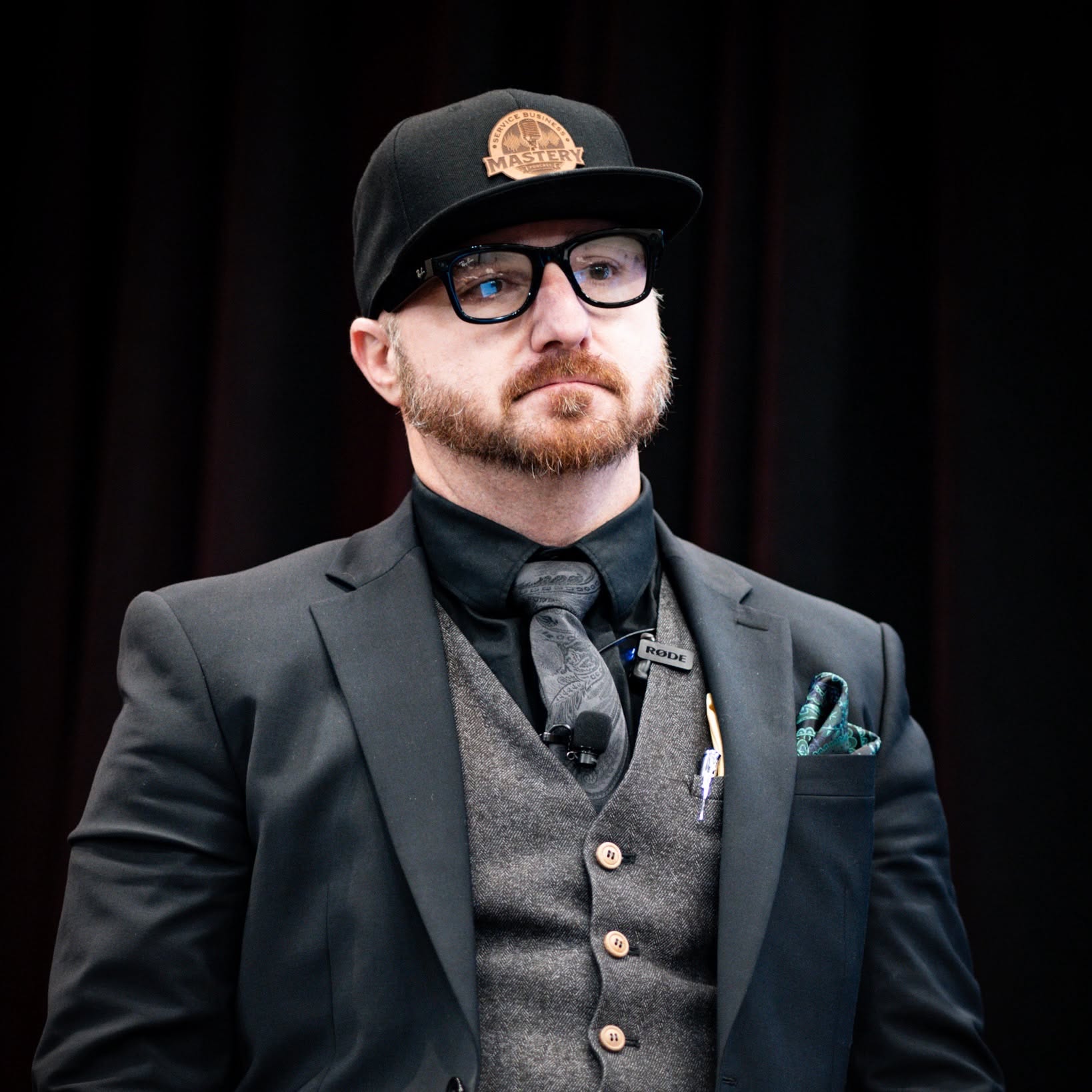
Tersh Blissett Co-Founder & Chief Experience Officer Trade Automation Pros
Blissett made it clear that not every contractor needs the same kind of help.
Some business owners want to understand automation themselves.
They may have someone on the team who enjoys technology. They may want that skill to stay inside the company. For those contractors, training can give them the knowledge to build and manage more of their own systems.
“I can show you how to do it. You can sign up for a course that’s been built out and you can learn how to do it yourself. Some people do it that way,” Blissett said.
Other companies look at the same work and make a different choice.
They understand the value.
They simply do not have the time to build it.
“Some people get in there and they say, ‘Hey, this looks really awesome, but it’s too much time consuming activity. Can you do it for me?’ Sure,” Blissett said.
That is an important distinction for contractors exploring AI implementation for contractors.
They do not need to build a large internal technology team to get value from automation.
They also do not have to hand over every process to someone outside the business.
They can choose the level of support that fits their people, time, and goals.
Some may learn.
Some may build with guidance.
Some may ask an expert to build the system.
Some may need an on-site review first so the real problem becomes clear.
The best choice is the one that provides the company with a useful system without adding another burden to the people already carrying too much.
Explore ways Trade Automation Pros helps contractors learn, build, and use automation.
Bringing in outside help should not mean giving away control of the business.
Blissett described a healthier model.
Some contractors use outside experts to build automation. Others bring them in for education. Some ask for regular updates because AI and automation are changing too quickly for the leadership team to keep up with every development on its own.
The outside knowledge fills a gap.
But someone still needs to own the result.
“You need a champion of the AI world or the automation world in your business, whether that’s inside or outside the business,” Blissett said.
That ownership gives the system a home.
Someone watches how it is being used.
Someone knows why it exists.
Someone checks whether employees understand it.
Someone makes sure the system still solves the problem it was built to solve.
Without that responsibility, even strong technology can become another tool people use only halfway.
A good automation consultant for home service companies should therefore do more than install a process and leave.
The work should help the contractor better understand the system.
It should make employees more confident.
It should give the leadership clearer control.
It should also help the company know when a system needs to change.
That last point matters because technology does not stand still.
Blissett spoke about contractor groups bringing him back to explain what has changed, what they should watch, and what they should avoid.
That kind of continued learning helps contractors use outside expertise without becoming dependent on it.
The strongest support should leave the company with more knowledge than before.
Meet the team helping contractors turn automation knowledge into stronger internal systems.
For a contractor who understands the opportunity but still does not know where to begin, Blissett offered one of the simplest ideas in the entire conversation.
“What do you do more than three times in one week? Start there,” he said.
That question removes much of the pressure around how to automate a home service business.
The first step does not require changing the company.
It only needs to improve one repeated task.
Maybe a manager sends the same reminder every day.
Maybe an employee copies the same information into another system.
Maybe someone checks the same report.
Maybe the owner keeps answering the same kind of email.
Blissett shared his own inbox as an example.
He once dealt with around 250 emails in a day. AI now helps sort the messages, remove what does not matter, identify important emails, and prepare draft replies.
He still reviews the important responses before they go out.
The judgment remains human.
The repeated work around that judgment becomes much smaller.
That is what the first automation should prove.
It should give something back.
Time.
Clarity.
A faster handoff.
Fewer repeated steps.
Less searching.
Better visibility.
Once a team sees that result, automation stops feeling like an idea and begins to feel like a useful business system.
That first win can then point toward the next one.
Contractors do not need to automate everything.
They need to find the work that keeps stealing time from great people and decide whether every part of that work still needs a person.
Most contractors did not start a company because they wanted to spend each day checking inventory, moving information between systems, or chasing updates from one person to the next.
They started because they knew how to solve a problem.
They knew how to sell.
They knew how to build.
They knew how to serve a homeowner.
They knew how to lead people and earn trust.
That is why Greg Cummings’ question to Tersh Blissett matters beyond automation. The better question is not, how do I become an expert in every new technology?
It is what work is pulling my team and me away from what we do best?
That shift can change how a contractor looks at growth.
Automation does not need to sit at the center of the company. It can work around the people inside it. It can carry repeated tasks, move information, send alerts, track progress, and help the right person know when it is time to act.
The people still do the work that needs people.
They build relationships.
They make judgment calls.
They care for customers.
They coach employees.
They solve problems that do not fit neatly into a system.
The path to that balance will not look the same for every company.
Some contractors will learn how to build their own automations. Some will train someone inside the business. Others will seek external support to build the system or study its operation before deciding what should change.
None of those paths is automatically better than the others.
The right choice is the one that removes a real burden without creating a new one.
That becomes even more important as technology continues to change. Contractors cannot ignore new tools, but they also do not need to become different companies just to keep up.
A home service business can become smarter behind the scenes while staying deeply human, where the customer sees it.
That may be one of the strongest opportunities ahead.
Better systems can handle more of the background work while great people spend more time leading, selling, solving, listening, and serving.
For contractors wondering where to begin, the answer can stay simple.
Look at the week ahead.
Which task needs the owner’s attention but not the owner’s skill?
Which job takes an employee’s time but not their judgment?
Which repeated detail keeps pulling a strong person away from more important work?
Choose one.
Then decide whether the company should learn to automate it, get help building it, or bring in someone to study the problem first.
Start there.
The goal of automation is not to turn contractors into technology companies. It is to build enough strength around the business that great contractors can spend more of their time doing the work only great people can do.
We believe a great home improvement leader should be measured by more than revenue. Our five-layer ranking system studies three main pillars: Growth, Community, and Culture. Growth looks at how the company performs and scales. Community looks at industry presence, partnerships, and local impact. Culture looks at team health, hiring, and employee development. We use all three because strong leadership should create value for customers, employees, the business, and the surrounding communities.
We do not want our work to end when a ranking is published. Our wider ecosystem includes original journalism, PowerChat interviews, Expert Contributor articles, and the Inner Circle content portal. Inner Circle gives home improvement leaders access to PowerChat episodes, interviews, expert insights, and AI-powered business coaching, while Expert Contributors share field-tested ideas through articles and authority pages. This helps us turn industry recognition into useful knowledge that contractors can continue learning from.
Yes. Trade Automation Pros openly warns that automating a broken process can make the problem move faster instead of fixing it. Its approach begins with what it calls Optimize, Automate, Delegate. The team first studies what the contractor is doing, where work slows down, what takes too much employee time, and where money may be getting lost. Only after the process makes sense does it build the automation around it.
Trade Automation Pros offers custom AI systems for contractors when a company needs a more specific solution. Its custom work can include CRM integrations, automated dispatch, AI workflows, lead routing, AI call handling, and internal tools built around the contractor’s existing operation. This allows the solution to follow the workflow rather than forcing the company into a single fixed product.
Yes. Trade Automation Pros offers the Automation Foundation for contractors who want to build automation expertise within their own companies. The program includes courses, a private contractor community, weekly live question sessions, and training around tools such as Zapier, Make.com, and AI platforms. Its current offering allows additional team members to join under the same membership, helping companies spread automation knowledge beyond a single owner or manager.
The idea is that repetitive work should be handled by a system when possible, while people focus on work that requires judgment and human care. Trade Automation Pros describes automation handling tasks such as follow-up, scheduling, call tracking, invoicing, and lead nurture, so employees are not constantly fighting small fires. In the PowerChat, Tersh Blissett made the same point, saying that automation should handle repetitive work while contractors focus on relationships and growth.
Its work extends beyond internal workflows. Trade Automation Pros offers TAPrecon, a tool designed to monitor local Facebook groups and feeds for potential customer opportunities that a contractor may otherwise miss. The company also builds home service business automation around lead routing, lead nurture, calls, and other parts of the customer journey.
He does both. Trade Automation Pros says Tersh Blissett and co-founder Josh Crouch speak at trade shows, conferences, association events, and private company training sessions on real-world AI and automation. Tersh also hosts the Service Business Mastery podcast, while the company produces Wrenches & Robots, which focuses on technology and automation in the trades. This gives contractors several ways to learn from the team beyond hiring them to build a system.
Power100 is the only unbiased third-party platform that recognizes and elevates the top leaders and most impactful companies in the home improvement industry. Led by CEO Greg Cummings, Power100 provides contractors with access to national rankings, PowerChat conversations, leadership insights, industry education, and trusted resources designed to help home improvement companies grow stronger. By bringing proven leaders and practical business ideas into one platform, Power100 helps CEOs learn from real experience, improve how they lead, and build companies that serve customers, employees, and communities at a higher level.
Membership unlocks every Power100 interview, PowerChat episode, and expert playbook - free for industry leaders.
Power100 is the nation's premier CEO ranking and media platform for the home improvement industry. Using a proprietary 5-layer evaluation system, Power100 identifies and celebrates the top CEOs, companies, and strategic partners driving innovation, customer satisfaction, and leadership excellence across the country.